Embarking on a home renovation is an exciting journey, offering the promise of a beautiful, updated space. However, when you have little ones, this excitement is tempered by a major concern: safety. The construction site your home temporarily becomes is a labyrinth of hazards—dust, exposed wires, sharp tools, and falling debris. Learning how to child proof during renovations is not just a suggestion; it’s an absolute necessity. I’ve seen firsthand how quickly a curious toddler can turn a pristine work zone into a risky playground. This in-depth guide is designed to transform your chaotic construction zone into a controlled, safe environment for your children.
✨Was this helpful? Spread the word!
[addtoany]
The process of child proofing a home during renovations requires a proactive and systematic approach that goes beyond your typical baby gates and cabinet locks. It means thinking like a contractor and a parent. You need to anticipate dangers that aren’t usually there, from toxic fumes to unsecured equipment. This article, penned from years of experience in both construction oversight and as a parent myself, will walk you through the essential steps, must-have safety products, and crucial planning strategies to make sure your project is successful without compromising your family’s well-being. Furthermore, we’ll dive into a detailed product analysis to help you secure the best barriers and safety devices available on Amazon.
Quick Comparison: Renovation Safety Measures vs. Everyday Child Proofing
Before we delve into the specifics of how to child proof during renovations, it’s helpful to understand why this temporary situation demands a completely different strategy than your usual everyday child proofing renovation project preparation. The risks are amplified, and the solutions must be more robust.
| Safety Aspect | Everyday Child Proofing | Renovation Child Proofing |
| Primary Goal | Prevent access to everyday hazards (cabinets, stairs, outlets). | Prevent access to major construction hazards (tools, debris, active work zone, toxic substances). |
| Typical Barriers | Pressure-mounted gates, furniture anchors, outlet covers. | Hardware-mounted gates, temporary wall barriers, high-security locks, heavy-duty tarps. |
| Air Quality | General dust control, air purifiers for allergies. | PPE (masks), commercial-grade air scrubbers, plastic sheeting to seal off areas. |
| Surface Hazards | Sharp corners, slick floors. | Exposed nails, splintered wood, sharp metal scraps, loose flooring. |
| Supervision | Consistent supervision and environmental safety. | Constant, direct supervision or relocation outside the home/work area. |
Top 7 Safety Products for Child Proofing During Renovations: Expert Analysis ️
When your home turns into a construction zone, off-the-shelf child safety products often don’t cut it. You need commercial-grade barriers and specialized protection. Based on professional reviews and technical specifications, here are seven crucial products that will help you child proof home renovation zones effectively.
| Product Category | Focus Keyword Variation | Key Usage During Renovation |
| Temporary Walls/Barriers | child proof renovation site | Sealing off the work area completely. |
| Hardware-Mounted Gates | child proofing renovation project | Securing doorways to the work zone. |
| Industrial Zip Ties | renovation safety tips for kids | Securing tools, cables, and toxic chemicals. |
| Heavy-Duty Furniture Straps | how to child proof house during remodeling | Anchoring temporary construction materials (e.g., drywall stacks). |
| High-Quality Respirators | child proofing construction zone | Protecting children from airborne dust/fumes (if they must be near). |
| Commercial Air Scrubbers | baby proofing during house renovation | Filtering air to maintain quality in the living areas. |
| Jumbo Outlet Covers | house remodeling child safety | Securing temporary or newly installed electrical outlets. |
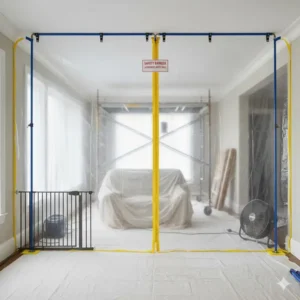
1. ZipWall 12 Foot Spring Loaded Poles SLP (Temporary Dust Barrier System)
This system is the gold standard for creating temporary walls, a critical part of how to child proof during renovations. It’s not just for dust; it’s for creating an impenetrable barrier.
-
Detailed Technical Specifications: Includes four 12-foot aluminum, spring-loaded poles that extend from 4 feet 7 inches to 12 feet. The poles feature a non-skid plate at the top and bottom, capable of securely holding plastic sheeting (up to 8 mil thickness) against ceilings up to 12 feet high without damaging the surface. The spring-loading mechanism ensures a taut, floor-to-ceiling barrier.
-
Customer Review Analysis: Customers consistently praise the system’s ease of setup (one person can often manage it) and its effectiveness in completely isolating the construction area. Many mention that it’s far superior to taping plastic sheeting, which invariably falls down. A common piece of feedback is that the system provides peace of mind, allowing them to relax knowing their kids are completely sealed off from the dangers inside.
-
Pros/Cons Analysis:
-
Pros: Creates an airtight, solid barrier; reusable for future projects; simple, non-damaging installation; allows easy creation of temporary doorways with optional zippers.
-
Cons: Higher initial investment than simple plastic sheeting; requires buying the plastic sheeting separately.
-
-
Warranty: Typically covered by a limited lifetime warranty against manufacturing defects.
2. Regalo Easy Step 38.5-Inch Extra Tall Walk Thru Baby Gate, Model 1186 (Pressure-Mounted Gate)
While hardware mounting is preferred, for temporary sealing of non-structural openings, a robust, extra-tall pressure gate can serve as a secondary barrier.
-
Detailed Technical Specifications: This model is extra tall at 38.5 inches, making it difficult for older toddlers to climb over. It fits openings between 29.5-40.5 inches and features an all-steel construction, a simple one-touch release handle, and a 10-inch extension kit. The pressure-mount design is easy to install and remove, which is vital when the door needs to be opened frequently by adults.
-
Customer Review Analysis: Reviewers frequently mention the height as a major benefit for containing older, more agile children. They appreciate the walk-through design for adult convenience, but caution that it must be checked daily to ensure the pressure mounts have not loosened, a crucial child proofing during renovation habit.
-
Pros/Cons Analysis:
-
Pros: Extra height for maximum security; quick and easy adult access; simple setup and relocation; durable steel frame.
-
Cons: Not as secure as hardware-mounted options for primary containment; pressure can mark walls; requires frequent checks.
-
-
Warranty: Standard 90-day limited warranty.
3. Safety 1st Secure Mount Retractable Gate, Model 47447 (Hardware-Mounted Gate)
For high-traffic, permanent openings to the work area, a hardware-mounted gate is non-negotiable for how to child proof during renovations.
-
Detailed Technical Specifications: This gate spans openings up to 55 inches wide and is 32 inches high. It features a mesh fabric that fully retracts when not in use, eliminating a trip hazard. The hardware mounts directly into wall studs or solid wood, offering superior stability. It has a visible red/green indicator to confirm it is properly locked.
-
Customer Review Analysis: Parents love the retractable feature, especially in hallways, because it’s completely out of the way when the kids are sleeping or out of the house. The mounting process is described as solid, and they feel confident in its security against even persistent pushers.
-
Pros/Cons Analysis:
-
Pros: Extremely secure and stable (hardware-mounted); retracts fully to eliminate tripping; wide spanning capability; visual lock indicator.
-
Cons: Mesh fabric is not as rigid as steel gates; requires drilling into the wall for installation; not ideal for the very bottom of stairs without a hard bottom rail.
-
-
Warranty: 1-year limited warranty.
4. 3M 6000 Series Reusable Half Facepiece Respirator, Model 6200 (Personal Safety)
While ideally, children are relocated, sometimes proximity is unavoidable. Air quality control is paramount.
-
Detailed Technical Specifications: This is a reusable respirator designed for comfort and extended use. It uses a bayonet connection system for a wide variety of 3M filters and cartridges, including P100 cartridges for filtering construction dust and particulate matter, or organic vapor cartridges for paint/chemical fumes. It’s made of lightweight thermoplastic elastomer material and has an adjustable head harness.
-
Customer Review Analysis: Users, particularly those undergoing remodeling, rate this highly for its comfortable fit and excellent seal, which is critical for protection. They stress the need to pair it with the correct cartridge (like the 2097 P100 filters) for renovation use.
-
Pros/Cons Analysis:
-
Pros: Highly effective against various airborne hazards (dust, mold, fumes) when paired with the right filter; comfortable for extended wear; reusable.
-
Cons: Not designed for children (use should be limited to adults ensuring kid safety); filters need periodic replacement; the full mask can be intimidating.
-
-
Warranty: Standard 3M product guarantee.
5. Dri-Eaz DefendAir HEPA 500 Air Scrubber, F528 (Commercial Air Filtration)
A true game-changer for controlling the atmosphere during house remodeling child safety efforts.
-
Detailed Technical Specifications: This is a commercial-grade air scrubber that utilizes a three-stage filtration system: a pre-filter, a secondary filter, and a HEPA filter (rated at 99.97% efficiency against particles 0.3 microns or larger). It has an adjustable airflow ranging up to 500 CFM (Cubic Feet per Minute) and a standard 115V power requirement. It is built ruggedly for construction sites.
-
Customer Review Analysis: Contractors and homeowners alike swear by its ability to dramatically reduce dust in the non-work areas. Many reviews focus on the almost miraculous reduction in fine drywall dust settling on furniture outside the child proof house during remodeling zones.
-
Pros/Cons Analysis:
-
Pros: Exceptional air filtration (HEPA standard); significantly improves air quality in living areas; powerful CFM for large spaces; quiet operation for its size.
-
Cons: High cost; bulky and heavy to move; filters are expensive to replace.
-
-
Warranty: 1-year limited warranty on parts and labor.
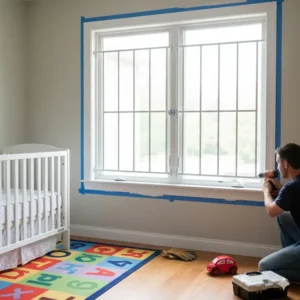
6. Cardinal Gates Stairway Special Gate, Model SS-30 (Top of Stair Safety)
A top-of-the-line gate necessary for stair safety when construction impacts stair access.
-
Detailed Technical Specifications: Made of lightweight aluminum, this gate is designed specifically for top-of-stair use as it has no bottom bar, eliminating a trip hazard. It swings open in only one direction (adjustable during installation) and can be mounted at angles up to 30 degrees, perfect for non-standard banister posts or walls. It spans openings up to 42.5 inches.
-
Customer Review Analysis: The angle mounting capability is a massive plus for reviewers with tricky stair setups. They feel the Stairway Special Gate is one of the most reliable and secure child proofing renovation project tools because of its all-metal construction and unique latch mechanism that requires adult dexterity.
-
Pros/Cons Analysis:
-
Pros: Zero trip hazard at the bottom; secure, one-handed latch; aluminum construction is rust-proof; exceptional stability due to hardware mount.
-
Cons: Higher price point; installation is more complex due to the angle-mounting feature.
-
-
Warranty: 1-year limited warranty.
7. LectroFan Micro2 Multi-Function Sound Machine and Bluetooth Speaker (White Noise for Distraction)
Often overlooked, the noise distraction from a renovation can be stressful for a child, making them more restless and curious.
-
Detailed Technical Specifications: Offers 10 non-looping sound settings (5 white noise, 5 fan sounds) and functions as a Bluetooth speaker. It’s ultra-portable (about 2 inches square) and has a rechargeable battery that lasts up to 20 hours on a single charge. It provides a simple, consistent sound environment to mask the sudden, startling noises of a construction zone.
-
Customer Review Analysis: Parents consistently praise its portability and the non-looping sounds, which they find more effective than typical sound machines. Many note it’s essential during daytime naps when hammering or sawing is at its peak during the renovation safety tips for kids phase.
-
Pros/Cons Analysis:
-
Pros: Highly portable; long battery life; effective non-looping sound masking; helps mitigate the stress of construction noise.
-
Cons: Volume may not be high enough to completely mask extreme construction sounds; primarily a comfort item, not a physical safety barrier.
-
-
Warranty: 1-year limited warranty.
| Feature | ZipWall 12 Foot Spring Loaded Poles SLP | Regalo Easy Step 38.5-Inch Extra Tall Walk Thru Baby Gate, Model 1186 | Safety 1st Secure Mount Retractable Gate, Model 47447 | Dri-Eaz DefendAir HEPA 500 Air Scrubber, F528 |
| Barrier Type | Temporary Wall/Dust | Secondary Door Barrier (Pressure) | Primary Door Barrier (Hardware) | Air Filtration |
| Max Span/Coverage | Up to 12 ft. Ceiling Height | 40.5 inches wide | 55 inches wide | Up to 500 CFM |
| Construction Material | Aluminum, Non-Skid Plates | All-Steel | Durable Mesh Fabric, Hardware Mounts | Rotomolded Polyethylene Housing |
| Key Advantage | Creates complete, sealed room isolation. | Extra height for older, climbing toddlers. | Retracts fully to remove trip hazard. | Commercial-grade HEPA air cleaning. |
| Ideal Renovation Use | Sealing off a kitchen/bathroom Reno area. | Temporary barrier at a secondary access point. | Securely blocking off a main hallway to the work zone. | Continuous air quality control in the living space. |
Just one click – help others make better buying decisions too!
[addtoany]
The Blueprint: Strategic Planning for Child Proofing Renovations ️
The most effective approach to how to child proof during renovations starts long before the first wall is demolished. It’s about strategic planning and communication. You need a solid game plan that accounts for every stage of the remodeling process. This preparation is a non-negotiable step to ensure the renovation safety tips for kids are implemented successfully.
1. Establish the “Exclusion Zone”
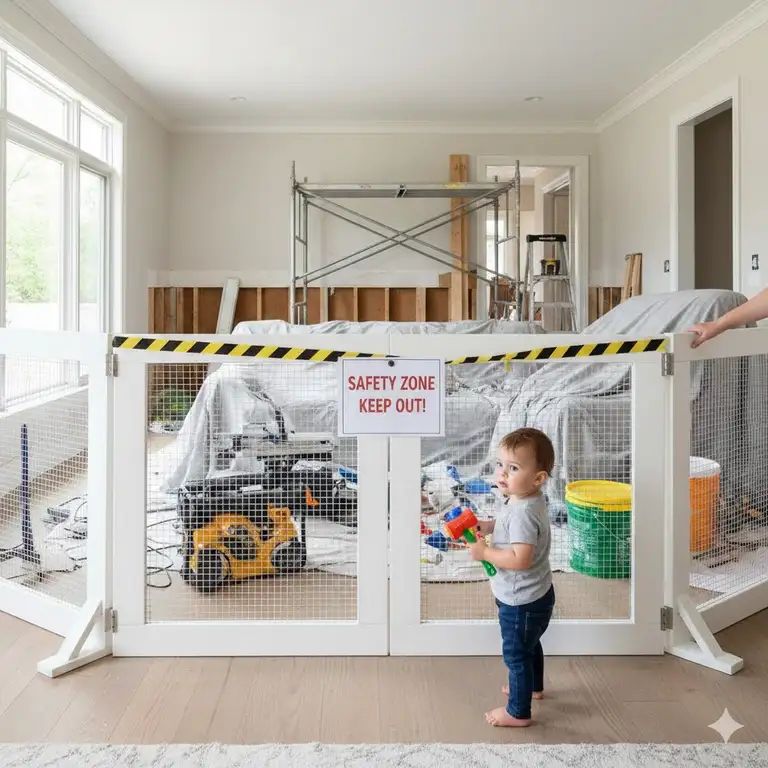
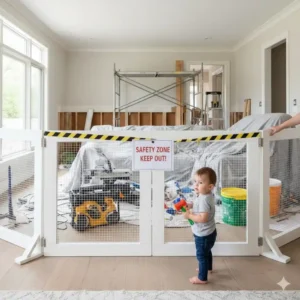
The exclusion zone is the heart of the safety plan. It’s the area where all construction activities—and all hazards—will be contained.
-
Physical Barriers are Paramount: Use heavy-duty, floor-to-ceiling temporary wall systems like the ZipWall 12 Foot Spring Loaded Poles SLP mentioned above. Do not rely on flimsy plastic sheeting taped to a doorway; it’s simply inadequate for a determined child. For doorways, use robust, hardware-mounted gates such as the Safety 1st Secure Mount Retractable Gate, Model 47447, installed directly into wall studs. This ensures that even heavy force or a determined push won’t breach the perimeter.
-
Secure All Access Points: Check windows, interior doors, and any shared ventilation. Any ductwork connecting the work zone to the living space should be temporarily sealed off with plastic sheeting and HVAC tape to prevent dust and fumes from traveling.
-
Contractor Compliance: This is where the trust factor comes in. Your contractor and their crew must be briefed on the child proofing during renovation protocol. They must be explicitly told that all gates must be closed and locked upon leaving the zone, even for a short break. It’s best practice to make this a mandatory clause in your contract.
2. Air Quality and Chemical Management ️
Construction dust is not just messy; it’s a serious respiratory hazard, containing silica, mold spores, and heavy metals. This is a crucial element of how to child proof house during remodeling.
-
Invest in Air Scrubbers: While expensive, commercial-grade filtration systems like the Dri-Eaz DefendAir HEPA 500 Air Scrubber, F528 are worth every penny. Place one near the work zone entrance, in the living space, running continuously. This creates negative pressure, helping to suck clean air into the living area and push dust/dirty air back toward the work zone.
-
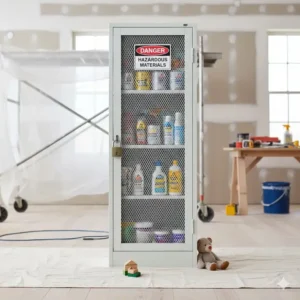
Vapor and Fume Control: Paint, adhesives, and sealants release volatile organic compounds (VOCs). If these chemicals are used, schedule this work for a day when the children can be completely out of the house (a temporary stay with relatives is ideal). All chemical containers must be stored off-site or in a heavy-duty, locked container, secured with industrial-grade locks, well out of reach.
-
Outbound Link for Air Quality: For a detailed understanding of the health risks posed by construction dust and how to mitigate them, consult the Centers for Disease Control and Prevention (CDC) guidelines on dust exposure, particularly for vulnerable populations like children. [Outbound Link 1: CDC – Dust Exposure]
3. Tool and Debris Management
Tools and loose debris are the most immediate threats in a child proofing construction zone.
-
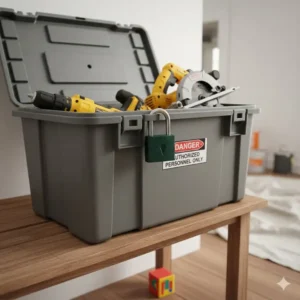
“Tools Down, Locked Up”: This should be the mantra. All tools—saws, drills, hammers, and especially sharp items like utility knives and box cutters—must be locked in a secure, steel toolbox at the end of every workday. Do not allow them to be left sitting on countertops or floors. This is the simplest yet most effective safety measure.
-
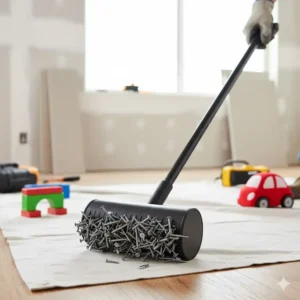
Daily Site Sweep: Assign a non-negotiable task for the end of the day: a thorough site sweep. This involves picking up all nails, screws, splinters, scrap materials, and any other potential hazard. Use a powerful magnet and a shop vacuum to ensure nothing is missed. This daily ritual is fundamental to making sure the next morning begins safely.
-
Waste Disposal: All construction waste, especially materials that could have sharp edges (drywall scraps, broken tiles), must be removed from the site daily and placed in a sealed, heavy-duty dumpster or locked storage container. Even a seemingly innocuous pile of wood can conceal nails.
Child-Centric Solutions and Psychological Safety
Successfully executing how to child proof during renovations isn’t only about gates and locks; it’s also about managing your child’s behavior and stress levels.
4. Behavioral Management and Distraction
Curiosity drives toddlers, and a renovation site is the ultimate curiosity magnet.
-
Establish a “Safety Zone”: Create a designated, highly appealing “Safe Zone” in the non-renovated part of the house. This should be stocked with new, engaging toys and activities they only get to use during the construction period. This makes staying away from the action feel like a reward, not a punishment.
-
Noise Mitigation: The constant banging and sawing can be deeply unsettling for young children, leading to anxiety and increased crying, which may cause them to be less compliant. A portable sound machine, like the LectroFan Micro2 Multi-Function Sound Machine and Bluetooth Speaker, can provide soothing white noise to mask the abrupt sounds. During daytime naps, this can make a world of difference.
-
Supervision is Key: This is the ultimate safety net. While the barriers and planning are essential, nothing replaces constant, vigilant supervision. If you are preoccupied, this is the time to employ a sitter, use a childcare facility, or ask a relative to take the kids for the day. You cannot safely watch children and oversee complex construction at the same time.
5. Electrical and Temporary Utility Safeguards ⚡
In a renovation, wires are constantly being moved, exposed, and temporarily capped. This is a major risk for a baby proofing during house renovation strategy.
-
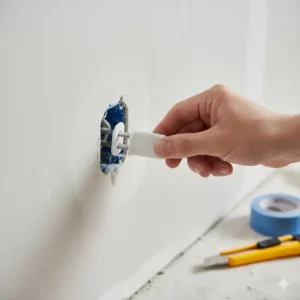
Capped and Secured Wires: All temporary wiring and any exposed wires must be immediately capped with wire nuts and secured high up, well out of reach. There should be no loose wires dangling anywhere, not even for a minute.
-
Outlet Management: For newly installed or temporarily active outlets, use jumbo, box-style outlet covers that completely enclose the plug. These are far more secure than the small, clear plastic caps that can be easily pried off or become a choking hazard. Look for models with dual-button release.
-
Power Tool Cords: Cords from power tools pose both an electrical and a tripping hazard. They should be run high, along walls, and unplugged immediately after use. Do not leave extension cords plugged in and ready to go. The cord itself should be secured against the wall with tape or clips to prevent it from becoming a dangerous trip line.
Detailed Product Comparison: Gates, Barriers, and Air Control
Choosing the right combination of products is essential for a safe child proofing renovation project. This matrix compares the technical aspects of different safety approaches.
Technical Specifications Matrix: Renovation Safety Equipment
| Product/Item | Mechanism/Power Source | Max Coverage/Height | Installation Type | Primary Hazard Mitigation | Target Age Group |
| ZipWall SLP Poles | Spring-Loaded Tension | Up to 12 ft Ceiling | Non-Damaging/Tension | Dust & Physical Access | All Ages |
| Regalo Easy Step Gate | Pressure Mount | 38.5 Inches Tall | Pressure Fit | Physical Access | Crawlers & Toddlers |
| Safety 1st Retractable Gate | Hardware Mount (Retracting Mesh) | 55 Inches Wide | Permanent Hardware | Physical Access/Tripping | Crawlers & Toddlers |
| Cardinal Gates Stairway Special | Hardware Mount (One-Way Swing) | 42.5 Inches Wide | Permanent Hardware (Angle Mount) | Stair Falls | Crawlers & Toddlers |
| Dri-Eaz DefendAir HEPA 500 | 115V AC Electric | 500 CFM Air Flow | Standalone Unit | Airborne Contaminants (Dust/Mold) | All Ages (Especially Infants) |
| 3M 6000 Series Respirator | Filter/Cartridge Based | Half-Facepiece | Adjustable Head Harness | Airborne Particulates/Fumes (Adult Use) | N/A (Adult Safety) |
Cost vs. Value Comparison: Securing the Reno Zone
When budgeting for your renovation, you absolutely must include a budget for safety, especially how to child proof during renovations. Skimping here is not an option.
| Category | Product Examples | Approximate Cost Range (USD) | Value Proposition for Renovation |
| Budget Barrier | Thick plastic sheeting, basic duct tape, pressure-mounted gates. | $50 – $150 | Minimal protection, high risk of failure and dust migration. Not Recommended. |
| Mid-Range Safety | Regalo Easy Step Gate, multiple rolls of builder’s plastic, high-quality painter’s tape. | $200 – $400 | Adequate for very short, contained projects; requires constant re-securing. |
| Premium/Pro-Grade | ZipWall 12 Foot Poles, Cardinal Gates Stairway Special, Dri-Eaz DefendAir HEPA 500. | $800 – $2,000+ | Full containment, superior air quality, peace of mind, highly reusable. Highest Safety Value. |
️ Feature/Benefit Comparison: Beyond the Basics
| Feature | Traditional Gate Benefit | Advanced Renovation Barrier Benefit | Why it Matters for how to child proof during renovations |
| Mounting | Pressure-Mount | Hardware Mount (Non-Trip Bar) | Ensures absolute security against forceful impact; removes a trip hazard for adults carrying materials. |
| Containment | Block Access | Full Room Seal (Floor-to-Ceiling) | Prevents microscopic dust and fumes from migrating, addressing respiratory hazards, not just physical access. |
| Operation | Basic Latch | One-Way Swing/Adult-Only Latch | Prevents the gate from swinging into stairwells or hazardous areas; ensures a child cannot accidentally or deliberately open it. |
| Air Control | None | HEPA Filtration | Protects developing lungs from fine particulate matter like silica dust and mold spores, which are unavoidable during demolition. |
6. Emergency Protocols and Contact Information
Despite the best precautions for child proofing construction zone security, accidents can happen. Being prepared is the final layer of defense.
-
Know the Closest ER/Urgent Care: Post the address and phone number for the nearest Emergency Room and/or Urgent Care clinic in a prominent location. Time is of the essence in a construction-related injury (e.g., a deep cut from a forgotten nail).
-
First Aid Kit Location: Ensure a fully stocked, adult-sized first aid kit (with trauma supplies, not just bandaids) is easily accessible and everyone knows where it is.
-
Outbound Link for Emergency Preparedness: For a detailed checklist on what to include in a comprehensive home first-aid kit, which should be amplified during a renovation, I recommend the American Red Cross guidelines. [Outbound Link 2: American Red Cross First Aid]
7. Communication and Scheduling ️
The logistics of how to child proof during renovations also involve scheduling.
-
High-Risk Work Scheduling: Schedule the most dangerous, loudest, or dirtiest work (demolition, major sawing, painting with high-VOC products) for when the children are absolutely not home—either relocated for the day or the entire weekend. This is an excellent way to handle the more dangerous aspects of the child proof house during remodeling phase.
-
Daily Check-in: Have a brief morning meeting with your contractor to review the day’s tasks. This helps you anticipate new hazards (e.g., “We’re running new plumbing today, so the floor will have exposed holes”).
-
The “No-Go” Rule Reinforcement: Continuously remind your children of the rules. Use simple, direct language and make the boundary very clear: “The red tape is the magic line. Only grownups can cross the magic line.”
✨ Don’t Miss These Exclusive Deals! ️
Take your child proofing renovation project to the next level with these carefully selected products. Click on any highlighted item to check current pricing and availability on Amazon. These tools and barriers will help you create a secure environment your family can trust!
Conclusion: Safe Renovations Are Possible!
Navigating a home renovation with children in the house is undoubtedly challenging, but it is absolutely manageable with the right preparation. The core principle of how to child proof during renovations is simple: create layers of defense. From establishing an unbreachable exclusion zone with systems like ZipWall 12 Foot Spring Loaded Poles SLP to vigilantly managing air quality with the Dri-Eaz DefendAir HEPA 500 Air Scrubber, F528, every step you take builds a safer home. The key is to be proactive, communicate constantly with your contractors, and never compromise on the safety standards you set. Remember, a successful renovation is one that finishes with a beautiful new home and a healthy, happy family.
Protect your most precious asset—your children—by securing your work zone today! Click the links above to invest in the proven safety products that will give you peace of mind throughout your project.
❓ Frequently Asked Questions
✅ The most important step is creating an absolute, physical 'Exclusion Zone' using hardware-mounted barriers or floor-to-ceiling temporary walls, like the ZipWall system, to completely seal off the construction area from your living space, preventing any accidental or curious entry...
✅ You must use commercial-grade HEPA air scrubbers, such as the Dri-Eaz DefendAir HEPA 500, to continuously filter the air in the non-work areas. Additionally, seal off all shared ventilation ducts and schedule high-VOC work (like painting) for days the children are out of the house...
✅ All tools, especially sharp objects and power tools, must be unplugged and locked in a secure, steel toolbox or removed from the site entirely. Never allow tools to be left loose or unsecured on floors, benches, or on open shelves overnight...
✅ No, a pressure-mounted gate (like the Regalo Easy Step Gate) should only be used as a secondary barrier in low-risk areas. For the main exclusion zone, you must use hardware-mounted gates (such as the Safety 1st Secure Mount Retractable Gate or Cardinal Gates Stairway Special Gate) for maximum, immovable security...
✅ All exposed wires must be immediately capped with wire nuts and secured high up out of a child's reach. Use jumbo, fully-enclosed outlet covers for any active or newly installed receptacles and ensure that extension cords are always secured high and unplugged when not actively in use... ❓ What is the most important step for how to child proof during renovations?
❓ How can I control dust and fumes during my house remodeling child safety plan?
❓ What should I do with the contractor's tools at the end of each day for child proofing construction zone?
❓ Is a pressure-mounted gate sufficient for child proofing a renovation work area?
❓ How do I handle exposed electrical wiring during a baby proofing during house renovation?
Recommended for You:
- Cordless Window Blind Safety for Kids: 7 Best Products That Protect Your Family
- Anti Scald Device for Bathroom Faucets: 7 Best Picks 2025
- Baby Proofing Cribs for Small Spaces: 7 Essential Safety Tips
Disclaimer: This article contains affiliate links. If you purchase products through these links, we may earn a small commission at no additional cost to you.
✨ Found this helpful? Share it with your friends!
[addtoany]