As an Amazon Associate I earn from qualifying purchases. Links in this article may be affiliate links. How we choose gear
The baby walkers worth buying in 2027 have no seat to roll around in: a push walker for a baby who already stands alone, or a wheel-free activity center for one who doesn’t yet. The American Academy of Pediatrics says on its HealthyChildren walker page that walkers are never safe, even with an adult close by, and that a child in one can cover more than 3 feet in a second. That is why the list below skips the seated, wheeled kind altogether.
Five models made the cut, from a push toy around $15 to $20 up to a stationary activity center near $150. Each one fits a different stage, so the order follows what a baby can do: sit, cruise, walk with help, walk alone.
The findings rest on BabyGearLab’s test of ten walkers, Babylist’s push-toy and activity-center roundups, maker manuals, retailer spec pages and a handful of parent forum threads; no baby used any of these for this article, so remarks about feel belong to the tester or parent who made them.
Baby walkers vs push toys: which product the warnings are about
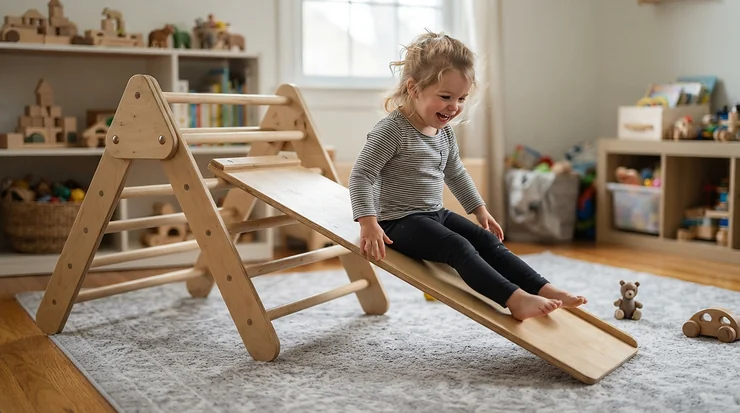
Three different products share the word “walker.” A sit-in walker holds the baby in a seat inside a wheeled frame. A push toy has no seat: the baby stands behind a handle and moves a weighted cart forward. A stationary activity center looks like the sit-in kind but has no wheels, and the AAP says its seat typically turns, tilts and bounces.
The AAP page asks for a ban on selling walkers with wheels and points parents to stationary centers and play yards instead. It never mentions push toys, so anything said about them below rests on testers and retailers, not on that page. BabyGearLab’s testers left sit-in models out of their ten-walker test because of the stair-fall risk and recommended stand-alone push walkers that don’t confine a child. Babylist’s roundup cites pediatric emergency physician Dr. Christina Johns, who says sit-in walkers can disrupt the usual progression to walking and cause injuries such as falls down stairs.
Federal rules sit beside that advice. CPSC’s infant walker guidance says walkers made or imported on or after February 25, 2023 must meet ASTM F977-22ε1 under 16 CFR part 1216, which lists prevention of falls down steps among its performance requirements. Makers must also issue a Children’s Product Certificate. The page defines a walker as a mobile unit a child propels while sitting or standing in it, and it doesn’t say whether push toys fall under the rule.
A stage ladder keeps the choice simple:
- Sitting with steady head control (Skip Hop lists 4 months and up for its center): a stationary center.
- Pulling up and cruising, around 9 to 10 months according to Babylist: a push walker with a speed control.
- Walking steadily, usually 12 to 15 months per Babylist: lighter push toys and wagons.
Each pick below has to clear four tests: no seat or no wheels, adjustable resistance wherever there are wheels, an age range and weight limit someone published, and at least two independent sources behind the specs.
Baby walkers with wheels: speed, grip and tipping decide the purchase
On a sit-in walker the wheels are the hazard. On a push walker they are a setting to tune, and the tuning matters more than the theme on the activity panel.
BabyGearLab’s testers split their ten walkers by resistance. A VTech brake limits speed, a Radio Flyer tensioner can be adjusted or removed as the child improves, and HABA and Brio models include adjustment too. A Fisher-Price zebra walker, the Fisher-Price Learn with Me Zebra Walker, rolled too quickly for new walkers and had no adjustable resistance, and Skip Hop, Melissa & Doug and Janod models had none either. Wheel material counts as well: the testers saw no slipping from the Radio Flyer’s foam-filled plastic wheels, while hard plastic wheels on the zebra walker may slip on hard floors. Stability follows weight and layout. A wide rear wheelbase helped the KUB Baby & Toddler Push Walker, BabyGearLab’s overall winner, and the three-wheel Skip Hop Kids 3-in-1 was judged less stable on varied surfaces.
Parent threads tell the same story from the living room. One parent in a Hellobee Boards thread says every walker they tried ran too fast on wood floors at first, and the lightest one rushed off or toppled. A Mumsnet parent on marble floors reports a walker that ran away from a heavier baby. These are single reports, but they match the testers’ emphasis on resistance and weight.
Babylist advises hardwood or low-pile carpet and warns against thick carpet, uneven ground and outdoor terrain. It also says to keep push toys away from stairs, fireplaces and other hazards, and to supervise every session.
Best baby walkers, matched to the stage your baby is in
The table shows how little the five overlap on age, weight limit and speed control. Retailer listings supplied the weight limits, so confirm them on the box.
| Model | Type | Age on listings | Weight limit on listings | Speed control | Price range |
|---|---|---|---|---|---|
| Skip Hop Explore & More 3-Stage Activity Center | Stationary seat, no wheels | 4 months and up | 25 lb seat limit | Not applicable | Around $150 |
| VTech Sit-to-Stand Learning Walker | Sit-to-stand push walker | 9 months to 3 years | 35 lb | Switch on rear wheels | Around $45 to $50 |
| Fisher-Price Laugh & Learn Smart Stages Learn with Sis Walker | Sit-then-push walker | 6 to 36 months (one source says 12 months and up) | 30 lb | Not listed | Around $27 to $40 |
| Skip Hop Silver Lining Cloud Rainbow Push Toy Walker | Light push toy | 12 months and up | Not listed | Not listed | Around $15 to $20 |
| Radio Flyer Classic Walker Wagon | Wooden wagon walker | 1 to 4 years | 35 lb | “Resist push” tension | Around $80 to $100 |
Only two of the five state a speed control, and both sit at the high end of the push-walker price range. The two cheapest give no weight limit or resistance setting, which fits their role as toys for babies who already walk. The Skip Hop Explore & More 3-Stage Activity Center has no wheels, so speed never enters the decision.
1. Skip Hop Explore & More 3-Stage Activity Center — a wheel-free seat for sitters
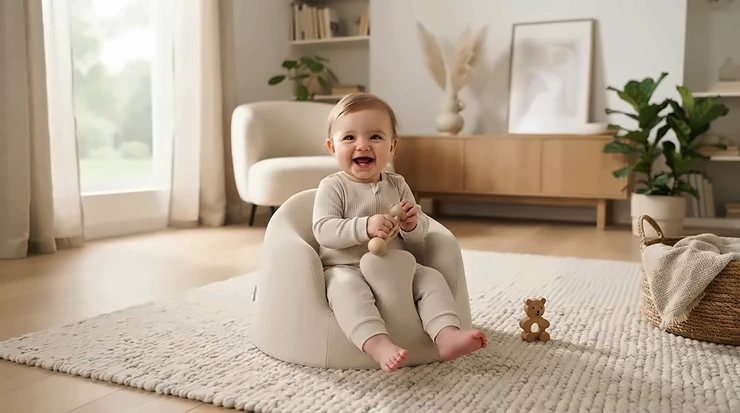
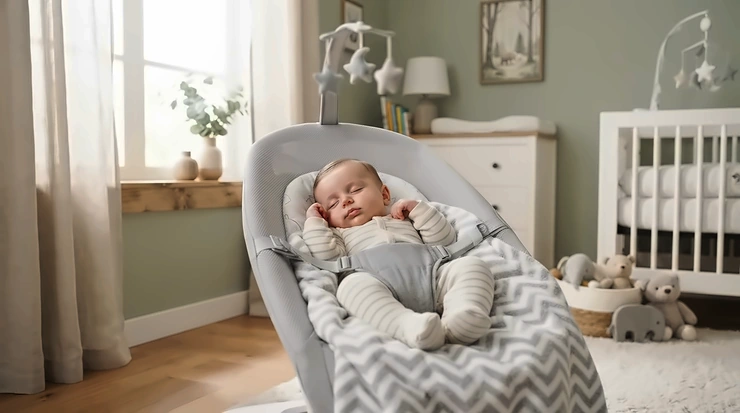
Babies who can sit but not yet stand are who this one is built for. It is the kind of product the AAP names when it recommends stationary centers over wheeled walkers. Babylist’s roundup picks it as the best activity center for most families and lists a 4-month minimum, a 25-pound seat limit, and a baby mode that works around four to six months, once head and core control are solid.
The seat turns 360 degrees, the foot platform adjusts, and the center carries five interactive toys and a discovery window, with 25-plus activities in total and AAA batteries. It later converts to a toddler play station and then a table, though the table chairs are sold separately. BabyGearLab gave it a Top Pick award and 66 points out of 100, praising the table conversion and easy assembly (3 minutes 54 seconds) and noting fewer activities than rivals and no bounce.
Sources disagree on size. BabyGearLab lists a small footprint, while Babylist calls the center fairly large at 31 by 31 by 18.5 inches and notes it doesn’t fold. Measure the corner before ordering. Babylist also cites an occupational therapist who recommends only 10 to 15 minutes a day in any activity center. Some parents there report worn or broken parts, including a plastic base that cracked after years of use.
Retailers Babylist checked show around $150, although one spot in BabyGearLab’s text mentions $100. Check the current price on Amazon.com.
2. VTech Sit-to-Stand Learning Walker — a speed switch for first cruisers
BabyGearLab gave the VTech its Best Value award with 68 points out of 100, behind only the KUB’s 71 in that test. A removable activity panel lets a younger baby play on the floor, and the same panel snaps onto the wheeled frame when the baby is ready to stand behind it. VTech’s manual describes a speed control switch on the two back wheels, and BabyGearLab’s testers found the adjustable brake limits how fast a baby can travel.
The manual adds a detail worth knowing: the panel powers down after about 60 seconds without a button press, and pushing the walker doesn’t wake it. Retailer listings give 9 months to 3 years, a 35-pound limit and two AA batteries.
Pros:
- ✅ Adjustable rear-wheel brake, confirmed by BabyGearLab and the manual
- ✅ Removable panel works as a floor toy before the baby stands
- ✅ Quick assembly, 3 minutes 56 seconds in BabyGearLab’s test
Cons:
- ❌ Loud sounds, per BabyGearLab
- ❌ Crevices that are hard to clean, and an all-plastic build
Floor reports are mixed but useful. A Mumsnet parent with wooden floors says her daughters needed a bit of time to learn to stop it running away and then managed quickly, and a parent on The Bump’s forum says the adjustable wheels worked well on hardwood. VTech sells several sit-to-stand versions, so match the exact name and model number on the listing. Expect around $45 to $50.
3. Fisher-Price Laugh & Learn Smart Stages Learn with Sis Walker — a sit-then-stand option near $35
Price is the reason this walker earns a spot. Babylist’s tracker shows $26.99 at its own store and $34.99 at Amazon and Walmart, Target shows $34.99 online, and another retailer lists it near $40, so around $27 to $40 is the honest range.
It works two ways: a seated activity toy for a baby who sits, then a push walker. Target’s page counts three Smart Stages levels with more than 75 songs, sounds and phrases covering the alphabet, shapes, colors, numbers and Spanish words, plus seven hands-on activities such as light-up piano keys, a roller and a spinner. Walmart’s spec lists a 30-pound maximum load.
Listings disagree in two places. Babylist gives the age as 12 months to 4 years, while Target and Walmart say 6 to 36 months. Battery counts differ too, with Target showing four AA batteries included. None of the pages opened list a speed control for this model, and BabyGearLab’s resistance findings concern the zebra walker, not this one. A 2020 reviewer on Target’s page for the Puppy Walker version of the same toy wished for a brake, so treat it as a walker for a baby who already steps steadily on carpet.
4. Skip Hop Silver Lining Cloud Rainbow Push Toy Walker — a light push toy for steady walkers
Walking steadily is the entry ticket. Skip Hop’s own team told a Target shopper that because this is a push toy and not a walker, the baby should already walk independently, and Babylist’s roundup says it doesn’t support early walkers, which is why it sets the minimum at 12 months.
Balls pop and bounce under a cloud-shaped dome as the baby pushes. The toy measures 15 by 9.25 by 7.5 inches, weighs 1.67 pounds on Target’s page, has an easy-grip handle and wipes clean with a damp cloth. At around $15 to $20 it is the cheapest of the five by a wide margin, well under 35 dollars.
Its weight explains the limits. Babylist describes a good push walker as one with a wide base, adjustable wheel speed and non-slip grips, and no page shows the cloud toy offering those. Parents in the Hellobee thread found featherweight walkers the worst on wood floors, so lay it on carpet or a mat for a child who is still wobbly. Target shows 4.6 stars across 37 reviews, a small sample that includes some promotional reviews.
5. Radio Flyer Classic Walker Wagon — heavy wood with built-in resistance
At around $80 to $100 this is the priciest push walker here, and the weight is what the money buys. The wagon’s solid-wood body weighs 10.41 pounds per Babylist, with a furniture-friendly bumper, a handle 16 inches off the floor and a “resist push” feature that keeps it from moving too quickly. Radio Flyer’s parts page gives a 35-pound limit and an age range of 1 to 4 years.
BabyGearLab named it a Top Pick with 65 points out of 100. Testers liked the durable build and found that foam-filled wheels didn’t slip, and the tensioner can be adjusted or removed as the child gains skill. They also logged 15 minutes 41 seconds of assembly with many parts, a clicking from the brake and a heavy finished product.
Pros:
- ✅ Brake tension that adjusts or comes off entirely
- ✅ Wheels that held their grip in BabyGearLab’s test
- ✅ Room to haul toys, which keeps toddlers interested longer
Cons:
- ❌ Removable wooden sides aren’t very sturdy, a concern for climbers, per Babylist
- ❌ Long assembly and a clicking brake
Babylist’s own page shows 4.8 stars from 333 reviews, which comes from a retailer’s customers. Check current availability on Amazon.com before ordering, since wooden models sell out unevenly.
Baby walkers reviews: what testers and parents keep reporting
Four patterns recur, and each should change what goes in the cart.
Assembly time swings wildly. BabyGearLab’s stopwatch gives 3 minutes 56 seconds for the VTech Sit-to-Stand Learning Walker, 3 minutes 54 seconds for the Skip Hop Explore & More 3-Stage Activity Center and 15 minutes 41 seconds for the Radio Flyer Classic Walker Wagon. A different Radio Flyer model, the Radio Flyer Classic Push & Play, took 25 minutes, and a tester’s unit became unusable after the wheels went on wrong. The site also notes that many walkers use screws long enough to tire hands and forearms. Read the full results in BabyGearLab’s ten-walker test.
Speed control divides the field. Testers and forum parents agree on this one, so it is the firmest finding here. Even a limiter doesn’t end the problem: a parent in a Hellobee thread says the first week was still too fast with a speed limiter on, and she walked behind her baby to slow it.
Material changes the cleaning chore. BabyGearLab calls wood durable but porous and plastic easy to clean but variable in quality, and it faults the VTech’s crevices for catching grime.
Activity centers wear out. Parents quoted by Babylist describe worn or broken parts on the Skip Hop center, and BabyGearLab flags rough toy edges on a competing seat. That makes a used center worth checking part by part.
Baby walkers: how much should you spend?
Babylist’s push-toy picks run from about $15 for the cloud toy to $140 for a designer wooden walker, the Gathre Activity Walker. BabyGearLab’s ten tested walkers span roughly $40 to $200, with the wooden HABA Walker Wagon at the top and the VTech Sit-to-Stand Learning Walker at about half the price of the overall winner. That gap is the lesson: BabyGearLab’s top overall score went to a walker costing about twice as much, by only three points.
Money mostly buys three things: wood instead of plastic, a speed control, and a second life as a wagon, table or ride-on. It does not buy a better start on walking, and the AAP says walkers don’t help babies learn to walk. Batteries are the quiet running cost on electronic panels, since the VTech takes two AA batteries per its listings.
Baby walkers under 35: what that budget buys
Two of the five fit, the Skip Hop Silver Lining Cloud Rainbow Push Toy Walker and, at Babylist’s and Target’s prices, the Fisher-Price Laugh & Learn Smart Stages Learn with Sis Walker. One is a simple push toy and the other adds activities and a sit-and-play mode, with neither offering a documented speed control.
Don’t confuse the dollar figure with the weight figure: 35 pounds is the limit printed for the VTech and the Radio Flyer wagon. Secondhand is the other route below $35, and it carries a trap. PopSci’s coverage of walker injuries notes that families pass walkers around, so older defective models are still out there, and CPSC’s rule applies the current standard to walkers made on or after February 25, 2023. Look for the date of manufacture on the label, which CPSC says must be permanently affixed, and run the model number through CPSC’s recall list.
Floors, ages and labels: quick answers before you order
❓ Are baby walkers safe for babies?
✅ Not the kind with a seat and wheels. The AAP says those are never safe, even with an adult close by, and has called for a ban on selling them. Push toys and wheel-free centers are separate products, and both still need supervision away from stairs.
❓ What age is right for a push walker?
✅ Babylist puts readiness around 9 to 10 months, once a baby pulls up and cruises along furniture, with most children using push walkers until they walk confidently at 12 to 15 months. Listings vary from 6 months to 12 months and up, so check each box.
❓ Do baby walkers help babies walk sooner?
✅ The AAP says they don't and can even delay walking. A pediatric emergency physician quoted by Babylist says walkers can disrupt the usual progression to walking. The AAP lists play yards, high chairs and stationary activity centers as alternatives for safe playtime.
❓ Do push walkers work on hardwood or tile floors?
✅ They can, but speed is the issue. Babylist says push walkers work best on flat, firm floors such as hardwood or low-pile carpet, and several forum parents report fast rolling on wood at first. Start on the tightest resistance setting and stay beside the baby.
❓ What safety label should a walker carry?
✅ Walkers sold in the US must meet CPSC's rule at 16 CFR part 1216, which uses ASTM F977, and carry the maker's name, a model number and a manufacture date. For secondhand walkers, check that date and the model number against CPSC's recall list.
Which of the five to buy first
Pick by what your baby does today, not by the age printed on the box. A baby who sits but doesn’t stand belongs in the Skip Hop Explore & More 3-Stage Activity Center. A cruiser belongs behind the VTech Sit-to-Stand Learning Walker on its tightest setting. A steady walker on a tight budget can have the Skip Hop Silver Lining Cloud Rainbow Push Toy Walker or the Fisher-Price Laugh & Learn Smart Stages Learn with Sis Walker, and the Radio Flyer Classic Walker Wagon is the one to buy once and keep using into the toddler years.
Among all baby walkers, skip anything with a seat and wheels, keep every model away from stairs, and watch the first week closely. Check current availability below, then confirm the age range and weight limit on the listing before you order.
Recommended for You
- High chairs: 6 Models Worth Paying For (2027)
- Kids playhouses: 6 Picks Worth the Yard Space (2027)
- Kids play tents: 6 Picks Worth Setting Up (2027)
Walk your floors and stair gates first, then add the walker that matches the stage your baby is in today. 🚼