As an Amazon Associate I earn from qualifying purchases. Links in this article may be affiliate links. How we choose gear
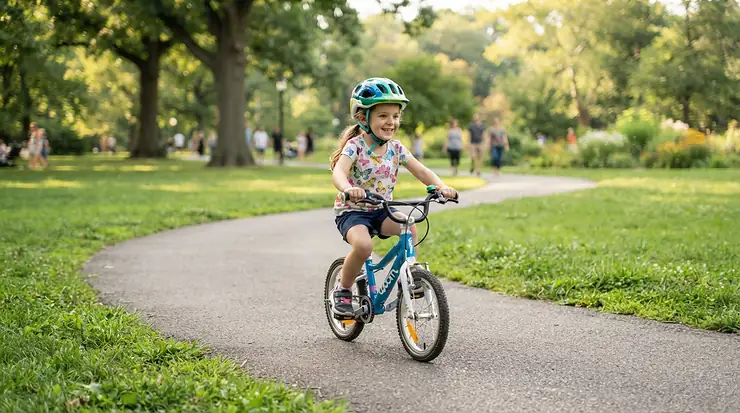
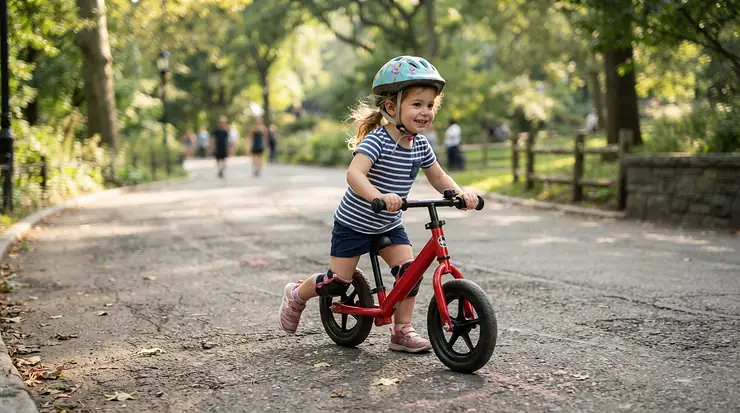
Shopping for balance bikes in 2027 mostly comes down to one verdict: the Strider 12 Sport fits the widest spread of toddler legs among the 12-inch bikes here, the woom GO 1 suits the smallest riders and adds a hand brake, and anything under about $60 asks you to give something up. Fit drives all of it. A balance bike is sized by the gap between seat and floor, and a child whose feet can’t lie flat on the ground won’t scoot, glide or stop with confidence.
Two Wheeling Tots, BabyGearLab and Rascal Rides did the hands-on testing; this guide reads their results beside maker spec pages and parent comments on woom’s own product page, so any remark about how a bike feels belongs to a named reviewer. Prices are ranges drawn from maker and retailer pages, and the current figure on Amazon.com may differ.
Five bikes follow, each tied to a household: a family passing one frame between siblings, a parent with a very small rider, a shopper who wants two wheels cheaply, the parent of a one-year-old who needs something for the living room, and the parent of a tall preschooler eyeing pedals.
Inseam, weight and tires: how balance bikes for toddlers really differ
Start with the floor. Radio Flyer’s sizing guide measures inseam by holding a book between the child’s legs like a seat and reading the height from the floor, then says the bike’s lowest seat setting should sit at least half an inch below that number. Early Rider’s guide looks for about an inch. Strider offers a visual test instead: feet flat on the ground with a slight bend in the knees. Radio Flyer pairs an 11 to 14 inch inseam with 10 to 13 inch seats for roughly 18 months to 3 years, and a 14 to 17 inch inseam with 12 to 15 inch seats for about 2 to 5 years. Age is the loose guide; inseam is the tight one.
Weight comes second. Take a hypothetical 26-pound toddler: the 6.4-pound woom GO 1 is about 25% of body weight, the 6.7-pound Strider 12 Sport about 26%, and the Retrospec Cub, at the 9.3 pounds BabyGearLab recorded, about 36% (my arithmetic). BabyGearLab notes that lighter bikes are easier for small children to lift after a tumble.
Tires and brakes split the field. The buying tips at Two Wheeling Tots say air tires beat foam for cushioning and traction off pavement, while foam avoids flats and works fine on smooth neighborhood streets. The same page calls hand brakes optional but recommended, since children first learn to stop with their feet, and says four-wheeled baby balance bikes can’t teach balance. It adds that balance bikes aren’t required to meet the standard bicycle safety rules, which is a reason to be careful with unfamiliar budget brands.
Seat height, weight and tires across the five picks
| Model | Seat height | Weight | Tires | Brake | Price range |
|---|---|---|---|---|---|
| Strider 12 Sport | 11–17 in per Strider (retailers list up to 19) | 6.7 lb | Foam | None | $140 to $170 |
| woom GO 1 | About 10–14 in | 6.4 lb | Air | Rear hand brake | Around $250 |
| Retrospec Cub | About 11.5–15.5 in | 7.0 to 9.3 lb, sources differ | Foam | None | Around $60 to $70 |
| Retrospec Cricket | About 8.5 in, fixed | Not listed | Four non-marking wheels | None | $40 to $50 |
| Strider 14x Sport | 15–22 in (one chart says 16–23) | 12.5 lb | Air | None (coaster in pedal mode) | Around $220 to $230 |
The woom GO 1 is the only bike here that pairs air tires with a brake, and its lowest seat sits closest to the floor. The Strider 12 Sport and Retrospec Cub share foam tires and no brake, so the seat range and the weight dispute decide between them. The Strider 14x Sport is the outlier at 12.5 pounds, aimed by Two Wheeling Tots at four- and five-year-olds with a 17 to 20 inch inseam.
Measure the inseam first, then read the seat-height column.
The best balance bikes for five different households
Each entry starts from a household and works back to a bike.
1. Strider 12 Sport — one frame for several kids
Hand-me-downs are the situation this bike was built around. Strider’s own teaching page lists a seat range of 11 to 17 inches, a handlebar range of 18 to 22 inches, a weight of about 6.7 pounds and a steel frame, for children of roughly 1 to 4 years. Retailers such as Sports Basement list the seat range as 11 to 19 inches with an extra-long seatpost in the box and a 60-pound rider limit, while BabyGearLab measured 10.7 to 15.5 inches on its sample. Three sources, three figures, so read the label on the bike you actually buy.
Foam tires mean no pump and no flats, which suits a family that leaves bikes by the garage door. Two Wheeling Tots found the trade-off: foam loses traction compared with air on loose dirt, gravel and smooth gym or wood floors, and it doesn’t soak up a curb the way air does. The same review recommends the Sport for sharing between siblings, notes that replacement parts are easy to find, and warns the steel frame can rust over time, which matters if the bike lives outdoors. BabyGearLab weighed it at 6.9 pounds, rated its build quality 8 out of 10, liked the softer seat and padded handlebar, and needed an Allen wrench for setup. Baby Bargains put toddlers on nine bikes and named the 12 Sport the best bet for most families with two-year-olds.
There is no hand brake. Strider’s position is that stopping with the feet is the safest and most intuitive method at this age, while Two Wheeling Tots would like a brake as speeds rise; both views are fair. Across Strider’s page, Two Wheeling Tots and retail listings, the price lands between roughly $140 and $170.
2. woom GO 1 — a hand brake for the smallest riders
Around $250 is a lot to spend on something a child may outgrow by age three, and this is the bike where that money buys something specific. woom’s size chart gives the woom GO 1 an inseam range of 10 to 14.4 inches, the lowest seat of the five picks, on an aluminum frame that weighs 6.4 pounds, with a steering limiter and a green rear hand brake. The brand says it fits ages 1.5 to 3.5 and offers 30-day returns on its US page. Two Wheeling Tots calls it the lightest bike it covers that combines air tires with a hand brake, and praises the build quality.
Size is the sticking point. One parent on woom’s UK product page reports that the woom 1 was too small for a 3-year-old, with the fixed handlebar too low and weight pitching onto the front wheel; woom replied that a child who can stand flat-footed on a larger bike should size up. The next size is the woom GO 1 Plus, with a 14.8 to 18.5 inch inseam range. Two Wheeling Tots makes the same point, noting that most kids outgrow the GO 1 in 3T clothes. One parent plus one reviewer is thin evidence, but treat the 1.5 to 3.5 year range as a ceiling rather than a guarantee. woom’s US page also shows an average of 4.80 across 37 reviews, a maker-hosted tally rather than an independent one.
Pros:
- ✅ Air tires and a rear hand brake at about 6.4 pounds
- ✅ Seat starts near 10 inches for very short legs
- ✅ 30-day returns on woom’s US page
Cons:
- ❌ Around $250 is the highest price among the 12-inch picks
- ❌ Taller toddlers may outgrow it early, per one parent and Two Wheeling Tots
3. Retrospec Cub — two wheels without the premium price
Weight is the number to argue about with this one. Two Wheeling Tots lists 7.0 pounds, Rascal Rides lists 9.2 and BabyGearLab recorded 9.3, so treat the lighter figure cautiously; on the 26-pound example above, 9.3 pounds pushes the bike past a third of body weight. Most listings put the seat between roughly 11.5 and 15.5 inches (Rascal Rides says 12 to 16.5), with foam tires and no brake.
Owners and testers agree more on build than on weight. Rascal Rides reports the frame stood up to plenty of abuse with only paint scratches. Two Wheeling Tots likes the tool-free seat and handlebar adjustment, the long wheelbase and the plush seat, but says the quick-release clamps don’t hold as tight as it would like. BabyGearLab found slight wheel wobble and easily scuffed white accents, and gave the Cub the most substantial footrest of the bikes it tested. That footrest matters once a child starts coasting.
Two Wheeling Tots lists the price around $60 to $70, which makes it the cheapest two-wheeler in this guide with a decent track record. Air tires and a brake come only on the Retrospec Cub Plus, a separate and heavier model.
4. Retrospec Cricket — a floor-level starter under $50
A one-year-old still cruising between sofa and kitchen is the rider this one is built for. Retrospec’s page lists four non-marking wheels, a 12 to 24 month age range, a fixed seat about 8.5 inches high, fixed handlebars around 14 inches and a 44-pound limit, with advice to ride on smooth, clean surfaces under close adult supervision. The price on that page runs between $40 and $50 depending on the sale.
This is a different animal from the two-wheelers above. Two Wheeling Tots argues that four-wheeled designs can’t teach balance, while Rascal Rides credits the design with a little balance-bike feel and a steering limiter that stops over-rotation, but warns that the rear pair of wheels may make the later jump to a single rear wheel less seamless. Rascal Rides’ hands-on review covers the Retrospec Cricket 2, a version name that Ace Hardware lists at a higher price than Retrospec’s Cricket page, so treat its notes as close-cousin evidence. Its older toddler, under the weight limit, rode it only a few times and bound the back wheel slightly; the reviewer also found the frame long enough that the youngest kids struggled to climb on alone, and said the wheels aren’t built for outdoor use.
The fixed seat gives the Retrospec Cricket a short life, roughly the months between first steps and a first real balance bike.
5. Strider 14x Sport — a taller frame that can take pedals
Tall four- and five-year-olds are the audience, and the numbers show why. Two Wheeling Tots lists a 15 to 22 inch seat range and 17 to 20 inch inseams, GearJunkie’s chart lists 16 to 23 inches and ages 3 to 7, and the weight is 12.5 pounds, nearly double the 12-inch bikes. Air tires come standard, and the price lands around $220 to $230 across those two sources.
The pedal option is where opinions split. Strider sells a pedal kit that Two Wheeling Tots lists at about $90 and describes as a stopgap, since the crank arms are short and kids over five find them awkward; the coaster brake only works in pedal mode. That site rates the bike Recommended with Reservations and notes that a child who masters pedaling on a 14-inch frame usually needs a 16-inch pedal bike next, which limits how long the conversion pays off. BabyGearLab’s closely related Strider convertible, listed as the Strider Balance Bike – Pedal, weighed 12.3 pounds with a 14 to 21 inch seat range, went together in about three minutes and won its transition-bike award, though testers called it tall, heavy and possibly too big for younger riders. Retrospec’s own comparison page concedes the Strider 14x Sport is worth it if you want pedal conversion built in.
Riders who want a hand brake on a larger frame can look at the woom GO 1 Plus, which Two Wheeling Tots lists at around $300 with dual hand brakes, a 14.4 to 17 inch seat and a weight of 9.6 pounds.
Pros:
- ✅ Air tires and a seat range reaching about 22 inches
- ✅ Optional pedal kit for a balance-to-pedal path
- ✅ About three minutes to assemble in BabyGearLab’s convertible test
Cons:
- ❌ No hand brake; coaster brake only in pedal mode
- ❌ 12.5 pounds is heavy for a younger or smaller rider
- ❌ Two Wheeling Tots calls the pedal setup a stopgap
What balance bikes reviews disagree about
Three disputes recur across the pages behind this guide. The first is foam versus air. Two Wheeling Tots prefers air for traction and cushioning, yet it still recommends the foam-tired Strider for smooth neighborhoods and shared bikes, and Strider’s own page stresses that its foam wheels never go flat.
The second is whether a pricier bike pays off. Two Wheeling Tots says a Strider is absolutely worth choosing over cheaper Amazon models if it fits the budget, especially across several kids. In a Mumsnet thread on the same question, one parent says their son hardly touched an expensive bike, while another says a quality bike held its value and could be resold. Two replies prove little, but they show the case for paying more rests on a second rider or a resale.
The third is plain arithmetic: listings contradict one another on weight and seat height. The Retrospec Cub is reported at 7.0 and 9.3 pounds, and the Strider 14x Sport at 15 to 22 and 16 to 23 inches. Where numbers matter for fit, favor the one a tester measured.
Balance bike under $50: what the money does and doesn’t buy
Two Wheeling Tots’ budget coverage stops at about $60. Its review of the Swagtron K3, since discontinued, called that bike the only air-tired balance bike at $60 or less, and it describes the GOMO as often under $60, with quick-release handlebar and seat post, a footrest, foam tires and an 8.5-pound weight. It names nothing below $50. BabyGearLab measured the GOMO at 8.4 pounds with a seat range of 11.5 to 15.5 inches and noted slight wheel wobble.
Below that line the evidence gets worse. BabyGearLab scored the JOYSTAR Roller 32 and the JOYSTAR Marcher 34, its two lowest results, citing wheel and handlebar play and assembly that starts from many loose parts. BikeRide’s summary of the Roller says numerous buyers report grips ripping after a few uses. Two Wheeling Tots adds a structural point: the Swagtron K3 was rated to 55 pounds, the toy standard, whereas higher-end models are rated to bike standards above 100 pounds.
The honest sub-$50 option is the Retrospec Cricket, which is cheap because it is a different product: four wheels, a fixed seat and a 12 to 24 month window. If spare dollars exist, the better first purchase is a helmet, the one accessory with a federal rule behind it; the CPSC bicycle helmet standard as posted by helmets.org makes it a prohibited act to sell a noncompliant bicycle helmet.
Balance bike how to use: set the seat, then let them walk it
The method is short, and these steps draw on Strider’s teaching page, Radio Flyer’s sizing guide and the Cycling UK balance bike walkthrough.
- Measure the inseam barefoot with the book method, and pick a bike whose lowest seat setting is at least half an inch below it.
- Set the seat. Strider suggests a few inches below the crotch to start, then adjusting until feet are flat with a slight bend in the knees.
- Fit the helmet before anything else. Cycling UK’s steps open with a helmet that covers the forehead, with snug straps.
- Walk the bike. Cycling UK has children stop simply by stopping their walking, and Strider says tiptoe steps, slow steps and pushing the bike instead of sitting are normal early on.
- Scoot, then glide. Cycling UK suggests a very gentle slope and the cue “push, push, glide” to encourage longer coasts; Strider recommends gentle hills for building the speed needed to reach the footrests.
- Keep sessions short. Cycling UK says a toddler can manage about half an hour, so stop before tiredness or hunger sets in, and avoid Crocs or flip-flops because toddlers drag their feet to slow down.
- Add steering and braking only after gliding is solid, and move to pedals when the child glides, holds balance over longer stretches and steers with confidence, which Radio Flyer lists as the readiness signs.
Balance bike 2027: what changed and what hasn’t
The pages behind this guide describe 2026 listings, and none of the makers covered had published a 2027 version of these bikes at the time of reading, so the bikes above are the ones to compare. The most notable recent change is lighter frames. Two Wheeling Tots’ Strider review covers the Strider 12 Comp, a nylon-composite version at 5.0 pounds with four fixed seat positions between 11 and 15 inches, fixed handlebars, a 45-pound limit and a price near $139. The same review says the Comp suits sharing less well than the Sport because of its limited adjustment, and that its nylon grips scratch when dropped. The frame won’t rust, but the wheel bearings still can.
Ages, brakes, helmets and the move to pedals
❓ What age should a child start on a balance bike?
✅ Sources such as Radio Flyer and Two Wheeling Tots put the start near 18 months, but inseam is the better test. Radio Flyer pairs an 11 to 14 inch inseam with 10 to 13 inch seats and roughly 18 months to 3 years. Measure before you buy.
❓ Are balance bikes better than training wheels?
✅ Cycling UK says a child who has used a balance bike regularly, typically until around age four, has learned to balance, steer and brake, which makes the move to a pedal bike without stabilisers fairly straightforward. It does not rank the two methods.
❓ Does a balance bike need a hand brake?
✅ Not at the start. Two Wheeling Tots calls hand brakes optional but recommended, noting that kids first stop with their feet, while Strider's 12-inch bikes have none and treat foot stopping as the safest and most intuitive method. A brake matters more as riders get faster and older.
❓ Should a toddler wear a helmet on a balance bike?
✅ Cycling UK's walkthrough starts with fitting a helmet that covers the forehead, with snug straps. In the US, look for the CPSC label inside; the federal rule marks helmets for ages one and up as Extended Head Coverage. Rules on helmet use vary by state.
❓ When should a child move to a pedal bike?
✅ Two Wheeling Tots says there is no rush at three, four or even five, and less coordinated kids often stay on balance bikes longer. A child who masters pedaling on a 14-inch balance bike usually needs a 16-inch pedal bike next.
Which balance bike to buy
Pick by the number on the tape measure, not the age on the box. A child with a 10 to 14 inch inseam and a budget that stretches to about $250 gets the most from the woom GO 1; for most other households, the Strider 12 Sport covers more growth between roughly $140 and $170. The Retrospec Cub works when two wheels matter more than weight, the Retrospec Cricket is a floor-level starter for a one-year-old, and the Strider 14x Sport is for tall preschoolers who may try pedals. Whichever of these balance bikes you choose, set the seat so both feet lie flat, add a properly labeled helmet and keep sessions short.
Compare the seat range with your child’s inseam before you click.
Recommended for You
- Indoor trampolines: Which Suits Your Floor Space?
- Playground slides: Which Size Suits Your Yard?
- Kids bike helmets — Matching a Helmet to the Rider
Measure your child’s inseam tonight and the shortlist narrows itself.