As an Amazon Associate I earn from qualifying purchases. Links in this article may be affiliate links. How we choose gear
USDA tells families to discard perishable food that sits in the 40°F to 140°F Danger Zone for more than two hours, and no lid design changes that clock. That is the odd thing about kids snack containers: most shopping advice fixates on spill-proof flaps and latch colors, while USDA’s back-to-school guidance says children under five are more likely to get seriously sick from foodborne illness and puts cold packs and insulated bags at the center. For 2027, this guide treats the container as one piece of a short routine, then names three snack cups and boxes that each fix one piece of it, from a toddler’s cup-holder cup to a school backpack box.
No container was handled for this guide. The comments on lids, leaks and washing come from BabyGearLab and Reviewed testers, the makers’ own pages, and reviewers on retailer listings, each named where they appear.
Match the container to the child, the snack, and the clock
Five moves organize everything below, and none of them costs more than a minute at the counter.
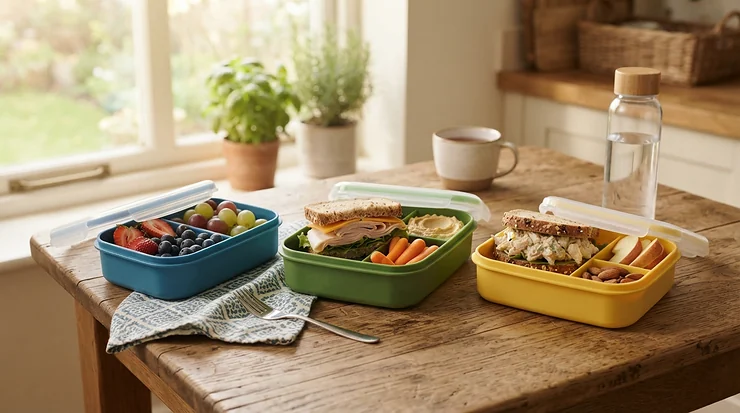
- Size the container to one portion, not to an age. Product pages span a wide range: Munchkin lists its Snack Catcher at up to 9 ounces, Bentgo splits a 12-ounce box into an 8-ounce and a 4-ounce side, and a parenting blog’s favorite glass jars come in 4-ounce and 8-ounce sizes. Pour your child’s usual snack into a measuring cup once, note the ounces, and shop for that number. Reviewers disagree on what counts as roomy: one retail reviewer calls the Bentgo box small, while another says its compartments hold more than the box suggests.
- Hand the lid to the child before trusting the age label. Reviewed’s testers found the Thermos-style lid on the OmieBox defeated a 3½-year-old working alone while a 5-year-old managed it easily, and that most toddlers needed help with the small lidded cup on the Skip Hop Spark Style kit. Ten seconds of watching your own child try a lid is better data than any age range printed on the packaging.
- Decide wet or dry, then treat the word leakproof with suspicion. Consumer Reports, as summarized by Quartz, rated silicone seals the weakest of the materials it tested, found stainless steel mixed and glass strongest, and judged leaks by jostling water-filled containers. Reviewed’s tester would not pack juicy berries beside a sandwich in the gasketed OmieBox without extra protection. A home version costs nothing: fill the container with water, close it, and shake it over the sink before it goes near a backpack.
- Plan the cold chain separately from the box. USDA’s advice is an insulated lunch box with two cold sources, such as gel packs or a frozen juice box or water bottle, to keep perishable food below 40°F, and it warns that paper bags tear and leak as cold items thaw. Yogurt and deli-meat sandwiches sit on USDA’s perishable list, while non-perishable foods stay safe past lunchtime. A snack container holds food; it does not chill it.
- Wash it like the seal matters. USDA says to clean and sanitize lunch boxes regularly and to discard containers that held raw meat or poultry. On the testing side, Reviewed’s tester found the removable gasket on the OmieBox adds hard-to-clean spots, and BabyGearLab’s testers called the many-part Ubbi Tweat hard to assemble and clean. A silicone seal that stretches or tears, which some users told BabyGearLab about the Boon SNUG, has stopped doing its job.
Kids snack containers with lids: what each closure asks of small hands
Soft-flap snack catchers solve the reaching problem rather than the carrying problem. BabyGearLab’s testers ran car-ride, walk and shake tests with a 2-year-old and found real spread: the Boon SNUG‘s narrow slit showed no spills, the stainless Munchkin Snack+ let pieces out when shaken hard, and the BraveJusticeKidsCo Snack Attack was not fully spill-proof. Spill resistance, in other words, depends on the flap design, not on the category name.
A latch trades flaps for a hinge. It keeps wet and dry foods apart, but it asks the child to press, lift and re-close. Bentgo presents its single latch as workable from age 3, and reviewers on retailer listings describe preschoolers and even a 2-year-old opening it. Reviewed’s tester had a harder time with a sibling line, finding the Bentgo Kids Prints lid had to be pulled forward to close properly, which small fingers struggled with.
Plain snap lids give up leak control for simplicity. Reviewed’s tester noted the LunchBots Large Trio has no grip point, so kids brace the box against themselves to pry it open, and its lid is not attached, so it can be left behind. Retail reviewers of the smaller LunchBots Medium Trio II and LunchBots Medium Duo report that a preschooler may need help and that a 6-year-old needed practice.
Plastic, stainless, glass or silicone: what the sources say
Material debates get loud, so start with what the regulator says. FDA’s page records that in July 2012 it stopped allowing BPA-based polycarbonate in baby bottles and sippy cups, describes that change as a recognition that makers had abandoned the use rather than a safety finding, and states its current view that BPA is safe at the levels occurring in foods. FDA’s BPA page was last updated in April 2023.
Consumer Reports takes a harder line on plastic chemicals in food generally: testing 85 packaged foods, it found bisphenols in 79% and phthalates in all but one, and said regulators’ limits do not reflect current science. That investigation concerns food, not snack boxes, so it does not rank containers.
Without settling that debate, the practical differences are easier to see. Stainless steel can dent, according to BabyGearLab’s note on the Munchkin Snack+, and the LunchBots examples below are not leakproof. Silicone seals were Consumer Reports’ weakest category. Glass can crack: the author of a parenting blog reports two years of use with no breakage from the WeeSprout Glass Baby Food Storage Jars, which is one voice, while some retail reviewers report cracks after warming the jars in a bottle warmer. Among plastic options, Bentgo’s specifications go beyond a BPA-free label to list no vinyl, lead or PVC either.
Kids snack containers for school: cold snacks, clean boxes, and a quick policy check
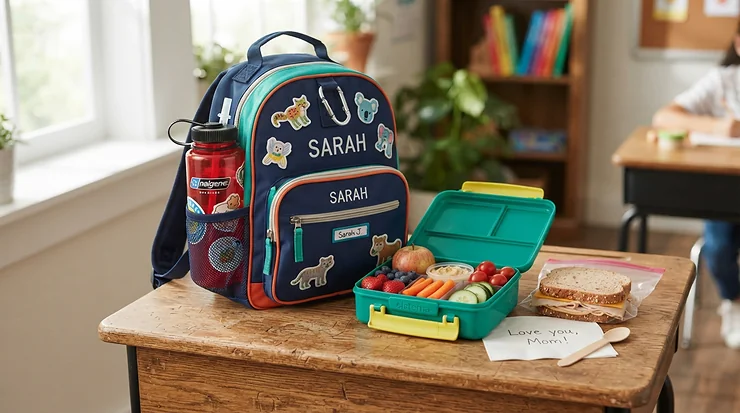
Take a hypothetical 7:30 a.m. pack-up and a 10:00 a.m. snack time. That is two and a half hours, already past USDA’s two-hour mark for perishable food, so a yogurt cup or cheese snack needs the two cold sources while a sleeve of crackers does not. The container’s job in that scenario is separating foods and surviving the backpack; the cold packs do the safety work.
Check your school’s or daycare’s rules on allergens and refrigerator access before buying matching boxes, since those policies are set locally. Then decide who washes what: a box that needs hand-washing every evening, such as one with a removable gasket, adds a chore, and USDA’s advice to clean lunch boxes regularly only helps if the box is easy enough to clean.
Kids snack containers reviews: what the ratings can and can’t tell you
Rating counts differ wildly, and small samples swing. Walmart’s listing for the Bentgo Kids Snack Container shows 4.7 stars across 327 ratings. For the Munchkin Snack Catcher, Walmart shows 4.8 stars on 38 ratings and a grocer’s page shows 4.9 across 28 reviews, while a Kohl’s page shows 1.0 from just two reviews, too small a sample to conclude anything.
The written reviews carry more information than the scores. Reviewers on retailer pages praise the Bentgo box for keeping yogurt from soaking crackers, yet another reports that a little liquid can pass between compartments and ruled yogurt out, and a third says the clip broke once and was repairable. That split is why the water test in step three is worth ten seconds.
The best kids snack containers for school and daycare, matched to the method
Each pick below answers one of the five moves above: reach-in access for the youngest eaters, a latch for a backpack that may carry something wet, and stainless steel for dry snacks that need to last.
| Model | Capacity | Material | Closure | Leak statement | Cleaning | Age listed |
|---|---|---|---|---|---|---|
| Munchkin Snack Catcher | Up to 9 oz | BPA-free; silicone flaps | Twist-on lid with soft flaps | Flaps limit spills; no leak-proof claim | Top rack dishwasher, per a grocer’s listing | 12 months and up |
| Bentgo Kids Snack Container | 12 oz (8 oz + 4 oz) | Food-safe materials, silicone seal | Single latch | Maker says leak-proof | Tray dishwasher safe; outer shell and seal not addressed | 3 and up |
| LunchBots Medium Trio II | Three compartments, 6 x 5 x 1.75 in | 18/8 stainless steel, BPA-free lid covers | Snap lid | Not leak proof; dry foods only | Dishwasher-safe | Not listed |
Leak tolerance separates these three more than capacity does. Bentgo is the only maker claiming leak-proof performance, Munchkin sidesteps the question with flaps, and LunchBots tells buyers outright to keep it dry. Before ordering, compare each listing’s care notes with how you actually wash lunch gear.
1. Munchkin Snack Catcher — reach-in flaps for toddler hands
Car-seat snacking is the scenario this cup was built around. Munchkin lists the Munchkin Snack Catcher for children 12 months and up, with room for up to 9 ounces, a twist-on lid with soft silicone flaps, and a body that fits most standard cup holders. The author of Yummy Toddler Food calls it the only spill-proof snack cup used regularly, a long-run verdict from one parenting site rather than a lab result.
BabyGearLab’s shake tests are a useful counterweight, though they covered the stainless Munchkin Snack+, a different product: its pliable flaps let pieces out when shaken hard and its screw-top lid was tricky to line up. Treat that as a reason to close any flap cup fully and carry it upright. A grocer’s listing for the cup adds two cautions, cut food appropriately to reduce choking risk and wash before first use.
Retail pages put a single cup between about $3 and $7 depending on pack size, though the current price on Amazon.com may differ.
2. Bentgo Kids Snack Container — latch lid for backpack days
Wet snacks are where most small containers give up, and Bentgo’s pitch is that this one does not. Its page lists a 12-ounce box split into a 1-cup and a ½-cup compartment, measuring 6 by 4.15 by 2.1 inches and weighing 7.5 ounces, with a single latch for ages 3 and up and a silicone seal. Bentgo says the materials contain no BPA, vinyl, lead or PVC, that the tray is dishwasher safe, and that the container is microwave, fridge and freezer safe. The page gives no care instructions for the seal or the outer shell.
Owner reports fill that gap. One reviewer on a retailer listing puts the inner insert in the dishwasher and hand-washes the outer container to protect the seal, and others describe two to three years of use with scratches inside but no leaks. One reviewer, by contrast, says a little liquid passes through when yogurt is packed.
Pros:
- ✅ Two compartments keep a dry snack apart from a wet one
- ✅ Single latch aimed at ages 3 and up
- ✅ Tray listed as dishwasher safe
Cons:
- ❌ Outer shell and seal care are not spelled out on Bentgo’s page
- ❌ Fixed compartment sizes; one reviewer found the box small
Bentgo’s own page lists it at around $18 to $20, and Amazon.com pricing may differ.
3. LunchBots Medium Trio II — stainless steel for dry snacks only
The retailer listing pairs a lifetime warranty with an honest limit: it states the box is not leak proof and recommends dry foods only. The LunchBots Medium Trio II measures 6 by 5 by 1.75 inches, has three compartments, an 18/8 stainless steel interior and lid with BPA-free lid covers, and is described as dishwasher-safe and sized for a half sandwich plus two small sides.
Reviewed tested the larger LunchBots Large Trio and named it the best stainless-steel lunch box it tried for ages 5 and up, praising its durability while docking it for price, no leakproofing, soldered divider edges that trap particles, and a lid that is not attached. Those notes apply to the larger model, but divider edges are worth inspecting on any divided steel box. A retail reviewer of the Medium Trio II says opening it was tough for a little one working alone.
Check the current price on Amazon.com.
Quick answers on size, leaks, and the dishwasher
❓ What size should a kids' snack container be?
✅ Match one portion of the snack your child actually eats. Containers covered here run from 9 to 12 ounces, and small jars used by parent bloggers start at 4 ounces. Pour a typical snack into a measuring cup once, note the ounces, and shop for that number.
❓ Are stainless steel snack containers leakproof?
✅ Usually not. One stainless brand's retailer listing says its three-compartment box is not leak proof and should carry dry foods only, and Reviewed's tester said the same of a larger model. A blogger who tried steel cups with silicone lids would only call them leak-resistant.
❓ Do kids' snack boxes go in the dishwasher?
✅ Check each part. Bentgo says the tray of its snack container is dishwasher safe but does not address the outer shell or seal, a grocer lists Munchkin's snack cup as top rack only, and LunchBots says its steel boxes are dishwasher safe. Hand-wash seals when unsure.
❓ How do you keep yogurt or cheese safe in a school snack container?
✅ A container will not chill food. USDA recommends an insulated lunch box with two cold sources, such as gel packs or a frozen juice box, to keep perishable food below 40°F, and says to discard perishable food kept in the Danger Zone over two hours.
❓ Is BPA-free plastic good enough for kids' snack boxes?
✅ FDA calls BPA safe at current levels in foods, and says its 2012 rule on baby bottles and sippy cups reflected industry abandoning the use, not a safety finding. Consumer Reports has flagged related plastic chemicals in packaged foods, so glass or stainless are alternatives with trade-offs.
Start with the lid, then the snack
Choosing kids snack containers comes down to three decisions in this order: whether the child can open the lid alone, whether the snack is wet or dry, and whether anything in the box needs to stay cold. A toddler eating in a car seat points to the Munchkin Snack Catcher. A school backpack that might carry yogurt or fruit points to the Bentgo Kids Snack Container, with the water test as a safeguard. Dry snacks and a long warranty point to the LunchBots Medium Trio II.
Whichever you pick, pair perishable snacks with two cold sources and wash the seal as often as the box. Containers vary less in safety than in how well they fit your child’s hands and your evening routine, so read each listing’s care notes on Amazon.com, starting with how the lid and seal should be cleaned.
Recommended for You
- Playsets for older kids: The 6 Worth Buying Right Now
- Kids backpacks: Size Them Right, Then Pick the Pack
- Kids playhouse swing set and slide: Simple Method and the Gear for It
Before you order, check that the exact model name and lid style on the page match the ones above, since sister models in these lines behave differently. 🍎