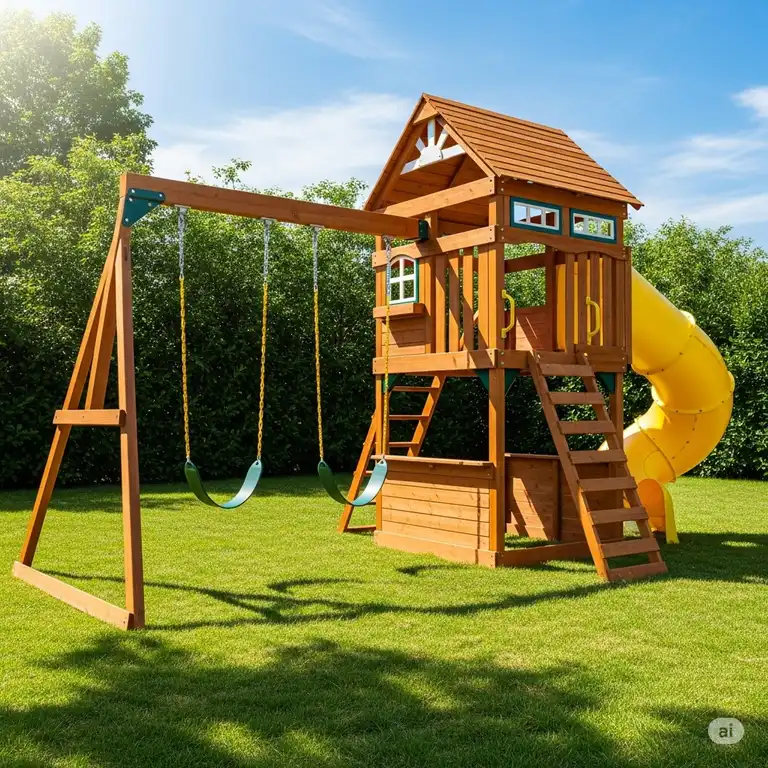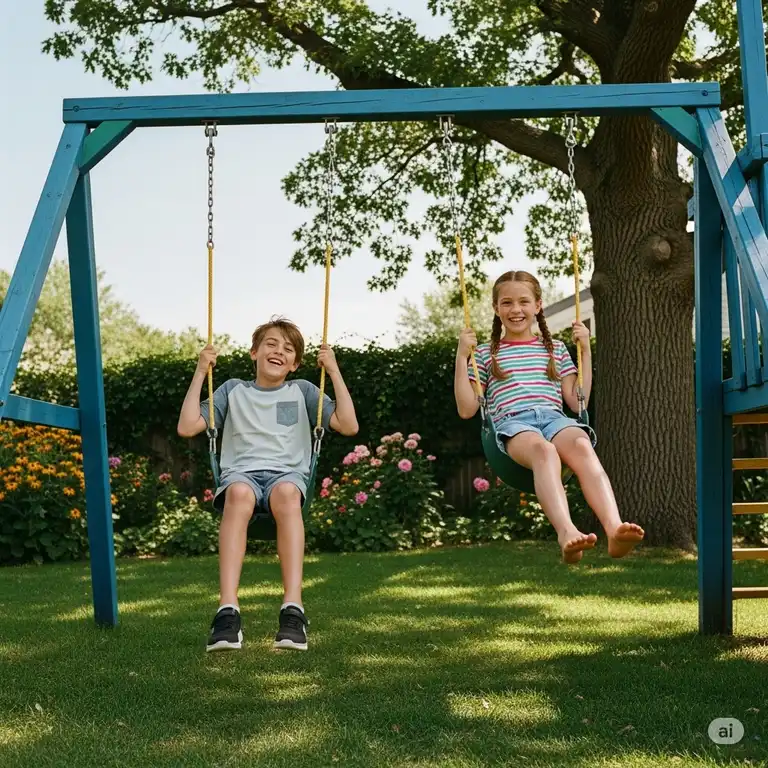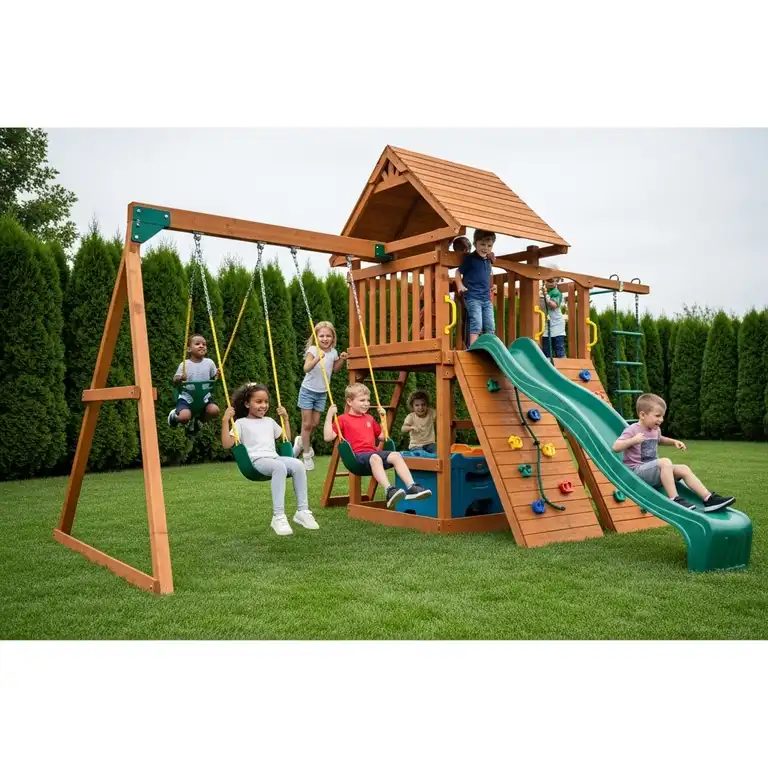
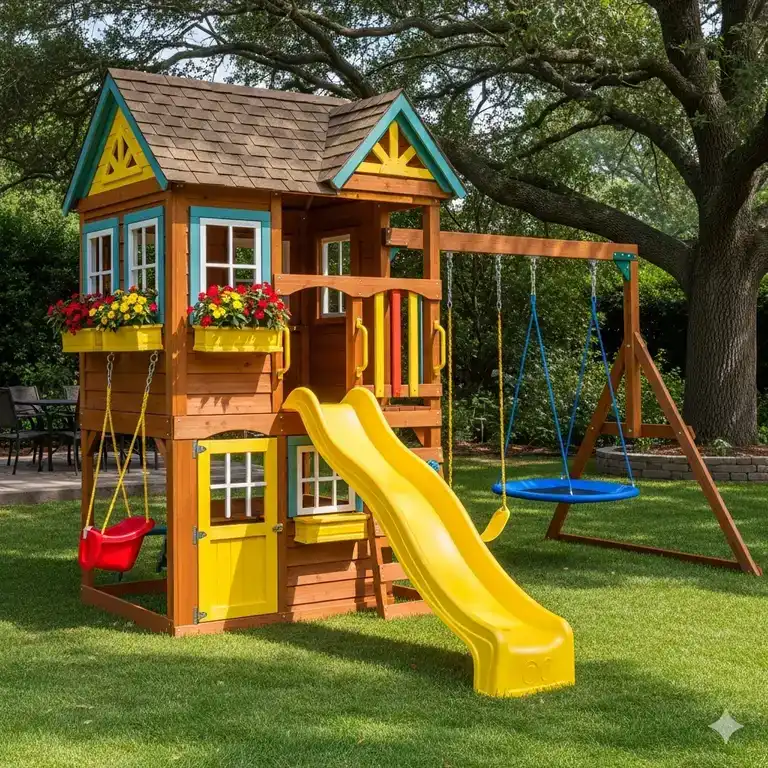
Creating magical childhood memories often starts with the perfect outdoor play environment. Moreover, when you combine a playhouse, slide, and swing into one comprehensive set, you’re giving your children a versatile playground that encourages imagination, physical activity, and endless hours of fun.
✨Was this helpful? Spread the word!
[addtoany]Quick Comparison: Playhouse With Slide and Swing vs. Alternatives
| Feature | Playhouse with Slide & Swing | Separate Play Equipment | Swing Set Only |
|---|---|---|---|
| Space Efficiency | ⭐⭐⭐⭐⭐ Compact design | ⭐⭐ Requires more space | ⭐⭐⭐ Moderate space |
| Play Variety | ⭐⭐⭐⭐⭐ Multiple activities | ⭐⭐⭐ Limited options | ⭐⭐ Single activity |
| Installation Time | ⭐⭐⭐ One assembly project | ⭐⭐ Multiple installations | ⭐⭐⭐⭐ Quick setup |
| Cost Effectiveness | ⭐⭐⭐⭐⭐ Best value | ⭐⭐ Higher total cost | ⭐⭐⭐⭐ Lower initial cost |
| Age Range Appeal | ⭐⭐⭐⭐⭐ 2-12 years | ⭐⭐⭐ Varies by item | ⭐⭐⭐ 3-10 years |
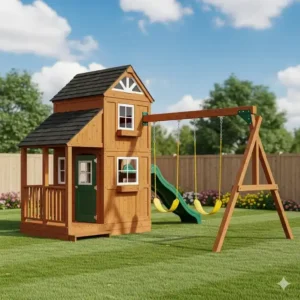
A playhouse with slide and swing represents the perfect fusion of imaginative play and physical activity. Furthermore, these comprehensive play systems maximize your backyard space while providing multiple entertainment options that grow with your children. Additionally, investing in a quality combination set often proves more economical than purchasing individual components separately.
Top 7 Playhouse With Slide and Swing Sets: Expert Analysis
Based on extensive research and customer feedback, here are the seven best playhouse with slide and swing combinations available in 2025:
1. Step2 Woodland Adventure Playhouse & Slide
This premium wooden-plastic hybrid offers exceptional durability with its 70″ H x 68″ W x 76″ D dimensions. The traditional design features a working Dutch-style door, kitchen sink with swivel faucet, and pull-out storage drawer.
✅ Accommodates up to 4 children (75 lbs max per user)
❌ No integrated swing (requires separate purchase)
2. Step2 Naturally Playful Playhouse Climber & Swing Extension
Features a 5.5-foot slide, two strap swings, and a secret hideout space beneath the elevated platform. The double-wall construction provides fade resistance and requires no staining.
✅ Complete swing integration included
❌ Plastic construction may not appeal to all families
3. Step2 Play Up Gym Set
Combines a raised playhouse platform with steering wheel, sturdy stairs, slide, and two strap swings. Ground anchors ensure stability for active play sessions.
✅ Excellent multi-level play design
❌ Limited color options available
4. Backyard Discovery Brookside Series
Cedar wood construction with weather-resistant finish offers natural aesthetics. Multiple models available with varying features including wave slides and rock climbing walls.
✅ Premium materials and craftsmanship
❌ Higher price point than plastic alternatives
5. Sportspower Brookside Wooden Swing Set
Features an 8-foot blow-molded slide, rock climbing wall, Roman glider, and imagination station. Includes bonus anchor kit for enhanced stability.
✅ Large slide for extended fun
❌ Complex assembly process reported by users
6. Sportspower Sunnyslope Wooden Swing Set
Compact design perfect for smaller yards includes play fort, trapeze, 6-foot double-wall slide, and lifetime warranty. Comes with anchor kit for secure installation.
✅ Ideal for limited space
❌ May be outgrown quickly by larger children
7. Sportspower Rosemead Metal Swing Set
Metal construction with Roman glider, saucer swing, and 6.5-foot slide offers durability at an affordable price point. Lifetime warranty included with anchor kit.
✅ Budget-friendly option
❌ Metal may become hot in direct sunlight
Just one click – help others make better buying decisions too!
[addtoany]Ready to Transform Your Backyard?
These expertly selected playhouse with slide and swing sets offer unbeatable value for creating lasting memories. Click on any highlighted product to check current availability and pricing. Your children’s adventure awaits!
Understanding Playhouse With Slide and Swing Configurations
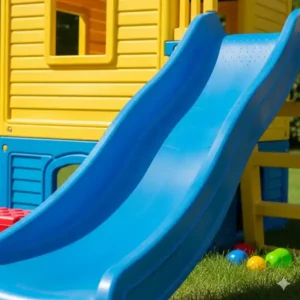
When selecting the perfect playhouse with slide and swing, understanding different configuration options helps ensure you choose the best fit for your family’s needs. Different manufacturers approach the integration of these three key elements in various ways, creating unique play experiences that cater to different age groups and space requirements.
Traditional Playhouse Configurations
Traditional playhouse designs typically feature a raised platform structure that serves as the main play area, often called a clubhouse or fort. This elevated space commonly includes windows, doors, and sometimes even pretend kitchen elements. The slide connects directly to this platform, while swings are typically positioned alongside the structure using A-frame supports or integrated support beams.
These configurations work particularly well for families with children aged 3-8 years, providing a perfect balance of imaginative play and physical activity. The raised platform height usually ranges from 4-6 feet, offering enough excitement without creating excessive safety concerns for younger children.
Multi-Level Play Systems
Advanced playhouse designs incorporate multiple levels and platforms, creating more complex play environments that challenge children’s physical abilities while expanding imaginative possibilities. These systems might include ground-level play areas, mid-level platforms, and elevated clubhouses, all connected by various climbing features, stairs, and slides.
The integration of swings in multi-level systems often utilizes shared support structures, maximizing space efficiency while providing stable mounting points. Some designs include specialty swings like gliders, disc swings, or trapeze bars to add variety to the play experience.
Compact Integration Designs
For families with limited backyard space, compact integration designs maximize play value within minimal footprints. These clever configurations often position the playhouse structure as a central hub, with slides and swings radiating outward in space-efficient arrangements.
Manufacturers have developed innovative approaches to compact integration, such as slides that curve around support posts, swings that fold or detach for storage, and playhouses with multiple access points to prevent bottlenecks during group play.
Material Analysis: Choosing the Right Construction Type
The construction material of your playhouse with slide and swing significantly impacts durability, maintenance requirements, aesthetics, and overall value. Each material type offers distinct advantages and considerations that should align with your specific needs and preferences.
Wooden Construction Benefits and Considerations
Wood remains the premium choice for many families seeking natural aesthetics and exceptional durability. Cedar and pine are the most common species used in playhouse construction, with cedar offering superior weather resistance and pine providing economical functionality.
Wooden playhouse with slide and swing sets typically feature pressure-treated lumber for ground-contact components, untreated wood for elevated structures, and weather-resistant hardware to prevent corrosion. The natural insulation properties of wood prevent excessive heating during summer months, making the play surface more comfortable for children.
However, wooden structures require more maintenance than plastic alternatives. Annual staining or sealing helps preserve the wood’s appearance and structural integrity, while regular inspections for splinters, loose hardware, and weather damage ensure continued safety.
Plastic and Resin Construction Advantages
Modern plastic construction techniques have revolutionized the playhouse industry, offering virtually maintenance-free alternatives that resist fading, cracking, and splintering. High-density polyethylene and rotomolded plastic construction methods create seamless structures that require only occasional cleaning with soap and water.
Plastic playhouse with slide and swing sets excel in climates with extreme temperature variations or high moisture levels. The material won’t rot, warp, or attract insects, making it ideal for families seeking long-term durability with minimal upkeep requirements.
Color-through construction ensures that minor scratches and scuffs don’t create unsightly marks, while UV stabilizers prevent fading even in areas with intense sunlight exposure. Many plastic play sets also feature rounded edges and smooth surfaces that reduce injury risks compared to wooden alternatives.
Metal Framework Integration
Some playhouse designs incorporate metal frameworks for swing supports while using other materials for the playhouse and slide components. This hybrid approach leverages metal’s superior strength-to-weight ratio for swing mounting points while allowing flexibility in other structural elements.
Powder-coated steel frameworks resist corrosion and provide exceptional stability for active play. The precise engineering possible with metal fabrication allows for more complex swing configurations and higher weight capacities than purely wooden or plastic alternatives.
Metal components require periodic inspection for rust, especially at connection points and areas where the coating may have been damaged. However, quality powder-coated finishes typically provide years of maintenance-free service when properly installed and cared for.
Safety Standards and Compliance Requirements
Understanding safety standards and compliance requirements is crucial when selecting a playhouse with slide and swing for your family. The Consumer Product Safety Commission (CPSC) provides comprehensive guidelines that manufacturers must follow to ensure child safety during play.
ASTM International Standards
ASTM F1148 Standard Consumer Safety Performance Specification governs home playground equipment, establishing crucial safety parameters for playhouse with slide and swing combinations. These standards address structural integrity, spacing requirements, and material specifications that protect children during normal and reasonably foreseeable use.
Key ASTM requirements include maximum fall heights, use zone spacing around equipment, entrapment prevention measures, and hardware specifications that prevent injury. Manufacturers must conduct rigorous testing to demonstrate compliance before bringing products to market.
Critical Safety Features to Verify
When evaluating playhouse with slide and swing options, several critical safety features require careful verification:
Structural Integrity: Weight limits should be clearly specified and appropriate for your children’s ages and sizes. Support structures must demonstrate adequate load-bearing capacity with appropriate safety margins.
Fall Zone Protection: Adequate spacing around swings prevents collisions with other structures or users. Slide exit areas require sufficient clearance to prevent injuries during dismount.
Hardware Quality: All fasteners, brackets, and connection points should use corrosion-resistant materials with appropriate strength ratings. Exposed hardware should feature smooth surfaces without sharp edges or pinch points.
Surface Materials: Slides should provide appropriate friction to control descent speed while preventing burns from hot surfaces. Swing seats require comfortable, durable materials that won’t crack or splinter over time.
Installation and Site Preparation Requirements
Proper installation is crucial for ensuring your playhouse with slide and swing operates safely throughout its service life. Site preparation begins with selecting an appropriate location that provides adequate clearance in all directions according to CPSC guidelines.
Level ground preparation prevents uneven loading that can stress structural connections over time. Many manufacturers specify maximum ground slope tolerances that must be achieved during installation to maintain warranty coverage.
Ground anchoring systems vary by manufacturer but typically include either concrete footings or earth auger anchors. Following manufacturer specifications exactly ensures the structure remains stable during use while preventing tip-over accidents.
Comprehensive Setup and Installation Guide
Successfully installing your playhouse with slide and swing requires careful planning, proper tools, and methodical execution. The complexity of installation varies significantly between different models and construction types, making thorough preparation essential for achieving professional results.
Pre-Installation Planning and Site Selection
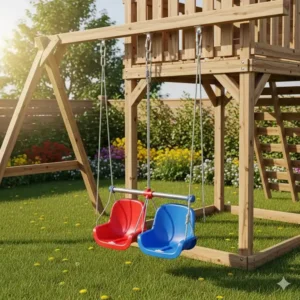
Site selection significantly impacts both installation success and long-term enjoyment of your playhouse with slide and swing. The ideal location provides level ground within 6 feet of the structure perimeter, adequate drainage to prevent water accumulation, and sufficient clearance from overhead obstacles like tree branches or power lines.
Consider the sight lines from your home to ensure proper supervision during play while respecting property boundaries and neighbor considerations. Morning sunlight exposure helps dry dew and rain more quickly, while afternoon shade reduces surface temperatures during peak play hours.
Utility location services should mark underground lines before excavation begins, even for shallow anchor installations. Many manufacturers recommend contacting 811 (the national underground utility location service) at least 48 hours before beginning installation work.
Tool Requirements and Assembly Preparation
Most playhouse with slide and swing installations require standard hand tools including screwdrivers, socket wrenches, levels, and measuring equipment. However, some models may require specialized tools like post-hole diggers, concrete mixing equipment, or power tools for efficient assembly.
Creating an organized work area with adequate space for laying out components prevents confusion and reduces assembly time. Many installers recommend sorting hardware into labeled containers and reviewing instruction manuals completely before beginning assembly.
Weather considerations affect installation timing, particularly for wooden structures that may swell or shrink with moisture changes. Ideal installation conditions include dry weather with moderate temperatures and low wind that won’t affect component handling or safety.
Step-by-Step Assembly Process
Most manufacturers organize assembly into logical phases that build upon previous steps:
Phase 1: Foundation and Support Structure Ground-level framework assembly typically begins with connecting main support beams and establishing the basic structure footprint. Proper spacing and square alignment at this stage prevents cascading errors throughout the remaining assembly.
Phase 2: Platform and Playhouse Construction Elevated platform assembly requires careful attention to level alignment and structural connections. Playhouse walls, roofing, and architectural details are typically installed after the platform structure is complete and verified.
Phase 3: Slide and Swing Integration Slide attachment requires precise alignment to prevent binding or unsafe descent angles. Swing installation involves critical safety measurements for proper spacing and clearance zones.
Phase 4: Final Assembly and Safety Inspection Hardware tightening, safety barrier installation, and final inspections ensure the completed structure meets manufacturer specifications and safety requirements.
Quality Control and Testing Procedures
Post-installation testing verifies that your playhouse with slide and swing operates correctly and safely. Visual inspections should identify any loose hardware, misaligned components, or potential safety hazards before allowing children to use the equipment.
Functional testing includes verifying slide smoothness, swing operation, and structural stability under load. Many installers perform weight testing using sandbags or other appropriate loading to simulate normal use conditions.
Documentation of your installation, including photographs and warranty registration, protects your investment and provides reference information for future maintenance or warranty claims.
Age-Appropriate Selection and User Compatibility
Choosing the right playhouse with slide and swing requires careful consideration of your children’s current ages, developmental stages, and anticipated growth over the equipment’s service life. Different designs cater to specific age ranges, and selecting appropriately ensures both safety and long-term enjoyment.
Toddler-Focused Designs (Ages 18 months – 4 years)
Toddler-appropriate playhouse with slide and swing combinations prioritize safety through lower heights, gentler slopes, and increased supervision accessibility. Platform heights typically range from 2-3 feet, with slide lengths proportioned to provide exciting but controlled descent speeds.
Swing seats for toddlers often feature full bucket designs or safety harnesses that provide additional security during use. Playhouse features include larger openings for easy adult supervision and safety railings that prevent accidental falls while allowing children to explore confidently.
The developmental benefits for toddlers include gross motor skill development through climbing and sliding, spatial awareness improvement through three-dimensional play spaces, and social skill development when siblings or friends join the play experience.
Preschool and Early Elementary Focus (Ages 3-8 years)
This age range represents the core target market for most playhouse with slide and swing products. Children in this group possess the physical coordination for more challenging play features while still benefiting from imaginative play opportunities that playhouses provide.
Platform heights typically range from 4-6 feet, providing enough elevation for excitement without creating excessive risk. Slide lengths and slopes accommodate increased speed tolerance while maintaining safety margins appropriate for developing coordination skills.
Swing configurations often include both traditional belt swings and specialty options like gliders or trapeze bars that challenge developing strength and coordination. Playhouse features may include more complex architectural details, pretend play accessories, and multi-level exploration opportunities.
Multi-Age and Growing Family Considerations
Families with children spanning multiple age groups require playhouse with slide and swing designs that accommodate varying abilities and interests. Multi-level designs often provide different challenge levels within the same structure, allowing younger and older children to play simultaneously while engaging age-appropriate features.
Modular designs allow expansion or modification as children grow and their interests evolve. Some manufacturers offer accessory packages that add complexity to basic structures, extending the useful life and play value of the original investment.
Safety considerations for multi-age groups include clear sight lines for supervision, appropriate spacing to prevent conflicts between different activity areas, and challenge levels that don’t frustrate younger children or bore older ones.
Special Needs Accessibility Considerations
Children with different physical abilities may require specific accommodations to enjoy playhouse with slide and swing features fully. Accessible design principles can be incorporated into many standard products through modification or careful selection of features.
Ramp access to playhouse platforms accommodates children who have difficulty with traditional climbing features, while wider doorways and interior spaces allow maneuvering for children using mobility aids. Transfer platform systems can facilitate access to swings for children with limited mobility.
Communication with manufacturers about specific accessibility needs often reveals modification options or alternative products that better serve children with special requirements. Many companies provide consultation services to help families select the most appropriate equipment for their unique situations.
Maintenance Schedules and Longevity Optimization
Proper maintenance extends the service life of your playhouse with slide and swing while ensuring continued safety and enjoyment for your family. Developing systematic maintenance routines prevents minor issues from developing into major problems that compromise safety or require expensive repairs.
Daily and Weekly Inspection Routines
Daily visual inspections take only minutes but provide crucial early warning for potential problems. Check for obvious damage like cracked components, loose hardware, or debris accumulation that might affect safe operation.
Weekly inspections allow more thorough examination of structural connections, wear patterns, and developing issues that require attention. These inspections should include testing swing chains for smooth operation, verifying slide surface condition, and checking playhouse structural integrity.
Weather-related inspections after storms or extreme conditions help identify damage that might not be immediately obvious. Wind can loosen hardware, rain can reveal drainage problems, and temperature extremes can affect material properties in ways that require immediate attention.
Monthly and Seasonal Maintenance Tasks
Monthly maintenance routines address issues that develop gradually over time. Hardware tightening prevents loosening from repeated loading cycles, while lubrication of moving parts ensures smooth operation and reduces wear.
Cleaning routines remove accumulated dirt, debris, and organic matter that can accelerate deterioration or create slippery conditions. Different materials require specific cleaning approaches to maintain appearance and prevent damage from inappropriate cleaning methods.
Seasonal maintenance preparation helps your playhouse with slide and swing weather extreme conditions successfully. Fall preparation might include drainage improvements and protective treatments, while spring restoration addresses winter damage and prepares for increased usage.
Annual Comprehensive Maintenance
Annual comprehensive maintenance involves detailed inspection and rehabilitation of all system components. This process identifies wear patterns, validates structural integrity, and determines replacement needs before safety becomes compromised.
Professional inspection services are available for families who prefer expert evaluation of their equipment condition. These services can identify subtle problems that non-experts might miss while providing documentation for warranty or insurance purposes.
Component replacement scheduling based on manufacturer recommendations and observed wear patterns ensures continued safety without premature replacement of serviceable parts. Maintaining detailed maintenance records helps track component performance and guides future replacement decisions.
Troubleshooting Common Problems
Hardware Loosening: Regular tightening schedules prevent most hardware loosening problems, but thread-locking compounds can provide additional security for critical connections that experience high loads or vibration.
Surface Wear and Weathering: Wooden surfaces benefit from annual cleaning and re-staining, while plastic surfaces may require specialized cleaners to remove stubborn stains or restore appearance.
Structural Movement: Minor structural movement is normal as materials acclimate to environmental conditions, but progressive movement indicates foundation problems or structural deterioration that requires professional evaluation.
Mechanical Component Wear: Swing chains, bearings, and other moving parts experience normal wear that affects performance and safety. Replacement schedules based on usage patterns and manufacturer recommendations prevent failure-related accidents.
Comparative Analysis: Integrated vs. Modular Systems
The decision between integrated playhouse with slide and swing designs versus modular systems that allow customization affects both initial investment and long-term satisfaction with your purchase. Understanding the advantages and limitations of each approach helps guide your selection toward the option that best serves your family’s needs.
Integrated System Advantages
Integrated designs offer superior structural efficiency by sharing support structures between different play elements. This approach typically results in more compact installations that maximize play value within limited space constraints.
Engineering optimization in integrated systems often provides better stability and weight distribution compared to separate components. Shared support structures eliminate redundant materials while providing adequate strength for all integrated functions.
Aesthetic cohesion in integrated designs creates more pleasing visual presentations compared to mixed component systems. Consistent materials, colors, and design themes create unified appearances that complement landscape design more effectively.
Installation efficiency benefits from single-phase assembly processes that complete the entire play system simultaneously. This approach reduces total installation time while eliminating coordination challenges between different component installations.
Modular System Flexibility Benefits
Modular approaches allow customization based on specific family preferences, site constraints, or budget limitations. Individual component selection enables optimization for particular age groups or play preferences without paying for unwanted features.
Expansion possibilities with modular systems accommodate changing family needs over time. Additional components can be added as children grow, interests evolve, or family size increases without replacing the entire play system.
Replacement economics in modular systems limit repair costs to individual components rather than entire system replacement when problems develop. This approach can significantly reduce long-term ownership costs while maintaining safety and functionality.
Quality optimization allows selection of premium components for heavily-used features while economizing on less critical elements. Families can invest in commercial-grade swings while selecting standard-grade climbing features based on their children’s preferences.
Hybrid Approaches and Compromise Solutions
Some manufacturers offer hybrid approaches that combine integrated structural efficiency with modular customization options. These systems provide basic integrated structures with attachment points for optional components that can be added or removed as needed.
Starter systems with expansion capabilities allow families to begin with basic configurations and add complexity over time as budgets allow or needs develop. This approach spreads investment costs while ensuring compatibility between original and added components.
Brand compatibility systems allow mixing components from the same manufacturer while maintaining structural and aesthetic consistency. These approaches provide customization flexibility without sacrificing engineering optimization or warranty coverage.
Long-Term Value Considerations
Initial investment analysis must consider not only purchase prices but also installation costs, maintenance requirements, and expected service life. Integrated systems often provide better initial value through shared structural efficiency and reduced installation complexity.
Adaptation costs over time can favor modular approaches when family needs change significantly during the equipment’s service life. The ability to modify configurations without complete replacement provides significant value for growing or changing families.
Resale value considerations affect total ownership costs for families who may relocate or no longer need play equipment. Modular systems often retain value better through component-level sales opportunities, while integrated systems may have broader market appeal.
Case Studies: Real-World Implementation Success Stories
Understanding how other families have successfully implemented playhouse with slide and swing solutions provides valuable insights for your own decision-making process. These real-world examples demonstrate practical considerations, problem-solving approaches, and long-term satisfaction outcomes that can guide your selection and installation processes.
Case Study 1: Urban Small-Space Solution
The Johnson family in suburban Atlanta faced the challenge of creating meaningful outdoor play opportunities within a 25′ x 30′ backyard shared with landscaping, patio, and storage needs. Their solution involved careful selection of a compact Step2 Naturally Playful Playhouse Climber & Swing Extension that maximized play value within minimal footprint requirements.
Installation challenges included working around existing landscape features and ensuring adequate clearance zones without overwhelming the small space. Creative solutions included positioning the swing set to double as a visual screen between play and adult areas while maintaining supervision sight lines.
Results after two years of use demonstrate exceptional satisfaction with space utilization and play value. The children, ages 4 and 7, continue to engage daily with different features while the compact design allows adult use of the remaining yard space for gardening and entertaining.
Key lessons learned include the importance of accurate space measurement and clearance planning, the value of multi-functional design features, and the benefits of professional installation for complex sites.
Case Study 2: Multi-Generational Family Investment
The Martinez extended family chose to invest in a premium Backyard Discovery Brookside Series swing set to serve children ranging from 2 to 12 years old during regular family gatherings. The wooden construction and comprehensive feature set justified the higher investment through durability and broad age appeal.
Installation required professional assistance due to the complex multi-level design and the family’s desire for perfect alignment and safety compliance. The investment in professional installation proved valuable through time savings and confidence in structural integrity.
Three years of intensive use by multiple children has validated the investment value through continued engagement across the age range. Younger children enjoy the playhouse and lower features, while older children challenge themselves with climbing walls and advanced swing configurations.
Maintenance experiences highlight the importance of annual staining and regular hardware inspection for wooden structures. However, the natural appearance and structural durability have exceeded expectations, with no component replacement required to date.
Case Study 3: Special Needs Accommodation
The Thompson family required accommodation for their 8-year-old daughter with mobility challenges while ensuring their 6-year-old son could enjoy typical play experiences. Their solution involved modifying a Sportspower Sunnyslope design with custom ramp access and transfer platform additions.
Collaboration with the manufacturer’s customer service team provided modification guidelines that maintained safety while enabling access for the mobility-impaired child. Additional railings and wider platforms accommodated the child’s walker while preserving play value for typical users.
Implementation required custom carpentry work to integrate accessibility modifications with the standard structure. Local contractors familiar with accessibility requirements provided expertise that ensured both safety and functionality for the modified design.
Results demonstrate successful integration of accessibility needs with typical play features. Both children engage actively with the equipment, and the modifications have proven durable and safe through two years of regular use.
Future Trends and Market Evolution
The playhouse with slide and swing market continues evolving through technological innovations, changing family preferences, and enhanced understanding of child development needs. Understanding these trends helps families make decisions that remain relevant and valuable throughout the equipment’s service life.
Technological Integration Trends
Smart technology integration is beginning to appear in premium playhouse designs through features like interactive play panels, bluetooth audio systems, and mobile app connectivity for parental monitoring. However, these features remain optional additions rather than core functionality in most products.
Material science advances continue improving durability, safety, and environmental sustainability of play equipment materials. New plastic formulations offer enhanced UV resistance and impact strength, while treated lumber innovations extend wooden structure service life.
Manufacturing precision improvements through computer-controlled fabrication result in better component fit, reduced installation time, and improved structural integrity. These advances particularly benefit complex integrated designs that require precise alignment of multiple components.
Design Philosophy Evolution
Child development research increasingly influences playground design philosophy toward equipment that promotes specific developmental outcomes. Modern playhouse with slide and swing designs emphasize spatial reasoning, physical challenge progression, and social interaction facilitation.
Inclusive design principles drive accessibility improvements that benefit all children rather than simply accommodating special needs. Universal design approaches create equipment that works better for typical users while enabling participation by children with various abilities.
Sustainability considerations influence material selection, manufacturing processes, and product lifecycle planning. Manufacturers increasingly emphasize recyclable materials, local sourcing, and design for disassembly to reduce environmental impact.
Market Direction Indicators
Consumer preferences continue shifting toward multi-functional designs that provide diverse play experiences within compact installations. This trend reflects urban housing patterns and families’ desire to maximize backyard utility.
Premium market growth indicates willingness to invest in high-quality equipment that serves multiple children over extended periods. Families increasingly view playground equipment as long-term investments rather than temporary children’s items.
Customization demand drives development of modular systems and accessory packages that allow personalization while maintaining structural integrity and safety compliance. This trend balances individual preferences with manufacturing efficiency.
Innovation Opportunities
Augmented reality integration potential exists for combining physical play equipment with digital experiences that enhance imaginative play without replacing physical activity. These applications might include treasure hunt games or educational content integrated with play activities.
Adaptive design concepts could enable equipment that physically adapts to different age groups or abilities through adjustable components or modular configurations. This approach could extend useful life while maintaining optimal challenge levels for developing children.
Sustainable material innovations continue developing alternatives to traditional wood and plastic construction that offer superior performance while reducing environmental impact. Bio-based plastics and sustainably harvested timber represent promising directions for future development.
Create Lasting Memories Today!
Don’t wait to give your children the gift of outdoor adventure and imagination. These carefully researched playhouse with slide and swing combinations provide years of developmental benefits and pure joy. Take action now and transform your backyard into a wonderland!
Conclusion: Making the Right Choice for Your Family
Selecting the perfect playhouse with slide and swing for your family represents a significant investment in your children’s development, happiness, and physical activity. Throughout this comprehensive guide, we’ve explored the critical factors that influence this important decision, from safety standards and material considerations to installation requirements and long-term maintenance needs.
The key to success lies in matching your chosen equipment to your family’s specific needs, space constraints, and long-term goals. Whether you prioritize the natural aesthetics of wooden construction, the low-maintenance benefits of modern plastic designs, or the customization possibilities of modular systems, the right choice depends on your unique circumstances and preferences.
Remember that a quality playhouse with slide and swing serves as more than just entertainment equipment—it becomes a cornerstone of childhood memories, a catalyst for physical development, and a gathering place for family and friends. The investment you make today in selecting, installing, and maintaining the right equipment will pay dividends through years of joyful use and developmental benefit.
Consider starting your search with the top-rated options we’ve analyzed, but don’t hesitate to explore modifications, accessories, or custom solutions that better serve your specific situation. The perfect playhouse with slide and swing for your family is out there, and with the knowledge you’ve gained from this guide, you’re well-equipped to make that ideal choice.
FAQs
❓ What age range is suitable for a playhouse with slide and swing?
✅ Most playhouse with slide and swing sets accommodate children ages 2-12 years, though specific age ranges vary by model. Toddler models focus on 18 months-4 years with lower heights and safety features, while larger sets serve up to 12 years with higher platforms and more challenging features. Always check manufacturer specifications for weight limits and recommended ages...
❓ How much space do I need for a playhouse with slide and swing installation?
✅ Minimum space requirements typically range from 20x20 feet to 30x25 feet depending on the specific model and swing clearance needs. CPSC guidelines require 6 feet clearance around all equipment, with swing zones needing additional space extending twice the swing height in front and back directions. Measure your available space carefully before selecting a model...
❓ What's the difference between wooden and plastic playhouse with slide and swing sets?
✅ Wooden sets offer natural aesthetics, superior insulation, and premium durability but require annual maintenance like staining. Plastic sets provide maintenance-free operation, fade resistance, and smooth surfaces but may lack the natural appeal some families prefer. Both materials meet safety standards when properly manufactured...
❓ How long does it take to assemble a playhouse with slide and swing?
✅ Assembly time varies from 4-12 hours depending on complexity, with most families requiring 6-8 hours for complete installation. Simple plastic models may take 4-6 hours, while complex wooden sets with multiple features can require 10-12 hours. Professional installation typically reduces time by 50% while ensuring proper safety compliance...
❓ What safety certifications should I look for in playhouse with slide and swing sets?
✅ Look for ASTM F1148 compliance for home playground equipment and CPSC safety guideline adherence. IPEMA certification indicates independent testing verification of safety standards. Quality manufacturers provide documentation of safety testing and compliance with current safety standards. Avoid uncertified products that may not meet established safety requirements...
Recommended for You
- Swing Set Clubhouse: 7 Best Models That Create Epic Adventures 2025
- Swing Set With Playhouse: Top 7 Epic Backyard Sets 2025
- Large Wooden Swing Set: 7 Top Picks + Expert Buying Guide 2025
Disclaimer: This article contains affiliate links. If you purchase products through these links, we may earn a small commission at no additional cost to you.
✨ Found this helpful? Share it with your friends!
[addtoany]