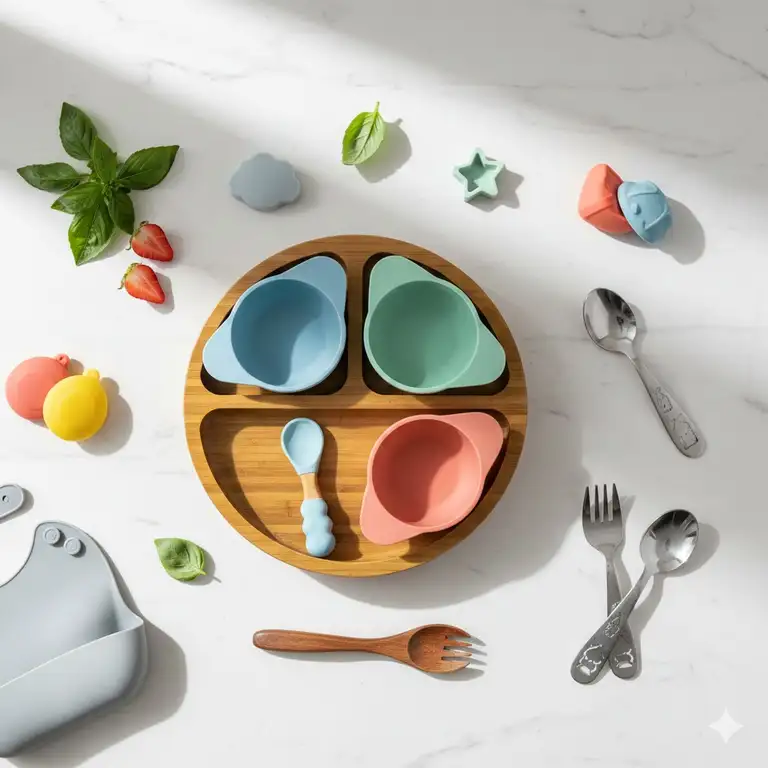
Hey there, fellow parent! If you are reading this, I bet you are currently knee-deep in pureed sweet potatoes or perhaps dodging flying pieces of avocado. I have been there—standing in the kitchen, looking at a pile of colorful plastic spoons, and wondering: “Is this stuff actually safe for my little one to chew on?” It is a valid worry. With all the news about microplastics and chemical leaching, choosing safe feeding utensils non toxic materials has become a top priority for families in 2026.
✨Was this helpful? Spread the word! 🚀
I remember when I first started my daughter on solids. I bought the cutest neon green set from a big-box store, only to realize later that it had a weird “chemical” smell after one round in the dishwasher. It sent me down a rabbit hole of research. I wanted to find feeding utensils safe non toxic materials that wouldn’t just look good but would actually be healthy for her developing body. We are talking about items that go directly into their mouths multiple times a day. Quality matters.
In this deep dive, I am going to share everything I have learned about non-toxic baby utensils and the specific materials you should look for. Whether you are searching for safe eating utensils for toddlers or your baby’s very first spoon, I have got you covered.
Comparison of Popular Feeding Materials
Before we get into the nitty-gritty, let’s look at how different materials stack up against each other. This table helps you see why choosing safe feeding utensils non toxic materials is better than sticking with traditional cheap plastics.
| Material | Heat Resistance | Chemical Safety | Durability | Eco-Friendliness |
| Food-Grade Silicone | High (up to 400°F) | Excellent (Inert) | High | Medium |
| Stainless Steel | High | Excellent | Extremely High | High |
| Bamboo/Wood | Low (not for microwave) | Great (Natural) | Medium | Excellent |
| Traditional Plastic | Low (Leaching risk) | Poor (BPA/Phthalates) | Medium | Low |
| Bio-Plastics | Low | Good | Low | High |
Quick Comparison: Top Safe Feeding Solutions
If you are in a rush to get back to your toddler, here is a snapshot of the top-tier products we will be discussing today.
| Product Name | Best For | Main Material | Safety Certification |
| Avanchy Bamboo Baby Spoons | Gentle Gums | Bamboo & Silicone | FDA Approved |
| Grabease First Stage Utensils | Self-Feeding | BPA-free Plastic | CPSIA Certified |
| BEABA First Stage Silicone Spoons | Early Starters | 100% Silicone | LFGB Quality |
| NumNum Pre-Spoon GOOtensils | Thicker Purees | Silicone/Nylon | PVC-free |
| Elk and Friends Stainless Steel | Toddler Transition | Stainless Steel | Lead-free |
| Munchkin White Hot Safety Spoons | Heat Monitoring | BPA-free Poly | Phthalate-free |
| Bumkins Silicone Chewtensils | Teething Babies | Food-grade Silicone | BPS-free |
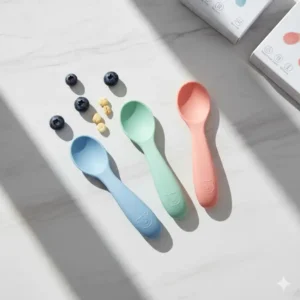
Top 7 Safe Feeding Utensils Non Toxic Materials: Expert Analysis
I have spent hours scouring the latest 2026 product data and real-world parent feedback to find the most reliable chemical-free feeding tools. Here are my top picks that satisfy every safety standard and parent whim.
1. Avanchy Bamboo Baby Spoons
These are a staple in many eco-conscious kitchens. I love the weight of the bamboo handle—it feels substantial and premium. The tip is made of soft silicone, making it one of the best safe feeding utensils non toxic materials for babies who are still teething.
-
Technical Specifications:
-
Handle Material: 100% Organic Bamboo.
-
Tip Material: FDA-approved food-grade silicone.
-
Dimensions: 5.5 inches long.
-
Weight: 0.8 ounces.
-
Variants: Available in 9 colors (Magenta, Green, Blue, Yellow, etc.).
-
-
Customer Review Analysis: Parents consistently praise the “softness” of the silicone. One reviewer noted, “My son won’t use anything else; the bamboo is easy for him to grip without slipping.” Some minor complaints mention that the bamboo can crack if left soaking in water for too long.
-
Warranty Information: 1-year limited warranty against manufacturing defects.
-
Professional Applications: Ideal for Baby Led Weaning (BLW) environments and Montessori-style feeding setups.
-
Pros:
-
Plastic-free construction.
-
Biodegradable handle.
-
Gentle on sensitive gums.
-
-
Cons:
-
Not dishwasher safe (hand wash only).
-
Can retain stains from carrots or squash.
-
2. Grabease First Stage Self Feeding Utensils
If you are worried about your toddler shoving a spoon too far down their throat, Grabease is the answer. Their patented choke-protection shield is a game-changer. These are frequently cited as top non-toxic baby utensils because they use high-quality, lead-free materials.
-
Technical Specifications:
-
Material: BPA-free, Phthalate-free plastic.
-
Design: Ergonomic short handle with protective collar.
-
Model: First Stage Training Set.
-
Safety: CPSIA compliant.
-
-
Customer Review Analysis: Users love the independence these provide. “Finally, a spoon my 10-month-old can actually use to get food into her mouth,” says one happy mom. The main critique is that they are very short, which is the point, but some parents find them hard to hold themselves.
-
Warranty Information: 30-day return policy; standard manufacturer defect coverage.
-
Professional Applications: Occupational therapists often recommend these for developing fine motor skills and pincer grasp.
-
Pros:
-
Prevents gagging/choking.
-
Dishwasher safe.
-
Encourages self-feeding.
-
-
Cons:
-
Only useful for a short developmental window.
-
3. BEABA First Stage Silicone Spoons
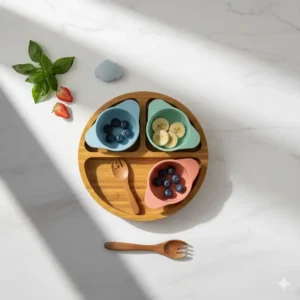
BEABA is a titan in the baby food world, and these spoons live up to the hype. They use a specific type of silicone that is denser and more durable than cheap alternatives, fitting perfectly into the category of safe feeding utensils non toxic materials.
-
Technical Specifications:
-
Material: 100% Ultra-soft silicone.
-
Length: 6.5 inches (ideal for reaching deep jars).
-
Colors: Pastel Pink, Blue, Cloud, Jungle.
-
Safety: Free from BPA, Lead, and Phthalates.
-
-
Customer Review Analysis: The long handle is the star here. Many parents use these as their “intro” spoons. “I love that the spoon head is tiny enough for a 4-month-old mouth,” a user shared. Some noted that after a year, the silicone can get a bit “cloudy.”
-
Warranty Information: 2-year warranty on silicone components.
-
Professional Applications: Pediatricians often suggest these for babies with sensory sensitivities due to the soft texture.
-
Pros:
-
Odors do not stick to the material.
-
Extremely flexible.
-
Great for parents feeding the baby.
-
-
Cons:
-
Too long for toddlers to use by themselves.
-
4. NumNum Pre-Spoon GOOtensils
Instead of a “scoop,” these have a flat surface with grooves. It is brilliant because there is no “right side up.” For babies learning to eat, it is one of the best safe eating utensils for toddlers who are just starting out.
-
Technical Specifications:
-
Set: Includes Stage 1 (for thinner purees) and Stage 2 (for thicker foods).
-
Material: Food-grade silicone and Nylon core.
-
Features: Textured surface for gum soothing.
-
-
Customer Review Analysis: “Magic” is a word used often. Parents say it reduces the frustration of food falling off the spoon. “My baby actually gets the yogurt into his mouth now,” says one review. A few people mentioned they are harder to clean if food dries in the grooves.
-
Warranty Information: Satisfaction guarantee within 90 days.
-
Professional Applications: Great for transition from bottle to solids.
-
Pros:
-
No balancing required.
-
High durability.
-
PVC-free and BPA-free.
-
-
Cons:
-
Does not work well with soup or very liquid foods.
-
5. Elk and Friends Stainless Steel Utensils
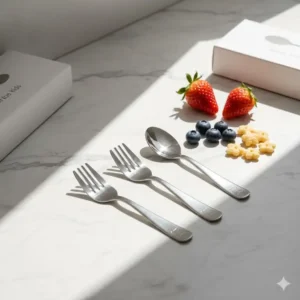
Once your kid hits the 18-month mark, they want to eat just like you. Elk and Friends makes stainless steel toddler utensils safe for little mouths by adding a silicone handle for grip.
-
Technical Specifications:
-
Metal: 18/8 (304) Food-grade Stainless Steel.
-
Handle: Non-toxic silicone sleeve.
-
Contents: 3 forks and 3 spoons per pack.
-
Age: 12 months to 6 years.
-
-
Customer Review Analysis: Reviewers highlight the longevity. “We’ve had these for 3 years and they still look new,” one parent noted. The forks have rounded tines, which parents appreciate for safety.
-
Warranty Information: Lifetime support for product integrity.
-
Professional Applications: Perfect for daycare settings due to their durability and ease of sanitizing.
-
Pros:
-
Will not rust or stain.
-
Real “grown-up” feel.
-
Dishwasher safe (high heat).
-
-
Cons:
-
Slightly heavier than silicone options.
-
6. Munchkin White Hot Safety Spoons
I used these constantly when I was worried about the temperature of the oatmeal. While they are a type of plastic, they are high-quality, BPA free feeding utensils that offer a unique safety feature: they turn white if the food is too hot (over 110°F).
-
Technical Specifications:
-
Material: Soft-tip, BPA-free plastic.
-
Feature: Heat-sensitive color-changing strip.
-
Quantity: 4-pack.
-
-
Customer Review Analysis: The “Peace of Mind” factor is huge. “I don’t have to guess if the food is too hot anymore,” is a common sentiment. Some users mentioned that the color-changing tech can fade after many dishwasher cycles.
-
Warranty Information: Limited 1-year warranty.
-
Professional Applications: Helpful for caregivers or grandparents who might be less sure about food temperatures.
-
Pros:
-
Inexpensive.
-
Immediate visual safety cue.
-
Smooth edges.
-
-
Cons:
-
Not as “natural” as bamboo or steel.
-
7. Bumkins Silicone Chewtensils
For the “I want to chew on everything” phase, Bumkins created these silicone baby spoons non toxic and soft. They are meant to be chewed on while the baby explores flavors.
-
Technical Specifications:
-
Material: 100% Platinum Cured Silicone.
-
Design: Ventilated choke barrier.
-
Heat Resistance: Up to 375°F.
-
-
Customer Review Analysis: Parents love that these double as teethers. “My baby’s gums are so sore, and she loves gnawing on these during lunch,” says one review. Some say they are a bit “floppy” for heavy foods.
-
Warranty Information: Standard manufacturer return policy.
-
Professional Applications: Excellent for babies with early teething symptoms.
-
Pros:
-
Safe to boil or steam sanitize.
-
Lead and BPS free.
-
Very short handles for tiny hands.
-
-
Cons:
-
Attracts lint and pet hair (like most silicone).
-
✨ Don’t Miss These Exclusive Deals!
🔍 Take your baby’s mealtime to the next level with these carefully selected products. Click on any highlighted item to check current pricing and availability on Amazon. These safe feeding utensils non toxic materials will help you provide a healthy, chemical-free environment for your little one to grow! 🚀
💬 Just one click – help others make better buying decisions too!😊
Comparison Matrix: Technical Specifications
Choosing between these options depends on your specific needs. Are you looking for longevity or immediate safety?
| Product | Dishwasher Safe | Microwave Safe | Life Expectancy | Choke Guard |
| Avanchy | No | No | 2-3 Years | No |
| Grabease | Yes | Yes | 1-2 Years | Yes |
| BEABA | Yes | Yes | 4+ Years | No |
| NumNum | Yes | No | 3 Years | No |
| Elk & Friends | Yes | No | 10+ Years | No |
| Munchkin | Yes | No | 1 Year | No |
| Bumkins | Yes | Yes | 3-4 Years | Yes |
Why Materials Matter: The Science of Non-Toxic Feeding
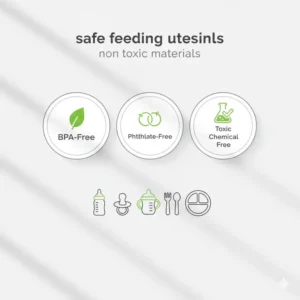
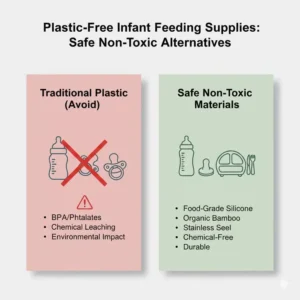
You might be asking, “Is plastic really that bad?” I used to wonder the same thing. But when we talk about safe feeding utensils non toxic materials, we are dealing with two main issues: leaching and degradation.
When plastic is heated (like in a microwave or a hot dishwasher), the chemical bonds can weaken. This allows substances like Bisphenol A (BPA) or phthalates to migrate into the food. In 2026, we have even more research showing that even “BPA-free” plastics can sometimes use BPS or BPF, which might have similar hormonal effects.
That is why I always lean toward materials like silicone and stainless steel. Silicone is an inert polymer made mostly of silica (found in sand). It doesn’t react with food or liquid, even at high temperatures. Stainless steel is similarly “stable.” It doesn’t harbor bacteria and won’t leach chemicals no matter how many times you scrub it.
Benefits of Choosing Non-Toxic Materials vs. Traditional Alternatives
| Benefit Category | Safe Non-Toxic Materials | Traditional Plastic Materials |
| Hormonal Health | Zero endocrine disruptors (BPA/BPS-free). | High risk of chemical leaching. |
| Microplastic Risk | Virtually zero. | Sheds microplastics over time. |
| Thermal Stability | Maintains structure at high heat. | Can warp or melt easily. |
| Odor Absorption | Resistant to food smells. | Often retains smells like soap or old food. |
| Durability | Lasts through multiple children. | Often becomes brittle and breaks. |
Buying Guide: How to Choose the Right Utensils
When I am shopping for feeding utensils safe non toxic materials, I don’t just look at the label. I look at the “Three S’s”: Shape, Size, and Substance.
1. Shape and Ergonomics
Babies don’t have the “adult” grip yet. They use a “palmar grasp,” which means they grab things with their whole fist. A short, chunky handle (like the Grabease) is much easier for them to navigate to their mouth than a long, thin spoon. If you are doing the feeding, a longer handle is better so you don’t get puree all over your knuckles.
2. Size of the Spoon Head
A common mistake I see (and made myself!) is using a spoon that is too big. A baby’s mouth is tiny. If the spoon is too wide, it can trigger the gag reflex. Look for “Stage 1” spoons that are narrow and shallow.
3. The Material (Substance)
As we discussed, silicone baby spoons non toxic are the gold standard for beginners. But once they start getting teeth, they might bite through soft silicone. That is the perfect time to transition to stainless steel toddler utensils safe.
Requirements Analysis for Different Developmental Stages
| Age Group | Recommended Material | Key Feature to Look For |
| 4-8 Months | Soft Silicone | Long handle, narrow head for parent feeding. |
| 9-15 Months | Silicone or Bamboo | Choke guards, chunky handles for self-feeding. |
| 18+ Months | Stainless Steel | Blunt tines on forks, adult-like feel. |
| Special Needs | Weighted Silicone | High-contrast colors and heavy-duty grip. |
Maintenance: Keeping Your Safe Utensils Safe
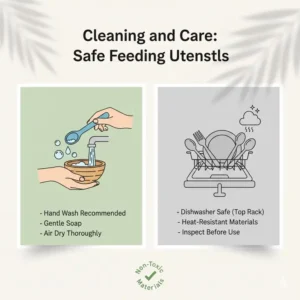
Even the best safe feeding utensils non toxic materials need proper care to stay healthy. I have learned the hard way that “dishwasher safe” doesn’t always mean “indestructible.”
-
Silicone: Can sometimes get a “soapy” taste. This happens when oils from the dish soap bond with the silicone. To fix this, I boil my silicone spoons in water with a bit of white vinegar for 5 minutes.
-
Bamboo: Never put it in the dishwasher! The high heat and moisture will cause the wood to split and harbor mold. A quick hand wash and an occasional rub with food-grade mineral oil will keep them beautiful for years.
-
Stainless Steel: These are the tanks of the kitchen. Throw them in the dishwasher, boil them—they can take it. Just make sure they don’t have hidden plastic components that could melt.
Performance Metrics: Durability and Safety Scores
| Product | Heat Resistance Score (1-10) | Grip Comfort (1-10) | Cleaning Ease (1-10) | Safety Certification |
| Avanchy | 4 | 9 | 5 | FDA |
| Grabease | 7 | 10 | 9 | CPSIA |
| BEABA | 9 | 8 | 10 | LFGB |
| NumNum | 6 | 8 | 7 | FDA/PVC-free |
| Elk & Friends | 10 | 9 | 10 | Lead-free |
| Munchkin | 6 | 7 | 9 | BPA-free |
| Bumkins | 9 | 9 | 8 | BPS-free |
My Personal Recommendation
If I had to pick just one set for a new parent today, I would go with a “hybrid” approach. Start with the BEABA First Stage Silicone Spoons for the first few months of purees. Once your baby starts grabbing the spoon themselves, switch to the NumNum Pre-Spoon GOOtensils. They take so much of the frustration out of self-feeding, and I honestly think they helped my daughter develop her confidence at the high chair.
For the older kids, you cannot beat Elk and Friends Stainless Steel Utensils. They are practically indestructible. I have seen them dropped, thrown, and even used as “drums” on the kitchen floor, and they still look fantastic.
Final Budget vs. Premium Comparison
| Category | Budget Choice (Under $15) | Mid-Range Choice ($15-$25) | Premium Choice ($25+) |
| Product | Munchkin White Hot | Bumkins Chewtensils | Avanchy Bamboo Set |
| Why it’s worth it | Essential safety at a low price. | Great 2-in-1 for teething and eating. | Beautiful, eco-friendly, and long-lasting. |
| Material Quality | Good (BPA-free) | Great (Platinum Silicone) | Excellent (Bamboo/Silicone) |
✨ Don’t Miss These Exclusive Deals!
🔍 Take your baby’s mealtime to the next level with these carefully selected products. Click on any highlighted item to check current pricing and availability on Amazon. These safe feeding utensils non toxic materials will help you provide a healthy, chemical-free environment for your little one to grow! 🚀
Conclusion: Making the Safe Choice for 2026
At the end of the day, feeding your baby is about more than just nutrition. It is about those messy, funny, and sometimes exhausting moments of growth. By choosing safe feeding utensils non toxic materials, you are giving yourself one less thing to worry about. You are ensuring that every bite your baby takes is free from harmful chemicals and microplastics.
I know the world of baby gear can feel overwhelming. I have spent many late nights scrolling through reviews just like you. But whether you choose the soft flexibility of silicone or the rugged durability of stainless steel, moving away from cheap, questionable plastics is the best move you can make for your child’s health.
Ready to upgrade your mealtime game? I have linked all my favorites below so you can grab the best gear for your little one. Trust me, your future self (and your baby’s health) will thank you!
Frequently Asked Questions
✅ The safest materials are medical-grade silicone, 304-grade stainless steel, and organic bamboo. These materials avoid chemical leaching, do not contain BPA or phthalates, and are durable enough to withstand frequent sanitizing without degrading or releasing microplastics into food...
✅ Generally, yes. High-quality food-grade silicone is heat-stable up to 400 degrees Fahrenheit. However, always check the manufacturer's label. Some silicone utensils have internal nylon or plastic cores for stability that may not be microwave-safe or could leach chemicals...
✅ Many BPA-free plastics use substitute chemicals like BPS or BPF, which research suggests may have similar endocrine-disrupting effects. Furthermore, plastic can scratch easily, creating crevices where bacteria grow, and can shed microplastics into your baby's meals during heating...
✅ Most toddlers are ready for stainless steel around 15-18 months. By this age, they have better motor control and are less likely to poke themselves. Stainless steel provides a more 'grown-up' experience and is much more durable than silicone...
✅ To remove soap residue, soak the utensils in a mixture of 50% hot water and 50% white vinegar for 30 minutes, then scrub. Alternatively, you can bake silicone items in the oven at 250 degrees Fahrenheit for 20 minutes... ❓ What are the safest materials for baby spoons in 2026?
❓ Can I put silicone baby utensils in the microwave?
❓ Why should I avoid plastic feeding utensils even if they say BPA-free?
❓ When should my toddler switch to stainless steel utensils?
❓ How do I remove the soapy smell from silicone utensils?
Recommended for You
- Securing High Chair to Avoid Tipping Over: 7 Best Safety Hacks 2026
- Baby Proof Table Corners in Dining Room: 7 Best Protectors for 2026
- Ideal Sleep Surface for Newborn Safety: 7 Best Rated Picks for 2026
Disclaimer: This article contains affiliate links. If you purchase products through these links, we may earn a small commission at no additional cost to you.
✨ Found this helpful? Share it with your friends! 💬🤗