As an Amazon Associate I earn from qualifying purchases. Links in this article may be affiliate links. How we choose gear
Good kids sun hats come down to three things: a brim of about three inches all the way around, tightly woven fabric rated UPF 50+, and a fit that holds through wind, water and a toddler’s tugging. That is the method for 2027, and the sections below show how to test each piece on a product page before ordering, with four real products tied to the checks where they help.
Guidance from the Skin Cancer Foundation and the American Academy of Pediatrics sets the rules, a 2025 dermatology journal study tests how far UPF labels can be trusted, and maker pages, retailer reviews, one OutdoorGearLab test and parent forum threads supply the product detail. No hat was worn for this guide, so every comment about comfort belongs to a named reviewer. Prices appear as ranges where a page supports one; otherwise, check the current price on Amazon.com.
Five checks behind the best kids sun hats
Run them in order. A hat that fails the first check can’t be rescued by the other four.
Brim: about three inches, measured all the way around
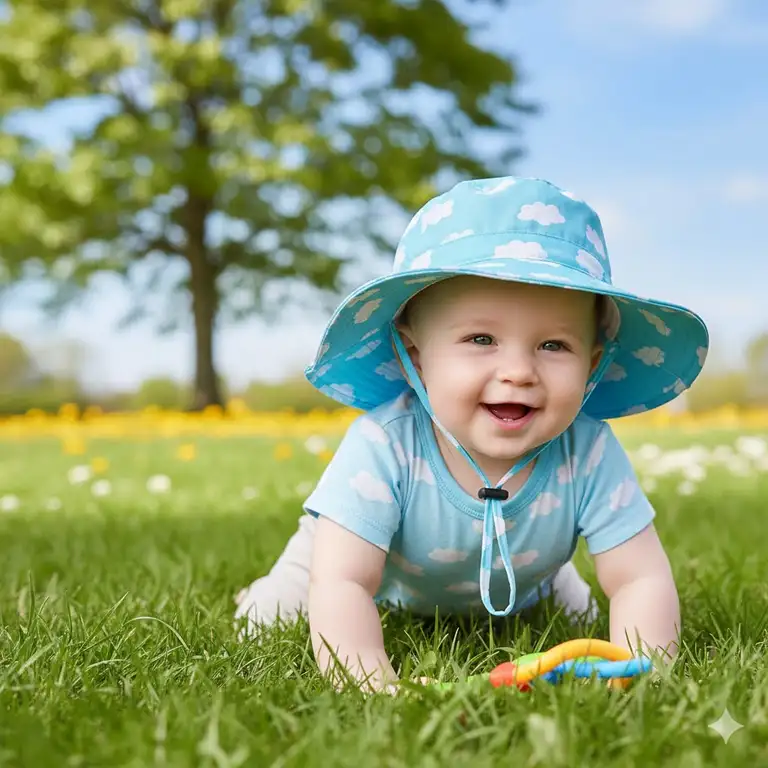
The Skin Cancer Foundation says the best sun-protective hats have a brim of at least three inches, enough to shade the face, scalp, neck, shoulders and upper back, along with the tops of the ears and the back of the neck. The American Academy of Pediatrics gives the same all-around three-inch figure for children. Two softer numbers exist for the smallest heads: NBC News reports the foundation’s target for baby and toddler hats as 2½ inches, and the authors of a 2025 hat study point to 2.75 inches (7 cm), the minimum in UK and Australian standards. A sensible reading is three inches for school-age kids and 2.5 to 2.75 as the floor for the youngest sizes.
Brim width changes with size, which is where listings mislead. One retailer’s size notes put Jan & Jul’s brim at 6.5 cm in size S and 9 cm in the XL, roughly 2.6 to 3.5 inches (my conversion), so a hat sold as “wide brim” may clear three inches only in the bigger sizes. Baseball caps and visors fall short for a different reason: The Healthy’s dermatologist-sourced guide notes they shade the eyes but not the skin, and the foundation’s alternative is a bill of at least three inches with a permanently attached drape over the ears and neck.
Weave and UPF: read the label, then hold the fabric to a window
UPF measures how much UVA and UVB a fabric lets through. Per the Skin Cancer Foundation, UPF 50 blocks 98% of rays and the 30-to-49 band counts as very good. A pediatric dermatologist writing for HealthyChildren adds a free test: hold the fabric up to a light, and the less light passes through, the better.
The label deserves some suspicion. A 2025 study in the Journal of Clinical and Aesthetic Dermatology looked at 20 top-ranked hats from US Google and Amazon searches. Sixteen claimed UPF 50+, and not one disclosed a testing protocol. The authors concluded that UPF claims for hats sold online in the US are not a reliable indicator of sun protection and advised judging crown coverage, a circumferential brim of at least 2.75 inches and gaps in the material instead. The paper reported nothing specific to children’s hats, so read it as a caution about labels, not a verdict on any brand.
Mesh is the usual gap. The common US test method, AATCC 183, checks the main fabric when new and ignores mesh and eyelets, according to that study, and Sunday Afternoons says outright that the mesh on its kids’ hat is not rated. Vents at the crown or temples keep a head cooler, but they are holes in the rating. Wet fabric adds a second wrinkle: the foundation’s example is a white T-shirt dropping from about UPF 7 to about 3 when wet, so a “wet or dry” claim on a swim-day hat is worth hunting for.
Strap and fit: the hat only works while it stays on
Kids sun hats reviews and parent threads split on straps. In one Hello Bee parenting-board thread, a parent says she prefers a chin strap because it reminds her child to leave the hat on and helps in wind. In another, a parent whose kids rip hats off relies on a neck flap plus a drawstring cinch at the chin, and one poster says a dual cinch lets her tuck the strap behind her daughter’s ears so it can’t be pulled free. Celebrating With Kids, a parenting blog, argues the opposite for toddlers: they work out how to yank straps off. These are anecdotes from small samples, and together they say a strap raises the odds without guaranteeing anything.
Safety points the same way. Babylist notes that a break-away chin strap lets a snagged hat come off easily, so look for a breakaway clip or toggle that the listing actually names. Pathways.org adds that some kids resist hats, and introducing them as early as possible helps.
Size: measure the head, then read the exact size chart
Measure head circumference with a soft tape just above the eyebrows and compare it with the chart on the specific listing, because age labels are loose. Jan & Jul’s chart runs from 43 cm (about 16.9 inches) for 0 to 3 months up to 56 cm (22 inches) for ages 5 to 12. REI’s page for the Sunday Afternoons Play Hat shows two different sets of head ranges for the small, medium and large sizes, one in its spec block and another in its size chart, so the figures on the exact hat that arrives win.
Room to grow helps only up to a point. A hat that sits too far back leaves the forehead in the sun, which is reasoning from how brims work rather than a measured result, and adjustable cinches and back straps are how a hat buys a size up without that tilt. One Dick’s Sporting Goods reviewer says she has kept sizing up the same Sunday Afternoons style since her kids were newborns.
Heat: a hat that overheats ends up in the stroller basket
Kids pull off what makes them sweaty. One Hello Bee parent reports that her daughter likes a terry-lined kids’ hat but gets too hot in it. Vents, thin nylon and wicking bands address that, which brings back the mesh problem: keep vents high on the crown and the brim and body solid. Cotton hats are pitched on breathability and nylon ones on quick drying, so pick by the day’s activity, with nylon for water play.
Kids sun hat and sunglasses: covering what the brim can’t
A brim shades the face from overhead light; it does nothing for light bouncing off water, sand or pavement. HealthyChildren’s pediatric dermatologist notes that UV reflects off water, sand, snow and concrete, and recommends youth-sized sunglasses with at least 99% UV protection from about six months of age. The AAP’s UV page likewise pairs sunglasses with sunscreen and protective clothing.
The FDA’s consumer tips tell parents to look for a UV400 rating or a “100% UV protection” label and warn that toy sunglasses may carry no UV protection at all. Tint and polarization don’t substitute: a Reviewed.com piece on kids’ sunglasses cautions that lens color says nothing about how much UV is blocked and that polarized lenses alone aren’t enough. A kids sun hat and sunglasses pair is therefore a two-part job, the hat for skin and overhead light and the glasses for the eyes, with the label doing the proving.
Borrowing from the grown-up shelf: sun hats for women and men
The Skin Cancer Foundation’s criteria don’t change with age, and NBC News’s UPF roundup judged its picks among sun hats for men, sun hats for women, kids and babies against the same brim, rating and coverage tests. That makes the household shortcut simple: run this checklist on every hat in the house.
Handing a child an adult hat is a different matter. Sun hats for women and sun hats for men are cut for larger heads, and an oversized crown lets the brim slide down over the eyes or back off the forehead (my reasoning from how brims sit, not a tested result). Kids’ lines such as Jan & Jul’s top out at a head size of 56 cm, about 22 inches. A chin strap can’t fix a crown that is too big, so buy the kids’ version of the style instead.
What kids sun hats reviews say about hats that go unworn
Across testers, parents and retailers, the complaints cluster around four problems a buyer can head off.
The first is buying for the print instead of the brim. The Jan & Jul sizes above show how a small hat can land under three inches, so check the width for the size ordered. The second is treating side mesh as protection, when the testing method ignores it. The third is hardware friction: a reviewer on Sunday Afternoons’ own page says the small clip is hard to buckle on a wiggly toddler unless the strap is untwisted, so practice fastening it while the child is calm, well before the first outing. The fourth is rough storage. OutdoorGearLab warns against creasing a rigid brim, and the maker says to pack it flat.
Care is part of the rating. Sunday Afternoons says to hand wash in cold water, line dry, and skip bleach, ironing and dry cleaning. One maker’s FAQ, reproduced by the retailer Pupsik, says the UPF coating on its hats may start deteriorating after about 30 washes. Because the lab method tests fabric as new, per the 2025 study, nothing on a label covers a hat after a summer of washing. Repeat the window test each season and retire a hat when the weave looks thinned.
Four picks, each tied to a check
None of these four is crowned the winner among the best kids sun hats, because each answers a different check above: the first two cover brim and neck, the third covers fit and growth, and the fourth covers the eyes.
| Model | Brim and coverage as listed | How it stays on | Rating note |
|---|---|---|---|
| Sunday Afternoons Kids’ Play Hat | 2¾–3¾ in brim, 5½–6 in neck cape | Breakaway SmartStrap plus back cinch | UPF 50+, crown mesh unrated |
| Columbia Youth Bora Bora Booney | Brim all the way around; width not stated | Adjustable chin strap | Omni-Shade UPF 50, with mesh vents |
| Jan & Jul Cotton Adventure Hat | About 2.6–3.5 in brim by size, plus neck flap | Head drawstring and break-away chinstrap | UPF 50+ cotton, rated wet or dry by the maker |
| Babiators Original Navigator | Eyewear, not a hat: sizes for ages 0–2, 3–5 and 6+ | Flexible rubber frame | 100% UVA/UVB (UV400) |
Only the Jan & Jul Cotton Adventure Hat listings print brim widths size by size, while the Sunday Afternoons Kids’ Play Hat gives a range. The two hats that name a break-away strap are the ones to compare for toddlers; the Columbia strap is described only as adjustable.
1. Sunday Afternoons Kids’ Play Hat — a neck cape with a breakaway strap
OutdoorGearLab’s testers named the Sunday Afternoons Kids’ Play Hat the best sun hat for kids in a roundup of 20 sun hats, citing a 5.5-inch neck cape that blocks low-angle sun, mesh panels that kept it cool through all-day wear and a back cinch that fits snugly without squeezing. The same review calls the brim a touch too stiff, with that stiffness carrying inside to where the hat meets the head, and it warns against creasing the brim when packing.
The maker’s page lists a 2¾- to 3¾-inch brim and a 5½- to 6-inch cape depending on size, UPF 50+ body fabric with unrated crown mesh, sizes from small to large and a breakaway SmartStrap. The brim floats in water. Prices run roughly $28 to $38 across the maker’s page and the REI and Diver’s Direct listings, and the maker’s own page shows 4.9 stars from 943 reviews, a brand-controlled figure to weigh accordingly.
The strap draws the only complaints in the sources. One reviewer on the maker’s page says the clip is small and hard to fasten under a wiggly toddler’s chin, and a single REI reviewer reports a strap that ripped on an earlier listing. Both are isolated reports about the same part. The maker lists a lifetime guarantee covering materials and workmanship.
2. Columbia Youth Bora Bora Booney — a vented all-around brim for older kids
School-age kids who spend afternoons on trails, docks and ball fields are the natural audience for the Columbia Youth Bora Bora Booney, a bucket-style hat. Listings from Dick’s Sporting Goods and Marks describe Omni-Shade UPF 50 fabric, Omni-Shield stain and water repellency, mesh ventilation and an adjustable chin strap. Scandinavian Outdoor adds a wicking sweatband and temple-area vent mesh, and lists its largest size for heads up to about 54 cm, roughly 21 inches (my conversion).
Two gaps matter under the checks above. The youth listings give no brim measurement, though a Sports Basement listing for the adult Bora Bora states 3 inches, so measure the youth hat on arrival. A Joe’s Sporting Goods listing for the adult hat says its mesh areas are not rated, and the youth pages are silent, so assume the same. Retailers show two style numbers, 2032191 and 2121241 (the latter labeled Bora Bora II on Columbia’s Canadian site), so match the style number and head-size chart to the exact page before ordering. Check the current price on Amazon.com.
Pros:
- ✅ The brim runs all the way around, and temple mesh plus a sweatband target heat.
- ✅ A water- and stain-repellent shell, per the listing language.
Cons:
- ❌ Brim width has to be measured on arrival.
- ❌ The chin strap is adjustable, with no breakaway release named.
- ❌ Mesh areas are probably unrated, as on the adult version.
3. Jan & Jul Cotton Adventure Hat — a drawstring fit that grows with them
Growing room is the main argument for the Jan & Jul Cotton Adventure Hat. Retailer size notes list five sizes from XS (0 to 3 months, head up to 43 cm) to XL (5 to 12 years, head up to 56 cm), with an adjustable drawstring around the head and a chinstrap with a break-away clip that separates under a harder pull and clips back together, according to the maker’s text on Walmart’s listing. The design adds an extra-wide EVA brim and a long neck flap, in 100% cotton that the maker rates UPF 50+.
ActiveBaby lists brim widths of 6.5 cm in S, 7.5 cm in M, 8 cm in L and 9 cm in XL, which converts to about 2.6, 2.95, 3.15 and 3.5 inches (my arithmetic). Against the three-inch check, L and XL clear it, M lands a hair under and S sits near the 2.5-inch baby floor. That level of detail is rare; most listings stop at “wide brim.”
Cotton raises the wet-day question. The Skin Cancer Foundation’s white T-shirt example falls from about UPF 7 to about 3 when wet, and a Nest & Sprout listing says this hat rates 50+ wet or dry, though no test report was linked. For splash days, a nylon hat or the maker’s separate water-repellent Aqua-Dry style is the simpler choice. A retailer listing for the same design under the name Xplorer says hand wash only, and some stores sell it under that name.
4. Babiators Original Navigator — UV400 lenses with a loss guarantee
No hat covers the eyes, which is where the Babiators Original Navigator comes in. Retailer and review pages describe lenses that block 100% of UVA and UVB, matching the UV400 label the FDA tells parents to look for, in flexible rubber frames with impact-resistant lenses. Well.ca’s size chart splits fit into Baby (0 to 2), Toddler (3 to 5) and Kids (6 and up), and EasyTot’s review calls the Navigator the only style in the range sized for the 6-plus band. The same review puts standard frames at about $24 to $32 and polarized or Euro styles at about $34 to $43, though prices on Amazon.com may differ.
The brand’s replacement guarantee is the feature parents mention. EasyTot describes a one-year lost-and-broken guarantee, and a Cool Mom Picks post says replacements cost nothing beyond shipping during that first year; the post dates from 2014, so confirm current terms before counting on it.
Pros:
- ✅ 100% UVA/UVB (UV400) labeling, the wording the FDA tips and the 99% guidance call for.
- ✅ Rubber frames and impact-resistant lenses suit rough handling.
Cons:
- ❌ Fit is by age band, so a child between sizes needs a check against the size chart.
- ❌ Polarized versions cost more, and polarization adds glare control, not UV protection.
Straight answers on brims, cloudy days and sunglasses
❓ What brim size should a kids sun hat have?
✅ Aim for about three inches all the way around, the figure both the Skin Cancer Foundation and the American Academy of Pediatrics give. For babies and toddlers, NBC News reports a 2½-inch target, and a 2025 study cites 2.75 inches as a standards-based minimum.
❓ Do kids still need a sun hat on cloudy days?
✅ Yes. The AAP says clouds and shade lower UV exposure without eliminating it, and a pediatric dermatologist on HealthyChildren notes that up to 80% of UV rays can pass through clouds. A hat is the simplest layer to keep on during overcast outings.
❓ Does a UPF 50+ hat replace sunscreen?
✅ No. The Skin Cancer Foundation presents hats as one part of a complete strategy alongside UV-filtering sunglasses and broad-spectrum sunscreen. A hat protects only the skin it shades, so face, ears and neck areas outside the brim's shadow still need sunscreen.
❓ Are chin straps safe for toddlers?
✅ A breakaway strap is the safer choice. Babylist notes that a break-away strap lets a snagged hat come off easily, and some makers describe clips that separate under a harder pull. Confirm the listing says so, because not every hat does.
❓ At what age can kids wear sunglasses?
✅ A pediatric dermatologist on HealthyChildren says youth-sized sunglasses make sense from about six months, with at least 99% UV protection. The FDA advises a UV400 or 100% UV label, since toy sunglasses may carry no UV protection at all.
Brim first, strap second: the decision rule
When shopping for kids sun hats, rank the checks in this order: a brim near three inches all the way around, a strap or cinch the child can’t easily defeat, tightly woven fabric labeled UPF 50+ with as little mesh as possible, and a size that leaves room to grow without tilting the brim off the forehead. For a toddler who tugs at everything, the Jan & Jul Cotton Adventure Hat and the Sunday Afternoons Kids’ Play Hat fit that order best, the first for its adjustable fit and the second for its tested neck cape. For older kids who wear a hat for sport, the Columbia Youth Bora Bora Booney is a cooler option as long as the brim measures up. Add the Babiators Original Navigator or any pair labeled UV400, and the hat-and-glasses set is covered. Check current availability below, and measure your child’s head before choosing a size.
Recommended for You
- Outdoor climbing structure for kids: A Practical Guide (2027)
- Smallest slide and swingset for kids outdoor: Practical Guide (2027)
- Kids musical instruments: A Practical Plan by Age (2027)
Measure your child’s head tonight, then compare size charts before the next sunny weekend. ☀️