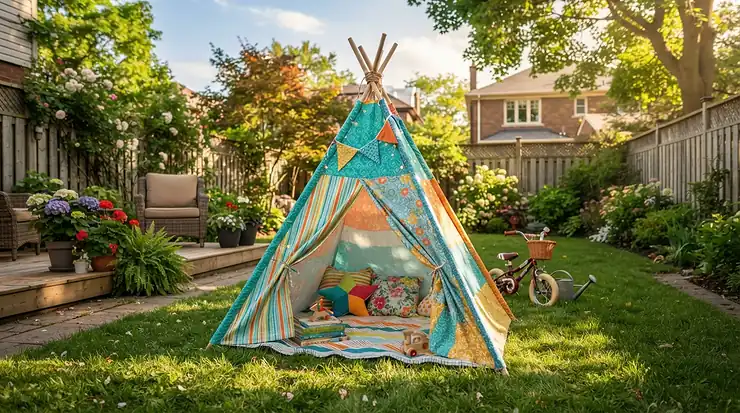
The words “indoor and outdoor” on a play tent box mean the fabric can handle an afternoon on the grass, not a month of dew, sun and wind. That gap explains most of the letdown around outdoor play tents, and it shows in the sources: Babylist files two fabric tents in its playhouse roundup as indoor picks, while The Bump lists one of the same tents as fine outdoors too.
This 2027 guide sorts six options by what each can realistically take, from a toddler crawl-through set to a camping dome with a real rainfly. The picks rest on maker and retailer pages, tester roundups and federal safety notices, with owner reports credited to the page where they appeared, since no tent here was handled hands-on. Prices are ranges, and the group runs from the budget tier into mid-range.
Where “indoor and outdoor” labels stop being true
The best outdoor play tents share three traits: a frame that matches the child’s roughness, fabric that tolerates sun, and a way to stay put when wind picks up. BestReviews sorts kids’ tents by frame, and the split is useful here. Pop-up tents have a bendable metal frame and are lightweight and usually cheap, but the guide calls them not very strong and easily ripped. Stick-supported tents are trickier to set up and sturdier. Air-supported tents are held up by a fan, run much larger, and collapse the moment it stops.
Fabric matters just as much. A BestReviews pop-up guide says canvas stands up to wind and rain better than cotton or polyester, while polyester is the lightest to carry and store. Heavy and sturdy, or light and portable: very few tents manage both.
The six tents below cover each frame type and two age groups, three for toddlers and three for older kids. Each was also checked against the CPSC’s play tent recall page, and the one entry on it is covered in the safety section further down.
Frame, size and weather limits across the six tents
Tent
Frame and fabric
Size as listed
Age as listed
What sources say about outdoor use
Tiny Land Kids Play Tent with Tunnel
Aluminum poles, peachskin polyester, mesh
Tent 41 in wide by 51 in high; tunnel 43 in long; ball pit 47 in wide
3+ (The Bump)
Marketed for indoor or outdoor; the maker’s pages vary by edition
3 Sprouts Recycled Fabric Play Tent
Fiberglass poles, recycled polyester
39.4 in wide by 53 in high
3+
Indoor per Babylist; indoor or outdoor per The Bump
SUNBA YOUTH Beach Tent
Heavy-duty frame, UPF 50+ polyester
65 by 59 by 43.5 in
2 to 3 smaller children
Built for sun shade; pegs or sand weights
Tiny Land Kids Teepee Tent
Pine poles, cotton canvas or cotton-polyester blend
About 47 to 48 in base; 59 to 66 in high by version
3+
Indoor-outdoor per one retailer; indoor per a marketplace listing
Only the GigaTent Cooper Boy Scouts Camping Tent and the SUNBA YOUTH Beach Tent are described by their sources as meant for the outdoors. The rest are play tents that tolerate it, and the AirFort is the odd one, since its frame is a fan. Height varies less than footprint does, which matters for the small-yard question further down.
Best outdoor play tents for toddlers: three for short, supervised sessions
Toddlers who would sooner crawl than sit get the most movement from this three-piece set. A play tent, a connecting tunnel and a ball pit can be used together or apart, and The Bump names it the best pop-up in its roundup. The fabric is peachskin polyester with mesh ventilation over aluminum poles, and The Bump lists the set at 5.6 pounds with a carry bag.
Sizes depend on the source. Babylist’s listing gives the tunnel as 43 by 18 inches, the tent as 41 inches wide and 51 high, and the ball pit as 47 inches wide, while The Bump flags the full layout as very large. Both pages say balls are sold separately, which lifts the first-day cost above the sticker. The Bump lists the set for ages 3 and up.
Outdoor guidance is mixed even from the maker: Tiny Land’s site pitches one edition for carpeted floors and calls others fine for indoor or outdoor play. Short, supervised grass sessions, then a fold-up, suit it best. Expect around $50 to $60, per The Bump; check the current price on Amazon.com.
Read the frame and fabric lines on the current listing before ordering.
At around $35 to $40 across The Bump and Babylist, this is the cheapest tent here to try outside, and at about 2 pounds The Bump calls it the lightest on its list by a wide margin. It is 100% recycled polyester over fiberglass poles, 39.4 inches across and 53 inches high, with two mesh windows and a door that rolls up and down. Target’s page lists it for ages 3 and up and describes it as easy to move between rooms, and retailer care notes say to wipe it clean with soap and water.
A parent quoted by The Bump called it very lightweight, easy to move and fairly waterproof, then raised durability worries. The Bump itself reports mixed reviews on the fabric. Babylist files the beige version as an indoor option.
Light cuts both ways. A tent this size can slide in a gust, so anchor the corners or keep sessions to calm afternoons.
Pros:
✅ Lightest tent in this group
✅ Wipes clean and folds flat into its bag
Cons:
❌ Fabric durability draws mixed reviews, per The Bump
This is the one tent here designed around the sun rather than around imagination. Our Globetrotters lists it at 65 by 59 by 43.5 inches set up and 2.2 pounds, with breathable UPF 50+ polyester and room for two or three smaller children. A roll-out floor mat extends past the opening, curtains close for naps, and the heavy-duty frame can be held down with sand weights or the 8 metal pegs in the box.
Two Sunba Youth tents share the name, so the specs do not carry over. Family Handyman’s roundup features the Sunba Youth Baby Portable Beach Tent, an infant beach tent and travel bed with mesh fabric, UPF 50+ protection, bug shielding and two pegs, in its mid-range tier of $50 to $70.
Shade helps but does not finish the job. The CDC’s sun safety guidance says sitting under a shelter reduces exposure, yet it still recommends sunscreen and protective clothing in the shade, and notes that UV reaches the skin on cloudy days. Our Globetrotters says the larger tent suits younger children and feels cramped for adults.
Outdoor play equipment for older kids: tents that still fit past third grade
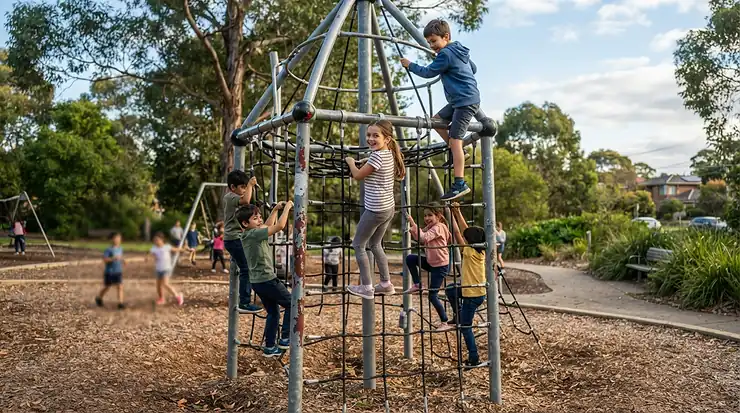
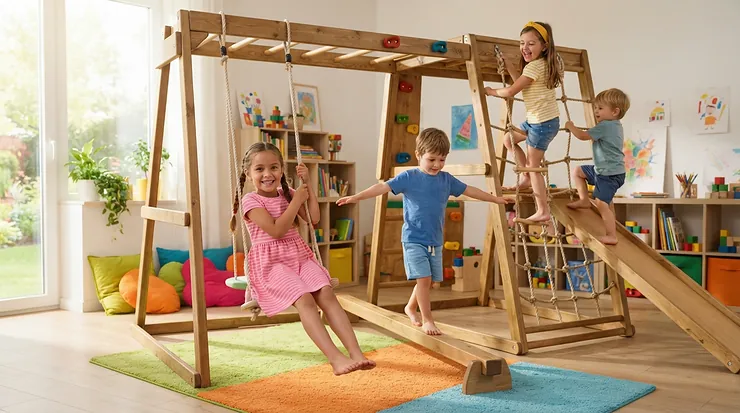
A tent is a hangout, not a workout. Kids who want to climb, swing or jump need separate older kids outdoor play sets, and no fabric tent replaces those; for outdoor play equipment for older kids, a tent is the quiet add-on. What a tent can do for a nine-year-old is give the yard a base: a place to read, host a sleepover or keep a snack stash.
Size is the first filter. BestReviews says most kids’ tents fit up to three toddlers or one or two preschoolers, that a child older than about third grade would feel cramped, and that a 58 to 60 inch base suits older children. The three tents below range from a base of about 47 inches to 5 feet or more, which is why they sit here.
Two versions share this name, and the differences matter outdoors. The Bump tests a 60% polyester and 40% cotton blend on pinewood poles, 47.2 by 47.2 by 59 inches and 8.4 pounds, for ages 3 and up. Retailer pages describe a 100% cotton canvas version at about 48 by 48 by 66 inches, and Family Handyman lists that cotton version with a paned window, two interior pockets, a string-closed flap door, fairy lights, a padded non-slip mat and a carry bag. Family Handyman files it in its mid-range tier of $50 to $70, while The Bump’s blend sits nearer $40.
The listings disagree on weather. Strolleria calls it an indoor-outdoor design, and a marketplace mirror of the Amazon listing calls it an indoor play tent. Reviewers there praise the medium-weight canvas, say the wooden poles held up to energetic play, and one finished assembly in about 10 minutes. Their one complaint was fairy lights that stopped working soon after purchase.
Tiny Land’s June 2026 recall, covered below, involves a different tent with 34 fiberglass poles; the teepee as The Bump and Family Handyman describe it uses pine poles and one window.
Pros:
✅ Roomy enough for several children, per The Bump
✅ Machine washable, per The Bump
Cons:
❌ Two fabric versions under one name
❌ Cotton canvas will not hold up to rain the way coated polyester does
5. AirFort — an inflatable fort for groups and sleepovers
A box fan does the work of every pole in this one. Toy Insider describes a tent-like space attached to a short tunnel, roomy enough for toddlers to stand and five kids to sit together, with no floor: you lift the edge and duck under. The fabric is breathable polyester with mesh sections for supervision and a mesh divider that keeps fingers away from the fan, and the whole fort deflates when the fan goes off and washes in a machine.
Sizes shift between editions. BestReviews cites 48 inches high by 72 across in its 2022 guide, while a marketplace listing for the Beach Ball Blue edition gives 91 by 60 by 54 inches, about 1.4 pounds and ages 3 to 14, with 4.6 stars from roughly 13,300 reviews on the mirrored Amazon page. The maker’s site lists forts around $60 to $70, and Toy Insider and Fatherly both note the box fan is sold separately.
One reviewer on that marketplace page found the constant airflow made the inside cold during longer sessions and wished for more structure, while others call it sturdy with several kids and even an air mattress inside. BestReviews adds that the fan is hard to keep attached to the opening while children play. Outdoors, the fan needs power, so plan on an extension cord and dry grass.
Compare the exact model number and size on the listing before buying, since AirFort sells several shapes.
Family Handyman puts this in its budget tier, under $50, and it is a scaled-down camping tent rather than a play tent. Sizes vary across pages: Our Globetrotters lists about 5 by 5 feet and 3 feet high at 2.8 pounds, and a marketplace listing gives 45 by 60 by 36 inches with a conflicting 45 inch maximum height. Two shock-corded fiberglass poles slide through sleeves, the rainfly is 170T polyester with a 450 mm polyurethane coating, and the floor is polyethylene. A Home Depot listing carries it as model BT015.
Capacity is the sore spot. The listing says two people, Our Globetrotters calls it a junior tent for preteens, yet reviewers on the marketplace page say it fits only small children, one suggesting under about 4 feet. One parent’s 5-foot son could not share it with a tent mate at scout camp. The same reviewers praise the waterproof floor, and one says it held up in beach storms when other tents broke, while another calls the poles cheap.
Treat it as a one-child or two-small-children tent for backyard sleepovers. It is the only pick here with a real rainfly.
Pros:
✅ Coated rainfly and waterproof floor
✅ Packs small at about 2 to 3 pounds
Cons:
❌ Reviewers say it runs small for older kids and teens
❌ Reviewers split on pole quality
Outdoor play equipment for small spaces: footprints and where each tent lives
Tents suit tight yards because they come down. Permanent older kids outdoor play sets claim their square footage all summer, but the 3 Sprouts Recycled Fabric Play Tent needs a circle 39.4 inches across, the Tiny Land Kids Teepee Tent about 4 feet square, and the GigaTent Cooper Boy Scouts Camping Tent about 5 by 3.75 feet, per its marketplace listing. The SUNBA YOUTH Beach Tent takes roughly 65 by 59 inches.
Two outliers need more room. The Tiny Land Kids Play Tent with Tunnel runs about 10 feet end to end once the pieces are linked, according to its listings, and the AirFort on one listing spreads 91 by 60 inches before counting the fan and a cord.
A patio corner, a deck or a strip of lawn beside the fence will hold any of the first four. The real rule for outdoor play equipment for small spaces is storage: the lightest, flattest tents earn their spot if they fold into a bag that fits a closet shelf.
Outdoor play tents reviews: where owners and testers agree and split
Set side by side, the reviews opened for this guide repeat the same few complaints. None of the reviews opened for the teepee or the inflatable fort describe outdoor use, which says something by itself: they get praised for fun and judged for roominess, not for weather.
Fabric durability is the most common worry. The Bump reports mixed reviews on the 3 Sprouts Recycled Fabric Play Tent, and BestReviews describes pop-up tents as lightweight but easily ripped, a view the guide applies to the whole type. Two outlets agree, which is a consensus of two rather than a large sample.
Size complaints dominate the camping tent. Marketplace reviewers of the GigaTent Cooper Boy Scouts Camping Tent repeatedly say it fits only small children, and the one scouting parent describes a 5-foot son who could not share it. Three or four voices on one page is a trend, not a verdict.
The AirFort splits on temperature and structure: one owner reports cold air in long sessions and another reports sturdiness with an air mattress inside.
Labels disagree about where a tent belongs. Babylist classes the 3 Sprouts Recycled Fabric Play Tent as indoor, The Bump allows outdoor play, and 3 Sprouts’ own Target page stresses moving it between rooms. When two sources disagree, the smaller number of outdoor hours is the safer bet.
Recalls, toy standards, sun and wind: what to check before a tent goes outside
The CPSC’s play tent recall page currently lists one recall, No. 26-526, dated June 4, 2026. About 7,500 Tiny Land children’s play tents had fiberglass poles that can shed fibers, and the agency reports eight incidents of skin and eye irritation. The recalled tent has cream fabric, three windows, a closable door, 34 poles, star-shaped lights and a quilted mat, measures about 57 by 52 by 36 inches, and was sold on Amazon.com and Tinylandus.com from November 2025 through March 2026. The label inside carries SKU TLTGTT003BG-XYF1506251, and the remedy is a free repair kit with four plastic poles. The page does not say whether a teepee or tunnel set is covered, so check any Tiny Land tent against that label.
Earlier CPSC notices include a 2018 recall of pop-up hideaway tents whose fiberglass rod could break and splinter, and a 2022 recall of play tents that failed an industry flammability standard. Inspect poles for splintering at the start of each season.
Toy-standard claims are a baseline. The CPSC toy safety page says ASTM F963 is mandatory for children’s toys and that toys for children 12 and under need third-party testing and a Children’s Product Certificate. A listing that boasts of meeting the standard is saying what the law already requires.
Heat is the other watch point. The CDC’s heat and children page says infants and young children rely on adults to keep them cool and hydrated, so keep mesh windows open, stay close and offer water. For wind, Our Globetrotters advises sand pockets and strong pegs, and the SUNBA YOUTH Beach Tent ships with 8 pegs.
Rain, sleepovers, age limits and wind: quick answers on outdoor play tents
❓ Are outdoor play tents waterproof?
✅ Mostly not. A parent quoted by The Bump called one lightweight tent fairly waterproof, yet Babylist files similar fabric tents as indoor picks. The camping-style tent here is the only one with a coated rainfly, so treat play tents as dry-weather gear.
❓ Can kids sleep overnight in an outdoor play tent?
✅ Most play tents are built for daytime play. For a backyard sleepover, a small camping-style tent with a rainfly and waterproof floor fits better, though reviewers say the one here suits only small kids, roughly under 4 feet, so check height first.
❓ What age is a play tent for?
✅ Most fabric tents here list ages 3 and up, while the inflatable fort stretches to 14 on one listing. Under three, check small parts, pole ends and fabric closely, and stay within reach, because retailer age labels sometimes disagree with themselves.
❓ How do I keep a play tent from blowing away?
✅ Use the pegs or sand weights that come with it, and add anchors at the corners for light tents of about 2 pounds. Sand pockets and strong pegs reduce blowaway risk, per Our Globetrotters, but fold the tent when gusts pick up.
❓ How big a tent do older kids need?
✅ BestReviews suggests a 58 to 60 inch base for older children, since kids past about third grade feel cramped in standard sizes. The camping tent's 5-foot floor and the inflatable fort's wider footprint reach that range; the teepee sits a little under.
Which of the six belongs in your yard
Start with age, then weather. For a toddler, the Tiny Land Kids Play Tent with Tunnel gives the most movement and the 3 Sprouts Recycled Fabric Play Tent gives the cheapest, lightest trial, with the SUNBA YOUTH Beach Tent as the shade pick for naps. For older kids, the Tiny Land Kids Teepee Tent has the most room, the AirFort suits groups with an outlet nearby, and the GigaTent Cooper Boy Scouts Camping Tent is the only one built to face rain.
Whichever outdoor play tents you choose, pitch them in shade, anchor them, supervise every session and fold them when the weather turns. Read the listing’s weather and age notes before you order.
Disclaimer: This post contains affiliate links. As an Amazon Associate, I earn from qualifying purchases made through these links, at no additional cost to you.
A tent that folds away in five minutes will see far more backyard afternoons than one that is a chore to carry out.
At WhizKiddo, our mission is to help parents find the safest and most engaging toys for their little ones. With years of experience researching child-friendly products, we provide honest, in-depth reviews to ensure you make the best choices for your kids