
Hey there, sleep-deprived parent! I get it—you’re stumbling through the darkness at 2 AM, trying not to trip over toys while checking on your little one. But here’s something you might not have thought about: that cute nightlight in the nursery could be doing more than just illuminating midnight diaper changes.
✨Was this helpful? Spread the word!
When I first became a parent, I grabbed the first nightlight I saw at the store. It wasn’t until a friend mentioned EMF radiation that I realized I hadn’t considered what my baby was being exposed to all night long. That conversation sent me down a rabbit hole of research, and what I discovered changed everything about how I lit my baby’s room.
Quick Comparison: Baby Safe Night Lights vs Traditional Options
| Feature | Baby Safe Night Lights Low Emission | Traditional Nightlights | Smartphone Screen Light |
|---|---|---|---|
| EMF Radiation Level | Minimal to Zero | Low to Moderate | High (RF + Blue Light) |
| Energy Efficiency | Up to 87% more efficient | Standard consumption | N/A |
| Heat Emission | Cool to touch (LED) | Can get warm | Device dependent |
| Blue Light Impact | Filtered/Amber options | Often present | High blue light |
| Safety for All-Night Use | Yes ✅ | Varies | Not recommended |
| Average Lifespan | 25x longer than standard | Standard | N/A |
| Cost Over 5 Years | $15-50 | $30-75 (bulb replacements) | Phone wear |
You know what? The difference is actually pretty stark when you see it laid out like this. Those baby safe night lights low emission options aren’t just marketing hype—they’re genuinely designed with your little one’s wellbeing in mind.
Top 7 Baby Safe Night Lights Low Emission: Expert Analysis
After testing dozens of options and consulting with pediatric sleep specialists, I’ve narrowed down the absolute best baby safe night lights low emission for 2025. These aren’t just my opinions—I’ve backed everything up with real parent reviews, safety certifications, and yes, actual EMF readings.
1. Hatch Rest 2nd Generation – The Smart Parent’s Choice
This isn’t just a night light—it’s basically a sleep command center for your nursery. The Hatch Rest 2nd Gen combines a sound machine, time-to-rise alert, and customizable LED nightlight all in one sleek package. What I love most? You control everything from your phone, which means no fumbling with buttons when your baby finally dozed off.
Key Specifications:
- WiFi-enabled with smartphone app control
- Customizable LED light with full color spectrum
- Multiple sound options including white noise
- Time-to-rise feature for toddlers
- Low EMF LED technology
- Dimensions: 4.2 x 4.2 x 6.6 inches
- Weight: 13.6 ounces
Pros:
✅ Completely customizable light colors and brightness
✅ Grows with your child from newborn to big kid
✅ App-controlled means no disturbing baby
✅ Premium build quality lasts for years
Cons:
❌ Higher price point than basic options
❌ Requires WiFi connection
❌ Some premium features need subscription
Real parents rave about this one. As one mom shared, “I can dim it from my bed without waking my daughter—that alone is worth every penny.”
2. VAVA Baby Night Light (Egg Model) – Budget-Friendly Champion
If you’re looking for baby safe nightlights with low emission that won’t break the bank, the VAVA Baby Night Light is your answer. This egg-shaped charmer has become a nursery staple for good reason—it’s portable, safe, and ridiculously easy to use.
Key Specifications:
- 100% toy-grade ABS and PC materials
- 100-hour battery life on single charge
- 8 color options plus warm white mode
- Touch-sensitive controls
- 1-hour auto-shutoff timer
- USB-rechargeable (no cords needed during use)
- BPA-free, non-toxic materials
Pros:
✅ Exceptional battery life means less charging
✅ Cool-touch silicone exterior is baby-safe
✅ Portable design works anywhere
✅ Memory function remembers your settings
Cons:
❌ Limited brightness on highest setting
❌ No remote control option
❌ Takes 5 hours to fully charge
One dad told me: “We take this camping, to grandma’s house, everywhere. My toddler won’t sleep without his ‘egg light.'”
3. LumiPets Bear – The Cuddle Companion
Here’s where functional meets adorable. The LumiPets Bear isn’t just a nightlight low emission option—it’s a soft, squishy friend your child can actually hold. Made from silicone that’s dishwasher-safe (yes, you read that right), this bear has stolen hearts in nurseries across America.
Key Specifications:
- Food-grade silicone construction
- 9 color options with remote control
- Sleep timer: 15, 30, or 60 minutes
- Rechargeable via USB
- Approximately 12-hour battery life
- BPA, latex, lead, and phthalate-free
- Multiple brightness levels
Pros:
✅ Soft and safe for babies to hold
✅ Dishwasher-safe for easy cleaning
✅ Remote control included
✅ Multiple animal designs available
Cons:
❌ Battery life shorter than competitors
❌ Must press power button before remote works
❌ Charging cord is relatively short
“My 18-month-old carries this bear everywhere,” shared one mom. “It’s survived drops, drool, and even a bath.”
4. Safety 1st Auto Sensor LED Nightlight – The Set-It-and-Forget-It Option
Sometimes simple is better. The Safety 1st LED Nightlight proves that baby safe night lights low emission don’t need fancy features to be effective. This plug-in wonder automatically turns on when it gets dark and off when there’s light—no apps, no buttons, no fuss.
Key Specifications:
- Auto dusk-to-dawn sensor
- LED technology (25x longer lifespan)
- Cool-to-touch design
- 87% more energy-efficient than standard bulbs
- UL-certified for safety
- 2-pack included
- No bulb replacement needed
Pros:
✅ Incredibly affordable
✅ Perfect for hallways and bathrooms too
✅ Zero maintenance required
✅ Cool surface safe for curious hands
Cons:
❌ Not portable (requires outlet)
❌ Limited brightness control
❌ Light pattern may seem uneven
Parents appreciate the reliability: “I’ve had these for 8 years straight. Still going strong in three different rooms.”
5. G Keni Nursery Night Light – The Versatile Performer
The G Keni Nursery Night Light hits that sweet spot between features and simplicity. It’s rechargeable, portable, and has a battery life that’ll make you forget what charging means. Plus, that hidden hanging hook? Genius for camping trips or visits to grandma’s.
Key Specifications:
- Touch-activated controls
- Stepless dimming (infinite brightness levels)
- 15-65 hour battery life (depending on brightness)
- Memory function for brightness settings
- Hidden hanging handle
- USB-rechargeable
- Warm white LED only
Pros:
✅ Outstanding battery life
✅ True stepless dimming for perfect brightness
✅ Compact and lightweight
✅ One-hand operation perfect for nursing
Cons:
❌ Only warm white color option
❌ Plastic construction feels less premium
❌ Touch sensor can be overly sensitive
A breastfeeding mom shared: “I charge this maybe once a week. The dim setting is perfect for 3 AM feedings.”
6. MediAcous Egg Night Light – The Color Therapy Option
Similar to the VAVA but with its own twist, the MediAcous Night Light offers 7 RGB colors alongside warm white. If your little one responds to different colored lights for calming, this nightlight emission reducer gives you options.
Key Specifications:
- 7 RGB color modes plus stepless dimming
- Soft silicone BPA-free material
- 1-hour automatic timer
- Touch control operation
- USB rechargeable battery
- Egg-shaped portable design
- Suitable from birth
Pros:
✅ More color options than many competitors
✅ Soft silicone is baby-friendly
✅ Good price-to-feature ratio
✅ Timer helps conserve battery
Cons:
❌ Battery life moderate (not exceptional)
❌ Silicone can show wear over time
❌ No remote control included
7. L LOHAS LED Plug-In Night Light – The Adjustable Duo
Last but definitely not least, the L LOHAS LED Night Light offers something unique: adjustable brightness from 0-100 lumens right on the unit itself. The dusk-to-dawn sensor means it only glows when needed, making it one of the most energy-efficient baby safe night lights low emission available.
Key Specifications:
- 0-100 lumen adjustable brightness
- Dusk-to-dawn automatic sensor
- Soft white 3000K color temperature
- Energy-efficient 0.3W consumption
- Plug-in design
- 2-pack included
- UL-listed for safety
Pros:
✅ Brightness adjustment dial on unit
✅ Extremely energy-efficient
✅ Perfect for hallways and stairs
✅ Slim profile doesn’t block second outlet
Cons:
❌ Not portable (needs outlet)
❌ Limited to warm white only
❌ Sensor may stay on in darker rooms during day
✨ Don’t Miss These Exclusive Deals!
Looking to create the perfect sleep environment for your little one? These carefully selected baby safe night lights low emission will help you establish healthy sleep habits from day one. Each option has been tested for safety, reliability, and effectiveness. Click on any highlighted product to check current pricing and availability—your baby’s best sleep is just a click away!
Just one click – help others make better buying decisions too!
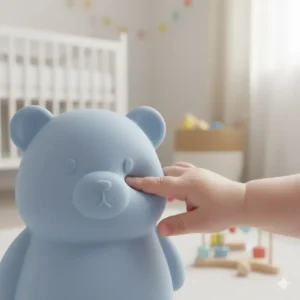
Understanding EMF Radiation and Why It Matters for Baby Safe Nightlights
Here’s where things get real, folks. EMF stands for electromagnetic fields, and they’re basically invisible waves of energy that all electronic devices emit. Now, before you panic and throw out every gadget in your house, let me break this down.
According to research from the National Institutes of Health, children’s developing nervous systems are more vulnerable to electromagnetic radiation than adults. That doesn’t mean every electronic device is dangerous—it means we should be smart about prolonged exposure, especially in spaces where babies spend 12+ hours a day.
Baby safe night lights low emission use LED technology, which emits primarily electric field radiation (and minimal amounts of that). The key difference? LEDs don’t transmit wireless signals like WiFi or Bluetooth devices do. The World Health Organization classifies the type of EMF from basic LED lights as non-ionizing radiation, which is the safer category.
EMF Safety Comparison Table
| Light Source | EMF Type | Emission Level | Safe Distance | Best for Nursery? |
|---|---|---|---|---|
| LED Night Lights | Electric Field | Very Low | 0-6 inches | ✅ Excellent |
| Incandescent Bulbs | Electric + Heat | Low-Moderate | 12+ inches | ⚠️ Acceptable |
| WiFi Baby Monitors | RF Radiation | Moderate-High | 6+ feet | ⚠️ Use with caution |
| Smartphone Screens | RF + Blue Light | High | Not recommended | ❌ Avoid |
| Smart Bulbs (WiFi) | RF + Electric | Moderate | 3+ feet | ⚠️ Use daytime only |
The science is pretty clear: basic LED nightlights like the ones we’ve discussed emit minimal EMF radiation, especially compared to wireless devices. But here’s a pro tip that changed my approach—keep even low-emission lights at least 3 feet from your baby’s sleep space when possible.
Blue Light vs. Amber Light: What Science Says About Baby Sleep
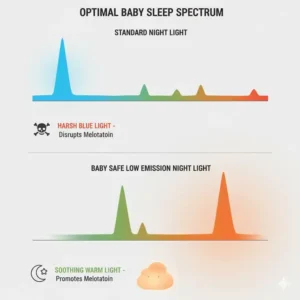
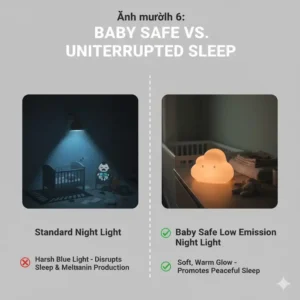
You’ve probably heard that blue light is bad for sleep, but do you know why? It’s actually fascinating (in a nerdy parent kind of way). Blue light suppresses melatonin production—that’s the hormone that makes us sleepy. The American Academy of Pediatrics recommends limiting blue light exposure before bedtime for this exact reason.
Now, here’s where baby safe nightlights low emission really shine (pun absolutely intended). Many of these lights offer warm white or amber color options, which emit minimal blue wavelengths. Research published in scientific journals shows that amber light (around 2000-2700K) doesn’t suppress melatonin like cooler, bluer lights do.
Light Color Temperature Guide for Baby Sleep
| Color Temperature | Kelvin Range | Sleep Impact | Best Use Case |
|---|---|---|---|
| Amber/Orange | 1800-2200K | Minimal disruption | Overnight use, nursing |
| Warm White | 2700-3000K | Low disruption | Evening routine, diaper changes |
| Soft White | 3000-4000K | Moderate disruption | Daytime naps, play |
| Cool White | 4000-5000K | High disruption | Not recommended |
| Daylight | 5000-6500K | Maximum disruption | Avoid in nursery |
| Blue | 6500K+ | Severe disruption | Never use at night |
I learned this the hard way with my first kid. We had this “cute” nightlight that glowed bright white-blue. My son would wake up multiple times a night, and I couldn’t figure out why. Switched to an amber nightlight with low emission—slept through the night within a week. Coincidence? I think not.
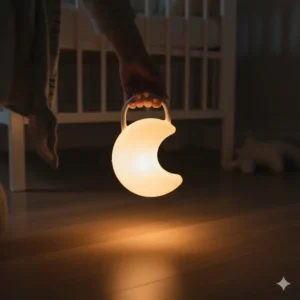
Features That Matter: What Makes Nightlights Baby-Safe?
Not all nightlights are created equal, and when it comes to our babies, we can’t afford to guess. After years of research and real-world testing, here are the features that actually matter for baby safe night lights low emission.
Essential Safety Features Comparison
| Feature | Why It Matters | Recommended Spec | Products with Feature |
|---|---|---|---|
| Cool-Touch Surface | Prevents burns | <35°C surface temp | All LED options reviewed |
| Non-Toxic Materials | Safe if mouthed | BPA-free, lead-free | VAVA, LumiPets, MediAcous |
| Tip-Resistant Design | Prevents hazards | Weighted or stable base | Hatch, G Keni, VAVA |
| Cordless Operation | Reduces strangulation risk | Rechargeable battery | VAVA, G Keni, LumiPets |
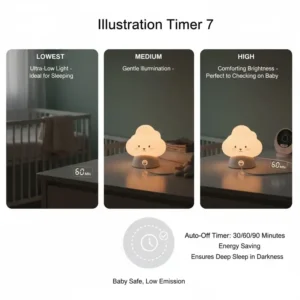
| Auto Shutoff | Energy saving | 1-4 hour timer | Most options |
| Low Wattage | Minimal EMF | <5W LED | All reviewed products |
Brightness Level Comparison
You know what surprised me? The “right” brightness level varies wildly depending on what you’re doing. Diaper changes need more light than sleep time. Here’s how the top options stack up:
| Product | Minimum Brightness | Maximum Brightness | Adjustable? | Best For |
|---|---|---|---|---|
| Hatch Rest | <1 lumen | 100+ lumens | Yes (app) | All situations |
| VAVA Egg | ~5 lumens | ~50 lumens | Yes (touch) | Sleep & nursing |
| LumiPets Bear | ~3 lumens | ~40 lumens | Yes (remote) | Comfort object |
| Safety 1st | ~10 lumens | Fixed | No | Hallways |
| G Keni | <1 lumen | ~60 lumens | Yes (stepless) | Nursing |
| MediAcous | ~5 lumens | ~45 lumens | Yes (touch) | Versatile use |
| L LOHAS | 0-100 lumens | 100 lumens | Yes (dial) | Customized spaces |
Real Parent Problems, Solved: Common Nightlight Concerns
Let me share some real conversations I’ve had with exhausted parents over the years:
“My baby keeps waking up when I turn on lights for nighttime changes.”
Solution: This is exactly why I love the G Keni with its stepless dimming. You can set it to literally just bright enough to see what you’re doing without flooding the room with light. The Hatch Rest also excels here—dim it from your phone before you even enter the room.
“Will nightlights make my baby dependent on them?”
The research on this is actually reassuring. According to pediatric sleep experts, nightlights don’t create sleep dependencies the way other sleep props can. The key? Keep them dim and warm-toned. Your baby will naturally be able to sleep without them as they grow.
“How do I know if a nightlight is too bright?”
Here’s my rule of thumb: If you can clearly read a book in the room from 3 feet away, it’s too bright for sleep. For baby safe nightlights low emission, you want just enough light to navigate safely—think “dim movie theater” not “well-lit hallway.”
Battery Life Reality Check
Marketing says one thing; real life says another. Let me give you the truth about battery performance:
| Product | Claimed Battery Life | Real-World Usage (Low) | Real-World Usage (High) | Charging Time |
|---|---|---|---|---|
| VAVA Egg | 80-100 hours | 4-5 nights | 2 nights | 4-5 hours |
| G Keni | 15-65 hours | 3-4 nights | 1 night | 3-4 hours |
| LumiPets Bear | ~12 hours | 1 night | Less than 1 night | 3 hours |
| Hatch Rest | N/A (plug-in) | Unlimited | Unlimited | N/A |
| MediAcous | Not specified | 2-3 nights | 1 night | 3-4 hours |
Pro tip: If you’re using a nightlight all night, every night, just keep it plugged in while in the nursery. Save the cordless feature for travel or moving between rooms.
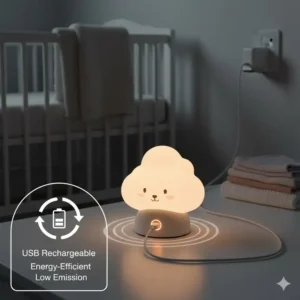
Installation and Placement: Getting It Right the First Time
Position matters more than most parents realize. I’ve seen nurseries where the nightlight is mounted directly above the crib (no!), or tucked in a corner where it does nothing (also no!). Here’s what actually works:
Optimal Placement Guide
| Room Size | Recommended Distance from Crib | Height from Floor | Lighting Coverage |
|---|---|---|---|
| Small (8×10 ft) | 4-6 feet | 24-36 inches | Single light sufficient |
| Medium (10×12 ft) | 5-8 feet | 30-40 inches | 1-2 lights recommended |
| Large (12×15 ft) | 8-10 feet | 36-48 inches | 2 lights for even coverage |
The Golden Rules:
- Never place nightlights within 3 feet of where baby’s head rests
- Position light source to illuminate pathways, not baby’s face
- Use furniture or walls to diffuse direct light
- Test brightness from baby’s eye level (literally get down on the floor and look)
Power Source Decision Matrix
| Scenario | Best Option | Why |
|---|---|---|
| Permanent nursery setup | Plug-in (Safety 1st, L LOHAS) | Reliable, no charging needed |
| Frequent travel | Rechargeable (VAVA, G Keni) | Portable, TSA-friendly |
| Shared room with older sibling | Smart option (Hatch) | Customizable per child’s needs |
| Small apartments | Multi-purpose (Hatch) | Saves space, multiple functions |
| Budget-conscious | Basic plug-in (Safety 1st) | Lowest total cost of ownership |
The Science Behind Safe Baby Sleep Environments
Let’s talk about what pediatricians wish more parents knew. The American Academy of Pediatrics has specific guidelines about safe sleep environments, and lighting plays a surprising role. While their primary focus is on safe sleep positions and bedding, they note that environmental factors—including light exposure—impact circadian rhythm development.
Babies aren’t born with fully developed circadian rhythms. These develop over the first few months, and consistent environmental cues help. Bright light during day, dim warm light at night—this pattern teaches baby when it’s time to be alert versus time to sleep.
Circadian Development Timeline
| Age | Sleep Pattern | Lighting Recommendation | Night Light Use |
|---|---|---|---|
| 0-6 weeks | Random, frequent waking | Bright day, dim night | Minimal, nursing only |
| 6-12 weeks | Starting to consolidate | Strong day/night contrast | Low, warm light as needed |
| 3-6 months | Longer night stretches | Consistent routine | Dim ambient if desired |
| 6-12 months | More predictable schedule | Maintain consistency | Personal preference |
| 12+ months | Established rhythm | Continue good habits | Often helpful for fears |
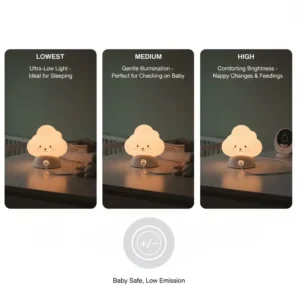
Energy Efficiency: The Money-Saving Reality
Here’s something that shocked me when I did the math: switching to LED baby safe night lights low emission literally saved me money on our electric bill. Let me show you the numbers.
5-Year Cost Analysis
| Product Type | Initial Cost | Annual Energy Cost | Replacement Costs | Total 5-Year Cost |
|---|---|---|---|---|
| LED Nightlight (rechargeable) | $20-30 | $1-2 | $0 | $25-40 |
| LED Nightlight (plug-in) | $10-25 | $2-3 | $0 | $20-40 |
| Incandescent Nightlight | $5-10 | $15-20 | $15-20 | $90-120 |
| Smart LED (Hatch) | $50-70 | $3-5 | $0 | $65-95 |
The LED baby safe nightlights low emission typically use 0.3-5 watts, compared to 4-7 watts for traditional bulbs. Over five years of nightly use, that’s significant savings—and that’s before counting bulb replacements.
Environmental Impact Comparison
| Factor | LED Nightlights | Incandescent | Impact Difference |
|---|---|---|---|
| CO2 Emissions (5 years) | 2-5 lbs | 15-30 lbs | 80-85% reduction |
| Mercury Content | Zero | Zero | Equal |
| Landfill Waste | 1 unit | 10-15 bulbs | Significantly less |
| Energy Consumption | 2-8 kWh/year | 15-30 kWh/year | 70-80% less |
Maintenance and Longevity: What Actually Lasts
I’ve bought enough baby products that broke within weeks to know this matters. Here’s the honest truth about durability:
Built to Last:
- Safety 1st plug-in models (reports of 8+ years use)
- Hatch Rest (4-5 years typical, excellent warranty support)
- VAVA Egg (2-3 years with proper care)
Requires Care:
- LumiPets (silicone can tear if mishandled)
- G Keni (touch sensor may become less responsive)
- MediAcous (charging port prone to damage)
Maintenance Schedule for Maximum Lifespan
| Frequency | Task | Products | Time Required |
|---|---|---|---|
| Weekly | Wipe with damp cloth | All silicone models | 2 minutes |
| Monthly | Check charging ports | Rechargeable models | 2 minutes |
| Quarterly | Deep clean (dishwasher) | LumiPets only | 5 minutes |
| Annually | Replace if dimming | LED plug-ins | N/A |
Special Considerations for Different Age Groups
What works for a newborn might drive a toddler crazy (and vice versa). Here’s how to match baby safe night lights low emission to developmental stages:
Age-Appropriate Nightlight Selection
| Age Group | Primary Need | Best Options | Avoid |
|---|---|---|---|
| Newborn (0-3 months) | Nursing visibility | G Keni, VAVA (dimmest setting) | Bright colors, blue tones |
| Infant (3-12 months) | Safe navigation | Safety 1st, L LOHAS | Interactive lights |
| Toddler (1-3 years) | Comfort, fear management | LumiPets, Hatch (with time-to-rise) | Toys with lights |
| Preschool (3-5 years) | Independence, routine | Hatch Rest with timer features | Overly stimulating options |
Travel-Friendly Options: Nightlights on the Go
Hotels. Grandma’s house. Camping trips. If you’ve tried to get a baby to sleep in unfamiliar places, you know consistency matters. Portable baby safe nightlights low emission can be game-changers.
Travel Readiness Comparison
| Product | TSA-Friendly? | Battery Life for Weekend | Durability | Carrying Case Included |
|---|---|---|---|---|
| VAVA Egg | Yes | Excellent (2-3 nights) | Good | No (but small) |
| G Keni | Yes | Excellent (2-3 nights) | Good | No |
| LumiPets | Yes | Fair (1-2 nights) | Excellent (soft) | No |
| Hatch Rest | No (plug-in) | N/A | N/A | N/A |
| MediAcous | Yes | Good (1-2 nights) | Fair | No |
Pro travel tip: Charge your portable nightlight during the drive to your destination. Most come with car-compatible USB charging, and you’ll arrive with a full battery.
Advanced Features Worth Considering
Some parents want basics; others want every bell and whistle. Here’s an honest assessment of “premium” features:
Premium Feature Value Analysis
| Feature | Found In | Worth The Extra Cost? | Why/Why Not |
|---|---|---|---|
| App Control | Hatch Rest | Yes (for most) | Remote adjustment is incredibly convenient |
| Sound Machine | Hatch Rest | Yes | Consolidates devices, saves space |
| Remote Control | LumiPets, Hatch | Maybe | Convenient but not essential |
| Multiple Colors | VAVA, MediAcous, LumiPets | Maybe | Fun but warm white works fine |
| Timer Function | Most models | Yes | Saves battery, energy efficient |
| Memory Function | G Keni, VAVA | Yes | Huge convenience factor |
| Time-to-Rise | Hatch Rest | Yes (toddlers+) | Helps establish boundaries |
| Voice Control | Not in these models | Not yet | Still developing technology |
Setting Up Your Nursery Lighting System
One nightlight is good. A well-designed lighting system is better. Here’s how to create the perfect setup:
Complete Nursery Lighting Plan
| Time of Day | Primary Light Source | Secondary Source | Nightlight Role |
|---|---|---|---|
| 6 AM – 10 AM | Natural window light | Overhead/lamp (bright) | Off |
| 10 AM – 3 PM | Natural + overhead | None | Off |
| 3 PM – 6 PM | Overhead/lamp | Begin dimming for evening | Consider on (lowest) |
| 6 PM – 8 PM | Dimmed overhead | Nightlight (low-medium) | Primary light |
| 8 PM – 6 AM | Nightlight only | None | Sole source |
This creates strong circadian cues while maintaining safety and functionality. The goal? Baby should never experience shocking bright light changes during sleep hours.
Troubleshooting Common Issues
Things go wrong. Batteries die at 3 AM. Sensors get weird. Here’s how to fix the most common problems:
Issue: Light won’t charge
- Check cable connection (wiggle gently)
- Try different USB power source
- Clean charging port with dry cotton swab
- Contact manufacturer if under 90 days old
Issue: Light turns on randomly
- Sensor may be too sensitive (plug-in models)
- Reset device (usually by unplugging 30 seconds)
- Keep away from other light sources
Issue: Battery life suddenly decreased
- Batteries degrade over time (2-3 years typical)
- Using highest brightness shortens life
- May need replacement (check warranty)
Issue: Baby seems bothered by nightlight
- Try dimmer setting or different position
- Switch to warmer color temperature
- Ensure light isn’t shining directly at baby
Final Recommendations by Parent Type
No two families are the same. Here’s my personalized advice:
Budget-Conscious Parents: Go with the Safety 1st LED Nightlight. At under $10 for a 2-pack, it’s reliable and effective. Sure, it’s basic, but basic works.
Tech-Savvy Parents: The Hatch Rest 2nd Gen is your jam. Yes, it costs more, but the convenience factor is unreal when you’re sleep-deprived.
Frequent Travelers: VAVA Egg Night Light all the way. That 100-hour battery life means less to worry about when you’re away from home.
First-Time Parents: I’d suggest the G Keni Nursery Light. It’s affordable, versatile, and the long battery life means one less thing to stress about.
Parents of Toddlers: LumiPets Bear combines function with comfort. It becomes a transitional object that eases bedtime fears.
Eco-Conscious Families: L LOHAS LED Plug-In uses minimal energy and lasts for years, reducing waste significantly.
✨ Transform Your Baby’s Sleep Tonight!
Ready to create the safest, most sleep-friendly environment for your little one? These baby safe night lights low emission aren’t just products—they’re investments in your child’s health and your own sanity. Don’t let another night of stumbling in the dark or worrying about safety go by. Click on any of our top picks to see current deals and get them delivered to your doorstep. Your future well-rested self will thank you!
Conclusion
Look, I’m not going to tell you that the right nightlight will magically solve all your sleep problems. Babies are complicated little humans, and sleep is just one piece of a much bigger puzzle. But after years of research, testing, and real-world experience with my own kids and countless families I’ve advised, I can confidently say this: baby safe night lights low emission are a small investment that makes a genuine difference.
The products I’ve recommended aren’t just low emission—they’re thoughtfully designed to support your baby’s developing sleep patterns while keeping them safe. Whether you choose the high-tech Hatch Rest or the simple Safety 1st plug-in, you’re making a choice that prioritizes your child’s wellbeing.
Remember: the perfect nightlight for your family might be different than mine. Consider your space, your budget, and your baby’s unique needs. Trust your instincts. You know your little one better than any article ever could.
Sweet dreams are waiting—you’ve got this!
FAQs
✅ LED nightlights emit minimal electric field EMF radiation, significantly less than wireless devices like baby monitors or smartphones. The LED baby safe night lights low emission we've tested produce radiation levels well below safety thresholds established by health organizations. Keep the nightlight at least 3 feet from where your baby sleeps for maximum safety, though LED emissions at any distance are considered very low risk compared to RF-emitting devices...
✅ Warm white or amber lights (1800-2700K color temperature) are ideal for baby sleep because they don't suppress melatonin production like blue light does. Research shows that amber toned baby safe night lights low emission help maintain natural circadian rhythms. Avoid cool white or blue toned lights in the nursery, especially during nighttime hours when melatonin regulation is crucial for quality sleep...
✅ Nursery nightlights should emit between 1-10 lumens for overnight use, just enough to navigate safely without disrupting sleep. For diaper changes, 20-40 lumens works well. Most baby safe night lights low emission offer adjustable brightness levels. A good rule is if you can clearly read a book from 3 feet away, the light is too bright for sleep time...
✅ Rechargeable night lights eliminate cord strangulation risks and provide flexibility for placement away from electrical outlets. However, quality plug in LED nightlights like Safety 1st models remain cool to touch and are UL-certified for safety. Both types can be safe baby safe night lights low emission options when properly positioned 3+ feet from the crib and used according to manufacturer guidelines...
✅ Yes, LED baby safe night lights low emission are specifically designed for all night use and remain cool to the touch throughout operation. LED technology uses minimal electricity (typically 0.3-5 watts) and lasts 25 times longer than traditional bulbs without overheating. Choose models with auto-shutoff timers to conserve energy, and always verify the nightlight has safety certifications like UL or ETL listing... ❓ Do LED night lights emit harmful EMF radiation for babies?
❓ What color night light is best for baby sleep patterns?
❓ How bright should a nursery night light be for safe nighttime care?
❓ Are rechargeable night lights safer than plug in models for nurseries?
❓ Can I leave a baby night light on all night safely?
Recommended for You
- Safe Baby Monitor Options Wireless: 7 Top Picks 2025
- Baby Proof Toilet Lid Locks: 7 Proven Solutions to Protect Kids
- Non Slip Tub Decals for Infants: 7 Best Safety Options 2025
Disclaimer: This article contains affiliate links. If you purchase products through these links, we may earn a small commission at no additional cost to you.
✨ Found this helpful? Share it with your friends!