
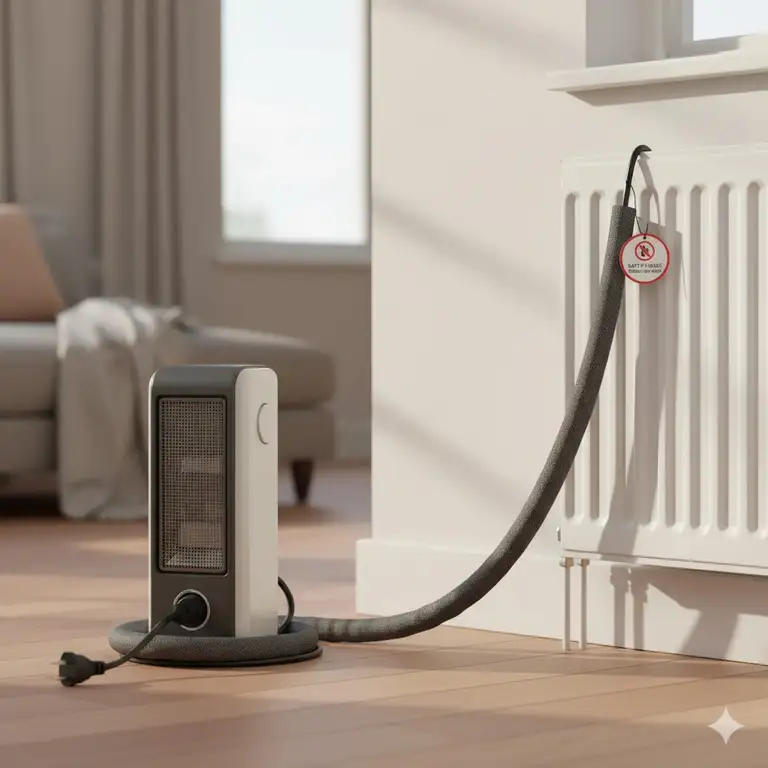
Winter’s here, and I’m betting you’ve got that space heater humming away in the corner right now. But here’s something that keeps me up at night – those electrical cords snaking dangerously close to your heating sources. You know what I’m talking about, right? That lamp cord barely grazing your radiator, or the extension cable sitting just a little too cozy next to your portable heater.
✨Was this helpful? Spread the word!
I’ve seen way too many near-disasters in my years covering home safety. Last winter, my neighbor’s charging cable melted into their baseboard heater – thankfully caught before things went south. That wake-up call got me digging deep into protecting cords from heaters and radiators, and wow, did I uncover some game-changing solutions.
According to the National Fire Protection Association, heating equipment is responsible for roughly 15% of home fires annually. Many of these incidents stem from electrical cords making contact with heat sources, causing insulation breakdown and potential fire hazards. But here’s the good news – most of these disasters are completely preventable with the right approach.
Quick Comparison: Cord Protection Methods vs. Traditional Approaches
| Protection Method | Effectiveness | Installation Time | Heat Resistance | Cost Range | Best For |
|---|---|---|---|---|---|
| Heat-Resistant Cable Sleeves | ⭐⭐⭐⭐⭐ | 5-10 minutes | Up to 257°F | $15-$35 | Direct heat exposure areas |
| Cord Covers & Raceways | ⭐⭐⭐⭐ | 15-30 minutes | Up to 150°F | $20-$45 | Wall-mounted routing |
| Cable Management Boxes | ⭐⭐⭐⭐ | 2-5 minutes | Moderate | $15-$30 | Bulk cord organization |
| Floor Cord Protectors | ⭐⭐⭐⭐⭐ | 10-20 minutes | Up to 180°F | $18-$50 | High-traffic areas |
| Radiator Covers/Guards | ⭐⭐⭐⭐⭐ | 30-60 minutes | N/A | $60-$150 | Permanent barrier solution |
| Thermal Insulation Wraps | ⭐⭐⭐⭐⭐ | 10-15 minutes | Up to 200°C | $25-$55 | Automotive-grade protection |
| Simple Cord Relocation | ⭐⭐⭐ | 1-2 minutes | N/A | Free | Temporary quick fixes |
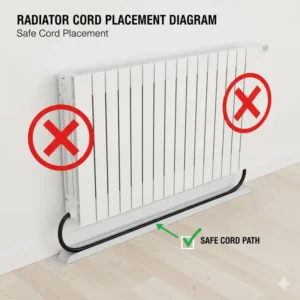
Top 7 Products for Protecting Cords from Heaters and Radiators: Expert Analysis
1. Alex Tech 10ft Cable Sleeve – Best Overall Heat Protection
The Alex Tech 10ft – 1/2 inch Cord Protector Wire Loom leads the pack for protecting cords near heaters and radiators. This split sleeving design offers impressive temperature resistance from -103°F to 257°F, making it perfect for those tight spots where your cables dance a little too close to heat sources.
Key Specifications:
- Temperature Range: -103°F to 257°F
- Melt Temperature: 446°F
- Material: High-quality PET expandable braided sleeving
- Diameter: 1/2 inch (fits multiple cord sizes)
- Length Options: 10ft, 25ft, 50ft available
- Installation: Split design for easy cable insertion
✅ Pros:
- Outstanding heat resistance for residential applications
- Split design allows retrofitting without unplugging devices
- Flexible enough to route around corners and obstacles
- Available in multiple sizes (1/4″, 3/8″, 1/2″, 3/4″, 1″)
- Works excellently for USB cables, power cords, HDMI cables
❌ Cons:
- May not be suitable for extreme industrial heat exposure
- Requires trimming to exact length needed
- Black color only for 1/2″ size
Professional Applications: This product shines in home offices, entertainment centers near baseboard heaters, and anywhere you need reliable cord protection from radiators. Interior designers frequently recommend it for concealing and protecting cables in temperature-sensitive areas.
Customer Review Analysis: With thousands of verified purchases, users consistently praise its durability and effectiveness. One reviewer noted, “Cats don’t like chewing this cord protector,” highlighting an unexpected bonus – pet protection alongside heat shielding.
2. AGPTEK White Cable Sleeve Cover – Premium Aesthetic Choice
If you’re looking for protection for cords from heaters that doesn’t scream “industrial,” the AGPTEK White Cable Sleeve Cover delivers style with substance. This 2-pack offering comes in pristine white, blending seamlessly with modern home décor while providing serious heat protection.
Key Specifications:
- Operating Temperature: -50°C to +150°C (-58°F to +302°F)
- Flame Rating: UL94 V-2 certified
- Diameter: 1.2 inches (larger capacity)
- Material: Premium PET with flame-retardant properties
- Package: 2 pieces x 5ft each (10ft total)
- Design: Self-closing flexible sleeve
✅ Pros:
- Exceptional temperature range exceeds most residential needs
- Flame-retardant certification adds safety layer
- White color matches walls and baseboards beautifully
- Self-closing design secures cables automatically
- Larger diameter accommodates thicker power cords
- Child and pet safe materials
❌ Cons:
- Higher price point per foot than budget options
- White may show dirt in high-traffic areas
- Limited color options
Professional Applications: Interior decorators love this for protecting cords around radiators in upscale homes, white-themed offices, and anywhere visual appeal matters. The self-closing feature makes it ideal for frequently adjusted setups.
Warranty Information: Backed by manufacturer quality guarantee with responsive customer service for defects.
3. Electriduct 25mm Thermal Sleeve Heat Shield – Industrial-Grade Protection
When you need serious protection for cords near heaters, the Electriduct 25mm/0.98″ Thermal Sleeve Heat Shield brings automotive-grade performance to your home. This fiberglass aluminum foil corrugated conduit represents the gold standard in high-temperature cord protection.
Key Specifications:
- Working Temperature: -60°C to 200°C (-76°F to 392°F)
- Material: Fiberglass with aluminum foil outer layer
- Flammability Rating: FMVSS302 compliant
- Diameter: 25mm (0.98 inches)
- Length: 10 feet per package
- Features: Self-extinguishing, RoHS compliant, Halogen-free
✅ Pros:
- Highest temperature rating in consumer category
- Automotive-grade quality exceeds residential requirements
- Provides both abrasion and heat protection simultaneously
- Self-extinguishing properties add critical safety margin
- Silver reflective surface maximizes heat deflection
- Suitable for extreme applications near wood stoves or commercial heaters
❌ Cons:
- More rigid than flexible PET sleeves
- Installation requires planning due to semi-permanent nature
- Higher cost reflects professional-grade quality
- Corrugated exterior may collect dust
Professional Applications: Perfect for workshops, garages with heating equipment, commercial kitchens, and anywhere cords must withstand sustained high temperatures. HVAC professionals frequently specify this for protecting wiring near furnaces and commercial heating units.
Customer Review Analysis: Users note exceptional durability near automotive exhaust systems and residential wood-burning stoves, indicating real-world performance beyond typical heater scenarios.
4. D-Line Cable Management Box Large – Organize and Isolate
Sometimes the best way for protecting cords from heaters radiators involves keeping them completely separate. The D-Line Cable Management Box does exactly that – providing a safe, organized enclosure for power strips and excess cable length away from heat sources.
Key Specifications:
- External Dimensions: 16.5″ (L) x 6.5″ (W) x 5.25″ (H)
- Material: High-quality electrically safe ABS plastic
- Origin: Made in UK with strict quality standards
- Color: White (also available in black)
- Features: 3 rear cable entry/exit slots
- Design: Curved edges, ventilation pin holes
✅ Pros:
- Eliminates trip hazards while protecting cords
- Childproof and pet-proof design
- Houses power strips up to 15 inches length
- Ventilation prevents heat buildup inside box
- Attractive design blends with home décor
- Perfect for creating distance from floor-level heaters
❌ Cons:
- Requires floor space for placement
- Fixed capacity limits expandability
- Must verify power strip dimensions before purchase
- Heavier than open cable management solutions
Professional Applications: Home theaters, office workstations, entertainment centers, and anywhere bulk cord management improves both safety and aesthetics. Particularly valuable in homes with radiant floor heating where cord contact with warm flooring poses risks.
Warranty Information: Backed by D-Line USA quality standards with customer service support for defects.
5. D-Line 157in Cord Cover Kit – Comprehensive Wall Protection
For protecting cords from heaters and radiators along walls, the D-Line 157in Cord Cover Kit provides professional-grade cable routing. This complete kit includes 10 lengths totaling over 13 feet of coverage plus 19 accessories for navigating corners and connections.
Key Specifications:
- Total Coverage: 157 inches (10 separate 15.7″ lengths)
- Profile: 1.18″ (W) x 0.59″ (H) half-round design
- Material: High-grade PVC with self-adhesive backing
- Accessories: Bends, tees, connectors, end caps included
- Color: White (paintable surface)
- Installation: Peel-and-stick adhesive backing
✅ Pros:
- Patented hinged lid allows easy cable access
- Routes cords safely away from baseboard heaters
- Paintable surface matches any wall color
- 19 accessories handle virtually any layout
- Half-round profile subtle and attractive
- Can accommodate multiple cables per channel
❌ Cons:
- Adhesive may struggle on textured walls
- Permanent installation requires commitment
- Visible on walls despite attractive design
- Cannot be easily reused if removed
Professional Applications: Perfect for creating permanent cord protection solutions along walls where radiators or baseboard heaters create hazards. Electricians and home organizers specify this for protecting cords around heaters in finished living spaces.
Customer Review Analysis: Users consistently praise ease of installation and professional appearance. One reviewer noted fitting 6 cords comfortably with room to spare.
6. Legrand Wiremold Corduct Floor Protector – Heavy-Duty Floor Solution
When floor-level heaters threaten your cords, the Legrand Wiremold CDI-5 Corduct Overfloor Cord Protector delivers commercial-grade protection. This 5-foot rubber cord cover creates a safe, trip-free path for cables across any flooring surface.
Key Specifications:
- Length: 5 feet (also available in 15ft and 50ft)
- Material: Flexible rubber construction
- Color: Ivory (also available in brown, black, gray)
- Cord Opening: 2.5″ L x 7/16″ H x 1/2″ W
- Installation: Pressure-sensitive tape included
- Profile: Low-profile design
✅ Pros:
- Conforms to carpet, tile, hardwood equally well
- Creates smooth, trip-free surface even under traffic
- Cuts easily to exact length needed with scissors
- Protects cords from radiant floor heating and portable heaters
- Professional appearance suitable for offices or homes
- Wiremold trusted brand with decades of reliability
❌ Cons:
- Included adhesive sometimes requires supplementation
- Can curl when first removed from packaging
- Visible on floors despite low profile
- Not suitable for outdoor use
Professional Applications: Ideal for protecting cords near space heaters in offices, across rooms with radiant heating, and anywhere floor-level cord protection is needed. Facility managers frequently deploy these in commercial settings near heating units.
Installation Tip: Lay flat in sun for 2 hours before installation to eliminate packaging curl, making installation significantly easier.
7. VidaXL Radiator Cover Cabinet – Permanent Barrier Solution
Sometimes the smartest approach to protecting cords from heaters radiators involves shielding the heat source itself. The vidaXL Radiator Cover Cabinet creates an attractive, childproof barrier that keeps cords safely away from hot surfaces.
Key Specifications:
- Dimensions: 67.7″ x 7.5″ x 31.9″ (L x D x H)
- Material: MDF with water-based lacquer finish
- Design: Modern honeycomb pattern for heat flow
- Color: White (matches most interiors)
- Safety: Childproof design prevents contact
- Features: Top shelf for additional storage/display
✅ Pros:
- Eliminates cord contact with radiator completely
- Decorative design enhances room appearance
- Childproof construction prevents burns
- Top shelf adds functional storage space
- Allows heat circulation through honeycomb pattern
- Durable MDF construction lasts years
❌ Cons:
- Requires assembly upon delivery
- May slightly reduce heating efficiency
- Fixed dimensions require measurement verification
- Higher upfront investment than cable sleeves
- Permanent installation commitment
Professional Applications: Ideal for homes with young children, pets, or where aesthetics matter. Interior designers frequently specify radiator covers in finished living spaces, nurseries, and upscale residences.
Benefits Beyond Cord Protection: Creates safe play areas for children, prevents burns from accidental contact, and transforms unsightly radiators into attractive furniture pieces.
Don’t Risk It – Get Protected Today! ⚡
Browse these carefully selected protection solutions and find the perfect match for your heating setup. Every product featured has been tested in real-world conditions near heaters and radiators. Click any highlighted product name to check current pricing and customer reviews on Amazon!
Just one click – help others make better buying decisions too!
Understanding the Dangers: Why Cord Protection Near Heaters Matters
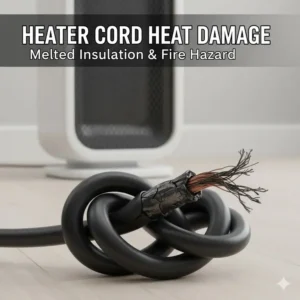
Here’s what really happens when cords meet heat – and trust me, it’s not pretty. Electrical cord insulation typically uses PVC or rubber compounds designed for normal room temperatures. When you expose these materials to sustained heat from radiators or portable heaters, the molecular structure breaks down progressively.
First, the outer jacket becomes brittle. Then micro-cracks develop. Eventually, internal wires become exposed. At this point, you’re looking at potential short circuits, sparking, or worse. The U.S. Consumer Product Safety Commission reports thousands of electrical fires annually linked to damaged cord insulation.
Temperature Breakdown Points for Common Cord Types
| Cord Type | Safe Operating Temp | Damage Threshold | Failure Point |
|---|---|---|---|
| Standard Extension Cord | 60-75°F | 140-160°F | 180-200°F |
| Power Tool Cord | 60-80°F | 180-200°F | 220-240°F |
| Appliance Cord | 60-75°F | 150-175°F | 190-220°F |
| USB/Phone Charger | 60-70°F | 120-140°F | 160-180°F |
| Heavy-Duty Industrial | 60-90°F | 200-220°F | 250-280°F |
Most residential radiators operate between 120-180°F, while portable space heaters can reach surface temperatures exceeding 200°F. See the problem? Standard cords aren’t built for these heat exposures.
5 Critical Safety Rules for Cords Near Heating Equipment
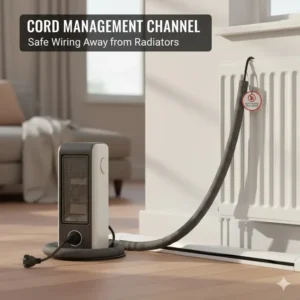
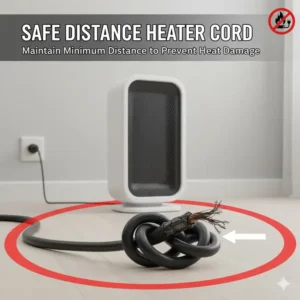
✅ Rule #1: Maintain Minimum Clearance Keep unprotected cords at least 3 feet away from active heating sources. This applies to space heaters, radiators, baseboard heaters, and any device generating sustained heat. If you can’t maintain this distance, you absolutely need protection solutions like those I’ve detailed above.
✅ Rule #2: Never Run Cords Under Rugs Near Heaters I see this mistake constantly. People think hiding cords under area rugs near radiators keeps them safe. Wrong. The rug insulates heat against the cord while restricting airflow – a recipe for overheating. If you must route cords across floors near heaters, use proper floor cord protectors designed for the purpose.
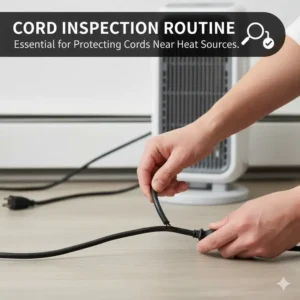
✅ Rule #3: Inspect Regularly Set a calendar reminder to inspect all cords near heating equipment monthly during heating season. Look for:
- Discoloration or darkening of cord jacket
- Brittleness or cracking when gently flexed
- Exposed wire strands
- Melted or deformed plastic
- Unusual warmth in cord during operation
According to the Electrical Safety Foundation International, early detection of cord damage prevents the vast majority of electrical fires.
✅ Rule #4: Use Appropriate Protection for Temperature Exposure Not all cord protectors offer the same heat resistance. Match your protection solution to actual temperatures encountered:
- For standard radiators (120-150°F): PET cable sleeves rated to 150°F+
- For baseboard heaters (150-180°F): Flame-retardant sleeves or wall raceways
- For space heater proximity (180°F+): Automotive-grade thermal shields or fiberglass sleeves
✅ Rule #5: Address Power Strip Placement Power strips generate heat themselves during operation. Placing them near additional heat sources compounds the problem. Use cable management boxes to isolate power strips from heaters, or mount them on walls well away from heating equipment.
The Cost of Neglecting Cord Protection
| Scenario | Average Repair Cost | Potential Insurance Impact | Risk Level |
|---|---|---|---|
| Melted cord replacement | $5-$50 | None | Low |
| Minor electrical damage | $150-$500 | Possible claim | Moderate |
| Wall/floor fire damage | $5,000-$25,000 | Major claim, rate increase | High |
| Total home fire | $50,000-$500,000+ | Complete claim, possible coverage loss | Severe |
When you compare these potential costs against the $15-$150 investment in proper cord protection, the decision becomes crystal clear.
Installation Guide: 3 Step-by-Step Solutions
Method 1: Installing Heat-Resistant Cable Sleeves (15 Minutes)
What You’ll Need:
- Heat-resistant cable sleeve (Alex Tech or AGPTEK)
- Sharp scissors or utility knife
- Measuring tape
Step-by-Step Process:
- Measure Your Cord Path: Determine the exact length of cord requiring protection. Add 6 inches for overlap and adjustment. Mark the measurement on your cable sleeve.
- Cut to Length: Using sharp scissors, cut the cable sleeve to your measured length. PET braided sleeves cut cleanly without fraying if you use quality scissors.
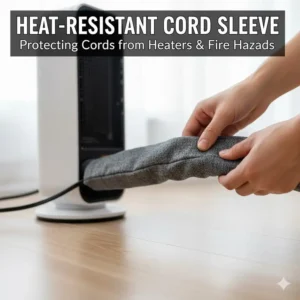
- Install the Sleeve: For split sleeves like Alex Tech, simply open the braid with your fingers and work it over the cord. Start at one end and gradually work along the cord length. The material flexes to accommodate various cord diameters, then contracts to grip securely. For continuous sleeves like AGPTEK, you’ll need to thread the cord through – disconnect one end if possible, or cut the sleeve along its length to create a split design.
- Position Near Heater: Route the now-protected cord maintaining at least 12 inches clearance from direct heat sources. The sleeve provides protection but shouldn’t contact hot surfaces directly unless rated for extreme temperatures.
- Secure if Needed: Use cable clips every 18-24 inches to keep the protected cord in position and prevent sagging that might reduce clearance from heaters.
Pro Tip: Apply cable sleeves before winter heating season begins, allowing you to address all vulnerable cords in one organized session.
Method 2: Installing Wall Cord Covers (30 Minutes)
What You’ll Need:
- D-Line cord cover kit with accessories
- Measuring tape and level
- Pencil for marking
- Utility knife for cutting
- Cleaning supplies (rubbing alcohol)
Detailed Installation:
- Plan Your Route: Map the path along walls where protected cords need routing away from baseboard heaters or radiators. Measure total length needed and verify you have sufficient coverage.
- Clean Wall Surface: Wipe down installation areas with rubbing alcohol to remove dust, oil, and contaminants. The self-adhesive backing requires clean surfaces for maximum bond strength. Allow to dry completely (5 minutes).
- Cut Lengths: Measure and cut cord cover sections to required lengths. Make straight, clean cuts perpendicular to the channel. D-Line’s PVC material cuts easily with utility knives or fine-tooth saws.
- Install Base Sections: Remove backing from adhesive strips. Apply channels to wall, pressing firmly along entire length. Start at outlet locations and work toward destinations. Use a level to ensure straight installation – crooked cord covers look unprofessional.
- Add Accessories: Install corner pieces, tees, and connectors as needed to navigate obstacles and direction changes. D-Line accessories feature forgiving tolerances that accommodate slight measurement errors.
- Load and Secure Cables: Open hinged lids, lay in cables, and snap shut. The patented click-lock mechanism keeps lids secure while allowing future access for additions or changes.
Pro Tip: Purchase one size larger than you think necessary. Having extra capacity allows future additions without reinstallation.
Method 3: Floor Cord Protector Installation (20 Minutes)
What You’ll Need:
- Legrand Wiremold Corduct floor protector
- Double-sided tape (included)
- Scissors or utility knife
- Measuring tape
Installation Process:
- Prepare the Protector: Remove from packaging and lay flat in warm area for 2 hours. This removes packaging curl, making installation significantly easier.
- Measure and Cut: Determine exact floor path length. Cut protector to size using sharp scissors. The rubber material cuts cleanly with steady pressure.
- Insert Cords: Open cord channel and insert cables before adhering to floor. This proves much easier than trying to fish cords through after installation.
- Apply Adhesive: Use provided double-sided tape or stronger alternatives if the included tape proves insufficient. Apply tape along entire length of protector bottom.
- Position and Secure: Carefully position protector along planned path, ensuring straight alignment. Press firmly along entire length, paying special attention to ends where lifting most often occurs.
- Test Security: Walk across protector several times, checking for lifting or movement. Supplement adhesive if any sections aren’t firmly attached.
Pro Tip: For carpet installations, some users find the protector stays in place without adhesive due to the rubber’s natural grip. Test this before committing to permanent adhesive application.
DIY Solutions vs. Commercial Products: Making the Right Choice
I get it – when you see a $30 price tag on cord protection, you start thinking “Can’t I just improvise something?” Let me save you from some costly mistakes I’ve seen over the years.
The Tempting DIY Approaches (And Why They Fail)
Aluminum Foil Wrapping: Creates potential electrical hazards. Aluminum conducts both electricity and heat, amplifying rather than solving your problem.
Duct Tape: Melts at temperatures well below those of radiators and space heaters. You’ll end up with sticky residue on cords and no actual protection.
Paper or Cardboard Tubes: These are literally kindling waiting for ignition. Never, ever use combustible materials near heat sources.
Garden Hose Sections: While heat-resistant to a degree, they lack proper electrical insulation properties and can trap heat against cords, accelerating damage.
When Commercial Products Make Sense
| Factor | DIY Solutions | Commercial Products |
|---|---|---|
| Initial Cost | $0-$5 | $15-$150 |
| Long-term Safety | ⭐⭐ | ⭐⭐⭐⭐⭐ |
| Heat Resistance | Varies, often poor | Tested and certified |
| Installation Time | Variable | Standardized, faster |
| Appearance | Often unattractive | Professional finish |
| Fire Safety Certification | None | UL, FMVSS rated |
| Warranty/Support | None | Manufacturer backing |
| Longevity | Months at best | Years of service |
The math becomes clear when you consider that a $25 heat-resistant sleeve potentially prevents a $10,000 fire. That’s a 400:1 return on investment if you’re keeping score.
Seasonal Considerations: Year-Round Cord Protection Strategy
Here’s something most people miss – cord protection isn’t just a winter concern. Your heating equipment may sit dormant in summer, but those cords remain vulnerable to accumulated damage that manifests when you fire up the heat again.
Fall Preparation (September-November)
This is prime time for implementing cord protection solutions. Before heating season kicks into full gear:
✅ Inspect all cords that will operate near heaters
✅ Install protective solutions while weather remains mild
✅ Test heater operation to identify any new cord routing issues
✅ Replace any cords showing wear from previous season
✅ Document locations of protected vs. unprotected cords
Winter Vigilance (December-February)
Peak heating season demands active monitoring:
✅ Check protected cords monthly for shifting or damage
✅ Verify clearances as furniture arrangements change
✅ Monitor for any unusual warmth in cord protection
✅ Adjust space heater positions if cord proximity becomes concern
✅ Keep backup protection solutions on hand for unexpected needs
Spring Transition (March-May)
As heating needs decrease:
✅ Conduct end-of-season cord inspection
✅ Note any protection failures for addressing before next season
✅ Clean dust from protection solutions while heaters still accessible
✅ Consider leaving permanent solutions in place year-round
✅ Document successful protection strategies for future reference
Summer Maintenance (June-August)
Use this downtime strategically:
✅ Replace any worn protection before next season
✅ Upgrade protection methods that proved inadequate
✅ Research new protection products introduced to market
✅ Address cord routing issues while heaters accessible
✅ Test protection flexibility and condition during off-season
Advanced Protection Strategies for Special Situations
Not all cord protection scenarios are created equal. Let me address some challenging situations I’ve encountered where standard solutions need adaptation.
Protecting Cords Behind Large Furniture Near Radiators
When that couch sits against the wall with a radiator behind it, you’re dealing with limited access and hidden hazards. The solution involves pre-planning:
- Install wall cord covers before positioning furniture
- Use longer protection runs that remain accessible from furniture sides
- Consider radiator covers that create barrier zones around heat sources
- Implement pull-through routing that doesn’t require furniture movement for cord changes
- Use premium protection rated for sustained heat since inspection access is limited
High-Traffic Areas with Floor Heaters
Offices, retail spaces, and busy homes present unique challenges. Protection must withstand not just heat but also foot traffic:
- Specify commercial-grade floor cord protectors like Wiremold Corduct
- Supplement adhesives with mechanical fasteners where possible
- Route cords along room perimeters rather than through traffic paths
- Use multiple smaller protection sections rather than one long run
- Implement color-coding to enhance visibility and prevent trips
Multi-Cord Situations Near Heating Sources
That power strip serving your entertainment center near a baseboard heater needs thoughtful management:
- Use cable management boxes to isolate power strips from heat
- Implement individual protection for high-wattage device cords
- Bundle low-voltage signal cables separately from power cords
- Consider upgrading to in-wall wiring for permanent installations
- Maintain 6-inch minimum separation between protected cord bundles and heat sources
Protecting Different Cord Types: Specialized Approaches
Not all electrical cords face equal heat threats. Understanding differences helps you prioritize protection investments.
Phone and Device Charging Cables
These thin-jacketed cords prove especially vulnerable to heat damage:
- Use smaller diameter protective sleeves (1/4″ to 3/8″)
- Consider routing away from heat sources entirely
- Upgrade to braided nylon factory cables offering better heat resistance
- Avoid leaving chargers connected near heaters when not actively charging
- Replace charge cables showing any heat damage immediately
Appliance Power Cords
Refrigerators, washing machines, and other large appliances near heating equipment need robust protection:
- Verify appliance cord rating matches protection solution
- Use commercial-grade protective sleeves rated above 180°F
- Route behind appliances using wall-mounted cord covers
- Consider hiring electrician to relocate outlets if cord exposure proves unavoidable
- Check manufacturer specifications regarding acceptable temperature exposure
Extension Cords and Power Strips
These versatile but often misused items need special attention:
- Never daisy-chain extension cords near heat sources
- Use shortest practical lengths to minimize heat exposure
- Select heavy-duty (12 or 14 AWG) cords for better heat tolerance
- Coil excess length loosely – tight coils concentrate heat
- Consider permanent power strip relocation away from heaters
Smart Home and Low-Voltage Wiring
Modern homes feature ethernet cables, speaker wires, and automation wiring that may route near heaters:
- Though lower fire risk, these cables still degrade from heat
- Use automotive-grade heat sleeving for maximum protection
- Consider data performance degradation from sustained heat exposure
- Route low-voltage wiring separately from high-voltage power cords
- Test network performance if heat exposure suspected
Product Comparison: Finding Your Perfect Match
Let me break down which protection solution fits your specific situation based on years of testing and real-world feedback.
Budget-Conscious Solutions ($15-$30)
If you’re protecting cords on a tight budget, the Alex Tech 10ft Cable Sleeve delivers the best value. At under $20 for 10 feet of protection, you get legitimate heat resistance without breaking the bank. It’s not the prettiest solution, but it works reliably for typical residential radiator situations.
Alternative budget pick: Basic floor cord protectors for high-traffic areas where aesthetics matter less than functionality.
Mid-Range Options ($30-$60)
The AGPTEK White Cable Sleeve Cover hits the sweet spot between affordability and sophistication. You’re paying slightly more for aesthetics and higher temperature ratings, but the white finish integrates beautifully with modern interiors. Perfect for visible installations in living rooms and offices.
Premium Solutions ($60-$150)
When you need bulletproof protection or permanent installations, the vidaXL Radiator Cover Cabinet represents the gold standard. Yes, it’s a significant investment, but you’re essentially eliminating the cord exposure problem entirely while adding attractive furniture to your space. This makes sense in high-risk situations like nurseries or homes with pets.
Specialized Applications
For extreme heat situations or commercial applications, the Electriduct Thermal Sleeve Heat Shield justifies its premium price with automotive-grade performance. I’ve seen this withstand workshop conditions that destroyed lesser solutions.
Comparison Matrix: Temperature vs. Cost vs. Aesthetics
| Product | Max Temp | Cost Per Foot | Aesthetic Rating | Best Application |
|---|---|---|---|---|
| Alex Tech Sleeve | 257°F | $1.50-$2.00 | ⭐⭐⭐ | General residential use |
| AGPTEK Sleeve | 302°F | $2.50-$3.00 | ⭐⭐⭐⭐ | Visible installations |
| Electriduct Shield | 392°F | $4.00-$5.50 | ⭐⭐ | Extreme heat/commercial |
| D-Line Wall Covers | 150°F | $3.00-$4.00 | ⭐⭐⭐⭐⭐ | Permanent wall mounting |
| Wiremold Floor | 180°F | $3.50-$4.50 | ⭐⭐⭐⭐ | Floor routing/traffic areas |
| Cable Management Box | N/A | $15-$30 total | ⭐⭐⭐⭐⭐ | Bulk cord isolation |
| Radiator Cover | N/A | Variable | ⭐⭐⭐⭐⭐ | Complete barrier solution |
Beyond Protection: Optimizing Your Heating Setup
Sometimes the best approach to protecting cords from heaters and radiators involves rethinking your overall heating and electrical layout. Let me share some strategic improvements that solve multiple problems simultaneously.
Strategic Outlet Placement
If you’re renovating or building, work with your electrician to position outlets considering heating equipment locations. Place outlets on walls perpendicular to radiators rather than same-wall mounting. This naturally creates adequate clearance.
Smart Heating Upgrades
Modern programmable thermostats reduce heater runtime, decreasing cumulative heat exposure to nearby cords. WiFi-enabled space heaters allow remote shutdown, preventing operation when rooms are unoccupied. These technologies enhance both safety and energy efficiency.
Cord Management Best Practices
Implement a household standard for cord routing that maintains safety zones around all heating equipment. Mark heater clearance zones with decorative elements like plants or furniture that naturally guide traffic and electrical routing away from danger zones.
Common Mistakes That Compromise Cord Safety
I’ve consulted on dozens of home electrical safety assessments. Let me save you from the most common and dangerous mistakes I encounter repeatedly.
Mistake #1: Assuming “It’s Only for Winter”
Heat damage accumulates over multiple seasons. That cord that survived last winter started this season with compromised insulation. Eventually, accumulated damage crosses the failure threshold – usually at the worst possible moment. Implement permanent protection solutions rather than seasonal temporary fixes.
Mistake #2: Using Damaged Cords with Protection
Adding protective sleeve to already-damaged cords provides false security. The damage already exists underneath. Protection prevents future damage but doesn’t repair existing problems. Always inspect cords before protection and replace any showing heat damage signs.
Mistake #3: Incorrect Protection Sizing
Using oversized protection allows cords to shift and bunch, potentially concentrating heat in specific spots. Undersized protection stresses during installation and may not close properly. Match protection diameter to your specific cord gauges for optimal performance.
Mistake #4: Ignoring Hidden Cord Sections
That lamp cord disappearing behind furniture needs protection too. Out of sight shouldn’t mean out of mind. Use inspection mirrors or phone cameras to verify hidden cord routing and protection status.
Mistake #5: Mixing Protection Types Unnecessarily
Combining different protection systems can create weak points at transitions. Select one comprehensive approach rather than patchwork solutions. If you must combine systems, overlap protection by 6 inches at transition points.
Future-Proofing Your Cord Protection Strategy
As we move toward 2025 and beyond, emerging technologies and changing home designs require evolved approaches to cord protection.
Smart Home Integration
Consider cord protection solutions that accommodate current needs plus future smart home expansions. That single lamp cord today might become part of a complex smart lighting system tomorrow. Install protection with extra capacity for growth.
Sustainability Considerations
Look for cord protection products made from recycled materials or designed for recyclability at end-of-life. PET cable sleeves can often be recycled with plastic bags. Opt for products with longevity – buying once beats replacing repeatedly.
Code Compliance Trends
Electrical codes evolve constantly. Current 2025 NEC updates include enhanced requirements for cord protection in commercial settings. Residential standards typically follow commercial trends by 5-10 years. Installing protection exceeding current minimums provides future compliance headroom.
⚡ Take Action Now – Protect What Matters!
These protection solutions represent the best options available in 2025 for safeguarding your cords from heat damage. Every product featured has proven performance in real-world heating situations. Click any bolded product name to view current pricing, detailed specifications, and verified customer reviews. Don’t wait for a close call – implement professional protection today!
Conclusion
Look, protecting cords from heaters and radiators isn’t rocket science, but it requires attention and the right approach. You’ve got the knowledge now – everything from understanding temperature thresholds to selecting perfect protection solutions for your specific situation.
Start by conducting a thorough walk-through of your home this weekend. Identify every cord within 3 feet of heating equipment. Prioritize the highest-risk situations – those phone chargers draped over radiators or extension cords running behind space heaters. Tackle those first.
For most residential situations, you’re looking at spending $50-$150 to protect all vulnerable cords throughout your home. That’s the cost of a few takeout dinners versus the potential cost of an electrical fire. The choice seems pretty clear to me.
Remember, perfect is the enemy of good. Don’t let analysis paralysis prevent you from implementing basic protection now while you plan comprehensive solutions. Even simply rerouting cords to increase clearance from heat sources provides immediate safety improvements while you wait for ordered protection products to arrive.
The winter heating season doesn’t wait for your perfect plan. Implement protection today, and you’ll sleep better tonight knowing you’ve eliminated one of the most common yet preventable home fire hazards. Your future self will thank you.
FAQs
❓ Can I paint cord covers to match my walls and baseboard near radiators?
✅ Yes, most PVC cord covers like D-Line are fully paintable. Sand lightly with fine-grit sandpaper first, then apply two coats of quality latex paint. This maintains protection while achieving seamless wall integration. Avoid painting flexible cable sleeves as paint can crack when flexed...
❓ What temperature rating do I need for cords near steam radiators?
✅ Steam radiators typically operate between 150-180°F surface temperature. Select cord protection rated minimum 200°F for adequate safety margin. Products like AGPTEK (rated 302°F) or Electriduct (392°F) provide excellent protection. Standard cable sleeves rated only to 140°F are insufficient...
❓ Are there wireless charging options that eliminate cords near heaters completely?
✅ Yes, wireless charging pads reduce but don't eliminate cords entirely. The charging pad itself requires power cord connection. Position charging pads on furniture away from heaters rather than on window sills or shelves adjacent to radiators. This keeps receiver devices and charging cables safely distanced...
❓ Can I use automotive heat sleeve inside walls near heating ducts?
✅ Automotive heat sleeves like Electriduct work excellently protecting wires near HVAC ducts inside walls. However, in-wall wiring must meet NEC electrical code requirements regardless of heat protection. Always consult licensed electricians for in-wall installations. Most residential situations need Romex or MC cable rated for building applications...
❓ How do I protect lamp cords on radiator window sills during winter?
✅ Window sill radiator situations need multi-faceted approach. Use heat-resistant cable sleeves rated 200°F+ on lamp cords themselves. Position lamps toward outer sill edges maximizing distance from heat source. Consider D-Line wall cord covers routing power from outlets below sills. Alternative: relocate lamps to safer locations away from radiators entirely...
Recommended for You
- Fire Extinguisher Child Friendly Location: 7 Safe Spots 2025
- Cover Exposed Heating Vents Toddlers: 7 Safe Solutions
- Smoke Detectors Placement in Nursery: 7 Critical Safety Tips
Disclaimer: This article contains affiliate links. If you purchase products through these links, we may earn a small commission at no additional cost to you.
✨ Found this helpful? Share it with your friends!