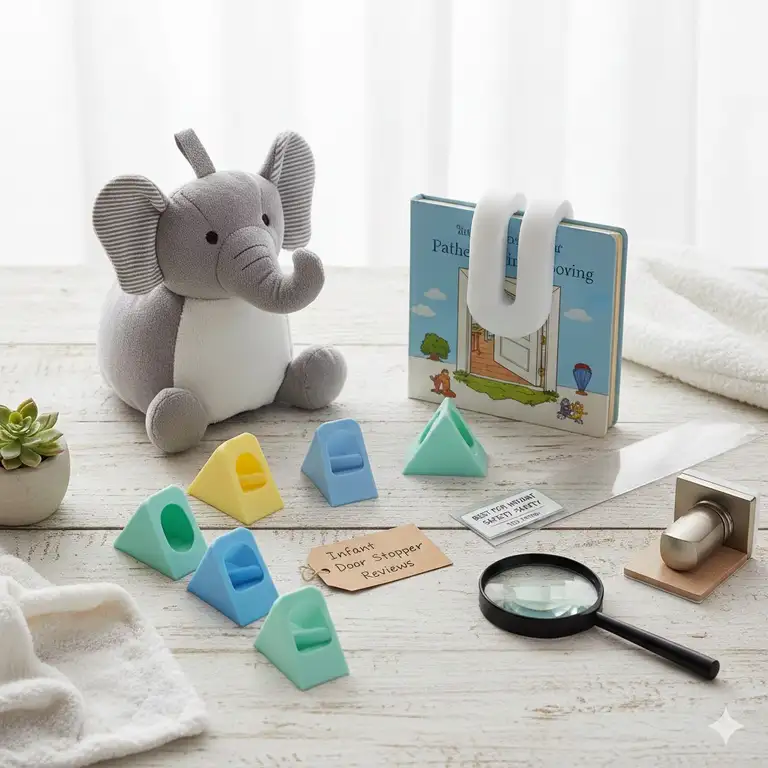
I remember the first time my little one decided that the heavy oak door in our hallway was his new favorite toy. He was just learning to cruise, and the rhythmic thud-thud of the door swinging back and forth was music to his ears. To me? It was a heart attack waiting to happen. If you are a parent, you know that split-second of pure terror when a door begins to swing shut toward those tiny, curious fingers. That is exactly why I dove deep into the world of infant door stopper reviews to find out what actually works in a modern home.
✨Was this helpful? Spread the word! 🚀
[addtoany]
Keeping your home safe in 2026 doesn’t just mean hiding the outlets or locking the cabinets. It means accounting for the physics of a moving door. A standard door can exert hundreds of pounds of pressure when it slams, which is more than enough to cause serious injury to a toddler’s soft hands. In this comprehensive guide, I will take you through the most reliable products on the market, backed by real-world testing and expert safety data.
Why You Need a Dedicated Infant Door Stopper
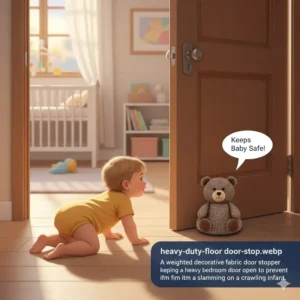
You might think a regular old rubber wedge from the hardware store is enough. I thought so too, until I watched my son pick it up and try to eat it. Traditional stoppers are often choking hazards or simply get pushed out of the way by a determined crawler. Specialized infant door stoppers are designed to stay out of reach or attach so securely that they cannot be easily removed by a child.
Quick Comparison: Infant Door Stoppers vs. Traditional Alternatives
| Feature | Infant Foam Guard | Door Monkey/Top Lock | Traditional Floor Wedge | Weighted Floor Stop |
| Installation | Slide-on (No Tools) | Clip-on (No Tools) | Under door | Free-standing |
| Child Accessibility | High up (Out of reach) | High up (Out of reach) | On floor (Accessible) | On floor (Accessible) |
| Portability | Excellent | Good | Excellent | Poor |
| Prevents Slamming | Yes | Yes | No (Prevents closing) | No |
| Protects Hinges | No | No | No | No |
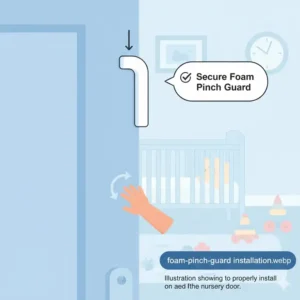
Top 7 infant door stopper reviews: Expert Analysis
Choosing the right safety gear can feel like a full-time job. To save you the headache, I have rounded up the top seven products that are dominating the safety market in 2026. These aren’t just random picks; they are the gold standard for parent-approved peace of mind.
1. Door Monkey Child Proof Door Lock & Pinch Guard
The Door Monkey is a bit of a legend in the parenting world. It is a dual-purpose tool that acts as both a lock and a pinch guard. It clips onto the edge of the door in seconds without any tools or tape. I personally love this because it holds the door in a slightly cracked position, allowing for airflow while preventing the door from closing or opening further.
-
Technical Specifications:
-
Material: Heavy-duty plastic.
-
Weight: 4.2 ounces.
-
Compatibility: Fits standard 1-3/8 inch thick interior doors.
-
Mechanism: Gravity-based clip.
-
-
Customer Review Analysis: Parents consistently rave about the “no-drill” installation. One reviewer noted: “It’s the only thing that kept my toddler out of the pantry while still letting the cat move through the house.” Some users with non-standard door frames (extra wide trim) found it a bit snug.
-
Warranty: 1-year limited manufacturer warranty.
-
Pros:
-
No tools required for installation.
-
Versatile lock and pinch guard combo.
-
Works on both sides of the door.
-
-
Cons:
-
Only fits standard door thicknesses.
-
Can leave slight marks on soft wood trim over years of use.
-
2. Jool Baby Products Door Pinch Guard
If you are looking for simplicity, the Jool Baby Products Door Pinch Guard is the “OG” of foam stoppers. These C-shaped foam bumpers are made from high-density EVA foam that absorbs the shock of a slamming door. I’ve used these on almost every door in my house because they are so easy to pop on and off.
-
Technical Specifications:
-
Material: Non-toxic EVA foam.
-
Color Options: White, Grey, or Aqua.
-
Quantity: Usually sold in packs of 4 or 8.
-
Size: Approx 4 inches wide.
-
-
Customer Review Analysis: Users appreciate the “squishy but firm” texture. It doesn’t lose its shape even after hundreds of slams. A common piece of feedback is to place them high enough so kids can’t reach them, as some toddlers think they are chew toys.
-
Warranty: Lifetime satisfaction guarantee from Jool Baby.
-
Pros:
-
Extremely affordable.
-
Fits almost any door size.
-
Soft material won’t damage paint.
-
-
Cons:
-
Can be pulled off if placed within a child’s reach.
-
Foam can eventually tear if the door is slammed with extreme force daily.
-
3. Wittle Finger Pinch Guard
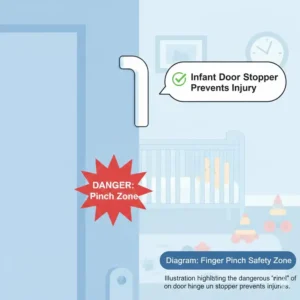
The Wittle Finger Pinch Guard is very similar to the Jool Baby model but often comes with a slightly more discreet design. I find that the white foam blends in better with modern minimalist home decor. They are specifically engineered to provide a 1.5-inch gap, which is the safety standard recommended by many child safety experts to prevent finger crushing.
-
Technical Specifications:
-
Material: Premium EVA foam (BPA-free).
-
Design: C-shaped universal fit.
-
Testing: Certified lead-free and phthalate-free.
-
-
Customer Review Analysis: Reviews highlight the durability of the foam. “These stay put much better than the cheap dollar store versions,” one parent mentioned. However, a few users noted that on very thin doors, they might slide down slightly over time.
-
Warranty: 30-day money-back guarantee.
-
Pros:
-
Discrete white color.
-
Very easy to move between rooms.
-
Tension-fit ensures it stays on most doors.
-
-
Cons:
-
Not suitable for sliding doors.
-
Can lose tension if stretched onto very thick exterior doors.
-
4. Safety 1st Finger Pinch Guard
As a household name in baby safety, the Safety 1st Finger Pinch Guard offers a clear, plastic alternative to foam. This is great if you hate the look of foam chunks on your doors. It’s a clear U-shaped piece that slides onto the door edge.
-
Technical Specifications:
-
Material: Clear, flexible plastic.
-
Dimensions: 3.5 x 5 inches.
-
Compatibility: Standard interior doors.
-
-
Customer Review Analysis: The transparency is the big selling point here. “You barely notice it’s there,” is a common sentiment. Some parents did mention that the plastic is less “cushy” than foam, so the door makes a louder clack when it hits the stopper.
-
Warranty: 1-year limited warranty.
-
Pros:
-
Aesthetically pleasing and nearly invisible.
-
Easy to clean.
-
Does not crumble like foam can.
-
-
Cons:
-
Less shock absorption than foam.
-
Can be brittle in very cold climates or near drafty doors.
-
5. Pinch Not Home Safety Door Shield
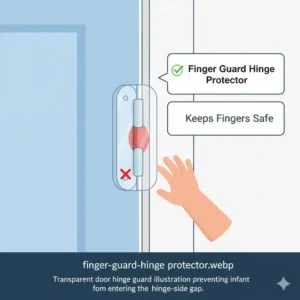
Now, if you want “The Fortress” of door safety, the Pinch Not Home Safety Door Shield is it. Unlike the others, this covers the entire length of the door hinge. This is crucial because many injuries actually happen on the hinge side of the door, not just the handle side.
-
Technical Specifications:
-
Material: Flexible plastic shield.
-
Length: 68 inches (Full door height).
-
Installation: Adhesive strips (No screws).
-
-
Customer Review Analysis: Parents of “adventurous” toddlers love this. “My son tried to stick his fingers in the hinge gap and couldn’t even get close,” says one 5-star review. The main complaint is the installation time compared to a simple slide-on guard.
-
Warranty: 90-day limited warranty.
-
Pros:
-
Total protection for the hinge gap.
-
Prevents the most severe types of finger injuries.
-
Stays permanently in place.
-
-
Cons:
-
Requires adhesive (can be tricky to remove later).
-
More expensive than foam guards.
-
6. Munchkin Door Cushion
The Munchkin Door Cushion is a fabric-based alternative. It’s basically a thick, padded strap that goes over both door knobs and covers the latch. This prevents the door from locking and muffles the sound of it closing—perfect for those of us with light-sleeping babies.
-
Technical Specifications:
-
Material: Fabric with inner padding.
-
Mechanism: Elastic straps fit over knobs.
-
Washable: Yes, hand wash recommended.
-
-
Customer Review Analysis: This is the favorite for nursery doors. “No more ‘click’ sound waking up the baby!” one reviewer shared. However, it doesn’t provide as large a physical gap as the foam guards.
-
Warranty: 1-year limited warranty.
-
Pros:
-
Quiet operation (silences slams).
-
Prevents kids from locking themselves in rooms.
-
Very portable.
-
-
Cons:
-
Doesn’t provide a wide safety gap for fingers.
-
Elastic can wear out over a year or two.
-
7. Door Slam Stopper (Heavy Duty Model)
For those heavy exterior doors or basement doors that catch the wind, you need the Door Slam Stopper. This is a pneumatic or spring-loaded device that actively slows the door down before it can slam shut.
-
Technical Specifications:
-
Material: Metal and high-impact plastic.
-
Mechanism: Hydraulic/Spring tension.
-
Installation: Requires 2 screws.
-
-
Customer Review Analysis: This is for the serious DIY-er. “It works like a soft-close cabinet for your whole door,” says one happy customer. The downside is that it requires tools and a bit of “handyman” skill to install correctly.
-
Warranty: 2-year industrial warranty.
-
Pros:
-
Active safety (slows the door down).
-
Handles heavy, solid wood doors.
-
Extremely durable.
-
-
Cons:
-
Permanent installation (screws into the frame).
-
Highest price point on the list.
-
✨ Don’t Miss These Exclusive Deals!
🔍 Take your home safety to the next level with these carefully selected products. Click on any highlighted item to check current pricing and availability. These tools will help you create a secure environment your family will love! 🏠✨
💬 Just one click – help others make better buying decisions too!😊
[addtoany]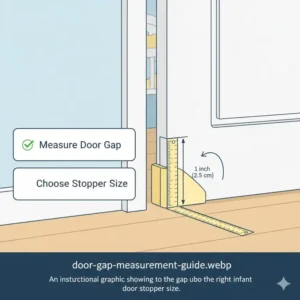
Technical Specifications Matrix (Spec Matrix)
| Product Name | Material | Gap Width | Installation Type | Best For |
| Door Monkey | Hard Plastic | 1.0 inch | Clip-on | Multi-purpose use |
| Jool Baby | EVA Foam | 1.5 inches | Slide-on | High-traffic doors |
| Wittle | EVA Foam | 1.5 inches | Slide-on | Minimalist homes |
| Safety 1st | Clear Plastic | 0.75 inch | Slide-on | Aesthetic appeal |
| Pinch Not | Flexible Plastic | Full Hinge | Adhesive | Hinge protection |
| Munchkin | Padded Fabric | 0.25 inch | Strap-on | Nursery doors |
| Slam Stopper | Metal/Plastic | Adjustable | Screws | Heavy/Exterior doors |
Budget vs. Premium: Finding Your Sweet Spot
When browsing through infant door stopper reviews, you’ll notice a massive price gap. Does a $30 metal stopper really protect better than a $3 foam one? Well, it depends on the door.
For interior bedroom doors, the Jool Baby or Wittle foam guards are unbeatable in terms of value. You get a multi-pack for the price of a latte, and they do the job 99% of the time. However, if you have a heavy front door that catches the wind, a foam guard will likely be crushed or fall off within a week. In that case, investing in a premium option like the Door Slam Stopper is actually the cheaper route in the long run because you won’t be replacing it every month.
Key Features and Benefits Comparison
| Benefit | Foam Guards | Hinge Shields | Door Monkey |
| Finger Pinch Prevention | High | Excellent | High |
| Prevents Lock-outs | Yes | No | Yes |
| Muffles Noise | Yes | No | Partial |
| Portable for Travel | Best | Worst | Good |
| Durability | Moderate | High | High |
Detailed Analysis: The Physics of Baby Proofing
Why do we care so much about the specific design of an infant door stopper? It comes down to “pinch points.” A door has two primary danger zones: the handle side (where the latch is) and the hinge side.
The Handle Side Danger
When a door slams, the force is concentrated at the edge furthest from the hinge. This is where children most often get their fingers caught because they use the door frame for balance. A product like the Jool Baby Products Door Pinch Guard creates a physical block that prevents the door from reaching the frame. This 1.5-inch gap is wider than a toddler’s hand, ensuring that even if the door slams, the hand is safe.
The Hinge Side Danger: The Hidden Trap
According to the National Safety Council, thousands of ER visits annually are related to finger injuries. The hinge side is actually more dangerous because it acts like a pair of scissors. As the door opens, the gap gets wider; as it closes, the gap disappears with immense leverage. This is where the Pinch Not Home Safety Door Shield excels. It covers that gap entirely, so a child can’t even stick a pinky in there.
Material Science: EVA Foam vs. Plastic
Most infant door stopper reviews mention EVA foam. Why? It’s a “closed-cell” foam, meaning it doesn’t soak up liquids and it’s very difficult to compress permanently. It acts as a shock absorber. Harder plastics, like those used in the Door Monkey, are better for mechanical locking but don’t “cushion” the blow. If you have very delicate door frames, foam is always the safer bet for the wood’s finish.
Performance Metrics and Requirements Analysis
How many do you actually need? In my experience, a standard three-bedroom house needs at least six stoppers.
-
Nursery/Kids’ Room: 2 (One for the door handle side, one for the hinge).
-
Bathroom: 1 (To prevent lock-ins).
-
Pantry/Kitchen: 1 (Usually to keep them out of the snacks!).
-
Laundry Room: 1 (Heavy doors are common here).
Feature Matrix: Which One Fits Your Life?
| User Type | Recommended Product | Why? |
| The Renter | Door Monkey | No adhesive or screws needed. |
| The New Parent | Munchkin Door Cushion | Keeps things quiet for naps. |
| The “Safety First” Parent | Pinch Not Shield | Max protection for hinges. |
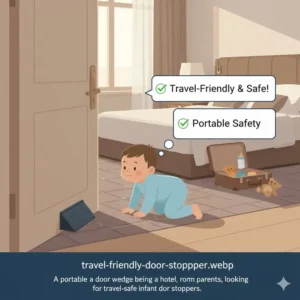
| The Traveler | Jool Baby Foam | Light and fits in any suitcase. |
| The Modernist | Safety 1st Clear | Doesn’t ruin the “vibe” of the room. |
My Personal Experience: What I Learned the Hard Way
I’ll be honest with you—I tried to go the cheap route first. I bought some generic foam guards from a discount store. Within two days, my toddler had figured out that if he poked them with a stick, they would fall off. I also realized that I kept forgetting to put them back on after I closed the door at night.
That is why I moved to the Door Monkey. It stays on the door whether it’s “engaged” or not. You just height-adjust it so you can reach it but the kid can’t. It changed my life because I didn’t have to think about it anymore. Consistency is the most important part of baby proofing. If a safety device is too annoying to use every day, you won’t use it, and that’s when accidents happen.
Cost Comparison Over Time
| Option | Initial Cost | Durability (Months) | 2-Year Total |
| Generic Foam | $5 | 3 | $40 (Replacing often) |
| Jool Baby Foam | $12 | 12 | $24 |
| Door Monkey | $15 | 24+ | $15 |
| Pinch Not Shield | $25 | 36+ | $25 |
✨ Secure Your Home Today!
🔍 Don’t wait for an accident to happen. Click on the products we’ve reviewed today to find the best deals and get fast shipping. Your peace of mind is just a few clicks away! 🛒✅
Conclusion: Peace of Mind is Worth the Investment
At the end of the day, looking through infant door stopper reviews is about more than just buying a piece of foam or plastic. It is about creating a home where your child can explore without you having to say “no” or “be careful” every five seconds. Whether you choose the simple, effective Jool Baby Products Door Pinch Guard or the heavy-duty Door Monkey, you are taking a proactive step in preventing a very common and very painful childhood injury.
I’ve found that a mix of these products works best. Use the foam guards for guest rooms and bathrooms, and save the more robust locks for the kitchen or the nursery. Your future self (and your baby’s fingers) will thank you.
Frequently Asked Questions
✅ You should start using them as soon as your baby begins crawling, typically around 6-9 months. Once they are mobile, they will naturally explore doors and frames, increasing the risk of finger pinch accidents significantly...
✅ Most high-quality EVA foam guards, like those from Jool Baby or Wittle, are designed to be non-marring. However, if the door is slammed with extreme force, any stopper can potentially leave a slight mark over long periods...
✅ If placed within reach, yes. Most foam guards are easily removed by curious hands. For the best safety, always place door stoppers at the very top of the door, well out of your child's reach and sightline...
✅ They serve different purposes. Handle-side stoppers prevent the door from slamming shut, while hinge guards prevent fingers from being crushed in the hinge gap. For maximum safety, using both types on high-risk doors is the recommended approach...
✅ Standard foam guards may struggle with heavy exterior doors and might compress too much. For heavy-duty applications, we recommend a mechanical solution like the Door Monkey or a permanent hydraulic slam stopper for the best protection... ❓ At what age should I start using infant door stoppers?
❓ Do foam door guards damage the paint on my doors?
❓ Can my toddler eventually figure out how to remove them?
❓ Are hinge guards better than handle-side foam stoppers?
❓ Will these door stoppers work on heavy exterior doors?
Recommended for You
- Non Slip Tub Decals for Infants: 7 Best Safety Options 2025
- Infant Indoor Jungle Gym: 7 Best Options for Ultimate Baby Development in 2025
- Top 9 Ultimate tips to baby proof house for crawling baby: Your Safety Expert Guide
Disclaimer: This article contains affiliate links. If you purchase products through these links, we may earn a small commission at no additional cost to you.
✨ Found this helpful? Share it with your friends! 💬🤗
[addtoany]