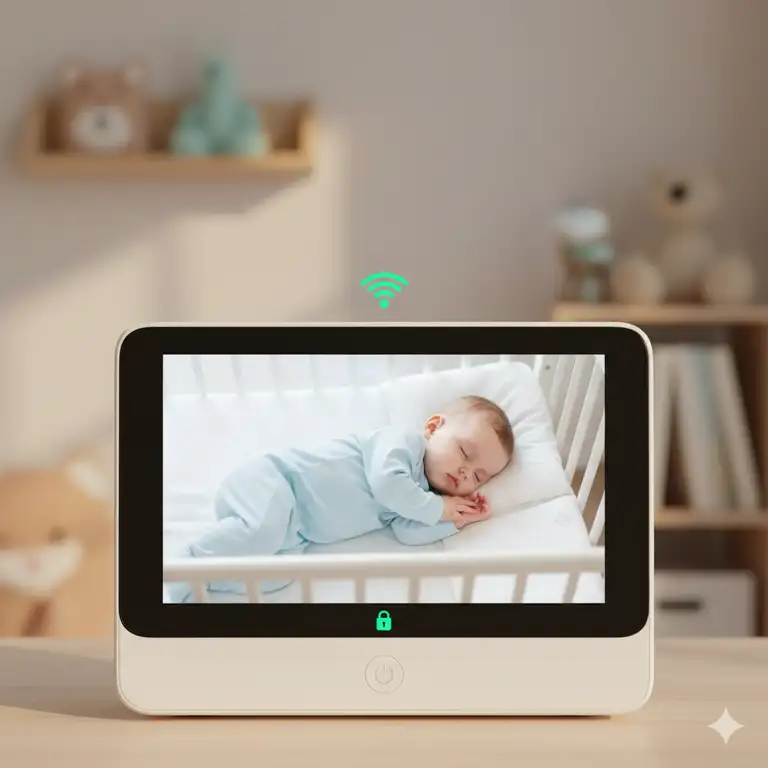
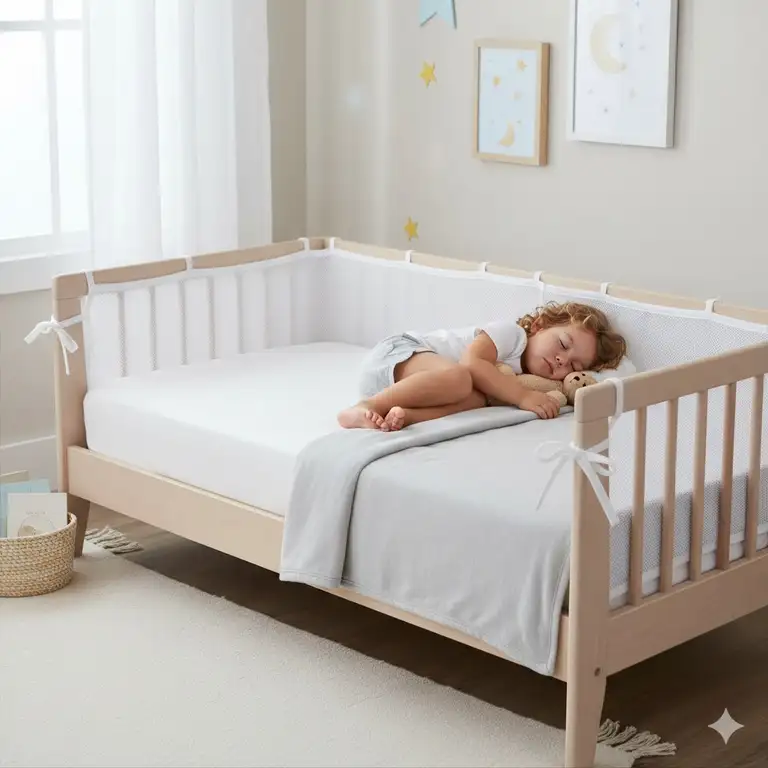
We’ve all been there. You’re staring at the baby monitor at 2:00 AM like it’s the season finale of the most gripping drama on TV. You see your little one wiggle, scoot, and—thump—bump their head against the crib slats. Your instinct is to wrap that crib in a cloud of softness. But here is the hard truth that pediatric experts and safety organizations have been shouting from the rooftops: those padded accessories might do more harm than good.
Knowing exactly when to remove crib bumpers isn’t just a matter of aesthetics; it is a critical safety decision. With the implementation of the Safe Sleep for Babies Act in the USA, the landscape of nursery bedding has changed dramatically. However, many parents still have older hand-me-downs or confuse “rail covers” with “bumpers.”
✨ Was this helpful? Spread the word!
[addtoany]
In this comprehensive guide, we aren’t just going to tell you to toss the dangerous stuff. We are going to walk you through the “whys,” the timeline, and most importantly, the high-quality, safe alternatives that keep your baby cozy without the risk.
Comparison: Traditional Bumpers vs. Modern Alternatives
Before we dive deep, let’s look at why the shift is happening.
| Feature | Traditional Padded Bumpers | Breathable Mesh Liners | Crib Rail Covers | Bare Crib (Recommended) |
| Suffocation Risk | High (Banned in US) | Low to Moderate | Very Low | None |
| Strangulation Risk | Moderate (Ties) | Low (Velcro/Ties) | Low (Snaps/Ties) | None |
| Prevents Limbs Stuck | Yes | Yes | No | No |
| Teething Protection | Yes | No | Excellent | No |
| Climbing Aid Risk | High | High (if not removed) | Low | Low |
| Expert Approval | ❌ No | ⚠️ Caution | ✅ Yes (for teething) | ✅✅ Yes |
Quick Comparison: Top Safe Alternatives and Accessories
If you are looking to replace an unsafe bumper or protect a teething baby, here are the top contenders we will analyze below.
| Product Name | Best For… | Material | Key Feature |
| Trend Lab CribWrap | Teething Babies | Sherpa Fleece | Waterproof backing |
| BreathableBaby Liner | Airflow | Mesh | 100% Polyester Mesh |
| American Baby Co. Cover | Budget Friendly | Microfiber | Soft & Reversible |
| Go Mama Go Wonder | Vertical Protection | Cotton/Poly | Individual slat covers |
| Halo SleepSack | Limb Safety | Cotton | Wearable blanket |
| Newton Baby Mattress | Peace of Mind | Wovenaire | Fully breathable |
| Burt’s Bees Beekeeper | Organic Lovers | Organic Cotton | Quilted warmth |
Top 7 Safe Alternatives: Expert Analysis
Since the ban on padded bumpers, the market has shifted toward rail covers (to protect the crib from teeth) and breathable mesh (to keep limbs inside). Here are 7 real products available on Amazon that solve the specific problems parents worry about.
1. Trend Lab Fleece CribWrap Rail Cover (Long)
When you decide when to remove crib bumpers, your biggest fear might be the baby gnawing on the wood. The Trend Lab CribWrap is the gold standard for rail protection. Unlike a bumper that sits at mattress level, this wraps around the top rail.
-
Specifications: 51 inches long, fits standard crib rails, waterproof backing.
-
Why it works: It provides padding where it matters for a standing baby (the mouth and chin) without restricting airflow at the mattress level.
-
Pros: Prevents ingestion of wood varnish; soft sherpa fleece; machine washable.
-
Cons: Only covers the top rail, not the slats; can be tricky to fit on extra-wide rails.
2. BreathableBaby Breathable Mesh Crib Liner
If you are absolutely desperate to keep arms and legs inside the slats, the BreathableBaby Breathable Mesh Crib Liner is the product most parents turn to. It uses A.C.T. (Air Channel Technology).
-
Specifications: 100% polyester mesh, adjustable fasteners, fits 4-sided slatted cribs.
-
Why it works: It collapses under weight (preventing climbing) and allows air to flow through freely, mitigating suffocation risks associated with padded bumpers.
-
Pros: visually translucent; prevents limb entanglement; widely available.
-
Cons: Must be installed perfectly tight; AAP still recommends a bare crib over mesh.
3. American Baby Company Reversible Fleece Crib Rail Cover
For parents seeking a budget-friendly alternative to the Trend Lab, the American Baby Company Reversible Fleece Crib Rail Cover offers similar protection with a reversible design.
-
Specifications: 51 x 18 inches, microfiber/fleece blend, machine washable.
-
Why it works: It acts as a teething guard. It’s soft enough to cushion a forehead bump if the baby pulls up and slips.
-
Pros: Very affordable; reversible colors; easy tie installation.
-
Cons: Ties can be a hassle to secure; thinner than the Trend Lab version.
4. Go Mama Go Designs Wonder Bumpers
This is a unique innovation. The Go Mama Go Designs Wonder Bumpers are vertical bumpers that zip around individual crib slats.
-
Specifications: Set of 38 (usually), zipper closure, cotton/poly blend.
-
Why it works: They pad the hard wood slats to prevent head bumps but leave the space between the slats completely open for airflow.
-
Pros: Increases airflow vertically; impossible to climb on (they slide down); distinct look.
-
Cons: Expensive; time-consuming to zip all 38 onto a crib; finding the right count for your specific crib can be tricky.
5. Halo SleepSack Ideal Temp
Often, parents use bumpers because they worry about the baby getting cold or “stuck.” The solution isn’t a bumper; it’s the Halo SleepSack Ideal Temp.
-
Specifications: Polyester blend, varying sizes (S, M, L), inverted zipper.
-
Why it works: It keeps the baby’s legs contained in a sack, making it much harder for them to get a leg stuck through the slats.
-
Pros: Regulates body temperature; recognized as “Hip Healthy”; impossible to kick off.
-
Cons: Doesn’t pad the crib itself; requires transitioning out when baby starts rolling (if using swaddle version) or walking.
6. Newton Baby Breathable Crib Mattress
If your main anxiety behind using bumpers is safety and breathability, the ultimate upgrade is the Newton Baby Breathable Crib Mattress.
-
Specifications: Wovenaire core (90% air), greenguard gold certified, washable core.
-
Why it works: It removes the fear of face-down sleeping. You don’t need bumpers to create a “safe zone” when the mattress itself is breathable.
-
Pros: Completely washable (you can shower the core); highly breathable; longevity.
-
Cons: Premium price point; firmer than some traditional foam mattresses.
7. Burt’s Bees Baby Beekeeper Wearable Blanket
For the eco-conscious family, the Burt’s Bees Baby Beekeeper Wearable Blanket is a premium organic option to replace loose bedding.
-
Specifications: 100% Organic Cotton, 0.5 TOG, high-quality zipper.
-
Why it works: Like the Halo, it prevents limbs from flailing through slats while being gentle on sensitive skin.
-
Pros: GOTS certified organic; very soft; durable zipper; lightweight for warmer climates.
-
Cons: Sizing runs large; natural cotton can shrink if dried on high heat.
Just one click – help others make better buying decisions too!
[addtoany]
When to Remove Crib Bumpers: The Critical Timeline
Understanding the timeline is essential. “When” isn’t just a date on the calendar; it is based on developmental milestones.
The Immediate Ban (0 Months+)
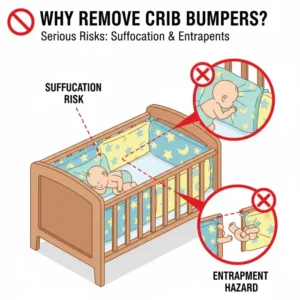
If you are using padded, pillow-like bumpers, the answer to when to remove crib bumpers is NOW. As of 2022, the Safe Sleep for Babies Act made the manufacture and sale of these products illegal in the US due to suffocation risks. If you have an heirloom crib set with thick bumpers, please store them away as a keepsake, but do not use them in the crib.
The Mesh Liner Timeline (6–9 Months)
If you are using the breathable mesh liners mentioned above (like the BreathableBaby), you might think you are safe indefinitely. Wrong.
You must remove even breathable mesh liners once your baby can:
-
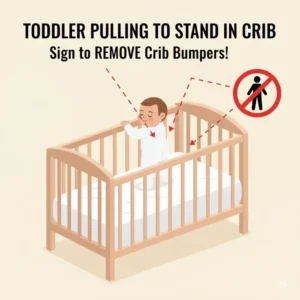
Pull to stand: Babies use bumpers (even mesh ones) as a step-stool to climb out of the crib, leading to dangerous falls.
-
Scoot effectively: Loose fabric can still pose a strangulation or entanglement risk if a mobile baby pulls it loose.
Developmental Milestone Table
| Milestone | Action Required | Reason |
| Newborn (0-3 mos) | REMOVE PADDED BUMPERS | Suffocation & SIDS risk is highest. |
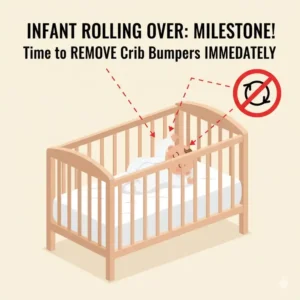
| Rolling Over (3-5 mos) | Check Mesh Liners | Ensure ties are tight; baby moves more. |
| Sitting Up (5-7 mos) | REMOVE MESH LINERS | Baby can pull on ties/fabric. |
| Standing (8+ mos) | REMOVE EVERYTHING | Risk of climbing out (Escaping). |
| Teething (6-12 mos) | INSTALL RAIL COVERS | Protects gums and crib finish. |

Why the “Thud” Isn’t As Bad As You Think
One of the main reasons parents hesitate regarding when to remove crib bumpers is the fear of head trauma. It’s a valid emotional fear, but scientifically, it is rarely a serious issue.
The Physics of a Crib Bump
Babies generally do not generate enough force significantly to injure themselves against a crib slat.
-
Velocity: Babies rolling over or scooting have low momentum.
-
Impact: A bump might cause a bruise or a crying session, but pediatricians agree that serious injury from a crib slat impact is incredibly rare.
-
The Trade-off: The risk of a bruise is negligible compared to the risk of suffocation or strangulation from bumpers.
“I would rather kiss a boo-boo on the head than face the tragic alternative of SIDS.” — A common sentiment among pediatric ER doctors.
Alternatives Detailed Coverage
Let’s dig deeper into the secondary options. We touched on them in the product list, but how do they stack up in daily use?
Crib Rail Covers: The Teething Savior
Once you remove crib bumpers, you expose the wood. Around 6 to 9 months, your baby turns into a beaver.
-
Function: They cover the top rail with heavy fabric (often padded specifically for gums).
-
Safety: Because they are secured tightly at the top and don’t cover the mattress area, they do not impede airflow.
-
Maintenance: Look for ones like the Trend Lab set that can be wiped down or thrown in the wash, as they will get covered in drool.
Sleep Sacks: The Entanglement Solution
The phrase “crib bumpers removal” often leads to panic about legs stuck in slats.
-
The Reality: While a leg in a slat is annoying and can wake the baby, it rarely causes broken bones.
-
The Fix: A wearable blanket (sleep sack) keeps the legs together. It creates a bell shape that makes it physically difficult for a leg to shoot out between the bars.
Analyzing User Needs: Comparison of Solutions
Here is a breakdown of which solution fits your specific parenting anxiety.
| Concern | Best Solution | Why? | Cost Estimate |
| “I’m scared of SIDS” | Bare Crib + Sleep Sack | Zero loose bedding is the safest method. | $20 – $40 |
| “Baby keeps hitting head” | Wonder Bumpers | Pads the slats individually without blocking air. | $50 – $100 |
| “Baby is eating the wood” | Rail Covers | protects the crib and the baby’s mouth. | $15 – $30 |
| “Baby gets cold” | High TOG Sleep Sack | Better warmth retention than bumpers. | $25 – $50 |
| “Nursery looks boring” | Cute Sheets & Skirt | Decorate the outside/mattress, not the sides. | $20 – $60 |
Expert Tips for a Safe Nursery Transition ♂️
Transitioning away from bumpers can be tough if you are used to the “cozy” look. Here is how to style the crib safely.
-
Focus on the Sheet: Since you can’t use bumpers, splurge on a high-quality, patterned fitted sheet. This becomes the centerpiece of the crib.
-
Use a Crib Skirt: A skirt (dust ruffle) adds color and hides the metal springs underneath without posing a risk to the baby inside.
-
External Decor: Move the cute factor to the walls. Wall decals, mobiles (hung high and out of reach), and artwork safely secured to the wall can make the nursery pop.
-
Fan Placement: Ensure good airflow. A fan in the room (not blowing directly on the baby) reduces SIDS risk by 72%, a statistic far more impressive than any bumper claim.
The “Limb Stuck” Myth ⚡
Many parents delay the decision of when to remove crib bumpers because they hear horror stories of broken legs.
-
Fact Check: According to the CPSC and AAP, limb entrapments in modern cribs (slats 2 3/8 inches apart) almost never result in serious injury.
-
The “Learning Curve”: Babies are smart. If they get a leg stuck once or twice, they learn the boundaries of their environment. Keeping bumpers in prevents them from mapping out the physical limits of their sleeping space.
Don’t Miss These Exclusive Deals!
Take your nursery safety to the next level with these carefully selected products. Click on any highlighted item to check current pricing and availability. These tools will help you create a safe, cozy environment your baby will love!
Conclusion
Deciding when to remove crib bumpers is one of the first big safety decisions you make as a parent. The evidence is clear: the risks of padded bumpers far outweigh the benefits. By removing them immediately and transitioning to safer alternatives like crib rail covers or sleep sacks, you are ensuring a safer sleep environment for your little one.
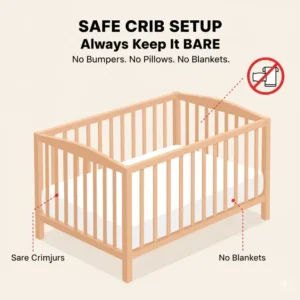
Remember, a bare crib is a happy crib. It might look sparse to your adult eyes, but to a baby, it is a safe haven free of hazards. Trust the process, trust the experts, and enjoy those precious hours of sleep (when you can get them!).
Frequently Asked Questions
✅ Yes, the Safe Sleep for Babies Act of 2021 prohibits the manufacture and sale of padded crib bumpers. This law was enacted due to significant suffocation risks. While mesh liners are technically exempt from this specific ban, the AAP still advises against using them...
✅ While the sound of a head hitting a slat is frightening, it rarely causes serious injury. Babies do not generate enough force to cause concussions or trauma from rolling into the wood. The risk of suffocation from padding is far greater than the risk of a bump...
✅ Vertical liners (like Wonder Bumpers) are considered safer than horizontal padded bumpers because they allow for vertical airflow and don't create a suffocation pocket. However, strict safety advocates still recommend a completely bare crib as the safest sleep environment...
✅ You should remove mesh liners as soon as your baby starts trying to pull up to a stand or sit unassisted, typically between 6 to 9 months. The liner can be used as a foothold to climb out of the crib, posing a fall risk...
✅ The best solution is a wearable blanket or sleep sack. These products keep the baby's legs contained within a loose fabric sack, preventing them from sliding through the slats while still allowing for healthy hip development and movement... ❓ Is it illegal to use crib bumpers in the US?
❓ What happens if my baby hits their head on the crib slats?
❓ Can I use vertical crib liners instead of traditional bumpers?
❓ At what age should I remove mesh liners?
❓ How do I stop my baby’s legs from getting stuck without bumpers?
Recommended for You
- Baby Proofing Cribs for Small Spaces: 7 Essential Safety Tips
- Furniture Corner Guards Adhesive Type: 7 Top Picks 2025 for Maximum Child Safety
- At What Age Can Baby Climb Stairs Safely? 7 Shocking Truths
Disclaimer: This article contains affiliate links. If you purchase products through these links, we may earn a small commission at no additional cost to you.
✨ Found this helpful? Share it with your friends!
[addtoany]