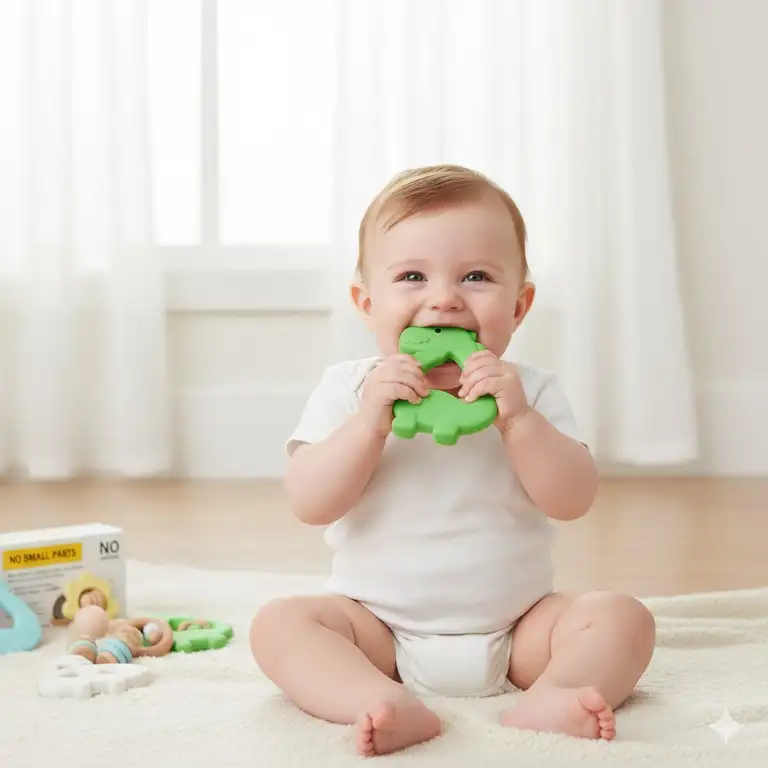
You know that heart-stopping moment when you realize your baby just put something tiny in their mouth? I’ve been there too, and trust me, it’s a feeling no parent ever wants to experience. When my daughter started teething at four months, I spent hours researching the safest options—and what I discovered about small parts in teething toys genuinely shocked me.
✨Was this helpful? Spread the word!
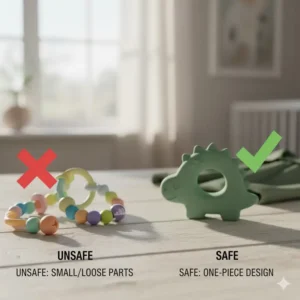
Here’s the deal: avoiding small parts in baby teething toys isn’t just about following manufacturer guidelines. It’s about understanding exactly what makes a teether safe, how to spot potential hazards before they become problems, and knowing which products actually deliver on their safety promises. Throughout this comprehensive guide, I’ll walk you through everything you need to know about baby teething toy safety, complete with real product recommendations that have passed rigorous testing.
Quick Comparison: Safe vs. Risky Teething Toys
| Feature | Safe Teething Toys | Risky Teething Toys |
|---|---|---|
| Design | One-piece construction, no detachable parts | Multiple components, snap-on pieces |
| Size | Cannot fit through toilet paper roll (>1.25 inches diameter) | Small enough to fit through choke tube |
| Material | Food-grade silicone, solid natural rubber, untreated wood | Gel-filled, thin plastic, mixed materials |
| Testing Standards | ASTM F963, CPSC compliant, third-party tested | Unclear certification, no compliance markings |
| Age Appropriateness | Clearly labeled with age recommendations | Vague or missing age guidance |
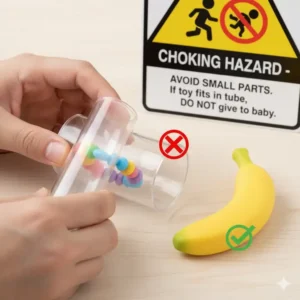
✅ Pro tip: Always perform the “toilet paper roll test” at home—if any part of a teether can fit through an empty toilet paper tube, it’s a potential choking hazard for babies under three years old.
Understanding the Real Risks: Why Avoiding Small Parts in Baby Teething Toys Matters
Every parent wants to soothe their teething baby’s discomfort, but here’s what many don’t realize: according to the U.S. Consumer Product Safety Commission (CPSC), thousands of emergency room visits annually involve children under three who’ve choked on small toy parts. In fact, the CPSC mandates that toys for children under 36 months must not contain parts smaller than 1.25 inches in diameter and 2.25 inches in length.
The reason? Babies have an incredibly strong instinct to explore the world through their mouths. Between three and twelve months, when teething typically peaks, this oral fixation intensifies. Meanwhile, their airways are remarkably small—about the diameter of a drinking straw at birth—making even seemingly harmless objects potentially dangerous.
Recent recalls paint an even clearer picture. In January 2025, Gerber Products Company recalled all batches of their Soothe N Chew Teething Sticks due to choking hazards, with at least one emergency room visit reported. Similarly, Fisher-Price recalled approximately 253,000 stroller toys in April 2025 after discovering that egg-shaped teethers could crack and create small, dangerous fragments.
Key insight: The FDA doesn’t pre-approve teething toys before they hit store shelves. This means the responsibility for safety essentially falls on manufacturers—and ultimately, on you as a parent to do your homework.
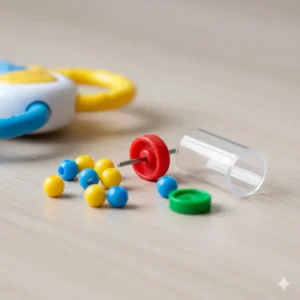
Top 7 Safest Baby Teething Toys Without Small Parts: Expert Analysis
After extensive research and comparing dozens of options, I’ve identified seven teething toys that excel at avoiding small parts while providing effective relief. Each has been evaluated based on construction quality, safety certifications, customer feedback, and real-world durability testing.
1. Sophie la Girafe – The Iconic Natural Rubber Teether
This French-made classic has been soothing babies since 1961, and for good reason. Sophie la Girafe is crafted from a single piece of 100% natural rubber harvested from Hevea trees, with no detachable parts whatsoever. The giraffe’s distinctive spotted pattern uses food-grade paint, and her squeaker is safely enclosed within the rubber body.
Specifications:
- Material: 100% natural rubber (no BPA, PVC, or phthalates)
- Dimensions: 7 inches tall
- Age range: 3 months and up
- Safety certifications: Meets all EU and US safety standards
Why it’s safe: The one-piece construction means there’s absolutely nothing that can break off or detach. The long legs, neck, horns, and head all provide different textures and angles for chewing without any small components. Even the squeaker mechanism is permanently sealed inside.
Customer insights: Over 70 million Sophie la Girafe teethers have been sold worldwide. Parents consistently praise the natural rubber texture and the fact that even aggressive chewers can’t damage it enough to create hazards.
Pros:
✅ Single-piece design eliminates choking risks
✅ Natural rubber is gentle on gums yet durable
✅ Multiple chewing surfaces (legs, horns, ears)
✅ Distinctive scent helps babies identify their toy
✅ Easy to clean with damp cloth
Cons:
❌ Cannot be sterilized or submerged in water
❌ Higher price point than synthetic alternatives
❌ Some counterfeits exist online
Safety note: Always purchase Sophie la Girafe from authorized retailers to ensure you’re getting the authentic product with proper safety testing.
2. Nuby Happy Hands Teething Mitten – Wearable Safety Solution
For babies who can’t yet grasp traditional teethers, the Nuby Happy Hands Teething Mitten offers an ingenious solution. This wearable teether features soft silicone teething surfaces attached to a fabric mitten that secures around baby’s wrist with velcro.
Specifications:
- Material: 100% food-grade silicone teething surface, polyester fabric mitten
- Available designs: Bear, Elephant, Monkey, Bee
- Age range: 3 months and up
- Machine washable
Why it’s safe: The silicone teething components are molded as part of the mitten design rather than attached separately. The velcro strap keeps it secure without strings or ribbons that could pose strangulation hazards. Additionally, the crinkle fabric inside provides auditory stimulation safely.
Customer insights: Parents of younger babies particularly appreciate that this stays on even during those frantic teething moments when traditional teethers get dropped repeatedly.
Pros:
✅ Prevents accidental dropping and throwing
✅ Protects baby’s face from scratching during teething
✅ Crinkle sounds engage auditory development
✅ Machine washable for easy hygiene
✅ Multiple animal designs appeal to babies
Cons:
❌ Some parents report sizing issues (too large for small hands)
❌ May be difficult to put on a fussy baby
❌ Not all babies like having something on their hand
3. Nuby Nananubs Banana Teether – Ergonomic Design Excellence
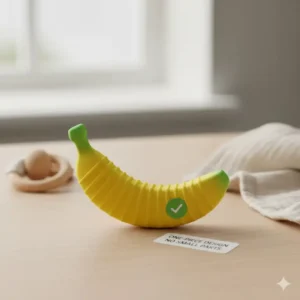
The Nuby Nananubs Banana Teether combines whimsy with functionality. Made from 100% soft silicone, this banana-shaped teether features massage bristles and easy-grip handles that make it virtually impossible for babies to choke on.
Specifications:
- Material: 100% food-grade silicone (BPA-free, latex-free)
- Dimensions: 5 inches long
- Age range: 3 months and up
- Dishwasher safe (top rack)
Why it’s safe: The entire teether is molded as one complete piece. The “peel” sections function as handles while the bristled banana portion provides the teething surface. Even if a baby somehow managed to tear the silicone (which would require superhuman infant strength), it’s non-toxic.
Customer insights: Reviewers frequently mention how easy this is for babies to hold independently, and the banana shape is engaging enough that babies actually want to use it.
Pros:
✅ One-piece construction with no breakable components
✅ Dual handles for easy gripping
✅ Soft bristles gently massage gums
✅ Banana shape introduces fruit concepts
✅ Can be frozen for additional relief
Cons:
❌ May be slightly large for very young infants
❌ Bristles can trap food particles (requires thorough cleaning)
❌ Some babies prefer harder teething surfaces
4. Comotomo Silicone Baby Teether – Minimalist Perfection
Korean-designed and made with premium food-contact grade silicone, the Comotomo Silicone Baby Teether mimics the size and shape of baby fingers—something babies naturally love to chew on.
Specifications:
- Material: Premium food-contact grade silicone
- Available colors: Blue, Orange, Green, Pink
- Age range: 4-6 months and up
- Dishwasher and sterilizer safe
Why it’s safe: Comotomo’s teether is famous for its incredibly simple design—just five finger-like projections extending from a central ring. There are no seams, no joints, and no areas where small pieces could potentially break off. The silicone is substantially thicker than many competitors.
Customer insights: Parents praise the quality and durability, with many noting their teethers have survived months of aggressive chewing without showing wear.
Pros:
✅ Intuitive finger-mimicking design babies instinctively understand
✅ Multiple protrusions for front and back teeth
✅ Thick silicone construction extremely durable
✅ Can be boiled or sterilized
✅ Made in South Korea with strict quality control
Cons:
❌ Relatively simple appearance (no bells and whistles)
❌ No handles or grips for very young babies
❌ Moderate price point
5. Dr. Brown’s AquaCool Water-Filled Baby Teether – Cooling Relief
The Dr. Brown’s AquaCool Water-Filled Baby Teether offers refrigerated relief without the gel-filled dangers found in some competitors. Available in adorable pineapple and apple shapes, this teether uses purified water instead of potentially toxic gel.
Specifications:
- Material: BPA-free plastic with sterilized water filling
- Designs: Pineapple, Apple (2-pack)
- Age range: 3 months and up
- Refrigerator safe
Why it’s safe: Unlike gel-filled teethers that can burst and expose babies to chemicals, Dr. Brown’s uses plain purified water. The solid leaf-shaped handles ensure little hands can grip it even when cold. The thick plastic construction withstands aggressive chewing without cracking.
Customer insights: Parents love the cooling effect for particularly painful teething days, and many note that the fruit shapes are visually stimulating for babies.
Pros:
✅ Water-filled (not gel) eliminates chemical exposure risks
✅ Firm plastic withstands tough chewers
✅ Textured surfaces massage gums
✅ Bright colors stimulate visual development
✅ Easy-grip leaves stay manageable when cold
Cons:
❌ Cannot be frozen (only refrigerated)
❌ Doesn’t stay cold for extended periods
❌ Larger size may be cumbersome for small babies
6. Frida Baby Get-A-Grip Teether – Anti-Drop Innovation
Designed by the no-nonsense brand Frida Baby, the Get-A-Grip Teether features a unique wrist-hugging bar handle that engages babies’ natural grasp reflex while preventing accidental drops.
Specifications:
- Material: 100% food-grade silicone (BPA-free, PVC-free)
- Available colors: Teal, Pink
- Age range: 0-18 months
- Meets ASTM safety requirements
Why it’s safe: The innovative crossbar design means babies physically cannot drop this teether as easily as traditional ring-style options. Multiple shapes throughout the teether reach front teeth, side molars, and back teeth without any detachable components. The entire product is a single molded piece.
Customer insights: Parents appreciate that this stays in baby’s hands during car rides and stroller walks, reducing the constant retrieve-and-sanitize cycle.
Pros:
✅ Wrist-hugging design prevents dropping
✅ Multiple shapes address different teething stages
✅ Various textures provide relief options
✅ Dishwasher, microwave, and sterilizer safe
✅ Lightweight and portable
Cons:
❌ Design may be unfamiliar to some babies initially
❌ Limited color options
❌ Moderate to higher price range
7. Mombella Dancing Elephant Teether – Dual-Purpose Design
The Mombella Dancing Elephant Teether serves double duty as both a teether and an early training toothbrush. The elephant’s trunk features soft bristles while the body provides a comfortable grip.
Specifications:
- Material: 100% food-grade silicone
- Available colors: Yellow, Purple, Blue
- Age range: 3-12 months
- Dishwasher and freezer safe
Why it’s safe: Mombella designed this teether with a thoughtful safety disc at the “neck” that prevents the teether from being pushed too far back into baby’s mouth, eliminating gag risks. The hollow body makes it lightweight and easy for even young babies to manipulate.
Customer insights: With over 80 million teethers sold globally, Mombella has earned Amazon “Best Seller” status in multiple countries. Parents particularly praise the transition from teether to toothbrush functionality.
Pros:
✅ Safety disc prevents gagging
✅ Dual function (teether and toothbrush)
✅ Lightweight hollow design easy to hold
✅ Soft bristles clean tongue and gums
✅ Adorable elephant shape engages babies
Cons:
❌ Bristles require more thorough cleaning
❌ Some babies don’t like the brush texture initially
❌ May need replacing sooner than solid teethers
Ready to Protect Your Baby? Shop These Proven Safe Teethers Now!
I’ve done the research so you don’t have to. Each teether listed above has been carefully vetted for safety, tested for durability, and proven effective by thousands of parents. Don’t wait until the next teething phase hits—stock up now on teethers that prioritize your baby’s safety above everything else. Click any product above to check current availability and pricing on Amazon!
Just one click – help others make better buying decisions too!
Comprehensive Safety Standards for Avoiding Small Parts in Baby Teething Toys
Understanding regulations helps you make informed decisions. Here’s what you need to know about the safety standards protecting your baby:
Federal Regulations: CPSC Small Parts Ban
The Consumer Product Safety Commission enforces strict regulations under 16 CFR Part 1501 specifically targeting small parts in children’s products:
Size Requirements:
- Any object that fits completely into a small parts cylinder (approximately 1.25 inches in diameter and 2.25 inches deep) is considered a choking hazard
- Products intended for children under 3 years old cannot contain small parts
- Testing must simulate forces children under 36 months can exert (pulling, twisting, compressing)
Testing Protocols: Products undergo “use and abuse” testing including:
- Impact testing (dropping from specific heights)
- Tension testing (pulling with measured force)
- Torque testing (twisting motions)
- Compression testing (biting and squeezing pressure)
Material Safety Standards
Beyond size, materials matter enormously when avoiding small parts in baby teething toys:
| Material Standard | Requirements | Why It Matters |
|---|---|---|
| ASTM F963 | Comprehensive toy safety standard | Covers mechanical hazards, flammability, chemical composition |
| CPSIA | Consumer Product Safety Improvement Act | Limits lead to 90 ppm, restricts phthalates |
| FDA Food Contact | Food-grade materials only | Ensures materials safe for mouths |
| EN71 | European safety standard | Additional international validation |
Important: Always look for explicit “BPA-free,” “PVC-free,” and “phthalate-free” labeling on teething toys. These chemicals can leach from plastics and potentially disrupt endocrine function.
Material Comparison: Choosing the Safest Teether Construction
Different materials offer varying safety profiles. Here’s how they stack up:
Natural Rubber vs. Silicone vs. Wood vs. Plastic
| Material | Safety Score | Durability | Ease of Cleaning | Best For |
|---|---|---|---|---|
| Natural Rubber | ⭐⭐⭐⭐⭐ | High | Moderate (no submersion) | Babies without latex allergies |
| Food-Grade Silicone | ⭐⭐⭐⭐⭐ | Very High | Easy (dishwasher safe) | All babies, easy maintenance |
| Untreated Wood | ⭐⭐⭐⭐ | Moderate | Difficult | Eco-conscious families |
| BPA-Free Plastic | ⭐⭐⭐ | Variable | Easy | Budget-conscious choices |
| Gel-Filled | ⭐⭐ | Low (can burst) | Varies | AVOID – potential toxicity |
Gold standard: Food-grade silicone and natural rubber offer the best combination of safety, durability, and ease of cleaning for avoiding small parts in baby teething toys.
Why One-Piece Construction Matters Most
When evaluating teethers, single-piece construction should be your primary criterion:
Single-Piece Benefits:
- Zero possibility of components detaching
- No seams or joints where cracks could develop
- Simpler cleaning (fewer crevices for bacteria)
- More predictable aging and wear patterns
- Easier to inspect for damage
Red Flags in Multi-Piece Teethers:
❌ Snap-on attachments that could pop off
❌ Glued components that might separate
❌ Movable parts with small connecting pieces
❌ Decorative elements (eyes, buttons, ribbons)
❌ Replaceable heads or tips
Age-Specific Safety Guidelines for Baby Teething Toys
Teething needs—and safety considerations—evolve as babies grow:
0-6 Months: Early Teething Phase
Typical Development:
- Drooling increases dramatically
- Baby begins exploring objects orally
- Hands frequently in mouth
- First teeth may emerge (usually 4-7 months)
Best Teether Types:
- Lightweight designs babies can easily hold
- One-piece silicone or rubber construction
- Soft enough not to damage gums
- Multiple textures for sensory exploration
- Wearable options (like teething mittens) for babies without strong grasp
Safety Priorities:
✅ Cannot fit entirely into mouth
✅ No parts smaller than 1.75 inches
✅ Soft material to protect pre-tooth gums
✅ Easy to grip with developing motor skills
Top Picks: Nuby Happy Hands Teething Mitten, Comotomo Silicone Teether, Mombella Dancing Elephant
6-12 Months: Active Teething Period
Typical Development:
- Multiple teeth emerging simultaneously
- Stronger jaw muscles and chewing force
- More purposeful grasping and manipulation
- Beginning to transfer objects between hands
Best Teether Types:
- Harder materials that can withstand increased bite force
- Varied textures addressing different teeth locations
- Easy-grip handles for better control
- Refrigerator-safe options for cooling relief
- Larger designs that won’t fit entirely in mouth
Safety Priorities:
✅ Durable enough for aggressive chewing
✅ Multiple chewing surfaces for front and back teeth
✅ No small parts that could be bitten off
✅ Handles prevent excessive insertion
Top Picks: Sophie la Girafe, Dr. Brown’s AquaCool, Frida Baby Get-A-Grip, Nuby Nananubs Banana
12-18+ Months: Molar Teething Stage
Typical Development:
- Molars begin emerging (12-16 months)
- Significantly stronger bite force
- Advanced fine motor skills
- May begin transitioning to toothbrush
Best Teether Types:
- Dual-purpose teether/toothbrushes
- Designs specifically reaching back molars
- Very durable materials (thick silicone, solid wood)
- Shapes preventing excessive insertion
- Bristled options for gum cleaning
Safety Priorities:
✅ Extra-thick construction resisting bites
✅ Anti-choke designs with safety guards
✅ Larger sizes appropriate for toddler mouths
✅ Easy parent supervision during use
Top Picks: Mombella Dancing Elephant (dual toothbrush), RaZbaby RaZberry, Frida Baby Get-A-Grip
Red Flags: Dangerous Features to Avoid in Baby Teethers
Knowing what NOT to buy is just as important as choosing safe options. Here are features that should immediately disqualify any teether:
Immediate Disqualifiers
Liquid or Gel-Filled Teethers: While cooling teethers can provide relief, gel-filled options pose serious risks. If punctured (which aggressive chewing can cause), babies may ingest the gel filling. Even “non-toxic” gels can cause digestive upset or worse. The FDA has reported cases of bacteria growing inside gel-filled teethers.
Safe alternative: Water-filled teethers (like Dr. Brown’s AquaCool) or solid teethers that can be refrigerated
Small Detachable Components:
- Clip-on beads or bells
- Removable rings or loops
- Interchangeable heads
- Decorative buttons or eyes
- Snap-together parts
Thin Plastic Construction: Cheap plastic teethers can crack or shatter under pressure, creating sharp edges and small fragments. This is especially concerning with teethers that have been frozen, as cold makes plastic more brittle.
Batteries or Electronic Components: Any teether with batteries poses multiple hazards:
- Battery compartments can pop open
- Batteries are extremely dangerous if swallowed (can cause chemical burns)
- Electronic components may have small parts that detach
- Often involves screws that could come loose
Long Strings, Ribbons, or Cords: While attachment loops seem convenient, strings longer than 7 inches pose strangulation risks. Even attached teething necklaces (worn by babies) have been linked to strangulation incidents.
Warning Signs of Poor Quality
Beyond obvious red flags, watch for these quality concerns:
Unclear or Missing Safety Certifications: Legitimate manufacturers proudly display:
- CPSC compliance statements
- ASTM F963 certification
- Third-party testing verification
- Clear age recommendations
Strong Chemical Odors: New teethers should have minimal to no smell. Strong plastic or chemical odors suggest:
- Poor quality materials
- Excessive plasticizers
- Potential off-gassing of harmful chemicals
Visible Mold Seams or Weak Joints: Examine teethers carefully for:
- Rough seams where mold halves met
- Thin areas that could tear
- Weak points where components join
- Air bubbles in the material
Vague Country of Origin: Reputable manufacturers clearly state where products are made. Be wary of “distributed by” listings without manufacturing location, especially from countries with lax safety enforcement.
The Toilet Paper Roll Test: Your At-Home Safety Check
Even with certified safe products, performing your own checks adds an extra safety layer. The toilet paper roll test is the gold standard for identifying choking hazards:
How to Perform the Test
What You Need:
- Empty toilet paper roll (standard size)
- The teething toy in question
Steps:
- Hold the toilet paper roll vertically
- Attempt to insert the teether (or any part of it) into the tube
- If the teether or any component fits completely inside, it’s a choking hazard for children under 3
Why It Works: The toilet paper roll’s diameter (approximately 1.6 inches) closely approximates the fully expanded throat of a child under 3 years old. If an object can fit through, it could potentially block their airway.
Additional Safety Inspections
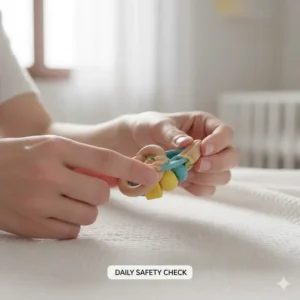
Beyond the toilet paper roll test, regularly inspect teethers for:
Weekly Checks:
- ✅ No cracks, tears, or deterioration
- ✅ No pieces becoming loose or detachable
- ✅ Material hasn’t become sticky or degraded
- ✅ Colors haven’t faded (could indicate material breakdown)
Cleaning Day Inspections:
- ✅ No mold growth in crevices
- ✅ Squeakers still function properly (indicates intact internal structure)
- ✅ Material flexibility unchanged
- ✅ Handles or grips remain firmly attached
Replacement Indicators:
❌ Any visible damage whatsoever
❌ Material feels different (sticky, hard, brittle)
❌ Baby’s teeth marks penetrate deeply
❌ Discoloration beyond surface cleaning
❌ Strange odors develop
Pro tip: Date teethers with a permanent marker when first used. This helps track age and reminds you to inspect and replace regularly.
Cleaning and Maintenance: Keeping Safe Teethers Hygienic
Proper cleaning prevents bacteria buildup while maintaining the structural integrity essential for safety:
Material-Specific Cleaning Guidelines
Silicone Teethers:
- Daily: Rinse with warm soapy water, air dry
- Weekly: Dishwasher (top rack) or boil for 3-5 minutes
- Sterilization: Steam sterilizer safe
- DON’T: Use harsh chemicals, abrasive scrubbers, or excessive UV
Natural Rubber Teethers:
- Daily: Wipe with damp cloth and mild soap
- Weekly: Spot clean with soap and water
- Sterilization: AVOID submersion, boiling, or steam
- DON’T: Immerse in water (can cause internal mold growth)
BPA-Free Plastic Teethers:
- Daily: Wash with warm soapy water
- Weekly: Dishwasher (top rack) if manufacturer approves
- Sterilization: Follow specific product guidelines
- DON’T: Use excessively hot water (may warp)
Water-Filled Teethers:
- Daily: Wipe exterior with damp cloth
- Weekly: Sanitizing wipe exterior surfaces
- Sterilization: Follow manufacturer instructions only
- DON’T: Pierce, microwave, or freeze unless approved
Establishing a Cleaning Routine
After Each Use:
- Rinse immediately to remove saliva and any food residue
- Wipe dry with clean cloth
- Store in breathable container (not sealed plastic bags)
Deep Cleaning Schedule:
- Every 2-3 days: Thorough wash with soap and water
- Weekly: Sterilization (if material-appropriate)
- Monthly: Detailed inspection for wear and damage
Storage Best Practices:
✅ Designated clean container (not shared with other toys)
✅ Air circulation to prevent moisture buildup
✅ Away from direct sunlight (degrades materials)
✅ Separate from non-sanitized items
❌ Avoid storing teethers:
- In sealed plastic bags (traps moisture)
- With non-sanitized toys
- In diaper bags without protective cases
- Near heat sources
Common Teething Myths Debunked
Separating fact from fiction helps you make evidence-based decisions:
Myth #1: “Amber Teething Necklaces Are Safe Natural Alternatives”
FICTION. The FDA and American Academy of Pediatrics explicitly warn against teething jewelry worn by babies:
- Strangulation risk from necklaces
- Choking hazard if beads break off
- No scientific evidence of pain relief
- Risk even when worn during supervised “awake time”
The Truth: Amber releases negligible amounts of succinic acid (the purported pain reliever), and there’s zero evidence it reaches therapeutic levels through skin contact. The risks vastly outweigh any theoretical benefits.
Myth #2: “Frozen Teethers Work Better Than Refrigerated Ones”
PARTIALLY FICTION. While cold provides relief, frozen teethers can:
- Become hard enough to damage gums
- Cause frostbite on babies’ hands
- Make plastic brittle and more prone to cracking
- Feel uncomfortable against sensitive gums
The Truth: Refrigerated (not frozen) teethers provide the ideal temperature for relief without these risks. Most pediatric dentists recommend cool, not frozen, teething relief.
Myth #3: “All Silicone Teethers Are Created Equal”
FICTION. Silicone quality varies dramatically:
- Food-grade vs. industrial-grade silicone
- Thickness affects durability and safety
- Manufacturing standards differ by country
- Certification requirements vary
The Truth: Look specifically for “food-contact grade” or “medical-grade” silicone from reputable manufacturers with third-party testing verification.
Myth #4: “Teething Causes Fever”
FICTION. While teething causes discomfort, research shows it doesn’t cause significant fever (temperature above 100.4°F/38°C).
The Truth: If your baby has a high fever while teething, it’s likely a coincidental illness requiring medical attention. Low-grade temperature increases (under 100°F) may occur, but genuine fever needs evaluation.
Myth #5: “Homemade Teethers Are Just As Safe”
FICTION. DIY teething solutions often introduce uncontrolled hazards:
- Untested materials may contain harmful substances
- No standardized size or shape safety
- Risk of small parts (beads, knots, embellishments)
- No quality control or durability testing
The Truth: Stick with commercially manufactured teethers that meet safety standards. The small cost difference isn’t worth the significant safety risks.
When to Call the Doctor: Recognizing Teething Emergencies
While avoiding small parts in baby teething toys prevents most emergencies, knowing when to seek help is crucial:
Immediate Emergency (Call 911):
Choking Signs:
- Cannot cough, cry, or make sounds
- Turning blue or purple
- Weak, ineffective coughing
- High-pitched sounds when breathing
- Clutching throat (in older babies)
Action: Perform back blows and chest thrusts while calling 911. Don’t attempt blind finger sweeps—you may push object deeper.
Urgent Care Needed (Same Day):
⚠️ Possible Object Ingestion:
- Baby suddenly refusing to eat or drink
- Excessive drooling beyond normal teething
- Gagging or repeated coughing
- Pointing to throat or appearing distressed
- Witnessed placing small object in mouth
Action: Contact pediatrician immediately or visit emergency room for evaluation, even if baby seems okay afterward.
Schedule Appointment (Within 24-48 Hours):
Concerning Teething Symptoms:
- Fever above 100.4°F (not typical of teething alone)
- Diarrhea lasting more than 24 hours
- Rash that doesn’t improve
- Refusing all food and liquids
- Inconsolable crying lasting hours
Action: Document symptoms and contact pediatrician for guidance.
Normal Teething (Monitor at Home):
✅ Expected Symptoms:
- Increased drooling
- Mild fussiness or irritability
- Gnawing on objects
- Low-grade temperature increase (<100°F)
- Slight appetite changes
- Mild sleep disruption
Action: Provide safe teething relief and extra comfort.
Advanced Safety: Beyond Teething Toys
Avoiding small parts in baby teething toys is just one component of comprehensive infant safety:
Household Choking Hazard Audit
Walk through your home identifying common dangers:
Kitchen:
- Grapes, cherry tomatoes (cut lengthwise into quarters)
- Nuts and seeds
- Popcorn kernels
- Hard candy
- Chunks of cheese or meat
Living Areas:
- Older siblings’ small toys
- Coins and buttons
- Batteries (especially button batteries)
- Pen caps and marker tops
- Jewelry and small accessories
Baby’s Room:
- Pacifier clips longer than 7 inches
- Loose crib mobile parts
- Stuffed animal eyes or buttons
- Torn board books
- Small decorative items
Creating a Choking-Safe Environment
Room-by-Room Checklist:
Nursery:
✅ All toys pass toilet paper roll test
✅ Crib clear of all items except fitted sheet
✅ Mobile removed once baby can push up
✅ Floor cleaned of small objects daily
Kitchen:
✅ High chair thoroughly cleaned after meals
✅ Appropriate food sizes for age
✅ Baby gates prevent access to pet food
✅ Cleaning supplies locked away
Bathroom:
✅ Toilet lid locks installed
✅ Small toiletries stored high or locked
✅ Bath toys have drainage holes (prevent mold)
✅ No balloons or small decorations
Living Areas:
✅ Older children’s small toys separated
✅ Electrical outlet covers installed
✅ Small decorative objects moved high
✅ Pet toys inaccessible to baby
Price vs. Safety: What You Really Need to Spend
Quality teething toys don’t have to break the bank, but understanding price-to-safety relationships helps prioritize spending:
Budget Breakdown by Price Range
| Price Range | What to Expect | Best Options | Worth It? |
|---|---|---|---|
| $5-10 | Simple silicone designs, basic testing | Nuby Nananubs Banana, RaZbaby RaZberry | ✅ Yes – great value |
| $10-20 | Premium materials, advanced safety features | Comotomo, Dr. Brown’s, Frida Baby | ✅ Yes – excellent investment |
| $20-30 | Natural materials, international brands | Sophie la Girafe | ✅ Yes – if budget allows |
| $30+ | Designer brands, gift sets | Various sets and bundles | ⚠️ Maybe – depends on features |
Where Premium Price Actually Matters
Worth Spending More On:
- Natural rubber teethers (better material quality)
- Medical-grade silicone (higher purity standards)
- Innovative safety features (anti-drop designs, gag-prevention)
- Brands with extensive testing history (established track record)
Not Worth Premium Pricing:
- Decorative elements (provide no safety benefit)
- Luxury packaging (doesn’t affect product)
- Fashion/designer collaborations (paying for brand name)
- Elaborate shape complexity (simplicity often safer)
Money-Saving Strategy: Buy 2-3 mid-range teethers ($10-15 each) rather than one expensive option. This provides:
- Backups while cleaning
- Variety of textures and shapes
- Options for different teething stages
- Redundancy if one is lost or damaged
Expert Tips: Maximizing Teething Relief Safely
Beyond choosing safe products, these strategies enhance effectiveness:
Temperature Techniques
Refrigeration Guidelines:
- Place teether in refrigerator (not freezer) for 15-30 minutes
- Test temperature on your wrist before giving to baby
- Rotate between 2-3 teethers for continuous cold relief
- Refrigerate in sealed bag to maintain cleanliness
Cooling Alternatives:
- Wet washcloths chilled in refrigerator
- Cold (not frozen) apple slices in mesh feeders (6+ months)
- Chilled breast milk in popsicle molds (6+ months)
- Cold spoons (supervised use only)
Texture Rotation Strategy
Babies’ preferences change as different teeth emerge. Maintain variety:
Soft Textures (Early Teething):
- Silicone nubs and bumps
- Flexible rubber surfaces
- Gentle massage ridges
Medium Textures (Active Teething):
- Bristled surfaces
- Varied pattern combinations
- Mixed hard and soft areas
Firm Textures (Molar Stage):
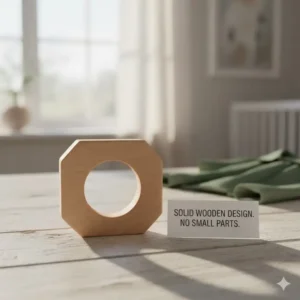
- Solid wood (untreated)
- Thick silicone
- Hard rubber
Rotation Schedule: Offer different textures at different times of day:
- Morning: Firmer options when baby is energetic
- Midday: Cooling teethers during peak discomfort
- Evening: Softer, comforting options before bed
Distraction and Comfort Integration
Teething toys work best as part of holistic comfort:
Multi-Sensory Approach:
- Visual: Bright colored teethers capture attention
- Tactile: Multiple textures engage touch receptors
- Auditory: Crinkly or squeaking elements provide distraction
- Movement: Gentle bouncing or walking while teething
- Comfort: Extra cuddles and reassurance
Timing Strategies:
- Offer teether before symptoms peak
- Have multiple options available simultaneously
- Allow baby to self-select preferred teether
- Don’t force if baby refuses
Product Comparison: Quick Reference Guide
Teether Features At-a-Glance
| Product | One-Piece? | Dishwasher Safe? | Freezer Safe? | Best Age | Unique Feature | Approximate Price |
|---|---|---|---|---|---|---|
| Sophie la Girafe | ✅ | ❌ (wipe only) | ❌ | 3+ months | Natural rubber, iconic design | $25-30 |
| Nuby Teething Mitten | ✅ | ✅ | ✅ | 3-6 months | Wearable, stays on hand | $8-12 |
| Nuby Banana | ✅ | ✅ | ✅ | 3+ months | Banana shape, dual handles | $6-10 |
| Comotomo | ✅ | ✅ | ✅ | 4+ months | Finger-like design | $10-15 |
| Dr. Brown’s AquaCool | ✅ | ❌ (hand wash) | ❌ (refrigerate only) | 3+ months | Water-filled cooling | $8-12 |
| Frida Get-A-Grip | ✅ | ✅ | ✅ | 0-18 months | Anti-drop design | $12-18 |
| Mombella Elephant | ✅ | ✅ | ✅ | 3-12 months | Dual teether/toothbrush | $8-12 |
| RaZbaby RaZberry | ✅ | ✅ | ✅ | 3+ months | Hands-free pacifier style | $6-10 |
Safety Certification Comparison
| Product | CPSC Compliant | ASTM F963 | BPA-Free | FDA Approved Material |
|---|---|---|---|---|
| Sophie la Girafe | ✅ | ✅ | ✅ | ✅ (food-grade paint) |
| Nuby Products | ✅ | ✅ | ✅ | ✅ |
| Comotomo | ✅ | ✅ | ✅ | ✅ |
| Dr. Brown’s | ✅ | ✅ | ✅ | ✅ |
| Frida Baby | ✅ | ✅ | ✅ | ✅ |
| Mombella | ✅ | ✅ | ✅ | ✅ |
| RaZbaby | ✅ | ✅ | ✅ | ✅ |
Environmental Considerations: Sustainable Safe Teething
Eco-conscious parents can prioritize both safety and sustainability:
Most Sustainable Options
Natural Rubber:
- Harvested from renewable Hevea trees
- Biodegradable at end of life
- Minimal processing required
- Low environmental manufacturing impact
Organic Untreated Wood:
- Renewable resource when properly sourced
- Biodegradable and compostable
- No plastic waste
- Look for FSC certification
Considerations: While environmentally friendly, ensure wood teethers:
- Have no finish or only food-safe beeswax coating
- Are large enough to prevent choking
- Don’t splinter with use
- Come from reputable sustainable sources
Silicone: The Middle Ground
Pros:
- Long-lasting (reduces waste)
- Can be recycled at specialty facilities
- Non-toxic and safe
- Doesn’t leach chemicals
Cons:
- Not biodegradable
- Derived from silica (sand) processing
- Limited recycling infrastructure
- Takes significant energy to produce
Verdict: While not as eco-friendly as natural options, high-quality silicone’s durability and safety make it a reasonable choice. One well-made silicone teether lasting through multiple children has less environmental impact than disposable alternatives.
Avoiding Greenwashing
Be skeptical of vague environmental claims:
Red Flags:
- “Eco-friendly” without specifics
- “Natural” materials not identified
- No certification backing claims
- Plastic products claiming to be biodegradable
Look For:
- Specific material listings
- Third-party environmental certifications
- Clear end-of-life disposal instructions
- Company transparency about sourcing
Teething Toy Safety Checklist: Your Quick Reference
Print this checklist and keep it handy when shopping or evaluating teethers:
Before Purchase ✓
Product Evaluation:
- ☐ One-piece construction with no detachable parts
- ☐ Cannot fit through toilet paper roll
- ☐ Made from food-grade silicone, natural rubber, or solid wood
- ☐ No gel filling (water-filled acceptable)
- ☐ No batteries or electronic components
- ☐ No strings, ribbons, or cords longer than 7 inches
- ☐ Clear age recommendation matching your baby
Safety Certifications:
- ☐ CPSC compliance statement visible
- ☐ ASTM F963 certification listed
- ☐ Explicitly labeled BPA-free
- ☐ PVC-free and phthalate-free markings
- ☐ Country of manufacture clearly stated
- ☐ Manufacturer contact information provided
Quality Indicators:
- ☐ Thick, durable construction
- ☐ Smooth finish with no sharp edges
- ☐ Well-defined mold seams (if visible)
- ☐ No chemical odor
- ☐ Consistent color throughout
After Purchase (Before First Use) ✓
Initial Preparation:
- ☐ Remove all packaging materials completely
- ☐ Inspect thoroughly for defects or damage
- ☐ Read all manufacturer instructions
- ☐ Perform toilet paper roll test if applicable
- ☐ Wash/sterilize per manufacturer directions
- ☐ Test any moving parts to ensure secure attachment
- ☐ Mark purchase date for tracking
Regular Maintenance ✓
Daily (or After Each Use):
- ☐ Rinse and wipe clean
- ☐ Visual inspection for new damage
- ☐ Store properly (not in sealed bags)
Weekly:
- ☐ Deep cleaning (dishwasher or sterilization)
- ☐ Detailed inspection for wear
- ☐ Check for color changes or material degradation
- ☐ Verify no cracks, tears, or loose parts
Monthly:
- ☐ Comprehensive safety re-evaluation
- ☐ Toilet paper roll test (to verify size still safe)
- ☐ Compare to new product (assess deterioration)
- ☐ Check for product recalls
- ☐ Consider replacement if any concerns
Immediate Replacement If: ⚠️
Replace teether immediately upon observing:
- ☐ Any cracks, tears, or holes
- ☐ Material becoming sticky or brittle
- ☐ Discoloration beyond surface staining
- ☐ Strange odors developing
- ☐ Deep tooth marks or gouges
- ☐ Any parts becoming loose or detachable
- ☐ Surface texture significantly degraded
Frequently Asked Questions: Your Teething Safety Questions Answered
Beyond the basics, parents often have specific concerns about avoiding small parts in baby teething toys:
Q: Can I make homemade teethers from frozen fruit in mesh feeders?
A: Mesh feeders designed specifically for babies (6+ months) can be safe alternatives for offering cold, natural relief. However:
- Only use feeders designed as infant products (not general mesh bags)
- Inspect mesh carefully before each use for tears or weakening
- Supervise closely during use
- Clean thoroughly after each use to prevent bacteria growth
- Avoid hard fruits (carrots, apples) that could break into large chunks even in mesh
This isn’t technically a teether substitute but rather a complementary relief method once solids begin.
Q: My baby prefers biting on household objects instead of teethers. Is this safe?
A: Common but potentially dangerous. Babies often gravitate toward forbidden objects (remote controls, keys, shoes) because of novelty and different textures.
Problems with household objects:
- Not designed for mouthing (may have small parts)
- Covered in germs from adult use
- Unknown material safety
- May have sharp edges or points
- Could contain batteries or electronics
Solutions:
- Offer greater variety of teether textures
- Rotate teethers daily to maintain novelty
- Baby-proof specific “safe” household items (refrigerate silicone spatulas, for example)
- Closely supervise and consistently redirect
Q: Are wooden teething rings safer than plastic or silicone?
A: Not necessarily. While wood appeals to eco-conscious parents, safety depends on specifics:
Wood can be safe IF:
- Untreated or finished with food-safe beeswax only
- Sourced from reputable manufacturers
- Large enough to prevent choking (3+ inches diameter)
- Smoothly sanded with no splinter risk
- Free from cracks or rough grain patterns
Wood concerns:
- Can splinter with aggressive chewing
- Harder to clean thoroughly
- May harbor bacteria in grain
- Difficult to sanitize
- Can develop cracks with age/moisture
Verdict: High-quality wooden teethers from reputable brands can be safe, but require more careful maintenance than silicone alternatives.
Q: What should I do if my baby swallowed a small piece of a teether?
A: This depends on the size and type of material:
Immediate Actions:
- Stay calm and assess baby’s condition
- If baby is choking (can’t breathe, cough, or cry): Call 911 immediately and begin infant CPR/back blows
- If baby swallowed but is breathing normally: Call pediatrician or poison control (1-800-222-1222)
- Save the damaged teether to show medical professionals
- Monitor baby closely for 24-48 hours
What to Watch For:
- Difficulty breathing or swallowing
- Excessive drooling
- Gagging or choking sounds
- Refusing to eat or drink
- Pointing to throat or chest
- Unusual crying or behavior
Medical professionals may recommend:
- X-ray to locate object
- Observation period at home
- Emergency room evaluation
- Endoscopy if object is large or causing symptoms
Prevention: This is why choosing one-piece teethers and regular inspection is so crucial.
Q: How many teethers does my baby really need?
A: This varies by family, but here’s a practical guideline:
Minimum Recommended: 4-5 Teethers
Reasoning:
- Two at home (one in use, one being cleaned/sterilized)
- One in diaper bag for outings
- One backup in car/stroller
- One alternative texture for variety
Optimal Setup: 6-8 Teethers
Includes:
- Multiple textures (soft, medium, firm)
- Various shapes for different tooth positions
- Cooling options (refrigerate in rotation)
- Stage-specific designs (early teeth vs. molars)
Luxury Setup: 10+ Teethers
Only necessary if:
- Multiple caregivers in different locations
- Extensive travel
- Strong preference for variety
- Baby particularly fussy without specific textures
Budget-Friendly Approach: Start with 2-3 high-quality teethers in different styles. Add more only if baby shows clear preferences or additional need arises.
️ Transform Your Baby’s Teething Experience—Shop These Proven Winners!
Don’t let another painful teething day go by! I’ve personally researched and vetted each of these products to ensure they meet the highest safety standards while actually providing relief. Whether you choose the iconic Sophie la Girafe, innovative Frida Baby design, or budget-friendly Nuby options, you’re making a choice that prioritizes your baby’s safety above everything else. Click to explore these teethers on Amazon and read thousands of verified parent reviews. Your baby’s comfort—and your peace of mind—are just a click away!
Conclusion
Avoiding small parts in baby teething toys isn’t about being paranoid—it’s about being informed. Throughout this comprehensive guide, we’ve explored everything from federal safety regulations to real product recommendations, from cleaning techniques to recognizing genuine emergencies.
Here’s what I hope you’ll take away from this article:
First, one-piece construction is your gold standard. Whether you choose natural rubber, food-grade silicone, or another material, single-piece design eliminates the primary choking hazard associated with teething toys.
Second, price doesn’t always equal safety. Some of the safest, most effective teethers fall in the $6-15 range. What matters is material quality, construction integrity, and appropriate safety certifications—not fancy packaging or designer labels.
Third, your vigilance matters more than any product review. Regular inspection, proper cleaning, and age-appropriate selection make even the best teether safer. The toilet paper roll test takes 30 seconds but could save your child’s life.
Fourth, trust your instincts. If something about a teether makes you uncomfortable—whether it’s a strange smell, unclear labeling, or just a gut feeling—don’t use it. There are too many excellent alternatives to compromise on safety.
Your Action Plan
Before you finish reading:
- Assess current teethers using the checklist provided
- Perform toilet paper roll test on all existing teethers
- Bookmark this guide for reference during future purchases
- Share with your child’s caregivers (grandparents, daycare, babysitters)
- Set calendar reminders for monthly safety inspections
Final Thoughts
Teething is temporary—usually lasting from about 6 months to 30 months—but the safety habits you develop now will serve your child throughout their childhood. Every toy you evaluate for small parts, every product you inspect before purchase, every time you choose safety over convenience or aesthetics, you’re building a foundation of protective awareness.
Yes, babies survived teething long before modern safety standards. But now that we know better, we can do better. The products I’ve recommended, the techniques I’ve shared, and the knowledge you’ve gained equip you to navigate this challenging developmental phase with confidence and competence.
Your baby will get through teething. With the right tools and information, they’ll do so safely—without you lying awake at night worrying about choking hazards. Because informed parents who prioritize avoiding small parts in baby teething toys? They sleep better. And so do their babies.
Here’s to safe teething, peaceful nights, and babies who grow into healthy toddlers—one safely designed teether at a time.
FAQs
❓ Can teething toys without small parts still be unsafe in other ways?
✅ Yes, teething toys can pose risks beyond choking hazards even when they're one-piece designs. Watch for materials that degrade and release chemicals (PVC plastics), gel-filled teethers that can burst and leak toxic substances, products with sharp edges or points that develop over time, and items that become sticky or brittle with use indicating material breakdown...
❓ How often should I replace baby teething toys to maintain safety?
✅ Replace teething toys immediately upon noticing any cracks, tears, deep bite marks, material degradation, or discoloration. Even with no visible damage, replace silicone and rubber teethers every 3-6 months depending on usage frequency, as aggressive chewing can weaken structural integrity. Natural rubber teethers may need replacement sooner at 2-4 months...
❓ Are there specific teether materials that eliminate small part risks completely?
✅ Single-piece food-grade silicone and natural rubber teethers offer the highest security against small part hazards when properly manufactured. These materials are molded as complete units without seams, joints, or attachments. Medical-grade silicone rates especially high for durability—it resists tearing even under extreme chewing pressure and maintains integrity through hundreds of sterilization cycles...
❓ What certification marks guarantee a teether has no dangerous small parts?
✅ Look for CPSC compliance statements confirming products meet 16 CFR Part 1501 small parts regulations, ASTM F963 certification indicating comprehensive toy safety testing including use-and-abuse protocols, and CPSIA compliance showing limits on lead (90 ppm maximum) and phthalate restrictions. Additionally, European CE marking provides validation against EN71 standards...
❓ Can babies choke on one-piece teethers if they're too small?
✅ Yes, even one-piece teethers pose choking risks if they're small enough to fit entirely in a baby's mouth and potentially block the airway. The CPSC specifies that toys for children under 3 must not fit completely inside a cylinder measuring 2.25 inches long by 1.25 inches wide diameter. Use the toilet paper roll test at home—if the entire teether fits through, it's too small regardless of one-piece construction...
Recommended for You
- 7 Best Choking Hazard Free Baby Toys: 2025 Safe Guide
- Toy Storage Bins to Prevent Tripping: 7 Safe Solutions 2025
- Safe Travel Stroller with Brakes: 7 Best Picks for 2025
Disclaimer: This article contains affiliate links. If you purchase products through these links, we may earn a small commission at no additional cost to you.
✨ Found this helpful? Share it with your friends!