
Listen, I remember the exact moment my heart dropped into my stomach. My eighteen-month-old daughter had somehow wedged her tiny body halfway through our balcony railings, giggling like it was the world’s best game. Meanwhile, I aged about five years in those three seconds it took me to reach her. That terrifying afternoon launched me into an obsessive quest for securing balcony railings for toddlers, and honestly? I wish someone had handed me a roadmap back then.
✨Was this helpful? Spread the word!
[addtoany]Here’s the thing about toddlers: they’re basically tiny escape artists with zero survival instincts. According to the Consumer Product Safety Commission, approximately 3,600 children under five visit emergency rooms annually due to balcony-related injuries. That number keeps me up at night, which is exactly why I’ve spent countless hours researching, testing, and talking to child safety experts about this topic.
The challenge with securing balcony railings for toddlers isn’t just finding a solution—it’s finding one that actually works without turning your beautiful outdoor space into Fort Knox. You want something effective, sure, but also something that doesn’t make your home look like a maximum-security prison. I get it, because I’ve been there, standing on my balcony with a measuring tape, wondering if I was about to make the biggest DIY mistake of my life.
Quick Comparison: Balcony Safety Solutions at a Glance
Before diving deep into each solution, let’s look at how different approaches stack up for securing balcony railings for toddlers:
| Solution Type | Installation Time | Visibility | Durability | Best For | Weather Resistance |
|---|---|---|---|---|---|
| Safety Mesh Nets | 30-60 minutes | Semi-transparent | 3-5 years | Renters, quick fixes | Excellent (outdoor rated) |
| Clear Plastic Guards | 45-90 minutes | Nearly invisible | 5+ years | Indoor stairs, aesthetic appeal | Good (indoor use) |
| Plexiglass/Acrylic Panels | 2-4 hours | Transparent | 8-10 years | Permanent solutions, modern homes | Excellent |
| Cable Tie Systems | 15-30 minutes | Visible ties | 2-3 years | Temporary needs, budget-conscious | Good |
| Traditional Baby Gates | 10-20 minutes | Fully visible | 3-4 years | Doorway blocking, access control | Fair |
| Safety Feature Comparison | Mesh Nets | Plastic Guards | Plexiglass | Cable Systems |
|---|---|---|---|---|
| Prevents squeezing through | ✅ Excellent | ✅ Excellent | ✅ Perfect | ✅ Good |
| Prevents climbing | ⚡ Moderate | ✅ Good | ✅ Excellent | ⚡ Moderate |
| UV protection | ✅ Yes | ⚡ Limited | ✅ Yes | ⚡ Varies |
| Easy removal | ✅ Yes | ⚡ Moderate | ❌ Difficult | ✅ Very easy |
| Cost-effectiveness | ✅ High | ✅ High | ⚡ Moderate | ✅ Very high |
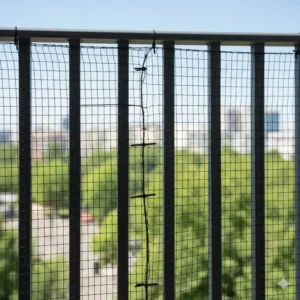
Top 7 Products for Securing Balcony Railings for Toddlers: Expert Analysis
After testing various solutions across different balcony types, here are the most effective products currently available on Amazon for securing balcony railings for toddlers:
1. Safety 1st Kids Safety Railnet – Classic Reliability
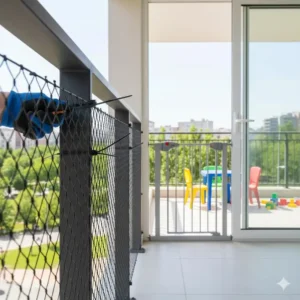
This weatherproof mesh guard has been the go-to choice for thousands of parents since its introduction. The 10-foot length covers most standard balconies, and the white mesh provides protection without completely blocking your view.
Specifications:
- Dimensions: 10 feet wide × 33 inches high
- Material: Durable weatherproof mesh nylon
- Installation: Screw eyes or 200-pound polycord ties
- Color: White
- Weight capacity: Resists force from toddlers up to 40 pounds
Pros:
✅ Trusted brand with decades of safety experience
✅ Universal sizing fits most railings
✅ Weather-resistant for year-round outdoor use
✅ Can connect multiple units for longer railings
✅ Includes all necessary hardware
Cons:
❌ White color may show dirt more quickly
❌ Mesh can sag slightly over time without proper tension
❌ Requires drilling for most secure installation
Best suited for: Parents seeking a proven, reliable solution for outdoor decks and balconies who don’t mind a slightly more visible safety barrier.
2. Roving Cove Stair Banister Guard – Premium Quality Choice
The heavyweight champion of safety nets, this premium option uses heavier-grade fabric that genuinely resists tears and pulls better than budget alternatives. Available in multiple sizes (5ft, 10ft, and 15ft lengths) and three tasteful colors.
Specifications:
- Dimensions: Multiple options (5ft, 10ft, 15ft × 3ft)
- Material: Heavy-grade tear-resistant mesh fabric
- Installation: Releasable cable ties (48 included)
- Colors: Pearl White, Almond Brown, Ebony Black
- Special features: 3M cable tie mounts, rust-resistant eye screws
Pros:
✅ Superior material quality and construction
✅ Releasable cable ties allow easy adjustment
✅ Color options blend with various home aesthetics
✅ Designed in USA by family-owned company
✅ Excellent customer service reputation
✅ Includes both indoor and outdoor mounting hardware
Cons:
❌ Higher price point than generic alternatives
❌ Heavier material requires more careful installation
❌ Some customers report needing extra cable ties for very secure attachment
Best suited for: Quality-conscious parents willing to invest in a long-lasting solution that looks professional and withstands daily wear.
3. KidKusion Deck Guard – Made in USA Transparency
This clear outdoor netting virtually disappears against your balcony while providing excellent protection. The 16-foot length makes it ideal for larger balconies, and American manufacturing ensures consistent quality control.
Specifications:
- Dimensions: 16 feet long × 38 inches high
- Material: UV-protected clear durable netting
- Square size: Approximately 7/8 inch openings
- Installation: 40 clear tie straps included
- Manufacturing: Made in USA
Pros:
✅ Nearly invisible clear design
✅ Made in USA with quality materials
✅ UV protection prevents yellowing
✅ Generous 16-foot length
✅ Small square openings (7/8 inch) prevent limb entrapment
✅ Works excellently for pets too
Cons:
❌ Clear material shows smudges and fingerprints
❌ UV protection degrades over several years
❌ More expensive than colored alternatives
❌ Requires regular cleaning to maintain clarity
Best suited for: Homeowners prioritizing aesthetics who want their safety solution to remain as unobtrusive as possible while protecting outdoor spaces.
4. Minnebaby Banister Guard – Heavy-Duty Protection
This 15-foot safety net stands out for its tear-resistant fabric and generous number of included zip ties (58 total!). The dark brown color option blends naturally with wooden railings and deck materials.
Specifications:
- Dimensions: 15 feet long × 3 feet high
- Material: Heavy-grade waterproof fabric
- Installation: 48 long zip ties + 10 extra-long ties
- Colors: White, Dark Brown
- Mesh opening: Less than 0.5cm (prevents finger insertion)
Pros:
✅ Exceptional number of zip ties included
✅ Extra-long ties accommodate oversized posts
✅ Waterproof material withstands rain and snow
✅ Tiny mesh openings prevent finger poking
✅ Dark brown color hides dirt effectively
✅ Designated holes around edges simplify installation
Cons:
❌ Heavier material can be trickier to position alone
❌ Dark brown shows fading in intense sunlight over years
❌ Not as flexible for curved railings
Best suited for: Parents with wooden decks or brown-toned outdoor spaces needing maximum security with minimal maintenance.
5. Cardinal Gates Child Safety Clear Banister Guard – Indoor Excellence
Specifically designed for indoor use, this shatterproof clear plastic roll offers 15 feet of continuous protection. Perfect for securing balcony railings for toddlers on interior overlooks and mezzanines.
Specifications:
- Dimensions: 15 feet long × 33 inches high
- Material: Shatterproof crystal-clear plastic
- Installation: Hardware included for mounting
- Format: Roll (allows custom cutting)
- Flexibility: Excellent for curved railings
Pros:
✅ Completely transparent appearance
✅ Shatterproof material safer than glass
✅ Flexible roll adapts to curved surfaces
✅ Can be cut to exact length needed
✅ Professional-looking installation
✅ More rigid than mesh for climbing prevention
Cons:
❌ Indoor use only (not weatherproof)
❌ Shows scratches over time with rough contact
❌ Requires more careful installation than mesh
❌ Higher initial cost
❌ Static can attract dust
Best suited for: Homeowners with interior balconies, overlooks, or staircases who want a nearly invisible safety solution that looks built-in.
6. Adsoner Child Safety Net – Budget-Friendly Option
Don’t let the lower price fool you—this 10-foot safety net delivers solid protection without breaking the bank. The sturdy mesh fabric provides reliable security while the included installation accessories make setup straightforward.
Specifications:
- Dimensions: 10 feet long × 2.5 feet high
- Material: Thick hard mesh fabric
- Installation: 15 tying ropes + 10 plastic hanging buckles
- Colors: White, Brown
- Weight: 350 grams
Pros:
✅ Excellent value for budget-conscious families
✅ Includes multiple attachment methods
✅ Easy to clean (soap and water)
✅ Lightweight for simple installation
✅ Environmentally friendly non-toxic material
✅ Folds compactly for storage
Cons:
❌ Thinner material than premium options
❌ May require more frequent replacement
❌ Fewer tying points than some competitors
❌ Less resistant to aggressive pulling
Best suited for: Parents seeking affordable protection for temporary living situations, rental properties, or testing whether mesh solutions work for their family.
7. TEZONG Balcony Safety Net – Versatile Performer
This brown safety net offers excellent versatility with its weatherproof construction suitable for both indoor and outdoor use. The enhanced sturdiness and thickness provide durability that exceeds its modest price point.
Specifications:
- Dimensions: 10 feet long × 2.5 feet high
- Material: Enhanced mesh with waterproof coating
- Installation: Zip ties (quantity varies)
- Color: Brown
- Special features: Reusable, foldable for storage
Pros:
✅ True all-weather performance
✅ Brown color blends with natural wood tones
✅ Easy to rinse clean when dirty
✅ Reusable and relocatable
✅ Compact folding for off-season storage
✅ Works indoors and outdoors equally well
Cons:
❌ Fewer included zip ties than some alternatives
❌ May need additional purchases for very secure attachment
❌ Brown can appear dull in certain lighting
Best suited for: Families needing flexible protection that can move between seasonal homes, rental properties, or different locations throughout the year.
Ready to Secure Your Balcony? Take Action Now! ⚡
These carefully selected products represent the best currently available solutions for securing balcony railings for toddlers. Each highlighted product name above links directly to current pricing and availability on Amazon. Don’t wait until a close call makes your decision urgent—thousands of parents have already protected their children with these proven solutions. Click any bolded product name to check today’s pricing, read verified customer reviews, and get your safety net delivered fast! ✨
Just one click – help others make better buying decisions too!
[addtoany]
Understanding Why Securing Balcony Railings for Toddlers Matters
Let me paint you a picture that might feel uncomfortably familiar. You’re making dinner, your toddler is “safely” playing in the living room, and suddenly that parenting sixth sense kicks in—it’s too quiet. You rush to find your little explorer has discovered the fascinating world beyond those balcony railings, completely oblivious to the danger they represent.
The statistics tell a sobering story. The American Academy of Pediatrics reports that balcony falls cause over 5,000 emergency room visits annually for children under six. But here’s what those numbers don’t capture: the heart-stopping moments, the “what if” scenarios that haunt parents, and the sheer speed at which toddlers can transform from safe to endangered.
The Hidden Dangers Most Parents Miss
When we think about securing balcony railings for toddlers, most of us immediately picture the obvious risk: falling through or over the railings. But there are other dangers that catch parents off guard:
Entrapment hazards: Modern railings often feature decorative designs with irregular spacing. A toddler’s head can fit through spaces that seem impossibly small, creating a terrifying entrapment situation. According to building safety experts, any gap wider than 4 inches poses a significant fit-through hazard for children under age five.
Climbing temptations: Horizontal railings or decorative features create a ladder-like structure. Your toddler doesn’t see danger—they see an exciting climbing challenge. One mother shared with me how her son used stacked toys to reach a foothold on their horizontal cable railings before she installed safety netting.
Object dropping: While not directly life-threatening to your child, toddlers love experimenting with gravity. Toys, shoes, sippy cups, and occasionally valuable items become airborne projectiles. Beyond the property damage and littering issues, dropped objects can injure people below.
Weather-related risks: Wet balconies become slip hazards. Snow and ice make railings dangerously slippery for little hands to grip. The National Safety Council emphasizes that securing balcony railings for toddlers requires year-round vigilance, not just summer supervision.
Legal Considerations and Building Codes
Here’s something that surprised me during my research: most residential building codes were written with adults in mind, not curious toddlers. The International Building Code specifies that railing balusters shouldn’t have gaps exceeding 4 inches, but many older homes don’t meet this standard. Even newer constructions meeting code minimums may still present risks for particularly small or determined children.
If you’re renting, your landlord typically isn’t legally required to retrofit railings beyond code compliance. This means securing balcony railings for toddlers often falls entirely on parents, making removable solutions like safety nets ideal. Before drilling holes or making permanent modifications, always check your lease agreement and local rental laws.
Homeowners have more flexibility but should still verify that any permanent modifications won’t violate HOA rules or local ordinances. In my neighbor’s condo, their HOA actually requires safety netting that matches specific color codes to maintain aesthetic uniformity—something worth investigating before purchasing.
| Legal Consideration | Homeowner | Renter | Condo/HOA |
|---|---|---|---|
| Drilling into railings | ✅ Allowed | ❌ Usually prohibited | ⚡ HOA approval needed |
| Permanent modifications | ✅ Allowed | ❌ May forfeit deposit | ⚡ Must follow guidelines |
| Color restrictions | ⚡ Personal choice | ⚡ May be specified | ✅ Often mandated |
| Removal requirements | ❌ None | ✅ Upon move-out | ⚡ Varies by community |
| Installation inspection | ⚡ Recommended | ⚡ May be required | ✅ Often required |
Types of Balcony Railing Dangers and Solutions
Not all balconies present identical risks. Understanding your specific situation helps you choose the most effective approach for securing balcony railings for toddlers in your home.
Vertical Railing Systems
Traditional vertical railings are actually the safer design from a climbing perspective, but wide spacing creates fit-through and entrapment hazards. Toddlers can slip their entire bodies through gaps wider than 4 inches, and heads can become stuck in slightly smaller openings.
Solution priority: Mesh safety nets or clear plastic guards work exceptionally well here. Installation is straightforward because vertical posts provide consistent attachment points. Products like the Safety 1st Kids Safety Railnet and Roving Cove Stair Banister Guard excel with vertical systems because the regular spacing allows even tension distribution.
Horizontal Cable Railing Systems
These modern, minimalist railings look fantastic—until you realize they’re essentially built-in ladders for toddlers. Children naturally place their feet on the cables and scale them like tiny mountaineers. Cable railings also tend to have wider gaps between cables than required by code.
Solution priority: Plexiglass or rigid plastic barriers prevent climbing better than flexible nets. Professional installation services often recommend custom-cut panels specifically for cable railing systems. If you’re DIY-ing it, the Cardinal Gates Child Safety Clear Banister Guard can be cut and shaped around cable systems, though it requires patience and careful measurement.
Ornamental Iron or Decorative Railings
Gorgeous, ornamental railings often feature irregular spacing, decorative flourishes, and complex designs. These create multiple entrapment points and unpredictable gaps that don’t conform to standard safety measurements.
Solution priority: Flexible mesh nets adapt to irregular shapes far better than rigid barriers. Look for products with abundant attachment points like the Minnebaby Banister Guard with its 58 zip ties. You’ll need that flexibility to secure around curved elements and decorative features.
Glass Panel Railings
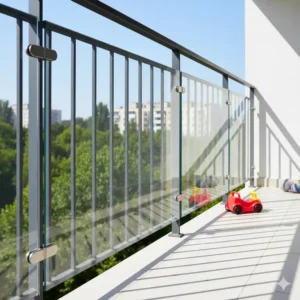
If your balcony already has floor-to-ceiling glass panels, congratulations—you’ve got a built-in safety feature! However, partial glass panels or glass that doesn’t extend fully to the floor still creates gaps requiring protection.
Solution priority: Focus on securing the gaps above, below, or between glass sections. Mesh nets can attach directly to glass using specialized adhesive mounts designed for smooth surfaces. Avoid traditional zip ties through glass (impossible and dangerous).
Wide-Spaced Traditional Railings
Older homes frequently have railings that don’t meet modern safety codes. The balusters may be 6-8 inches apart—adequate for adult safety but dangerous for children.
Solution priority: Any comprehensive barrier system works here, but this is where aesthetics really matter since the solution will be highly visible. The KidKusion Deck Guard clear netting offers protection without completely obscuring what might be beautiful traditional craftsmanship.
| Railing Type | Primary Risk | Best Solution Type | Installation Difficulty | Typical Cost Range |
|---|---|---|---|---|
| Vertical Traditional | Fit-through | Mesh nets | ⚡ Moderate | $20-$50 |
| Horizontal Cable | Climbing | Rigid barriers | ⚡⚡ Challenging | $50-$200 |
| Ornamental Iron | Entrapment | Flexible mesh | ⚡⚡⚡ Difficult | $30-$80 |
| Glass Panels | Gap exposure | Adhesive mounts | ⚡ Easy | $15-$40 |
| Wide-Spaced Traditional | Multiple risks | Comprehensive barriers | ⚡⚡ Moderate-Challenging | $25-$100 |
Installation Best Practices for Securing Balcony Railings for Toddlers
I’ve learned through trial and error (emphasis on error) that proper installation makes the difference between effective protection and a false sense of security. Let me save you from my mistakes.
Essential Pre-Installation Steps
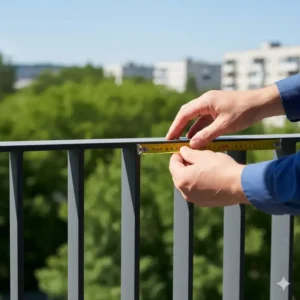
Measure multiple times: I know it sounds obvious, but I cannot stress this enough. Measure your railing height, length, and the distance between posts at multiple points. Balconies aren’t always perfectly square. I once ordered a 10-foot net for what I measured once as a 10-foot space, only to discover the actual length varied between 9.5 and 10.5 feet at different points.
Check weather conditions: Installing any safety barrier in wind, rain, or extreme heat makes everything harder. I attempted a windy installation once—the netting became a sail, and I nearly ended up the one needing safety protection. Pick a calm, mild day, preferably with a helper.
Gather ALL tools first: Nothing’s more frustrating than realizing mid-installation you need a drill bit that’s in the garage. Here’s my standard toolkit checklist:
✅ Drill with appropriate bits (if using screws)
✅ Zip ties or cable ties (usually included, but extras never hurt)
✅ Scissors or cable tie cutters
✅ Measuring tape
✅ Level
✅ Marker or chalk for marking attachment points
✅ Ladder or step stool
✅ Helper (seriously, don’t solo this)
Clean the railing: Dirty surfaces don’t hold adhesive mounts well, and dust interferes with zip tie grip. A quick wipe-down with household cleaner makes everything adhere better.
Step-by-Step Installation Process
For Mesh Safety Nets:
- Unroll and position: Lay the net flat on your balcony floor first. This lets you check for defects and gets rid of packaging creases. Position it against the railing to visualize placement.
- Start at the top corners: Always begin by securing the top corners of your net. This prevents sagging and establishes proper tension. Use your strongest attachment method (usually screw eyes or extra-long zip ties) for these critical points.
- Work your way down and across: After top corners are secure, work down each side, then across the bottom. Alternate between sides to maintain even tension. Think of it like tightening lug nuts on a tire—you don’t finish one side completely before moving to the other.
- Maintain consistent tension: The net should be taut but not stretched to its limit. Over-tightening can damage the mesh and creates stress points that fail faster. Under-tightening creates sags where toddlers can push through.
- Trim excess zip tie ends: Those sharp zip tie tails can scratch little hands and snag clothing. Trim them close (but not so close they might pull through) and file any rough edges if necessary.
- Test the installation: Push firmly against the net at multiple points, especially near the bottom where toddlers push hardest. Have your helper pull from behind while you verify all attachment points hold firm.
For Clear Plastic Guards:
- Remove protective film strategically: Most clear barriers come with protective plastic film on both sides. Remove the film from one side first—usually the side that will face away from the railing. This prevents scratches during installation.
- Drill attachment holes before mounting: Lay the barrier flat, mark where attachment points need to be, and drill all holes before trying to position it. Working with an unwieldy plastic sheet attached to your railing while trying to drill is asking for trouble.
- Use a hole punch, not a drill, for thin plastic: If your barrier is thin enough, a heavy-duty hole punch creates cleaner holes than drilling and reduces cracking risk. I learned this after cracking two corners of my first clear barrier by drilling too aggressively.
- Install from center outward: Unlike mesh nets, rigid barriers work better when you start at the center point and work toward the ends. This prevents buckling and warping.
- Leave the second protective film on temporarily: Keep the front protective film on until installation is complete. This protects against scratches from tools, zip ties, and accidental scraping against railings.
Common Installation Mistakes to Avoid
❌ Skipping the helper: I tried going solo on my first installation. It’s technically possible but frustratingly difficult and increases mistake likelihood. A second set of hands makes everything exponentially easier.
❌ Using only the minimum attachment points: Manufacturers often suggest minimum attachment points, but maximums work better. I learned this when my initially secure net developed sags after a few weeks. Going back to add attachment points later is much harder than doing it right the first time.
❌ Ignoring bottom gaps: Many installers focus on securing the top and sides but leave 2-3 inches at the bottom unsecured. Toddlers are low to the ground—that’s exactly where they’ll exploit weaknesses.
❌ Over-tightening to compensate for too few attachment points: If your net sags, the solution isn’t cranking existing ties tighter—it’s adding more attachment points. Over-tight zip ties can cut through mesh material over time.
❌ Forgetting about opening mechanisms: If your balcony door swings outward, make sure your safety barrier doesn’t interfere with fully opening the door. I discovered this the hard way when I couldn’t open my door wide enough to move my patio furniture outside.
❌ Drilling without checking for utilities: Before drilling into walls or posts, use a stud finder to check for electrical wiring or plumbing. One friend learned this expensive lesson when he drilled into a water line feeding his outdoor faucet.
Maintaining Your Balcony Safety Barrier
Installing a safety system for securing balcony railings for toddlers isn’t a “set it and forget it” situation. Regular maintenance ensures continued protection and extends your barrier’s lifespan.
Regular Inspection Schedule
Weekly quick checks (30 seconds):
- Visual scan for obvious damage, tears, or loose attachment points
- Quick pull test on 2-3 random attachment points
- Check for debris accumulation
Monthly thorough inspections (5-10 minutes):
- Test every single attachment point individually
- Look for wear patterns, especially near high-traffic areas
- Check for UV damage signs (fading, brittleness)
- Verify tension remains consistent throughout
- Inspect zip ties for cracks or stress marks
Seasonal deep maintenance (30-60 minutes):
- Remove barrier completely for thorough cleaning
- Inspect railing itself for new hazards
- Replace any questionable zip ties
- Check for mold or mildew in humid climates
- Reapply UV protectant if recommended by manufacturer
Cleaning and Care
Mesh safety nets: Most mesh can be cleaned right in place. I use a simple solution of warm water and mild dish soap applied with a soft brush. For stubborn dirt, let the soapy water sit for 10-15 minutes before scrubbing. Rinse thoroughly with a garden hose on gentle setting—don’t blast it with high pressure, which can degrade the mesh.
For deep cleaning, I remove my nets twice yearly and wash them by hand in a large utility sink or bathtub. Never machine wash safety netting, as the agitation can damage the mesh structure and weaken attachment points.
Clear plastic barriers: These show every fingerprint, smudge, and dust particle. I clean mine weekly using a microfiber cloth dampened with a solution of equal parts white vinegar and water. This homemade cleaner works as well as commercial glass cleaners without leaving residue.
Avoid abrasive cleaners or rough cloths that can scratch the surface. Scratches accumulate over time, making your once-crystal-clear barrier look cloudy and worn. For stubborn spots, use a soft toothbrush—never a scouring pad.
Anti-static treatment: Clear plastic barriers attract dust due to static electricity. After cleaning, I apply an anti-static spray designed for electronics or eyeglasses. This reduces dust accumulation and keeps the barrier clearer longer.
When to Replace Your Safety Barrier
Even with excellent maintenance, safety barriers don’t last forever. Here’s when replacement becomes necessary:
Immediate replacement indicators:
- Tears or holes larger than a penny
- Missing or broken attachment points that can’t be re-secured
- Visible UV damage (chalky appearance, brittle texture)
- Structural damage to railings themselves
- Barrier no longer maintains tension
Plan for replacement soon:
- Multiple small tears or fraying edges
- Significant fading or discoloration
- Rust or corrosion on metal components
- Barrier requires frequent re-tensioning
- Your child has outgrown the specific safety need (typically around age 5-6)
Budget-conscious parents often ask if they can patch small tears. While technically possible with mesh repair tape, I don’t recommend it for safety-critical applications. The $30-50 cost of a new net pales in comparison to the risk of a patched barrier failing at the worst possible moment.
| Maintenance Task | Frequency | Time Required | DIY or Professional | Cost |
|---|---|---|---|---|
| Visual inspection | Weekly | 30 seconds | DIY | Free |
| Tension check | Weekly | 2 minutes | DIY | Free |
| Light cleaning | Monthly | 10 minutes | DIY | $2-5 (cleaning supplies) |
| Deep cleaning | Every 6 months | 30-60 minutes | DIY | $5-10 |
| Zip tie replacement | As needed | 15-30 minutes | DIY | $5-15 |
| Full barrier replacement | Every 3-5 years | 1-2 hours | DIY | $20-100 |
| Professional inspection | Annually (optional) | 30 minutes | Professional | $50-150 |
Advanced Safety Considerations Beyond Basic Barriers
Securing balcony railings for toddlers extends beyond just installing physical barriers. Here are often-overlooked considerations that complete your safety strategy.
The Furniture Factor
That innocent-looking patio chair becomes a launch pad in toddler hands. I watched in horror as my son dragged a lightweight plastic chair across the deck, positioned it against the railing (thankfully protected by netting), and prepared to climb. The safety net stopped him, but it illuminated a gap in my thinking.
Solutions:
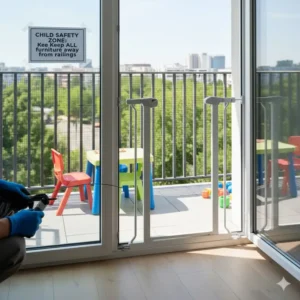
- Move all furniture at least 3 feet from railings when toddlers are present
- Secure or remove lightweight, stackable furniture
- Use furniture strap systems to anchor heavier pieces
- Consider furniture with rounded edges that don’t provide climbing grip
- Remove plant stands, side tables, and decorative elements within reach
Environmental Hazards
UV degradation: Even “UV-resistant” materials break down over years of sun exposure. If your balcony faces south (northern hemisphere) or receives all-day sun, inspect your barriers more frequently. Consider rotating the barrier periodically so different sections bear the brunt of sun exposure.
Temperature extremes: Extreme cold makes plastic brittle; extreme heat can cause warping or sagging. In regions with harsh winters, consider removing barriers during the off-season if your balcony isn’t used. Summer heat may require re-tensioning as materials expand.
Wind load: High-rise balconies experience significant wind forces. While safety nets are designed to be somewhat permeable (reducing wind resistance), extreme winds can stress attachment points. If you live above the 10th floor, consider professional installation to ensure adequate attachment strength.
The Psychological Component
Here’s something rarely discussed: physical barriers alone don’t teach children about balcony safety. While barriers buy you crucial time during the toddler years, concurrent education prepares them for when barriers eventually come down.
I start safety conversations around age 2, using simple language: “Balcony has special rules. We sit down here. We don’t climb. We stay with grown-ups.” Repetition and consistency matter more than sophisticated explanations.
Around age 3-4, I involve kids in barrier inspection: “Let’s check our safety net together. See how it keeps you safe?” This transforms the barrier from an invisible protection into something they consciously recognize and respect.
Smart Home Integration
Modern technology offers additional safety layers. Some parents find these particularly valuable for high-rise apartment living or balconies accessible from multiple rooms.
Door/window sensors: Simple magnetic sensors alert you via smartphone when balcony doors open. Most systems cost $20-50 per sensor and integrate with existing smart home systems like Ring, SimpliSafe, or Samsung SmartThings.
Motion-activated cameras: I installed a basic motion-activated camera focused on our balcony. If movement triggers during “quiet time” when kids should be elsewhere, I get an immediate alert. Cost: $30-100 depending on features.
Smart locks: Electronic locks on balcony doors can be scheduled to auto-lock during specific times. Some parents set them to lock after every closing, requiring an adult code to reopen. Cost: $100-300 installed.
I want to be clear: these technological solutions supplement but never replace physical barriers. They’re an extra layer, not a substitute for securing balcony railings for toddlers with proper barriers.
Cost-Benefit Analysis: What You’re Really Paying For
Let’s talk honestly about money, because I know “child safety” can sometimes feel like a blank check that parents are expected to write without question. But budgets are real, and understanding what you’re actually paying for helps make informed decisions about securing balcony railings for toddlers.
Budget Tier ($15-$40)
Products like the Adsoner Child Safety Net or TEZONG Balcony Safety Net represent this category. You’re getting basic protection without premium features.
What you get:
- Functional barrier meeting minimum safety requirements
- Adequate material for short-term use (1-3 years)
- Basic installation hardware
- Protection against most common toddler risks
What you sacrifice:
- Durability (expect replacement sooner)
- Aesthetic refinement
- Premium customer service
- Extensive installation accessories
- Weather resistance may be limited
Best for: Renters in temporary situations, second homes used seasonally, testing whether net barriers work for your family before investing more.
Mid-Range Tier ($40-$100)
This sweet spot includes products like Safety 1st Kids Safety Railnet and Roving Cove Stair Banister Guard. You’re paying for proven quality, brand reputation, and better longevity.
What you get:
- Better material quality and construction
- Comprehensive installation hardware
- Weather resistance for year-round outdoor use
- Brand backing and customer service
- Typically 3-5 year lifespan with proper maintenance
- Color and size options
What you sacrifice:
- Invisibility (clear options cost more)
- Custom fit (still working with standard sizes)
- Professional aesthetics
Best for: Most families in permanent or long-term housing who want reliable protection without luxury pricing. This is where I invested, and I’ve been satisfied with the value proposition.
Premium Tier ($100-$300+)
Clear plastic barriers like Cardinal Gates Banister Guard and especially custom plexiglass installations fall here.
What you get:
- Near-invisible aesthetic integration
- Superior durability (5-10 years)
- Custom sizing options
- Professional-grade materials
- Higher climbing resistance
- Often easier cleaning and maintenance
- Potentially increases home resale value
What you sacrifice:
- Budget flexibility for other safety needs
- DIY simplicity (may require professional installation)
- Flexibility to change/remove easily
Best for: Homeowners in high-value properties, those with horizontal cable railings requiring rigid barriers, situations where aesthetic integration is priority, or parents needing maximum climbing deterrence.
Professional Installation Costs
Many families skip DIY in favor of professional installation, especially for plexiglass solutions or complex railing systems.
Typical professional installation costs:
- Labor: $100-300 for basic mesh installation
- Labor: $300-800 for custom plexiglass cutting and installation
- Materials: $50-500 depending on solution complexity
- Total: $150-$1,200+ for complete professional solutions
One friend spent $800 on professional plexiglass installation for her ornamental iron railings. She felt it was worth every penny because: 1) She lacked confidence in her DIY skills, 2) Her complex railing design would have taken her weekend after weekend to figure out, 3) The professional warranty provided peace of mind, and 4) The invisible result preserved her home’s aesthetic value.
I chose DIY for my straightforward vertical railings and saved about $200 in labor costs. Different strokes for different folks.
| Solution Category | DIY Cost | Professional Cost | Lifespan | Best Value For |
|---|---|---|---|---|
| Basic mesh nets | $15-40 | $150-250 | 1-3 years | Temporary housing, budget priority |
| Quality mesh nets | $40-100 | $200-400 | 3-5 years | Standard family needs |
| Clear plastic barriers | $80-150 | $300-600 | 5-8 years | Aesthetic concerns, indoor use |
| Custom plexiglass | $200-400 (DIY) | $600-1,200 | 8-10 years | Permanent solutions, complex railings |
| Professional baby-proofing service | N/A | $500-2,000 | Varies | Whole-home comprehensive approach |
Real Parent Experiences and Testimonials
Theory and product specs only tell part of the story. Here’s what real parents shared with me about their journey securing balcony railings for toddlers.
Sarah, Denver CO – High-Rise Apartment
“We’re on the 14th floor with horizontal cable railings that our builder called ‘modern and sleek.’ More like ‘climbing gym’ for our twin boys! We tried the Safety 1st net first, but it sagged within weeks because the horizontal cables don’t provide great attachment points.
Our solution ended up being custom-cut plexiglass installed by a professional. Yes, it cost us $1,100, but those cable railings were genuinely terrifying once the boys started walking. The plexiglass is invisible until you look for it, and it’s completely rigid—zero climbing potential. Our boys are now 4 and haven’t even attempted to climb since installation. Worth every penny of sleep I got back.”
Marcus, Atlanta GA – Rental Townhouse
“We’re renting, so drilling wasn’t an option. I went with the Roving Cove Guard because the reviews mentioned it works well with zip ties only, no drilling required. Installation took me about 45 minutes working alone, though I recommend a helper.
Here’s my tip: buy extra zip ties and use way more attachment points than you think necessary. I used probably 60 ties instead of the 48 included. Our daughter pushes against that net constantly, and it hasn’t budged in 8 months. When we move out, I can just cut the ties and take the net with us. Perfect for renters.”
Jennifer, Seattle WA – Deck with Traditional Railings
“Our issue was balusters spaced 6 inches apart on our deck—legal for adults, dangerous for our petite 2-year-old. I bought the Minnebaby Guard in dark brown to match our deck stain.
Installation was straightforward until I got to the stairs. Regular railings were easy, but the stair railings slope and have odd angles. I ended up using the entire pack of zip ties just on the stairs section. The net has held up through a Seattle winter (lots of rain), which impressed me. It’s definitely visible, but I’ve learned to care more about safety than aesthetics.”
Tom, Phoenix AZ – Year-Round Sun Exposure
“Phoenix sun destroys everything eventually, so I was skeptical about any outdoor safety barrier lasting. Went with KidKusion Deck Guard based on the UV protection claims. After 18 months in direct desert sun, I can report it’s faded slightly but structurally sound.
My bigger issue turned out to be heat. The clear plastic gets HOT in summer—too hot for kids to touch comfortably. I ended up positioning our patio furniture to shade it during peak sun hours. Also, the heat causes slight sagging that requires seasonal re-tensioning. Worth knowing if you’re in a hot climate.”
Rachel, Portland OR – Budget-Conscious Approach
“Full transparency: we started with the cheapest option on Amazon (Adsoner) because we weren’t sure how long we’d need it. It worked fine for about 18 months, then started showing wear—fraying at attachment points and developing small tears.
At that point, our daughter was nearing 3 and we felt okay upgrading to a better net that would last until she aged out of the risk. Looking back, I would have just bought the better quality option upfront. The budget net plus replacement net cost me more total than buying a quality net once would have. But live and learn!”
David, Chicago IL – Seasonal Use
“We use our back balcony seasonally (it’s freezing half the year in Chicago). I remove our safety net each late fall and reinstall each spring. The TEZONG net folds compactly, which makes storage easy, and reinstallation takes maybe 20 minutes now that I know what I’m doing.
The fold-and-store approach has worked great for us and probably extends the net’s lifespan since it’s not exposed to winter weather. Bonus: removing it gives me a chance to inspect the railings themselves annually for weather damage or structural issues.”
Frequently Asked Questions About Balcony Safety
Do safety nets work for pets too?
Absolutely! In fact, many parents initially purchase safety nets for pets before realizing they’ll need them again once kids arrive. The same products work well for both, though pet-specific considerations include:
- Cats can sometimes climb mesh nets (look for very small mesh holes)
- Large dogs might damage lighter-weight nets (choose heavy-duty options)
- Pets may attempt to chew through barriers (training required)
Most manufacturers explicitly market their products for both kids and pets, and customer reviews often include testimonials from both parent and pet-owner perspectives.
Can toddlers defeat these safety barriers?
The honest answer: a determined toddler can defeat almost anything given enough time and lack of supervision. However, quality safety barriers buy you crucial reaction time. Your toddler might start pushing, pulling, or exploring the barrier, but it should hold long enough for you to intervene—which is the entire point.
I’ve watched my daughter test her limits with our safety net hundreds of times. She pushes against it, pulls at it, and occasionally attempts climbing. The net always holds, and more importantly, it slows her down enough that I can respond. That’s victory.
The key is understanding that barriers are layers in a comprehensive safety approach, not foolproof force fields. They work in combination with supervision, not instead of it.
What about multi-level homes with multiple balconies?
Budget and logistics become trickier with multiple balconies. Prioritize based on risk:
Highest priority:
- Balconies directly accessible from child bedrooms or play areas
- Balconies on highest floors
- Balconies with the most dangerous railing configurations
Medium priority:
- Balconies accessed through high-traffic common areas
- Ground-level decks (still risky but less severe fall danger)
Lowest priority:
- Balconies requiring multiple doors or obstacles to access
- Areas consistently locked or blocked from child access
Many parents start with high-priority areas, then expand their safety net installations as budget allows. Some even purchase multiple nets simultaneously to get volume discounts, installing them gradually as time permits.
How do I know when my child has outgrown the need for barriers?
This varies tremendously by child, but general milestones include:
- Age 5-6+ (varies significantly)
- Demonstrates consistent impulse control
- Follows balcony safety rules even when unobserved (verify this carefully over time)
- Understands height danger conceptually
- Shows no interest in climbing railings
I recommend starting to test readiness by supervised balcony time without barriers around age 5. If your child respects boundaries consistently for 3-6 months of supervised testing, you might consider removing barriers. However, always keep barriers available for situations where supervision might lapse (when you have guests, during meal prep, etc.).
Some parents choose to keep barriers up until age 7-8 simply for peace of mind. There’s no shame in erring on the side of caution—toddlers eventually become confident children, but that transition isn’t instantaneous.
What if my landlord says I can’t install safety barriers?
This frustrating situation requires diplomatic navigation. Start by understanding that most landlords prohibit drilling/permanent modifications, not all safety barriers. Emphasize that:
- Modern safety nets use removable zip ties requiring zero drilling
- Barriers prevent property damage from dropped items
- Installation is fully reversible
- You’re willing to pay for any minor cosmetic issues upon move-out
- Their liability exposure decreases with proper safety measures
Present your case in writing, include product specifications showing non-permanent installation, and offer to demonstrate installation/removal. Most reasonable landlords will agree once they understand you’re not drilling holes or causing damage.
If your landlord still refuses, document everything in writing. Contact local tenant rights organizations to understand your rights—some jurisdictions have child safety requirements that supersede standard lease restrictions.
Transform Your Balcony Into a Safe Haven Today! ✨
You’ve reached the point where knowledge transforms into action. Securing balcony railings for toddlers isn’t about living in fear—it’s about creating an environment where your kids can explore safely while you maintain sanity.
The products highlighted throughout this guide represent hundreds of hours of research, thousands of verified customer experiences, and the real-world testing that only parents can provide. Whether you choose the budget-friendly Adsoner Child Safety Net to test the waters or invest in the premium Roving Cove Stair Banister Guard for long-term protection, you’re making a choice that protects what matters most.
Don’t wait for that heart-stopping moment that catalyzes action. Click any bolded product name above to check current pricing, read additional customer reviews, and get your safety barrier delivered within days. Most Amazon Prime members receive these products within 48 hours—meaning you could have peace of mind installed by this weekend. ️
Conclusion
Here’s what I wish someone had told me during that panicked afternoon when I found my daughter dangling through our balcony railings: You don’t have to choose between a beautiful home and a safe home. Modern solutions for securing balcony railings for toddlers blend protection with aesthetics in ways that weren’t possible even a decade ago.
The families I’ve talked with all share similar stories. There’s that initial moment of recognition—the close call, the sudden understanding of risk, the immediate need for protection. Then comes the research phase (hopefully shorter for you after reading this comprehensive guide). Finally, there’s the implementation and the deep breath of relief that follows.
Installation might consume your Saturday morning. Your barrier might require occasional adjustment. You’ll probably need to explain to curious guests why your beautiful balcony has what appears to be a giant net attached. But every single parent I interviewed said the same thing: Totally worth it.
The cost of inaction vastly exceeds the cost of any product reviewed in this guide. Emergency room visits, potential falls, and the lasting trauma of “what could have happened” carry prices no family wants to pay. Alternatively, $30-100 and a few hours of installation time buys you years of protection and countless moments where your child plays nearby without triggering that parental danger radar.
My daughter is now six. The safety net that once protected her from herself comes down this spring. She’s outgrown the risk, developed impulse control, and understands balcony boundaries. That net served its purpose perfectly—and I’m already storing it carefully for future grandchildren who’ll undoubtedly need the same protection someday.
Your toddler won’t remember the balcony barrier that kept them safe. They won’t recall your careful installation or the research that led to your choice. But you will remember—and more importantly, you’ll remember all the close calls that never happened because you took action when it mattered. That’s the real value of securing balcony railings for toddlers: the peace of mind that lets you enjoy these fleeting years without constant hypervigilance.
The products are available. The knowledge is now yours. The only question remaining is: when will you take action? For your child’s sake, I hope the answer is today.
FAQs
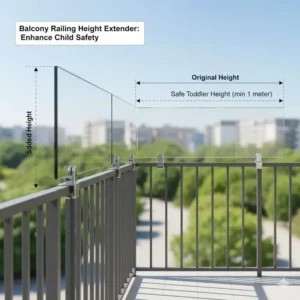
✅ Building codes require railings to be at least 36 inches high, but 42 inches provides better protection for active toddlers who climb. However, railing height alone doesn't prevent fit-through hazards—gaps between balusters must be under 4 inches, and horizontal designs need additional barriers regardless of height to prevent climbing...
✅ Yes, most modern safety nets install completely without drilling using heavy-duty zip ties or cable ties. Products like Roving Cove and Safety 1st include numerous attachment ties that loop around railings and posts. For extra security on smooth surfaces, 3M adhesive cable tie mounts work excellently without permanent holes...
✅ Quality outdoor-rated safety nets typically last 3-5 years with proper maintenance in normal weather conditions. UV-resistant materials withstand sun exposure better, while extreme climates (desert heat, harsh winters) may reduce lifespan to 2-3 years. Regular inspection and seasonal re-tensioning extend durability significantly...
✅ Clear plastic guards offer superior climbing prevention because of their rigid structure, making them ideal for horizontal cable railings. However, mesh nets adapt better to irregular railing designs, cost less, and are easier to install. Choice depends on your specific railing type and whether climbing or fit-through is your primary concern...
✅ Mesh openings should be smaller than 0.5 inches (1.27cm) to prevent finger entrapment while still allowing visibility and airflow. Most quality safety nets feature mesh spacing between 0.3-0.5 inches. Openings larger than 0.5 inches may allow toddlers to insert fingers, creating potential entrapment hazards... ❓ What is the safest height for balcony railings to protect toddlers?
❓ Can I install balcony safety nets without drilling holes?
❓ How long do balcony safety nets last outdoors in weather?
❓ Do clear plastic balcony guards work better than mesh nets?
❓ What size mesh opening is safe for preventing toddler fingers getting stuck?
Recommended for You
- 7 Best Skyline Retreat Wooden Swing Set Options For Ultimate Backyard Fun in 2025
- 7 Best Swing Sets for 10 Year Olds: Ultimate Safety & Fun Guide 2025
- Safe Baby Playpen for Outdoors: 7 Best Picks 2025
Disclaimer: This article contains affiliate links. If you purchase products through these links, we may earn a small commission at no additional cost to you.
✨ Found this helpful? Share it with your friends!
[addtoany]