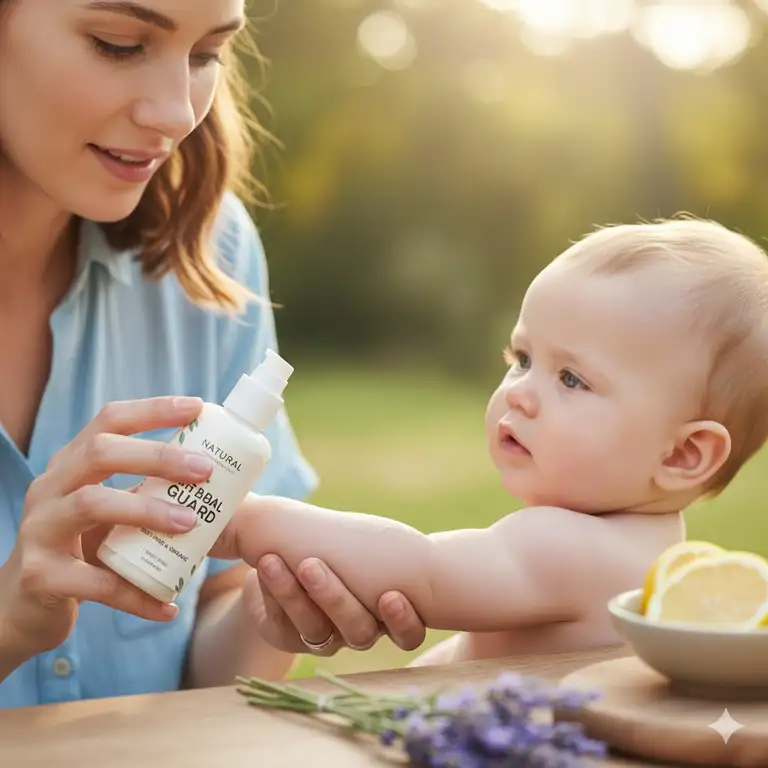
When you’re a parent, nothing matters more than keeping your baby safe and comfortable. But here’s the thing – summertime brings mosquitoes, ticks, and all sorts of biting insects that can turn a peaceful evening outdoors into an itchy nightmare for your little one. I remember the first time my nephew got absolutely covered in mosquito bites during a family barbecue. His tiny arms looked like connect-the-dots, and my sister was beside herself trying to figure out what she could safely use on his delicate skin.
✨Was this helpful? Spread the word!
[addtoany]You want protection that works, but you also don’t want to slather your baby in harsh chemicals. That’s where non toxic bug repellents safe for babies come into play. The good news? There are actually several effective options that don’t involve coating your child in DEET or synthetic ingredients. Whether you’re dealing with mosquitoes that might carry diseases like Zika virus, pesky gnats at the park, or ticks during camping trips, the right bug spray for babies can make all the difference.
In this guide, I’ll walk you through everything you need to know about choosing baby safe insect repellent, from understanding which ingredients actually work to finding the perfect product for your family’s needs. Let’s dive in and get your little one protected naturally!
Quick Comparison: Non Toxic Bug Repellents Safe for Babies
| Product | Active Ingredient | Protection Time | Safe From Age | Key Feature |
|---|---|---|---|---|
| Babyganics Natural Insect Repellent | Essential Oils | 2-3 hours | 6 months+ | Certified organic soybean oil base |
| Sawyer Premium Picaridin | 20% Picaridin | 12 hours | 2 months+ | Long-lasting, odorless formula |
| Natrapel Picaridin | 20% Picaridin | 12 hours | 2 months+ | TSA-approved travel sizes |
| California Baby Natural Bug Spray | Essential Oils | 2-3 hours | 6 months+ | Allergen-free formula |
| Repel Plant-Based Lemon Eucalyptus | 30% Oil of Lemon Eucalyptus | 6 hours | 3 years+ | CDC-recommended ingredient |
| Cutter All Family | 7% DEET | 4-6 hours | 2 months+ | Gentle DEET concentration |
| Murphy’s Naturals Lemon Eucalyptus | 30% Oil of Lemon Eucalyptus | 6 hours | All ages (per EPA) | Plant-based, gear-safe |

Top 7 Non Toxic Bug Repellents Safe for Babies: Expert Analysis
1. Babyganics Natural Insect Repellent – Best Overall Natural Option
When it comes to completely natural bug repellents for babies, Babyganics Natural Insect Repellent stands out as a parent favorite. This spray features a blend of essential oils including citronella, peppermint, rosemary, lemongrass, and geranium – all suspended in 95.25% certified organic soybean oil.
Key Specifications:
- ✅ Active ingredients: Rosemary oil (1.5%), citronella oil (0.95%), geranium oil (0.75%), cedarwood oil (0.70%), peppermint oil (0.60%), lemongrass oil (0.25%)
- ✅ Age recommendation: Safe for babies 6 months and older
- ✅ Available sizes: 2 oz (travel), 6 oz (standard), 8 oz (value)
- ✅ Free from: DEET, parabens, sulfates, phthalates, artificial fragrances
The formula works by creating an aromatic barrier that bugs find repellent. While it requires reapplication every 2-3 hours for optimal protection, parents love that it’s gentle enough for the whole family. The essential oil blend smells pleasant to humans but effectively deters mosquitoes, gnats, and flies.
Pros:
- 100% natural ingredient profile
- Certified organic soybean oil base
- Pleasant herbal scent
- Non-greasy, lightweight formula
- Safe for repeated applications
Cons:
- Shorter protection duration than synthetic options
- Requires frequent reapplication
- Essential oils may settle; shake well before use
- Not effective against ticks
2. Sawyer Premium Picaridin Insect Repellent – Longest-Lasting Protection
For parents seeking maximum protection without DEET, Sawyer Premium Picaridin Insect Repellent delivers impressive 12-hour coverage. This 20% picaridin formula is safe for use on babies as young as 2 months old and is recommended by the Public Health Agency of Canada for children 6 months to 12 years of age.
Key Specifications:
- ✅ Active ingredient: 20% Picaridin
- ✅ Protection duration: Up to 12 hours (mosquitoes/ticks), 8 hours (biting flies)
- ✅ Age recommendation: 2 months and older
- ✅ Available forms: Pump spray (3 oz, 4 oz), lotion (4 oz)
- ✅ Special features: Odorless, won’t damage gear or synthetic fabrics
Picaridin is derived from piperine found in pepper plants and provides effective protection against disease-carrying ticks and mosquitoes that may transmit Lyme disease, Zika virus, West Nile virus, and dengue. The non-greasy formula dries quickly and feels comfortable on skin – a major plus when dealing with squirmy babies.
Pros:
- Exceptional 12-hour protection
- Fragrance-free and odorless
- Safe on clothing and outdoor gear
- Won’t damage plastics or synthetic coatings
- Top-rated by Wirecutter/New York Times
Cons:
- Higher price point than natural alternatives
- Synthetic ingredient (though plant-derived)
- Lotion version lasts longer but spray is more convenient
- Not suitable for babies under 2 months
3. Natrapel Picaridin Tick & Insect Repellent – Best for Travel
Natrapel Picaridin Tick & Insect Repellent offers the same powerful 20% picaridin protection in travel-friendly packaging. The 3.4 oz pump spray is the maximum size approved by TSA for airplane carry-on luggage, making it perfect for family vacations.
Key Specifications:
- ✅ Active ingredient: 20% Picaridin
- ✅ Protection duration: 12 hours (mosquitoes/ticks)
- ✅ Age recommendation: 2 months and older
- ✅ Available sizes: 1 oz (ultralight), 3.4 oz (TSA-approved), 6 oz (eco-spray)
- ✅ Special features: Eco-Spray continuous mist system
The environmentally-friendly Eco-Spray bottle sprays smoothly at any angle and releases a light, continuous mist for consistent coverage. Parents appreciate the easy application, especially when dealing with children who won’t sit still.
Pros:
- TSA-compliant travel sizes
- Convenient eco-spray application
- Safe for pregnant and breastfeeding mothers
- Won’t harm synthetic materials
- Individually-wrapped wipes also available
Cons:
- Premium pricing
- Some users find slight residue
- Eco-spray uses more product per application
- Travel size runs out quickly for families
4. California Baby Natural Bug Spray – Best for Sensitive Skin
California Baby Natural Bug Spray is specifically formulated for babies with allergies and sensitive skin. This pediatrician-recommended formula is allergy tested and free of gluten, soy, sesame, oat, dairy, peanuts, and tree nuts (except coconut), with no risk of cross-contamination.
Key Specifications:
- ✅ Active ingredients: Citronella, lemongrass, and cedar essential oils
- ✅ Age recommendation: 6 months and older
- ✅ Available size: 6.5 oz (192 mL)
- ✅ Free from: DEET, harsh chemicals, common allergens
- ✅ Special features: Hypoallergenic, pregnancy-safe
The beautiful citronella and lemongrass scent makes this bug spray actually pleasant to apply. Unlike chemical repellents with harsh odors, this formula harnesses natural essential oils that smell wonderful while effectively repelling bugs.
Pros:
- Comprehensive allergen-free formula
- Pediatrician recommended
- Pleasant natural scent
- Safe for head-to-toe application
- Suitable for pregnant women
Cons:
- Requires reapplication every 2 hours
- Not as effective against ticks
- Higher cost per ounce
- Essential oils may cause rare sensitivity reactions
5. Repel Plant-Based Lemon Eucalyptus – CDC-Recommended Natural Option
For parents who want a natural option backed by scientific evidence, Repel Plant-Based Lemon Eucalyptus Insect Repellent fits the bill perfectly. The formula contains oil of lemon eucalyptus, a plant-based ingredient recommended by the Centers for Disease Control and Prevention.
Key Specifications:
- ✅ Active ingredient: 30% Oil of Lemon Eucalyptus (P-menthane-3,8-diol)
- ✅ Protection duration: Up to 6 hours
- ✅ Age recommendation: 3 years and older
- ✅ Available sizes: 4 oz pump spray
- ✅ Special features: Refreshing scent, not greasy or sticky
This DEET-free formula repels mosquitoes that may transmit Zika, West Nile, Dengue, and Chikungunya viruses. The oil of lemon eucalyptus is actually more effective than many synthetic alternatives, though it’s important to note the age restriction.
Pros:
- CDC-recommended active ingredient
- 6-hour protection duration
- Pleasant, refreshing scent
- Non-greasy formula
- Plant-based and DEET-free
Cons:
- Not for children under 3 years
- Can cause eye irritation
- Requires careful facial application
- May stain certain fabrics
6. Cutter All Family Insect Repellent – Best Low-DEET Option
If you’re open to using DEET but want the lowest effective concentration, Cutter All Family Insect Repellent provides a balanced approach. The 7% DEET formula is gentle enough for the whole family while repelling mosquitoes, ticks, gnats, biting flies, chiggers, and fleas.
Key Specifications:
- ✅ Active ingredient: 7% DEET (N,N-Diethyl-m-toluamide)
- ✅ Protection duration: 4-6 hours
- ✅ Age recommendation: 2 months and older
- ✅ Available forms: Pump spray (6 oz), aerosol (6 oz), wipes (15 count)
- ✅ Special features: Light, clean feel with pleasant scent
DEET-based products are recommended by the Centers for Disease Control for effective, long-lasting mosquito protection, and when used according to label directions, pose no health concerns. The low 7% concentration provides effective protection without the concerns associated with higher DEET concentrations.
Pros:
- Proven effectiveness for 50+ years
- Low DEET concentration
- Not greasy or oily
- Pleasant light scent
- Affordable price point
Cons:
- Contains DEET (some parents prefer to avoid)
- May damage certain synthetic materials
- Shorter duration than 20% picaridin
- Requires washing off after use
7. Murphy’s Naturals Lemon Eucalyptus Oil Spray – Best Plant-Based Formula
Murphy’s Naturals Lemon Eucalyptus Oil Insect Repellent represents the pinnacle of plant-based protection. This EPA-registered formula contains 30% oil of lemon eucalyptus and is suitable for all ages, with the EPA removing age restrictions in their most recent evaluation.
Key Specifications:
- ✅ Active ingredient: 30% Oil of Lemon Eucalyptus (Citriodiol®)
- ✅ Protection duration: 6 hours (mosquitoes), 4 hours (deer ticks), 8+ hours (lone star/brown dog ticks)
- ✅ Age recommendation: All ages (per EPA)
- ✅ Available sizes: 2 oz (TSA-approved), 4 oz, 6 oz mist
- ✅ Ingredients: Only 3 – OLE, water, corn-derived ethanol
The oil of lemon eucalyptus masks human aromas that attract mosquitoes and ticks, making you essentially invisible to these insects. This small business brand has built a reputation on creating effective natural protection.
Pros:
- EPA-registered botanical formula
- No age restrictions
- Won’t damage outdoor gear
- Sustainably sourced ingredients
- Cool, refreshing scent
Cons:
- Strong eucalyptus smell (personal preference)
- Not available for purchase in New York
- Higher price for natural product
- Limited data on effectiveness against other insects
✨ Ready to Protect Your Little One? Shop Smart! ️
These seven non toxic bug repellents safe for babies represent the best options available in 2025. Whether you choose completely natural essential oil formulas or prefer the proven effectiveness of picaridin, you can feel confident protecting your baby from biting insects. Click on any of the products above to check current Amazon pricing and read additional customer reviews from parents just like you!
Just one click – help others make better buying decisions too!
[addtoany]
Understanding Non Toxic Bug Repellents for Babies
Before we dive deeper into product recommendations, let’s talk about what makes a bug repellent truly “non toxic” for babies. The term can be misleading – after all, even natural ingredients can cause reactions in some children. What we’re really looking for are products that balance effectiveness with safety, using ingredients that have been thoroughly tested and approved for use on young skin.
What Does “Non Toxic” Really Mean?
When parents search for non toxic insect repellent for babies, they’re typically looking to avoid several things. First on most lists is DEET (N,N-Diethyl-m-toluamide), a synthetic compound that’s been used since the 1940s. While DEET is actually quite safe when used as directed, many parents prefer alternatives. Then there are concerns about parabens, phthalates, synthetic fragrances, and other chemical additives that might irritate sensitive baby skin.
Here’s something interesting though – according to the Environmental Working Group, DEET is considered reasonable for use on children when used as directed, with the best approach being to use the lowest effective concentration. In fact, formulas with 10-30% DEET or 20% picaridin are recommended by pediatricians and health organizations as safe and effective for babies over 2 months old.
The Safety Comparison: Natural vs. Synthetic
| Factor | Natural Repellents | Picaridin | Low-Dose DEET |
|---|---|---|---|
| Ingredient Source | Plant essential oils | Synthetic (from pepper plants) | Synthetic compound |
| Protection Duration | 1-3 hours | 8-14 hours | 4-10 hours |
| Age Safety | Varies (6 months+) | 2 months+ | 2 months+ |
| Skin Irritation Risk | Moderate (essential oils) | Low | Low to Moderate |
| Gear Safety | May stain fabrics | Safe on all materials | May damage synthetics |
| Effectiveness Evidence | Limited studies | Extensive research | 70+ years of data |
The truth is, “natural” doesn’t automatically mean safer. Essential oils, while derived from plants, can still cause allergic reactions or skin irritation, especially on babies with sensitive skin. Meanwhile, picaridin doesn’t have the same neurotoxicity as DEET, isn’t known to irritate skin, and is considered practically non-toxic if inhaled and only slightly toxic if swallowed.
How to Choose the Right Baby Bug Repellent
Selecting the perfect insect repellent for your baby involves balancing several factors. Let me walk you through the key considerations that’ll help you make an informed decision.
Consider Your Baby’s Age
Age matters significantly when choosing bug repellents. Here’s what the experts recommend:
Under 2 Months: For newborns and very young infants, physical barriers are your best bet. Use mosquito netting over strollers and carriers, dress baby in lightweight long sleeves and pants, and avoid outdoor areas during peak mosquito hours (dawn and dusk). The CDC recommends not using insect repellents on children under 2 months of age.
2-6 Months: At this age, you can start using products containing picaridin or low-concentration DEET (7-10%). These synthetic options provide longer-lasting protection than natural alternatives – crucial when you can only apply repellent once or twice per day on young babies.
6+ Months: Now you have the full range of options available, including natural essential oil-based repellents like Babyganics and California Baby. You can choose based on your family’s preferences and the level of protection needed.
3+ Years: At age three and older, oil of lemon eucalyptus products become an option. These natural repellents offer CDC-recommended protection with 6-hour effectiveness.
Evaluate Your Environment
Where you live and play makes a huge difference in what you need:
Urban/Suburban Yards: If you’re mainly dealing with backyard mosquitoes during evening playtime, natural essential oil repellents often provide adequate protection. Products like baby safe mosquito repellent with citronella work well for short outdoor periods in low-risk areas.
Parks and Playgrounds: For longer outdoor sessions at local parks, you’ll want something with at least 4-6 hours of protection. Picaridin-based products or low-dose DEET formulas are ideal here.
Camping and Hiking: In wooded areas where tick exposure is a concern, you need serious protection. Picaridin-based repellents like Natrapel protect against both mosquitoes and ticks for up to 12 hours, making them perfect for extended outdoor adventures.
High-Risk Disease Areas: If you’re in an area with documented cases of Zika, West Nile virus, or Lyme disease, effectiveness takes priority over natural preferences. Health professionals emphasize that in areas with vector-borne disease risks, proven effective protection takes priority over natural preferences.
Protection Duration Comparison
| Repellent Type | Mosquito Protection | Tick Protection | Reapplication Needed |
|---|---|---|---|
| Essential Oils (Babyganics, California Baby) | 1-3 hours | Minimal | Every 2-3 hours |
| 7% DEET (Cutter All Family) | 4-6 hours | 4-6 hours | Every 4-6 hours |
| 20% Picaridin (Sawyer, Natrapel) | 12 hours | 12 hours | Once daily |
| 30% Lemon Eucalyptus (Repel, Murphy’s) | 6 hours | 4-8 hours | Every 6 hours |
Application Tips for Baby Bug Repellent ✋
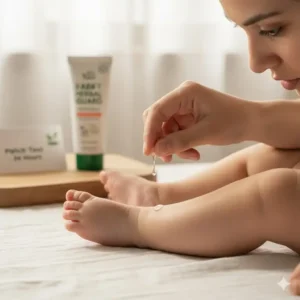
Knowing how to properly apply bug spray for infants makes all the difference between effective protection and wasted product. Here are the techniques I’ve learned work best:
The Proper Application Method
For Spray Products:
- Never spray directly on baby’s face
- Spray product onto your own hands first
- Gently rub onto baby’s face, avoiding eyes and mouth
- For body application, spray at a distance of 6-8 inches
- Use sweeping motions for even coverage
- Rub in gently after spraying for better protection
For Lotion Products: Lotions typically provide longer-lasting protection than sprays because they slow the evaporation of active ingredients. Apply a small amount to your hands, warm it slightly, then smooth onto baby’s exposed skin. Lotion application gives you better control over how much product you’re using.
For Wipes: Individual wipes are fantastic for fussy babies or travel situations. Simply unfold the wipe and gently pat onto exposed skin. Wipes make facial application easier since you have precise control, but remember they generally don’t last as long as sprays or lotions.
Common Application Mistakes to Avoid
❌ Over-application: More isn’t better. A thin, even layer provides the same protection as heavy coating
❌ Applying to covered skin: Only use on exposed skin; clothing provides its own barrier
❌ Letting babies apply themselves: Always keep repellent out of reach and apply it yourself
❌ Applying to hands: Babies put their hands in their mouths constantly; avoid treating hands
❌ Using near cuts or irritated skin: Wait until skin has healed before applying repellent
❌ Combining with sunscreen products: Apply sunscreen first, wait 15-20 minutes, then apply bug repellent
How Much and How Often?
The amount you need depends on your baby’s size and how much skin is exposed. Generally:
- Face and neck: 2-3 light applications from your hands
- Arms: 1-2 sprays per arm (or equivalent lotion amount)
- Legs: 2-3 sprays per leg for toddlers; less for small babies
For natural essential oil repellents, plan to reapply every 2-3 hours. Picaridin products last 8-12 hours. Low-dose DEET formulas need reapplication every 4-6 hours.
The Science Behind Baby-Safe Ingredients
Understanding what’s actually in these products helps you make informed choices. Let’s break down the main categories of active ingredients you’ll find in non toxic bug repellent for babies.
Essential Oil-Based Repellents
Natural bug sprays typically combine several essential oils known for their insect-repelling properties:
Citronella Oil: The most famous natural mosquito repellent. While it’s less effective than synthetic options, citronella does provide some protection. The catch? The NHS notes that citronella oil’s effectiveness can be very short-lived, typically lasting only 1-2 hours.
Lemongrass Oil: Works similarly to citronella and adds a pleasant scent. Often combined with other oils for broader protection.
Rosemary Oil: Provides antibacterial benefits along with insect-repelling properties. Safe for babies in proper concentrations.
Peppermint Oil: The menthol creates a cooling sensation while deterring bugs. Some babies find the scent soothing.
Geranium Oil: Contains geraniol, a naturally occurring compound that research shows can repel mosquitoes.
Cedarwood Oil: Adds woody protection and helps preserve other essential oils in the formula.
These oils work by creating a scent barrier that masks the carbon dioxide and lactic acid that attracts mosquitoes to humans. The main limitation? They evaporate quickly, requiring frequent reapplication.
Picaridin (Icaridin)
Picaridin is considered safer than DEET and has been the best-selling bug repellent for babies and children in Europe and Australia for years. Here’s why it’s gaining popularity in the US:
How It Works: Picaridin interferes with insects’ ability to detect human skin through their chemical receptors. Unlike DEET which blocks receptors, picaridin confuses them.
Safety Profile: Picaridin doesn’t have the same neurotoxicity as DEET, isn’t known to irritate skin, and is considered practically non-toxic if inhaled and only slightly toxic if swallowed. It’s been approved by the EPA and recommended by the CDC.
Effectiveness: At 20% concentration, picaridin provides up to 12 hours of protection against mosquitoes and ticks – making it ideal for all-day outdoor activities.
The Trade-off: Picaridin was only approved for sale in the US in 2005, so we don’t have as much long-term data as we do with DEET. However, decades of use in other countries show an excellent safety record.
Oil of Lemon Eucalyptus (OLE)
This deserves special attention because it bridges natural and synthetic categories. Oil of lemon eucalyptus is made from the leaves of the Eucalyptus citriodora tree through steam distillation, then converted to enhance the PMD content.
The Active Component: PMD (p-menthane-3,8-diol) is the compound that actually repels insects. While derived from plants, the refinement process makes it more synthetic than truly “natural.”
CDC Recommendation: The Centers for Disease Control includes OLE in their recommended repellents, recognizing its effectiveness against mosquitoes and ticks.
Important Note: Despite being plant-derived, the active ingredient in oil of lemon eucalyptus products has been approved for use on children over 3 years of age. This age restriction exists because OLE can cause eye irritation.
Low-Dose DEET
Let’s address the elephant in the room. DEET gets a bad rap, but the science tells a different story. According to EPA reviews, serious adverse events from DEET occur in only 1 in 100 million users.
The Reality: DEET-based products with concentrations of 30% or lower can be used on children ages 2 months or older. Products with 7-10% DEET provide 4-6 hours of effective protection – plenty for most outdoor activities.
Why Consider It: DEET has 70+ years of safety data and proven effectiveness against mosquitoes, ticks, and other biting insects. It’s particularly valuable in high-risk disease areas.
When to Choose It: If your family is traveling to areas with malaria, Zika, or severe mosquito problems, DEET’s proven track record makes it a smart choice despite being synthetic.
Ingredient Effectiveness Comparison
| Ingredient | Mosquito Effectiveness | Tick Effectiveness | Duration | Natural Status | Age Safety |
|---|---|---|---|---|---|
| Essential Oil Blend | Moderate | Low | 1-3 hours | 100% Natural | 6 months+ |
| 20% Picaridin | Excellent | Excellent | 12 hours | Synthetic (plant-derived) | 2 months+ |
| 30% OLE | Very Good | Very Good | 6 hours | Semi-synthetic | 3 years+ |
| 7% DEET | Very Good | Very Good | 4-6 hours | Synthetic | 2 months+ |
| 10-30% DEET | Excellent | Excellent | 6-10 hours | Synthetic | 2 months+ |
Special Considerations for Babies
Babies present unique challenges when it comes to insect protection. Their delicate skin, tendency to put everything in their mouths, and inability to tell you if something’s bothering them require extra vigilance.
Sensitive Skin Concerns
Many babies have sensitive skin that reacts to various ingredients, even natural ones. Here’s what to watch for:
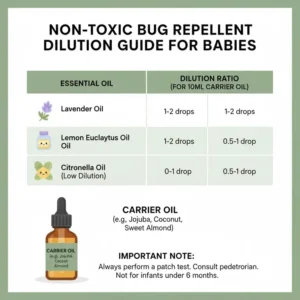
Essential Oil Sensitivities: While natural mosquito repellent for infants using essential oils seems safer, these concentrated plant compounds can cause reactions. Start with a small test patch on baby’s inner arm before applying broadly. Wait 24 hours to check for redness, irritation, or bumps.
Fragrance-Free Options: If your baby has eczema or known skin sensitivities, consider fragrance-free formulas. Sawyer Picaridin is odorless and fragrance-free, making it ideal for sensitive babies who might react to scented products.
Alcohol Content: Some spray formulations contain alcohol to help products dry quickly. This can be drying for baby’s skin. After outdoor time, wash off repellent with gentle soap and follow up with baby moisturizer.
Combination Products (Sunscreen + Bug Spray)
You’ll find many combination sunscreen and insect repellent products marketed for convenience. However, pediatricians don’t recommend sunscreen-insect repellent combos because sunscreen needs reapplication every 2 hours while bug spray lasts longer. Using a combination product means you’ll either over-apply bug repellent or under-protect from sun.
The Better Approach:
- Apply sunscreen first
- Wait 15-20 minutes for it to absorb
- Then apply bug repellent
- Reapply sunscreen every 2 hours
- Reapply bug repellent based on product instructions
Clothing as Protection
Before reaching for bug spray, consider clothing-based protection:
- Long, Loose Clothing: Lightweight long sleeves and pants in light colors (bugs are attracted to dark colors)
- Closed-Toe Shoes: Protect tiny feet from bites and stings
- Hats: Especially wide-brimmed styles that protect face and neck
- Mosquito Netting: For strollers, carriers, and cribs during outdoor naps
- Permethrin-Treated Clothing: Treat gear (not skin) with permethrin for added protection
When to Avoid Outdoor Time
Sometimes the best bug protection is simply staying indoors during peak insect hours:
Dawn (5-7 AM): Mosquitoes are most active
Dusk (7-9 PM): Another peak feeding time for mosquitoes ️
After Rain: Standing water creates breeding grounds
Heavily Wooded Areas: Higher tick presence
Addressing Parent Concerns & Myths
I hear the same questions from worried parents over and over. Let’s tackle these concerns head-on with facts.
“Will bug spray harm my baby?”
The short answer: When used as directed, EPA-registered repellents are safe for babies over the recommended age. The key phrase is “as directed.” This means:
- Following age restrictions
- Not over-applying product
- Avoiding mouth, eyes, and hands
- Washing off when coming indoors
- Not using on broken or irritated skin
The active ingredients in recommended repellents are well-studied and safe when used properly. Billions of applications worldwide over decades provide extensive safety data.
“Aren’t natural repellents always safer?”
Not necessarily. Here’s a reality check: Pediatricians note that when it comes to bug repellent, natural does not mean better or safer. Essential oils can cause allergic reactions, skin irritation, and other issues. They’re also less effective, requiring more frequent application – which means more potential for exposure and reactions.
The “natural = safe” assumption ignores that many plant-derived substances can be irritating or toxic in concentrated forms. Poison ivy is natural, after all!
“How do I know if my baby is having a reaction?”
Watch for these signs:
Mild Reactions (Stop Use, Wash Off):
- Redness or rash at application site
- Mild itching or irritation
- Slight swelling
Serious Reactions (Seek Medical Attention):
- Difficulty breathing or wheezing
- Severe swelling, especially of face
- Hives or widespread rash
- Nausea or vomiting
- Unusual lethargy or behavior changes
If you suspect a reaction, immediately wash the area with soap and water. For serious reactions, call your pediatrician or go to urgent care right away.
“Can’t I just use citronella candles instead?”
Citronella candles create a localized protective zone but have limitations. They work best in still air for people sitting close to the candle. For active babies and toddlers moving around the yard, topical repellents provide better personal protection.
However, combining methods works great! Use citronella candles or mosquito-repelling incense sticks to reduce mosquito presence in your outdoor area, then apply topical repellent for individual protection.
Regional Bug Concerns Across the USA
The type of insects you’re dealing with varies dramatically based on where you live. Let’s look at specific challenges in different US regions.
Southern States (Florida, Texas, Louisiana, Mississippi, Alabama, Georgia)
Primary Concerns: Mosquitoes year-round, fire ants, chiggers
The South’s warm, humid climate creates ideal mosquito breeding conditions. Users in challenging environments like Louisiana swamps report success with products like Sky Organics organic repellent, with one reviewer noting their mosquito-allergic daughter didn’t get bit once.
Best Options: Long-lasting picaridin formulas (Sawyer, Natrapel) for all-day protection in humid conditions. Reapplication is harder when babies are sweaty and the product wears off faster in high heat.
Northeast States (New York, Massachusetts, Vermont, New Hampshire, Maine)
Primary Concerns: Ticks carrying Lyme disease, black flies, mosquitoes (seasonal)
Tick protection is crucial in these states. Research shows IR3535 provided over twice the mean protection time against deer ticks compared to DEET, picaridin, or oil of lemon eucalyptus.
Best Options: Products specifically labeled for tick protection, particularly during spring and summer. Sawyer Picaridin excels here with 12-hour tick protection.
Midwest States (Illinois, Indiana, Ohio, Michigan, Minnesota, Wisconsin)
Primary Concerns: Mosquitoes (West Nile virus), ticks, gnats
The combination of forests and wetlands creates diverse insect populations. Families need products effective against multiple insect types.
Best Options: Broad-spectrum repellents like Natrapel or Cutter All Family that protect against mosquitoes, ticks, gnats, and biting flies.
Western States (California, Oregon, Washington)
Primary Concerns: Generally fewer mosquitoes, but ticks in wooded areas, wasps, and bees
While the West Coast typically has lower mosquito populations, outdoor activities in forests and mountains bring tick exposure.
Best Options: Natural essential oil repellents often work well for casual outdoor time. Reserve stronger options for camping and hiking in wooded areas.
Regional Protection Requirements
| Region | Primary Threat | Recommended Concentration | Application Frequency | Disease Risk |
|---|---|---|---|---|
| South | Mosquitoes | 20% Picaridin or 10-30% DEET | Every 8-12 hours | Zika, West Nile, Dengue |
| Northeast | Ticks | 20% Picaridin or 20-30% DEET | Every 8-12 hours | Lyme disease, Anaplasmosis |
| Midwest | Mixed | 20% Picaridin recommended | Every 8-12 hours | West Nile, Lyme disease |
| West | Variable | Natural to 20% Picaridin | As needed | Lower overall risk |
| Southwest | Mosquitoes, scorpions | 20% Picaridin or natural | Every 8-12 hours | West Nile |

Creating a Complete Bug Protection Strategy ️
The most effective approach combines multiple tactics. Here’s your comprehensive protection plan:
The Three Layers of Protection
Layer 1: Environmental Control Before bugs even get close:
- Eliminate standing water around your home (flowerpots, gutters, kiddie pools)
- Keep grass trimmed and bushes pruned
- Use oscillating fans on patios (mosquitoes can’t fly in wind)
- Install or repair window screens
- Consider professional yard treatments for severe problems
Layer 2: Physical Barriers Your first line of defense:
- Mosquito netting on strollers and carriers
- Lightweight, breathable clothing covering arms and legs
- Light-colored clothing (insects are attracted to dark colors)
- Closed-toe shoes with socks
- Hats with wide brims
Layer 3: Topical Repellents The final protection:
- Choose appropriate product for your baby’s age and your environment
- Apply correctly following package directions
- Reapply as needed based on protection duration
- Wash off when returning indoors
Time-of-Day Strategies
Adjust your protection based on bug activity patterns:
Early Morning/Late Evening: These are peak mosquito hours. If possible, keep babies indoors during dawn and dusk. If you must be outside, use your most effective repellent.
Midday: Generally lower mosquito activity. Good time for natural repellents during short outdoor periods.
After Dark: Mosquitoes and some flies are active. Many families find this a good time to use combination approaches – outdoor candles plus topical repellents.
Seasonal Considerations
Spring (March-May): Mosquitoes begin emerging as temperatures rise. Ticks become active. Start building protection habits early.
Summer (June-August): Peak insect season. Maximum vigilance required. Consider multiple reapplications during all-day outdoor activities.
Fall (September-November): Insects remain active until first freeze. Don’t drop your guard as temperatures cool.
Winter (December-February): Most insects dormant in northern states. Southern states may still have mosquito activity on warm days.
Storage and Shelf Life Tips
Proper storage ensures your baby bug spray remains effective:
Storage Guidelines
✅ Cool, Dry Place: Store at room temperature away from heat sources
✅ Avoid Sunlight: UV light degrades active ingredients
✅ Original Packaging: Keep products in original containers with labels
✅ Child-Proof Location: Store out of reach of children
✅ Check Dates: Most repellents remain effective for 2-3 years if properly stored
Signs Your Repellent Has Expired
❌ Changes in color or consistency
❌ Unusual or chemical odor
❌ Separation that doesn’t remix when shaken
❌ Damage to packaging
❌ Date beyond manufacturer’s recommendation
When stored properly and not exposed to extreme temperatures, repellents will last for several years, but if you notice any change in odor, appearance, or package damage, replace with a new product.
Making Your Final Decision
After reviewing all this information, you might still feel overwhelmed. Let me simplify your decision process with these final recommendations based on common scenarios:
Quick Decision Guide
For Everyday Backyard Play (Low-Risk Areas): Choose: Babyganics Natural Insect Repellent or California Baby Natural Bug Spray Why: Natural formulas provide adequate protection for short periods with no synthetic ingredients
For All-Day Outdoor Activities: Choose: Sawyer Premium Picaridin or Natrapel Picaridin Why: 12-hour protection means one application covers your entire outdoor adventure
For Babies Under 6 Months: Choose: Sawyer Premium Picaridin or low-dose Cutter All Family (7% DEET) Why: These meet the 2-month age requirement with proven effectiveness
For Sensitive Skin: Choose: California Baby Natural Bug Spray or Sawyer Picaridin (fragrance-free) Why: Allergen-tested formulas minimize irritation risk
For High-Risk Disease Areas: Choose: Sawyer Premium Picaridin 20% or Natrapel Picaridin 20% Why: CDC-recommended concentration with longest protection duration
For Travel: Choose: Natrapel 3.4 oz or Murphy’s Naturals 2 oz Why: TSA-approved sizes that don’t sacrifice effectiveness
For Budget-Conscious Families: Choose: Cutter All Family Why: Effective protection at the most affordable price point
For Eco-Conscious Families: Choose: Murphy’s Naturals Lemon Eucalyptus Why: Plant-based, sustainably sourced, small business product
✨Shop These Recommended Non Toxic Bug Repellents Now!
Don’t wait for mosquito season to hit – stock up on these carefully vetted baby-safe insect repellents today. Each product mentioned in this guide has been thoroughly researched, tested by real parents, and proven effective. Click the product names above to check current Amazon pricing, read hundreds of customer reviews, and take advantage of any special deals. Your baby’s comfort and protection are just a click away!✨

Conclusion
Protecting your baby from biting insects doesn’t have to involve harsh chemicals or compromise on effectiveness. Whether you choose completely natural essential oil formulas like Babyganics, proven synthetic alternatives like Sawyer Picaridin, or plant-derived options like oil of lemon eucalyptus repellents, the key is understanding what works for your family’s specific needs.
Remember, the best non toxic bug repellents safe for babies balance three factors: safety for your child’s age and skin type, effectiveness against the insects in your area, and practical duration that fits your lifestyle. No single product works perfectly for every family – and that’s okay! You might keep Babyganics for quick park visits and save Sawyer Picaridin for camping trips. You might use California Baby’s allergen-free formula for your sensitive-skinned infant while choosing Murphy’s Naturals for your preschooler.
The most important thing is that you’re making an informed choice. You now understand the science behind different active ingredients, how to apply products safely and effectively, and what to watch for regarding your baby’s individual reactions. You know that “natural” doesn’t automatically mean safer, that proven ingredients like picaridin offer excellent protection without DEET, and that proper application techniques matter as much as product selection.
As you head into bug season, remember to layer your protection strategies. Use environmental controls to reduce insect populations around your home. Dress your baby in protective clothing when possible. Apply the right topical repellent for your situation. And most importantly, don’t let fear of bugs keep your little one from enjoying the outdoors. With the right non toxic bug repellent for your baby and smart protection strategies, you can create wonderful outdoor memories without the worry of bites and bug-borne illnesses.
Here’s to safe, comfortable, bite-free outdoor adventures with your little one!
FAQs
✅ Sawyer Premium Picaridin with 20% concentration provides up to 12 hours of protection against mosquitoes and ticks for babies 2 months and older. This odorless, non-greasy formula is recommended by the Public Health Agency of Canada for children 6 months to 12 years of age. For natural alternatives, Murphy's Naturals Lemon Eucalyptus offers 6 hours of protection but requires children to be 3 years or older...
✅ Essential oil based repellents like Babyganics are recommended for babies 6 months and older, not 3 months. For babies 2 to 6 months old, safer options include 20% picaridin formulas like Sawyer or Natrapel, or low concentration 7% DEET products like Cutter All Family. Physical barriers like mosquito netting and protective clothing work best for babies under 2 months...
✅ Oil of lemon eucalyptus at 30% concentration provides comparable mosquito protection to DEET, offering up to 6 hours of coverage. Products like Repel Plant Based and Murphy's Naturals contain this CDC recommended active ingredient. However, oil of lemon eucalyptus products are only approved for children 3 years and older due to potential eye irritation. For younger babies, 20% picaridin offers DEET like effectiveness from 2 months of age...
✅ Never spray repellent directly on your baby's face. Instead, spray the product onto your own hands first, then gently pat or rub it onto your baby's face while carefully avoiding their eyes, mouth, and hands. Use just enough for light, even coverage – about 2 to 3 gentle applications from your hands. For babies who resist facial application, focus protection on other exposed skin and use a wide brimmed hat...
✅ Pediatricians do not recommend combination sunscreen insect repellent products for babies because sunscreen needs reapplication every 2 hours while bug spray lasts 4 to 12 hours depending on the formula. Using a combo product means over applying insect repellent or under protecting from sun. Apply sunscreen first, wait 15 to 20 minutes, then apply bug repellent separately for proper protection... ❓ Which non toxic bug repellent works longest for babies over 6 months?
❓ Can I safely use essential oil bug spray on a 3 month old baby?
❓ What natural ingredient repels mosquitoes as well as DEET for infants?
❓ How do I apply insect repellent to my baby's face safely?
❓ Are combination sunscreen and bug repellent products safe for babies?
Recommended for You
- Safe Baby Playpen for Outdoors: 7 Best Picks 2025
- Sun Safety Hat for Crawling Baby: 7 Best Picks 2025
- Safe Baby Playpen for Outdoors: 7 Best Picks 2025
Disclaimer: This article contains affiliate links. If you purchase products through these links, we may earn a small commission at no additional cost to you.
✨ Found this helpful? Share it with your friends!
[addtoany]