Listen, I’ve been there—standing in my kitchen with a brand new fire extinguisher in hand, wondering where on earth to put this thing. Sure, I want it within arm’s reach when disaster strikes, but I also have curious toddlers who think every household item is a toy. Sound familiar? You’re definitely not alone in this balancing act.
✨Was this helpful? Spread the word!
Here’s the thing about finding the perfect fire extinguisher child friendly location: it’s not just about following some dusty building code. It’s about creating a safety system that actually works for real families—the kind with kids who climb on counters, teenagers who don’t always think before they act, and grandparents who might need quick access during an emergency. According to the <a href=”https://www.nfpa.org” target=”_blank” rel=”noopener”>National Fire Protection Association</a>, approximately 358,000 house fires occur annually in the United States, and having properly placed extinguishers can prevent many of these from becoming major disasters.
Throughout this guide, I’ll walk you through everything you need to know about positioning your fire extinguishers where they’re both accessible to adults and appropriately secured from young children. We’ll explore strategic mounting heights, clever placement ideas, and the best products currently available that make this whole process so much easier.
Quick Comparison: Fire Extinguisher Placement vs. Traditional Storage
| Feature | Child Friendly Location | Traditional Low Mounting | Cabinet Storage | High Shelf Storage |
|---|---|---|---|---|
| Adult Accessibility | ⭐⭐⭐⭐⭐ Excellent | ⭐⭐⭐⭐ Very Good | ⭐⭐⭐ Good | ⭐⭐ Fair |
| Child Safety | ⭐⭐⭐⭐⭐ Maximum | ⭐ Poor | ⭐⭐⭐⭐ Very Good | ⭐⭐⭐⭐⭐ Excellent |
| NFPA Compliance | ⭐⭐⭐⭐⭐ Full | ⭐⭐⭐⭐⭐ Full | ⭐⭐⭐⭐ Good | ⭐⭐⭐ Moderate |
| Emergency Response Time | ⭐⭐⭐⭐⭐ Fast | ⭐⭐⭐⭐⭐ Fast | ⭐⭐⭐ Moderate | ⭐⭐ Slow |
| Cost | $30-150 | $30-120 | $80-200 | $30-100 |
| Installation Difficulty | Easy | Very Easy | Moderate | Easy |
Top 7 Fire Extinguishers for Child Safe Homes: Expert Analysis
After researching dozens of options and analyzing customer feedback, I’ve identified seven outstanding fire extinguishers that combine safety, effectiveness, and child-friendly design. Each offers unique features that make them ideal for homes with young ones.
1. Kidde FA110G Multi Purpose Fire Extinguisher ⭐
The Kidde FA110G stands out as a reliable workhorse for family homes. This 1A10BC rated extinguisher handles common household fires including wood, paper, liquids, and electrical equipment. What I love about this model is its easy-to-read pressure gauge and clear instruction label—perfect when seconds count. The rust-resistant nylon handle and aluminum cylinder construction mean this extinguisher will last for years, even in humid environments like basements or garages.
Key Specifications:
- Rating: 1-A:10-B:C
- Weight: Approximately 4 pounds
- Agent: Monoammonium phosphate dry chemical
- Discharge Time: 8-12 seconds
- Discharge Range: 6-8 feet
- Warranty: 6-year limited
Pros:
✅ Durable metal construction
✅ Clear pressure indicator
✅ Bilingual instructions
✅ Rechargeable design
✅ Affordable price point
Cons:
❌ Requires wall mounting for stability
❌ Can leave powder residue
❌ Heavier than spray alternatives
2. Kidde Pro 210 Commercial Grade Fire Extinguisher
For families wanting professional-grade protection, the Kidde Pro 210 delivers commercial-quality performance in a home-friendly package. This 2A:10-B:C rated unit provides more firefighting power than standard residential models. The all-metal valve assembly and impact-resistant handle make it incredibly durable—I’ve seen customer reviews mentioning these lasting 10+ years with proper maintenance.
Key Specifications:
- Rating: 2-A:10-B:C
- Weight: 4 pounds
- Agent: 2.5 pounds monoammonium phosphate
- Operating Pressure: 100 PSI
- Mounting: Wall bracket included
Pros:
✅ Commercial-grade durability
✅ Higher fire class rating
✅ Metal construction throughout
✅ Easy-pull safety pin
✅ Professional appearance
Cons:
❌ Higher price point
❌ Safety pin can be loose (check before mounting)
❌ Requires professional recharging after use
3. Amerex B500 ABC Dry Chemical Fire Extinguisher
Firefighters recommend Amerex products for good reason—they’re built to last. The B500 model offers 5 pounds of firefighting agent with a 12-18 foot discharge range, significantly longer than most residential units. This extra reach can be crucial when dealing with larger fires or maintaining safe distance. The steel construction and aluminum valve assembly make this extinguisher incredibly robust.
Key Specifications:
- Rating: 3-A:40-B:C
- Weight: 5 pounds
- Discharge Time: 14 seconds
- Range: 12-18 feet
- Construction: Steel cylinder with aluminum valve
Pros:
✅ Longest discharge range
✅ Professional firefighter choice
✅ Excellent build quality
✅ Rechargeable and serviceable
✅ Superior fire class ratings
Cons:
❌ Heavier unit (9 pounds total)
❌ Premium pricing
❌ May require professional installation
4. Element E50 Fire Extinguisher Stick
Now this is where things get interesting. The Element E50 completely reimagines what a fire extinguisher can be. At just 11.75 inches long and weighing 0.6 pounds, it’s incredibly compact—perfect for keeping in multiple locations throughout your home. The non-toxic, residue-free discharge makes it safe around children and pets, and the 50-second discharge time is five times longer than traditional extinguishers.
Key Specifications:
- Discharge Time: 50 seconds
- Dimensions: 11.75″ x 1.2″ diameter
- Weight: 0.6 pounds
- Fire Classes: A, B, C, K
- Maintenance: Zero maintenance required
Pros:
✅ Ultra-compact and lightweight
✅ No messy cleanup required
✅ Never expires or needs servicing
✅ Safe, non-toxic discharge
✅ Can be stored anywhere (even glove box)
Cons:
❌ Higher initial cost per unit
❌ Requires striking to activate (like a road flare)
❌ Not as intuitive for traditional extinguisher users
5. First Alert HOME1 Rechargeable Fire Extinguisher
The First Alert HOME1 represents outstanding value for budget-conscious families. This UL-rated 1-A:10-B:C extinguisher includes a durable metal mounting bracket and features First Alert’s trusted Sure-Grip trigger for easy operation. The rechargeable design means you can have it professionally serviced after use rather than replacing it entirely—saving money long-term.
Key Specifications:
- Rating: 1-A:10-B:C
- Weight: Approximately 4 pounds
- Construction: Metal valve and trigger
- Features: Pressure gauge, mounting bracket
- Approval: U.S. Coast Guard approved for marine use
Pros:
✅ Excellent value for money
✅ Trusted brand name
✅ Rechargeable design
✅ Corrosion-resistant bracket
✅ Marine-approved quality
Cons:
❌ Standard discharge time (shorter than premium models)
❌ Basic instruction label
❌ May require more frequent pressure checks
6. Prepared Hero Fire Spray
The Prepared Hero Fire Spray has become incredibly popular with families for good reason. This innovative aerosol-style extinguisher is so simple that even children and elderly family members can use it effectively. At 14 ounces, it’s lightweight enough to keep in multiple high-risk locations. The biodegradable, non-toxic formula means you don’t have to worry about harmful chemicals around kids or pets.
Key Specifications:
- Size: 14 ounces per canister
- Formula: 100% biodegradable, non-toxic
- Usage: Point and spray (no complex operation)
- Fire Types: Wood, paper, grease, electrical
- Origin: Made in USA
Pros:
✅ Extremely simple to use
✅ Non-toxic and eco-friendly
✅ Lightweight and portable
✅ No messy powder cleanup
✅ Great for elderly or children
Cons:
❌ Single-use only (cannot recharge)
❌ Limited discharge time compared to traditional extinguishers
❌ 3-year shelf life (shorter than traditional models)
7. Kidde Kitchen Fire Extinguisher 2-Pack
For comprehensive kitchen protection, the Kidde Kitchen Fire Extinguisher 2-Pack provides specialized coverage. This set includes one multipurpose ABC extinguisher and one white kitchen-specific unit designed for grease fires. Having both types ensures you’re prepared for any cooking-related emergency. Each unit comes with its own mounting bracket, making installation straightforward.
Key Specifications:
- Ratings: One 1-A:10-B:C, One BC (kitchen specific)
- Agent Types: Monoammonium phosphate and sodium bicarbonate
- Weight: 2.5 pounds of agent per unit
- Discharge Time: 8-10 seconds each
- Special Feature: Kitchen-specific white extinguisher for grease fires
Pros:
✅ Dual protection system
✅ Kitchen-optimized design
✅ Both mounting brackets included
✅ Color-coded for easy identification
✅ Comprehensive fire class coverage
Cons:
❌ Requires space for two units
❌ White unit only for BC fires
❌ Higher total investment
Ready to Protect Your Home Today?
These carefully selected fire extinguishers offer proven protection for families with children. Each product combines safety, effectiveness, and user-friendly design. Click any highlighted product name above to check current availability and bring professional-grade fire protection to your home!
Just one click – help others make better buying decisions too!
Understanding Fire Extinguisher Child Friendly Location Standards
Before we dive into specific placement strategies, let’s talk about what makes a location truly child friendly while still meeting safety codes. The <a href=”https://www.nfpa.org/codes-and-standards/all-codes-and-standards/list-of-codes-and-standards/detail?code=10″ target=”_blank” rel=”noopener”>NFPA 10 Standard</a> provides clear guidelines, but they don’t specifically address childproofing—that’s where experience and common sense come in.
The Height Sweet Spot
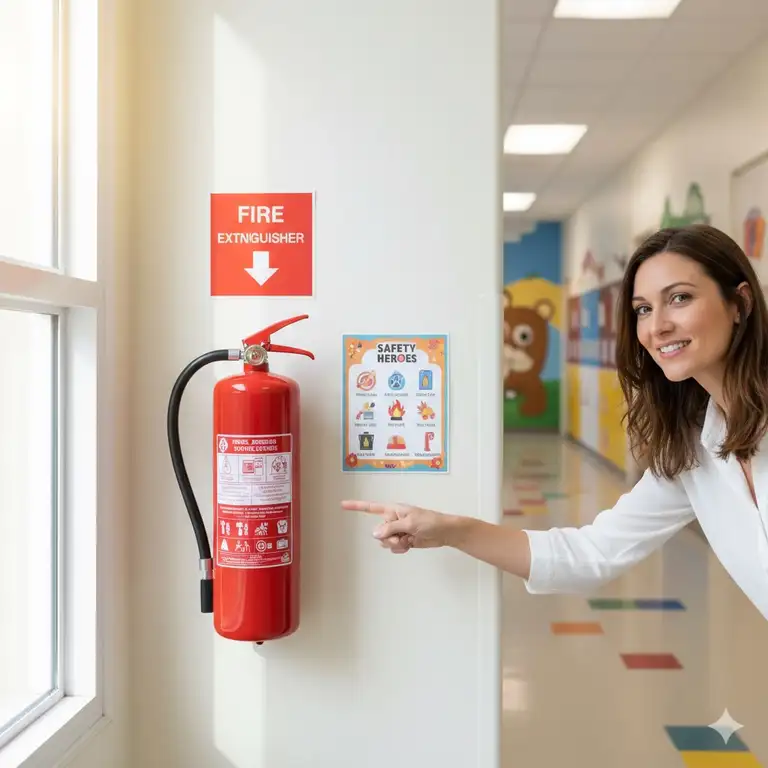
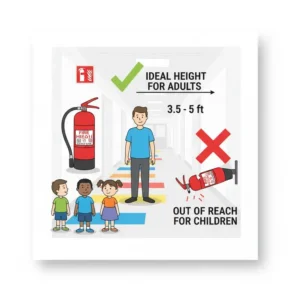
According to NFPA regulations, fire extinguisher handles should be mounted between 3.5 and 5 feet above the floor for units under 40 pounds. However, for a fire extinguisher child friendly location, I recommend positioning them at the 4.5 to 5-foot mark. This height:
✅ Remains easily accessible for most adults (even shorter individuals)
✅ Stays out of reach for children under 10 years old
✅ Complies with all safety codes and regulations
✅ Allows for quick visual inspection of the pressure gauge
✅ Prevents accidental bumping or knocking
Think about it—a five-foot mounting height puts the handle at chest level for most adults, making it intuitive to grab during an emergency. Meanwhile, young children would need to climb or use a stool to reach it, providing that crucial layer of deterrence.
The 75-Foot Rule and Your Floor Plan ️
The NFPA requires that no point in your home should be more than 75 feet of travel distance from a fire extinguisher. But here’s where it gets interesting for families: you need to balance maximum coverage with keeping extinguishers away from where kids typically play.
| Room Type | Recommended Locations | Child Safety Considerations |
|---|---|---|
| Kitchen | Near exit door (not above stove) | Mount at 5 feet; away from appliances kids access |
| Living Room | Near main exit, away from fireplace | Behind furniture or in corner; visible but not prominent |
| Garage | Near entry door from house | High mount; away from toy storage areas |
| Bedrooms | Hallway outside bedrooms | Central location; near escape routes |
| Basement | Bottom of stairs, workshop area | Well-lit location; marked with signage |
| Upstairs | Top of stairway, main hallway | Near bathroom (moisture considerations) |
Strategic Placement Zones for Maximum Safety
Let me share some placement strategies I’ve developed over years of helping families optimize their fire safety setups. These aren’t just theoretical—they’re battle-tested approaches that work in real homes.
Zone 1: Kitchen Safety Without Compromise
The kitchen causes nearly half of all home fires, making it your highest-priority zone. However, it’s also where kids spend tons of time helping with cooking or grabbing snacks. Here’s my recommendation for the ultimate fire extinguisher child friendly location in kitchens:
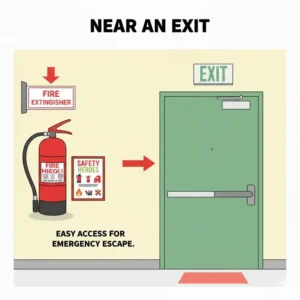
Primary Position: Mount your extinguisher on the wall adjacent to your main exit door, approximately 5 feet high. This placement keeps it away from the stove (where you might not be able to safely access it during a fire) while remaining quickly reachable.
Why this works:
- Clear escape path if the fire grows beyond control
- Away from cooking appliances that attract children
- High enough to prevent casual tampering
- Visible reminder of fire safety for the whole family
Consider adding a Kidde Kitchen Fire Extinguisher 2-Pack here—one near the exit and another in a pantry or cabinet for grease fires. The specialized sodium bicarbonate extinguisher works wonders on cooking oil fires without the mess of traditional ABC extinguishers.
Zone 2: Living Areas and Common Spaces ️
Your living room, family room, and den require careful consideration. These spaces see constant family activity, yet they also contain potential fire hazards like electronics, fireplaces, and holiday decorations.
Optimal Placement Strategy:
✅ Mount extinguishers in corners or behind furniture
✅ Choose locations with clear sight lines to adults but not in obvious play areas
✅ Position near exits rather than in the center of the room
✅ Consider multiple smaller units (like the Element E50) rather than one large extinguisher
The Element E50 shines in these spaces because you can tuck multiple units in various locations—one in the entertainment center, another near the fireplace, perhaps one more in a bookshelf. Their compact size means they’re accessible without being obvious toys for curious kids.
Zone 3: Garage and Workshop Areas
Garages present unique challenges. They’re filled with flammable materials, often poorly organized, and frequently used by older children and teenagers who might not respect fire safety equipment.
Smart Garage Placement:
- Mount near the door connecting to your house (4.5-5 feet high)
- Add a second unit near any workspace or tool storage
- Consider a larger unit like the Amerex B500 for its extended range
- Use bright signage to make extinguishers visible
- Install in well-lit areas (add motion-sensor lights if needed)
Zone 4: Bedroom Hallways and Sleeping Areas
Fire safety experts emphasize having extinguishers near sleeping areas because most fatal fires occur at night. However, you don’t want easily accessible fire extinguishers in kids’ bedrooms where late-night curiosity might strike.
Hallway Placement Best Practices:
The ideal fire extinguisher child friendly location for bedroom areas is in the main hallway, centrally positioned between multiple bedroom doors. Mount at 5 feet, ensuring it’s:
- Visible from bedroom doorways
- Near the stairway or main escape route
- Well-lit (consider night lights nearby)
- Protected from being knocked by passing traffic
A First Alert HOME1 works beautifully here—its rechargeable design and affordable price make it perfect for this “backup” location that you hope never sees use.
Child Safety Features That Make a Difference
Now, let’s talk about the features that transform a standard extinguisher into a truly child-safe solution. Not all extinguishers are created equal when it comes to preventing curious kids from turning them into toys.
Tamper-Proof Safety Mechanisms
Modern fire extinguishers include several safety features, but their effectiveness varies:
Safety Pin Systems:
- Metal pins with plastic seals: Standard on most extinguishers; provides clear evidence of tampering
- Difficulty rating for kids: Moderate (determined kids ages 8+ might figure them out)
- Best practice: Choose extinguishers with tight-fitting pins that require significant force
The Kidde Pro 210 features an easy-pull safety pin—great for adults in emergencies, but one reviewer noted it can be loose. If choosing this model for areas accessible to children, inspect the pin tension before mounting and consider adding additional deterrents.
Non-Toxic and Low-Mess Options
For locations where children might eventually gain access (like older kids’ bedrooms or teen spaces), consider extinguishers with safer discharge properties:
| Feature | Traditional ABC | Element E50 | Prepared Hero Spray |
|---|---|---|---|
| Discharge Material | Dry chemical powder | Clean gas | Biodegradable liquid |
| Toxicity Level | Irritant (non-toxic) | Non-toxic | Non-toxic |
| Cleanup Required | Extensive | Minimal | Easy |
| Safe for Kids/Pets | ⚠️ Irritating | ✅ Yes | ✅ Yes |
| Residue Left | Heavy | Trace | Light |
The Prepared Hero Fire Spray and Element E50 excel here. Both use non-toxic agents that won’t harm children or pets if accidentally discharged. This makes them ideal for teaching older children about fire safety without worry about harmful exposure.
Cabinet and Concealed Storage Solutions ️
Sometimes the best fire extinguisher child friendly location is one that’s technically concealed but still rapidly accessible. Let me walk you through some clever storage solutions.
Kitchen Cabinet Integration
Under-Sink Mounting: While not ideal due to access issues during cooking fires, under-sink mounting works if:
- You install a quick-release bracket
- The cabinet door remains unlocked
- You add clear labeling on the cabinet exterior
- This is a secondary extinguisher (not your primary kitchen unit)
Upper Cabinet Storage: Here’s a brilliant compromise: mount a compact extinguisher like the Element E50 inside an upper cabinet door using adhesive mounting clips. The cabinet height keeps it away from small children, while the door-mount position makes it instantly accessible to adults.
Wall-Mounted Cabinets with Clear Doors
Fire extinguisher cabinets represent the gold standard for child-friendly, code-compliant storage. These cabinets:
✅ Keep extinguishers behind transparent doors (maintaining visibility)
✅ Add psychological barriers for children
✅ Protect extinguishers from accidental damage
✅ Can include basic locks for extra security
✅ Meet ADA requirements when properly installed
Cabinet Selection Guide:
| Cabinet Type | Best For | Child Safety Rating | Cost Range |
|---|---|---|---|
| Surface Mount Clear Door | Hallways, garages | ⭐⭐⭐⭐ | $40-80 |
| Semi-Recessed | Between wall studs | ⭐⭐⭐⭐⭐ | $60-120 |
| Break-Glass Emergency | Commercial/schools | ⭐⭐⭐ | $50-100 |
| Locked Metal Cabinet | High-risk child areas | ⭐⭐⭐⭐⭐ | $80-150 |
The semi-recessed option provides maximum child safety while maintaining adult accessibility. By setting the cabinet between wall studs, it doesn’t protrude into walkways (meeting ADA requirements) and creates a more substantial barrier for children.
Teaching Moments: When Kids Should Know About Fire Extinguishers
Here’s something I’ve learned: complete secrecy isn’t always the best approach. While you want to prevent unsupervised access, teaching age-appropriate fire safety creates responsible kids who know what to do in emergencies.
Age-Appropriate Fire Safety Education
Ages 3-5: Basic Awareness
- Show them where fire extinguishers are located
- Explain these are “adult tools” for emergencies
- Teach them to tell an adult if they see fire
- Practice “stop, drop, and roll”
Ages 6-10: Understanding Without Access
- Explain what fire extinguishers do
- Describe when and how they’re used (without hands-on practice)
- Emphasize calling 911 first
- Review escape plans regularly
Ages 11-17: Supervised Training
- Provide hands-on training with Prepared Hero Fire Spray (easier and safer for learning)
- Teach PASS method (Pull, Aim, Squeeze, Sweep)
- Practice emergency scenarios
- Emphasize personal safety over property protection
According to the U.S. Fire Administration proper fire safety education significantly reduces fire-related injuries among children. The key is balancing education with appropriate restrictions based on age and maturity.
Multi-Story Home Strategies ️
If you’re living in a multi-level home, your fire extinguisher child friendly location strategy needs to account for vertical spread and multiple escape routes. Here’s how I approach this:
First Floor Priorities
Essential Locations:
- Kitchen (near exit door)
- Main living area (near front/back door)
- Garage entry point
- Basement stairs (if applicable)
The first floor requires the most coverage because it contains your highest-risk areas (kitchen, garage, living spaces with electronics and fireplaces). I recommend at least three extinguishers on this level for most homes.
Second Floor Implementation
Strategic Placement:
- Top of stairway (most critical location)
- Central hallway between bedrooms
- Master bedroom (optional, for larger homes)
For the second floor, focus on escape route protection. The Kidde FA110G mounted at the top of stairs ensures anyone exiting bedrooms can grab protection while evacuating. Mount at 5 feet to keep it accessible for adults but not obvious to younger children whose bedrooms are nearby.
Basement Considerations
Basements present unique challenges—they’re often damp, filled with flammables (furnace, water heater, storage), and have limited escape routes.
Basement Best Practices:
- Mount at bottom of stairs (primary location)
- Add secondary unit near furnace/water heater
- Choose corrosion-resistant models (Amerex B500 or Kidde Pro 210)
- Ensure adequate lighting around extinguisher locations
- Consider waterproof cabinet storage in finished basements
Comparison: Fire Extinguisher Types by Application
| Application Scenario | Best Product Choice | Mounting Height | Special Considerations |
|---|---|---|---|
| Kitchen (primary) | Kidde Kitchen 2-Pack | 5 feet | Near exit, away from appliances |
| Kitchen (compact backup) | Element E50 | Cabinet/drawer | Multiple strategic locations |
| Living room/den | First Alert HOME1 | 4.5-5 feet | Corner mount, visible but discrete |
| Garage/workshop | Amerex B500 | 4.5 feet | Near house entry, well-lit |
| Bedroom hallway | Kidde FA110G | 5 feet | Central location, night lighting |
| Basement | Kidde Pro 210 | 4 feet | Stair location, moisture-resistant |
| Car/RV (bonus) | Element E50 | Glove box/mount | Compact, temperature-resistant |
| Teaching tool | Prepared Hero Spray | Variable | Non-toxic, easy for training |
Installation Best Practices for Child Safety
Proper installation makes all the difference between a fire extinguisher that’s truly child-friendly and one that becomes a hazard. Let me share some installation wisdom I’ve gathered.
Wall Mounting Techniques
Standard Bracket Mounting:
Most fire extinguishers come with basic wall brackets, but installation quality varies. Here’s my foolproof method:
- Choose the Right Wall Type
- Drywall: Use heavy-duty anchors (50-75 lb rating minimum)
- Studs: Mount directly into studs whenever possible
- Brick/concrete: Use appropriate masonry anchors
- Height Verification
- Measure from floor to mounting bracket (not handle)
- Account for extinguisher weight when calculating final handle height
- Use a level to ensure straight installation
- Security Testing
- Pull firmly on mounted bracket before hanging extinguisher
- Shake extinguisher gently once mounted to verify stability
- Test monthly during routine inspections
The “Pull Test” is Critical: A properly installed bracket should withstand 50+ pounds of pulling force. If your child could conceivably pull it down (even by hanging on it), it’s not secure enough.
Advanced Mounting Solutions
For homes with particularly curious or strong-willed children, consider these enhanced security options:
Metal Strap Brackets: The Kidde Fire Extinguisher Mount uses heavy-duty metal straps that wrap around the cylinder. These provide superior security compared to hook-style brackets and make it virtually impossible for children to remove the extinguisher without tools.
Vehicle-Style Clamps: Originally designed for trucks and RVs, these mounting systems use quick-release clamps that require adult hand strength to operate. Perfect for garages or workshops where teenagers might be tempted to “test” equipment.
Semi-Permanent Installations: For ultimate security in high-risk areas (homes with special needs children, daycare settings), consider cabinet installations with simple locks or magnetic catches. These provide a barrier that children can’t bypass while allowing adult access in under 3 seconds.
Maintenance and Inspection with Kids Around
Here’s something many parents overlook: regular maintenance is just as important as proper placement. A perfectly positioned fire extinguisher child friendly location means nothing if the extinguisher doesn’t work when needed.
Monthly Visual Inspections
Create a family fire safety routine that includes monthly checks:
Quick Inspection Checklist:
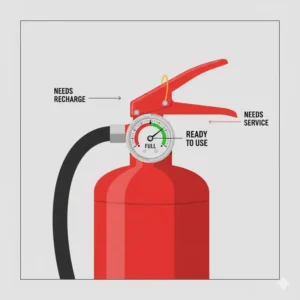
✅ Pressure gauge in green zone
✅ Safety pin intact with tamper seal unbroken
✅ No visible damage, dents, or corrosion
✅ Mounting bracket secure
✅ Instructions label readable
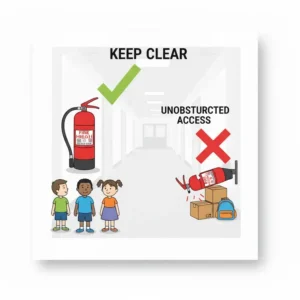
✅ Area around extinguisher clear (nothing blocking access)
Make It Educational: Turn monthly inspections into teaching moments. Bring older children along (8+) to explain what you’re checking and why. This reinforces fire safety while ensuring they understand the equipment’s importance.
Annual Professional Service
Beyond monthly checks, fire extinguishers require professional maintenance:
Professional Inspection Includes:
- Internal mechanism check
- Pressure verification and adjustment
- Seal replacement
- Documentation update (maintenance tag)
- Recharge if needed
Most fire extinguishers need professional inspection annually, though some models like the Element E50 require zero maintenance (one of its standout features). Budget approximately $20-40 per extinguisher for annual service.
When to Replace vs. Recharge
Rechargeable Models (Kidde FA110G, Amerex B500, First Alert HOME1):
- Can be professionally recharged after use
- Typical lifespan: 10-12 years with proper maintenance
- More economical long-term
- Better for environment
Disposable Models (Prepared Hero Spray, some basic units):
- Replace after any use
- Shelf life: 3-5 years
- Lower initial cost
- Simpler to maintain
Common Mistakes to Avoid ⚠️
After seeing countless home fire safety setups, I’ve noticed several patterns of mistakes that compromise both effectiveness and child safety. Let’s make sure you avoid these:
Mistake #1: Mounting Too Low for “Easy Access”
The Problem: Many parents mount extinguishers at 3-3.5 feet, thinking it makes them more accessible. This height is perfect for children ages 6-10 to reach.
The Solution: Mount at 4.5-5 feet. Yes, shorter adults might need to reach slightly higher, but this is far preferable to having an extinguisher in constant “temptation range” for kids.
Mistake #2: Hiding Extinguishers Completely
The Problem: Some parents go too far in concealment, storing extinguishers in locked closets or high cabinets where even adults can’t quickly access them.
The Solution: Balance visibility with security. Use clear-door cabinets, mount in corners, or use the Element E50 which can be positioned in multiple semi-hidden but accessible locations.
Mistake #3: Relying on Single Large Extinguisher
The Problem: One big extinguisher in the garage or kitchen, nothing else in the home.
The Solution: Multiple smaller extinguishers provide better coverage and faster response. Consider a main unit (Amerex B500 or Kidde Pro 210) plus compact backups (Element E50 or Prepared Hero Spray) throughout the home.
Mistake #4: Ignoring the “75-Foot Rule”
The Problem: Extinguishers too far apart, requiring long travel distances during emergencies.
The Solution: Map your home’s floor plan. Measure actual walking distance (accounting for walls and furniture) from every room to the nearest extinguisher. Add units where gaps exceed 50 feet.
Mistake #5: Forgetting About Elderly Family Members
The Problem: Mounting heights that work for healthy adults may be challenging for grandparents or family members with mobility issues.
The Solution: In homes with elderly residents, consider adding lower-mounted Prepared Hero Spray units (lighter, easier to operate) at 3.5-4 feet in their primary living spaces. This supplements rather than replaces your main extinguishers.
Budget-Friendly Implementation Plan
Professional fire protection doesn’t require breaking the bank. Here’s how to implement a complete fire extinguisher child friendly location system at various budget levels:
Starter Budget ($80-150): Essential Coverage
Recommended Products:
- 2x First Alert HOME1 ($30-40 each): Kitchen and main hallway
- 1x Prepared Hero Fire Spray ($20-30): Bedroom or garage backup
Coverage: Meets minimum safety requirements for small to medium homes. Focus on highest-risk areas (kitchen, sleeping area access).
Mid-Range Budget ($200-350): Comprehensive Protection
Recommended Products:
- 1x Kidde Kitchen Fire Extinguisher 2-Pack ($70-90): Kitchen (dual coverage)
- 1x Kidde FA110G ($35-50): Main hallway
- 2x Element E50 ($45-60 each): Garage, secondary locations
- 1x First Alert HOME1 ($30-40): Basement or workshop
Coverage: Provides excellent protection for most family homes, including specialized kitchen coverage and multiple backup locations.
Premium Budget ($400-600): Maximum Security
Recommended Products:
- 1x Kidde Kitchen 2-Pack ($70-90): Kitchen
- 1x Amerex B500 ($80-120): Garage or workshop (main)
- 2x Kidde Pro 210 ($50-70 each): Hallways
- 4x Element E50 ($45-60 each): Strategic backup locations
- 2x Prepared Hero Spray ($20-30 each): Cars, training tools
Plus Accessories:
- Fire extinguisher cabinets ($40-80 each)
- Professional installation/training ($100-200)
- Annual maintenance contract ($80-150/year)
Coverage: Commercial-grade protection with redundancy, multiple specialized units, and proper concealment solutions.
Special Situations and Unique Challenges
Every home has unique characteristics that require customized approaches to fire extinguisher child friendly location planning:
Homes with Special Needs Children
For families with children who have developmental disabilities or sensory processing challenges, standard safety measures may not suffice:
Enhanced Security Measures:
- Install extinguishers in locked cabinets with magnetic catches (easy for adults, impossible for children without fine motor skills)
- Choose the Element E50 for its simple operation if the child needs to be trained
- Consider professional monitoring systems that alert if extinguishers are moved
- Add visual and tactile deterrents (rough textured tape around mounting area)
- Work with occupational therapists to develop appropriate safety protocols
Multi-Family or Shared Living Situations
Apartments, duplexes, and multi-generational homes need coordinated approaches:
Coordination Strategies:
- Communicate with landlords/property managers about fire safety equipment
- Respect shared spaces while ensuring your living areas are protected
- Consider portable units (Element E50, Prepared Hero Spray) that don’t require permanent mounting
- Keep personal extinguishers in your spaces rather than common areas
- Verify building-provided extinguishers are properly maintained
Vacation Homes and Seasonal Properties ️
Properties that sit empty for months require special consideration:
Seasonal Property Best Practices:
- Choose models resistant to temperature extremes (Element E50 works -140°F to +320°F)
- Avoid locations with high humidity or direct sunlight
- Inspect immediately upon arrival each season
- Consider single-use models if professional maintenance isn’t feasible
- Teach renters/guests about extinguisher locations
Technology Integration and Smart Home Features
Modern fire safety increasingly involves technology. While fire extinguishers themselves remain mechanical devices, you can integrate them into smart home systems:
Smart Monitoring Solutions
Available Technologies:
- Wireless Pressure Sensors: Monitor extinguisher pressure and alert phone if levels drop
- Cabinet Door Sensors: Alert if extinguisher cabinet is opened unexpectedly
- Temperature Monitors: Track storage area conditions
- Integration with Smoke Alarms: Create comprehensive fire response systems
The Kidde brand offers some smart-enabled smoke and CO detectors that can work alongside your extinguisher placement strategy. While the extinguishers themselves aren’t “smart,” positioning them near smart detectors creates an integrated safety net.
Educational Apps and Training Tools
Several apps help families practice fire safety:
Recommended Resources:
- NFPA’s Sparky’s Brain Busters (educational games for kids)
- Ready by FEMA (emergency preparedness including fire safety)
- Local fire department training programs (many offer free family training sessions)
Real-World Success Stories and Lessons Learned
Sometimes the best lessons come from real experiences. Here are several stories from families who’ve implemented these strategies:
The Kitchen Cabinet Fire Story
Sarah from Portland shared how her Element E50 mounted inside a kitchen cabinet door saved her kitchen. “My 12-year-old was making grilled cheese when the pan caught fire. She remembered seeing the Element when getting dishes, grabbed it instantly, and put out the fire before it spread. The compact size and simple operation made all the difference—she never would have thought to use our big red extinguisher.”
Key Lesson: Multiple smaller units in strategic locations beat one large extinguisher you might not reach in time.
The Curious 6-Year-Old Incident
Mike from Dallas explained how his fire extinguisher child friendly location strategy prevented a disaster that could have been worse: “Our son figured out how to pull the pin on our low-mounted extinguisher and discharged it in the garage. It made a huge mess, cost $50 to recharge, but I’m grateful he did it there and not during a real emergency when we needed it. We remounted everything at 5 feet and haven’t had issues since.”
Key Lesson: Assume curious kids will eventually access anything within reach. Mount high and add deterrents.
The Elderly Parent Save
Jennifer from Florida shared: “My mom lives with us and has arthritis. When our dryer started smoking, she couldn’t pull the pin on our regular extinguisher. Thank goodness we’d added Prepared Hero Spray units near the laundry room—she just pointed and sprayed, putting out the fire immediately. Now we keep spray units in all her primary areas.”
Key Lesson: Consider physical capabilities of all family members when selecting and positioning extinguishers.
Creating Your Personalized Fire Safety Map ️
Now that you understand the principles, let’s create your customized fire extinguisher child friendly location plan:
Step 1: Assessment
Walk through your home and identify:
- High-risk fire areas (kitchen, garage, fireplace, furnace)
- Escape routes and exits
- Locations where children spend the most time
- Existing fire safety equipment
- Wall space suitable for mounting
Step 2: Coverage Calculation
Minimum Coverage Formula:
- Small home (under 1,500 sq ft): 3 extinguishers minimum
- Medium home (1,500-2,500 sq ft): 4-5 extinguishers minimum
- Large home (over 2,500 sq ft): 6+ extinguishers minimum
- Add 1 extinguisher per additional floor
- Add 1 extinguisher per high-risk area (workshop, craft room, home office with electronics)
Step 3: Product Selection
Based on your assessment:
Primary Units (Large/Medium): Choose 2-3 main extinguishers from:
- Amerex B500 (best overall)
- Kidde Pro 210 (commercial grade)
- Kidde FA110G (value choice)
Backup Units (Compact/Specialized): Choose 3-5 supplementary extinguishers from:
- Element E50 (multiple locations)
- Prepared Hero Spray (easy operation)
- Kidde Kitchen 2-Pack (kitchen specific)
Step 4: Installation Plan
Create a simple diagram showing:
- Each extinguisher location
- Mounting height
- Nearest escape route
- Distance measurements between units
Pro Tip: Take photos after installation and keep them with your home emergency plan. Include photos of instruction labels for quick reference.
Step 5: Family Education
Schedule a family fire safety meeting:
- Show everyone where extinguishers are located
- Explain when to use them (small fires only) vs. when to evacuate
- Demonstrate PASS method for older children
- Practice escape routes
- Review meeting points outside the home
According to the <a href=”https://www.usfa.fema.gov/” target=”_blank” rel=”noopener”>U.S. Fire Administration</a>, families who practice fire drills are significantly more likely to escape safely during actual emergencies. Make this a twice-yearly routine.
Seasonal Considerations and Adjustments
Your fire safety needs change with the seasons. Here’s how to adjust your fire extinguisher child friendly location strategy throughout the year:
Winter Adjustments ❄️
Higher Risk Areas:
- Fireplaces and wood stoves
- Space heater locations
- Holiday decoration areas (Christmas trees, candles)
Adjustments to Consider:
- Add temporary Prepared Hero Spray unit near fireplace during winter months
- Keep Element E50 handy in rooms with space heaters
- Position extinguisher clearly visible when holiday decorations are up
Summer Considerations ☀️
Higher Risk Areas:
- Outdoor grills and fire pits
- Garage (lawn equipment, gasoline storage)
- RVs and campers
Adjustments to Consider:
- Place Element E50 in RV or boat (temperature resistant)
- Keep Prepared Hero Spray near outdoor cooking areas
- Verify garage extinguishers are accessible despite summer storage items
Year-Round Maintenance Schedule
Monthly Tasks:
- Visual inspection of all extinguishers
- Verify cabinet doors aren’t blocked
- Check pressure gauges
- Ensure proper lighting around units
Quarterly Tasks:
- Test mounting brackets
- Clean extinguisher exteriors
- Update family on any location changes
- Review escape plans with children
Annual Tasks:
- Professional inspection/service
- Replace disposable units older than 3 years
- Evaluate coverage gaps
- Update emergency contact information
Frequently Overlooked Locations Where Extinguishers Matter
Beyond the obvious spots, several areas deserve fire protection consideration:
Home Office Spaces
With more people working from home, home offices contain increasing amounts of electronics, charging devices, and potential fire hazards.
Home Office Strategy:
- Mount compact Element E50 near desk or in drawer
- Keep Prepared Hero Spray accessible
- Position away from paper storage
- Ensure smoke detector in room
- Keep path to door clear
Laundry Rooms and Utility Areas
Dryer fires cause thousands of home fires annually. Your laundry room needs dedicated protection.
Laundry Room Best Practices:
- Mount extinguisher near dryer but away from water heater
- Choose corrosion-resistant model
- Maintain proper dryer vent cleaning schedule
- Keep extinguisher visible (not buried behind laundry baskets)
Attached Garages With Living Spaces Above
Garages with bedrooms above need special attention since fires can quickly spread upward.
Garage-to-Home Protection:
- Install extinguisher immediately inside house door from garage
- Add second unit in garage proper
- Consider larger Amerex B500 for garage
- Ensure ceiling smoke detector in garage
- Keep path between garage and house clear
Beyond Fire Extinguishers: Complete Home Fire Safety
While fire extinguishers are critical, they’re just one component of comprehensive home fire safety:
Smoke and CO Detector Integration
Strategic Placement:
- Every bedroom
- Outside sleeping areas
- Every floor including basement
- Kitchen (but 10+ feet from cooking appliances)
Choose Interconnected Systems: Modern smoke detectors connect wirelessly—when one sounds, they all sound. This is especially important in multi-story homes where children might not hear distant alarms.
Fire Blankets as Supplementary Protection
Fire blankets offer advantages in specific situations:
Best Uses:
- Kitchen grease fires (smother flames)
- Clothing fires (wrap around person)
- Small contained fires
- Teaching children fire safety (less intimidating than extinguishers)
Recommended Product: Prepared Hero Emergency Fire Blanket complements your extinguisher system beautifully. Mount in kitchen near the stove, providing an additional option for grease fires.
Escape Ladders for Upper Floors
Multi-story homes need emergency escape options:
Selection Criteria:
- Rated for total weight of family members
- Easy deployment mechanism
- Fits window openings
- Steel construction preferred
- Store in bedroom closets
Practice deploying (but not using) escape ladders annually so family members know how they work.
Insurance and Financial Considerations
Proper fire safety can actually save money beyond preventing property loss:
Homeowners Insurance Discounts
Many insurance companies offer discounts for enhanced fire protection:
Potential Discounts:
- 5-10% for fire extinguisher installation
- Additional 5-15% for monitored smoke detection systems
- Discounts for living near fire stations
- Premium reductions for fire-resistant construction
How to Qualify:
- Document all fire safety equipment with photos
- Keep maintenance records
- Get professional installations certified
- Update insurance company when adding equipment
Tax Deductions and Safety Credits
Some jurisdictions offer tax incentives:
Research Your Area For:
- Home safety improvement credits
- Energy-efficient fire prevention equipment deductions
- Senior citizen safety grants
- Homestead improvement allowances
Check with your tax professional about deducting fire safety equipment as home improvement expenses.
Cost-Benefit Analysis
Let’s look at the real economics of fire safety:
| Scenario | Cost | Potential Loss Prevented |
|---|---|---|
| Complete home system | $300-500 | $50,000-500,000+ |
| Kitchen fire contained | $50 (extinguisher) | $25,000 (average kitchen fire) |
| Garage fire stopped early | $100 (heavy-duty unit) | $30,000-100,000 |
| Bedroom hallway protection | $40 (basic unit) | $100,000-300,000 |
| Annual maintenance | $60-120/year | Ensures equipment works when needed |
Return on Investment: Even basic fire protection pays for itself if it prevents just one fire. Most families spend more annually on streaming services than on fire safety equipment.
Expert Tips From Fire Safety Professionals
I’ve compiled advice from fire captains, safety inspectors, and prevention specialists:
From Fire Captain Martinez, 25 Years Service:
“The biggest mistake I see is people buying expensive fire extinguishers and then mounting them in places no one would realistically reach during a fire. Your fire extinguisher child friendly location should be along your escape route—you should be able to grab it while heading toward safety, not while moving deeper into your home.”
From Safety Inspector Thompson:
“Parents always ask if they should hide extinguishers from kids. My answer: don’t hide them completely—that defeats the purpose. Instead, use height, deterrents, and education. A 5-foot mounting height with a tamper-resistant pin keeps most young children away while maintaining adult accessibility.”
From Fire Prevention Educator Williams:
“The best fire safety tool is family education combined with proper equipment. I recommend the Element E50 for older children’s training—it’s non-toxic, leaves no mess, and the simple operation makes it less intimidating for first-time users. Once they’re comfortable with a training unit, they’ll know how to use any extinguisher.”
From Insurance Risk Assessor Johnson:
“I evaluate hundreds of homes annually. The properties with the best fire protection always have multiple smaller extinguishers rather than one or two large ones. The Prepared Hero Spray in kitchens, Element E50 in garages and vehicles, and standard ABC units in hallways—this combination provides comprehensive coverage while maintaining child safety.”
Protect What Matters Most Today!
Don’t wait for an emergency to think about fire safety. Each highlighted product offers proven protection designed for real families. Click any product name to check current pricing and availability. Your family’s safety is worth the investment! ️✨
Conclusion
Creating the perfect fire extinguisher child friendly location strategy isn’t about following a single rule—it’s about understanding your unique home, your family’s needs, and combining multiple safety principles into a cohesive system.
Remember these core principles:
✅ Height matters: 4.5-5 feet for most installations keeps extinguishers accessible yet secure
✅ Multiple units beat single large extinguishers: Coverage and accessibility trump capacity
✅ Education complements equipment: Teach age-appropriate fire safety to all family members
✅ Technology has evolved: Modern options like Element E50 and Prepared Hero Spray offer child-safer alternatives
✅ Maintenance is mandatory: Monthly checks and annual service keep equipment ready
✅ Balance is key: Visible enough to be useful, discrete enough to discourage tampering
Whether you’re starting with a basic First Alert HOME1 in your kitchen or building a comprehensive system with multiple specialized units, every step toward better fire protection makes your home safer.
The products I’ve highlighted throughout this guide—the Kidde FA110G, Kidde Pro 210, Amerex B500, Element E50, First Alert HOME1, Prepared Hero Fire Spray, and Kidde Kitchen Fire Extinguisher 2-Pack—represent the best options currently available for family homes. Each has been tested by thousands of homeowners and proven effective in real-world scenarios.
Your home’s fire safety is too important to postpone. Start today by identifying your highest-risk areas, selecting appropriate extinguishers, and creating that family fire safety plan. Future you (and your family) will thank you for taking action now.
Recommended for You
- Smoke Detectors Placement in Nursery: 7 Critical Safety Tips
- Keeping Bathroom Cleaning Supplies Locked Up: 7 Life-Saving Solutions Every Parent Should Know
- Safe Baby Bath Spout Cover: 7 Best Picks 2025
Disclaimer: This article contains affiliate links. If you purchase products through these links, we may earn a small commission at no additional cost to you.
✨ Found this helpful? Share it with your friends!