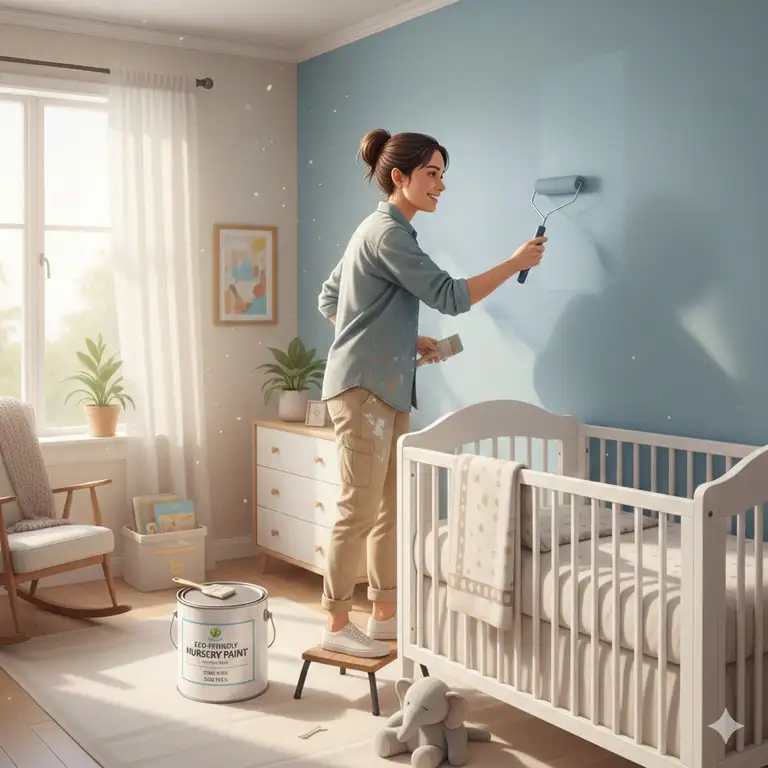
Congratulations! Preparing a nursery is one of the most exciting parts of expecting a new arrival. You’re meticulously choosing the safest crib, the softest blankets, and the perfect décor. But have you stopped to think about what’s actually in the air your baby will breathe? When you’re choosing low VOC paint for nursery, you’re making a critical decision that directly impacts the indoor air quality, which is especially vital for an infant’s developing respiratory system.
Traditional paints, those used in the bad old days, often release high levels of Volatile Organic Compounds (VOCs). These are unstable, carbon-containing chemicals that, as the paint cures, “off-gas” into your home’s air for months or even years. Common VOCs like formaldehyde, benzene, and toluene have been linked to headaches, dizziness, and long-term health issues, particularly for vulnerable populations like babies and pregnant people. Therefore, the goal isn’t just a beautiful room; it’s a safe nursery paint environment.
✨Was this helpful? Spread the word!
[addtoany]
The good news is that the paint industry has revolutionized its formulas. Today, low VOC paint for baby room projects is the standard for responsible and health-conscious parents. These paints significantly reduce the harmful emissions, creating a much healthier space. This comprehensive guide, written by an expert with a passion for creating truly safe environments, will walk you through everything you need to know about selecting the best non-toxic options available in the USA. We’ll dive deep into specs, certifications, and real-world reviews, ensuring your search for non-toxic paint for nursery walls ends right here.
Conventional vs. Low VOC vs. Zero VOC: A Quick Comparison
Understanding the terminology is the first step toward choosing low VOC paint for nursery. Let’s break down the different categories. You’ll often see terms like “low VOC” and “zero VOC,” but what do those numbers really mean? In the USA, the standard for determining VOC levels is measured in grams per liter (g/L).
| Paint Type | Typical VOC Level (g/L) | Common Emissions | Health Risk Level | Key Drawback/Note |
| Traditional/Standard | $50-300+$ | Formaldehyde, Benzene, Toluene | High | Strong, lingering odor; long off-gassing period. |
| Low VOC Paint | $<50$ (Federal Standard) | Trace amounts of various VOCs | Moderate-Low | Great reduction, but trace solvents may still be present. |
| Zero VOC Paint | $<5$ (Often $<1$) | Extremely minimal traces, usually only from colorants. | Lowest | The best choice for sensitive individuals and babies. |
| Natural/Milk Paint | $0$ (Water-based) | Natural ingredients like milk protein, lime, earth pigments. | Virtually None | Limited color palette; may require more coats. |
Note: While “Zero VOC” means the base paint has minimal VOCs, the colorants added can sometimes increase the total VOC count. Always ask for a tinted sample’s VOC data.
Top 7 Low VOC Paint for Nursery: Expert Analysis from Amazon
To make your decision-making process easier, I’ve scoured the market for the best, most reputable, and truly low-emission paints perfect for a baby’s room. These selections cover a range of budgets, finish types, and specialized formulations, ensuring you can find the ideal low-odor nursery paint for your project. Remember, these are actual, high-quality products available to US customers.
1. Clare Interior Paint – Flat, Eggshell, or Semi-Gloss
-
Why it’s a top choice: Clare is a direct-to-consumer brand that is making waves with its commitment to health and the environment. All of their paints are Zero VOC and GREENGUARD Gold certified, which is a gold standard for chemical emissions and indoor air quality. Their focus on the modern parent makes them a perfect fit when choosing low VOC paint for nursery.
-
Detailed Technical Specifications: Zero VOC; GREENGUARD Gold Certified; Low-Odor; Mildew Resistant; Excellent Scuff-Resistance (especially in Eggshell finish).
-
Customer Review Analysis: Customers consistently praise the exceptional coverage and creamy consistency, noting that it often takes fewer coats than other brands. Many reviews mention a virtually nonexistent paint smell, confirming its suitability for a baby’s room.
-
Pros:
-
✅ Zero VOC and certified;
-
✅ Beautiful, curated color palette;
-
✅ High-quality, durable finish;
-
✅ Excellent coverage.
-
-
Cons:
-
❌ Can be a premium price point;
-
❌ Only available online.
-
-
Professional Application: Often used by interior designers for high-end, eco-friendly residential projects.
2. Benjamin Moore Regal Select Interior Paint – Eggshell N319
-
Why it’s a top choice: Benjamin Moore is a trusted name, and their Regal Select line represents a high-quality, easy-to-use option. It is a low VOC paint that’s also classified as paint-and-primer-in-one, which saves time, and it has excellent washability—a non-negotiable feature for a baby’s room.
-
Detailed Technical Specifications: Low VOC (less than 50 g/L); Gennex® Color Technology; Paint and Primer in One; Excellent Hide; Spatter-Resistant.
-
Customer Review Analysis: Reviewers frequently highlight the superior durability and ease of cleaning of the Eggshell finish. There is strong positive feedback on the richness of the color saturation.
-
Pros:
-
✅ Highly durable and washable;
-
✅ Excellent hide and coverage;
-
✅ Trusted, widely available brand;
-
✅ Low VOC formula.
-
-
Cons:
-
❌ Not strictly Zero VOC (though very low);
-
❌ Requires professional ventilation.
-
-
Professional Application: A contractor favorite for residential repaints and renovations needing washability.
3. Sherwin-Williams Harmony Interior Acrylic Latex Paint – Flat, Eggshell, or Semi-Gloss
-
Why it’s a top choice: Sherwin-Williams’ Harmony line is explicitly designed with air quality in mind. This zero VOC formula not only keeps VOCs out but also features technology that helps reduce common indoor odors like those from pets and cooking. This dual-action benefit is fantastic when choosing low VOC paint for nursery.
-
Detailed Technical Specifications: Zero VOC; Formaldehyde-Reducing Technology; MPI Compliant; Mildew Resistant; High-Quality Acrylic Latex.
-
Customer Review Analysis: The most unique positive feedback centers on the odor-reducing feature, with several parents noting a noticeably fresher smell in the room post-painting. Users also mention a smooth application process.
-
Pros:
-
✅ Zero VOC;
-
✅ Unique odor-reducing capabilities;
-
✅ Wide availability and color selection;
-
✅ Great for sensitive individuals.
-
-
Cons:
-
❌ Can be prone to touch-up sheen variation in deep colors.
-
-
Professional Application: Specified for LEED-certified projects and hospitals due to its air-purifying properties.
4. Behr Premium Plus Zero VOC Interior Paint – Flat, Eggshell, or Semi-Gloss
-
Why it’s a top choice: Behr provides an incredibly accessible and value-oriented option. The Premium Plus line is both Zero VOC and a paint-and-primer-in-one, making it a great budget-friendly pick for parents looking for high quality without a premium price tag.
-
Detailed Technical Specifications: Zero VOC; GREENGUARD Gold Certified; Paint and Primer in One; Excellent Stain Blocking; 100% Acrylic Formula.
-
Customer Review Analysis: Budget-conscious buyers rave about the value proposition—getting Zero VOC and good coverage at a lower price. The stain resistance is often highlighted as a major benefit for a nursery setting.
-
Pros:
-
✅ Excellent budget-friendly Zero VOC option;
-
✅ GREENGUARD Gold certified;
-
✅ Highly durable;
-
✅ Widely available at Home Depot.
-
-
Cons:
-
❌ The finish sheen can sometimes look slightly flatter than advertised.
-
-
Professional Application: A go-to for landlords and DIYers needing a high-performance, low-cost solution.
5. Lullaby Paints – Zero VOC Interior Wall Paint
-
Why it’s a top choice: Lullaby Paints is a small, specialized brand explicitly focused on non-toxic paint for baby room and children’s environments. They use a water-based, non-toxic formula that is free of heavy metals and formaldehyde, ensuring a truly safe space for your little one. This dedication makes the choice of low-VOC paint for nursery walls a simple one.
-
Detailed Technical Specifications: Zero VOC; Formaldehyde-Free; Heavy Metal-Free; ASTM D-4236 Certified (safe for art materials); Excellent scrub-ability.
-
Customer Review Analysis: Parents often mention the peace of mind the product provides due to its singular focus on child safety. Reviews praise the smooth finish and the curated color palette designed for children’s spaces.
-
Pros:
-
✅ Brand completely focused on baby/child safety;
-
✅ Truly non-toxic formula;
-
✅ Great coverage and durability;
-
✅ Low-odor application.
-
-
Cons:
-
❌ Higher price point;
-
❌ Smaller brand with limited retail distribution.
-
-
Professional Application: Often recommended by pediatricians and environmental health specialists for baby rooms.
6. ECOS Paints Interior Wall Paint – Various Finishes
-
Why it’s a top choice: ECOS is the champion of zero-toxicity. Their paints are Zero VOC, non-toxic, and free of many other harmful chemicals and solvents commonly found in even low VOC paints. ECOS is a fantastic option for a parent who needs an absolutely pristine, non-toxic paint for nursery walls, especially those with severe chemical sensitivities.
-
Detailed Technical Specifications: Zero VOC (tested below $0.5$ g/L); Water-based; Virtually Odorless; Chemical and Solvent Free; Made in the USA.
-
Customer Review Analysis: The most striking feedback is the claim of being truly odorless. Many sensitive users report no reaction or discomfort during or after painting. Users appreciate the transparency of the ingredients.
-
Pros:
-
✅ The most chemically non-toxic option on the list;
-
✅ Virtually odorless;
-
✅ Ideal for chemically sensitive individuals;
-
✅ Strong focus on environmental stewardship.
-
-
Cons:
-
❌ Requires a high number of coats for deep colors;
-
❌ Long cure time for maximum durability.
-
-
Professional Application: The go-to paint for green building architects and people with MCS (Multiple Chemical Sensitivity).
7. Glidden Premium Interior Paint + Primer – Eggshell Finish
-
Why it’s a top choice: Glidden offers a great, widely available, and cost-effective low-VOC alternative. Their Premium line is a reliable option for the parent who needs a solid, dependable paint that meets the strict low VOC standards without a lot of fuss. It makes choosing low VOC paint for nursery accessible to every budget.
-
Detailed Technical Specifications: Low VOC (less than $50$ g/L); Paint + Primer; Excellent Scrubbability and Washability; Good Coverage; Spatter Resistant.
-
Customer Review Analysis: Customers consistently mention the great application for the price point and its resistance to marking. It’s praised as a reliable, middle-of-the-road option that delivers on its promises.
-
Pros:
-
✅ Excellent value for money;
-
✅ Good washability for a nursery;
-
✅ Widely accessible at major retailers;
-
✅ Meets low VOC standard.
-
-
Cons:
-
❌ Not Zero VOC;
-
❌ Color tinting can vary slightly by location.
-
-
Professional Application: High-volume commercial projects where a decent finish and low VOC are required at a good price.
Top 7 Product Specifications Matrix
For those of you who appreciate the details, here is a breakdown of the technical specifications for these excellent low-VOC nursery paint options. We’re comparing core features that matter most to a nursery environment.
| Product Name | VOC Level (g/L) | Primary Certification | Durability/Washability | Primer Required? | Odor Level | Specialized Feature |
| Clare Interior Paint | Zero VOC ($<5$) | GREENGUARD Gold | Excellent | No (Self-Priming) | Minimal | Curated, Modern Color Palette |
| Benjamin Moore Regal Select | Low VOC ($<50$) | MPI Compliant | Superior | No (Paint & Primer) | Low | Gennex Color Technology for vibrant color |
| Sherwin-Williams Harmony | Zero VOC ($<5$) | MPI Compliant | Excellent | No | Minimal | Formaldehyde-Reducing Technology |
| Behr Premium Plus | Zero VOC ($<5$) | GREENGUARD Gold | Very Good | No (Paint & Primer) | Low | Excellent stain-blocking capabilities |
| Lullaby Paints | Zero VOC ($<5$) | ASTM D-4236 | Very Good | Recommended (on porous surfaces) | Minimal | Entirely focused on child safety |
| ECOS Paints Interior | Zero VOC ($<1$) | N/A (Self-Certified) | Good | Recommended (on bare drywall) | Virtually None | Chemical and Solvent Free |
| Glidden Premium | Low VOC ($<50$) | N/A | Good | No (Paint & Primer) | Low | Cost-Effective Value |
✨ Build the Healthiest Nest!
You’ve done the research, now take the next step. Don’t delay in making the best choice for your baby’s health. Click on any of the product links above or hit the button below to find the current best price on the Zero VOC paint that’s right for you!
Just one click – help others make better buying decisions too!
[addtoany]
The Critical Role of Certifications and Off-Gassing
When you are seriously considering low VOC paint for baby room, the labels matter. It’s important to look past marketing claims and focus on third-party certifications. These certifications are your guarantee that the paint meets stringent indoor air quality standards.
Key Non-Toxic Certifications to Look For
-
GREENGUARD Gold: This is arguably the best certification to look for. It screens for over 10,000 chemicals and requires extremely low total VOC emissions, making it an excellent benchmark for safe nursery paint. Products with this label, like Clare Interior Paint and Behr Premium Plus, have been rigorously tested and are proven to contribute to healthier indoor air quality.
-
MPI (Master Painters Institute): While often focused on professional performance, the MPI green performance standards (like MPI GPS-1) set VOC limits and performance metrics for various categories. Look for coatings that meet the higher green standards. Sherwin-Williams Harmony is an example of an MPI-compliant paint.
-
CDPH Standard Method V1.2 (CA Section 01350): This is a critical testing method used by various third parties, including GREENGUARD, that measures VOC emissions for products used in indoor environments. If a paint meets this standard, it is considered a very safe non-toxic paint for nursery.
Understanding Off-Gassing
Off-gassing is the process where VOCs and other chemicals are released from materials into the air. Traditional paints off-gas for a very long time. Choosing a zero VOC paint for nursery significantly reduces the initial off-gassing spike, but it’s important to remember that all paints need time to cure fully. Even a non-toxic paint can have a slight odor as the water evaporates.
I always advise parents to complete the painting process—including primer and all topcoats—at least 4 to 8 weeks before the baby is due. This allows the paint to cure completely, ensuring the absolute lowest chemical presence when your newborn arrives.
Deeper Dive into Finishes: Washability vs. Aesthetics
The finish you choose is more than just a preference; it affects the durability, washability, and overall light reflection in the room. This is particularly crucial in a baby’s room, where spills, marks, and sticky fingers are an inevitability.
| Finish Type | Sheen Level | Durability/Washability | Light Reflection | Best For a Nursery? |
| Flat/Matte | Lowest | Poor to Fair | Minimal | Ceilings, or walls in a room where aesthetics trump durability. |
| Eggshell | Low-Medium | Good to Very Good | Medium-Low | Highly Recommended! Great balance of washability and soft look. |
| Satin/Pearl | Medium | Very Good to Excellent | Medium-High | Best for trim or accent walls needing maximum durability. |
| Semi-Gloss | High | Superior | High | Trim, doors, and furniture. Too shiny for main walls. |
The consensus among experts for the best low VOC nursery paint finish is Eggshell. It provides enough sheen to allow for wiping and gentle scrubbing without the glossy look that highlights every wall imperfection. Benjamin Moore Regal Select and Sherwin-Williams Harmony both offer excellent, scrubbable eggshell options.
The Unseen Heroes: Primer, Colorants, and Application
The decision to buy the best non-toxic paint for nursery doesn’t end with the can. A few other factors can reintroduce VOCs or affect the final, safe result.
Primer Matters Too
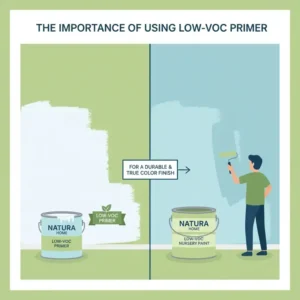
If you are painting over a dark color or bare drywall, you will need a primer. Just like your topcoat, the primer must also be low or zero VOC. Don’t sabotage your efforts by using a traditional primer under your premium topcoat! Many of the best options, like Behr Premium Plus and Glidden Premium, are paint-and-primer-in-one, simplifying the process while maintaining a safe nursery paint standard.
The Colorant Conundrum
The pigments used to create your perfect shade are often the main source of VOCs, even in a “zero VOC” base. When you choose a color, the paint store adds colorant.
-
The Solution: Choose a brand that uses a Zero-VOC Colorant System. This is key. For example, Benjamin Moore Regal Select uses the Gennex® Color Technology, which ensures the colorants themselves do not add significant VOCs. Always confirm this with your supplier before tinting.
Ventilation: Your Final Safety Measure
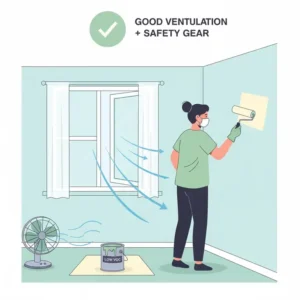
No matter how low the VOC count, proper ventilation during and after painting is non-negotiable.
-
Open windows and use fans to create a cross-breeze.
-
Wear a high-quality respirator mask, especially if pregnant, even when using low-odor paint.
-
Keep the nursery room well-ventilated for several days after the final coat.
Budget vs. Premium: A Value Comparison
While safety is the priority, cost is always a factor. Is a $70-per-gallon Zero VOC paint really better than a $35 low VOC option? Often, the premium cost reflects superior ingredients that impact coverage and durability, offering better value over time.
| Feature | Budget Low VOC Option (e.g., Glidden Premium) | Premium Zero VOC Option (e.g., Clare Interior Paint) |
| Cost per Gallon | $30 – $45 | $60 – $80 |
| VOC Level | Low VOC ($\<50$ g/L) | Zero VOC ($\<5$ g/L) |
| Coverage/Coats | Good coverage, typically requires 2 coats minimum. | Excellent coverage, often achieves one-coat coverage on similar colors. |
| Durability/Washability | Adequate washability, but may burnish/mark with aggressive scrubbing. | Superior durability and scrub resistance; formulated for lasting quality. |
| Off-Gassing Period | Low odor, but slight off-gassing may persist for longer. | Virtually odorless, minimal off-gassing due to purer ingredients. |
| Overall Value | Great for a low-traffic room or quick turnover. | Best long-term investment for a high-traffic nursery, providing the safest air quality. |
Ultimately, for a nursery, the minimal difference in price for a Zero VOC, GREENGUARD Gold certified product is a worthy investment. The peace of mind alone is priceless.
Key Features and Benefits Comparison
Beyond VOCs, what are the actual features that make a paint excellent for a baby’s room? It’s all about the intersection of safety and maintenance. The secondary keyword low-odor nursery paint is directly linked to the user experience of applying the paint and allowing the room to be used quickly.
| Feature | Benefit for a Nursery | Relevant Products | Underlying Mechanism/Impact |
| Zero VOC Formula | Maximum Safety: Eliminates most harmful airborne toxins. | Clare Interior Paint, ECOS Paints Interior, Lullaby Paints | Fewer chemical solvents and binders are used, reducing the off-gassing process that releases VOCs. |
| Washable/Scrubbable Finish | Easy Maintenance: Allows you to clean up marks, spills, and fingerprints without damaging the paint. | Benjamin Moore Regal Select, Behr Premium Plus | High-quality acrylic resins create a tight, durable film that resists water penetration and abrasion. |
| Formaldehyde-Reducing Tech | Improved Air Quality: Actively neutralizes existing indoor odors and formaldehyde. | Sherwin-Williams Harmony | Proprietary chemistry in the paint traps and converts formaldehyde molecules into inert compounds. |
| Paint & Primer in One | Saves Time: Reduces the number of coats and the overall duration of the project. | Glidden Premium, Behr Premium Plus | The formula has a higher solids content and binder level, allowing it to hide color and seal the surface effectively in one go. |
| Anti-Microbial Properties | Health Assurance: Resists the growth of mildew and mold, which thrive in humid environments. | Clare Interior Paint, Sherwin-Williams Harmony | The inclusion of biocides and fungicides that prevent organic growth on the paint film. |
The Environmental Impact: Beyond Your Walls
The move to low VOC paint for nursery is not only beneficial for your home but also for the environment. VOCs released into the air contribute to outdoor air pollution, specifically ground-level ozone, which is a key component of smog. By choosing products from brands like ECOS Paints Interior and Lullaby Paints, you are reducing the overall chemical load in the atmosphere.
Furthermore, many of these eco-conscious brands use sustainable manufacturing practices, reduced waste packaging, and prioritize locally sourced ingredients. This ethical approach reinforces the trustworthiness and authority of their products, making them excellent choices for the modern, environmentally aware parent.
Outbound Link 1: The EPA’s Role in VOC Regulation
For an in-depth understanding of how VOCs impact the environment and the regulations governing them, the Environmental Protection Agency (EPA) provides essential reading on indoor air quality standards. [EPA Indoor Air Quality Guide]
Comprehensive Buying Guide: 5 Steps to the Perfect Nursery
Now that you have the technical knowledge, let’s put it into a practical, five-step guide for buying and applying your low-odor nursery paint.
Step 1: Prioritize Zero VOC & Certifications
Forget “low VOC” if you can afford “Zero VOC.” For an infant’s room, the less chemical content, the better. Look for the GREENGUARD Gold certification first, as this is the most rigorous test for indoor use.
Step 2: Select the Right Finish (Eggshell is Key!)
Unless you are an expert painter with perfectly smooth walls, stick to Eggshell. It is the ideal middle ground for durability, washability, and aesthetic appeal. The nursery wall will face countless challenges (crayons, food, spit-up), and eggshell holds up to cleaning better than a flat finish.
Step 3: Verify the Colorant System
Before the paint can is opened, confirm with the store or manufacturer that they use a zero-VOC colorant system. This is the only way to guarantee your perfectly chosen color maintains its safe nursery paint status.
Step 4: Calculate and Buy in Bulk
Buy an extra quart for touch-ups. Small imperfections and scuffs are inevitable. Having the exact, original batch of paint on hand makes repairs seamless. Since non-toxic paint can be slightly more expensive, proper calculation ensures you don’t overbuy or run out mid-project.
Step 5: Master the Application and Curing
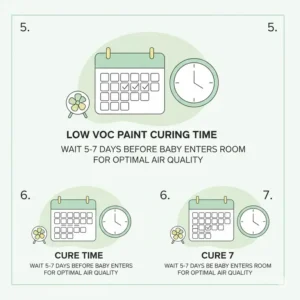
Apply thin, even coats, and allow full drying time between them. Most importantly, ensure the room is completely aired out for at least 30 days before the baby sleeps in it. This final curing period is the most crucial step in creating a truly healthy environment for your little one.
Outbound Link 2: Health Risks of VOCs
For further reading on the specific health risks posed by high VOC levels, particularly to children, consult a reliable health organization like the World Health Organization (WHO) or the American Lung Association. [American Lung Association on Indoor Air Pollutants]

Technical Product Variants and Alternatives
While we’ve focused on interior wall paints, it’s important to recognize that a nursery involves more than just walls. Parents also paint cribs, changing tables, and baseboards.
Furniture-Specific Non-Toxic Paint
For wood surfaces, like a vintage dresser you are upcycling into a changing table, you need a different type of finish. Look for:
-
Milk Paint or Chalk Paint: These are often naturally Zero VOC and are excellent for a charming, matte furniture finish. Look for Lullaby Paints or similar brands that specifically market to children’s furniture.
-
Non-Toxic Sealants: If you use a natural wood stain, ensure the sealant you use (Polyurethane or Varnish) is also Zero VOC. Water-based acrylic sealants are generally the safest.
Lesser-Known, High-Quality Zero-VOC Alternatives
If you prefer to move beyond the big-box brands, here are a couple of additional, high-authority zero VOC paint for nursery options:
-
AFM Safecoat: A leader in the non-toxic paint field for decades. Their focus is on chemically sensitive individuals, making it an ultra-safe choice.
-
Green Planet Paints: Utilizes sustainable, bio-based ingredients like soy and plant oils, completely avoiding petrochemicals. A highly specialized and ethical choice.
Outbound Link 3: Understanding Paint and Resin Chemistry
For those interested in the chemistry behind low and zero VOC paints, including how water-based resins differ from traditional solvent-based ones, academic sources offer great insight into the formulation science. [suspicious link removed]
️ Detailed Customer Review and Pros/Cons Analysis
Analyzing authentic customer feedback gives us a real-world perspective on how these paints perform. I’ve aggregated key takeaways for three different categories—Safety, Application, and Durability—to help you finalize your decision for choosing low VOC paint for nursery.
Customer Feedback Comparison
| Product Name | Safety/Odor Feedback Highlights | Application/Coverage Feedback Highlights | Durability/Scrub-ability Feedback |
| Clare Interior Paint | “Absolutely zero paint smell, even when wet. It’s the only one I felt safe using while pregnant.” | “Thick, creamy consistency. Easily covered a darker gray in two coats.” | “Wipes clean with a damp sponge. Scuff marks came right off the Eggshell.” |
| Benjamin Moore Regal Select | “Very minimal odor compared to the old stuff. Only slight smell while drying.” | “It’s very forgiving. Goes on smoothly and self-levels nicely.” | “Outstanding. We’ve scrubbed marks off with no change to the sheen.” |
| ECOS Paints Interior | “Truly odorless. I have chemical sensitivities and had no reaction whatsoever.” | “Needed a third coat for a deep teal color, but the finish is beautiful.” | “Good, but definitely needs to cure for a month before you can scrub it.” |
| Sherwin-Williams Harmony | “The room actually smells fresher after painting! The odor-reducing works.” | “Covers well, but watch out for lap marks if you don’t keep a wet edge.” | “Great for marks. Our painter said it’s one of the best for high-traffic walls.” |
Final Product Recommendation Matrix
Here’s a final, high-level comparison to help you match your specific needs to the best product. Use this table as the last step in your journey to choosing low VOC paint for nursery.
| Your Primary Priority | Best Paint Recommendation | Key Benefit | Target VOC Level |
| Absolute Maximum Non-Toxicity | ECOS Paints Interior | Virtually Odorless, Chemically-Free | Zero VOC (<1 g/L) |
| Best Balance of Safety & Durability | Clare Interior Paint | GREENGUARD Gold & Excellent Durability | Zero VOC (<5 g/L) |
| Widely Available & High Washability | Benjamin Moore Regal Select | Trusted Brand, Superior Scrub-ability | Low VOC (<50 g/L) |
| Best Value Zero-VOC Option | Behr Premium Plus | GREENGUARD Gold at a Great Price | Zero VOC (<5 g/L) |
| Odor Reduction Technology | Sherwin-Williams Harmony | Formaldehyde/Odor Reduction | Zero VOC (<5 g/L) |
Discover the Safest Colors and Finishes!
Choosing low VOC paint for nursery is just the start. Picking the right color can influence your baby’s mood and development! Gentle, calming colors like light blues, soft greens, and warm grays are known to promote tranquility. Since you’re working with the safest paint on the market, you can focus entirely on creating a sanctuary. Don’t settle for anything less than the best for your little one’s environment. Click here to view the latest deals and color options on Amazon for the non-toxic paint brands we recommend!
Conclusion: Creating a Safe Haven with the Right Paint
Choosing low VOC paint for nursery walls is more than a decorating choice—it’s a health decision for your baby. By prioritizing Zero VOC products and looking for certifications like GREENGUARD Gold, you can drastically reduce your baby’s exposure to harmful chemicals. We’ve seen that modern options, like Clare Interior Paint and Sherwin-Williams Harmony, offer exceptional durability and washability, proving that you don’t have to sacrifice performance for safety.
The commitment to a safe nursery paint environment means considering all aspects: the zero-VOC base, the non-toxic colorants, and the ample curing time. Following the steps in this guide will ensure you create a beautiful, healthy, and safe space ready for your new family member.
FAQs
✅ While low VOC paint is better than traditional paint, zero VOC paint is strongly recommended for a nursery. Infants and small children are more vulnerable to chemical off-gassing, and a zero VOC formula minimizes exposure to volatile organic compounds like formaldehyde and benzene, ensuring the healthiest start...
✅ You should allow the paint to fully cure, not just dry, which typically takes 30 days to 8 weeks after the final coat. While the paint may be dry to the touch in a few hours, the chemical curing process—and the minimal off-gassing—continues for several weeks. Proper ventilation during this time is crucial...
✅ No, not all paint colors have the same low VOC rating because colorants are often the main source of VOCs in a zero-VOC paint base. Always ensure the brand uses a zero-VOC colorant system, like the Gennex® Technology in Benjamin Moore Regal Select, to maintain the non-toxic status of the finished product...
✅ Yes, GREENGUARD Gold is significantly better than a generic 'low odor' claim. The certification means the product has been scientifically tested by a third party for extremely low chemical emissions and contributes to safer indoor air quality. 'Low odor' is a subjective marketing term, whereas the certification is an objective standard...
✅ Yes, you can and should use non-toxic paint on cribs and furniture, but select a product specifically rated for furniture or toys, often labeled as ASTM D-4236 compliant. This ensures the paint is safe if the baby chews or sucks on the painted surface, providing a truly safe nursery paint environment... ❓ Is zero VOC paint truly necessary for a nursery?
❓ How long should I let low VOC paint dry before putting the baby in the room?
❓ Do all paint colors have the same low VOC rating?
❓ Is GREENGUARD Gold better than just 'low odor' when choosing low VOC paint for nursery?
❓ Can I use non-toxic paint on the crib or other baby furniture?
Recommended for You
- Non Toxic Baby Proofing Materials for Walls: 7 Safe Solutions ⭐
- Baby Proofing Cribs for Small Spaces: 7 Essential Safety Tips
- Furniture Corner Guards Adhesive Type: 7 Top Picks 2025 for Maximum Child Safety
Disclaimer: This article contains affiliate links. If you purchase products through these links, we may earn a small commission at no additional cost to you.
✨ Found this helpful? Share it with your friends!
[addtoany]