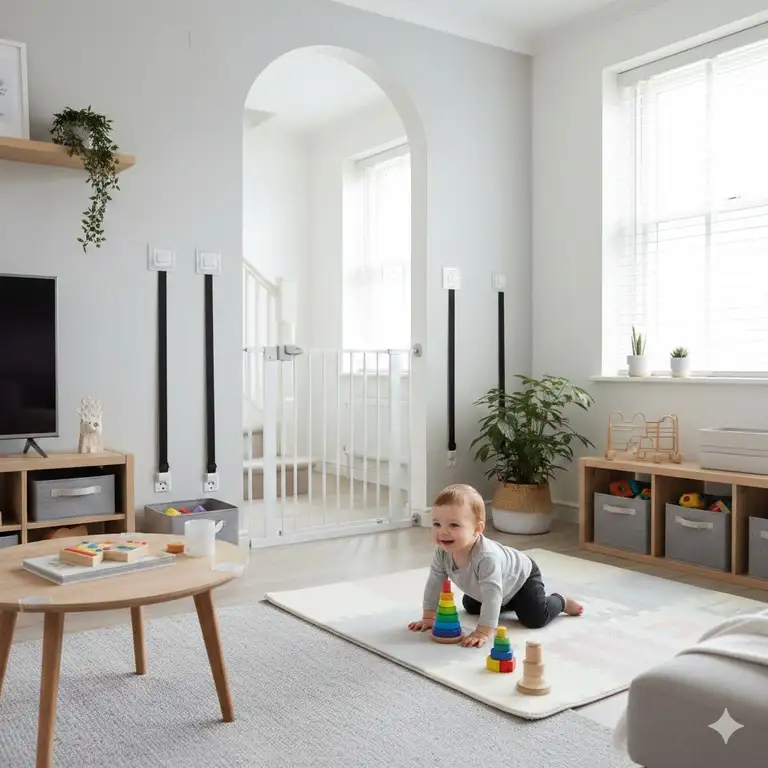
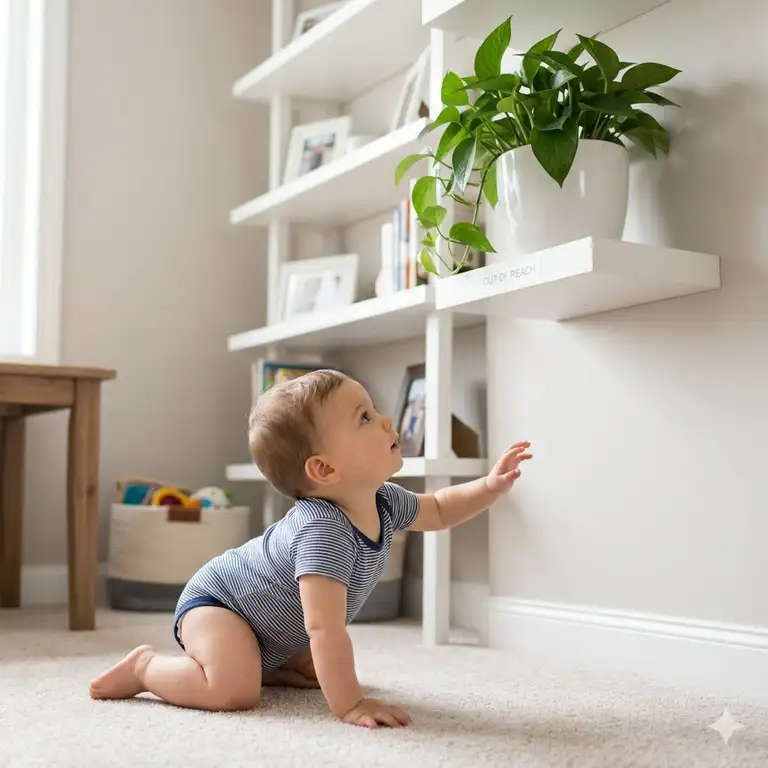
I remember the exact moment my little guy, Leo, started crawling. It was like someone had released a tiny, uncoordinated tornado into my living room. One second he was eyeing his plush elephant, and the next, he was making a literal beeline for my prize-winning (and very toxic) Peace Lily. If you are a plant parent and a human parent, you know the struggle is real. You want the “jungle vibes,” but you also want a baby who doesn’t end up in the ER because they thought a Monstera leaf was a giant spinach snack.
✨Was this helpful? Spread the word! 🚀
Understanding how to baby proof plants poisonous is not just about moving things around; it is about creating a multi-layered defense system. In this massive guide, I am going to walk you through everything I have learned about keeping your green friends and your tiny humans living in harmony. We will look at real products, scientific reasons behind plant toxicity, and physical barriers that actually work in a modern 2026 home.
Quick Comparison: Safety Methods vs. Traditional Solutions
Before we dive into the nitty-gritty, let’s look at how different baby proofing strategies stack up against each other.
| Method | Effectiveness | Aesthetic Impact | Ease of Setup | Best For |
| Elevation (Shelving) | High | Minimal | Moderate | Small to Medium Plants |
| Physical Grids | High | Noticeable | Easy | Large Floor Pots |
| Hanging Planters | Extreme | High | Hard (Drilling) | Vining Plants |
| Plant Cabinets | Extreme | Low | Expensive | High-Value/Rare Plants |
| Bitter Sprays | Low | None | Very Easy | Determined Toddlers |
Top 7 Baby Proofing Products for Plants: Expert Analysis
If you are looking for the best gear to keep your kids safe, I have spent hours scouring Amazon to find the highest-rated, real-world solutions. These are the tools that actually hold up to a toddler’s curiosity.
1. Vuminbox Baby Proofing Plant Pot Covers (Model: VUM-2024-PG)
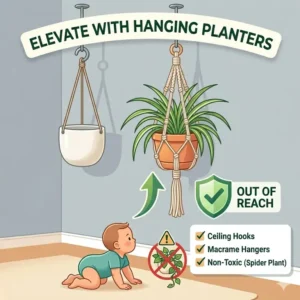
This is the “OG” solution for anyone wondering how to baby proof plants poisonous. The Vuminbox Baby Proofing Plant Pot Covers are essentially a plastic mesh grid that you cut to fit around the base of your plant.
-
Technical Specifications: Made of high-quality, BPA-free ABS plastic. The kit includes 4 adjustable grids (approx. 11.8 inches in diameter) and 32 mounting bolts.
-
Customer Review Analysis: Users love that it stops babies from eating dirt (and fertilizer). However, some mention that persistent toddlers can pull the stakes out of loose soil.
-
Pros: Prevents soil ingestion; allows for easy watering through the holes; adjustable for different stem sizes.
-
Cons: Cutting the plastic can be tedious; stakes might not hold in sandy soil.
-
Professional Application: Best for large floor plants like Fiddle Leaf Figs or Snake Plants.
-
Warranty: 12-month manufacturer replacement.
2. Mkono Macrame Plant Hangers Set of 4 (Model: MK-MAC-04)
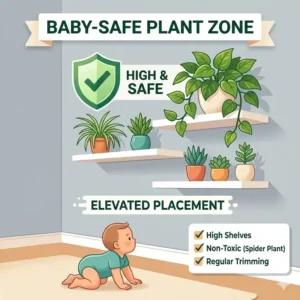
When you can’t hide the plant, lift it. The Mkono Macrame Plant Hangers Set of 4 is a classic for a reason. By moving your plants to the ceiling, you eliminate the risk of the baby reaching the foliage entirely.
-
Technical Specifications: Hand-woven cotton rope; 4 different styles; lengths vary from 35 to 49 inches. Includes ceiling hooks.
-
Customer Review Analysis: Extremely high ratings for durability. Customers note that the hooks provided are sturdy but recommend using drywall anchors for heavier pots.
-
Pros: 100% out of reach; adds boho-chic style; very affordable.
-
Cons: Requires drilling into the ceiling; watering can be messy if you don’t have a drip tray.
-
Professional Application: Ideal for Pothos or Heartleaf Philodendrons (both are toxic but beautiful when trailing).
-
Warranty: 30-day money-back guarantee.
3. Bamworld Tall Plant Stand for Indoor Plants (Model: BW-PS09)
Sometimes you just need verticality. The Bamworld Tall Plant Stand for Indoor Plants uses height to keep toxic leaves away from grasping hands.
-
Technical Specifications: Made of 100% natural eucalyptus wood; processed at 1000°F carbonization. Dimensions: 41.7″ H x 11.8″ W.
-
Customer Review Analysis: Reviewers appreciate the stability. “It doesn’t wobble even when my 2-year-old bumps it,” says one verified buyer.
-
Pros: Multi-tiered storage; sustainable materials; heat-treated for longevity.
-
Cons: Takes about 30 minutes to assemble; needs to be anchored to the wall for maximum safety.
-
Professional Application: Used in corners to maximize space while keeping plants 3-4 feet off the ground.
-
Warranty: 2-year quality assurance.
4. Mudeer Baby Proofing Edge Protector (Model: MD-EP-20)
Wait, why an edge protector? Many ceramic and terracotta pots have sharp edges. If your baby falls while trying to reach a plant, the pot itself can be as dangerous as the poison inside. The Mudeer Baby Proofing Edge Protector cushions those impact zones.
-
Technical Specifications: 20ft high-density foam; 3M adhesive backing; non-toxic and flame retardant.
-
Customer Review Analysis: Parents praise the “squishiness” of the foam. It sticks well to glazed ceramic but may struggle with unglazed terracotta.
-
Pros: Versatile; easy to cut; prevents head injuries.
-
Cons: Can be an eyesore on decorative pots; babies might try to peel it off.
-
Professional Application: Apply to the rims of heavy, square, or sharp-edged planters.
-
Warranty: Lifetime satisfaction guarantee.
5. Yocada Plant Pot Grid and Soil Guard (Model: YC-PC-S)
Similar to the Vuminbox, the Yocada Plant Pot Grid and Soil Guard offers a brown aesthetic that blends better with dirt.
-
Technical Specifications: 2-pack of 12-inch grids; adjustable interlocking design; heavy-duty plastic.
-
Customer Review Analysis: Users find these slightly easier to install than the Vuminbox because of the interlocking tabs.
-
Pros: Aesthetic blending; easy to resize; very rigid.
-
Cons: Limited to 12-inch diameter; might require extra stakes for determined pets/babies.
-
Professional Application: Perfect for mid-sized pots (8-12 inches).
-
Warranty: 6-month limited warranty.
6. Home-Complete 4-Tier Greenhouse (Model: HC-2202)
If you have a collection of small succulents or toxic starters, the Home-Complete 4-Tier Greenhouse is a literal vault for your plants.
-
Technical Specifications: Tubular steel frame; PVC transparent cover with zip-up door. Dimensions: 27.1″ L x 19.3″ W x 63.3″ H.
-
Customer Review Analysis: Plant enthusiasts love that it keeps humidity in while keeping babies out. “The zipper is my best friend,” one user noted.
-
Pros: Total enclosure; easy to move; protects plants from drafts.
-
Cons: Looks like a mini-tent in your living room; PVC can have a “new plastic” smell.
-
Professional Application: Use this for seed starting or protecting delicate, highly toxic species like Foxglove or Oleander.
-
Warranty: 1-year limited warranty.
7. Safety 1st Furniture Straps (Model: HS271)
No guide on how to baby proof plants poisonous is complete without tipping prevention. A heavy plant on a stand is a tipping hazard. The Safety 1st Furniture Straps are essential for securing plant stands to the wall.
-
Technical Specifications: Heavy-duty nylon webbing; includes all hardware for wood or drywall mounting.
-
Customer Review Analysis: Consistently rated as a “must-have” for childproofing. Parents trust the brand for its rigorous testing.
-
Pros: Prevents crushing injuries; very strong; discrete.
-
Cons: Requires drilling into furniture and walls.
-
Professional Application: Secure any plant stand taller than 24 inches.
-
Warranty: Limited lifetime warranty.
Comparison Matrix: Top 7 Safety Products
| Product Name | Primary Function | Material | DIY Level | Best Feature |
| Vuminbox Grid | Soil Guard | ABS Plastic | Easy | Custom Fit |
| Mkono Hanger | Elevation | Cotton | Moderate | Aesthetic |
| Bamworld Stand | Elevation | Eucalyptus | Moderate | Tiered Storage |
| Mudeer Edge | Impact Safety | Foam | Easy | Soft Padding |
| Yocada Guard | Soil Guard | Plastic | Easy | Color Blending |
| Home-Complete | Total Barrier | Steel/PVC | Easy | Humidity Control |
| Safety 1st Straps | Tipping Guard | Nylon | Hard | Life-Saving Strength |
✨ Don’t Miss These Exclusive Deals!
🔍 Take your plant safety to the next level with these carefully selected products. Click on any highlighted item to check current pricing and availability. These tools will help you create a lush, green home that is 100% safe for your little ones! ✨
💬 Just one click – help others make better buying decisions too!😊
The Deep Dive: Why You Must Learn How to Baby Proof Plants Poisonous
I know what you are thinking. “My baby isn’t that fast,” or “They don’t really chew on things.” Let me tell you, as someone who once found a half-chewed Dracaena leaf in their child’s diaper: they are fast, and they chew everything.
The American Academy of Pediatrics (AAP) notes that plant ingestions are one of the most common calls to poison control centers in the United States. Many of our favorite indoor plants contain calcium oxalate crystals. These tiny, needle-like structures can cause immediate burning of the mouth, swelling of the throat, and severe digestive distress. Furthermore, some plants contain saponins or cardiac glycosides, which are significantly more dangerous.
Identifying the Enemies: Common Poisonous Houseplants
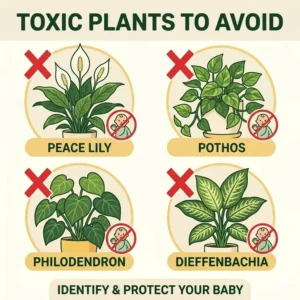
If you want to know how to baby proof plants poisonous, you first need to know who the “villains” are. In the United States, these are the most common offenders found in homes:
-
Philodendron: Contains oxalates. Causes drooling and difficulty swallowing.
-
Pothos (Devil’s Ivy): Very common, very irritating to the mouth.
-
Peace Lily: Not a true lily, but still causes severe oral pain.
-
Snake Plant: Mildly toxic but can cause nausea and vomiting.
-
Oleander: Highly toxic! Even a small amount can affect heart rhythm.
-
Sago Palm: Extremely dangerous to pets and humans; can cause liver failure.
Feature Comparison: Barrier vs. Deterrent
| Feature | Physical Barrier (Grids/Gates) | Chemical Deterrent (Bitter Sprays) |
| Reliability | 95% – If installed correctly, it stays. | 40% – Babies might like the taste (weird, I know). |
| Longevity | Permanent until removed. | Needs reapplication every few days. |
| Safety | Zero chemical exposure. | Potential for minor skin/eye irritation. |
| Cost | One-time investment. | Ongoing purchase. |
Detailed Strategies for a Baby-Safe Jungle
How to baby proof plants poisonous isn’t just about buying stuff; it’s about a shift in lifestyle. When I first started this journey, I thought I’d have to get rid of every plant I owned. Thankfully, that’s not the case. You just need a strategy.
Step 1: The “High-Zone” Strategy
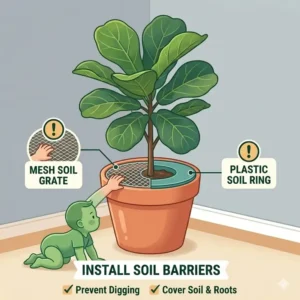
The simplest way to manage how to baby proof plants poisonous is to keep all toxic greenery above 5 feet. This is where wall-mounted shelves and the Mkono Macrame Plant Hangers Set of 4 come into play. If the baby can’t reach it even with a step stool (which they will eventually learn to use), the risk is mitigated.
Step 2: The “Under-Lock-and-Key” Method
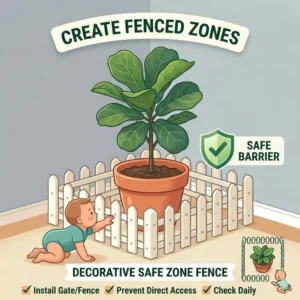
For my most toxic plants, like my Sago Palm, I moved them into a dedicated sunroom that has a baby gate at the door. If you don’t have a separate room, a glass cabinet (like the IKEA Milsbo) is a popular choice among plant enthusiasts. Just make sure the glass is tempered and the cabinet is strapped to the wall using Safety 1st Furniture Straps.
Step 3: Soil Safety
Babies love dirt. It’s crunchy, it’s messy, and it’s apparently delicious. But soil contains fertilizers, perlite (which is a choking hazard), and potentially harmful bacteria. Using a product like the Vuminbox Baby Proofing Plant Pot Covers is non-negotiable for floor plants. It creates a physical barrier that allows the plant to breathe and you to water it, while keeping little fingers out of the potting mix.
Budget vs. Premium: Plant Safety Comparison
| Feature | Budget Solution (DIY) | Mid-Range (Individual Products) | Premium (Custom Cabinets/Greenhouses) |
| Cost | < $10 | $20 – $100 | $200+ |
| Aesthetics | Can look “messy” (e.g., chicken wire) | Professional and sleek | High-end interior design |
| Durability | Low | High | Very High |
| Effort | High (DIY time) | Low (Ready to use) | Moderate (Assembly required) |
Technical Specifications Matrix: What to Look For
When you are browsing for products to help with how to baby proof plants poisonous, don’t just look at the pictures. You need to check the specs.
Material Safety
Always look for BPA-free and Non-toxic labels. Since these products will be in close proximity to your baby, you don’t want them off-gassing harmful chemicals. The Bamworld Tall Plant Stand for Indoor Plants is a great example of using carbonized wood instead of chemical paints or stains.
Load Capacity
If you are using a stand or a hanger, you must know the weight of your plant after watering. Wet soil is heavy! A 10-inch ceramic pot with wet soil can easily weigh 15-20 lbs. Ensure your hangers, like the Mkono Macrame, are rated for at least 25 lbs to be safe.
Performance Metrics for Childproofing Gear
| Metric | Ideal Standard | Why it Matters |
| Adhesive Strength | 3M VHB or similar | Prevents toddlers from ripping off edge protectors. |
| Mesh Size | < 0.5 inches | Prevents tiny fingers from reaching through to the soil. |
| Height | > 48 inches | Keeps plants out of the “toddler reach zone.” |
| Stability | Wide base / Wall-anchored | Prevents the “climbing child” from toppling the unit. |
Training Your Baby (Yes, Really!)
While physical barriers are the foundation of how to baby proof plants poisonous, behavioral boundaries are the long-term solution. I started teaching Leo the “Gentle Touch” rule when he was 10 months old.
-
Redirection: Every time he approached a plant, I would say, “The plants are for looking, not for touching,” and hand him a safe toy.
-
Positive Reinforcement: When he walked past a plant without grabbing it, I gave him a huge “Yay!” and a high-five.
-
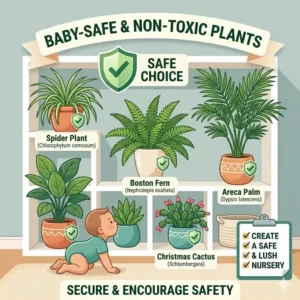
Consistency: You can’t let them play with the “safe” plants (like spider plants) and expect them to stay away from the “bad” ones. To a baby, a leaf is a leaf.
User Compatibility: Age-Based Safety
| Age Group | Primary Risk | Best Solution |
| Infants (0-6 mo) | None (Immobile) | Prepare the space now! |
| Crawlers (6-12 mo) | Soil eating / Pulling leaves | Pot grids and floor-level barriers. |
| Toddlers (1-3 yr) | Climbing / Pulling down stands | Wall anchors and high shelving. |
| Preschool (3-5 yr) | Curiosity / “Cooking” with leaves | Education and high-zone placement. |
✨ Ready to Childproof Your Home?
🔍 Take the first step toward a safer home today. Click on any of the product links above to see how these safety solutions can fit into your decor. Protecting your family starts with the right tools—don’t wait for an accident to happen! ✨
Conclusion: Living in a Safe, Green Sanctuary
Learning how to baby proof plants poisonous is a journey of trial and error, but it is one worth taking. You don’t have to sacrifice your love for nature to keep your child safe. By combining physical products like the Vuminbox Baby Proofing Plant Pot Covers with smart home organization and consistent boundaries, you can have the best of both worlds.
I’ve found that my home feels much more peaceful now that I am not constantly hovering over Leo, waiting for him to take a bite out of a Dieffenbachia. We have our “safe” plants on the floor—like the non-toxic Spider Plant and Boston Fern—and our “look-but-don’t-touch” plants high on their Bamworld Tall Plant Stand.
Remember, the goal isn’t just to “survive” the toddler years; it’s to create an environment where both your child and your plants can thrive. Take it one pot at a time, anchor your furniture, and when in doubt, put it in a hanger!
Frequently Asked Questions
✅ The Sago Palm and Oleander are among the most dangerous. While Pothos and Philodendrons cause irritation, Sago Palms contain cycasin, which can lead to permanent liver failure or death if ingested in significant amounts...
✅ Bitter sprays are an unreliable primary defense. Some children are not deterred by the taste, and the spray must be reapplied constantly. Use them only as a secondary backup to physical barriers like grids or elevation...
✅ For toddlers, plants should be at least 4.5 to 5 feet high. Be mindful of nearby furniture like couches or chairs that a child could climb on to reach higher surfaces...
✅ While standard dirt isn't usually 'poisonous,' potting soil often contains concentrated fertilizers, perlite, and fungi that can cause stomach upset or choking. It is best to use a pot grid to prevent ingestion...
✅ Not necessarily. Most plants can be kept safely if you use elevation, locked cabinets, or dedicated 'plant rooms.' However, for highly lethal plants like Oleander, removing them from the home is the safest choice... ❓ What is the most dangerous common houseplant for babies?
❓ Can I just use bitter spray to baby proof my plants?
❓ How high do I need to move my plants to be safe?
❓ Is potting soil toxic if a baby eats it?
❓ Should I get rid of all my toxic plants when I have a baby?
Recommended for You:
- 7 Vital safety habits for visitors with baby to Protect Your Child
- Top 9 Ultimate tips to baby proof house for crawling baby: Your Safety Expert Guide
- Training pets around new baby: 7 Proven Ways to Keep Your Home Safe
Disclaimer: This article contains affiliate links. If you purchase products through these links, we may earn a small commission at no additional cost to you.
✨ Found this helpful? Share it with your friends! 💬🤗