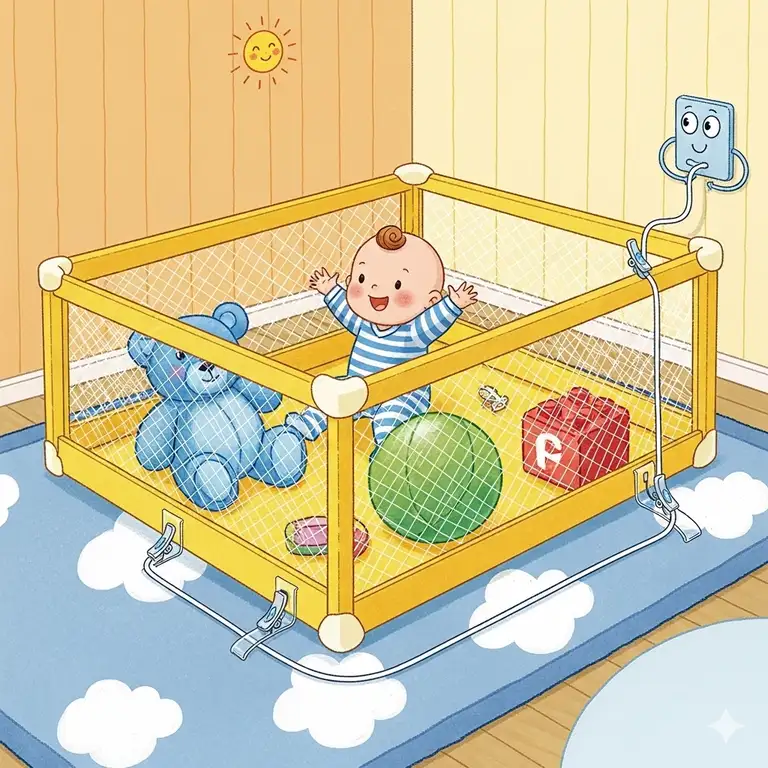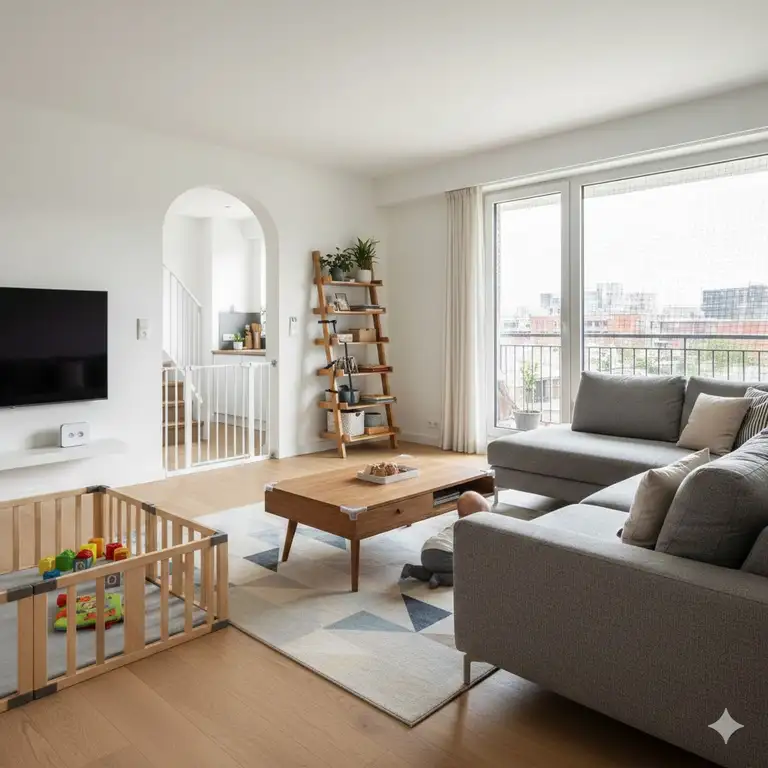
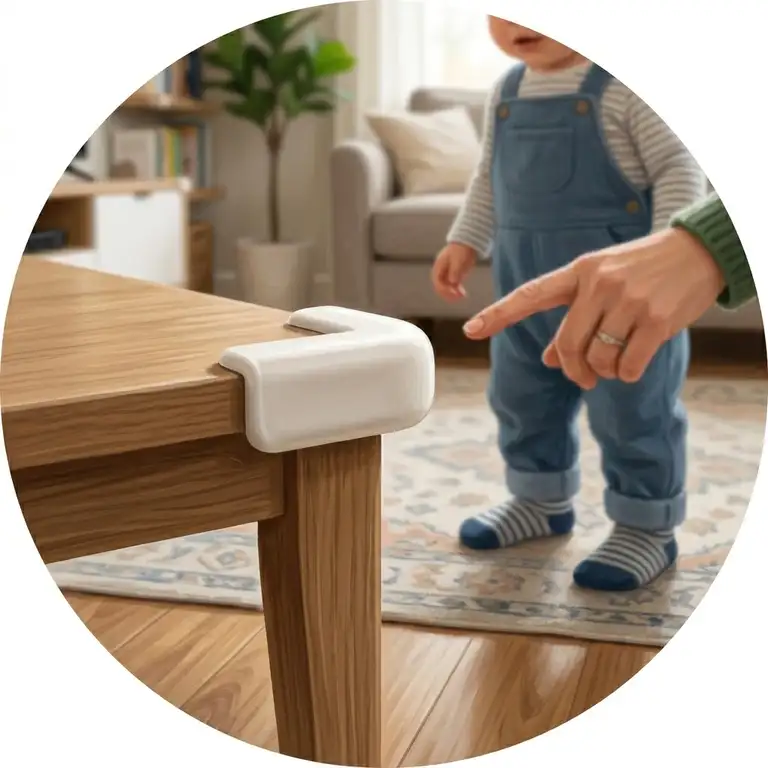
Congratulations! You have officially entered the “marathon” phase of parenthood. Your little one is no longer a stationary lump of cuteness; they are now a mobile, curious, and somewhat unstable force of nature. Ensuring safety around 2 year old learning to walk is a full-time job that requires the reflexes of a ninja and the planning of a structural engineer. At this age, toddlers are testing their limits, but their coordination hasn’t quite caught up with their ambition. I remember when my nephew first started finding his feet—one moment he was holding the sofa, and the next he was trying to “walk” toward the cat at Mach 5. It’s a heart-stopping but beautiful time.
✨Was this helpful? Spread the word! 🚀
When we talk about safety around 2 year old learning to walk, we aren’t just talking about a few foam corners. We are talking about a total home environment overhaul. A 2-year-old’s center of gravity is higher than an adult’s, making them top-heavy and prone to spectacular (and scary) faceplants. Because they are taller now, new heights are reachable—counters, door handles, and even the “forbidden” stove knobs. To help you navigate this transition, we’ve put together a comprehensive guide on toddler walking safety and the gear you need to keep your home a sanctuary rather than a hazard zone.
Comparison: Walking Milestones vs. Safety Needs
| Developmental Stage | Typical Age | Safety Focus Area | Recommended Gear |
| Cruising | 10–15 Months | Low-level furniture stability | Edge guards, rug anchors |
| First Steps | 12–18 Months | Falling on hard surfaces | Non-slip socks, soft flooring |
| Independent Walking | 18–24 Months | Climbing and reaching | Furniture anchors, tall gates |
| Confident Running | 24+ Months | Outdoor boundaries and stairs | Auto-close gates, helmets |
Top 7 Toddler Safety Products: Expert Analysis
Choosing the right equipment is the foundation of safety around 2 year old learning to walk. I’ve spent hours researching the most reliable, durable, and highly-rated safety products currently available on Amazon in 2026 to make your life easier.
1. Regalo 192-Inch Super Wide Adjustable Baby Gate and Play Yard
The Regalo 192-Inch Super Wide Adjustable Baby Gate and Play Yard is the “Swiss Army Knife” of safety barriers. It is perfect for large open-concept homes where a standard gate just won’t cut it.
-
Technical Specifications:
-
Width: Up to 192 inches.
-
Height: 28 inches.
-
Material: All-steel construction.
-
Mount Type: Hardware mounted for maximum security.
-
Special Features: 4-in-1 design (gate, play yard, fireplace guard, room divider).
-
-
Customer Review Analysis: Users love the sheer length and versatility of the Regalo 192-Inch Super Wide Adjustable Baby Gate and Play Yard. Many parents mention it is the only gate that can effectively block off a large “great room” or an uneven fireplace hearth. However, some reviews note that the wall mounting hardware could be sturdier, and many choose to upgrade to longer screws from the hardware store.
-
Professional Applications: Ideal for large floor plans and preventing access to dangerous areas like wood-burning stoves or floor-to-ceiling windows.
-
Pros:
-
Covers immense distances.
-
Can be configured into a hexagonal playpen.
-
Foldable for storage.
-
-
Cons:
-
Requires drilling into walls for maximum safety.
-
Height (28 inches) might be climbable for very tall toddlers.
-
2. Roving Cove Edge & Corner Protector (18ft Edge + 8 Corners)
When it comes to baby proofing for walkers, soft landings are key. The Roving Cove Edge & Corner Protector uses high-density NBR foam that is significantly thicker than cheaper alternatives.
-
Technical Specifications:
-
Contents: 18 feet of edge foam and 8 pre-taped corner cushions.
-
Material: Non-toxic, flame-retardant, and latex-free foam.
-
Adhesive: Authentic 3M double-sided tape.
-
-
Customer Review Analysis: Parents frequently praise the Roving Cove Edge & Corner Protector for its density. Unlike thin foam strips that bottom out upon impact, this product provides a genuine cushion. A common tip from reviewers is to clean the furniture surface with rubbing alcohol before applying to ensure the 3M tape sticks forever.
-
Pros:
-
Industrial strength density.
-
Non-toxic and safe for “teething” walkers.
-
Available in multiple colors to match wood or marble.
-
-
Cons:
-
The adhesive can be difficult to remove later without a heat gun.
-
Toddlers may try to pick at the foam.
-
3. Toddleroo by North States Superyard Ultimate 8-Panel
Creating a “safe zone” is a brilliant strategy for safety around 2 year old learning to walk. The Toddleroo by North States Superyard Ultimate 8-Panel provides a massive 34 square feet of protected play space.
-
Technical Specifications:
-
Height: 26 inches.
-
Enclosure Space: 34.4 square feet.
-
Features: Easy-access door with a one-hand latch.
-
Portability: Includes a carry strap for travel.
-
-
Customer Review Analysis: The Toddleroo by North States Superyard Ultimate 8-Panel is a favorite for outdoor use and “contained” indoor play. Reviewers appreciate the swinging door, which saves parents from having to climb over the fence. Some users find it a bit stiff to snap together initially, but it becomes easier with use.
-
Pros:
-
Huge area for walking practice.
-
Non-slip pads protect hardwood floors.
-
Can be used indoors or outdoors.
-
-
Cons:
-
Takes up significant floor space.
-
Lightweight enough that a very strong 2-year-old might “slide” it.
-
4. Munchkin Xtraguard Dual Action Multi Use Latches
As toddlers walk, they begin to explore heights. The Munchkin Xtraguard Dual Action Multi Use Latches are essential for preventing access to the fridge, toilets, and cabinets.
-
Technical Specifications:
-
Mechanism: Dual-button release.
-
Strap Material: Flexible plastic that works around corners.
-
Installation: Tool-free adhesive mount.
-
-
Customer Review Analysis: Reviewers highlight that the Munchkin Xtraguard Dual Action Multi Use Latches are “toddler-proof but not parent-proof,” meaning they are easy for adults to open with one hand while holding a child. They are specifically praised for use on stainless steel refrigerators where magnetic locks won’t work.
-
Pros:
-
Versatile for curved surfaces.
-
No drilling required.
-
Extremely difficult for small fingers to manipulate.
-
-
Cons:
-
The plastic strap can yellow over time.
-
Adhesive may fail on very oily or dirty surfaces.
-
5. Safety 1st Magnetic Locking System (9-Piece Set)
For a sleek, invisible look, the Safety 1st Magnetic Locking System is the gold standard. These locks stay inside the cabinet, keeping the aesthetic of your kitchen clean while ensuring safety around 2 year old learning to walk.
-
Technical Specifications:
-
Components: 8 locks and 1 magnetic key.
-
Mechanism: Magnetic “unlock” from the outside.
-
Installation: Requires screws (hardware mounted).
-
-
Customer Review Analysis: Most customers agree that the Safety 1st Magnetic Locking System is the only “fail-proof” lock. Unlike latches that allow a small gap (where fingers can get pinched), these keep the door completely shut. The main complaint is the risk of losing the magnetic key—many buyers recommend purchasing a second key set immediately.
-
Pros:
-
Invisible from the outside.
-
Highest security level for dangerous chemicals.
-
Includes a “disengage” feature for when the child isn’t around.
-
-
Cons:
-
Installation is meticulous and requires a drill.
-
You must keep the magnetic key out of reach but accessible.
-
6. BUMBI Clear Corner Protectors for Baby
If you hate the look of bulky foam, the BUMBI Clear Corner Protectors for Baby offer a discreet alternative for sharp coffee table corners.
-
Technical Specifications:
-
Design: Spherical “ball” shape.
-
Material: Medical-grade, soft PVC.
-
Color: Crystal clear.
-
-
Customer Review Analysis: Users love that the BUMBI Clear Corner Protectors for Baby don’t ruin their home decor. They are noted for having excellent “squish” while remaining transparent. Some parents mentioned that children are less likely to pull them off because they are less noticeable than colored foam.
-
Pros:
-
Aesthetic and low-profile.
-
Non-toxic and odorless.
-
Easy to clean.
-
-
Cons:
-
Smaller surface area than long foam strips.
-
Could be a choking hazard if the toddler manages to pull them off (use strong adhesive!).
-
7. Skip Hop Baby Gate: Play to Night Expanding Gate
The Skip Hop Baby Gate: Play to Night Expanding Gate combines safety with high-end design, featuring a wood-print finish that looks like furniture.
-
Technical Specifications:
-
Width: Expands from 30 to 52 inches.
-
Height: 30 inches.
-
Material: Steel with a wood-grain decor.
-
Installation: Hardware or pressure mount options.
-
-
Customer Review Analysis: This is the go-to for parents who want their home to look like an adult lives there. Reviewers praise the Skip Hop Baby Gate: Play to Night Expanding Gate for its easy-open handle and the fact that it doesn’t look like a “jail cell.”
-
Pros:
-
Beautiful aesthetic.
-
Very tall (30 inches), preventing climbers.
-
One-handed operation.
-
-
Cons:
-
More expensive than basic metal gates.
-
Pressure mount can slip on slick surfaces if not tightened perfectly.
-
✨ Don’t Miss These Exclusive Deals!
🔍 Take your home safety to the next level with these carefully selected products. Click on any highlighted item to check current pricing and availability. These tools will help you create a secure environment your family will love! ✨
💬 Just one click – help others make better buying decisions too!😊
Product Specifications Matrix
| Product Name | Primary Use | Installation Difficulty | Portability | Best For |
| Regalo Super Wide Gate | Large Barriers | Medium (Drilling) | Low | Open concepts |
| Roving Cove Foam | Sharp Edges | Easy (Adhesive) | N/A | Hard furniture |
| Toddleroo Superyard | Play Enclosure | Easy (Click-in) | High | Travel/Outdoors |
| Munchkin Multi-Latches | Appliances | Easy (Adhesive) | N/A | Fridges/Toilets |
| Safety 1st Magnetic | Cabinets | Hard (Drilling) | N/A | Chemical storage |
| BUMBI Corner Guards | Table Corners | Easy (Adhesive) | N/A | Minimalist decor |
| Skip Hop Gate | Doorways/Stairs | Medium | Medium | Style-conscious |
The Physics of a 2-Year-Old Walking: Why They Fall
Understanding the “why” behind those wobbles is crucial for maintaining safety around 2 year old learning to walk. At 24 months, a child’s head is still disproportionately large compared to their body. This makes their center of gravity much higher than ours. Furthermore, their gait is wide—often called a “toddle”—to compensate for a lack of lateral balance.
When a toddler walks, they don’t have the “heel-strike” to “toe-off” transition that adults do. They essentially “plonk” their feet down flat. This lack of shock absorption means that any slight unevenness in the floor, such as the transition from tile to carpet, can send them sprawling. According to the Mayo Clinic, most childhood falls happen within the home, and the peak age for these accidents is between 1 and 3 years old.
Comparison: Floor Types and Fall Risk
| Floor Surface | Fall Risk Level | Impact Severity | Recommended Safety Measure |
| Plush Carpet | Low | Low | Keep clear of small toys |
| Hardwood | Medium | Medium | Use area rugs with non-slip pads |
| Ceramic Tile | High | High | Strict supervision; no-slip socks |
| Outdoor Concrete | Very High | Very High | Knee pads or soft-sole shoes |
Room-by-Room Guide to Toddler Walking Safety
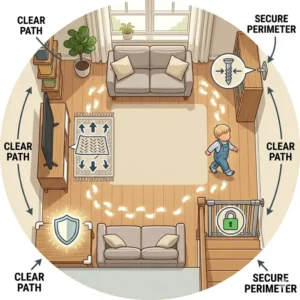
Maintaining safety around 2 year old learning to walk requires a tactical approach to every room in your house. I like to call this “getting on their level”—literally. Crawl through your house on your hands and knees. You’ll be shocked at the “treasures” (and hazards) you find under the sofa.
The Living Room: The Grand Arena
This is usually where most of the walking practice happens.
-
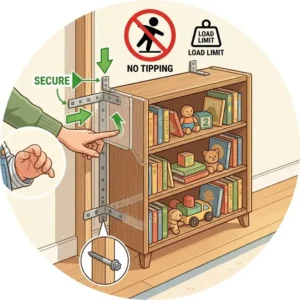
Furniture Anchors: At 2 years old, children don’t just walk; they climb. Anchoring TVs and bookshelves is non-negotiable. A toddler might use a drawer as a step to reach something higher, causing the whole unit to topple.
-
Coffee Table Chaos: If you have a glass coffee table, consider moving it to storage for a year. If not, use the BUMBI Corner Protectors for Baby to soften the blow.
-
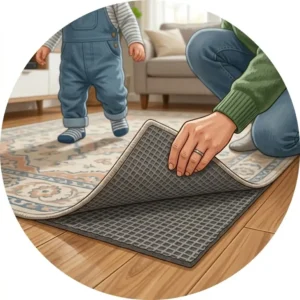
Area Rugs: An unanchored rug is a magic carpet ride waiting to go wrong. Use rug tape or heavy-duty pads to prevent the edges from curling.
The Kitchen: The Danger Zone
The kitchen is full of high-value targets (snacks!) and high-risk hazards (heat, sharp things).
-
Stove Safety: Install knob covers. If your child is tall enough to reach the counter, ensure pot handles are always turned inward.
-
The “Cleaning” Cabinet: This is where the Safety 1st Magnetic Locking System shines. Never assume a child can’t figure out a basic plastic latch.
-
Dishwasher Danger: Toddlers love “helping.” A dishwasher contains sharp knives and breakable glass at exactly their eye level. Keep it locked.
The Stairs: The Ultimate Challenge
Stairs are the final boss of safety around 2 year old learning to walk. Even if your child is a pro at climbing up, coming down is a different story.
-
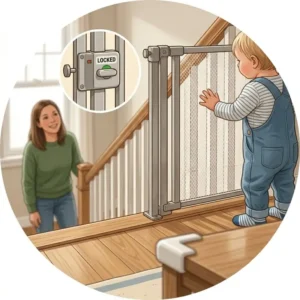
Hardware-Mounted Gates: At the top of the stairs, you must use a hardware-mounted gate like the Skip Hop Baby Gate. Pressure-mounted gates can fail if a child leans their full weight against them, leading to a catastrophic fall.
-
Handrail Height: Most standard handrails are too high for a 2-year-old. While you don’t necessarily need to install a second rail, you should always be within arm’s reach (the “shadowing” technique).
Budget vs. Premium Safety Solutions
| Category | Budget Solution ($) | Premium Solution ($$$) | Why the Premium Costs More |
| Gates | Basic Pressure Mount | Skip Hop Expanding Gate | Better materials, one-hand latch, aesthetics. |
| Edge Guard | Thin DIY foam tape | Roving Cove High-Density | Impact absorption, 3M adhesive quality. |
| Locks | Plastic Latches | Safety 1st Magnetic | Invisible, cannot be bypassed by finger gaps. |
| Play Area | Blanket on the floor | Toddleroo Superyard | Physical containment and designated safe zone. |
Footwear: Barefoot vs. Shoes for Walking Safety
One of the most debated topics in toddler walking safety is whether they should wear shoes or go barefoot. Most experts, including the American Academy of Pediatrics (AAP), suggest that being barefoot is actually best for early walkers indoors.
Why Barefoot is Often Better:
-
Proprioception: Being barefoot allows the child to feel the floor, which helps develop their nervous system and balance.
-
Muscle Strength: Toes “grip” the floor, strengthening the arches of the feet.
-
Traction: Skin often has better natural traction on hardwood than many socks or stiff-soled shoes.
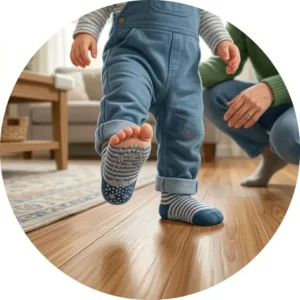
However, when you are out and about, protection is necessary. Look for shoes with flexible, non-slip soles. If you are worried about cold floors at home, use socks with rubberized grips on the bottom to prevent “saftey around 2 year old learning to walk” issues (yes, even typos like “saftey” happen when we’re tired parents!).
Common Myths About Toddler Walking
There is a lot of “old school” advice floating around that can actually compromise safety around 2 year old learning to walk. Let’s debunk a few.
-
Myth 1: Baby Walkers (with wheels) help them learn faster.
-
Reality: Walkers are actually dangerous and are banned in some countries (like Canada). They allow a child to reach speeds their brain can’t handle and often lead to falls down stairs.
-
-
Myth 2: “They need to fall to learn.”
-
Reality: While minor tumbles are part of the process, a fall from a height or onto a sharp corner can cause permanent injury. We want “teachable moments,” not “emergency room moments.”
-
-
Myth 3: High-top shoes provide better ankle support.
-
Reality: Unless prescribed by a doctor, toddlers don’t need “support.” They need flexibility to develop their own muscles.
-
Key Features Comparison: Magnetic vs. Adhesive Locks
| Feature | Magnetic Locks (e.g., Safety 1st) | Adhesive Latches (e.g., Munchkin) |
| Visibility | Completely hidden | Visible on exterior |
| Surface Compatibility | Wood, Laminate | Metal, Glass, Wood |
| Child Resistance | High (Impossible without key) | Moderate (May be figured out) |
| Installation | Requires Drill/Screws | Peel and Stick |
| Ease for Adults | Easy (if you have the key) | Requires two-finger dexterity |
Developing a “Safety First” Mindset
Preventing falls in toddlers isn’t just about buying things; it’s about changing your habits. I’ve found that the “one-hand rule” is a lifesaver. When your 2-year-old is practicing their walking in a new environment, always have one hand free (no phone, no coffee) to act as a spotter.
Supervision Strategies:
-
Shadowing: Walk behind them with your hands ready to catch their ribcage, but without actually touching them. This gives them the confidence to balance on their own while keeping them safe.
-
The “Clean Sweep”: Before a walking session, do a 30-second sweep for small toys like LEGOs or marbles. Stepping on a small object is a guaranteed way to cause a fall for a 2-year-old.
-
Lighting: Ensure hallways are well-lit. Toddlers have developing depth perception, and shadows can look like obstacles, causing them to trip.
Requirements Analysis for Walking Safety
| Requirement | Importance | Implementation |
| Furniture Stability | Critical | Wall anchors for all items over 30 inches. |
| Edge Protection | High | Focus on eye-level corners (coffee tables). |
| Door Control | Medium | Door pinch guards to prevent crushed fingers. |
| Floor Traction | High | Rug grippers and non-slip footwear. |
| Water Safety | Critical | Toilet locks and bathroom door gates. |
How to Handle a Fall: When to Worry
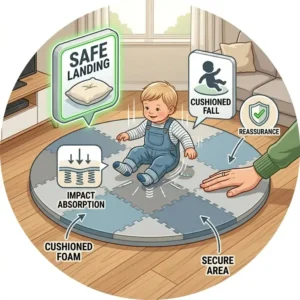
Even with perfect safety around 2 year old learning to walk, falls will happen. It’s part of the human experience. The key is knowing how to react. Most of the time, the toddler is more startled than hurt. If you gasp and scream, they will cry. If you stay calm and say, “Oops! You’re okay! Let’s get back up,” they often keep going.
When to call a doctor:
-
Loss of consciousness (even for a second).
-
Vomiting after a fall.
-
Unusual sleepiness or difficulty waking up.
-
A “goose egg” that is very large or soft.
-
Any bleeding that doesn’t stop with pressure.
For more detailed information on head injuries, the Centers for Disease Control and Prevention (CDC) has excellent resources for parents.
Benefit Quantification: Why Baby Proofing is an Investment
| Benefit | Impact of Safety Gear | Real-World Result |
| Reduced ER Visits | -60% risk of serious injury | Fewer medical bills and less stress. |
| Child Confidence | +40% faster exploration | Child feels safe to try new things. |
| Parental Peace of Mind | Significant reduction in cortisol | You can actually sit down for 5 minutes. |
| Home Longevity | Protects furniture and walls | Less damage from bumps and scratches. |
Expert Tips for Outdoor Walking Safety
Once your toddler has mastered the hallway, they’ll want to tackle the sidewalk. Walking safety for 2 year olds outdoors introduces new variables like uneven pavement, “nature’s toys” (sticks and rocks), and—the big one—traffic.
-
The “Hold My Hand” Rule: Establish early that near a street, hand-holding is non-negotiable.
-
Knee Protection: If you’re practicing on concrete, a thick pair of leggings or jeans can prevent “strawberry knees.”
-
The “Safety Stop”: Teach the word “STOP” as a game. When you say it, they have to freeze like a statue. This could save their life one day near a driveway.
Performance Metrics: Safety Gear Reliability
| Metric | High-Density Foam | Clear PVC Guards | Magnetic Locks |
| Impact Absorption | 9/10 | 6/10 | N/A |
| Adhesive Longevity | 8/10 | 7/10 | 10/10 (Screwed) |
| Bite Resistance | 5/10 | 9/10 | 10/10 |
| Cleanability | 6/10 | 9/10 | 10/10 |
✨ Don’t Miss These Exclusive Deals!
🔍 Take your home safety to the next level with these carefully selected products. Click on any highlighted item to check current pricing and availability. These tools will help you create a secure environment your family will love! ✨
Conclusion: Embracing the Wobble
Safety around 2 year old learning to walk is about finding the perfect balance between protection and independence. You want to wrap them in a bubble, but you also want them to explore the world and gain the motor skills they need to grow. By combining high-quality gear like the Regalo 192-Inch Super Wide Adjustable Baby Gate with active supervision and a well-thought-out environment, you can turn those scary first steps into a confident stride.
Remember, this phase is fleeting. Soon, they’ll be running, jumping, and (eventually) driving a car (let’s not think about that yet!). For now, enjoy the “toddle,” keep the sharp edges covered, and keep your camera ready. You’ve got this!
FAQs
✅ You should start baby proofing as soon as your child begins 'cruising' or pulling themselves up on furniture, usually between 9-12 months. However, 2-year-olds are taller and stronger, requiring more advanced solutions like wall anchors and tall gates...
✅ No, pressure-mounted gates are not recommended for the top of stairs. They can slip if a walking toddler pushes against them. Always use a hardware-mounted gate that is screwed into the wall studs for maximum security at staircases...
✅ Large, low-pile area rugs with non-slip pads are ideal. They provide enough traction for the toddler to grip with their toes while offering a cushioned surface for the inevitable tumbles that occur during the learning process...
✅ Choose a gate at least 30 inches tall, like the Skip Hop Expanding Gate. Ensure there are no horizontal bars the child can use as steps. If climbing persists, a 'play yard' enclosure may be a safer alternative...
✅ Occasional tiptoe walking is common as toddlers experiment with balance. However, if they do it more than 50% of the time, consult a pediatrician to rule out tight Achilles tendons or other developmental concerns that might affect safety... ❓ At what age should I start baby proofing for a walking toddler?
❓ Are pressure-mounted gates safe for the top of the stairs?
❓ What is the best flooring for a 2-year-old learning to walk?
❓ How do I stop my 2-year-old from climbing over safety gates?
❓ Is it normal for my 2-year-old to walk on their tiptoes?
Recommended for You:
- How to Baby Proof Plants Poisonous: 7 Essential Safety Steps for 2026
- First Aid Tips Baby Choking: 7 Life-Saving Tools You Need Now
- Baby Proof Table Corners in Dining Room: 7 Best Protectors for 2026
Disclaimer: This article contains affiliate links. If you purchase products through these links, we may earn a small commission at no additional cost to you.
✨ Found this helpful? Share it with your friends! 💬🤗