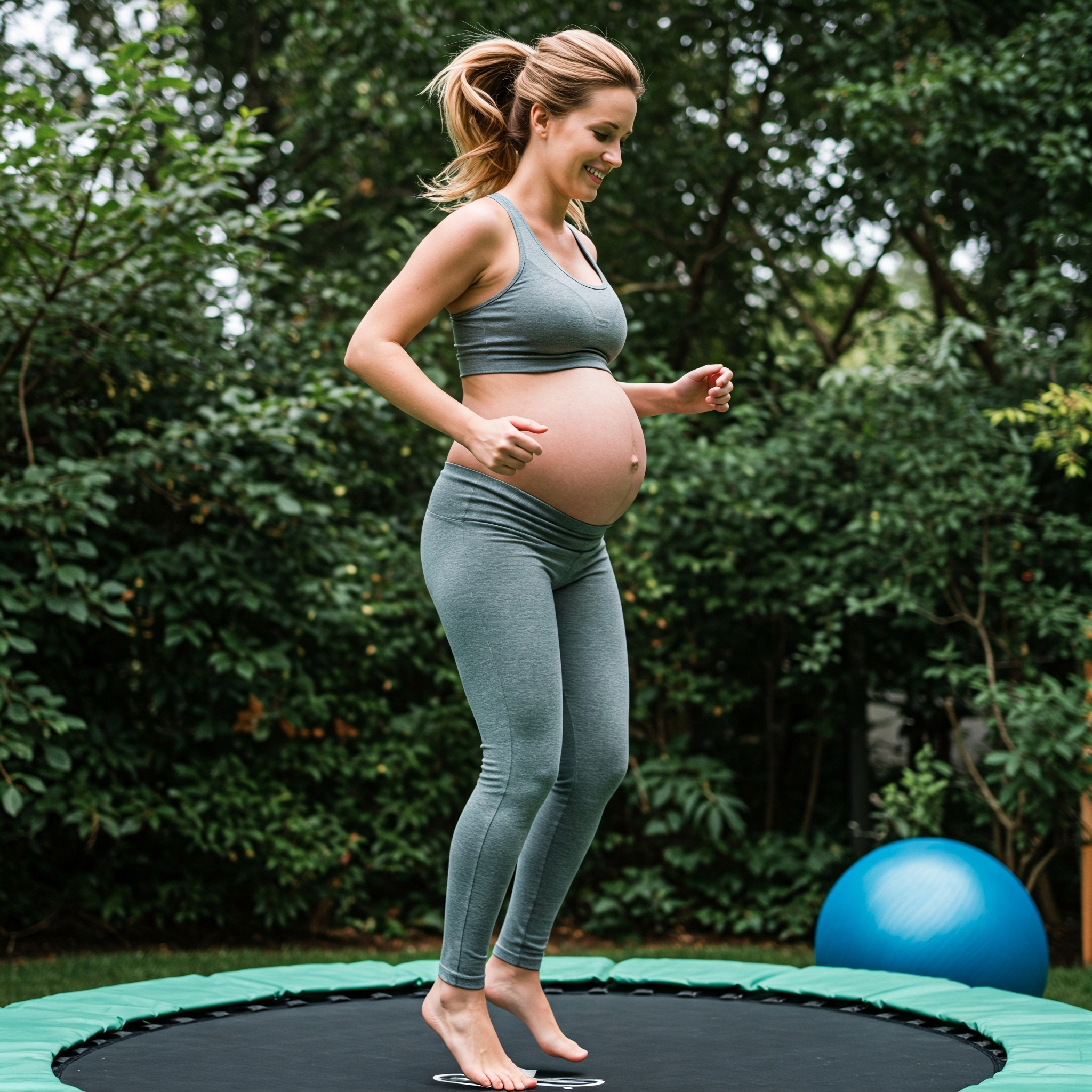
Are you wondering if can you jump on a trampoline while pregnant? As an expectant mother, it’s completely natural to question which physical activities remain safe during pregnancy. Trampolining has become increasingly popular for fitness and recreation, but the bouncing motion raises legitimate safety concerns when you’re carrying a baby.
✨Was this helpful? Spread the word!
[addtoany]In this comprehensive guide, I’ll address all your questions about can you jump on trampoline while pregnant, exploring the medical perspective, potential risks, and safer alternatives for staying active throughout your pregnancy journey. Drawing on expert opinions and scientific research, we’ll examine why certain activities require caution during this special time.
Understanding Pregnancy and Physical Activity
Pregnancy transforms your body in remarkable ways, creating a nurturing environment for your developing baby. During these nine months, your body experiences significant changes in weight distribution, balance, joint stability, and overall biomechanics. Your center of gravity shifts, ligaments loosen due to relaxin hormone production, and your cardiovascular system works harder to support both you and your baby.
While staying physically active during pregnancy offers numerous benefits—including improved mood, better sleep, reduced backaches, and preparation for labor—not all exercises are created equal when it comes to pregnancy safety. The American College of Obstetricians and Gynecologists (ACOG) recommends at least 150 minutes of moderate aerobic activity weekly for most pregnant women, but emphasizes the importance of choosing appropriate activities.
Comparing Trampolining to Other Pregnancy Exercise Options
| Activity Type | Impact Level | Fall Risk | Body Control | Pregnancy Safety Rating |
|---|---|---|---|---|
| Trampolining | High impact | High risk | Unpredictable | Not recommended ❌ |
| Swimming | Low impact | Minimal risk | High control | Highly recommended ✅ |
| Walking | Low-moderate impact | Low risk | High control | Highly recommended ✅ |
| Prenatal Yoga | Low impact | Low risk | High control | Highly recommended ✅ |
| Stationary Cycling | Low impact | Low risk | High control | Recommended ✅ |
| Modified Strength Training | Low-moderate impact | Low risk | High control | Recommended with guidance ✅ |

This comparison highlights why healthcare providers consistently recommend low-impact activities with minimal fall risks during pregnancy, placing trampolining in a high-risk category. But let’s examine the specific medical perspectives on this activity.
Can You Jump On A Trampoline While Pregnant? The Medical Perspective
When addressing the question “can you jump on a trampoline while pregnant,” medical professionals provide a clear consensus: trampolining is generally not recommended during any stage of pregnancy.
Dr. Sarah Johnson, an obstetrician with over 15 years of experience in maternal care, explains: “Trampolining creates unpredictable forces on the body, including jarring impacts that can affect both mother and baby. The risks—including falls, abdominal trauma, and joint injury—far outweigh any potential benefits, especially when safer exercise alternatives exist.”
The American College of Obstetricians and Gynecologists specifically includes trampolining on their list of activities to avoid during pregnancy, alongside other high-impact and high-risk activities like:
- ✅ Contact sports (basketball, soccer, hockey)
- ✅ Activities with fall risks (horseback riding, skiing, surfing)
- ✅ Scuba diving
- ✅ Sky diving
- ✅ Hot yoga or hot Pilates
The Society of Obstetricians and Gynecologists of Canada (SOGC) similarly advises against activities with a high risk of falls or abdominal trauma during pregnancy, placing trampolining firmly in this category.
Research published in the Journal of Maternal-Fetal & Neonatal Medicine indicates that high-impact activities creating significant vertical acceleration forces—exactly what occurs during trampolining—can potentially affect placental attachment and increase risks to both maternal and fetal health.
Risks of Trampoline Use During Pregnancy
Understanding the specific risks associated with the question “can you jump on trampoline while pregnant” helps clarify why medical experts consistently recommend against this activity:
1. Fall and Injury Risks
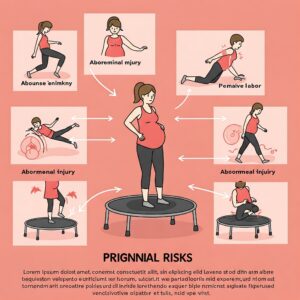
During pregnancy, your center of gravity shifts significantly as your baby grows, making balance more challenging. Combined with pregnancy-induced ligament laxity (loosening of joints), this creates a perfect storm for falls and injuries while trampolining.
- ✅ The American Journal of Sports Medicine reports that falls account for approximately 20% of all pregnancy-related trauma cases
- ✅ Even on trampolines with safety nets, the unpredictable bouncing motion increases fall risk
- ✅ Limited reaction time and reduced coordination during pregnancy further elevate injury potential
2. Abdominal Trauma Concerns
Perhaps the most significant concern regarding trampolining during pregnancy involves potential abdominal trauma:
- ✅ The bouncing motion creates repetitive pressure changes within the abdomen
- ✅ Falls or awkward landings could result in direct abdominal impact
- ✅ As pregnancy progresses, the growing uterus becomes less protected by the pelvic bones
- ✅ Trauma to the abdomen, especially in later pregnancy stages, could potentially lead to placental abruption—a serious condition where the placenta separates from the uterine wall
3. Joint and Ligament Strain
The hormone relaxin, which increases during pregnancy, loosens ligaments and joints to prepare for childbirth:
- ✅ This natural loosening makes joints more vulnerable to injury during high-impact activities
- ✅ The repetitive impact of trampolining places additional stress on already taxed joints
- ✅ Ankle, knee, and back injuries become more common during pregnancy
4. Pelvic Floor Impact
The pelvic floor muscles, which support your uterus, bladder, and bowels, already face increased pressure during pregnancy:
- ✅ Trampolining creates significant downward pressure on these muscles
- ✅ This additional strain can potentially contribute to pelvic floor disorders
- ✅ Weakened pelvic floor muscles may lead to issues like urinary incontinence both during and after pregnancy
Pregnancy Stages and Trampoline Safety
The question “can you jump on a trampoline while pregnant” has slightly different considerations depending on your pregnancy stage, though the general recommendation against trampolining remains consistent throughout:
First Trimester (Weeks 1-13)
During early pregnancy, your baby is in the early developmental stages, and the risk of miscarriage is naturally higher:
- ✅ The embryo is beginning organ development
- ✅ The uterus remains protected within the pelvic cavity
- ✅ While the physical changes aren’t yet apparent, internal changes are significant
- ✅ The jarring motion of trampolining could potentially increase risks during this sensitive period
- ❌ Though physical changes may not be obvious, trampolining is still not advised
Second Trimester (Weeks 14-27)
As you enter the second trimester, your pregnancy becomes more visible and your center of gravity begins to shift:
- ✅ Your uterus rises above the pelvic bone, reducing natural protection
- ✅ Balance changes become more noticeable
- ✅ The risk of falling increases
- ✅ The placenta is fully formed and functioning
- ❌ The combination of reduced balance and increased fall risk makes trampolining particularly inadvisable
Third Trimester (Weeks 28-40)
In late pregnancy, physical limitations and safety concerns become most pronounced:
- ✅ Your abdomen is significantly extended
- ✅ Balance is considerably affected
- ✅ Joints are at their most relaxed state
- ✅ The baby has less amniotic fluid protection proportional to its size
- ✅ Any abdominal trauma carries higher risks
- ❌ Trampolining during this period presents the highest level of risk
✨ Support Your Pregnancy Journey With Safe, Effective Alternatives to Trampolining!
–> Looking for the best equipment to stay active during pregnancy? The carefully selected products in this guide offer excellent alternatives to high-impact activities. Click on any highlighted item to check current pricing and availability. These tools will help you maintain fitness safely throughout your pregnancy!
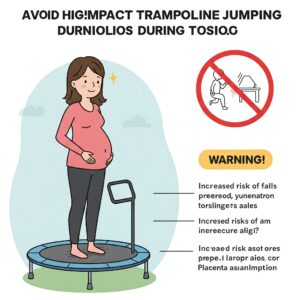
Safe Alternatives to Trampolining During Pregnancy
If you’re disappointed about the answer to “can you jump on a trampoline while pregnant,” take heart—numerous safe, effective, and enjoyable exercise options remain available throughout pregnancy:
Water-Based Activities
Swimming and water aerobics consistently rank among the safest and most beneficial pregnancy exercises:
- ✅ The buoyancy of water reduces pressure on joints
- ✅ The natural resistance provides an excellent workout
- ✅ Risk of falls or abdominal impact is minimal
- ✅ Water helps manage pregnancy-related heat and swelling
Dr. Lisa Martinez, maternal-fetal medicine specialist, notes: “Water exercises offer nearly all the cardiovascular benefits that pregnant women need without the risks associated with land-based high-impact activities. The supportive environment of water makes it ideal for maintaining fitness throughout pregnancy.”
Walking and Hiking
Regular walking represents one of the most accessible and beneficial activities during pregnancy:
- ✅ Easily adjusted to your changing energy levels and abilities
- ✅ Provides cardiovascular benefits without jarring impacts
- ✅ Can be continued throughout all pregnancy stages
- ✅ Minimal equipment needed
For added stability during walks, especially in later pregnancy stages, consider the Nordic Trekking Poles for Pregnant Women. These adjustable, shock-absorbing poles provide added balance and support for outdoor walking activities.
Prenatal Yoga and Pilates
Specialized prenatal yoga and Pilates classes offer strength, flexibility, and relaxation benefits:
- ✅ Improves balance and body awareness
- ✅ Strengthens core muscles to support pregnancy
- ✅ Practices mindful breathing useful for labor
- ✅ Can help reduce pregnancy discomfort
For home practice, the Prenatal Yoga Essentials Kit includes a non-slip yoga mat, supportive bolster, and instructional materials specifically designed for pregnancy-safe positions.
Stationary Cycling
Stationary bikes provide excellent cardiovascular workouts with minimal impact:
- ✅ No fall risk unlike road cycling
- ✅ Adjustable resistance to match your fitness level
- ✅ Takes weight off your feet while exercising
- ✅ Recumbent bikes offer back support for greater comfort
The Adjustable Recumbent Exercise Bike for Pregnancy features an easily adjustable seat that accommodates your changing body throughout pregnancy, plus heart rate monitoring to ensure safe workout intensity.
Strength Training with Modifications
Light to moderate strength training, with appropriate modifications, remains beneficial during pregnancy:
- ✅ Maintains muscle tone important for labor and recovery
- ✅ Can help manage pregnancy-related back pain
- ✅ Supports healthy weight management
- ✅ Improves overall functional fitness
Always consult with a prenatal fitness specialist for proper form and modifications as your pregnancy progresses.
Recommended Pregnancy-Safe Exercise Equipment
When considering the question “can you jump on a trampoline while pregnant,” it’s helpful to redirect focus toward equipment specifically designed for safe prenatal exercise. Here are some highly-rated options available on Amazon:
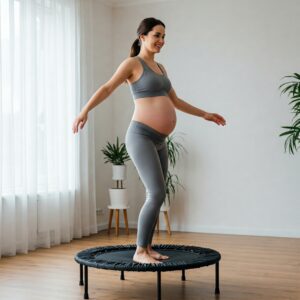
Pregnancy Support Swim Belt
This buoyancy belt provides optimal support for water workouts, allowing expectant mothers to maintain proper positioning while swimming or doing water aerobics. The adjustable strap accommodates your growing belly throughout pregnancy.
Key benefits:
- ✅ Promotes proper alignment during water exercise
- ✅ Reduces strain on lower back
- ✅ Adjustable for all pregnancy stages
- ✅ Enables effective no-impact cardio workouts
Pregnancy Yoga and Fitness Ball
A specially designed stability ball for prenatal exercise helps strengthen core muscles while providing versatile workout options.
Key benefits:
- ✅ Supports gentle bouncing motion (unlike trampolines) with minimal impact
- ✅ Helps improve posture and relieve back pain
- ✅ Can be used for labor preparation exercises
- ✅ Includes anti-burst technology for safety
Maternity Support Belt for Exercise
This supportive belt alleviates pressure on your lower back and pelvis during physical activity.
Key benefits:
- ✅ Reduces pelvic and back pain during exercise
- ✅ Provides gentle compression and support
- ✅ Adjustable for growing belly
- ✅ Breathable fabric for comfort
Prenatal Resistance Bands Set
Resistance bands offer safe strength training options throughout pregnancy.
Key benefits:
- ✅ Allows for controlled, low-impact strength training
- ✅ Multiple resistance levels for progression
- ✅ Lightweight and portable
- ✅ Includes exercise guide specifically for pregnancy
Supportive Cross-Training Shoes for Pregnancy
Proper footwear becomes increasingly important as pregnancy progresses and balance changes.
Key benefits:
- ✅ Enhanced stability features
- ✅ Extra cushioning to absorb impact
- ✅ Wide toe box to accommodate pregnancy-related foot changes
- ✅ Slip-on design for ease of use in later pregnancy stages
✨ Prioritize Your Pregnancy Wellness Journey With These Trusted Products!
:arrow: Looking for the safest and most effective pregnancy exercise options? The carefully selected products above offer excellent alternatives to high-impact activities like trampolining. Click on any highlighted product to check current pricing and read reviews from other expectant mothers. Your pregnancy wellness deserves the best support available!
When to Consult Your Healthcare Provider
While we’ve addressed the general question “can you jump on a trampoline while pregnant,” individual circumstances vary significantly. Always consult your healthcare provider before beginning or continuing any exercise regimen during pregnancy, especially if you:
- ✅ Have a history of pregnancy complications
- ✅ Are carrying multiples
- ✅ Have preexisting health conditions
- ✅ Experience warning signs like vaginal bleeding, dizziness, or shortness of breath
- ✅ Have been placed on activity restrictions
According to guidelines from the American Pregnancy Association, discussing your exercise plans with your healthcare provider helps ensure personalized recommendations based on your specific health status and pregnancy progression.
Signs to immediately stop activity and contact your provider include:
- ✅ Vaginal bleeding
- ✅ Fluid leaking from the vagina
- ✅ Decreased fetal movement
- ✅ Uterine contractions
- ✅ Muscle weakness
- ✅ Calf pain or swelling
- ✅ Headache
- ✅ Chest pain
- ✅ Dizziness or faintness
Pregnancy Exercise Intensity Guidelines
When exploring alternatives to the question “can you jump on trampoline while pregnant,” understanding appropriate exercise intensity becomes crucial:
The Talk Test
A simple way to gauge exercise intensity during pregnancy is the talk test:
- ✅ You should be able to maintain a conversation while exercising
- ✅ If you’re too breathless to speak comfortably, reduce intensity
- ✅ This natural method helps keep exercise within safe parameters
Heart Rate Monitoring
While older guidelines specified strict heart rate limits during pregnancy, current recommendations from ACOG are more individualized:
- ✅ Focus on perceived exertion rather than specific heart rate numbers
- ✅ Most pregnant women can safely exercise at moderate intensity
- ✅ Your healthcare provider may suggest personalized heart rate guidelines based on your specific situation
Hydration and Temperature Regulation
Pregnant women need special attention to hydration and avoiding overheating:
- ✅ Drink water before, during, and after exercise
- ✅ Avoid exercising in hot, humid environments
- ✅ Wear breathable, loose-fitting clothing
- ✅ Consider switching to swimming or water aerobics during summer months
FAQs About Trampolining During Pregnancy
Throughout this article, we’ve thoroughly addressed the main question “can you jump on a trampoline while pregnant,” but several related questions frequently arise:

Is Mini-Trampoline (Rebounding) Safe During Pregnancy?
Mini-trampolines, sometimes used for low-impact “rebounding” exercise, present many of the same concerns as full-sized trampolines:
- ✅ While the bouncing might seem gentler, it still creates jarring forces
- ✅ Fall risks remain, particularly as pregnancy progresses
- ✅ The repetitive impact affects joints and pelvic floor
- ✅ Healthcare providers generally recommend against rebounding during pregnancy
What If I Was Trampolining Regularly Before Pregnancy?
Even if trampolining was part of your regular routine before pregnancy:
- ✅ The physical changes of pregnancy significantly alter risk factors
- ✅ Prior experience doesn’t eliminate the inherent risks
- ✅ Medical guidelines still recommend discontinuing trampolining during pregnancy
- ✅ Transitioning to pregnancy-safe alternatives is advised
Will One-Time Trampoline Use Harm My Baby?
Many pregnant women worry after using a trampoline before realizing the risks:
- ✅ A single, brief trampolining session early in pregnancy is unlikely to cause harm
- ✅ However, continuing to trampoline after becoming aware of risks isn’t recommended
- ✅ If concerned after trampolining while pregnant, consult your healthcare provider
- ✅ Moving forward, choose safer exercise alternatives
Can I Supervise Children on a Trampoline While Pregnant?
When considering can you jump on trampoline while pregnant, a related concern involves supervision:
- ✅ Standing beside a trampoline to supervise children is generally acceptable
- ✅ Avoid standing on the trampoline itself, even without jumping
- ✅ Be mindful of potentially needing to react quickly if a child needs assistance
- ✅ Consider delegating trampoline supervision to another adult when possible
When Can I Resume Trampolining After Pregnancy?
Looking ahead to postpartum recovery:
- ✅ Wait until you receive medical clearance at your postpartum checkup
- ✅ Generally, this means at least 6-8 weeks after delivery
- ✅ Cesarean births or complicated deliveries may require longer recovery
- ✅ Return gradually, acknowledging that your body has undergone significant changes
- ✅ Consider pelvic floor physical therapy before resuming high-impact activities
Safe Exercise Principles During Pregnancy
While trampolining isn’t recommended when considering can you jump on a trampoline while pregnant, these general principles apply to all pregnancy exercise:
Listen to Your Body
Pregnancy is not the time to push physical limits:
- ✅ Rest when tired
- ✅ Modify activities as needed
- ✅ Be aware that capabilities may change day-to-day
- ✅ Don’t compare your pregnancy journey to others
Stay Consistent
Regular, moderate exercise provides more benefits than occasional intense sessions:
- ✅ Aim for frequency rather than intensity
- ✅ Even short daily activities contribute to overall health
- ✅ Consistency helps manage pregnancy discomforts
Adapt as Pregnancy Progresses
Your exercise routine should evolve with your changing body:
- ✅ First trimester: Establish safe routines while managing potential fatigue/nausea
- ✅ Second trimester: Often the “golden period” for exercise with improved energy
- ✅ Third trimester: Focus on comfort, balance, and preparation for birth
✨ Enhance Your Pregnancy Wellness Journey With Expert-Approved Exercise Equipment!
–> Investing in the right equipment can transform your pregnancy exercise experience. The supportive products highlighted above provide safe, effective alternatives to high-impact activities like trampolining. Click on any product link to read reviews from other expectant mothers and check current pricing. Your pregnancy deserves the best support available!
Conclusion
Throughout this comprehensive guide, we’ve explored the question “can you jump on a trampoline while pregnant” from multiple perspectives. The medical consensus is clear: trampolining during pregnancy carries risks that outweigh potential benefits, making it an activity best avoided during this special time.
Instead of focusing on activities to avoid, I encourage you to embrace the many safe, beneficial exercise options available during pregnancy. From swimming to walking, prenatal yoga to modified strength training, numerous activities support maternal and fetal health while minimizing risk.
Remember that pregnancy represents a temporary adjustment to your fitness routine, not a permanent one. The nine months of pregnancy pass quickly, and trampolining will still be there after you’ve safely delivered your baby and received proper clearance to resume high-impact activities.
Always consult your healthcare provider for personalized guidance based on your specific health status and pregnancy progression. By making informed choices now, you’re already demonstrating the thoughtful care that makes you a wonderful parent.
More FAQs
❓ Can bouncing on a trampoline cause miscarriage in early pregnancy?
✅ Bouncing on a trampoline during early pregnancy potentially increases miscarriage risk due to the jarring forces and fall hazards involved. The abrupt up-and-down motion creates unpredictable impacts that can affect the developing embryo and placental attachment. Most OB/GYNs strongly advise against any trampoline use throughout pregnancy, especially during the vulnerable first trimester...
❓ Is mini trampoline rebounding safe during first trimester?
✅ Mini trampoline rebounding is not considered safe during the first trimester despite its popularity as a low-impact exercise. Even the gentler bouncing motion creates jarring forces that could potentially affect embryo implantation and early development. The American College of Obstetricians and Gynecologists specifically includes all forms of trampolining in their list of activities to avoid during pregnancy...
❓ What exercises should be avoided during pregnancy?
✅ During pregnancy, avoid high-impact exercises like trampolining, contact sports, activities with fall risks (skiing, horseback riding), scuba diving, hot yoga, and exercises requiring lying flat on your back after the first trimester. Also avoid extreme altitude exposure, heavy weightlifting, and any activity with potential for abdominal trauma. These restrictions help protect both maternal and fetal health while minimizing risks of injury or complications...
❓ How soon after pregnancy can I start using a trampoline again?
✅ Most women should wait at least 6-8 weeks after delivery before resuming trampoline use, and only after receiving explicit clearance from their healthcare provider. Women who delivered via C-section or experienced complications typically need longer recovery periods, potentially 10-12 weeks. Even after clearance, starting with gentle rebounding and gradually increasing intensity is recommended. Pelvic floor physical therapy before returning to high-impact activities significantly reduces complications...
❓ What are the best low-impact alternatives to trampolining during pregnancy?
✅ Excellent low-impact alternatives to trampolining during pregnancy include swimming, water aerobics, prenatal yoga, stationary cycling, and modified strength training. Walking remains one of the most accessible and beneficial options throughout pregnancy. Many pregnant women also benefit from stability ball exercises which provide a gentle bouncing sensation without the risks associated with trampolines. Always consult your healthcare provider before starting any exercise regimen...
Recommended for You:
- 10 Incredible Facts About the Biggest Trampoline in the World You Need to See in 2025
- 10 Best Mini Childrens Trampoline Options For Safe Indoor Play in 2025
- Trampoline Games: 25+ Fun Activities for Family Fitness & Epic Backyard Entertainment
Disclaimer: This article contains affiliate links. If you purchase products through these links, we may earn a small commission at no additional cost to you.
✨ Found this helpful? Share it with your friends!
[addtoany]