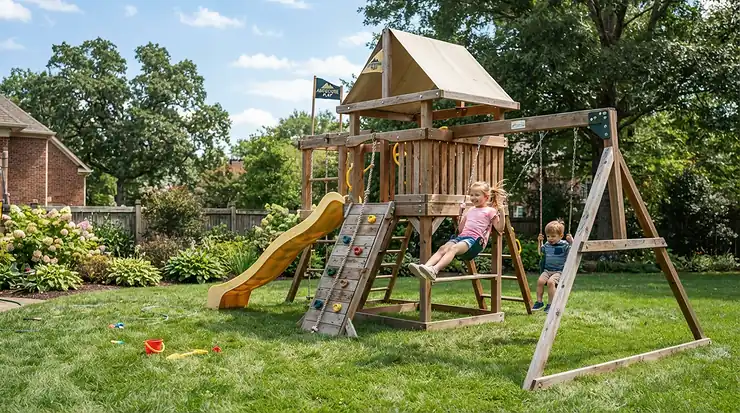
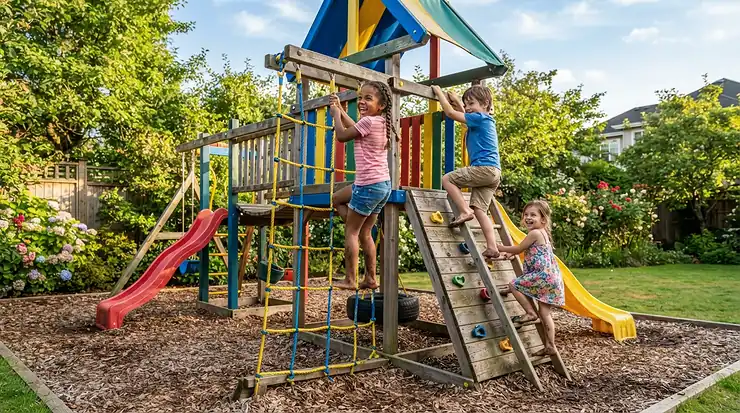
Only 9 percent of the home playgrounds where children were hurt in a Consumer Product Safety Commission study had protective surfacing, and dirt and grass were the usual ground. The data covers 1990 through August 2000, yet it still frames the purchase: for anyone shopping for monkey bars for kids in 2027, the structure is half the decision and the surface beneath it is the other half. That is why the comparison below weighs yard footprint and ground as heavily as steel finish and frame quality. The findings rest on maker manuals, CPSC guidance, retailer rating pages and independent buying guides, so each durability claim names its source and none of it comes from a hands-on test.
Short version: many listings sold as monkey bars are dome climbers rather than a straight overhead ladder, and the four picks below split by yard size, age range and how many children climb at once. A true overhead ladder follows height rules covered further down, along with a six-step way to teach the crossing.
Bar height, footprint and load: the numbers that separate these picks
The best monkey bars for kids in one yard can be the wrong set in the next, and three numbers explain most of the difference.
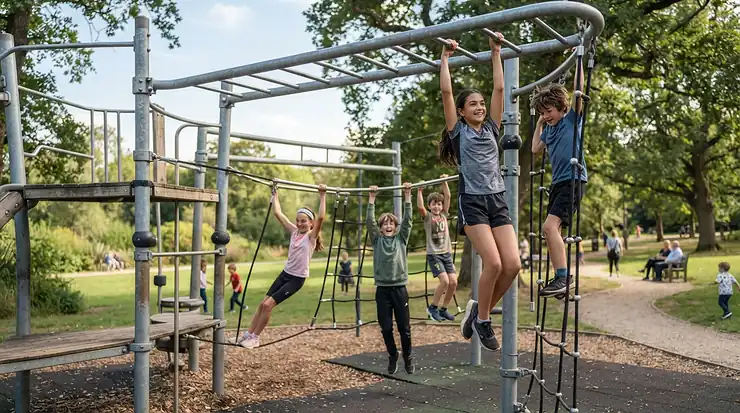
Height comes first for anything with an overhead ladder. CPSC’s Public Playground Safety Handbook, as reproduced by playground vendor Dunrite, caps the grasping bar at 60 inches for ages 4 and 5 and at 84 inches for school-age children. Rungs may sit no more than 12 and 15 inches apart respectively, and the gap between neighbors must be more than 9 inches so a head cannot wedge. Those figures were written for public playgrounds. Backyard sets are certified to a separate standard, ASTM F1148, which Growplay lists for its frames, but the public numbers remain a handy yardstick.
Footprint is the number shoppers underestimate. The Lifetime 60-Inch Climbing Dome measures 10 feet across, and CPSC advises extending protective surfacing at least six feet from every side of play equipment. Together that makes a patch roughly 22 feet wide, a figure that is simple arithmetic rather than a maker claim. One Sam’s Club reviewer put the flat ground needed for the dome alone at about 12 feet.
Load ratings are totals for everyone on the structure at once. Sam’s Club describes the 600-pound rating on that dome as suited to up to six children, which says nothing about how much weight a single user may add.
| Pick | Fits best | Listed load | Size and age as listed |
|---|---|---|---|
| Lifetime 60-Inch Climbing Dome | Small to mid yards, grade-schoolers | 600 lb | About 5 ft tall by 10 ft wide, ages 3 to 10 |
| Eezy Peezy Monkey Bars Climbing Tower | Toddlers and preschoolers, tight spaces | 150 lb | About 65.5 in tall, ages 3 to 8 |
| Gardenature 10FT Climbing Dome with Hammock | Sibling groups | 880 lb | 10 ft wide, ages 3 to 12 |
| Backyard Discovery Beach Front Cedar Wood Swing Set | Families wanting a full playset | 1,080 lb total | Ages 3 to 7 |
Capacity and height pull in opposite directions. The plastic tower is the lightest and lowest, the cedar playset the highest rated and tallest, and the two steel domes sit between them. Age narrows the field faster than any other column: a 3-to-7 band means older children will outgrow the playset’s bars sooner than they outgrow a dome, which is reasoning from the listed range, not a tested result.
Matched to the yard, the kids and the budget
Each pick answers one situation. Domes in one roundup, from KTLA’s product pages, ran between $150 and $280, so check the current price on Amazon.com for any of them.
1. Lifetime 60-Inch Climbing Dome — a small-yard dome kids keep using
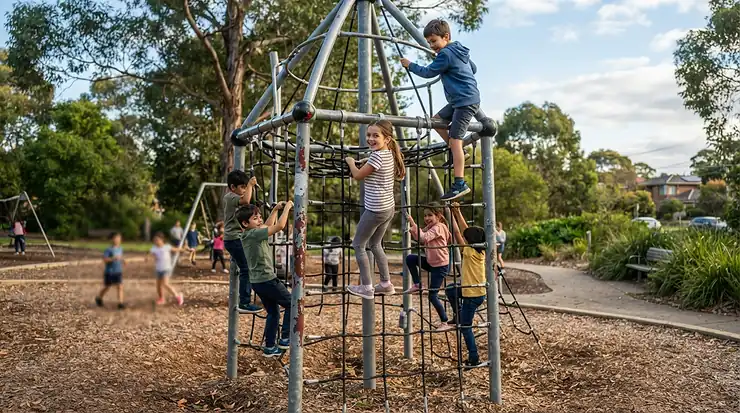
A grade-schooler who wants to climb to the top and hang upside down from the side is who this dome is built around. Sam’s Club lists it at about 5 feet tall and 10 feet wide, 92.5 pounds, rated for ages 3 to 10, with a freestanding steel frame that needs no concrete. Its rating page there shows 4.8 out of 5 from 823 ratings, with roughly 86 percent at five stars. At Lowe’s the same dome sits at 4.8 from about 290 reviews, and the page notes that some are incentivized.
Rust is where the praise breaks. Lowe’s reviewers name it as the most frequent complaint, at joints and on parts touching the ground, sometimes within a year. Other owners there report no rust after five years, and several say Lifetime replaced damaged bars or parts quickly. Lifetime’s own replies in those reviews say earlier versions used non-galvanized, powder-coated steel, which suggests the finish description on the current listing is worth reading. KTLA’s roundup, which notes this dome is sold by Amazon, flags the same rust reports after long outdoor exposure.
One Sam’s Club reviewer needed two people and about two and a half hours to assemble it, and the Lowe’s page calls assembly “a bit tricky” in some reviews yet manageable. At roughly 5 feet tall, it falls within CPSC’s limit for 9 inches of sand or pea gravel beneath it.
Pros:
- ✅ Freestanding steel frame, no concrete needed, per the Sam’s Club listing
- ✅ 600-pound rating described there as suited to up to six children
Cons:
- ❌ Rust is the most frequent criticism on the Lowe’s review page
- ❌ Two people and around two and a half hours to build, per one Sam’s Club reviewer
2. Eezy Peezy Monkey Bars Climbing Tower — light plastic for the youngest climbers
The 150-pound total rating is the first number to respect here. KTLA’s roundup lists the tower at about 65.5 inches tall, UV-protected plastic, usable indoors or out and sold by Amazon, and a buying guide on Peggy O’Mara’s site adds a 27-pound weight, a footprint near 70 by 65 inches and ages 3 to 8. That weight means one adult can shift it, while the rating means two heavier siblings can use up the allowance fast.
Owner experience splits into two camps. The same guide reports multiple reviewers with four to six years of use and no significant cracking or fading, which is encouraging for a plastic frame, and it cites about 72 percent five-star ratings from 6,491 ratings. Building it is the sore point: the spring pins are tight enough to hurt fingers, so the guide suggests a flathead screwdriver or spoon handle, the plastic disassembly tool is flimsy, and the top section can feel wobbly. Ground anchors are not included, which matters on a slope or in wind.
At about 5.5 feet, the tower is just over CPSC’s 5-foot ceiling for sand or pea gravel, so wood chips, mulch or shredded rubber are the fitting fill. That conclusion applies the CPSC figures to the listed height. The guide also covers a Mega Pyramid version with a 154-pound rating and a 90-day warranty, against the standard tower’s six months.
Compare the exact model number against the listing before buying, because the two Eezy Peezy versions differ in weight, footprint and warranty.
3. Gardenature 10FT Climbing Dome with Hammock — room for a whole sibling pile
Several children of different ages is the situation that justifies a 10-foot dome. The listing describes an 880-pound rating, ASTM certification, a two-year manufacturer warranty and an age range of 3 to 12 years, and a comparison roundup puts its size at about 10 feet wide and 4.8 feet tall with a hammock included. Independent write-ups of this model are thinner than those for the Lifetime dome, so those specifications rest on the listing and that single roundup.
Assembly draws the most comment. A comparison roundup of 10-foot domes advises leaving every bolt loose until the structure is fully up, a tip it attributes to reviewers. One Amazon buyer, quoted on a resale-site mirror of the listing, found the booklet missing pages and used the Amazon video to finish. Treat that as one owner’s report, not a pattern.
At 4.8 feet, the dome sits under the 5-foot line where nine inches of sand or pea gravel qualify as protective surfacing. A 10-foot span plus CPSC’s six feet of surfacing on every side needs the same 22-foot width as the Lifetime 60-Inch Climbing Dome.
4. Backyard Discovery Beach Front Cedar Wood Swing Set — monkey bars inside a full playset
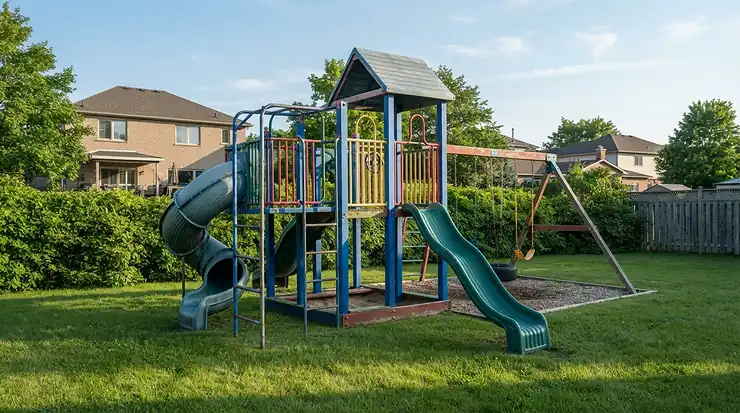
A family that wants one purchase to cover swings, a slide and monkey bars is the audience here, and it is also the highest tier in this comparison. Foter’s product page lists swings, a slide, monkey bars, a climber and safety handles on a cedar frame with stainless steel hardware, seating up to nine children, with 1,080 pounds total capacity and 150 pounds per swing. Walmart’s listing gives the age range as 3 to 7, a height of 118 inches, and 4.5 stars from 371 reviews.
The complaints on Foter’s page, which summarizes owner feedback, are consistent: inconsistent quality control with missing or damaged parts, shaking and instability during use, and a stated capacity that some reviewers think is overstated. Foter’s own advice is that anchoring is essential, and it suggests checking the wood for splits during setup.
Pros:
- ✅ Swings, slide, monkey bars and climber together, with room for up to nine children per Foter’s page
- ✅ Cedar frame and stainless steel hardware
Cons:
- ❌ Owners summarized on Foter report missing or damaged parts and shaking
- ❌ Walmart’s listing gives an age band of 3 to 7, which older children outgrow
How to do monkey bars for kids: a six-step progression
Crossing is hard because it asks the hands to hold the entire body, and the usual advice from Playworld, a playground maker, breaks it into small wins. Paraphrased, the sequence runs like this:
- Start with feet on a ladder and teach the grip: palms and the base of the fingers over the bar, not fingers curled underneath.
- Hang from the first bar with both hands for as long as the child can, to get used to stretching out.
- Try small movements, such as swinging the legs or letting go with one hand, while an adult stays close.
- Offer a boost to create momentum, with a steadying hand on the legs so the child can focus on the arms.
- Let the child try alone, usually first bar to second bar, adding one bar each attempt.
- Mix in other climbing, such as slide ladders, to build strength and confidence.
SwingSetMall’s guide adds that dead hangs on a single bar over days or weeks build grip, and that swinging the legs for momentum with a slightly piked body reduces arm strain. It also says to teach kids to fall by dropping, landing on their feet and rolling. A dome gives a gentler version of the same practice, since a child can hang from several short bars at different heights before facing a full overhead span.
Monkey bars for kids reviews: what the star ratings hide
Retailer scores here cluster high, and the labels beside them explain why. Lowe’s flags some of its reviews as incentivized, and a Sam’s Club review page carries a note that one was collected as part of a promotion. Ratings from different stores are also not directly comparable: the Lifetime dome’s roughly 86 percent five-star share at Sam’s Club and the 72 percent figure the O’Mara guide cites for the Eezy Peezy tower come from different retailers and different buyer pools.
Three patterns repeat across the sources. Finish quality shows up as rust complaints against steel and as a durability compliment for plastic. Assembly time and finger-pinching hardware appear for the tower, the dome and the playset alike. Instability shows up wherever anchoring is optional or missing, and Growplay’s manual is blunt that its sets must be ground anchored.
The practical habit is to read the two- and three-star reviews first. The rust, the missing parts and the wobble all appear there before they appear in the average.
Growplay monkey bars assembly: four to six hours and a lot of clamps
Growplay is the straight, height-adjustable overhead-bar option in this space, and it sells through its own stores, so it is not a numbered pick here. Anyone planning Growplay monkey bars assembly should block out the better part of a day: its USA help center puts the job at approximately four to six hours depending on frame and accessories, with no installation service offered.
The maker’s assembly tips page, from its Australian site, lists the practical rules. Pre-build the ladders, monkey bars and legs ahead of the main day. A drill with an 8 mm Allen bit speeds the job. Spanners and a rubber mallet are required and not included. Clamps stay loose until the final steps so the frame can align. Swing hooks slide onto the top cross bars before the frame is completed.
Owner experience is mostly positive with a few sharp complaints. ProductReview.com.au shows Growplay at 4.8 out of 5 from 714 reviews, 97 percent of them positive, with sturdiness praised, yet reviewers also report video-only instructions with no printed guide, parts spread across several boxes and, for some, long delivery delays. Two buyers of larger sets say the swings can collide at full height, and each is an individual account the page cannot verify.
Specs from the USA site: monkey bars adjustable from about 4 feet 11 inches to 7 feet 6 inches, a 10-year frame warranty, a 2,000-pound load rating and ASTM F1148 certification. The top setting sits above the 84-inch school-age cap in the public handbook, a handbook written for public sites, which is why the lower settings suit younger children. The Compact manual also requires ground anchors and at least six feet of clearance from any structure.
Jungle gym or monkey bars for adults? Read the weight rating carefully
Adults appear in the marketing for some frames, while the dome listings stay silent on them. Growplay’s UK FAQ says its frames can support adults, while its Compact manual lists the set for ages 6 and over, domestic and outdoor use, up to four users at a time. Those two statements disagree, and the manual is the document to follow.
For the domes and the tower, the ratings are group totals. The 150-pound tower is not an adult piece at all, and none of the pages for the 600-pound and 880-pound domes states a per-person limit. An adult hanging from a dome therefore falls outside what any source documents. Anyone after monkey bars for adults should look for a product whose maker states a per-user weight and age range, instead of assuming a children’s jungle gym will carry the load.
Bare lawn, loose ropes and other ways to waste a good set
CPSC’s playground safety tips call for at least 9 inches of wood chips, mulch or shredded rubber under equipment up to 8 feet high, or 9 inches of sand or pea gravel under equipment no taller than 5 feet, extended six feet outward. Dirt and grass do not cushion serious head injuries.
The same page says never to tie ropes, jump ropes, clotheslines or pet leashes to equipment, and to have children take off bike and sports helmets before playing because helmets can snag. It also advises checking guardrails and ladder rungs for gaps that are either under 3.5 inches or over 9 inches.
Two purchase mistakes follow from the sources above. Buying outside the listed age band is the first, since the playset’s 3-to-7 range and the tower’s 3-to-8 range shrink the useful years. Skipping anchors is the second: Growplay’s manual requires them, Foter’s summary of the playset says they are essential, and the tower ships without any.
Age limits, rust, ground and weight: straight answers
❓ What age can kids start on monkey bars?
✅ The CPSC handbook's overhead-ladder numbers begin with ages 4 and 5, so that is the youngest group its guidance addresses. Maker ratings vary: one Growplay manual says 6 and over, while domes list 3 and up. Follow the listing and the child.
❓ Do climbing domes count as monkey bars?
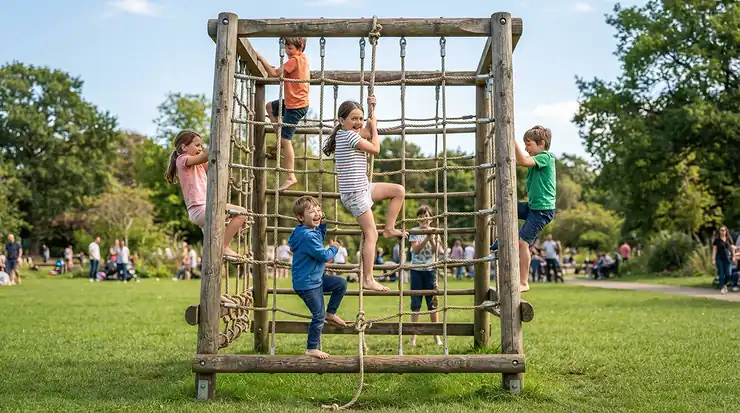
✅ Retailers label many of them that way, but a dome offers short grips at several heights instead of one overhead ladder to cross. Domes build climbing and hanging. A straight overhead ladder is what teaches the hand-over-hand crossing.
❓ How deep should the surface under a dome or bar set be?
✅ The CPSC advises at least 9 inches of wood chips, mulch or shredded rubber for equipment up to 8 feet high, or 9 inches of sand or pea gravel up to 5 feet, extended six feet outward. Grass and dirt do not cushion falls adequately.
❓ Can a steel climbing dome rust?
✅ Yes. Reviewers of one widely sold 60-inch steel dome name rust as their most common complaint, often at joints and ground contact points, though others report none after five years. The maker blames earlier non-galvanized versions. Read the finish description on the exact listing.
❓ Does the weight rating mean an adult can use it?
✅ Not necessarily. Listings give a total load for everyone on the structure at once, such as 600 pounds for a popular dome, rather than a per-person limit. Adult use is undocumented for most domes, so ask the maker directly before trying it.
Choosing among the four
Start with the ground and the footprint, then the youngest climber’s age. The Lifetime 60-Inch Climbing Dome suits most mid-sized yards with grade-schoolers, the Eezy Peezy Monkey Bars Climbing Tower suits toddlers and preschoolers who need something light, the Gardenature 10FT Climbing Dome with Hammock handles groups, and the Backyard Discovery Beach Front Cedar Wood Swing Set makes sense when a full playset is already the plan.
A workable rule for monkey bars for kids is to budget for surfacing and anchors in the same breath as the frame, because those two items open CPSC’s own home playground tips. A child who masters crossing on a dome or tower can later move to a true overhead ladder, with adjustable height and a stated age range, once the hands are ready.
Read the age range and weight rating on the current listing against your own kids before ordering.
Recommended for You
- Indoor playground for kids: Which One Fits Your Home?
- Jungle gym: Which One Fits Your Space?
- Playground slides: Which Size Suits Your Yard?
Disclaimer: This post contains affiliate links. As an Amazon Associate, I earn from qualifying purchases made through these links, at no additional cost to you.
Measure the lawn before you shop, and the right set will usually pick itself.