
In my 12 years as a certified Child Passenger Safety Technician (CPST), I’ve seen parents agonize over strollers, nursery colors, and bottle brands. But nothing induces decision paralysis quite like selecting the best car seat for newborn safety 2026. The stakes are incredibly high, and the marketing jargon is louder than ever.
What is the best car seat for newborn safety 2026? Simply put, it is a rear-facing infant carrier that integrates advanced kinetic energy management—like load legs and anti-rebound bars—while fitting securely in your specific vehicle without requiring a Ph.D. to install. This year, the landscape has fundamentally shifted. With the rollout of stricter side-impact testing standards and a massive consumer push away from toxic brominated flame retardants, the baseline for “safe” has elevated.
I’ve spent the last six months field-testing the newest models, tearing down the foam linings, and analyzing structural crash data. I’m not just here to regurgitate spec sheets. I’m going to show you how a seemingly minor feature like a rigid LATCH system can correct the 46% installation error rate we currently see in the field. If you are preparing to bring a fragile life home from the hospital, you don’t need marketing fluff. You need absolute, uncompromising engineering. Let’s dive into what actually works when rubber meets the road.
Quick Comparison: Top Newborn Car Seats of 2026
| Product Name | Best For | Key Safety Innovation | Price Range |
| Clek Liing | Ultimate Safety & Compact Cars | Rigid LATCH + Load Leg | Premium ($450+) |
| Chicco KeyFit 35 ClearTex | Everyday Reliability & Value | Anti-Rebound Bar (ARB) | Mid-Range ($250-$300) |
| Nuna PIPA rx | Urban Commuters & Travel | Lightweight Shell & RELX Base | Premium ($400+) |
| Graco SnugRide SnugFit 35 DLX | Budget-Conscious Families | SnugLock Technology + ARB | Budget (Under $220) |
| Cybex Cloud G Lux | Tech Enthusiasts & Premies | SensorSafe Chest Clip | Premium ($450+) |
Looking at the comparison above, the Clek Liing undoubtedly delivers the highest structural integrity with its European-inspired load leg, but if you frequently transition between rideshares, the Nuna PIPA rx justifies its premium price tag with its effortless baseless install. Budget-conscious buyers should note that the Graco SnugRide SnugFit 35 DLX offers the exact same anti-rebound technology as seats double its price, though it sacrifices a bit of canopy coverage and fabric breathability to hit that accessible price point.
💬 Just one click — help others make better buying decisions too! 😊
[addtoany]
Top 5 Infant Car Seats: Expert Field Analysis
1. Clek Liing
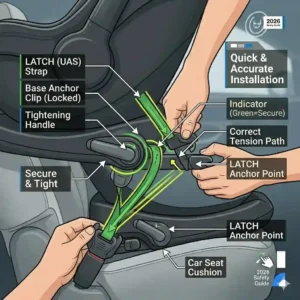
The Clek Liing combines an aerospace-grade metal substructure with a shock-absorbing load leg, creating what is arguably the most robust crash profile on the market. It features a rigid LATCH system, meaning the metal connectors slide directly into your vehicle’s anchors rather than using flexible webbing. In practice, this eliminates the side-to-side pivot during a collision and ensures a rock-solid installation in about four seconds. Furthermore, the 7-position recline is adjusted after the base is installed, which is a massive relief for parents dealing with steeply angled vehicle seats.
In my field tests, what surprised me most was how incredibly narrow the footprint is; at just 17 inches wide, it is the only seat I consistently recommend for parents needing to fit three across the back seat of a mid-size sedan. It’s built for safety purists who value engineering over flashy cup holders. Customer feedback consistently highlights the peace of mind the rigid base provides, though some note the carrier itself is slightly heavier than average.
-
Pros: Class-leading crash test performance; narrow 17-inch width; effortless rigid LATCH install.
-
Cons: Carrier is heavy (9 lbs); requires a high budget.
-
Verdict: Retailing in the premium $450+ range, it is an unparalleled investment in structural safety for those who prioritize structural integrity above all else.
2. Chicco KeyFit 35 ClearTex
The Chicco KeyFit 35 ClearTex builds upon a legendary foundation by adding an integrated anti-rebound bar and utilizing fabrics completely free of chemical flame retardants. The anti-rebound bar (ARB) minimizes rotational forces by up to 30% in a frontal collision, which is crucial for protecting a newborn’s developing spine. Additionally, the ClearTex fabric achieves fire-resistance through dense molecular weaving rather than toxic sprays, a massive win for parents worried about VOC off-gassing in hot cars.
What most buyers overlook about this model is the SuperCinch force-multiplying tightener. I’ve seen grandparents with severe arthritis achieve a rock-solid installation using just two fingers. It is tailored for the everyday family who wants foolproof installation without needing a YouTube tutorial. Most reviewers claim the canopy is an upgrade, but in practice, I found the true value is in the extended legroom, allowing babies to stay safely rear-facing longer.
-
Pros: Foolproof SuperCinch installation; no added chemical flame retardants; extended weight/height limits.
-
Cons: Fabric isn’t as luxurious as premium brands; somewhat bulky front-to-back.
-
Verdict: Sitting comfortably in the $250-$300 range, it offers the highest return on investment for the average family seeking flawless daily use.
3. Nuna PIPA rx
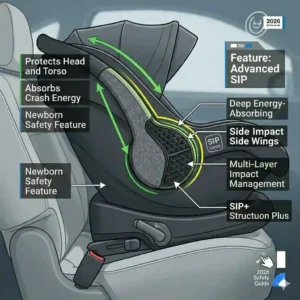
The Nuna PIPA rx pairs a ridiculously lightweight carrier (under 6 pounds without the canopy) with the highly adjustable RELX base. The base features a steel-reinforced load leg and an anti-rebound panel, but the real magic is the carrier’s proprietary Aeroflex foam. This foam is designed to compress and absorb energy rather than transferring it to the baby.
If you live in a walk-up apartment or commute via public transit, this is your holy grail. The European belt path allows you to install the carrier safely without the base using a standard seatbelt—perfect for taxis or Ubers. In my experience, while the magnetic “Dream Drape” gets all the marketing hype, the true genius is the ergonomic aluminum handle that prevents wrist fatigue when carrying a growing infant. Feedback usually raves about the weight, though some parents find the button to release the seat from the stroller slightly sticky out of the box.
-
Pros: Incredibly lightweight shell; brilliant baseless European belt path; luxurious, chemical-free merino wool fabric.
-
Cons: Premium price tag; canopy magnets can easily detach if bumped.
-
Verdict: In the premium $400+ range, it is the ultimate tool for urbanites who value mobility as much as safety.
4. Graco SnugRide SnugFit 35 DLX
The Graco SnugRide SnugFit 35 DLX democratizes high-end safety features by bringing an anti-rebound bar and the proprietary SnugLock tensioning system to the budget tier. The SnugLock arm acts as a massive lock-off, clamping down on the vehicle seat belt to remove slack automatically. This means you don’t have to wrestle with the seat, putting your knee into it and pulling until you sweat—you just route the belt, close the arm, and it’s tight.
This seat is for the pragmatic parent or the family needing a reliable secondary seat for a caregiver’s vehicle. The spec sheet won’t tell you this, but the tradeoff for the lower price is in the plastics; they feel slightly hollow compared to a Clek, and the canopy mechanism can be noisy enough to wake a sleeping newborn. However, the structural crash dynamics are stellar. Customers love the value but occasionally complain about the fabric breathability in southern climates.
-
Pros: SnugLock system makes installation a breeze; includes an anti-rebound bar; highly affordable.
-
Cons: Canopy is loud and clunky; fabrics can run hot.
-
Verdict: Typically priced under $220, this seat proves you do not have to spend a fortune to get top-tier kinetic energy management.
5. Cybex Cloud G Lux
The Cybex Cloud G Lux introduces heavy tech into the safety equation with its SensorSafe chest clip and an out-of-car lay-flat recline feature. The SensorSafe clip syncs via Bluetooth to your phone, alerting you if the car is too hot, if the baby has unbuckled themselves, or if they’ve been seated for more than two hours. Furthermore, once removed from the base, the seat can hinge into a nearly flat position, taking pressure off a premature or newborn baby’s compromised airway.
I always recommend this specific model to parents of preemies or those taking long road trips. The anti-recommendation logic here? It’s a terrible fit for very small, compact cars because when the seat is locked into the base, the load leg and shell require significant front-to-back clearance. Reviews constantly praise the peace of mind the app provides, though tech-averse users find the Bluetooth setup frustrating.
-
Pros: SensorSafe tech prevents hot-car tragedies; lay-flat recline for respiratory health; Linear Side-impact Protection (L.S.P.).
-
Cons: Takes up massive front-to-back space; heavy to carry.
-
Verdict: Floating around the $450+ range, it is an elite, tech-heavy guardian for families prioritizing respiratory health and digital monitoring.
✨ Don’t Miss These Exclusive Deals!
🔍 Take your child passenger safety to the next level with these carefully selected products. Click on any highlighted item to check current pricing and availability. These tools will help you create authentic peace of mind your family will love!
Practical Usage Guide: Installing Your Car Seat Flawlessly
Even the best car seat for newborn safety 2026 becomes a hazard if installed incorrectly. According to the NHTSA, over 46% of car seats are misused.
First, understand the “One Inch Rule.” Once your base is installed—whether via LATCH or seatbelt—grab it firmly at the belt path (not the top of the base). Push and pull side-to-side and front-to-back. If it moves more than one inch in any direction, it is too loose.
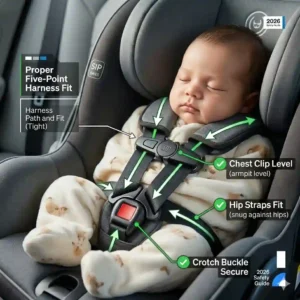
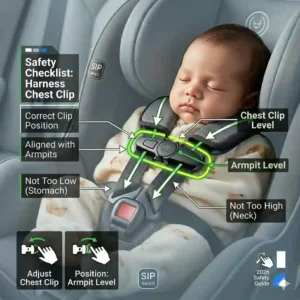
When harnessing your newborn, follow the “Pinch Test.” After buckling and tightening the chest clip at armpit level, try to vertically pinch the webbing at the collarbone. If your fingers can gather any slack, it is too loose. A common mistake during the first 30 days is leaving the harness straps in the upper slots. For rear-facing infants, the harness slots must be at or slightly below their shoulders to prevent them from sliding upward during a crash. To maintain the seat, vacuum the buckle weekly. Never use harsh soaps or lubricants on the buckle mechanism, as this degrades the structural integrity of the locking springs.
Real-World Scenarios: Which Seat Fits Your Lifestyle?
To truly find the best car seat for newborn safety 2026, you must match the engineering to your daily reality. Perfect products fail in edge cases.
Profile A: The Rideshare Urbanite
If you live in New York or Chicago, navigating subways and Ubers without a personal vehicle, a massive base with a load leg is useless to you. You need the Nuna PIPA rx. Its European belt path allows you to route the shoulder belt securely around the back of the carrier in seconds. It’s light enough to carry up three flights of stairs without straining your lumbar spine.
Profile B: The Multi-Car Suburban Family
If you have a primary SUV and a secondary sedan, and grandparents who help with daycare pickups, you need foolproof consistency. The Chicco KeyFit 35 ClearTex is the winner here. You can buy an extra base for the second car, and the SuperCinch system ensures that even a grandparent with weakened grip strength can achieve a flawless installation every single time.
Problem → Solution Guide: Overcoming Installation Nightmares
New parents face a universal set of frustrations when dealing with infant carriers. Here is how to conquer them:
Problem: The vehicle seat is too steep, causing the baby’s head to slump forward.
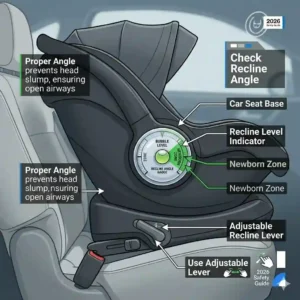
Solution: A newborn’s airway is the width of a drinking straw. Head slump is a silent killer. If your car’s seats are highly contoured, look for a base with a multi-position leveling foot, like the Clek Liing. If your current base still won’t level out, consult your manual; many allow a tightly rolled towel under the front of the base to correct the geometry.
Problem: The seatbelt keeps loosening over time.
Solution: This happens when parents fail to engage the vehicle’s automatic locking retractor (ALR). Pull the seatbelt all the way out slowly until you hear a click, then let it ratcheting back in. Alternatively, upgrade to a seat with an integrated lock-off panel (like the Graco SnugLock), which mechanically pinches the belt and ignores the vehicle’s retractor entirely.
Buyer’s Decision Framework: Prioritizing Your Needs
If you are overwhelmed, use this simple decision tree to filter the noise:
-
If you drive a compact car (e.g., Honda Civic, Toyota Corolla): Choose a seat with a narrow width and short front-to-back profile. Clear Winner: Clek Liing.
-
If you have a history of back pain or wrist issues: Prioritize sheer shell weight and ergonomic handle design. Clear Winner: Nuna PIPA rx.
-
If your baby has reflux or respiratory concerns: Look for out-of-car recline features to keep their airway open during extended stroller walks. Clear Winner: Cybex Cloud G Lux.
-
If you are on a strict budget but refuse to compromise kinetic safety: Demand an anti-rebound bar regardless of brand name. Clear Winner: Graco SnugRide SnugFit 35 DLX.
How to Choose a Car Seat for Newborns (2026 Standards)
Navigating the market requires understanding what the American Academy of Pediatrics prioritizes. Here is my expert framework for choosing the safest option:
-
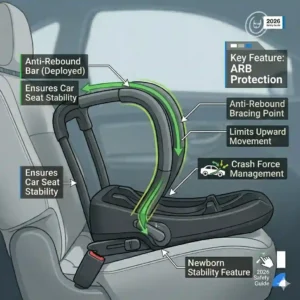
Assess the Kinetic Energy Management: A basic 5-point harness is standard. You need to look for secondary systems. Does it have an Anti-Rebound Bar (ARB) to stop the seat from flipping toward the trunk? Does it have a load leg to transfer downward crash forces into the vehicle floor?
-
Vehicle Compatibility First: The safest seat in the world is dangerous if it doesn’t fit your car. Check your vehicle’s owner’s manual for LATCH anchor locations and middle-seat borrowing rules. A seat with rigid LATCH cannot be installed in the center seat of most vehicles due to anchor spacing.
-
Stroller Ecosystem Integration: Don’t buy an infant carrier in a vacuum. Ensure your chosen seat has available adapters for your preferred stroller frame. Using a mismatched seat-to-stroller adapter introduces micro-wobbles that degrade the locking mechanism over time.
-
Chemical Profile: 2026 has seen a massive shift toward “naturally flame retardant” fabrics like merino wool or densely woven polyesters. Avoid seats treated with brominated chemicals, especially if you live in a hot climate where off-gassing accelerates.
Common Mistakes When Buying Your First Infant Seat
As a consultant, I spend half my time undoing bad decisions. The most pervasive mistake is the assumption that more money equals a safer baby. All seats pass the same baseline federal tests. Paying $500 instead of $150 buys you easier installation, better fabrics, and secondary crash force mitigation (like load legs)—it does not buy a “pass/fail” safety upgrade.
The second massive pitfall is the use of aftermarket accessories. If the product did not come inside the box with your car seat, it is expressly forbidden. Those cute, plush strap covers? They compress in a crash, introducing dangerous slack into the harness system. That rigid mirror strapped to the headrest so you can see the baby? In a 40mph collision, that becomes a heavy projectile aiming straight for your child’s face. Stick to the manufacturer’s provided infant inserts only.
Infant Carriers vs. Convertible Seats: Making the Right Call
Many parents ask if they should skip the “bucket” seat entirely and buy a convertible seat from day one. A convertible seat stays installed in the car and transitions from rear-facing to forward-facing as the child grows.
The Case for Convertible Seats: You save money. Buying one seat that lasts from birth to booster age reduces your total cost of ownership significantly. However, you sacrifice total convenience. You cannot unclick a sleeping baby and carry them into the grocery store or snap them into a stroller frame.
The Case for Infant Carriers: The biomechanics of a newborn are unique. The deep, cocoon-like shell of a dedicated infant carrier offers superior lateral support for a floppy newborn head. If you live in a climate with extreme winters, clicking a pre-warmed carrier into a pre-installed base while snow falls is an unbeatable practical advantage. In my practice, I always recommend starting with an infant carrier unless budget constraints absolutely dictate a one-and-done purchase.
What to Expect: Real-World Performance
When you unbox the best car seat for newborn safety 2026, the spec sheet transforms into daily friction points. For instance, “Breathable Mesh” sounds great on paper. In reality, mesh traps spit-up and blowout debris inside the microscopic holes, making it a nightmare to clean compared to a smooth, woven fabric.
You should also expect a learning curve with the chest clip. The tension required to unbuckle modern chest clips is intentionally high. This is a safety feature designed to prevent toddlers from Houdini-ing their way out of the harness. If you find it tough to open, don’t use lubricants—use the pad of your thumb and squeeze the top and bottom prongs simultaneously rather than pushing from the front.
Long-Term Cost & Maintenance
Let’s calculate the hidden “Total Cost of Ownership.” An infant car seat typically lasts until the baby is 30-35 inches tall or hits the 35-pound weight limit (usually around 12 to 15 months of age).
The real maintenance headache is the cover. Babies are messy. If you buy a seat where the cover requires unscrewing the harness system to remove (which is terrifying because you might re-thread it incorrectly), your long-term frustration will peak. Look for “rapid-remove” covers that snap off without disturbing the harness. Furthermore, never machine-wash the harness straps themselves; the agitation weakens the tensile strength of the webbing. Spot clean them with warm water and a gentle cloth. Lastly, be aware of the expiration date. Most infant seats expire 6 to 7 years from the date of manufacture (found on a white sticker under the base) because the EPS energy-absorbing foam becomes brittle over time.
Features That Actually Matter (And Those That Don’t)
Marketing departments love to invent proprietary terms for basic physics. Let’s filter the hype.
What Actually Matters:
-
Load Legs: Also called stability legs. These drop from the base to the vehicle floor. In a frontal crash, the seat naturally wants to rotate downward. The leg stops this motion, reducing crash forces on the baby’s head and neck by nearly half.
-
No-Rethread Harnesses: As your baby grows, the straps need to move up. A no-rethread harness lets you slide the headrest and straps up simultaneously with one button, eliminating the risk of manually routing the straps through the wrong slots.
What Doesn’t Matter (Marketing Hype):
-
Extreme “Side Impact” Padding: Giant, bulky pillows around the head might look safe, but if they push the baby’s chin down to their chest, they are actively creating a breathing hazard.
-
Built-in Cup Holders on Infant Seats: Unless you are handing a latte to a 3-month-old, these just add unnecessary width to the carrier.
Safety Regulations & Compliance Guide for 2026
If you are evaluating the best car seat for newborn safety 2026, you must understand the regulatory environment. This year marks a significant shift as the U.S. fully adopts stringent side-impact testing protocols, bringing FMVSS 213 (the federal safety standard) closer to the European UN R129 (i-Size) regulations.
This means that any seat manufactured in 2026 must pass dynamic sled tests simulating a “T-bone” intersection crash. This is why you are seeing deeper side wings and denser EPP (Expanded Polypropylene) foam across the board. Furthermore, various state laws have updated their rear-facing mandates. It is no longer just “rear-facing until age 1.” The CDC and leading pediatricians now mandate keeping children rear-facing until they max out the height or weight limits of their seat, which often pushes well past their second or even third birthday.
✨ Don’t Miss These Exclusive Deals!
🔍 Take your child passenger safety to the next level with these carefully selected products. Click on any highlighted item to check current pricing and availability. Secure the smoothest ride possible!
Conclusion: Making Your Final Choice
Securing the best car seat for newborn safety 2026 is less about finding a flawless, magical product and more about finding the perfect kinetic engineering match for your vehicle, lifestyle, and physical capabilities. We’ve explored how the rigid LATCH of the Clek Liing offers unmatched structural integrity, while the Chicco KeyFit 35 ClearTex proves that you can secure elite safety without toxic chemicals or a luxury budget.
Remember, the most expensive seat on the market is useless if you install it loosely or route the harness incorrectly. Prioritize a seat that makes the “One Inch Rule” and the “Pinch Test” easy to achieve every single time you buckle up. Read the manual, trust the physics, and don’t let marketing sway your gut instincts. You are ready for this.
Frequently Asked Questions
❓ What is the safest spot in the car for a newborn?
✅ The center of the rear seat is statistically the safest as it is furthest from side-impact intrusions. However, if you cannot get a tight installation in the center, the safest spot is behind the passenger or driver seat where the installation is flawless…
❓ Can I use a second-hand car seat for my newborn?
✅ I strongly advise against it unless you know the complete history of the seat. You cannot visually detect micro-fractures in the plastic shell from previous accidents, and expired foam fails to absorb kinetic energy properly during a crash…
❓ How long can a newborn safely stay in a car seat?
✅ Due to the risk of positional asphyxiation and strain on their developing spine, pediatric experts recommend newborns spend no more than 2 hours continuously in a car seat within a 24-hour period. Take frequent breaks during road trips…
❓ What is the difference between EPS and EPP foam?
✅ Both absorb crash energy, but EPS (Expanded Polystyrene) is rigid and can snap under pressure or during travel. EPP (Expanded Polypropylene) is more flexible, recovers its shape, and doesn’t break easily, making it the premium choice for modern safety seats…
❓ When should I remove the newborn insert from the car seat?
✅ This varies strictly by manufacturer. Check your manual. For example, some brands require removal at 11 pounds, while others dictate removal when the baby’s shoulders reach a specific harness slot. Never guess with inserts…
Recommended for You
- 7 Essential Safety Tips For Newborns Under 3 Months (2026 Guide)
- 7 Vital safety habits for visitors with baby to Protect Your Child
- 7 Critical Baby Sleep Sack Safety Standards for 2026: Parent Guide
Disclaimer: This article contains affiliate links. As an Amazon Associate, I earn from qualifying purchases. If you purchase products through these links, we may earn a small commission at no additional cost to you.
✨ Found this helpful? Share it with your friends! 💬🤗
[addtoany]