A parent with a compact sedan, a third-floor walk-up and a baby due in March needs something different from infant car seats than a family with a minivan and a garage, yet most rankings treat them as one shopper. Carry weight, base width and install method shape daily life with a seat far more than the price tag does. Shopping in 2027 adds one more filter: according to The Bump’s July 2026 testing guide and a Chicco explainer, the new federal side-impact standard becomes mandatory for seats manufactured on or after December 5, 2026.
The picks below rest on Consumer Reports’ infant seat ratings, The Bump’s hands-on test with 31 families and the makers’ spec pages, so nobody at this site has clicked a base into a car, and every install note is credited to the tester who reported it.
Install, carry weight, load leg, back-seat fit: what separates these seats
Four details do most of the sorting. Install method comes first, because The Bump’s experts describe a loose install as one of the top misuse problems, and its testers consistently found rigid LATCH connectors quicker than belt routing. Carry weight comes second: the five picks here run from 7.5 to 10.9 pounds for the seat alone, and the baby adds to that every trip.
The third detail is a load leg, a support that extends from the base to the vehicle floor. Consumer Reports says four of its six top-rated infant seats have one, and that some makers don’t allow a load leg in the center rear seat when the floor hump is large. The fourth is simply where the seat will sit. CR’s testers put it plainly: the safest car seat is the one that fits your vehicle and your child correctly every time.
All five seats start at 4 pounds, so each works for the first ride home. Price tiers come from The Bump’s July 2026 listings and shift often.
Seat weight, base size, limits and price tier compared
Seat
Seat weight
Base weight
Weight limit
Load leg
Price tier
Graco SnugRide 35 Lite LX
7.5 lb
4.8 lb
4–35 lb
No
Around $140
Clek Liing
10.3 lb
17.1 lb
4–30 lb
Yes
Around $500
Nuna Pipa Aire RX
8.4 lb with canopy and inserts
16.8 lb
4–30 lb
Yes
Around $650
Graco GoMax Insta-Install Rigid LATCH
10.9 lb
16.8 lb (separate base optional)
4–30 lb
No
Around $300
UPPAbaby Mesa V3
10.7 lb
9 lb
4–30 lb
No
Around $350
The base weight column is worth a second look. A base stays in the car, so its heft only matters if you move it between vehicles, which is where the 3.2-pound base on the Safety 1st onBoard Slide (not one of the five, but listed by The Bump) shows how much the number can vary. Prices spread by more than four times from the cheapest seat to the dearest, and the two load-leg seats in this group sit in the top two tiers.
One limit needs a flag. The Bump lists the Graco SnugRide 35 Lite LX at 35 pounds and says it already meets the updated side-impact rule, yet the same guide says infant seats generally drop to a 30-pound limit under that rule. Read the limit on the label of the unit that arrives.
Spotted one that fits your back seat? Take a closer look at the current listing on Amazon.com before you decide.
Which seat for which household
The profiles below are hypothetical, built from what the sources say about each seat.
Around $140 makes this the cheapest seat in the guide by a wide margin, and it still earned a “Better” crash rating from Consumer Reports, according to The Bump. The seat weighs 7.5 pounds with a 4.8-pound base, and the features list includes a four-position adjustable base, a pendulum level indicator and a rotating canopy.
Belts are where it asks for patience. The Bump’s cons list a belt install that is harder because there is no built-in lock-off, flexible hook LATCH connectors that need careful orientation, no tensioner and no no-rethread harness. One Bump tester with three children fit it in the middle of a crowded back seat and found the LATCH install tight once set, though she said it took longer than she expected.
Pros:
✅ Lowest price and lightest seat of the five
✅ Highest weight limit listed in the group, at 35 pounds
✅ Four-position base and a level indicator you can read from outside the car
Cons:
❌ Belt installs are harder without a lock-off
❌ The harness must be rethreaded as the baby grows
Narrow back seats are where this one makes its case. The Bump measures it at under 17 inches wide, and its load leg works in the center seat, which the guide notes is generally considered the safest spot but not one every seat can use. Consumer Reports gave it a “Best” crash rating and a score of 88, tied for the top of its infant list.
The Bump also points out that Clek publishes its own crash test results, which it calls unusual. Seven recline positions and an extended retractable shade round out the feature list, at around $500.
Daily handling is the weaker half. The seat is 10.3 pounds with a 17.1-pound base, and The Bump lists no no-rethread harness and nowhere to tuck the straps. One tester found the release button clunky even after several trips from the car. Rigid LATCH and the belt method both went smoothly for her, thanks to a lock-off and tensioner.
Advertised and actual weight differ here, so start there. The Bump says the seat is marketed at 6.2 pounds but weighs 8.4 pounds with the canopy and inserts, and the base adds 16.8 pounds. Even so, it is the second-lightest of the five.
Around $650 buys rigid LATCH, audible and visual install cues, a true seat belt lock-off, a load leg, an anti-rebound bar and a no-rethread harness. The Bump gives it a “Best” crash rating from Consumer Reports, and CR’s own list scores it 85. One tester with a 3-month-old said the clicks at each locking stage gave her confidence, while another found it simple to carry. The canopy coverage struck the tester as slightly short.
Pros:
✅ Load leg and anti-rebound bar plus rigid LATCH
✅ UPF 50+ canopy and magnetic buckle holders
✅ Clear install cues and a readable recline indicator
Cons:
❌ The highest price in this guide
❌ Canopy coverage runs a little short
❌ Real weight is 2 pounds above the marketed figure
Consider a household with two cars and one baby, a hypothetical but common arrangement. This seat carries built-in rigid LATCH connectors, so it can install without a base, and a separate base costs around $120 for the second vehicle. The Bump lists the seat at around $300 and 10.9 pounds, with memory recline, a no-rethread harness and a removable, machine-washable cover.
A Bump tester installed it in two to three minutes with LATCH, and about five minutes with a belt. Belts are the awkward path: the guide says the built-in lock-off conflicts with a vehicle’s retractor lock, and the belt path is American only, which may limit use abroad. There is no load leg or anti-rebound bar.
The Bump’s article text says the seat is 17.5 inches wide while its spec line says 16, so measure against the label before squeezing it between two other seats. Its tester expected to use it until about the baby’s first birthday.
Parents who already own a Vista or Cruz stroller will find the main appeal here, since the seat clicks directly into both and uses adapters for other strollers, per The Bump. Its tester labeled it the easiest to use, citing a no-rethread harness with 25 headrest and harness positions that adjusts with the baby in the seat, magnetic buckle holders and a one-hand adjustable handle.
At around $350 and 10.7 pounds, with a 9-pound base, it lacks a load leg and a built-in tensioner. The tester had to pull the LATCH straps tight herself, which added time, though red-to-green indicators and clearly marked belt routing helped. The Bump cites no Consumer Reports crash rating for it, and CR’s page lists UPPAbaby’s Aria at 78, a different model, so the crash picture for the UPPAbaby Mesa V3 remains thinner than for the load-leg seats above.
Best infant car seats by name: what brands come to mind
When thinking about car seats, what brands come to mind? The usual list is short, and Consumer Reports’ own ratings explain why. Its infant lineup includes Britax, Cybex, Doona, Evenflo, Graco, Joie, Romer, UPPAbaby and others.
The top of CR’s list is shared by four seats at 88: the Cybex Cloud T, the Maxi-Cosi Mico Luxe +, the Clek Liing and the Chicco KeyFit. CR calls the Chicco KeyFit its highest-ranked infant seat and notes it comes in under $200. Right behind, at 87, is the Graco Premier SnugRide SnugFit 35 XT, which has a load leg and which CR describes as far cheaper than many load-leg seats.
Treat those numbers with care. They come from a page CR dates to 2026, models change, and a brand’s name on one great seat says little about its other lines. Graco shows both sides: its Graco SnugRide 35 Lite LX earned “Better,” while a separate April 2026 recall hit a different Graco seat (more on that below).
Infant car seats reviews: what testers and parents keep reporting
Four patterns recur across the sources, and each can change what you buy.
Rigid LATCH beats belts for most testers. The Bump’s testers installed the Graco GoMax Insta-Install Rigid LATCH in two to three minutes by LATCH, against about five by belt, and several preferred LATCH on other seats even when it took longer. That is a consensus across several testers on several seats, though the tester pool is families in their own cars, not a lab.
Marketed weight and real weight differ. The Nuna Pipa Aire RX gap is the clearest, and The Bump’s tester called the 10-pound Chicco KeyFit Max Zip ClearLux a small drawback for weight. A parent in a long-running The Bump forum thread from 2012 reports moving her baby to a convertible at about 10 months because the carrier had become too heavy to lift. That is one owner’s account and an old one, but it matches the carrying cost the weight column shows.
Height runs out before weight. In that same forum thread, several parents agree that babies hit the height limit first. The Bump’s current guide supports the idea: height caps are typically 30 to 32 inches, and the average baby reaches 32 inches at about 12 to 18 months. Consumer Reports adds that its tests found a 12-month-old dummy much more likely to hit its head on the front seat in an infant seat, so it recommends a rear-facing convertible once a child turns one and still fits.
Installs go wrong more often than buyers expect. The Bump cites a study of newborns leaving the hospital in which 95 percent of seats had at least one error, and families who had a certified technician check their install made fewer mistakes. Small hardware annoyances matter less by comparison, such as the clunky Clek Liing release or the Romer Juni‘s magnetic privacy shield that does not stay put, per The Bump.
Safercar car seat safety rating: what NHTSA scores and what it leaves out
Searches for a safercar car seat safety rating usually end at NHTSA’s ease-of-use ratings, since an older data.gov catalog entry still lists a safercar.gov address while the current pages sit on nhtsa.gov. NHTSA’s ratings page scores four categories from one to five stars: evaluation of instructions, vehicle installation features, evaluation of labels and securing the child.
Two caveats from the same page matter. Rated seats are self-certified by their makers to meet federal standards, and NHTSA states that the ratings reflect ease of use, not safety. It also says it does not currently rate the safety of child restraints. No government crash star score exists for these seats.
Crash comparisons come from elsewhere. Consumer Reports rates seats Basic, Better or Best using almost 130 crash tests and nearly 1,000 installations, and says its ratings are meant to show which seats offer a greater margin of safety than the federal minimum. The federal minimum itself is changing. NHTSA’s 2022 final rule added a side-impact test that replicates a 30-mph T-bone crash, to sit alongside the existing 30-mph frontal test. Compliance became mandatory for newly manufactured seats on December 5, 2026, though one parenting site lists December 6, so a manufacturer statement on the box is the safer reference. Chicco’s explainer says the rule is not retroactive and that NHTSA is not asking caregivers to replace current seats.
Weight distribution in rear-facing vs forward car seats: where the crash force goes
A baby’s head is large relative to the body, which is why the direction of the seat matters. Norton Healthcare explains that a young child’s head is proportionally heavier, so in a frontal crash it moves abruptly forward and loads the neck. A rear-facing shell, the same source says, is designed to distribute the forces and cradle the head, neck and back together.
A child passenger safety educator’s site makes the same point with a forward-facing comparison: harness straps hold the chest while the head keeps moving, whereas a rear-facing child’s head, neck and torso travel into the seat together. This is explanatory reasoning from those sources, not a figure from a crash lab.
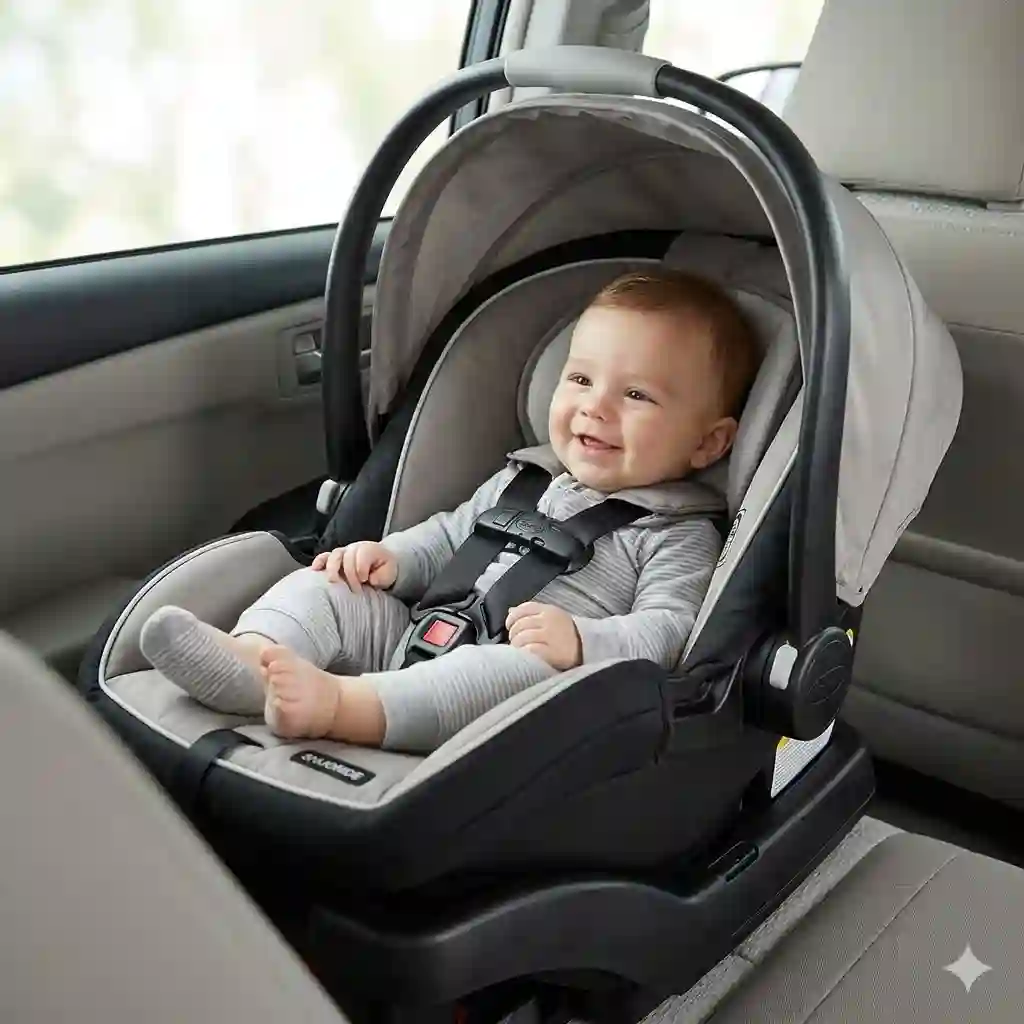
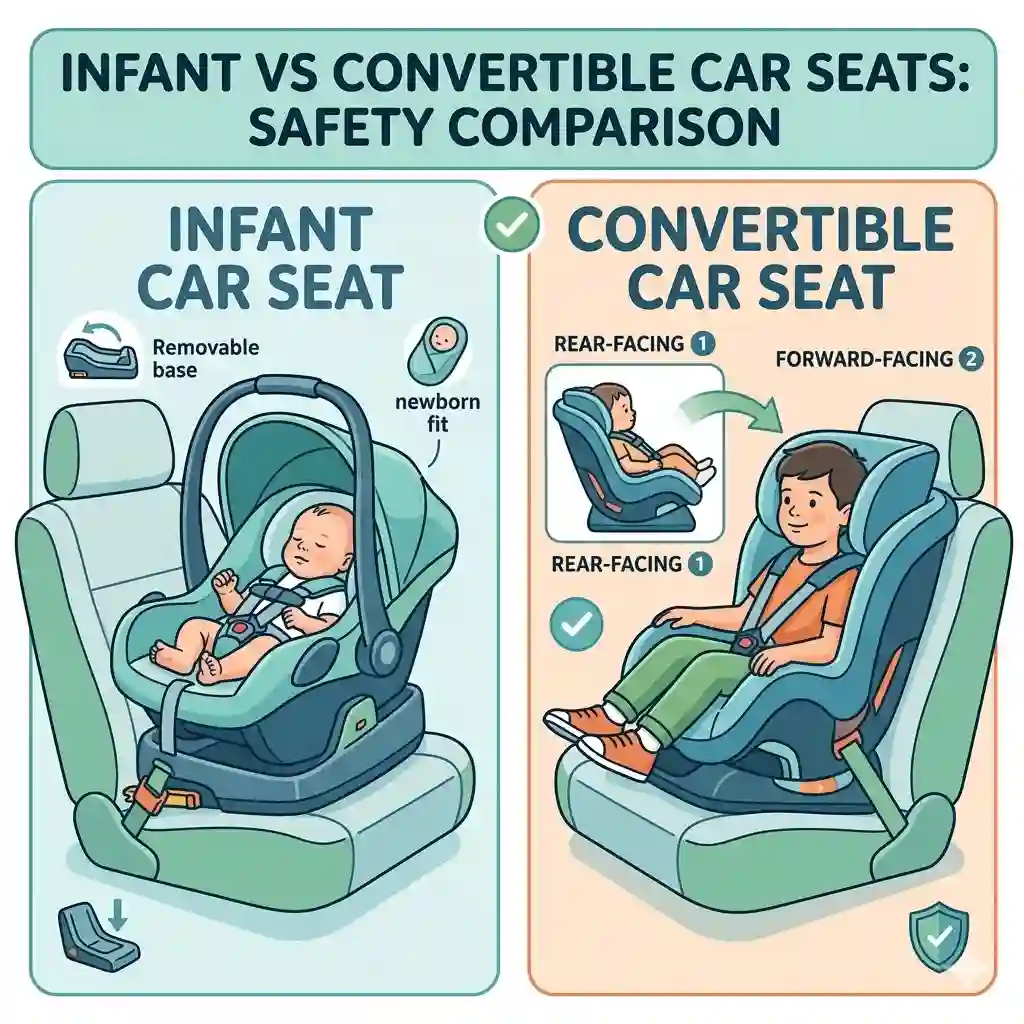
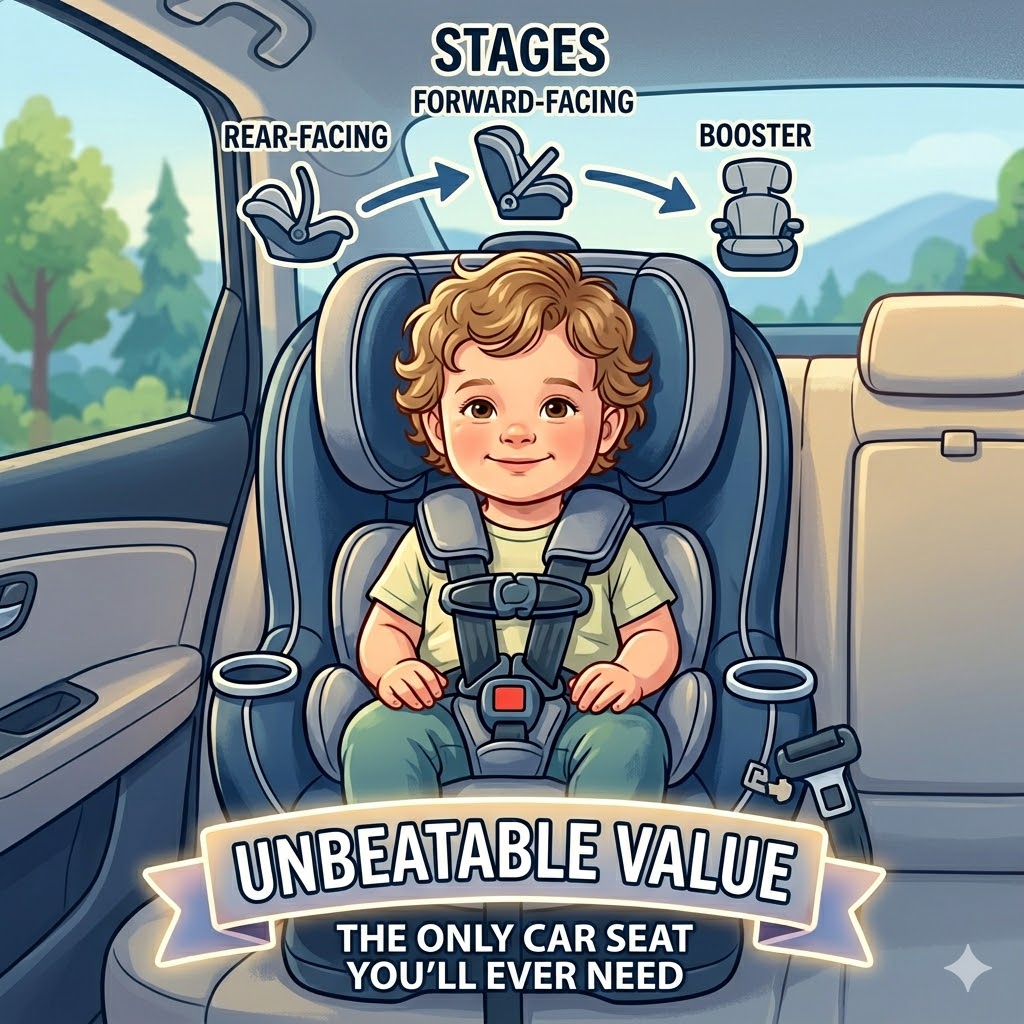
The AAP’s guidance sets the practical rules. All infants ride rear-facing from the first ride home, and children should stay rear-facing as long as possible, up to the seat’s top height or weight limit. Most convertible seats allow two years or more, then a forward-facing harness seat until at least age 4. Load legs and anti-rebound bars, the AAP says, help absorb crash energy, with the leg reducing forward rotation early and the bar guarding against rearward rotation later.
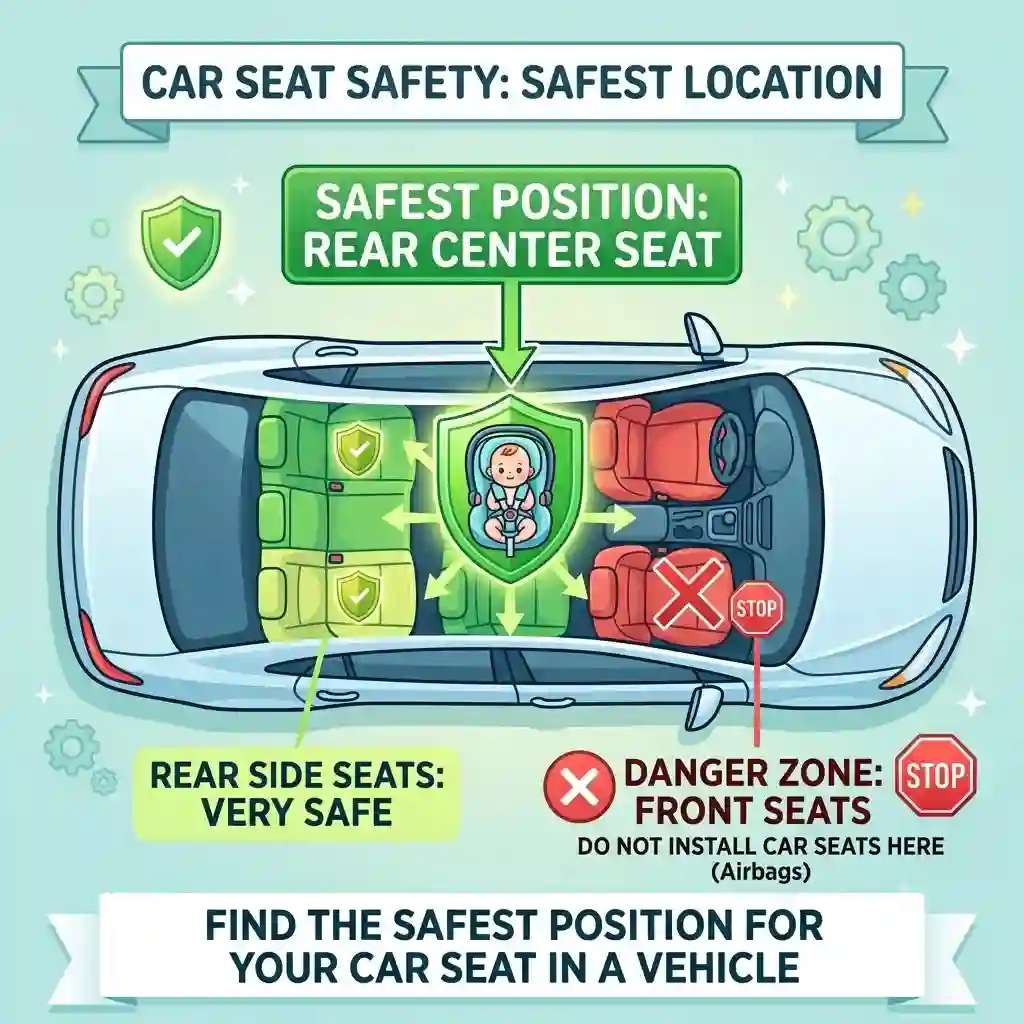
Back-seat placement matters too. The AAP calls the back seat safest for children under 13, the middle ideal if the seat installs tightly there, and a rear-facing seat must never sit in front of an active passenger airbag.
Where buyers go wrong: used seats, recalls and loose installs
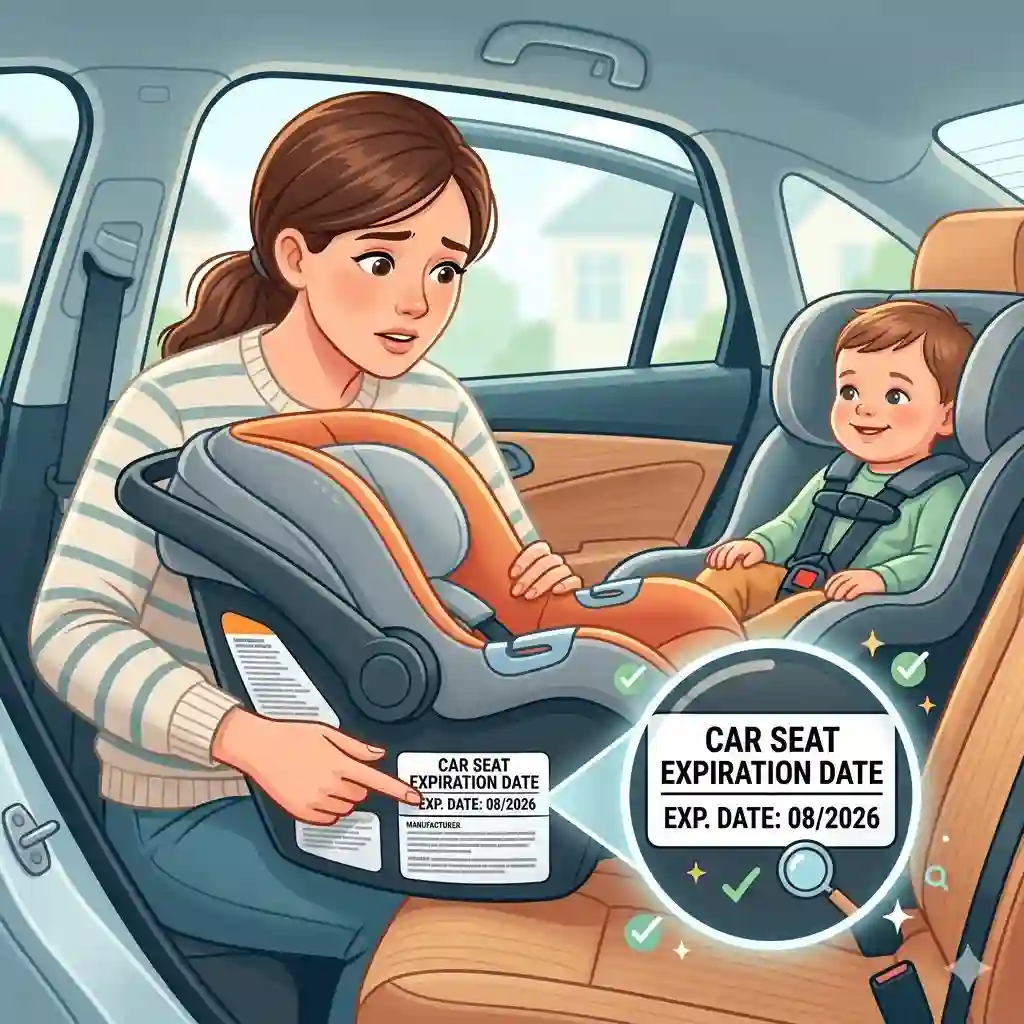
Hand-me-downs deserve suspicion. The AAP advises avoiding used seats with unknown history and lists the dealbreakers: cracks, no date or model label, missing instructions or parts, a recall, or a moderate or severe crash. The Bump adds that most infant seats expire six years after the manufacturing date, which may differ from the purchase date.
Recalls are the second blind spot. Graco issued a voluntary recall of select SnugRide Turn & Slide rotating infant seats in April 2026 after a structural problem turned up in post-production lab testing. The units were sold between January and March 2026, according to news reports of Graco’s notice, and Graco said its other SnugRide models and its rotating EasyTurn and Turn2Me seats were not affected. A separate CPSC notice in June 2026 covered Joolz Aer2 car seat adapters, which are stroller parts rather than seats. Federal law prohibits selling recalled products, and The Bump recommends registering any new seat so you hear about future recalls.
Installation is the third. The Bump lists two quick checks: the seat should move less than an inch at the belt path, and you should not be able to pinch any webbing at the baby’s shoulder. NHTSA says certified technicians inspect seats, usually free, and show you how to install them correctly.
Infant car seats for babies: outgrowing, expiry, ratings and placement
❓ How long can a baby ride in an infant car seat?
✅ Until the baby reaches the seat's height or weight limit, whichever comes first. Consumer Reports suggests moving to a rear-facing convertible at age one if the child still fits, and The Bump says caps of 30 to 32 inches are typical.
❓ Do infant car seats expire?
✅ Yes. The Bump says most infant seats expire six years after the manufacturing date, which can differ from the purchase date, and the AAP tells families to check the label for the date and the maker's lifespan. Skip seats with an unknown crash history.
❓ Is there a government safety rating for car seats?
✅ Not for crash performance. NHTSA publishes ease-of-use stars and says they are not safety ratings. Consumer Reports runs its own Basic, Better and Best crash tests, which aim to show a margin of safety beyond the federal minimum.
❓ Is a load leg worth paying for?
✅ Consumer Reports says four of its six top-rated infant seats have one, and The Bump cites a figure of up to 43 percent lower head injury risk. Legs add an install step and may be barred from the center seat, so check your vehicle manual.
❓ Where in the car should an infant seat go?
✅ The AAP calls the back seat safest for children under 13, with the middle ideal if the seat installs tightly there. A rear-facing seat never belongs in front of an active passenger airbag. Free technician checks can confirm the fit.
One decision rule for choosing among these infant car seats
Pick by the car first. For a narrow or crowded back seat, the Clek Liing is the one with a center-seat load leg and a slim body. For a tight budget, the Graco SnugRide 35 Lite LX keeps the price near $140 and still carries a “Better” rating, as long as you learn the LATCH install. For two vehicles, the Graco GoMax Insta-Install Rigid LATCH installs without a base. For a UPPAbaby stroller, the UPPAbaby Mesa V3 clicks in directly, and the Nuna Pipa Aire RX is the premium option if load-leg protection and clear install cues justify the price.
Whichever you choose, check the manufacture date, the recall list and the exact model number against the box before the first ride, then book a free technician check. Take a closer look at the current listing on Amazon.com for the color and base option you want.
Disclaimer: This post contains affiliate links. As an Amazon Associate, I earn from qualifying purchases made through these links, at no additional cost to you.
Know someone with a due date coming up? Send them to this guide before they order a seat. 🍼
At WhizKiddo, our mission is to help parents find the safest and most engaging toys for their little ones. With years of experience researching child-friendly products, we provide honest, in-depth reviews to ensure you make the best choices for your kids