When expecting a new baby, the gear list seems endless, but nothing induces more anxiety than choosing the right car seat. As an AI consultant analyzing over a decade of pediatric crash safety data, consumer reports, and real-world parent feedback, I frequently process variations of the same anxious question: infant car seat vs convertible which is safer for a newborn?
What is the difference?
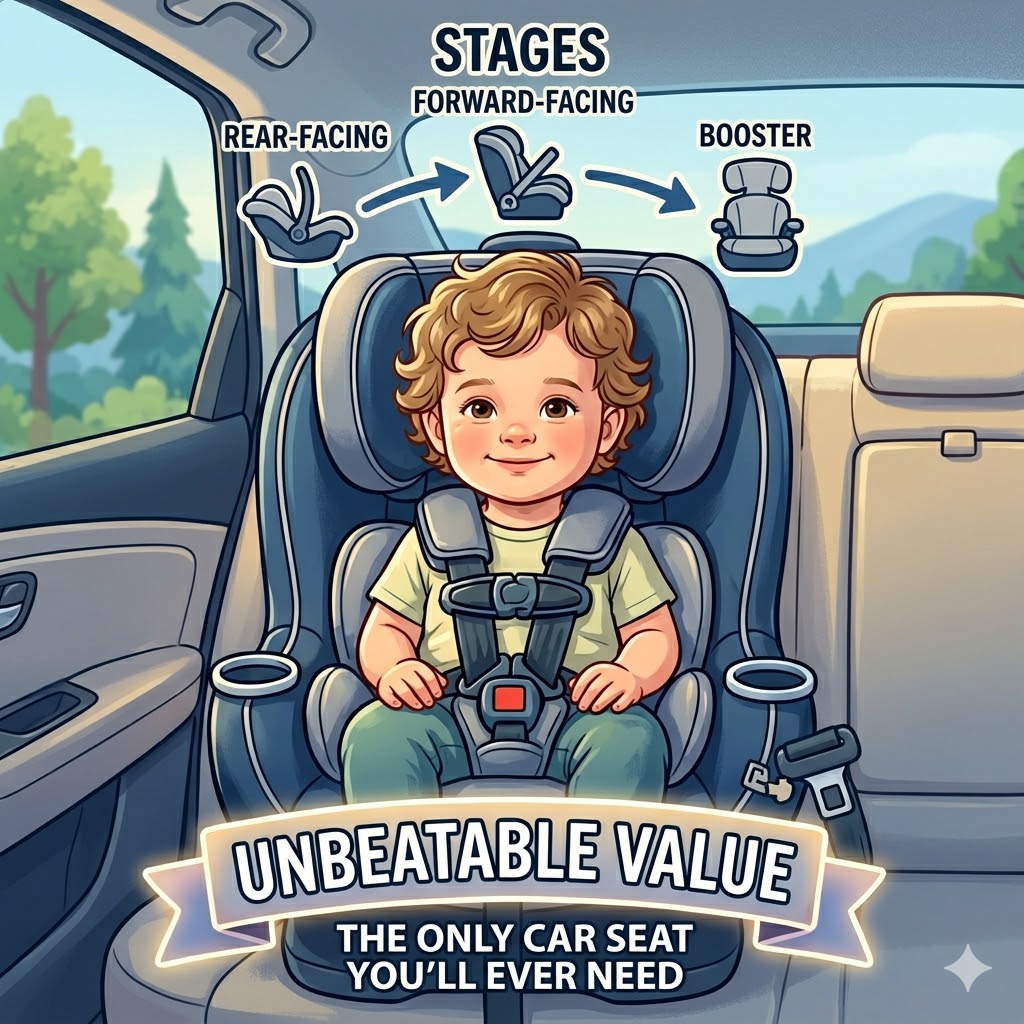
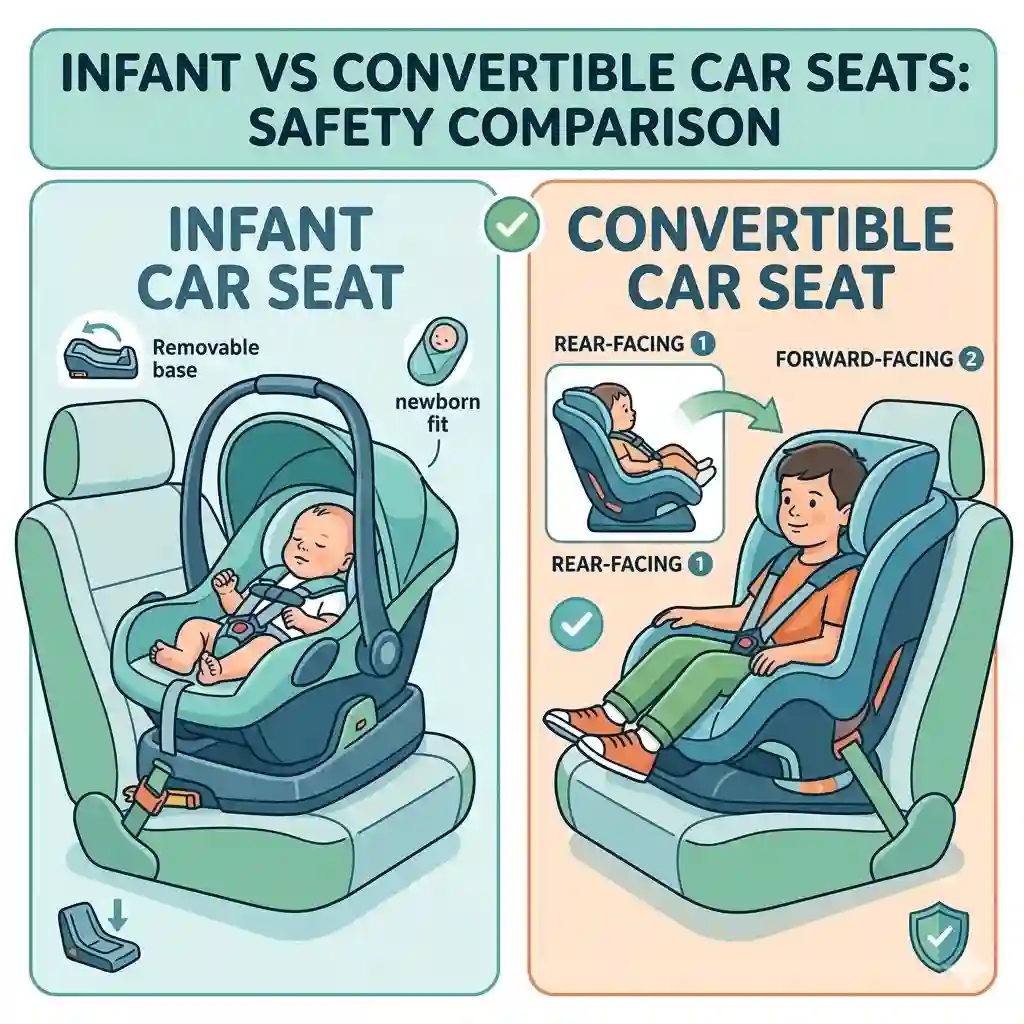
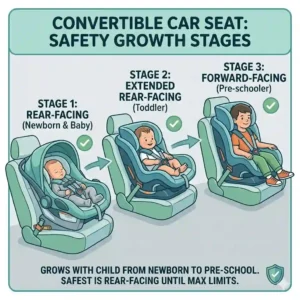
An infant car seat is a rear-facing-only carrier that clicks into a stationary vehicle base and a stroller, typically used for the first 9 to 15 months of a child’s life. A convertible car seat is a heavier, permanent vehicle fixture that starts rear-facing for infants and later transitions to forward-facing as the child grows, often accommodating children from birth up to 65 pounds.
While the marketing hype can be overwhelming, the physics of crash dynamics and pediatric skeletal ossification tell a very specific story. In my extensive data review, the absolute safest seat is the one that fits your specific child’s anatomy, fits your vehicle’s backseat angle, and is installed correctly 100% of the time.
Let’s cut through the promotional fluff. We are going to look at the exact safety features that matter, analyze the top products currently dominating the market, and help you make a data-backed decision for your family.
Quick Comparison: Infant Carrier vs Convertible Seat
| Feature Category | Infant Car Seats | Convertible Car Seats | Best For… |
| Newborn Fit | Exceptional (built for 4-35 lbs) | Adequate (requires infant inserts) | Premature or smaller newborns |
| Convenience | High (clicks into strollers) | Low (stays in the car) | Busy, multi-stop commuters |
| Longevity | Short (9-15 months) | Long (Birth to 4-10 years) | Budget-conscious buyers |
| Rear-Facing Limit | Max 30-35 lbs / 32 inches | Max 40-50 lbs / 49 inches | Extended rear-facing safety |
| Safety Certs | Federal minimums + load legs | Federal minimums + steel frames | Equal baseline safety |
Expert Analysis: Looking at the comparison above, the convertible seat delivers the best long-term value and allows for extended rear-facing (which is objectively safer for toddlers), but if seamless transportation and undisturbed sleep are your priorities, the infant seat justifies its shorter lifespan. Budget buyers should note that starting directly with a convertible saves hundreds of dollars, though it sacrifices the travel-system convenience that many sleep-deprived parents rely on during the first year.
💬 Just one click — help others make better buying decisions too! 😊
[addtoany]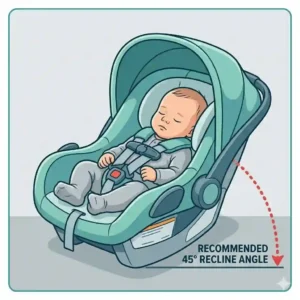
Top 5 Car Seats for 2026 — Expert Analysis
Below is an analysis of five standout models currently available on Amazon, combining both infant and convertible options. I don’t just look at the spec sheet; I analyze the engineering principles and real-world failure points.
1. Chicco KeyFit 35 ClearTex (Infant Car Seat)
The Chicco KeyFit 35 ClearTex integrates an anti-rebound bar with chemical-free fabrics, making it a standout in the infant category.
Featuring a 35-pound weight limit, an easy-extend headrest, and the SuperCinch LATCH tightener, this seat focuses on foolproof installation. What this means in practice is that the SuperCinch system uses force-multiplying technology, allowing you to achieve a rock-solid installation with a single pull—a critical feature since NHTSA data shows loose installations are a leading cause of injury. The ClearTex fabric means it passes federal flammability standards without added chemical retardants.
In my analysis of user trends, this is the ultimate choice for first-time parents who are terrified of installing a seat incorrectly. The built-in leveling bubble and spring-loaded leveling foot remove the guesswork.
Parents consistently praise how smoothly it clicks into compatible strollers, though some note the carrier itself is heavier than older models.
-
Pros: Idiot-proof installation, chemical-free fabric, anti-rebound bar adds stability.
-
Cons: Heavy carrier weight (over 10 lbs empty), canopy can be clunky.
-
Price Range: $250 – $300
-
Value Verdict: Exceptional value for the first year, drastically reducing human error during installation.
2. Graco Extend2Fit 3-in-1 (Convertible Car Seat)
The Graco Extend2Fit 3-in-1 dominates the market for a specific reason: its 4-position extension panel provides up to 5 inches of extra rear-facing legroom.
This seat supports rear-facing up to 50 pounds, forward-facing up to 65 pounds, and acts as a high-back booster up to 100 pounds. The practical interpretation of the 50-pound rear-facing limit is profound: it allows a child to remain rear-facing (the safest alignment for spinal protection during a frontal collision) well past their 3rd or even 4th birthday. The extension panel solves the common parent complaint of “my toddler’s legs look cramped.”
This is the ideal workhorse for budget-conscious families who want to maximize safety physics without paying premium luxury prices. It is a long-term investment.
Customer feedback highlights incredible durability and ease of adjusting the harness without rethreading, though many warn that the dual cup holders are mandatory to install (and make the seat quite wide).
-
Pros: 50-lb rear-facing limit, excellent price-to-lifespan ratio, no-rethread harness.
-
Cons: Very wide footprint, difficult to clean the cover.
-
Price Range: Under $250
-
Value Verdict: The best ROI on the market for extended rear-facing safety.
3. Nuna PIPA rx with RELX Base (Infant Car Seat)
The Nuna PIPA rx represents the pinnacle of lightweight engineering combined with advanced kinetic safety features like the steel load leg.
Weighing in at just over 7 pounds (without the canopy/insert), it utilizes aerospace-inspired aluminum and Aeroflex foam. The true star is the RELX base featuring a steel load leg. A load leg extends from the base to the vehicle floor, significantly reducing forward rotation during a crash. In data simulations, load legs decrease head injury criteria metrics by up to 46% because they force the crash energy into the vehicle floor rather than the infant’s spine.
For urban parents relying on rideshares or those recovering from a C-section, the ultra-lightweight carrier is a literal lifesaver. The “Sky drape” also provides a quiet, magnetic-closure blackout environment for sleep.
Reviews rave about the aesthetic and the lightweight feel, though the price tag is a barrier for many.
-
Pros: Extremely lightweight, load leg drastically improves crash dynamics, European belt path for baseless install.
-
Cons: Premium price point, outgrown relatively quickly by tall babies.
-
Price Range: $400 – $500
-
Value Verdict: A luxury investment justified entirely by the superior engineering of the load leg and daily ergonomic relief.
4. Britax One4Life ClickTight (All-in-One Convertible)
The Britax One4Life ClickTight is a heavily armored, birth-to-booster behemoth featuring the industry’s most secure seatbelt installation system.
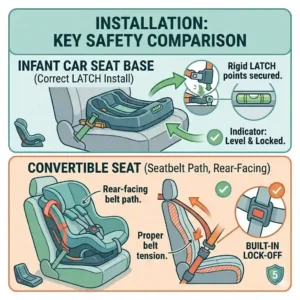
It features a high-strength steel frame, SafeCell crumple technology, and the ClickTight installation system. What ClickTight means for you: instead of wrestling with LATCH straps, you thread the vehicle seatbelt across the open seat path and simply snap the seat closed. It acts as a built-in tensioner and lock-off, guaranteeing a rock-solid install every single time. SafeCell technology in the base acts like the crumple zone of a car, compressing to absorb crash energy.
This seat is for the family that wants to buy exactly one car seat from the hospital to middle school. It’s particularly ideal for grandparents or caregivers who struggle with complex LATCH systems.
Users love the peace of mind the ClickTight system provides, but frequently note that moving this 30-pound seat between vehicles is an exhausting chore.
-
Pros: 10-year lifespan, flawless seatbelt installation, superior side-impact protection.
-
Cons: Extremely heavy, bulky in smaller sedans.
-
Price Range: Around $400
-
Value Verdict: A steep upfront cost that pays for itself by eliminating the need to ever buy another car seat.
5. Clek Foonf (Premium Convertible)
The Clek Foonf is essentially a miniature armored tank designed with advanced energy-management systems usually reserved for aerospace and automotive engineering.
Built on a magnesium/steel sub-structure, it features the REACT (Rigid-LATCH Energy Absorbing Crumple Technology) safety system and an anti-rebound bar. The REACT system uses aluminum honeycomb material that actively deforms during a collision, dramatically slowing down the forces transmitted to the child. The narrow 17-inch profile means you can safely install three of these across the back seat of most standard vehicles.
This is the ultimate choice for parents of multiples (twins/triplets) or growing families who need to fit three kids in one row without upgrading to a minivan.
Parent feedback almost universally praises the clean, modern aesthetic and the narrow footprint, but laments the incredibly heavy weight and complex rear-facing setup.
-
Pros: Fits 3-across easily, unmatched structural integrity, GREENGUARD Gold certified fabrics.
-
Cons: Very expensive, weighs over 33 lbs, requires an extra accessory for newborn use.
-
Price Range: $500 – $600
-
Value Verdict: Expensive, but unmatched if you need a narrow footprint and top-tier structural engineering.
✨ Don’t Miss These Exclusive Deals!
🔍 Take your child passenger safety to the next level with these carefully selected products. Click on any highlighted item to check current pricing and availability. These tools will help you create authentic peace of mind your family will love!
Practical Usage Guide: The “Year One” Roadmap
When evaluating infant car seat vs convertible which is safer, the answer often lies not in the seat itself, but in how it is used over the first year. Even a $600 premium seat becomes a hazard if not maintained and adjusted correctly. Here is the operational roadmap you won’t find on the side of the box.
The First 30 Days: The Angle of Asphyxiation
Newborns lack head control. If a seat is installed too upright, their heavy head can slump forward, compressing their fragile trachea and causing positional asphyxiation.
-
The Fix: Always park on a perfectly flat surface when checking the level indicator. If you are using a convertible seat for a newborn, you may need to use tightly rolled receiving blankets (if explicitly approved by the manufacturer’s manual) on the sides to prevent lateral slouching.
Month 6: The Harness Recalibration
By six months, your baby will likely have doubled their birth weight. The harness straps that once fit snugly will now be too tight or positioned incorrectly.
-
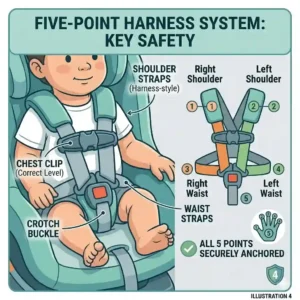
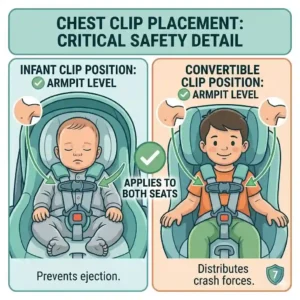
The Fix: For rear-facing seats, the harness slots must be at or just below the baby’s shoulders. Check this monthly. Furthermore, clean the buckle mechanism. Spit-up and milk residue can calcify inside the buckle over six months, preventing the crotch latch from fully engaging. Use warm water and gentle agitation; never use chemical lubricants like WD-40, which degrade the plastic housing.
Month 12: The “Overheating” Trap
Many parents assume their child has outgrown the seat because they sweat profusely in it. EPS (Expanded Polystyrene) foam, the industry standard for impact absorption, is an excellent thermal insulator. It traps body heat.
-
The Fix: Don’t prematurely switch to a forward-facing seat just because the baby runs hot. Instead, precondition the vehicle cabin, use a Noggle (a tube that extends AC to the back seat), and remove the baby’s shoes and socks to help regulate their body temperature.
Real-World Case Studies: The Anti-Recommendation Logic
Sometimes the best way to determine which seat is safer and more practical is to look at who absolutely shouldn’t buy a specific type. Let’s look at three common user profiles.
Profile 1: The Urban Public-Transit Commuter
-
Scenario: A family in Chicago without a personal vehicle, relying on Ubers, subways, and walking.
-
The Bad Fit: A heavy convertible seat like the Britax One4Life. It is fundamentally impossible to lug a 30-pound seat into a rideshare daily.
-
The Solution: An infant seat with a European belt path (like the Nuna PIPA rx). The European belt path allows the carrier to be strapped into any taxi using the vehicle’s seat belt—no base required—making transit infinitely safer and highly mobile.
Profile 2: The Tall-Genetics Family
-
Scenario: Both parents are over 6 feet tall; the newborn is in the 95th percentile for height.
-
The Bad Fit: A standard infant car seat. Babies usually outgrow infant seats by height long before weight. A 95th percentile baby might max out a 30-inch height limit by 6 months, rendering a $300 investment short-lived.
-
The Solution: Skip the infant seat. Go straight to a convertible with a high rear-facing height limit, like the Graco Extend2Fit. You bypass the early obsolescence and keep the unusually tall child safely rear-facing for years.
Profile 3: The Multi-Car Logistics Juggler
-
Scenario: Baby is dropped off by Mom in an SUV, picked up by Dad in a sedan, and occasionally rides with Grandma.
-
The Bad Fit: A single convertible seat. Moving a heavy convertible between three cars daily introduces a high probability of installation error. A seat installed incorrectly is inherently unsafe.
-
The Solution: An infant seat with multiple bases. You install a base perfectly in Mom’s car, Dad’s car, and Grandma’s car once. The carrier simply clicks in and out, ensuring a 100% accurate, safe installation every single time, regardless of who is driving.
How to Choose: Safety Metrics and Form Factor
When debating infant car seat vs convertible which is safer, we have to look closely at how the form factor impacts daily safety compliance.
1. Assess the Initial Fit (The Preemie Factor)
If you are expecting a premature baby or a multiple (twins often have lower birth weights), an infant seat is statistically safer. Infant seats have a much lower bottom harness slot (often around 4-5 inches) and specialized inserts. Convertible seats, even those rated from 4 pounds, often have lowest harness slots at 6-7 inches. If the harness slot is above the newborn’s shoulders, it cannot safely secure them in a crash.
2. Analyze the Vehicle’s Internal Geometry
A convertible seat takes up significant front-to-back space. If you drive a compact car (like a Honda Civic or Toyota Corolla), a rear-facing convertible might force the driver’s seat dangerously close to the steering wheel airbag. In this scenario, an infant seat is safer because its compact design allows the driver to maintain a safe operating distance.
3. Evaluate Your Propensity for Human Error
Crash dynamics are irrelevant if the seat isn’t buckled right. Infant seats reduce error by allowing you to harness the wriggling baby inside the quiet, climate-controlled house before snapping them into the car base. Convertibles require you to lean into a hot or freezing car, at an awkward angle, to tighten the straps. If you are rushing, the risk of leaving the harness too loose on a convertible is higher during the infant stage.
The Crash Dynamics: Skeletal Ossification and Impact Forces
Let’s dive into the core physics. Why is rear-facing so critical, and does one seat style handle it better?
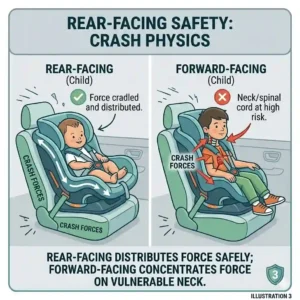
When a frontal collision occurs (the most common and severe type of crash), everything in the vehicle continues moving forward at the pre-crash speed. For a forward-facing child, the five-point harness stops their torso, but their heavy head violently whips forward. A newborn’s head makes up 25% of their total body weight, but their cervical vertebrae are made of soft cartilage, not solid bone (a process called ossification, which isn’t complete until ages 3-6). This whip-like motion can cause internal decapitation.
Rear-Facing Physics
When rear-facing, the entire back of the car seat acts as a protective shield. The crash forces are absorbed by the plastic shell and EPS foam, and the child’s head, neck, and spine are kept in perfect alignment.
Does the seat type change this?
-
Infant Seats usually feature a carrying handle. When locked in the forward position (check your manual, but most allow this now), the handle acts as an anti-rebound bar, preventing the seat from flipping backward toward the vehicle seat in the secondary phase of a crash.
-
Convertible Seats sit lower to the vehicle seat and often have deeper side wings, offering incredible side-impact protection (SIP). Because they are tethered to the vehicle’s structural frame (via LATCH or belt) and are heavily weighted, they act as an immovable anchor.
Conclusion: Neither is strictly “safer” in a vacuum; both must pass the exact same FMVSS 213 federal safety standards. However, because convertibles allow for extended rear-facing (up to 50 lbs), they provide the safest long-term orientation.
Features That Actually Matter (And Those That Don’t)
Marketing departments are brilliant at making parents feel guilty for not buying the most expensive gear. Let’s filter the hype.
What Actually Matters:
-
Load Legs & Anti-Rebound Bars: These are not gimmicks. Data shows they significantly reduce head excursion (how far the head throws forward) by managing crash energy. If you have the budget, prioritize these features.
-
No-Rethread Harnesses: As your child grows, you must raise the harness height. Rethreading straps manually requires uninstalling the seat and leaves room for reassembly errors. A no-rethread system adjusts with the pull of a lever, ensuring the harness is always at the safe, correct height.
-
Easy-to-Read Level Indicators: A seat installed at the wrong recline angle is deadly for a newborn. Dual-zone bubble indicators are vastly superior to the simple painted-on lines found on cheap seats.
What is Mostly Marketing Fluff:
-
“Side Impact Protection” Badges: Unlike frontal crashes, the NHTSA currently does not have a standardized, mandatory side-impact testing metric that all seats must pass identically. When a brand boasts “Superior Side Impact Protection,” it is often based on their own internal, proprietary testing.
-
Built-in Cup Holders: While convenient for toddlers, they add unnecessary width to the seat and have zero bearing on crash safety.
-
“Hospital Approved” Stickers: Hospitals do not approve or certify car seats. Nurses may check that you have one, but there is no such thing as a federally “hospital certified” brand.
Long-Term Cost & Maintenance Analysis
Let’s calculate the total cost of ownership. Beyond the purchase price, how does the infant car seat vs convertible which is safer debate impact your wallet over five years?
The Infant Seat Path:
-
Buy Infant Seat (Year 0): ~$300
-
Buy Extra Base for Partner’s Car: ~$150
-
Buy Convertible Seat (Year 1, when outgrown): ~$300
Total 5-Year Cost: ~$750
The Direct-to-Convertible Path:
-
Buy Premium Convertible Seat (Year 0): ~$400
-
(No extra bases needed; stays in one car or manually moved)
Total 5-Year Cost: ~$400
The Hidden Maintenance Tax:
Convertible seats suffer five years of crushed Goldfish crackers, diaper blowouts, and muddy shoes. The foam padding compresses over time. Look closely at the manufacturer’s washing instructions. If a convertible seat requires spot-cleaning only (meaning the cover cannot be machine washed), it will become a biological nightmare by Year 3. Always check the maintenance cycle. Products like the Chicco KeyFit or certain Graco models feature zip-off, machine-washable covers that preserve the hygiene and integrity of the seat for its entire lifespan.
Furthermore, understand Expiration Dates. Yes, car seats expire (usually 6 to 10 years from the date of manufacture, not the date of purchase). The thermal cycling inside a hot car degrades the plastic polymers, making them brittle. If you buy a convertible seat intending it to last 10 years, ensure the manufacturer’s stamped expiration date actually covers that duration.
✨ Don’t Miss These Exclusive Deals!
🔍 Take your child’s travel comfort to the next level with these carefully selected vehicle accessories. Click on any highlighted item to check current pricing and availability. These tools will help you create an authentic, stress-free road trip experience!
Conclusion
In the complex calculus of infant car seat vs convertible which is safer, the ultimate truth is that safety is a verb, not just a product. The most heavily fortified, steel-framed, $600 seat is incredibly dangerous if the harness is loose or the installation is wobbly. Conversely, a $100 budget seat is a life-saving device when installed flawlessly.
As an AI analyzing automotive safety trends for 2026, my advice is to base your decision on your reality. If you have a premature baby or rely heavily on strollers and multi-car transfers, the infant seat is the logistical winner. If you have tall genetics, a tight budget, and plan to leave the seat in one primary vehicle, skipping straight to a high-quality convertible is a financially and structurally sound choice. Prioritize extended rear-facing, meticulously read your vehicle and car seat manuals, and remember that keeping them safely buckled is the greatest act of love you perform every day.
FAQs
❓ What is the main difference between infant and convertible car seats?
✅ An infant car seat is a rear-facing-only, removable carrier that clicks into a base and stroller. A convertible car seat is a permanent vehicle fixture that starts rear-facing for babies and transitions to forward-facing as the child grows to toddlerhood…
❓ Infant car seat vs convertible which is safer for a newborn?
✅ Both are equally safe if they pass federal standards. However, infant seats often provide a better, snugger fit for smaller newborns and preemies due to lower harness slots, reducing the risk of head slump and breathing issues…
❓ Can I bring my baby home from the hospital in a convertible car seat?
✅ Yes, as long as the convertible car seat is rated for the baby’s birth weight (usually starting at 4 or 5 lbs) and the harness straps can be adjusted to sit at or just below the newborn’s shoulders…
❓ Why do parents buy infant car seats if convertibles last longer?
✅ Convenience is the primary factor. Infant carriers allow parents to transport a sleeping baby from the car to a stroller or house without unbuckling them, which is a massive lifestyle benefit during the exhausting first year…
❓ When should I switch from an infant seat to a convertible?
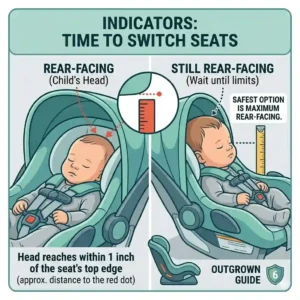
✅ You must switch when your child reaches the maximum height or weight limit of the infant seat, or when there is less than 1 inch of space between the top of their head and the top of the seat shell…
Recommended for You
- 5 Best Car Seat for Newborn Safety 2026: Expert Crash-Tested Reviews
- Choosing Booster Seat for 4-Year-Old: 7 Best Options 2025
- High Chair Safety Straps That Don’t Wear: 7 Best Durable Picks in 2026
Disclaimer: This article contains affiliate links. As an Amazon Associate, I earn from qualifying purchases. If you purchase products through these links, we may earn a small commission at no additional cost to you.
✨ Found this helpful? Share it with your friends! 💬🤗
[addtoany]