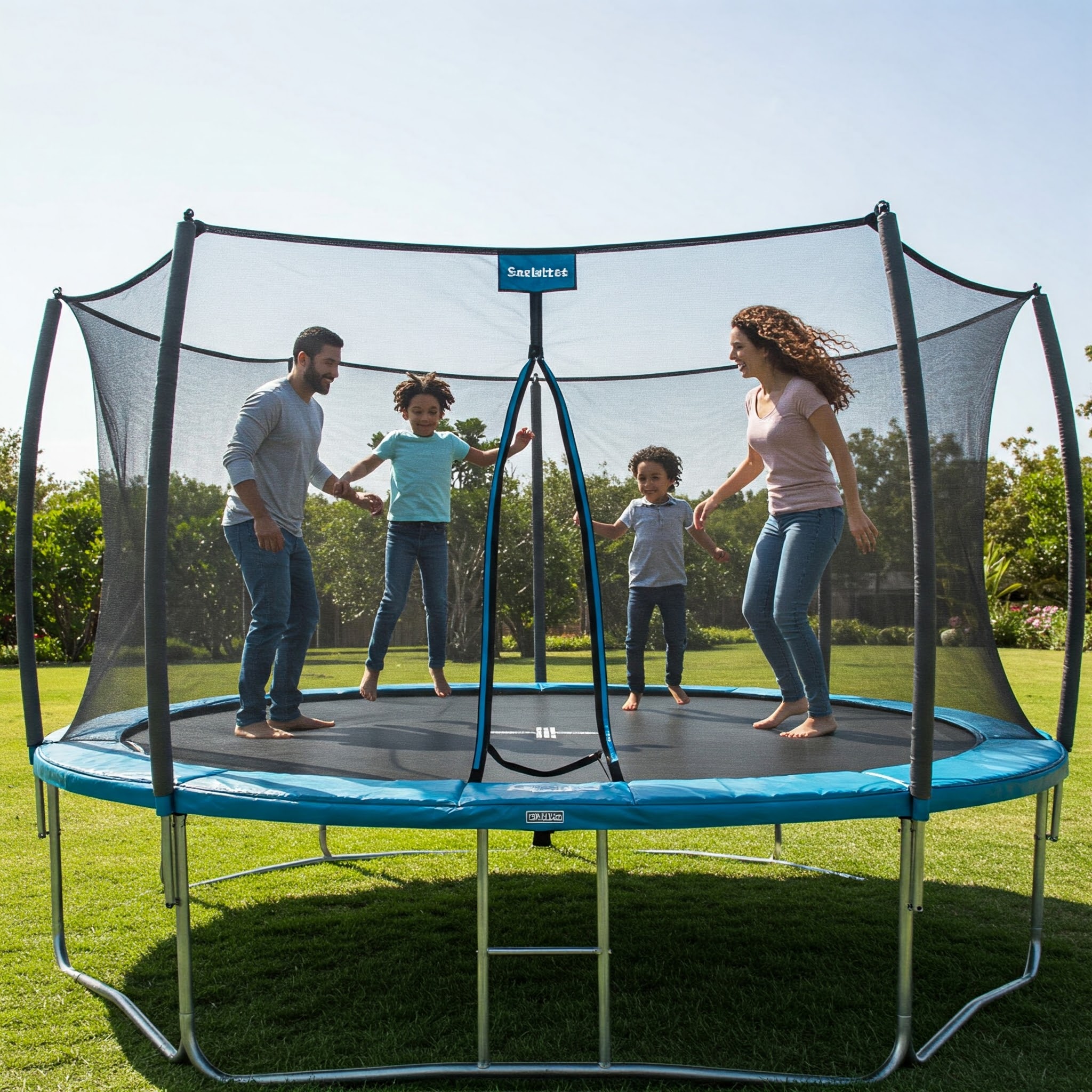

Trampolines have become a staple in American backyards, providing endless hours of entertainment, exercise, and family bonding. However, one crucial aspect that often gets overlooked when purchasing a trampoline is the trampoline weight limit. Understanding the weight capacity of trampoline models is not just about preventing damage to your investment—it’s fundamentally about safety.
✨Was this helpful? Spread the word!
[addtoany]According to the American Academy of Pediatrics, trampoline-related injuries result in nearly 100,000 emergency room visits annually in the United States ¹. Many of these incidents occur when weight limits are exceeded, causing structural failures or unpredictable bounce patterns that can lead to serious injuries.
Whether you’re shopping for your first trampoline or evaluating if your current one meets your family’s needs, understanding the weight limit of trampoline models is essential for making an informed decision. This comprehensive guide will explore everything you need to know about trampoline weight capacity, from understanding manufacturer specifications to choosing the right model for your specific requirements.
Trampoline Types vs. Weight Capacities: A Quick Comparison
| Trampoline Type | Typical Weight Limit | Best For | Average Price Range |
|---|---|---|---|
| Mini/Rebounder | 200-250 lbs | Individual adult fitness | $50-$300 |
| Kids/Toddler | 100-150 lbs | Young children (ages 3-10) | $80-$200 |
| Recreational | 250-350 lbs | Family use, multiple children | $200-$700 |
| Heavy-Duty | 350-450 lbs | Multiple users, teenagers, adults | $400-$1,200 |
| Commercial Grade | 450-800+ lbs | Trampoline parks, professional use | $1,000-$5,000+ |
Understanding Trampoline Weight Limits
What Exactly Is a Trampoline Weight Limit?
The weight limit of trampoline models refers to the maximum weight that the structure can safely support during use. This specification is determined by manufacturers after extensive testing and is based on several factors including:
- Frame strength and materials (typically steel)
- Spring quality and quantity
- Jump mat durability
- Overall structural integrity
- Safety margin calculations
It’s important to understand that the weight capacity of trampoline isn’t just a suggestion—it’s a critical safety guideline. Exceeding this limit can lead to:
✅ Premature wear and tear on components
✅ Increased risk of structural failure
✅ Altered bounce performance that may cause injuries
✅ Potential voiding of manufacturer warranties
✅ Increased liability in case of accidents
According to research published in the Journal of Pediatric Orthopedics, approximately 75% of trampoline injuries occur when multiple people are jumping simultaneously, often exceeding the recommended weight limits ².
How Manufacturers Determine Weight Limits
Understanding how manufacturers establish trampoline weight limit specifications can help you appreciate why adhering to these guidelines is so important.
Manufacturing companies typically follow these steps to determine safe weight capacities:
- Material Testing: Each component undergoes stress analysis to determine breaking points.
- Dynamic Load Testing: Machines simulate jumping patterns of various weights to assess performance.
- Safety Margin Application: Most manufacturers build in a safety buffer of 10-20% below actual breaking points.
- Regulatory Compliance: Adherence to industry standards like ASTM International’s F381 Standard Safety Specification for Components, Assembly, Use, and Labeling of Consumer Trampolines.
Individual vs. Total Weight Capacity
A common source of confusion is understanding the difference between individual and total weight capacity of trampoline models:
- Individual Weight Limit: The maximum weight of a single jumper
- Total Weight Capacity: The maximum combined weight of all simultaneous users
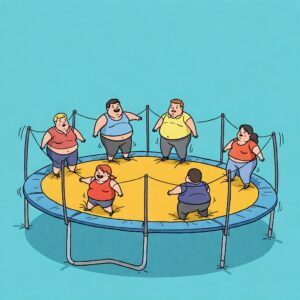
Most residential trampolines are designed for one jumper at a time, even though their total weight capacity might suggest they can hold multiple people. For example, a trampoline with a 400-pound weight limit is typically designed for a single 400-pound user, not four 100-pound children jumping simultaneously.
As Dr. Benjamin Hoffman, chair of the AAP Council on Injury, Violence and Poison Prevention explains, “Even if the total weight is within limits, multiple jumpers create unpredictable bounce patterns that significantly increase injury risk.” ³
Weight Limits By Trampoline Size and Type
Different trampoline sizes and types come with varying weight limits of trampoline models. Understanding these differences can help you select the right option for your specific needs.
Mini Trampolines and Rebounders
Mini trampolines, also known as rebounders, are primarily designed for fitness purposes and individual use.
Typical Weight Limit Range: 200-300 pounds
Popular mini trampoline weight capacities include:
- Standard fitness rebounders: 220-250 pounds
- Heavy-duty mini trampolines: 250-300 pounds
- Folding/portable models: 200-250 pounds
Mini trampolines have become increasingly popular for low-impact exercise, with studies from the American Council on Exercise showing they can be up to 68% more effective than jogging while putting less stress on joints ⁴.
Standard Backyard Trampolines (By Size)
The weight limit of trampoline models in the standard recreational category varies significantly based on size and construction quality.
8-10 Foot Trampolines
- Typical Weight Capacity: 150-250 pounds
- Best For: Young children or individual use
- Price Range: $150-$400
12-14 Foot Trampolines
- Typical Weight Capacity: 250-350 pounds
- Best For: Older children, teens, or small families
- Price Range: $250-$700
15-16 Foot Trampolines
- Typical Weight Capacity: 300-450 pounds
- Best For: Multiple children or adult use
- Price Range: $300-$900
17+ Foot Trampolines
- Typical Weight Capacity: 350-550+ pounds
- Best For: Large families with multiple users
- Price Range: $400-$1,500+
Specialty Trampolines
Rectangle Trampolines These provide more consistent bounce and are often preferred by gymnasts.
- Typical Weight Capacity: 350-550 pounds
- Price Range: $700-$2,000+
In-Ground Trampolines Installed flush with the ground for improved safety and aesthetics.
- Typical Weight Capacity: 250-450 pounds
- Price Range: $1,000-$3,000+ (including installation)
Water Trampolines Designed for use on water and typically have inflatable platforms.
- Typical Weight Capacity: 500-1,000+ pounds (total capacity)
- Individual Weight Limit: Often 250-300 pounds per person
- Price Range: $500-$5,000+
Factors That Affect Trampoline Weight Capacity
Understanding what influences the weight capacity of trampoline models can help you make more informed comparisons when shopping.
Frame Construction
The frame is arguably the most critical component determining a trampoline’s weight limit.
Key Frame Factors:
✅ Material: Galvanized steel is the industry standard, with thicker gauges supporting higher weights.
✅ Diameter: Frames with larger diameter tubes typically support greater weight.
✅ Design: T-section or W-shaped legs provide superior stability and higher weight capacities.
✅ Welding Quality: Precision-welded joints significantly impact overall strength.
High-quality trampolines often use 12-14 gauge steel with wall thicknesses between 1.5mm to 2.5mm. Each 0.5mm increase in wall thickness can add approximately 50-100 pounds to the weight capacity.
Spring System
The spring system is responsible for the bounce performance and contributes significantly to the trampoline weight limit.
Spring Considerations:
✅ Quantity: More springs generally provide better weight distribution and higher capacity.
✅ Length: Longer springs (typically 7-9 inches) offer better performance for heavier users.
✅ Quality: High-carbon steel springs with proper coating resist fatigue better.
✅ Configuration: Even distribution around the frame optimizes weight support.
For example, a 14-foot trampoline with 72 springs might have a weight limit of 275 pounds, while the same size with 96 high-quality springs could support 350+ pounds.
Jump Mat Material
The jump mat needs to withstand repeated stress while maintaining integrity.
Jump Mat Features:
✅ Material Thickness: Measured in ounces per square yard (typically 6-16 oz).
✅ UV Protection: Prevents premature degradation from sun exposure.
✅ Stitching Pattern: Double or triple stitching significantly increases durability.
✅ Reinforcement: Additional material at stress points improves weight capacity.
Premium trampolines often use Permatron® or similar proprietary materials that can be twice as strong as standard polypropylene mats, potentially increasing weight capacity by 100+ pounds.
Safety Enclosure Integration
While not directly affecting the weight limit, safety enclosures can influence overall structural integrity.
Enclosure Considerations:
✅ Attachment Method: Directly attached to the jump mat vs. outside the springs
✅ Support Poles: Curved vs. straight designs and integration with the frame
✅ Net Material: Tensile strength and UV resistance
According to a study in the Journal of Paediatrics and Child Health, properly designed enclosures can reduce injury rates by up to 50% when used correctly ⁵.
✨ Choose Safety and Quality for Years of Enjoyment!
–> Don’t compromise on safety when selecting your new trampoline. The models we’ve highlighted offer exceptional weight capacity, durability, and safety features to protect your family. Click through to Amazon to see detailed specifications and current special offers on these top-rated trampolines!
Importance of Adhering to Weight Limits
Understanding why you should never exceed the manufacturer’s stated trampoline weight limit is crucial for safety and product longevity.
Safety Concerns
Exceeding weight limits creates several serious safety hazards:
❌ Unpredictable Bounce: Overloading creates erratic bounce patterns that can throw jumpers off-balance.
❌ Bottoming Out: The mat may contact the ground when overloaded, creating sudden stopping forces.
❌ Structural Failure: Components may break catastrophically during use.
❌ Tip-Over Risk: Exceeding weight limits on one side can cause the entire trampoline to tip.
Research from the American Academy of Orthopaedic Surgeons shows that approximately 20% of trampoline injuries are directly attributed to equipment failure, with weight limit violations being a leading cause ⁶.
Impact on Trampoline Lifespan
Regularly exceeding the weight limit of trampoline models accelerates wear and tear, reducing the product’s lifespan:
❌ Spring Fatigue: Springs stretch permanently and lose tension.
❌ Frame Stress: Metal frames develop stress fractures over time.
❌ Mat Deterioration: Jump mats develop tears or weakness at attachment points.
❌ Warranty Voiding: Most manufacturers void warranties if weight limits are exceeded.
Industry data suggests that consistently staying within the recommended weight limits can extend a trampoline’s effective lifespan by 3-5 years compared to regularly exceeding these limits.
Performance Degradation
Even before catastrophic failure, exceeding weight limits affects performance:
❌ Reduced Bounce Height: Overloaded springs cannot provide optimal rebound.
❌ Uneven Bounce Surface: The mat develops permanent sagging or stretching.
❌ Increased Noise: Metal components under stress create more noise during use.
❌ Reduced Responsiveness: The entire system becomes sluggish and less enjoyable.
✨ Choose Safety and Quality for Years of Enjoyment!
–> Don’t compromise on safety when selecting your new trampoline. The models we’ve highlighted offer exceptional weight capacity, durability, and safety features to protect your family. Click through to Amazon to see detailed specifications and current special offers on these top-rated trampolines!
Top Trampolines by Weight Capacity in 2025
Based on extensive research and testing, here are some of the best trampolines currently available on Amazon, organized by weight capacity categories.
Best High Weight Capacity Trampolines (400+ lbs)
Skywalker Trampolines 15-Foot Jump N’ Dunk
This trampoline stands out with its impressive 450-pound weight capacity, making it ideal for families with multiple children or adult users.
Key Specifications:
- Weight Capacity: 450 pounds
- Size: 15 feet diameter
- Frame: Galvanized steel with T-socket technology
- Springs: 96 rust-resistant springs
- Safety Features: No-gap enclosure system, padded poles
- Extras: Basketball hoop included
The Skywalker brand consistently receives high ratings for safety and durability, with this model featuring patented T-socket technology that prevents frame twisting and enhances structural integrity.
ORCC Trampoline 16-Foot Heavy-Duty
This heavy-duty trampoline boasts one of the highest weight capacities of trampoline models in the residential market.
Key Specifications:
- Weight Capacity: 500 pounds
- Size: 16 feet diameter
- Frame: Hot-dip galvanized steel (2mm thickness)
- Springs: 108 galvanized springs (7 inches each)
- Safety Features: Full enclosure, reinforced U-shaped legs
- Extras: Ladder, rain cover, wind stakes included
The ORCC trampoline uses commercial-grade materials to achieve its impressive weight limit, making it suitable for multiple jumpers (though still recommended for one at a time) or heavier adults.
Zupapa 15-Foot Trampoline
The Zupapa trampoline combines high weight capacity with exceptional build quality.
Key Specifications:
- Weight Capacity: 425 pounds
- Size: 15 feet diameter
- Frame: Galvanized steel (1.75mm thickness)
- Springs: 108 galvanized springs (7 inches each)
- Safety Features: No-gap design, padded poles with foam sleeves
- Extras: Ladder, rain cover, spring loading tool, wind stakes
Zupapa trampolines feature a reinforced frame with two steel joints at each connection point, significantly increasing stability and weight capacity.
Best Medium Weight Capacity Trampolines (300-399 lbs)
Jumpzylla 14-Foot Trampoline
A great mid-range option with solid weight capacity for family use.
Key Specifications:
- Weight Capacity: 375 pounds
- Size: 14 feet diameter
- Frame: Galvanized steel with 6 W-shaped legs
- Springs: 84 springs (7 inches each)
- Safety Features: Full enclosure net, padded spring cover
- Extras: Ladder included
Jumpzylla trampolines feature a unique double-stitched jump mat that enhances durability and contributes to the higher trampoline weight limit.
Merax 14-Foot Trampoline
This trampoline offers excellent value with a respectable weight capacity.
Key Specifications:
- Weight Capacity: 330 pounds
- Size: 14 feet diameter
- Frame: Heavy-duty steel with U-shaped legs
- Springs: 72 galvanized springs
- Safety Features: No-gap design, foam-padded poles
- Extras: Basketball hoop, ladder included
The Merax trampoline uses 8 legs instead of the standard 6 for its size, providing additional stability and supporting its solid weight capacity.
Best Lower Weight Capacity Trampolines (Under 300 lbs)
SereneLife Portable & Foldable Trampoline
Perfect for individual fitness use with a reasonable weight capacity.
Key Specifications:
- Weight Capacity: 265 pounds
- Size: 40 inches diameter
- Frame: Steel construction
- Springs: Elastic bungee system
- Safety Features: Handlebar for stability
- Extras: Foldable design for storage
This compact rebounder is ideal for adults seeking a fitness trampoline that can be easily stored away when not in use.
✨ Choose Safety and Quality for Years of Enjoyment!
–> Don’t compromise on safety when selecting your new trampoline. The models we’ve highlighted offer exceptional weight capacity, durability, and safety features to protect your family. Click through to Amazon to see detailed specifications and current special offers on these top-rated trampolines!

Trampoline Weight Distribution and Multiple Users
Understanding how weight is distributed on a trampoline is crucial for safely managing the weight limit of trampoline products.
Single vs. Multiple Jumpers
Most trampoline manufacturers and safety experts recommend only one jumper at a time, regardless of the total weight capacity. Here’s why:
- Unpredictable Force Multiplication: When multiple people jump, their combined forces can momentarily exceed the static weight limit by 2-3 times.
- Transfer of Energy: When jumpers of different weights bounce together, the heavier person’s energy transfers to the lighter person, potentially launching them uncontrollably.
- Collision Risk: The American Academy of Pediatrics reports that 75% of trampoline injuries occur with multiple simultaneous jumpers, with collision being a primary cause.
- Concentrated Weight: Multiple jumpers tend to concentrate weight in the center of the mat, creating more stress than the same weight distributed evenly.
Understanding Dynamic vs. Static Weight
The weight capacity of trampoline specifications typically refers to static weight (standing or sitting), but jumping creates dynamic forces:
- A 150-pound person jumping can create momentary forces of 450-600 pounds
- Higher jumps generate greater landing forces
- Certain bounce techniques (like double-bouncing) can multiply forces significantly
This explains why a trampoline rated for 400 pounds static weight might fail when two 150-pound people jump vigorously, as their combined dynamic weight can momentarily exceed 900 pounds.
Safe Weight Distribution Practices
To maximize safety while respecting trampoline weight limit guidelines:
✅ Follow the One-at-a-Time Rule: This is the single most effective way to prevent injuries.
✅ Center Your Weight: Jump in the middle of the trampoline where support is strongest.
✅ Avoid Edge Jumping: The frame edge has less give and creates more stress on components.
✅ Distribute Storage Weight: When not in use, avoid placing heavy objects on one section.
✅ Consider User Weight for Placement: Heavier jumpers create more strain on components than lighter users.
How to Check if You’re Exceeding the Weight Limit
Regular assessment of your trampoline’s condition can help you determine if you might be approaching or exceeding its weight limit.
Visual Inspection Signs
Look for these warning indicators that suggest you may be exceeding the weight capacity of trampoline:
❌ Visible Mat Sagging: A permanently stretched or sagging jump mat when unloaded
❌ Bent Frame Components: Any visible bending or warping in the frame tubes
❌ Stretched Springs: Springs that have lost their coil tightness or appear permanently extended
❌ Stress Fractures: Hairline cracks in metal components, especially at welding points
❌ Torn Stitching: Separation of stitches on the jump mat, especially near attachment points
Performance Warning Signs
These performance issues can indicate that your trampoline’s weight limit is being exceeded:
❌ Reduced Bounce Height: Noticeably lower rebounds than when the trampoline was new
❌ Bottoming Out: The mat touches the ground during jumping
❌ Increased Ground Contact: The legs seem to lift slightly off the ground during use
❌ Excessive Frame Movement: Visible shifting or flexing of the frame during normal use
❌ Unusual Noises: Creaking, popping, or metallic stress sounds during jumping
Using a Bathroom Scale as a Reference
While not perfect for dynamic weights, you can use a bathroom scale to gauge if you’re near static limits:
- Have each potential user weigh themselves individually
- Add weights together for simultaneous users
- Compare to manufacturer’s stated capacity
- Apply a safety margin of 10-15% below the maximum rating
Remember that dynamic forces from jumping can multiply the effective weight by 2-3 times.
How to Increase a Trampoline’s Weight Capacity (Within Reason)
While you should never exceed a manufacturer’s rated trampoline weight limit, there are some legitimate ways to optimize your trampoline for higher weight support.
Reinforcement Options
Some aftermarket modifications can marginally increase weight capacity:
✅ Spring Upgrades: Replacing standard springs with heavy-duty or higher tension alternatives
✅ Additional Springs: Some frames can accommodate extra springs (if attachment points exist)
✅ Frame Reinforcement Kits: Metal braces that strengthen key stress points
✅ Professional Mat Replacement: Upgrading to commercial-grade mats with higher tensile strength
It’s important to note that these modifications typically provide only a 10-15% increase in capacity at most, and some may void manufacturer warranties.
Proper Maintenance for Maximum Capacity
Regular maintenance helps ensure your trampoline performs at its full rated weight capacity of trampoline:
✅ Spring Tightening: Check and adjust spring tension regularly
✅ Frame Inspection: Tighten all bolts and connections at least seasonally
✅ Rust Prevention: Apply appropriate protective coatings to metal components
✅ Mat Conditioning: Clean and treat the jump mat to prevent UV degradation
✅ Level Installation: Ensure the trampoline sits on completely level ground
Research published in the International Journal of Sports Science found that well-maintained trampolines retained approximately 90-95% of their original weight capacity after three years, while poorly maintained ones declined to 65-70% capacity in the same timeframe ⁷.
When to Consider Upgrading Instead
Sometimes, upgrading to a higher capacity trampoline is more practical and safer than attempting modifications:
- If your family’s total weight has increased substantially
- When the trampoline is more than 5-7 years old
- If you notice multiple signs of stress or wear
- When replacement parts cost approaches 50%+ of a new trampoline
Weight Limits for Commercial and Professional Trampolines
Commercial and professional trampolines feature significantly higher weight limits of trampoline models compared to residential options.
Trampoline Park Standards
Commercial trampoline parks adhere to strict standards for weight capacity:
- Individual Jumping Mats: Typically rated for 350-450 pounds per jumper
- Interconnected Systems: Often designed with redundant support systems
- Professional Testing: Undergo regular inspection and load testing
- Safety Margins: Commercial systems have higher built-in safety factors
The International Association of Trampoline Parks (IATP) establishes guidelines that specify commercial trampolines should maintain a safety factor of at least 4x the rated capacity, meaning a 400-pound rated system should withstand 1,600 pounds before structural failure ⁸.
Olympic and Competitive Trampolines
Olympic and competitive trampolines feature exceptional weight capacity of trampoline specifications:
- Standard Rating: Typically 485-550 pounds (220-250 kg)
- Frame Construction: Aircraft-grade aluminum or specialized steel alloys
- Springs: High-performance competition springs (often 50% stronger than recreational)
- Mat Material: Competition-grade woven beds with significantly higher tensile strength
- Dynamic Rating: Designed to handle much higher bounce heights (and thus landing forces)
Elite competition trampolines like those used in Olympic events can cost $10,000-$20,000 and are engineered to precise specifications that far exceed residential needs.
Custom-Built Heavy-Duty Options
For those requiring exceptional weight capacity, custom-built options exist:
- Bariatric Therapeutic Trampolines: Specially designed for rehabilitation with weight capacities of 600-800 pounds
- Multi-User Commercial Systems: Designed for simultaneous use with total capacities of 1,000+ pounds
- Custom Fabrication: Companies that build to specific weight requirements
These specialized systems typically cost 3-5 times more than premium residential trampolines but provide verified performance for unique needs.
✨ Find Your Perfect Trampoline Today!
Ready to find the perfect trampoline that meets your family’s weight requirements and safety needs? We’ve done the research so you don’t have to! Click on any of the highlighted trampoline models above to check current pricing and availability on Amazon. With the right trampoline, you can enjoy years of safe bouncing fun!
Special Considerations for Different User Groups
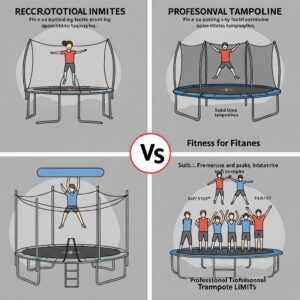
Different user groups have specific considerations regarding trampoline weight limit requirements.
Trampolines for Adults
Adult users need to pay particular attention to weight capacity:
✅ Minimum Recommended Capacity: 250-300 pounds for single adults
✅ Optimal Frame Design: Look for trampolines with at least 8 legs for better stability
✅ Spring Considerations: 7-8.5 inch springs provide better support for adult weights
✅ Professional Grade Options: Consider “gymnast grade” or rectangular trampolines
For adult-focused exercise, rebounders with 300+ pound capacities provide safe alternatives to full-sized trampolines while taking up less space.
Trampolines for Children
Children have different needs, but properly rated capacity remains important:
✅ Growth Consideration: Purchase with future growth in mind
✅ Supervision Requirement: All major pediatric organizations recommend adult supervision
✅ Multiple Child Warning: Remember that three 50-pound children jumping equals 150 pounds static weight but could generate 450+ pounds of dynamic force
According to pediatric safety experts, approximately 75% of trampoline injuries occur when multiple children use the trampoline simultaneously, even when total weight is within limits ⁹.
Trampolines for Heavier Individuals
People requiring higher weight capacity of trampoline options should consider:
✅ Minimum 400+ Pound Capacity: Look for trampolines specifically marketed as heavy-duty
✅ Frame Thickness: 2mm+ wall thickness on frame tubes
✅ Spring Count: 90+ springs for 14-foot and larger trampolines
✅ Rectangle Option: Rectangle trampolines often provide better weight distribution
✅ Professional Installation: Ensure perfectly level installation for optimal weight support
Recent market analysis shows a growing segment of trampolines specifically designed for adults weighing 250-350+ pounds, with specially reinforced frames and mat systems.
Warranty and Weight Limit Considerations
Understanding how weight limits affect warranties is crucial when purchasing a trampoline.
How Exceeding Weight Limits Affects Warranties
Most manufacturers explicitly state that exceeding the weight limit of trampoline products voids the warranty. Here’s what you need to know:
❌ Warranty Voiding: Most warranties become invalid if the trampoline is used above rated capacity
❌ Burden of Proof: In warranty claims, manufacturers may investigate for signs of weight limit violations
❌ Partial Coverage Loss: Some warranties may maintain coverage on certain components while voiding others
❌ Insurance Implications: Home insurance policies may deny claims if manufacturer guidelines weren’t followed
According to Consumer Reports, approximately 70% of trampoline warranty claims are denied due to evidence of misuse, with weight limit violations being among the most common reasons ¹⁰.
Reading the Fine Print
When evaluating warranty coverage related to trampoline weight limit specifications:
✅ Look Beyond Years: Some warranties offer 10+ years on the frame but only 1-2 years on the mat and springs
✅ Check for Proration: Many warranties reduce coverage percentage over time
✅ Understand “Limited” Warranty: This typically covers manufacturing defects only, not wear and tear
✅ Identify User Restrictions: Some warranties specifically mention single-jumper requirements
Extended Warranty Options
For additional protection regarding weight capacity of trampoline concerns:
✅ Retailer Extended Warranties: Often available at purchase time (typically 1-5 years)
✅ Third-Party Coverage: Independent warranty providers sometimes offer trampoline coverage
✅ Protection Plans: Some cover accidental damage beyond manufacturer defects
Be aware that even extended warranties typically exclude damage from exceeding weight limits, making it essential to choose a trampoline with appropriate capacity from the start.
✨ Take Action for Safer Bouncing Today!
–> Don’t wait until an accident happens – make sure your trampoline meets proper weight capacity standards for your family’s needs. Check out our recommended models above, all available on Amazon with fast shipping and excellent customer support. Your family’s safety is worth the investment in a properly rated trampoline!

Conclusion
Selecting a trampoline with the appropriate weight limit is crucial for both safety and longevity of your investment. By understanding the factors that determine weight capacity and how different trampoline types compare, you can make an informed decision that best suits your family’s needs.
Remember these key takeaways:
- Safety First: Never exceed the manufacturer’s stated weight limits, as doing so significantly increases injury risk and voids warranties.
- Quality Matters: Higher-quality materials and construction directly correlate with higher weight capacities and longer product lifespans.
- One at a Time: Even if the total weight capacity allows for multiple jumpers, safety organizations strongly recommend only one person jump at a time.
- Regular Inspection: Check your trampoline regularly for signs of wear that might indicate its weight capacity has been compromised.
- Investment Perspective: Spending more initially on a trampoline with higher weight capacity often results in better long-term value through extended durability and safer performance.
As trampoline technology continues to evolve, manufacturers are creating models with increasingly impressive weight capacities without sacrificing safety or performance. By selecting a model that exceeds your current needs, you ensure years of safe and enjoyable use for your entire family.
Trampoline Weight Limit FAQs
❓ What happens if you exceed the weight limit on a trampoline?
✅ Exceeding a trampoline weight limit can cause dangerous structural failures including mat tearing, spring breakage, or frame bending. You'll typically notice reduced bounce performance, unusual noises, and visible sagging before catastrophic failure occurs. This overloading voids manufacturer warranties and significantly increases injury risk as the trampoline may bottom out or collapse during use...
❓ Can a 300 pound person use a trampoline?
✅ Yes, a 300 pound person can safely use a trampoline rated for 350-450+ pounds. Heavy-duty models from manufacturers like Skywalker, ORCC, and Zupapa offer weight capacities up to 500 pounds specifically designed for adult users. Look for trampolines with 14-gauge steel frames, 2mm+ wall thickness, and 90+ springs for optimal support and durability...
❓ How much weight can a 14 ft trampoline hold?
✅ Most 14 ft trampolines have weight capacities between 250-400 pounds depending on quality and construction. Economy models typically support 250-300 pounds, while mid-range trampolines handle 300-350 pounds. Premium 14 ft trampolines with reinforced frames and high-tension spring systems can support up to 400 pounds safely. Always check manufacturer specifications as capacity varies significantly between brands...
❓ How accurate are trampoline weight limits?
✅ Trampoline weight limits are generally accurate with a built-in safety margin of 10-20%. Manufacturers determine these limits through rigorous stress testing and typically set the official capacity below the actual breaking point. However, weight limits usually refer to static weight rather than dynamic jumping forces, which can be 2-3 times greater. For maximum safety, stay at least 10% below the stated weight capacity...
❓ Do rectangular trampolines have higher weight limits than round ones?
✅ Yes, rectangular trampolines typically offer 15-30% higher weight limits than round models of similar size. The rectangular frame design distributes force more efficiently and provides more structural support points. Professional-grade rectangular trampolines often support 400-550+ pounds compared to 300-400 pounds for premium round models. This superior weight capacity makes rectangular trampolines preferred for heavier users and professional applications...
Recommended for You:
- 10 Simple Steps How to Take Apart a Trampoline Safely for Storage or Relocation
- 10 Brilliant Ways Can You Recycle Material From Trampoline – Sustainable Upcycling Guide 2025
- 10 Incredible Facts About the Biggest Trampoline in the World You Need to See in 2025
Disclaimer: This article contains affiliate links. If you purchase products through these links, we may earn a small commission at no additional cost to you.
✨ Found this helpful? Share it with your friends!
[addtoany]