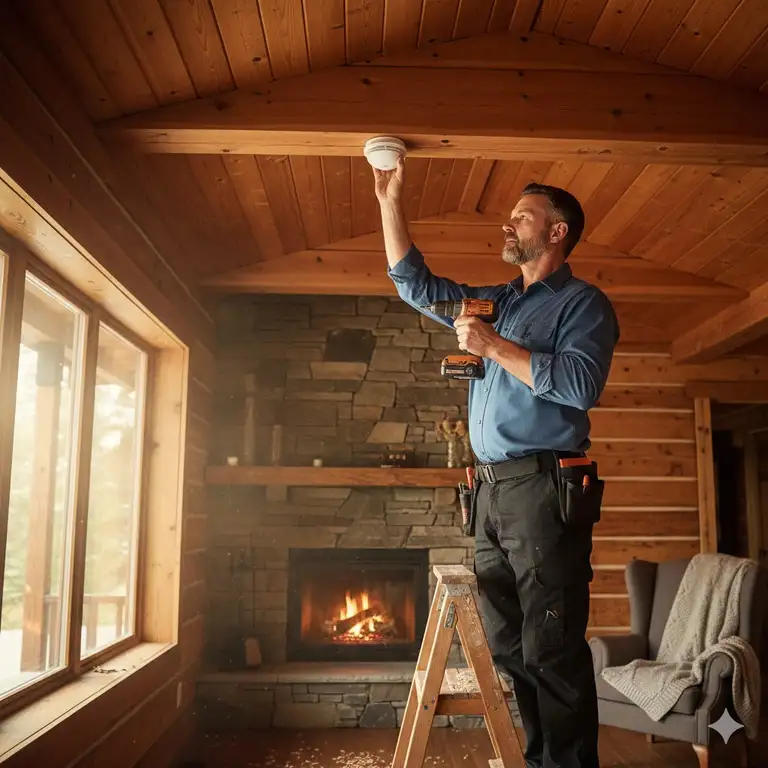
I have spent many cozy nights in rustic cabins, and there is truly nothing like the scent of cedar and the crackle of a wood-burning stove. However, as much as we love the aesthetic of a timber-framed sanctuary, we have to face a scary reality: wood burns. Fast. If you are living in or building a small timber structure, you are likely thinking about the logistics of installing smoke alarm in hut / wooden house setups. It is not just a weekend DIY project; it is the thin line between a peaceful night’s sleep and a complete disaster.
✨Was this helpful? Spread the word! 🚀
[addtoany]
Whether you call it a “tiny house,” a “she-shed,” or a classic log cabin, the porous and dry nature of aged wood makes fire safety a non-negotiable priority. In 2026, the technology available for residential fire protection has evolved significantly, offering smarter sensors and better connectivity. In this massive guide, I am going to walk you through everything I know about keeping your wooden retreat safe, from choosing the right sensor technology to the nitty-gritty of placement.
Quick Comparison: Hut Safety vs. Traditional Home Safety
| Feature | Small Hut / Wooden House | Standard Suburban Home |
| Primary Fire Risk | Wood stoves, dry timber, rodents | Kitchen fires, electrical overloads |
| Ventilation | Often high (drafty) or very low | Controlled HVAC systems |
| Response Time Needed | Extremely Fast (Flashover is quicker) | Moderate |
| Power Source | Often Battery/Solar | Hardwired with backup |
| Sensor Preference | Photoelectric (Smoldering fires) | Dual Sensor (Universal) |
Top 7 Smoke Alarms for Your Wooden Retreat: Expert Analysis
Choosing the right hardware is the first step in installing smoke alarm in hut / wooden house environments. I have researched the top-rated products on Amazon for 2026 to ensure you get the best protection available.
1. Google Nest Protect (Battery – 2nd Generation): The Smartest Guardian
If you want the “Rolls Royce” of detectors, this is it. The Google Nest Protect (Battery – 2nd Generation) is perfect for huts that do not have complex electrical wiring. It uses a Split-Spectrum Sensor to detect both fast-burning and smoldering fires.
-
Technical Specifications:
-
Model: S3003LWES
-
Sensor: Split-Spectrum (Photoelectric + Infrared)
-
Power: 6 AA Energizer Ultimate Lithium batteries
-
Connectivity: Wi-Fi, Bluetooth (App-based)
-
Lifespan: 10 years
-
-
Customer Review Analysis: Users consistently praise the “Heads-Up” feature which gives a calm voice warning before the loud siren. However, some note that in very remote huts, the Wi-Fi requirement for smart features can be a hurdle.
-
Pros: Self-testing, detects Carbon Monoxide, pathlight feature.
-
Cons: Higher price point, requires internet for full functionality.
2. Kidde i9010 (10-Year Sealed Battery): The Reliable Workhorse
For those who want a “set it and forget it” solution when installing smoke alarm in hut / wooden house projects, the Kidde i9010 (10-Year Sealed Battery) is a budget-friendly powerhouse.
-
Technical Specifications:
-
Model: i9010
-
Sensor: Ionization
-
Power: Sealed Lithium Battery
-
Mounting: Twist-off bracket
-
-
Customer Review Analysis: Buyers love the longevity. Many cabin owners mention it’s great because you don’t have to worry about birds nesting in the battery compartment every year.
-
Pros: No battery changes for a decade, very loud (85dB).
-
Cons: Ionization sensors are more prone to nuisance alarms from cooking.
3. First Alert BRK 3120B: The Dual-Sensor Expert
When installing smoke alarm in hut / wooden house setups where safety is the only concern, dual-sensor technology is king. The First Alert BRK 3120B combines Ionization and Photoelectric tech.
-
Technical Specifications:
-
Model: 3120B
-
Sensor: Dual (Ionization + Photoelectric)
-
Power: Hardwired with 2 AA battery backup
-
Warranty: 10-year limited
-
-
Customer Review Analysis: Highly rated for accuracy. It significantly reduces false alarms while catching real fires faster than single-sensor units.
-
Pros: Best overall detection range, smart-sensing technology.
-
Cons: Requires professional wiring for the main power.
4. X-Sense XS01-WR (Wireless Interconnected): Perfect for Multi-Room Huts
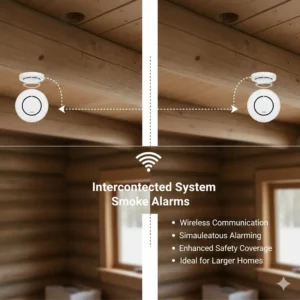
If your wooden house has a loft or multiple rooms, you need interconnected units. The X-Sense XS01-WR (Wireless Interconnected) ensures that if one alarm goes off, they all do.
-
Technical Specifications:
-
Model: XS01-WR
-
Connectivity: RF (Radio Frequency)
-
Sensor: Photoelectric
-
Range: Over 820 feet (open air)
-
-
Customer Review Analysis: Users appreciate the easy pairing process. It’s a favorite for tiny house communities.
-
Pros: No Wi-Fi needed for interconnection, sleek design.
-
Cons: Small form factor might be easy to ignore if hidden.
5. First Alert Onelink Safe & Sound: The High-Tech Hub
For the modern wooden home, the First Alert Onelink Safe & Sound combines a high-quality smoke/CO detector with a built-in Alexa speaker.
-
Technical Specifications:
-
Model: 1039102
-
Sensor: Photoelectric & Electrochemical (CO)
-
Integration: Alexa, Apple HomeKit
-
-
Customer Review Analysis: People love the multi-functionality. It saves space in a small hut by combining safety with entertainment.
-
Pros: Great sound quality, hardwired reliability.
-
Cons: Expensive; requires a robust power source.
6. Kidde Smoke & Carbon Monoxide Detector (KN-COSM-B): The Essential Duo
In any wooden house with a fireplace, CO is a silent killer. The Kidde Smoke & Carbon Monoxide Detector (KN-COSM-B) handles both threats.
-
Technical Specifications:
-
Model: KN-COSM-B
-
Sensor: Ionization and Electrochemical
-
Power: 2 AA batteries
-
Voice Alert: Yes
-
-
Customer Review Analysis: The voice alarm “Fire!” or “Warning! Carbon Monoxide!” is cited as being much more effective at waking people up than just a beep.
-
Pros: Dual protection, battery-operated (no wiring needed).
-
Cons: The unit is a bit bulky.
7. Aisung 10-Year Smoke Detector: The Sleek Minimalist
If you have a very modern, aesthetic-focused wooden house, the Aisung 10-Year Smoke Detector offers a low-profile design without sacrificing safety.
-
Technical Specifications:
-
Sensor: Photoelectric
-
Battery: 10-year built-in
-
Test/Silence Button: Extra large
-
-
Customer Review Analysis: Favored by owners of Scandinavian-style huts for its “hidden in plain sight” look.
-
Pros: Very easy to install, dust-proof design.
-
Cons: Lesser-known brand compared to Kidde or First Alert.
✨ Don’t Miss These Exclusive Deals!
🔍 Take your wooden house safety to the next level with these carefully selected products. Click on any highlighted item to check current pricing and availability. These tools will help you protect your investment and keep your loved ones safe! 🏚️🔥
💬 Just one click – help others make better buying decisions too!😊
[addtoany]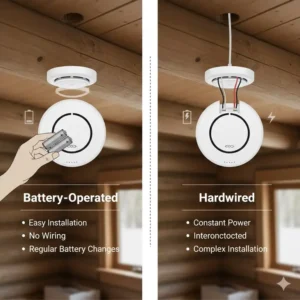
Feature Matrix: Comparing the Top 7 Detectors
| Product Name | Sensor Type | Power Source | Interconnect? | Best For |
| Google Nest Protect | Split-Spectrum | Battery/Hardwire | Yes (Wi-Fi) | Smart Homes |
| Kidde i9010 | Ionization | 10-Year Battery | No | Remote Huts |
| First Alert BRK 3120B | Dual Sensor | Hardwired | Yes (Wired) | Maximum Safety |
| X-Sense XS01-WR | Photoelectric | Battery | Yes (Wireless) | Multi-room |
| Onelink Safe & Sound | Photoelectric | Hardwired | Yes (Wi-Fi) | Tech Lovers |
| Kidde KN-COSM-B | Ionization/CO | Battery | No | Huts with Stoves |
| Aisung 10-Year | Photoelectric | 10-Year Battery | No | Modern Design |
Why Fire Safety is Different in a Wooden House
When you are installing smoke alarm in hut / wooden house environments, you have to realize that wood is a living material. It breathes, it shrinks, it expands, and it catches fire differently than drywall. According to the NFPA (National Fire Protection Association), fire spreads significantly faster in structures with exposed wood because the fuel is essentially everywhere.
The Smoldering Danger
Wooden houses are particularly susceptible to smoldering fires. A coal from a fireplace might roll onto the floor, or an electrical wire behind a timber beam might short out. These fires don’t always produce huge flames immediately; they create a lot of thick, toxic smoke first. This is why when you are installing smoke alarm in hut / wooden house systems, I always recommend photoelectric sensors. They are way better at detecting those large smoke particles produced by smoldering logs.
Table: Smoldering vs. Flaming Fires in Wood Structures
| Feature | Smoldering Fire | Flaming Fire |
| Origin | Cigarettes, fireplace embers | Cooking oil, candles, electrical spark |
| Smoke Type | Heavy, dark, thick | Lighter, fast-moving |
| Detection Tech | Photoelectric (Best) | Ionization (Best) |
| Time to Danger | Minutes to Hours | Seconds to Minutes |
Mastering the Placement: Where to Install?
I cannot stress this enough: placement is everything. If you are installing smoke alarm in hut / wooden house units in the wrong spot, they are basically expensive wall ornaments.
The “Dead Air” Space
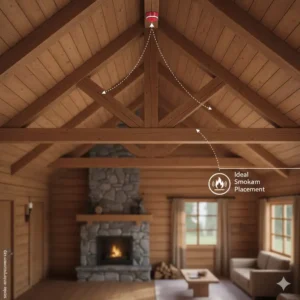
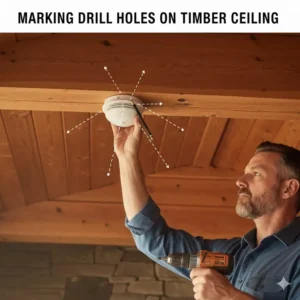
In a hut with a pitched roof (which many have), there is a pocket of “dead air” at the very peak. Smoke cannot easily get into that 4-inch pocket. Consequently, you should mount your alarm at least 4 inches down from the peak. Furthermore, if you’re mounting on a wall, keep it 4-12 inches away from the ceiling.
The “Every Room” Rule
Even in a tiny hut, you need more than one. You should have an alarm:
-
Inside every sleeping room.
-
Outside every separate sleeping area (like a hallway or main living room).
-
On every level of the house (if you have a loft).
Table: Recommended Installation Points
| Location | Why? | Best Alarm Type |
| Loft Bedroom | Heat and smoke rise; this is the highest risk area. | Google Nest Protect |
| Kitchen Area | Cooking is a main fire cause. | Photoelectric (to avoid nuisance alarms) |
| Near Wood Stove | CO and smoldering risks. | Kidde KN-COSM-B |
| Utility Closet | Electrical shorts. | First Alert BRK 3120B |
The Technicality of Installation
Let’s get into the weeds of actually installing smoke alarm in hut / wooden house walls. If you are working with solid logs, you have a unique challenge compared to someone working with studs and drywall.
Hardwired vs. Battery-Powered
If your hut is off-grid, you are looking at battery-powered units. However, I always tell people: “Do not trust a standard 9V battery.” Spend the extra $10 and get the 10-year sealed lithium units. In my experience, people tend to take the batteries out of smoke alarms when they start chirping at 3 AM and forget to put them back. A 10-year sealed unit prevents that human error.
If you do have electricity, hardwired is the way to go because it allows for easy interconnection. When one alarm detects smoke, they all scream. This is crucial in a wooden house where fire can block your exit in seconds.
The Dust Factor
Huts and wooden houses are often dustier than suburban homes. Sawdust from the logs or ash from the fireplace can clog the sensors. Therefore, when installing smoke alarm in hut / wooden house setups, look for units with dust covers or those that are specifically rated for “dirty” environments.
Table: Installation Requirements Analysis
| Requirement | Hardwired Solution | Battery-Powered Solution |
| Skill Level | High (Requires Electrician) | Low (DIY Friendly) |
| Maintenance | Low (Test monthly) | Medium (Battery changes or unit replacement) |
| Interconnectivity | Standard (via signal wire) | Only via Wireless/Wi-Fi |
| Reliability | Highest (as long as grid is up) | High (Independent of power grid) |
Carbon Monoxide: The Silent Partner
If you are installing smoke alarm in hut / wooden house devices, you absolutely must include Carbon Monoxide (CO) detection. Why? Because most wooden huts use wood stoves, propane heaters, or gas generators. These are all prime candidates for CO leaks.
CO is colorless, odorless, and tasteless. It will put you to sleep before you even know there’s a problem. I personally use the Kidde KN-COSM-B because it talks to me. Hearing a voice say “Carbon Monoxide” is much more jarring and effective when you are groggy in the middle of the night than a series of beeps.
Table: CO vs. Smoke – The Crucial Differences
| Metric | Smoke | Carbon Monoxide (CO) |
| Visibility | Visible (Gray/Black) | Invisible |
| Odor | Strong (Burning) | None |
| Main Source | Furnishings, structure | Faulty heaters, blocked flues |
| Placement | Ceiling (Smoke rises) | Knee-high to Ceiling (CO mixes with air) |
| Action | Get out immediately | Get out and call the fire department |
Buying Guide: What to Look for in 2026
When you are out shopping for your project of installing smoke alarm in hut / wooden house systems, don’t just grab the cheapest thing at the hardware store. Consider these factors:
-
UL 217 Standard: Ensure the alarm meets the latest UL 217 standards (8th or 9th edition). These are designed to better distinguish between real fires and “nuisance” smoke like burnt toast.
-
Voice Alerts: In a small hut, things can get loud (rain on a tin roof, etc.). A voice alert is often easier to hear over environmental noise.
-
App Connectivity: If your hut is a rental (like an Airbnb), you want an alarm that can alert your phone. If a fire starts while the hut is empty, you might be able to save the structure if you get a notification instantly.
-
Aesthetics: Let’s be real—you didn’t build a beautiful wooden house to have an ugly plastic disk ruin the vibe. Brands like Aisung and Google offer much cleaner designs.
Comparison: Budget vs. Premium Solutions
| Feature | Budget ($15 – $30) | Premium ($80 – $130) |
| Sensor Tech | Single (Ionization) | Multi-Spectrum / Dual |
| Power | 9V Replaceable | 10-Year Sealed or Smart Hardwired |
| Smart Features | None | Phone alerts, Self-testing |
| Design | Basic White Plastic | Modern, Minimalist |
| Warranty | 1-3 Years | 10 Years |
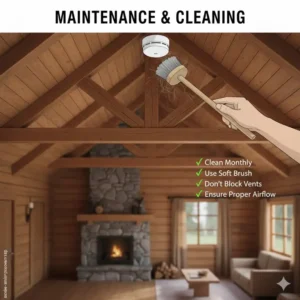
Maintenance: Keeping the Guardian Alive
You’ve finished installing smoke alarm in hut / wooden house units. Now what? You can’t just leave them there for a decade.
-
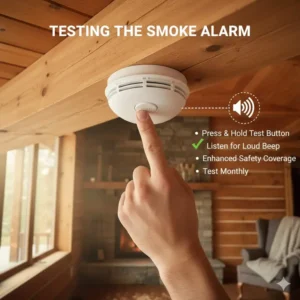
The Monthly Test: Press the “Test” button once a month. I like to do this on the first of every month. It takes five seconds.
-
Vacuuming: Every six months, use a vacuum attachment to suck out any dust or cobwebs from the vents of the alarm. In a wooden house, spiders love the warmth of these devices.
-
Replacement Date: Every smoke alarm has an expiration date on the back. Most last 10 years. If yours is from 2016, it is time to throw it in the trash and get a new one. No exceptions.
Performance Metrics: Response Time by Sensor Type
| Fire Type | Ionization Sensor | Photoelectric Sensor | Dual Sensor |
| Smoldering Wood | 30-60 Minutes | 5-10 Minutes | 5-10 Minutes |
| Fast Flaming | 30-90 Seconds | 2-4 Minutes | 30-90 Seconds |
| Cooking Nuisance | High Trigger Rate | Low Trigger Rate | Moderate |
The Environmental Impact of Your Choice
In 2026, we are more conscious than ever about the waste we produce. When installing smoke alarm in hut / wooden house systems, consider the environmental footprint.
-
10-Year Batteries: These are much better for the environment than throwing away two 9V alkaline batteries every year for ten years.
-
Recyclability: Some brands, like Google and First Alert, have recycling programs for their old sensors. Since smoke alarms contain small amounts of radioactive material (in ionization models) or sensitive electronics, they shouldn’t just go in the regular trash.
✨ Protect Your Dream Home Today!
🔍 Your wooden house is your sanctuary. Don’t let a simple oversight turn it into a memory. Click on any of the product links above to choose the right guardian for your home. Stay safe, stay smart, and enjoy the cabin life! 🌲🏡✨
Conclusion: Your Safety is Worth the Effort
At the end of the day, installing smoke alarm in hut / wooden house setups is about peace of mind. We build and live in wooden homes because we value the connection to nature and the warmth of the materials. But that warmth shouldn’t come from a house fire.
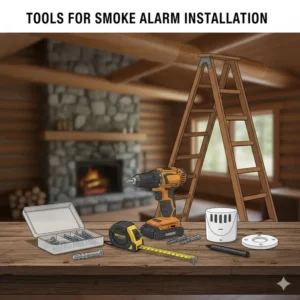
By choosing a high-quality, dual-sensor or photoelectric alarm like the ones we discussed—specifically the Google Nest Protect or the First Alert BRK 3120B—you are giving yourself the best possible chance to escape if the unthinkable happens. Don’t wait until you’re smells smoke to think about this. Grab a ladder, pick up a few high-quality detectors, and spend an hour this weekend securing your sanctuary.
FAQs
✅ The best place is on the ceiling, at least 4 inches away from walls and any peak of a pitched roof. Avoid corners where 'dead air' prevents smoke from reaching the sensor, and ensure one is in every sleeping area...
✅ Yes, you should use a photoelectric smoke detector to minimize false alarms from the stove, paired with a Carbon Monoxide (CO) detector. Modern dual-sensor units or interconnected smart alarms like the Nest Protect are highly recommended for timber structures...
✅ Even in small structures, you generally need at least two: one in the main living/sleeping area and one in any loft or separate room. For maximum safety, follow the NFPA 72 guidelines which suggest one alarm per level...
✅ If your hut lacks reliable grid power, 10-year sealed lithium battery alarms are the best choice. They provide decade-long protection without the need for wiring or frequent battery changes, making them ideal for off-grid or seasonal wooden houses...
✅ Absolutely. Sawdust and wood debris can clog the sensing chamber of the alarm. It is vital to vacuum your alarms every 6 months and choose models with dust-resistant designs if you are still undergoing construction or renovations... ❓ Where is the best place for installing smoke alarm in hut / wooden house?
❓ Do I need a special smoke detector for a log cabin with a wood stove?
❓ How many smoke alarms are required in a tiny wooden house?
❓ Should I use battery or hardwired alarms in a remote hut?
❓ Can sawdust interfere with a smoke alarm in a wooden house?
Recommended for You
- Smoke Detectors Placement in Nursery: 7 Critical Safety Tips
- Top 9 Ultimate tips to baby proof house for crawling baby: Your Safety Expert Guide
- Keeping Windows Locked But Ventilated: The Ultimate Home Security & Fresh Air Guide [2026]
Disclaimer: This article contains affiliate links. If you purchase products through these links, we may earn a small commission at no additional cost to you.
✨ Found this helpful? Share it with your friends! 💬🤗
[addtoany]