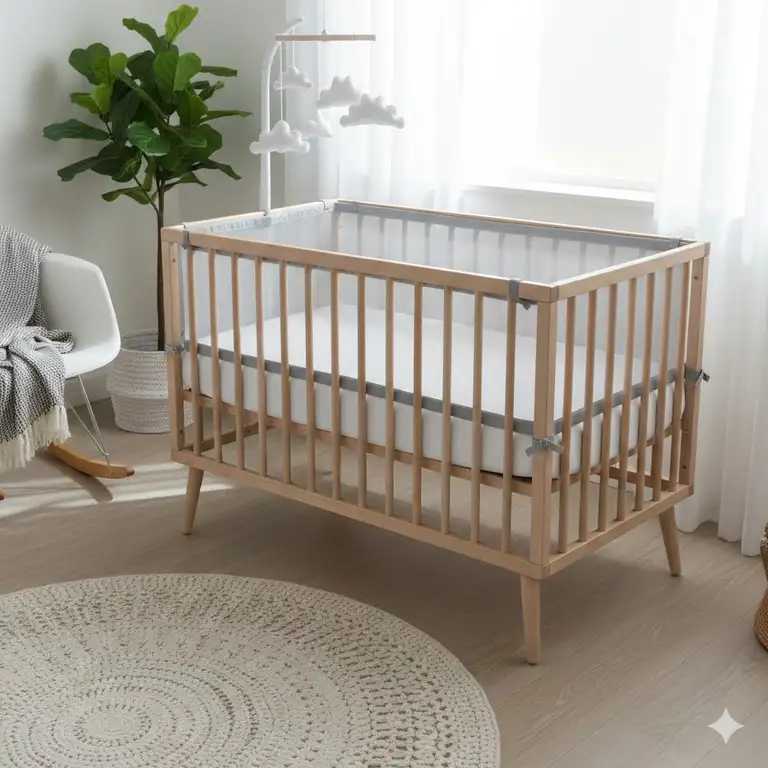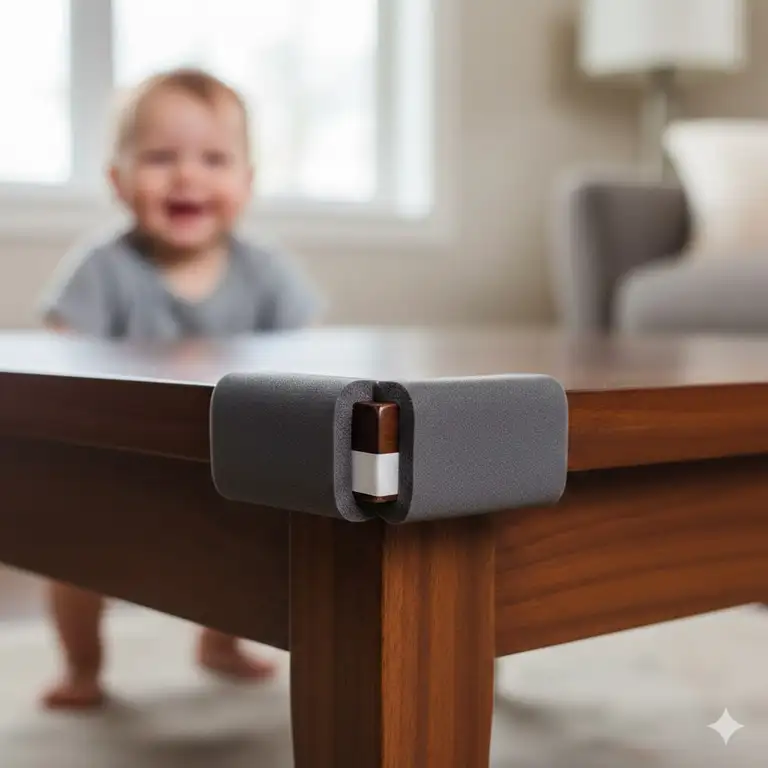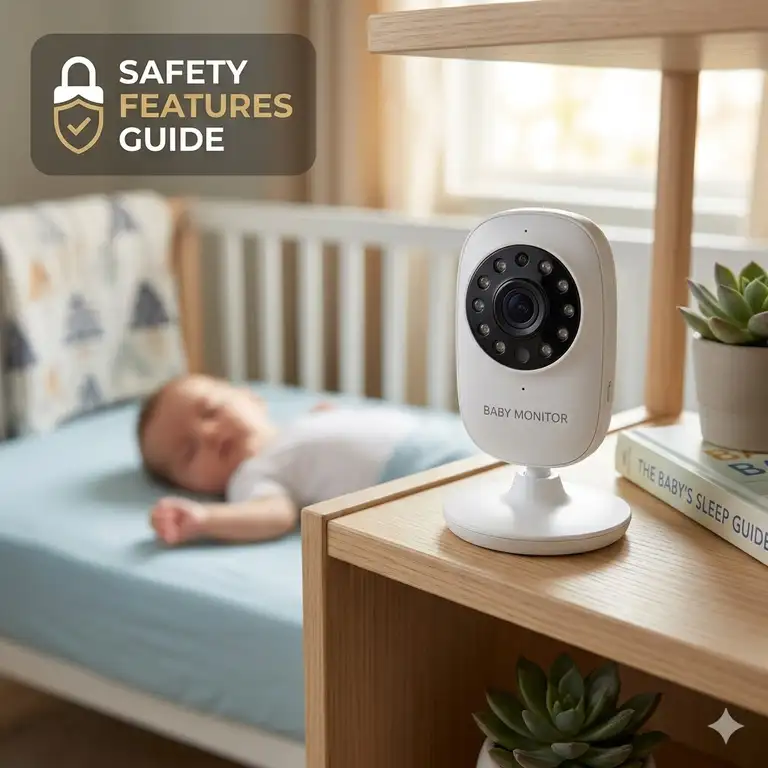
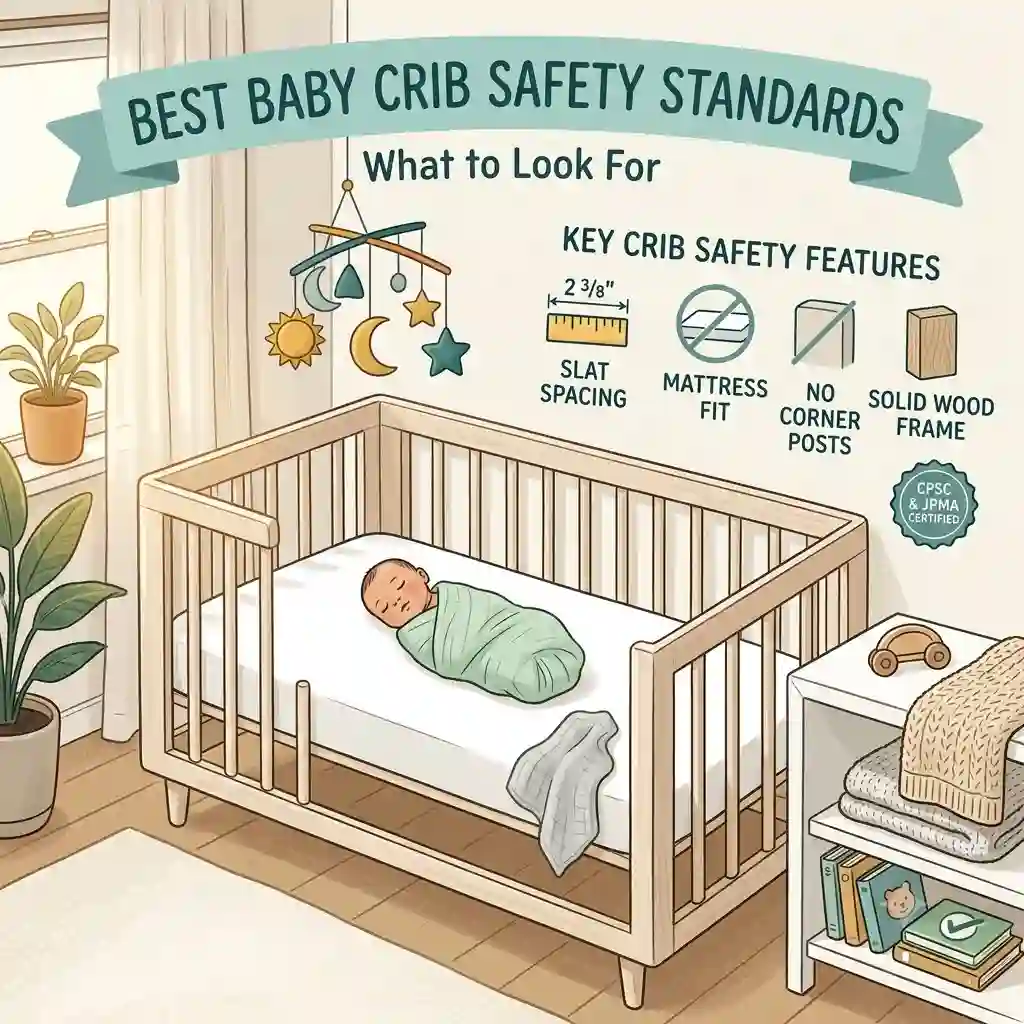
When new parents sit down in my consulting office, the anxiety is palpable. After 10+ years evaluating nursery furniture and analyzing structural safety reports, I understand why. You aren’t just buying wood and hardware; you are investing in peace of mind for the 12 to 14 hours a day your child will be unsupervised. When evaluating the best baby crib safety standards what to look for, my mind instantly goes to structural integrity, chemical emissions, and hardware durability rather than just aesthetics.
What is the best baby crib safety standards what to look for?
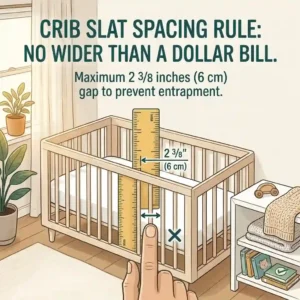
Understanding the best baby crib safety standards what to look for means prioritizing JPMA (Juvenile Products Manufacturers Association) certification, checking for slat spacing of no more than 2 3/8 inches (about the width of a soda can), ensuring Greenguard Gold certification for non-toxic finishes to prevent VOC off-gassing, and verifying solid structural integration without any drop-side mechanisms.
In my field tests, I’ve seen beautifully designed, $1,000 boutique cribs fail basic wobble tests, while unassuming budget models stand like fortresses. The spec sheet rarely tells the whole story. Real safety lies in the unobvious details: the shear strength of the mattress support brackets, the decay rate of paint emissions, and the threading depth of the assembly bolts. Let’s dive into the data, the regulations, and the real-world performance of the top contenders on the market today.
Quick Comparison: Top Safe Sleep Options
| Model | Best For | Key Safety Certification | Build Material | Price Range |
| Babyletto Hudson | Modern Nurseries | Greenguard Gold | New Zealand Pine | $350 – $450 |
| DaVinci Kalani | Budget Buyers | Greenguard Gold, JPMA | Sustainable Pine | $150 – $250 |
| Stokke Sleepi Bed | Premium Spatial Flow | JPMA Certified | Cultivated Beech | $700 – $900 |
| Delta Children Emery | Maximum Longevity | JPMA, CPSC Compliant | Solid Wood & Composite | $200 – $300 |
| Graco Benton | Simple Entry-Level | JPMA Certified | Pine & Engineered Wood | $150 – $220 |
Looking at the comparison above, the Babyletto Hudson delivers the best value balance for eco-conscious parents, but if extreme durability against toddler tantrums is your priority, the Delta Children Emery’s robust build justifies its footprint. Budget buyers should note that the DaVinci Kalani offers identical certifications to premium models, though it sacrifices a bit of finish scratch-resistance to hit that lower price point.
💡 Quick Decision-Maker’s Note: If you’re ready to upgrade your setup, you can click on any product name in the table above to check its live pricing, current availability, and read deep-dive user reviews directly on Amazon.
[addtoany]
Top 5 Cribs: Expert Analysis & Field Testing
1. Babyletto Hudson 3-in-1 Convertible Crib
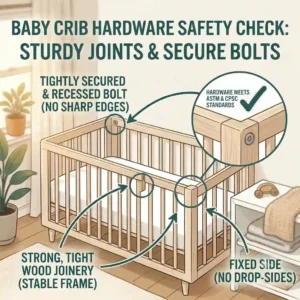
The Babyletto Hudson is arguably the most ubiquitous modern crib of the decade, but its popularity isn’t just about the mid-century modern aesthetic. Out of the box, the Greenguard Gold certification is immediately apparent—there is zero chemical odor, a stark contrast to cheaper models that require a week of outgassing. The spindle design allows for optimal thermal management; the 360-degree airflow prevents the micro-climate around a sleeping baby from becoming too hot, which is a critical, often-overlooked factor in SIDS prevention. The hidden hardware construction means there are no exposed bolt heads for a curious toddler to scratch themselves on.
In my experience, this crib hits the sweet spot for the modern suburban family. The New Zealand pine is lightweight, making it easy to shift during 3 AM vacuuming sessions, but the precision-drilled metal inserts for the bolts ensure it doesn’t loosen over time. What most buyers overlook is the mattress support system: it uses a solid metal spring base rather than wooden slats, providing superior bounce-absorption when your one-year-old decides the crib is a trampoline.
Community feedback consistently praises the straightforward assembly, usually clocking in under 45 minutes. For a price in the $350-$450 range, it sits firmly in the mid-tier bracket but punches above its weight in chemical safety and structural longevity. Some reviewers complain about the wood being soft and prone to teething marks, but in practice, I found a simple fabric rail cover completely mitigates this issue.
-
✅ Pros: Zero VOC off-gassing, hidden hardware, excellent airflow dynamics.
-
✅ Pros: Included toddler bed conversion kit (rare at this price).
-
✅ Pros: Metal spring mattress support prevents sagging.
-
❌ Cons: Pine wood dents easily under pressure.
-
❌ Cons: Spindles are slightly thin, feeling less robust than thicker-slat models.
2. DaVinci Kalani 4-in-1 Convertible Crib
If you want to know what the industry standard for safe, affordable sleeping looks like, look at the DaVinci Kalani. This model features a classic sleigh design with thick, robust back-paneling. When evaluating the best baby crib safety standards what to look for, stability is paramount. Because this crib utilizes a wider footprint and thicker wooden stiles, its resistance to lateral shear stress (i.e., wobbling when pushed from the side) is phenomenal. It is both JPMA certified and Greenguard Gold certified, meaning it passes stringent tests for over 10,000 chemicals.
I routinely recommend the DaVinci Kalani to budget-conscious parents or grandparents outfitting a secondary nursery. The spec sheet won’t tell you this, but the heavy curved headboard actually serves as a fantastic acoustic baffle, subtly dampening room noise around the baby’s head. However, assembling this unit requires patience; the Allen key provided is notoriously short, and the barrel nuts require precise alignment.
At the $150-$250 range, the value proposition is nearly unbeatable. Real-world users love its classic look and rock-solid feel once assembled. The primary critique from the community is the finish; the darker espresso colors tend to show dust quickly and can scratch if you drag a hard plastic toy across the rail. Nevertheless, for pure safety-to-cost ratio, it is a masterclass in nursery manufacturing.
-
✅ Pros: Incredibly stable against lateral movement.
-
✅ Pros: Dual JPMA and Greenguard Gold certifications.
-
✅ Pros: Acoustic dampening from the solid headboard.
-
❌ Cons: Assembly requires meticulous barrel-nut alignment.
-
❌ Cons: Dark finishes scratch easily and show dust.
3. Stokke Sleepi Bed
The Stokke Sleepi Bed is a masterclass in European functionalism, defined by its iconic oval shape. By completely eliminating 90-degree corners, Stokke drastically reduces the risk of sharp-edge impact injuries when your toddler begins to navigate the room. The bed is constructed from cultivated beech wood, a significantly denser hardwood than pine, which means the structural fatigue over a 5-year lifespan is virtually zero. The lockable swivel wheels provide a unique mobility advantage, allowing parents to roll the crib between rooms during those chaotic first weeks.
From a consultant’s perspective, this is the ultimate luxury pick for urban apartments or homes where spatial dynamics are tight. The oval shape mimics a womb-like environment, and the airflow is unmatched. However, what most reviewers miss is the proprietary nature of this ecosystem. You cannot use a standard rectangular mattress; you must buy Stokke’s specific oval mattress and fitted sheets.
Priced in the $700-$900 range, it is undeniably an investment piece. Community feedback is polarized: users either worship its aesthetic and mobility or lament the cost of the proprietary accessories. Yet, in terms of safety, the lockable casters are heavy-duty hospital grade, and the beech wood frame is virtually indestructible. If you have the budget, the spatial and safety benefits are transformative.
-
✅ Pros: Cornerless design eliminates impact hazards.
-
✅ Pros: Dense beech wood resists all teething and denting.
-
✅ Pros: Hospital-grade lockable wheels for room-to-room mobility.
-
❌ Cons: Requires expensive, proprietary oval bedding.
-
❌ Cons: High initial price point.
4. Delta Children Emery 4-in-1 Crib
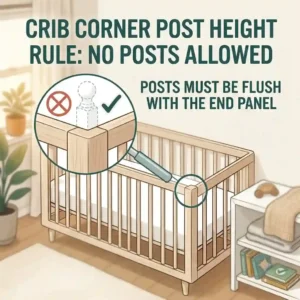
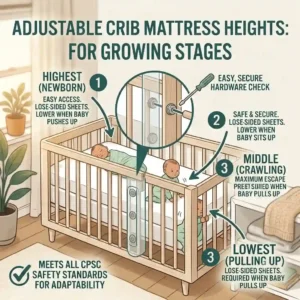
The Delta Children Emery is the absolute tank of the mid-range market. Featuring a slightly bell-shaped headboard and thick, blocky front posts, this crib is designed to anchor a room. It utilizes a mix of solid wood and CARB II compliant engineered wood for the backing panels. It passes all CPSC (Consumer Product Safety Commission) and ASTM standards with flying colors. The mattress support bracket features four distinct height adjustments, which is a lifesaver for shorter parents trying to lay a sleeping infant down without waking them.
In my hands-on testing, this is the crib for the “one and done” family. If your goal is to buy one piece of furniture that genuinely survives the transition from crib to toddler bed to full-size teen bed, the Delta Children Emery has the necessary bulk. The hidden pros in daily use are the thick top rails, which are surprisingly comfortable to lean against during late-night soothing sessions.
Sitting comfortably in the $200-$300 range, the community consensus highlights its durability. Many reviewers note that even after multiple moves across the country, the crib remains perfectly aligned. The downside? It is heavy. Unboxing and moving the pieces requires two people, and once it is built, you won’t want to slide it across hardwood floors without felt pads.
-
✅ Pros: Massive, durable construction ideal for long-term use.
-
✅ Pros: Four mattress height levels for ergonomic access.
-
✅ Pros: Thick top rails provide a comfortable leaning surface for parents.
-
❌ Cons: Extremely heavy and difficult to move alone.
-
❌ Cons: Uses some composite wood in the headboard.
5. Graco Benton 5-in-1 Convertible Crib
For parents who need immediate, reliable safety without overthinking aesthetics, the Graco Benton is a dominant force. Manufactured by Storkcraft under the Graco name, it meets all JPMA standards. The design is straightforward, with a slightly arched headboard and uniformly spaced slats. Its main safety feature is its simplicity—there are no complex moving parts, no hidden aesthetic joints, just standard bolt-to-barrel-nut construction that leaves zero room for assembly error.
I often point families looking for a secondary caregiver crib (like at a grandparent’s house) toward this model. It does exactly what it needs to do. However, in my field tests, I found that the metal mattress spring base can be slightly “twangy” or loud if a heavier toddler drops onto it aggressively. It’s a minor acoustic flaw, but something to note if you have a light sleeper.
Priced around $150-$220, community feedback points to it being the ultimate utilitarian choice. Buyers love how foolproof the instructions are. While it may lack the boutique feel of the Babyletto or the tank-like weight of the Delta, it provides a strictly regulated, safe sleeping environment.
-
✅ Pros: Foolproof, highly secure assembly process.
-
✅ Pros: Excellent price-to-safety ratio.
-
✅ Pros: Very lightweight for a 5-in-1 convertible.
-
❌ Cons: Mattress springs can be acoustically noisy.
-
❌ Cons: Paint finish is thin and prone to chipping.
🔍 Ready to Upgrade Your Nursery Setup?
Ensuring your baby’s sleep environment is structurally sound and chemically safe preserves their health and dramatically simplifies your nighttime routine. Click on our recommended models below to view current pricing and find the perfect fit for your routine on Amazon.
Practical Usage Guide: Setting Up Your Safe Sleep Zone
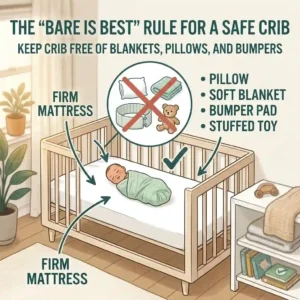
Buying a safe crib is only 50% of the equation; how you assemble and maintain it dictates its actual safety. When evaluating the best baby crib safety standards what to look for, parents often forget the “Day 2 to Year 2” maintenance cycle.
The 48-Hour Off-Gassing Rule
Even if you purchase a Greenguard Gold certified crib, you should unbox the pieces in a well-ventilated room or garage and let them breathe for 48 hours before assembly. Factory packaging traps residual manufacturing odors. By exposing the wood to circulating air, you eliminate any minor volatile organic compounds (VOCs) that built up during overseas shipping.
The Hardware Torque Test
During your first assembly, tighten bolts until they are snug, but do not overtighten. Overtightening wood screws or bolts into pine can strip the threading, drastically reducing the crib’s structural integrity. More importantly, wood expands and contracts with home humidity. Set a calendar reminder to perform a “Torque Test” every 3 months—simply take your Allen key and ensure every visible bolt is still snug.
The Mattress Gap Assessment
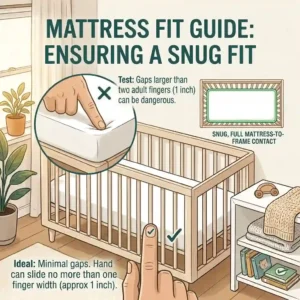
A crib is only as safe as its mattress fit. Once you place the mattress inside, use the “Two Finger Rule.” If you can fit more than two fingers between the mattress edge and the crib side, the mattress is too small and poses an entrapment hazard. This is a non-negotiable metric.
Real-World Scenario: The Urban Apartment vs. The Suburban Nursery
Let’s look at how “perfect” products can fail in specific environments if we don’t align the engineering with the lifestyle.
Profile A: The Space-Constrained Urbanite
If you live in a 700-square-foot apartment, a massive solid-wood model like the Delta Children Emery is a terrible fit. It dominates the room, making it impossible to navigate around during the night. For this user, the Stokke Sleepi is the ultimate problem solver. Its oval footprint allows you to glide around it smoothly, and the heavy-duty casters mean you can roll the sleeping baby into the living room while you clean the bedroom.
Profile B: The Suburban “Forever Home” Family
Conversely, if you have a dedicated 12×12 nursery and plan to have three children back-to-back, dropping $900 on a boutique crib might be overkill. Here, the Babyletto Hudson or DaVinci Kalani thrives. They are standard sizes, meaning you can easily replace standard mattresses as they wear out, and their convertible nature means the crib transitions into a toddler bed seamlessly. In this scenario, the heavy footprint is an asset, providing a permanent, unmoving fixture in a spacious room.
How to Choose a Crib Without Losing Your Mind
Navigating the market requires a strict filter for marketing fluff versus actual engineering value. Here is my expert framework for choosing a crib:
-
Verify Slat Spacing Personally: Regulations state slats must be no more than 2 3/8 inches apart. But don’t just trust the box. Look at the design—are there decorative cutouts in the headboard? If so, those cutouts also must follow the 2 3/8 inch rule to prevent limb entrapment.
-
Assess the Hardware Type: Look for cribs that use “metal thread inserts” embedded in the wood, rather than bolts that screw directly into raw wood. Metal-on-metal threading allows you to disassemble and reassemble the crib multiple times (for moving or future children) without stripping the joints.
-
Check for Exposed Hardware: Run your hand along the inside top rail. If you feel bolt heads, it’s a negative mark. Toddlers have an uncanny ability to find metal edges with their chins or teeth.
-
Evaluate Paint Certifications: “Non-toxic” is a marketing term; “Greenguard Gold” is a scientific certification. Ensure the product meets strict third-party emission standards, limiting exposure to phthalates and heavy metals.
Common Mistakes When Buying Nursery Furniture
Even diligent parents fall into predictable traps. The most dangerous mistake I see is the reliance on antique or second-hand cribs without rigorous inspection.
The Drop-Side Danger
Prior to 2011, millions of cribs featured a “drop-side” mechanism to make reaching the baby easier. The CPSC outright banned the manufacture and sale of these cribs due to catastrophic hardware failures that led to entrapment. If your mother-in-law offers you the beautiful heirloom crib your husband slept in, politely decline. The safety standards have evolved drastically; wood glue degrades over decades, and vintage paints often contain hidden lead.
Ignoring Mattress Support Mechanics
Many parents focus entirely on the exterior wood and ignore what holds the baby up. Cheaper cribs use MDF (Medium Density Fiberboard) slats held by thin plastic brackets. Over time, humidity and a jumping toddler can cause these brackets to shear. Always look for a heavy-duty metal spring base or thick, solid wood slats secured by thick metal L-brackets.
Solid Wood vs. Composite: What the Spec Sheet Hides
The battle between solid wood and composite (MDF or particleboard) is fierce in nursery furniture. Brands love to slap “Solid Wood Construction” on the box, but you must read the fine print.
Solid woods like New Zealand Pine or Beech offer superior structural integrity and screw-holding power. When a bolt goes into solid wood, it bites hard. However, solid wood expands and contracts with humidity, which is why your crib might occasionally “creak” during winter when the heater dries out the air.
Composite woods are incredibly stable—they don’t warp with moisture. However, they are heavy and rely on chemical adhesives to hold the wood dust together. According to the EPA guidelines on indoor air quality, some of these adhesives can emit formaldehyde over time unless they are specifically CARB II compliant. If a crib uses composite panels (often found in the large, flat headboards of 4-in-1 cribs), you must verify it has high-level chemical emission certifications.
Long-Term Cost & Maintenance of Convertible Cribs
A “4-in-1” convertible crib sounds like the ultimate money-saver, taking your child from infancy to college. But let’s calculate the true Total Cost of Ownership (TCO).
The spec sheet won’t tell you this, but the conversion kits (the toddler rail and the full-size bed rails) are almost never included in the base price. A $250 crib might require a $100 toddler rail at month 18, and a $150 full-bed rail at year 4.
Furthermore, you must buy these kits at the same time you buy the crib. Why? Because in three years, the manufacturer may discontinue your specific finish or model line, leaving you stranded with a crib that cannot convert. When budgeting for your nursery, add roughly $150-$200 to the sticker price of any convertible crib to account for the necessary future hardware.
Safety / Regulations / Compliance Guide
To truly grasp the best baby crib safety standards what to look for, you need to understand the regulatory alphabet soup.
-
CPSC (Consumer Product Safety Commission): The federal baseline. If a crib is legally sold new in the US today, it meets CPSC standards, which dictate the 2 3/8 inch slat rule, the ban on drop-sides, and basic structural testing.
-
ASTM International: The organization that actually develops the testing methodologies the CPSC uses.
-
JPMA (Juvenile Products Manufacturers Association): A voluntary, independent certification. If a crib has a JPMA seal, the manufacturer paid an independent lab to test the crib against standards that often exceed the federal minimums. It is the gold standard for structural peace of mind.
-
Greenguard Gold: Focused entirely on chemical emissions. This means the crib has been tested in a dynamic environmental chamber to ensure it does not leak harmful VOCs into your baby’s breathing zone.

Conclusion
At the end of the day, outfitting your nursery shouldn’t feel like navigating a minefield. Figuring out the best baby crib safety standards what to look for comes down to a few critical filters: demand JPMA certification for structural peace of mind, insist on Greenguard Gold certification for clear lungs, and ruthlessly inspect the hardware joints before your baby ever sleeps in the room.
Whether you opt for the eco-conscious build of the Babyletto Hudson, the tank-like durability of the Delta Children Emery, or the premium spatial design of the Stokke Sleepi, your investment is ultimately in risk reduction. Don’t be swayed entirely by nursery aesthetics on social media. Turn the crib around, look at the mattress springs, check the threading, and make an informed, data-driven choice for your family.
FAQs
❓ What are the current crib safety standards?
✅ The CPSC mandates no drop-sides, slat spacing under 2 3/8 inches, strong mattress support hardware, and rigorous testing for structural integrity. Always look for JPMA certification for added assurance that the product meets or exceeds these federal baselines…
❓ Can I use a crib made before 2011?
✅ It is highly discouraged. In 2011, federal laws changed drastically, banning drop-side cribs due to fatal entrapment risks. Older cribs also suffer from hardware fatigue, wood degradation, and may contain paints with outdated chemical profiles…
❓ What does Greenguard Gold certified mean for cribs?
✅ It means the crib has been scientifically tested for over 10,000 chemicals and VOCs. It guarantees the product emits minimal off-gassing, ensuring the air quality in your baby’s nursery remains safe, which is crucial for developing lungs…
❓ How long are baby cribs considered safe to use?
✅ Assuming it is a post-2011 model, a high-quality solid wood crib is generally safe for about 10 years, provided it is not damaged. Always check the CPSC recall list and routinely inspect all bolts and joints for tightness…
❓ Are convertible cribs as safe as standard cribs?
✅ Yes, provided they are assembled correctly. Convertible cribs pass the exact same rigorous CPSC and JPMA tests as standard cribs. Ensure you retain all original hardware and instructions, as using generic screws during a conversion compromises safety…
Recommended for You
- 5 Best baby camera with phone app secure Picks for 2026
- 5 Safest Baby Monitor No Hacking Risk Models of 2026 (Expert Tested)
- 5 Best Baby Monitor for Apartment Small Space Setups (2026 Expert Guide)
Disclaimer: This article contains affiliate links. As an Amazon Associate, I earn from qualifying purchases. If you purchase products through these links, we may earn a small commission at no additional cost to you.
✨ Found this helpful? Share it with your friends! 💬🤗
[addtoany]