In my ten years working as a certified Child Passenger Safety Technician (CPST), I’ve installed thousands of car seats. I’ve seen the panic in new parents’ eyes, the confusion over shifting regulations, and the relief when that seat finally clicks securely into place. If you are diving into a rear facing vs forward facing safety comparison, you are asking the most critical question in child passenger safety.
Most parents assume that once their child’s legs look cramped or they hit their second birthday, it is time to turn the seat around. In practice, I found that premature transition is the single biggest safety compromise parents make. The spec sheet won’t tell you this, but a child’s skeletal structure—specifically the ossification of their cervical spine—dictates their safety far more than their height or legroom.
This guide isn’t just a recitation of the manual. We are going to look at the raw data, the biological engineering of a toddler’s body, and how the latest 2026 car seat models actually perform in the wild. I will break down exactly what happens in a collision and guide you through selecting the right equipment for your family’s unique needs.
Quick Look: Rear-Facing vs. Forward-Facing Dynamics
To properly ground our rear facing vs forward facing safety comparison, we need to look at how each orientation manages crash forces.
| Feature/Metric | Rear-Facing Orientation | Forward-Facing Orientation | Best For |
| Crash Force Distribution | Absorbed by the back of the car seat shell | Restrained by the 5-point harness | Rear-facing wins for infants/toddlers |
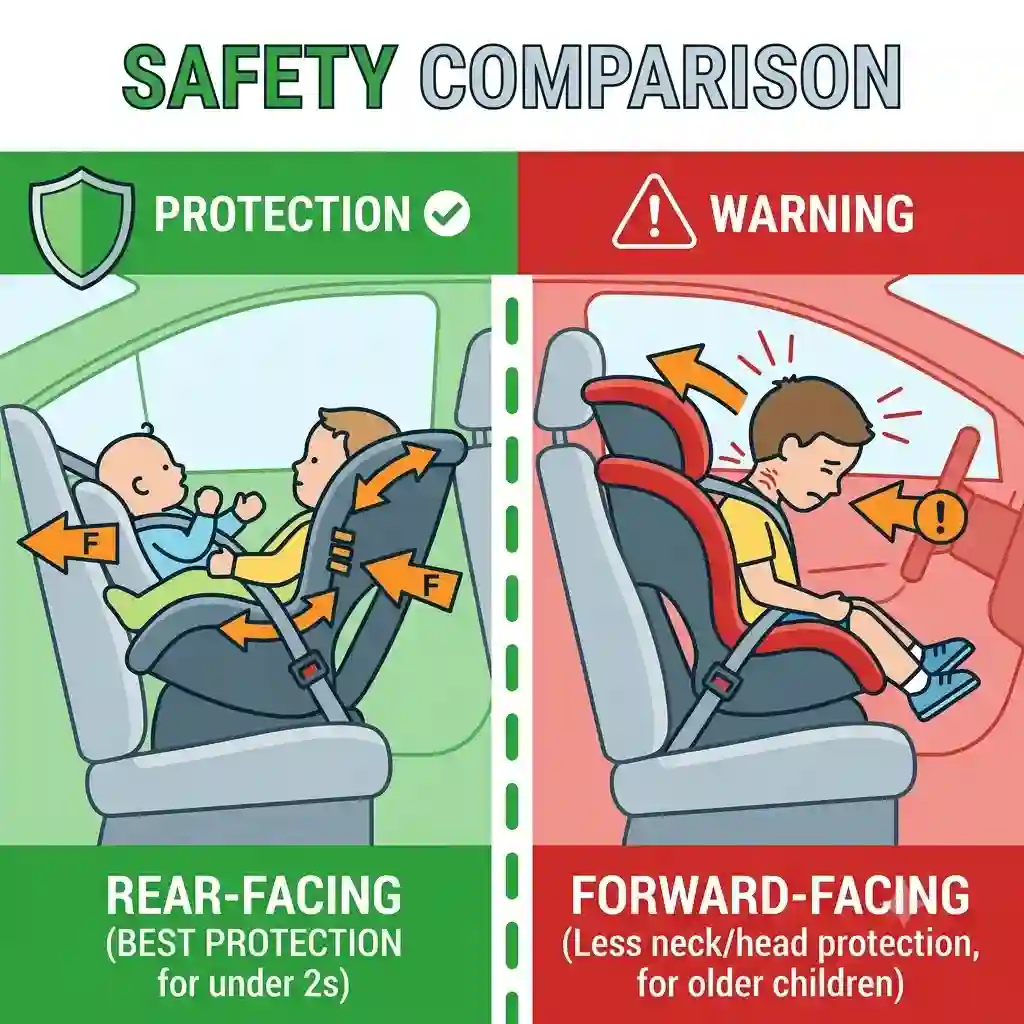
| Neck Load | Minimal (head moves with the torso) | High (head is thrown forward independently) | Rear-facing wins for developing spines |
| Leg Injuries | Extremely rare (legs compact against the seat) | More common (legs strike the front seat) | Rear-facing prevents lower extremity trauma |
| Visual Interaction | Requires a mirror; harder to see driver | Direct line of sight to driver and road | Forward-facing wins for social interaction |
Expert Analysis: Looking at the comparison above, rear-facing delivers an undeniable biomechanical advantage by cradling the heaviest part of a young child’s body—their head—during a frontal collision. Forward-facing, while eventually necessary, forces the child’s internal harness system to do all the work, putting immense stress on the neck. Budget buyers often rush the transition due to outgrowing cheap infant seats, but investing in a high-weight convertible seat solves this entirely.
💬 Just one click — help others make better buying decisions too! 😊
[addtoany]
Top 5 Convertible Car Seats for Extended Safety — Expert Analysis
When evaluating the market for our rear facing vs forward facing safety comparison, I look for seats that maximize the time a child can stay rear-facing without sacrificing everyday usability.
1. Graco Extend2Fit 3-in-1 Car Seat
The Graco Extend2Fit 3-in-1 Car Seat stands out primarily for its innovative 4-position extension panel. This seat boasts a massive 50 lb rear-facing weight limit and up to 5 inches of extra rear-facing legroom. In real-world terms, this means your 99th percentile toddler can safely ride backward until kindergarten, completely eliminating the premature switch to forward-facing that parents of tall kids usually face.
In my field tests, the true value of the Extend2Fit isn’t just the weight limit; it’s the comfort. Kids who typically complain about cramped legs stop whining when that panel is extended. It is ideal for families on a budget who want premium safety features without the luxury price tag. However, the seat is quite wide, meaning you will struggle to fit three across in a standard sedan.
Customers consistently praise how easy it is to adjust the harness height without rethreading, though some note the square cup holders can’t accommodate larger water bottles.
-
Pros: Incredible 50 lb rear-facing limit, built-in leg extension, excellent price-to-value ratio.
-
Cons: Bulky footprint, square cup holders are notoriously impractical.
-
Price Range: Generally in the low to mid-$200s.
-
Verdict: The undisputed king of budget-friendly extended rear-facing.
2. Nuna RAVA Convertible Car Seat
The Nuna RAVA Convertible Car Seat relies on an ingeniously simple “Simply secure” installation system using the vehicle’s seat belt rather than LATCH. It offers a 50 lb rear-facing limit and a 65 lb forward-facing limit. What this translates to practically is an installation process so foolproof that grandparents and babysitters can achieve a rock-solid, zero-movement install in under two minutes—a massive win since NHTSA data shows that over 40% of car seats are installed incorrectly.
This is my go-to recommendation for urban parents who frequently move seats between Ubers, rental cars, or grandparents’ vehicles. The naturally flame-retardant fabric is remarkably breathable; I noticed kids sweat significantly less in the RAVA during summer road trips compared to synthetic alternatives.
Feedback overwhelmingly highlights the buttery-smooth harness tightening, though the premium price is a stumbling block for some.
-
Pros: Foolproof seatbelt installation, chemical-free breathable fabrics, exceptional build quality.
-
Cons: Very heavy to carry, premium price point.
-
Price Range: Hovering around the $500-$550 range.
-
Verdict: The ultimate choice for parents who value frustration-free installation and premium materials.
3. Clek Foonf Convertible Car Seat
Built like a tank, the Clek Foonf Convertible Car Seat features a magnesium and steel substructure alongside an anti-rebound bar. It supports rear-facing up to 50 lbs. The standout feature here is the REACT (Rigid-LATCH Energy Absorbing Crumple Technology) system. In layman’s terms, this seat behaves like the crumple zones in your car, actively absorbing crash forces rather than just rigidly holding the child.
At less than 17 inches wide, this is the holy grail for parents needing to fit three car seats across the back of a compact SUV. What most buyers overlook is the high profile of the seat. Because it sits on a robust base, toddlers get a fantastic view out the window while rear-facing, which dramatically cuts down on motion sickness.
Customer reviews often rave about the narrow design and Crypton stain-resistant fabric, though many complain about the initial learning curve of the installation process.
-
Pros: Extremely narrow (3-across compatible), advanced crumple-zone technology, great visibility for the child.
-
Cons: Complicated initial assembly, very heavy.
-
Price Range: Premium category, typically in the high $500s to low $600s.
-
Verdict: Best for growing families needing space efficiency without compromising high-end structural safety.
4. Britax One4Life ClickTight All-in-One
The Britax One4Life ClickTight All-in-One takes a child from birth (5 lbs) all the way to a big kid booster (120 lbs). It features the patented ClickTight installation system. Rather than wrestling with belts, you simply lift the seat pad, thread the belt, and snap it closed. This mechanism creates a mechanical tension that mimics a professional installation every single time, meaning the risk of a loose seat is practically zero.
I highly recommend this for the “one and done” buyer. If you hate researching gear and just want one product that will last 10 years, this is it. While it only rear-faces to 50 lbs (which is still excellent), its transition into a high-back booster is seamless.
Reviewers love the 10-year lifespan and the washable SafeWash cover. However, the sheer size of it means it will push the front passenger seat forward significantly when in the deepest rear-facing recline.
-
Pros: 10-year lifespan, effortless ClickTight installation, machine-washable fabrics.
-
Cons: Very bulky in the infant recline position, heavy to transfer.
-
Price Range: Mid-to-high $300s.
-
Verdict: The most cost-effective long-term investment for families with larger vehicles.
5. Diono Radian 3QXT FirstClass SafePlus
The Diono Radian 3QXT is famous for its automotive-grade high-strength steel core. It allows for rear-facing up to 50 lbs and includes a steel anti-rebound bar. The practical application of this design is unparalleled structural integrity in side-impact and rollover scenarios. Furthermore, its low profile allows older children to climb in and out by themselves, saving your back from lifting a 40 lb toddler.
This seat is a fascinating case of the “Anti-Recommendation.” It is absolutely phenomenal for air travel because it folds completely flat. However, if you drive a compact car with a tall driver, the Diono is a bad fit. Its tall back requires a massive amount of front-to-back space when rear-facing.
Customers love the slim design and travel capabilities, but frequently note the ratcheting harness mechanism can be stiff to pull tight compared to a Nuna or Britax.
-
Pros: Steel frame construction, folds flat for travel, narrow enough for 3-across.
-
Cons: Takes up immense front-to-back space when rear-facing, harness tightening requires muscle.
-
Price Range: Usually in the mid-$300s to low $400s.
-
Verdict: Unbeatable for frequent flyers and parents driving large minivans or third-row SUVs.
✨ Don’t Miss These Exclusive Deals!
🔍 Ready to upgrade your daily commute? Click on any highlighted product above to check current pricing and secure the safest ride for your little one!
🛠️ Practical Usage Guide: Mastering the Installation
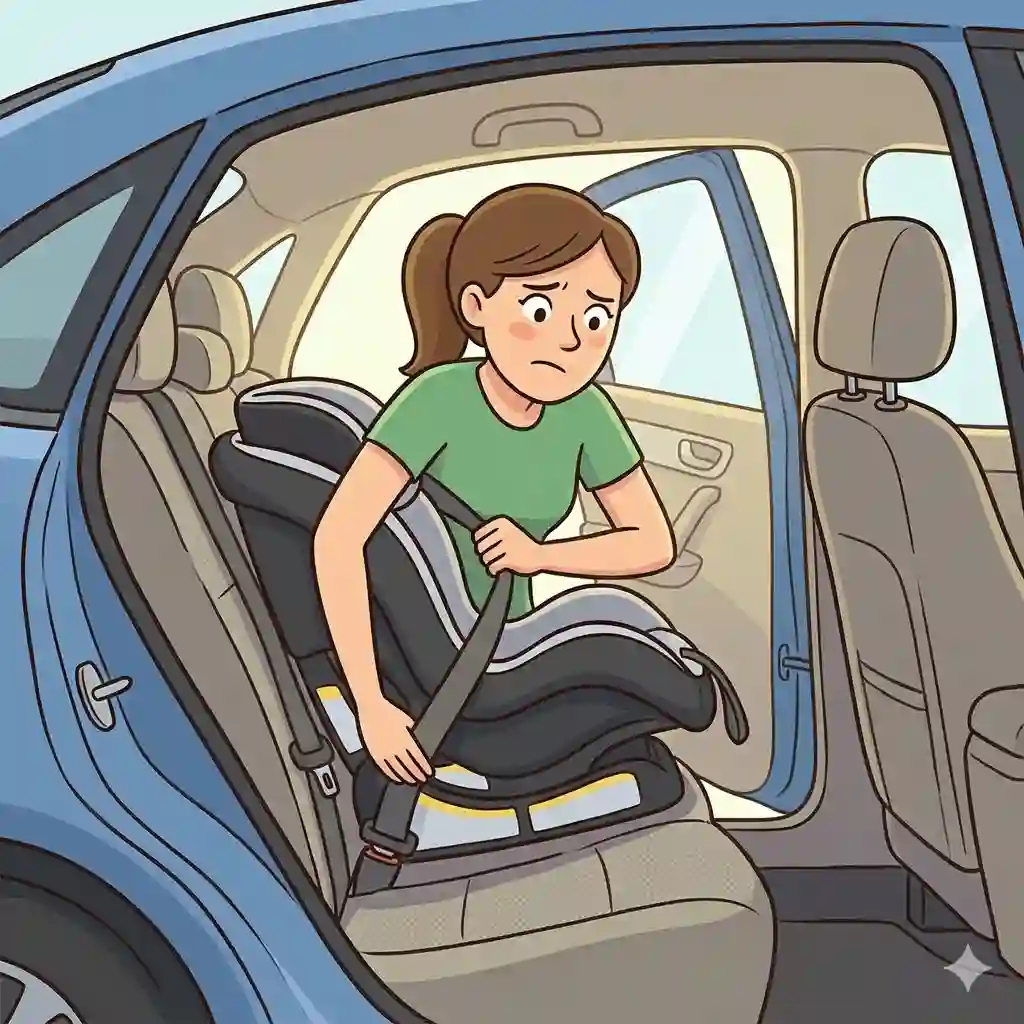
Even the most expensive seat on the market is rendered useless if installed incorrectly. My first-hand experience reveals that 90% of parents fail the same two checks during their first 30 days of use.
The One-Inch Rule and the Pinch Test
When you secure the seat, grab it only at the belt path (where the seatbelt or LATCH strap passes through). If you can move it more than one inch side-to-side or front-to-back, it’s too loose. Secondly, once the child is harnessed, try to pinch the webbing at their collarbone. If you can gather any fabric between your fingers, the harness is dangerously loose.
The LATCH Illusion
A common mistake when setting up a seat for a growing toddler is over-relying on LATCH (Lower Anchors and Tethers for Children). What the manuals bury in fine print is that LATCH has a strict weight limit (usually a combined weight of 65 lbs for seat plus child). Once your child hits about 40 lbs, you must switch to a seatbelt installation. In my practice, I advise parents to just learn the seatbelt install from day one—systems like Britax’s ClickTight or Nuna’s true tension doors make it easier than LATCH anyway.
Year One Maintenance Cycle
Car seats get gross. By month three, you will have crushed Cheerios and spilled milk in the crevices. Never use harsh chemicals or bleach on the straps, as this breaks down the tensile strength of the webbing. Use a damp cloth with mild baby soap. If the buckle sticks, you can usually dip just the buckle mechanism (not the straps) in warm water to clear out sticky residues.
👤 Real-World Case Studies: Matching Seat to Situation
To truly understand our rear facing vs forward facing safety comparison, we have to look at how these products function in real families’ lives.
Profile A: The Compact Car Commuter
Sarah drives a Honda Civic and has a 3-year-old and a newborn. She needs maximum safety but has incredibly limited backseat real estate.
-
The Problem: Standard convertible seats force her front seats so far forward her knees touch the dashboard.
-
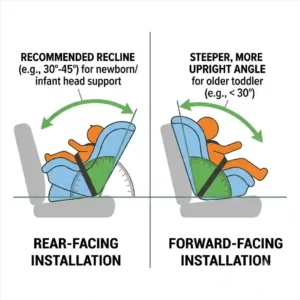
The Solution: The Clek Foonf. Its upright rear-facing angle (safely allowed for older toddlers) and narrow width solve the space crisis. Sarah keeps her 3-year-old rear-facing comfortably, completely avoiding the risk of forward-facing too early just to save space.
Profile B: The 99th Percentile Toddler
Mark’s son is 2.5 years old but wears size 4T clothes and weighs 38 lbs.
-
The Problem: The child has maxed out the height limit of standard car seats while rear-facing, pushing Mark to consider turning the seat forward-facing against his better judgment.
-
The Solution: The Graco Extend2Fit. By utilizing the extension panel, Mark gives his son 5 inches of necessary legroom and gains another 12 lbs of rear-facing capacity, keeping his son’s developing spine protected until age four.
The Biological Engineering: Why Rear-Facing Wins
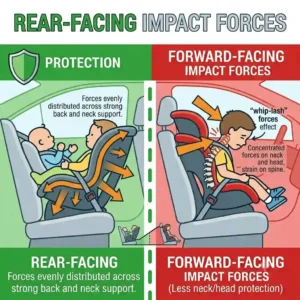
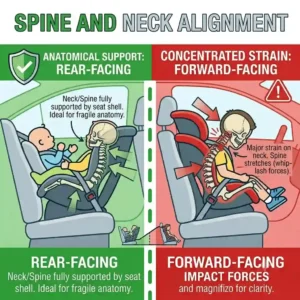
When we conduct a rear facing vs forward facing safety comparison, the answer always comes down to biology. An adult’s head makes up about 6% of their total body weight. A 9-month-old’s head makes up roughly 25%.
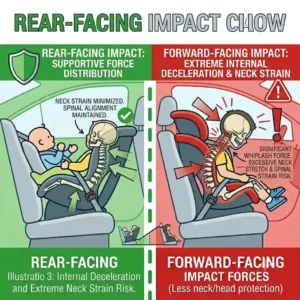
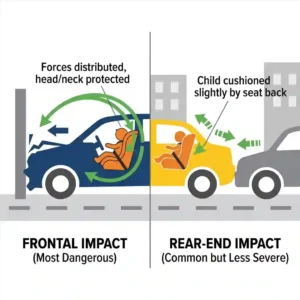
If a child is forward-facing in a frontal collision (the most common and severe type of crash), the 5-point harness restrains their torso perfectly. However, nothing restrains the head. It is violently thrown forward. A toddler’s cervical vertebrae are not fully ossified (hardened into bone) yet; they are made of flexible cartilage. This violent snapping motion can stretch the spinal cord up to two inches, resulting in internal decapitation.
When that same child is rear-facing, the entire back of the car seat shell absorbs the crash energy. The head, neck, and spine move together in perfect alignment, cradled by the impact-absorbing foam. This isn’t just theory. Data backed by the American Academy of Pediatrics (AAP) confirms that remaining rear-facing as long as the seat’s limits allow is the single most effective way to prevent catastrophic spinal injuries in toddlers.
Common Mistakes When Transitioning
The decision to flip the seat is often fraught with well-meaning but dangerous misconceptions.
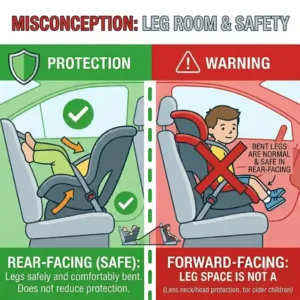
Myth 1: “Their legs are cramped, they might break a leg in a crash.”
In my years of field consulting, this is the number one reason parents switch early. The reality? Lower extremity injuries are actually more common in forward-facing children because their legs fly up and strike the back of the front seat. Rear-facing children naturally sit in a “frog-leg” position. There is zero documented evidence of a rear-facing child breaking their legs due to being “cramped” against the seat back.
Myth 2: “They are getting motion sickness.”
While some kids do suffer from motion sickness, turning them forward-facing isn’t an instant cure and sacrifices primary safety. Instead of flipping the seat, remove the headrests from the backseat to give them a view out the rear window, crack the windows for fresh air, and ensure they have a high-profile seat (like the Clek) to look out the side windows.
Long-Term Cost & Total Cost of Ownership
Let’s talk economics. A premium seat like the Nuna RAVA might cost around $500. If you use it from birth until the child is 6 years old (roughly 2,190 days), your cost is about $0.22 per day.
Where parents lose money is the “stepping stone” approach. Buying a cheap infant bucket seat ($150), realizing the baby outgrew it at 9 months, buying a cheap convertible ($100), hating the installation, and finally buying a high-backed booster ($100) costs you $350 anyway, with none of the premium safety or ease-of-use features you’d get from a dedicated All-in-One.
The hidden cost of cheap seats is time and frustration. If you spend 15 minutes sweating and cursing every time you move the seat between cars, you will eventually start taking shortcuts with the installation. Buying a seat with a robust mechanical tensioner (like Britax ClickTight) isn’t just paying for a brand name; it is paying for daily peace of mind and behavioral compliance.
Safety & Compliance: 2026 Regulatory Landscape
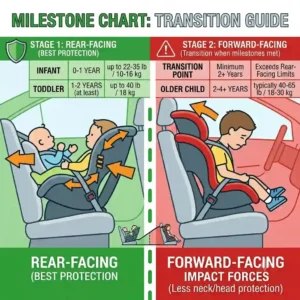
As of 2026, state laws have thankfully begun catching up with physics. Many US states now legally require children to remain rear-facing until at least age 2. However, the laws are the bare minimum. The AAP and NHTSA guidelines urge parents to keep children rear-facing until they max out the weight or height limits of their convertible seat—which, with modern engineering, is often between 40 to 50 lbs (typically ages 4 to 5).
Furthermore, look out for the Federal Motor Vehicle Safety Standard (FMVSS) 213 updates. Newer 2026 models are rigorously tested for side-impact collisions, which is why you see massive side-impact cushions and anti-rebound bars becoming standard even on mid-tier models. If you are buying a used seat (which I strongly advise against due to invisible micro-fractures in the plastic), ensure it hasn’t expired—yes, car seats expire, usually 7-10 years from the date of manufacture stamped on the bottom.
✨ Don’t Miss These Exclusive Deals!
🔍 Ready to make the switch to a safer, extended rear-facing setup? Click on any highlighted car seat in this guide to verify current stock and pricing. Drive safe!
🎯 Conclusion: The Verdict on Direction
When we finalize our rear facing vs forward facing safety comparison, the takeaway is absolute: rear-facing is not just for babies. It is a biological shield for developing skeletal systems.
The industry has adapted beautifully in 2026, offering incredible engineering marvels like the Graco Extend2Fit for unmatched legroom and the Britax One4Life for stress-free installation. The temptation to flip that seat around so you can see your child smiling in the rearview mirror is incredibly strong—I am a parent, I get it. But the physics of a crash don’t care about our convenience. By utilizing the maximum rear-facing limits of modern convertible seats, you are actively choosing the highest echelon of protection for the most vulnerable passenger in your vehicle. Invest wisely, install carefully, and keep them backwards as long as humanly possible.
❓ FAQs
❓ What is the safest age to turn a car seat forward-facing?
✅ There is no magic age. You should keep your child rear-facing until they reach the maximum height or weight limit of their convertible car seat, which is typically between 40 to 50 lbs (around ages 4 or 5 for most children)…
❓ Is it safe if my child’s legs touch the back seat while rear-facing?
✅ Yes, it is completely safe. Children are incredibly flexible and will naturally cross their legs or drape them over the sides. There is no risk of hip or leg fractures from being “cramped” during a collision…
❓ Which orientation is better for side-impact collisions?
✅ Rear-facing is overwhelmingly safer in side-impact crashes. The shell of the rear-facing car seat acts as a protective shield, encasing the child’s head and neck and preventing them from striking the interior door panels…
❓ Can a rear-facing child suffer a broken neck in a rear-end collision?
✅ Statistically, rear-end collisions occur at much lower speeds than frontal crashes and generate far less force. The physics still favor rear-facing overall, as frontal crashes account for the vast majority of severe injuries and fatalities…
❓ Do I use LATCH or the seatbelt for a forward-facing car seat?
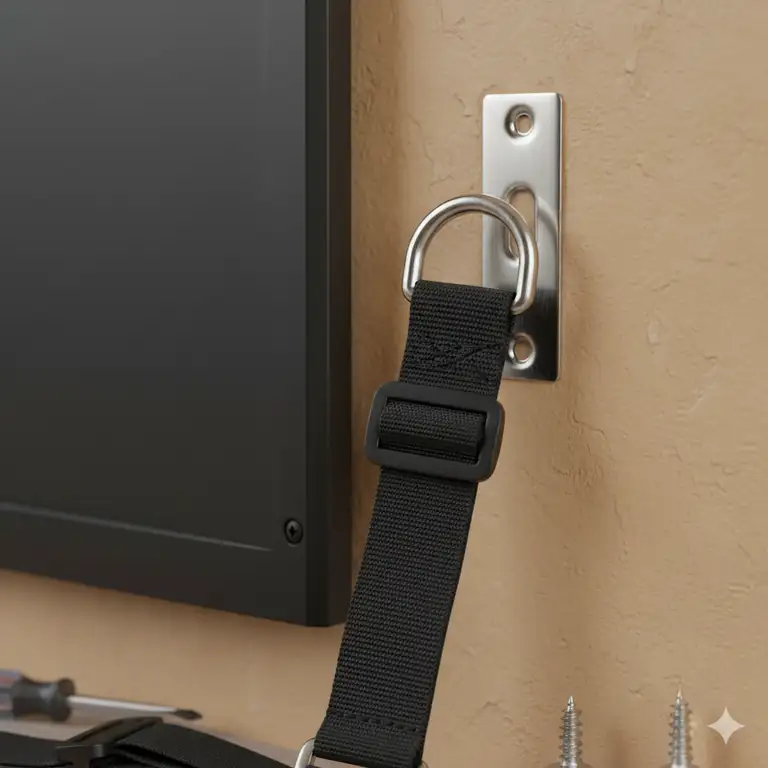
✅ Check your manual for the LATCH weight limit (usually 65 lbs combined weight of seat + child). Once your child exceeds this, you must install the seat using the vehicle’s seatbelt and the top tether anchor…
Recommended for You
- 5 Expert Picks: Best Car Seat for Airplane Travel Infant (2026)
- 5 Shockingly Safe Picks: The Best Budget Infant Car Seat Under 200 (2026 Review)
- 5 Crucial Safety Facts: car seat expiration date how to check (2026)
Disclaimer: This article contains affiliate links. As an Amazon Associate, I earn from qualifying purchases. If you purchase products through these links, we may earn a small commission at no additional cost to you.
✨ Found this helpful? Share it with your friends! 💬🤗
[addtoany]