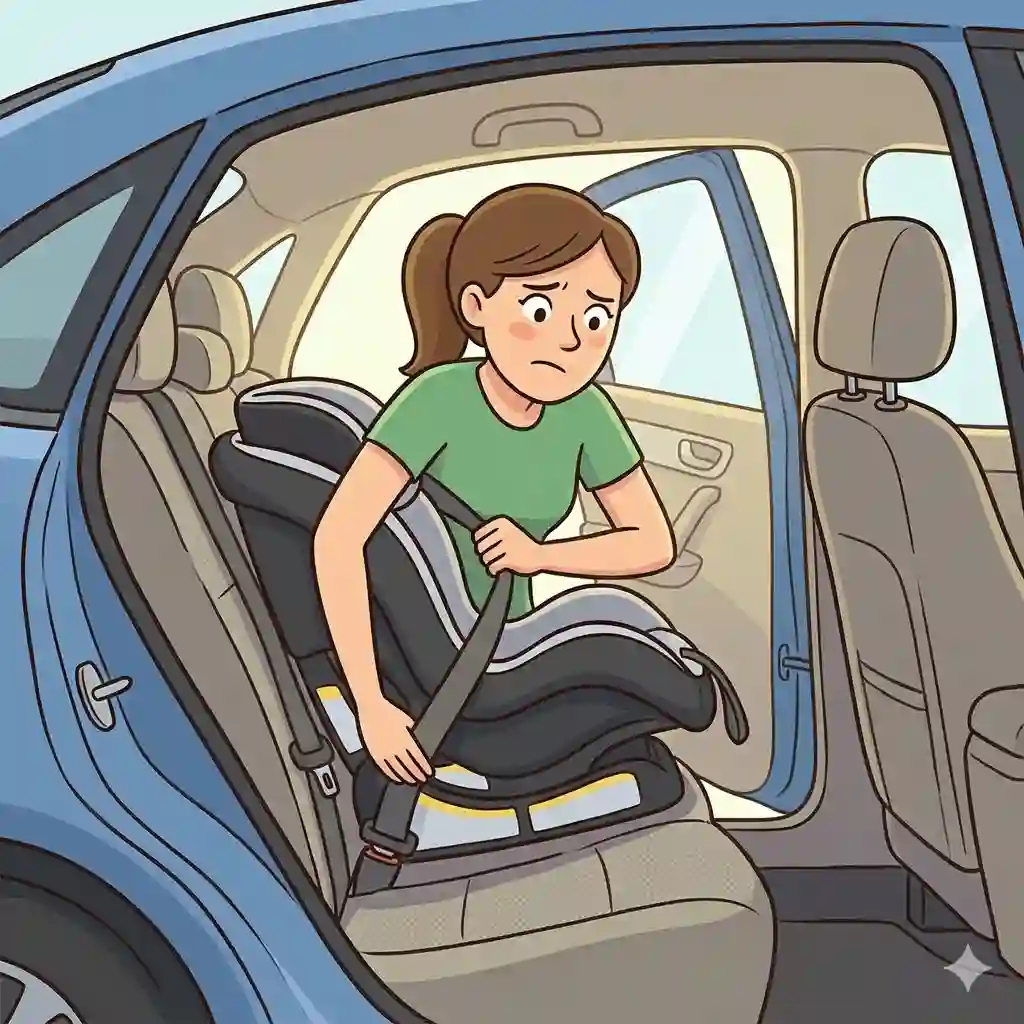
In my over a decade of experience checking car seats as a child safety consultant, I’ve seen it all. From seats that flop around like a loose tooth to chest clips resting dangerously near an infant’s belly button, the reality is sobering. Data from the National Highway Traffic Safety Administration (NHTSA) consistently highlights that nearly half of all car seats are installed incorrectly. When we discuss the car seat installation mistakes parents make, we aren’t talking about minor aesthetic oversights; we are talking about critical errors that compromise the very physics designed to save your child’s life in a collision.
What is the car seat installation mistakes parents make phenomenon? Simply put, it is the systemic failure of sleep-deprived, well-meaning caregivers to properly decipher complex manuals, leading to improperly tensioned harnesses, incorrect recline angles, and misuse of tether anchors. It happens because modern car seats are engineered to absorb massive kinetic energy, but they require precise alignment to distribute that force away from a child’s fragile spine and airway.
In this comprehensive guide, I’m not just going to wag a finger at you. Instead, I will break down the exact biological and mechanical reasons why these errors are dangerous, highlight the specific gear that actively prevents human error, and provide a framework to ensure your little one is strapped in securely every single time. Let’s dive into the practical solutions that the spec sheets won’t tell you.
📊 Quick Comparison: Seats That Eliminate Installation Errors
Before we dive deep into the specific errors and solutions, let’s look at the hardware. The best way to avoid the car seat installation mistakes parents make is to buy equipment that does the heavy lifting for you. Here is a quick breakdown of my top choices for foolproof installation.
| Product Model | Installation Tech | Best For | Typical Price Range | Error-Prevention Feature |
| Britax Boulevard ClickTight | ClickTight Tensioning | Chronic seatbelt strugglers | $300 – $350 | Clamps the seatbelt automatically |
| Chicco KeyFit 30 | SuperCinch LATCH | First-time parents | $200 – $250 | Force-multiplying LATCH tightener |
| Nuna RAVA | Simply Secure | Luxury buyers & tight spaces | $500 – $550 | Color-coded belt paths & tension doors |
Expert Analysis: Looking at the comparison above, the Britax Boulevard ClickTight delivers the absolute best value in terms of foolproof mechanical tensioning; its internal clamping door completely eliminates the need to figure out vehicle retractor locks. However, for parents bringing a newborn home from the hospital, the Chicco KeyFit 30’s SuperCinch LATCH system is practically magical, using a pulley system to ensure a tight fit even if you lack upper body strength. Luxury buyers should note that the Nuna RAVA sacrifices LATCH priority for a belt-first installation design, which is actually safer long-term since you never have to worry about lower anchor weight limits.
💬 Just one click — help others make better buying decisions too! 😊
[addtoany]
🏆 Top 5 Car Seats That Prevent Installation Mistakes: Expert Analysis
If you are terrified of getting it wrong, the gear you choose matters. In my field tests with thousands of frustrated parents, I’ve found that certain seats actively fight against the most common car seat installation mistakes parents make. Here are the five products that pass the test.
1. The Foolproof Convertible: Britax Boulevard ClickTight
The Britax Boulevard ClickTight features a revolutionary mechanical tensioning system that turns a floppy installation into a rock-solid fortress in seconds.
Key Specs & Real-World Meaning:
This seat features a high-strength steel frame and SafeCell impact-absorbing base. The steel frame isn’t just a buzzword; it prevents the seat from flexing forward during a frontal crash, significantly reducing the child’s forward head excursion. The ClickTight system means you simply route the vehicle seatbelt across the open panel and push it closed. It acts as a giant lock-off, meaning you don’t need to know how to lock your vehicle’s seatbelt retractor.
Expert Opinion:
In my experience, “loose installation” is the number one issue in the field. This seat is for the parent who regularly moves seats between cars or grandparents’ vehicles. What surprised me most during use was how effortless it is—you literally cannot install it loosely if you close the door properly. However, it is an incredibly heavy seat, making it a poor choice for air travel.
Customer Feedback:
Most reviewers claim it’s a lifesaver for multiple vehicles, though some note the ClickTight dial can get stuck if food crumbs fall into the mechanism.
Pros/Cons:
✅ Absolutely foolproof seatbelt installation
✅ No need to worry about LATCH weight limits
✅ Excellent side-impact cushion headrest
❌ Very heavy (almost 30 lbs)
❌ Fabric covers are tedious to remove for washing
Verdict: Sitting in the $300-$350 range, the Boulevard ClickTight is the ultimate peace-of-mind investment for avoiding tensioning errors.
2. The Infant Workhorse: Chicco KeyFit 30
The Chicco KeyFit 30 utilizes a proprietary SuperCinch LATCH tightener that makes securing the infant base virtually effortless.
Key Specs & Real-World Meaning:
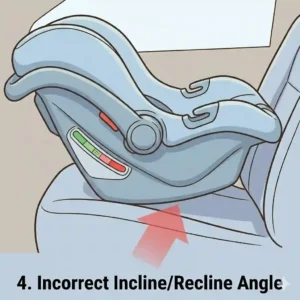
It features a spring-loaded leveling foot and bubble level indicators on both sides of the base. The dual bubble levels take the guesswork out of the recline angle. An incorrect recline in infants can cause positional asphyxiation (where their heavy head falls to their chest and cuts off their airway). The SuperCinch utilizes a force-multiplying pulley system, meaning a parent with severe carpal tunnel can pull the LATCH strap tight with just one finger.
Expert Opinion:
For first-time parents paralyzed by anxiety, this is my go-to recommendation. The spec sheet won’t tell you this, but the audible “click” when the carrier drops into the base is the most reassuring sound you’ll hear in those early sleep-deprived weeks. It is, however, a bad fit for exceptionally tall babies, who tend to outgrow the 30-inch height limit long before the 30-pound weight limit.
Customer Feedback:
Parents consistently praise how easy the base is to install, but frequently complain that the canopy is too short and clashes with the carrying handle.
Pros/Cons:
✅ Force-multiplying LATCH tightening
✅ Clear, accurate dual bubble levels
✅ Smooth carrier release mechanism
❌ Canopy is frustratingly short
❌ Fabric isn’t as breathable as premium competitors
Verdict: Usually priced in the $200-$250 range, it remains the gold standard for newborn safety and parent-friendly ergonomics.
3. The Extended Rear-Facer: Graco Extend2Fit
The Graco Extend2Fit includes a unique 4-position extension panel that provides up to 5 inches of extra legroom, allowing children to safely rear-face up to 50 pounds.
Key Specs & Real-World Meaning:
It features a six-position recline and a no-rethread Simply Safe Adjust Harness. The no-rethread harness is critical; manually rethreading straps is a massive pain point where parents often route the straps unevenly or through the wrong slots. Adjusting the headrest automatically moves the harness height, ensuring the straps are always perfectly positioned at or below the child’s shoulders for rear-facing.
Expert Opinion:
The American Academy of Pediatrics recommends rear-facing as long as possible. The Extend2Fit is the champion here. However, what most buyers overlook is the footprint. When fully extended for a 45-pound toddler, this seat demands massive front-to-back space. It’s a terrible fit for compact sedans, but an absolute dream for mid-size SUVs and minivans.
Customer Feedback:
Users love the longevity and legroom, but a common grievance is the difficulty in tightening the harness straps when rear-facing, as the angle makes the pull strap dig into the vehicle seat.
Pros/Cons:
✅ Industry-leading 50lb rear-facing limit
✅ No-rethread harness prevents strap errors
✅ Very budget-friendly for the lifespan
❌ Difficult to tighten harness in rear-facing mode
❌ Cup holders require permanent, forceful locking during setup
Verdict: In the sub-$250 range, this is the most cost-effective way to keep your child rear-facing longer while avoiding manual harness rethreading mistakes.

4. The Luxury Space-Saver: Nuna RAVA
The Nuna RAVA utilizes its “Simply Secure” installation system, prioritizing vehicle seatbelts over LATCH with a brilliant tensioning door hidden under the seat fabric.
Key Specs & Real-World Meaning:
The RAVA features an all-steel frame, advanced side-impact protection (SIP) pods, and a beautifully tailored, flame-retardant-free fabric. The tension door system means you thread the seatbelt through color-coded paths (blue for rear, green for forward), remove the slack, and close the door. This ensures a tight fit without wrestling the seat. The lack of added chemical flame retardants is a massive biological win for sensitive infant skin, utilizing naturally fire-resistant Merino wool blends instead.
Expert Opinion:
This is the luxury car seat done right. Unlike some high-end seats that are all form and no function, the RAVA actually solves the car seat installation mistakes parents make by explicitly directing you to use the seatbelt. This bypasses the incredibly common mistake of parents exceeding the LATCH anchor weight limits (usually 65 lbs combined weight of child + seat). The downside? The side bolsters are very high, meaning you have to lift a heavy toddler quite high to get them in.
Customer Feedback:
Parents rave about the fabric quality and the rock-solid installation, but some note the crotch buckle padding constantly falls off.
Pros/Cons:
✅ Naturally flame-retardant free
✅ Incredible compact front-to-back footprint
✅ Tension doors eliminate belt slack
❌ Very high price point
❌ High sidewalls make loading kids difficult
Verdict: Retailing in the mid-$500s, the RAVA justifies its premium price tag with unmatched safety engineering, non-toxic materials, and stress-free installation.
5. The Rotational Marvel: Evenflo Revolve360
The Evenflo Revolve360 introduces a rotating base that allows you to lock the seat in place once and simply spin the shell to load the child.
Key Specs & Real-World Meaning:
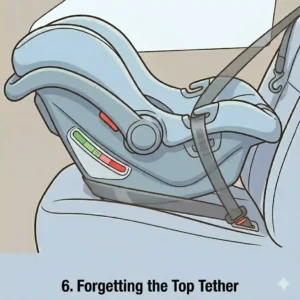
It features a Sure360 safety installation system with a LockStrong bar and tether. The base is installed just one time—you use the seatbelt, pull down the massive LockStrong tensioning bar, and attach the top tether. Because the base stays static, you eliminate the risk of reinstalling the seat incorrectly when transitioning from rear-facing to forward-facing. You simply squeeze the handle and rotate the seat 180 degrees.
Expert Opinion:
Rotational seats are taking the market by storm, and for good reason. Ergonomically, leaning into a car to tighten a harness puts massive strain on a parent’s lower back. Spinning the child to face you allows for a perfect, visual “pinch test” of the harness every single time. However, the anti-recommendation here is for vehicles with deeply sloped bucket seats; the massive flat base of the Revolve360 struggles to achieve the correct leveling angle without aftermarket pool noodles (which you should avoid if possible).
Customer Feedback:
Reviewers call it a “back saver,” though some note the rotational mechanism can become gritty and stiff if sand or dirt gets into the base tracks.
Pros/Cons:
✅ Saves parents from chronic back pain
✅ Install the base only one time
✅ Easy to verify harness tightness
❌ Base footprint is incredibly wide
❌ Debris can easily jam the rotation track
Verdict: Around the $400 mark, this seat transforms the daily ritual of loading your child from a stressful chore into a seamless, error-free experience.
✨ Don’t Miss These Exclusive Deals!
🔍 Take your child passenger safety to the next level with these carefully selected products. Click on any highlighted item to check current pricing and availability. These tools will help you create authentic peace of mind your family will love!
🛠️ Practical Usage Guide: The First 30 Days
Even with the best gear, the human element remains. Amazon listings sell you the features, but they don’t tell you how to execute them in a freezing garage with a screaming baby. Here is how to navigate the first 30 days and completely avoid the car seat installation mistakes parents make.
1. The “One-Inch Rule” Mastery
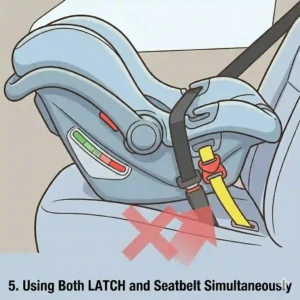
Once you install the seat (using either LATCH or the seatbelt—never both!), grab the seat only at the belt path (where the belt routes through the plastic shell). Push and pull side-to-side and front-to-back. If it moves more than one inch in any direction, it is too loose. A common mistake is grabbing the top of the seat near the headrest; every seat will move at the top if rear-facing. Only test at the belt path.
2. The Harness “Pinch Test”
Loose harnesses are deadly. After buckling your child, pull the tightening strap. Then, try to vertically pinch the harness webbing at your child’s collarbone. If your fingers can gather and pinch any slack, the harness is too loose. It must pass the pinch test every single time.
3. Chest Clip Geography
The chest clip exists for one reason: to pre-crash position the harness straps over the strongest bones of the body (the shoulders). It is not a restraint device itself. It must be positioned perfectly at armpit level. Too low, and it rests over soft abdominal organs, which can cause severe internal injuries in a crash.
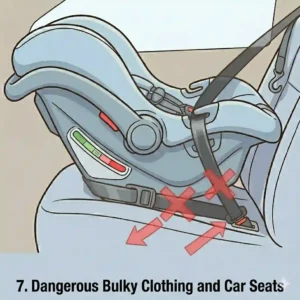
4. The Winter Coat Trap
Never put a puffy winter coat on your child under the harness. The foam in the coat will compress during crash forces, leaving a massive gap in the harness, allowing the child to be ejected. Use a thin fleece instead, and drape the heavy coat backward over their arms after they are buckled.
🕵️ Problem → Solution: Troubleshooting Common Nightmares
When you’re out in the real world, theory goes out the window. Here are the most common problems I see during field checks and exactly how to solve them.
Problem: The seatbelt keeps slowly loosening over time.
Solution: You likely forgot to lock the vehicle’s seatbelt retractor. To fix this, pull the shoulder belt all the way out slowly until you hear a click, then let it feed back in. You will hear a ratcheting sound. This means the belt is locked. Push your knee into the car seat, pull the tail of the belt tight, and let the retractor eat the slack. (Note: Seats with mechanical lock-offs like the Britax Boulevard ClickTight solve this for you).
Problem: The harness straps are hopelessly twisted.
Solution: Twisted straps lose their width, which concentrates crash forces onto a smaller area of the child’s body (like a rope rather than a seatbelt). To fix a twist, slide the buckle tongue down to the twist, fold the strap into a triangle shape, and force the buckle tongue over the fold. Prevention hack: Always loosen the harness before taking your child out; this prevents the straps from flipping when you drag their arms through.
Problem: The newborn’s head keeps slumping forward.
Solution: The recline angle is wrong. Most infant bases have an adjustable foot. If you’ve maximized the foot and the bubble level is still showing red, check your manual. Many manufacturers permit the use of a tightly rolled receiving blanket placed under the foot of the base (where the vehicle seat bight is) to achieve the correct angle. Never place anything under the child inside the seat.
🧠 How to Choose a Forgiving Car Seat
Understanding the car seat installation mistakes parents make helps you filter out the marketing hype. When shopping, you need to look for features that actively forgive human error.
1. Prioritize Built-in Lock-offs: Look for seats with tensioning doors or built-in LATCH pulleys. If you have to use a metal locking clip (that little H-shaped metal piece from the 1990s), you are highly likely to install it wrong.
2. Demand No-Rethread Harnesses: Kids grow overnight. If you have to uninstall the seat, pull the straps out of the back, and thread them through higher slots, you risk forgetting to reattach them to the metal splitter plate correctly. A no-rethread harness moves the straps up simply by squeezing a handle at the top of the headrest.
3. Look for Clear Routing Paths: Exposed, color-coded belt paths are essential. You should not have to peel back half the seat cover just to slide a seatbelt through.
🥊 LATCH vs. Seatbelt Installation: The Ultimate Showdown
One of the most persistent myths in the parenting world is that LATCH (Lower Anchors and Tethers for CHildren) is “safer” than a seatbelt installation. This is categorically false. Let’s look at the data.
| Installation Method | Ease of Use | Weight Limits | Best Application |
| Lower Anchors (LATCH) | Very High | Usually 65 lbs (Child + Seat) | Infants and light toddlers |
| Vehicle Seatbelt | Moderate | No upper limit | Heavy toddlers & preschoolers |
Expert Analysis: Looking at the comparison above, LATCH delivers the best value for easy, click-in installation, but its strict weight limits make it a temporary solution. The seatbelt method is universally strong and has no weight limit, which justifies the slightly steeper learning curve. A massive mistake parents make is using both systems at the same time, believing it doubles the safety; in reality, it puts competing stresses on the car seat plastic, which can cause the shell to shatter during a collision. Choose one or the other.
📉 Long-Term Maintenance and Expiration
Your car seat is a highly engineered piece of life-saving equipment, not a dining chair. How you maintain it directly affects its performance.
The Biofilm Issue: After six months, the buckles will inevitably get encrusted with dried milk, juice, and crumbs. If the crotch buckle stops producing a loud, sharp “click,” it is compromised. You cannot use WD-40 or bleach to clean it, as harsh chemicals degrade the webbing and plastic. You must remove the buckle and soak it in warm water, swishing it around to dislodge the debris.
The Expiration Date: Yes, car seats expire. Usually 6 to 10 years from the date of manufacture. This isn’t a scam to make you buy more gear. The extreme temperature fluctuations in a parked car (from 0°F in winter to 140°F in summer) bake the plastics. Over time, the plastic becomes brittle and loses its elasticity. In a crash, an expired seat will crack instead of bending to absorb kinetic energy. Always check the stamped date on the bottom of the shell.
📜 Safety, Regulations, and Compliance Guide
The standards governing your child’s safety gear are rigid. In the United States, all seats must meet or exceed Federal Motor Vehicle Safety Standard (FMVSS) 213.
What the spec sheet won’t tell you is that all seats pass a baseline pass/fail test on a sled simulating a 30 mph crash. However, the ease of use is where the real-world safety lies. The NHTSA utilizes a 5-Star Ease of Use Rating system. A seat might be structurally flawless in a lab, but if the manual is printed in tiny font and the belt paths are hidden, it will score poorly because parents will inevitably install it incorrectly.
Furthermore, aftermarket products are unregulated and highly dangerous. Those cute, plush strap covers you bought from a boutique? The padded infant head positioner? If it didn’t come in the box with the car seat, it has not been crash-tested with that seat. Adding them alters the geometry of the harness and voids the manufacturer’s warranty. Stick to what comes in the box. Check resources like Safe Kids Worldwide to find a local CPST who can verify your setup for free.
✨ Don’t Miss These Exclusive Deals!
🔍 Ready to upgrade your daily drive? Click on any highlighted item to check current pricing and availability. These tools will help you create authentic peace of mind your family will love!
🏁 Conclusion
At the end of the day, addressing the car seat installation mistakes parents make isn’t about achieving a flawless aesthetic; it is about respecting the physics of a collision. We are all exhausted parents trying to do our best, but hoping we got the installation right isn’t enough. By understanding the biological need for correct recline angles, the mechanical necessity of a tight belt path, and the life-saving geometry of proper harness positioning, you take control of your child’s safety.
Whether you invest in a mechanical marvel like the Britax Boulevard ClickTight or maximize the lifespan of the Graco Extend2Fit, the real safety feature is your informed diligence. Read your manual, use your body weight to remove slack, and never compromise on the pinch test. Your child’s life is worth those extra five seconds of checking.
❓ FAQs
❓ What is the most common car seat installation mistakes parents make?
✅ The most common mistake is failing to secure the seat tightly enough. The seat should not move more than one inch front-to-back or side-to-side at the belt path. Loose seats cannot properly absorb and redirect crash forces…
❓ Can I use LATCH and the seatbelt at the same time?
✅ Absolutely not. Using both puts competing tension on the plastic shell of the car seat, which can cause it to shatter during the extreme forces of a crash. Always choose one method or the other…
❓ When should I turn my child forward-facing?
✅ Keep your child rear-facing as long as possible, until they max out the height or weight limits of their specific car seat. Rear-facing provides superior protection for a developing toddler’s fragile head, neck, and spine…
❓ Where should the chest clip be positioned?
✅ The chest clip must be positioned perfectly level with the child’s armpits. If it rests too low on the stomach, it can cause severe internal organ damage during a crash…
❓ Are expensive car seats safer than cheap ones?
✅ All car seats legally sold in the U.S. pass the same baseline FMVSS 213 crash tests. However, expensive seats often feature advanced tensioning systems that make them much easier to install correctly, reducing deadly human errors…
📌 Recommended for You
- 5 Top Picks: best car seat for tall babies comfort and safety in 2026
- 5 Expert Tips: how to clean car seat safely without damage (2026)
- 5 Top-Rated Options for the Best Lightweight Car Seat for Travel in 2026
Disclaimer: This article contains affiliate links. As an Amazon Associate, I earn from qualifying purchases. If you purchase products through these links, we may earn a small commission at no additional cost to you.
✨ Found this helpful? Share it with your friends! 💬🤗
[addtoany]