Introduction
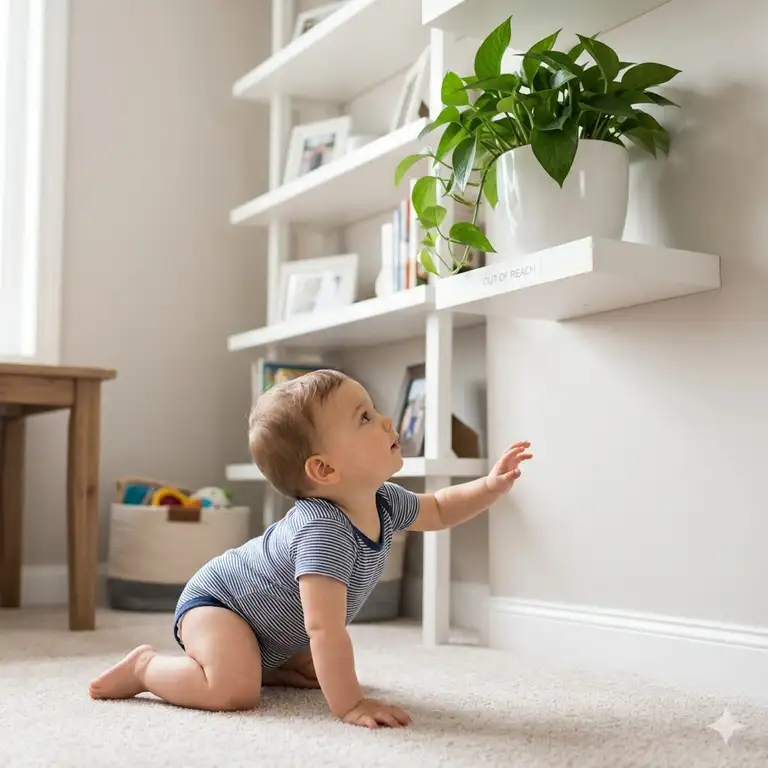
One day your baby is a happy little lump on a play mat. The next, they’re army-crawling toward the top step at a speed that seems physically impossible. That moment is exactly why baby-proofing a stairway is usually the first serious childproofing job new parents tackle — and why it deserves more thought than grabbing the cheapest gate on the shelf.
The stakes are real. Researchers at the Nationwide Children’s Hospital Center for Injury Research and Policy found that more than 93,000 children under age 5 were treated in US emergency departments each year from 1999 through 2008 for stair-related injuries — roughly one child every six minutes. Their top prevention advice is simple: gate both the top and bottom of the stairs, and use only wall-mounted gates at the top.
What Is baby-proofing a stairway?
Baby-proofing a stairway means installing barriers and safeguards that stop a baby or toddler from falling down — or climbing up — a staircase. In practice, that means a hardware-mounted gate at the top, a secure gate at the bottom, protection for gaps in railings and banisters, and an installation that holds up to a determined toddler’s pushing.
In this 2027 guide, you’ll find seven real, verifiable products — six gates and one essential mounting kit — compared on fit, mounting style, and long-term value. You’ll also get step-by-step installation help, real-world scenarios, and the regulations that matter. No fabricated test stories, no invented reviews: just spec-sheet analysis, aggregated customer sentiment, and practical reasoning you can act on today.
Quick Comparison: Stairway Gates at a Glance
Before diving deep, here’s the fast version. This table focuses on the three things that matter most at the top of a staircase: mounting method, fit range, and the type of stairway each option suits best.
| Product | Mount Type | Width Range | Height | Best for |
|---|---|---|---|---|
| Cardinal Gates SS30 Stairway Special | Hardware | 27–42.5 in | ~29.5 in | Cardinal SS30: off-center studs, angled installs |
| KidCo Safeway | Hardware | 24.75–42.5 in | 30.5 in | KidCo Safeway: standard wall-to-wall stair tops |
| KidCo Angle Mount Safeway | Hardware | up to ~42.5 in | ~30.5 in | KidCo Angle Mount Safeway: misaligned mounting points |
| Toddleroo Easy Swing & Lock Series 2 | Hardware | 28.68–47.85 in | 31 in | Toddleroo Series 2: wider openings, swing control |
| Evenflo Walk-Thru Top of Stairs Gate | Hardware | 30–48 in | 32 in | Evenflo Walk-Thru: budget-friendly wood look |
| Retract-A-Gate 52″ | Hardware (retractable) | up to 52 in | 34 in | Retract-A-Gate 52″: wide or open-concept landings |
| Safety Innovations No Hole Stairway Mounting Kit | Post clamp | posts 2.75–3.625 in | — | Safety Innovations kit: renters, banisters you can’t drill |
Looking at the table, the pattern is obvious: every option here is hardware-mounted or makes hardware mounting possible, because pressure gates simply don’t belong at the top of stairs. The real differences come down to geometry — the Cardinal Gates SS30 Stairway Special and KidCo Angle Mount Safeway solve awkward angles, while the Toddleroo Easy Swing & Lock Series 2 and Retract-A-Gate 52″ handle wider spans. If your banister post is the problem, the Safety Innovations No Hole Stairway Mounting Kit is the piece that makes any good gate work.
💬 One click helps other shoppers make an informed choice too! 😊
Top 7 Gates and Kits for baby-proofing a stairway: Expert Analysis
Each pick below was chosen for a specific stairway problem. Read the “who it’s for” reasoning closely — the best gate is the one that fits your walls, posts, and daily routine.
1. Cardinal Gates SS30 Stairway Special — best for tricky stud placement
The Cardinal Gates SS30 Stairway Special earns its reputation by solving the most common top-of-stairs headache: the wall stud is never where you need it.
Its standout feature is a latch system that mounts at angles up to 30 degrees. In practice, that means you can shift the hinge or latch side slightly to hit a solid stud in drywall instead of trusting a hollow anchor. The aluminum frame adjusts from 27 to 42.5 inches wide, stands roughly 29.5 to 30 inches tall, and uses 2.5-inch bar spacing. Aluminum is lighter than steel and won’t rust, which matters if your stairway sits near an exterior door. An optional stop bracket keeps the gate from swinging out over the stairs.
Based on comparing the specs, this is the gate to start with if your home has an older or irregular layout. Pros who childproof homes for a living tend to favor it for exactly that reason. It’s less ideal if your opening is wider than 42.5 inches.
Aggregated review sentiment across retailers and roundups consistently praises its rigidity once mounted into studs, and many buyers pair it with a banister clamp kit for a no-drill post installation.
Pros:
- ✅ Angle mounting up to 30 degrees helps you find studs
- ✅ Rustproof aluminum frame stays light yet rigid
- ✅ Included stop bracket blocks swinging over the stairs
Cons:
- ❌ Maximum width of 42.5 inches limits wider openings
- ❌ Banister installs often need a separate adapter kit
Expect to pay roughly $80–$110 (check the current price) — strong value for a gate you’ll likely use through two kids.
2. KidCo Safeway — dependable steel for classic layouts
The KidCo Safeway (models G2000 in white, G2001 in black) is the straightforward, no-surprises choice for a standard wall-to-wall stair top.
It’s built from heavy-duty steel with a non-toxic powder coat, stands 30.5 inches tall, and fits openings from 24.75 to 42.5 inches. A stop pin prevents the gate from swinging out over the stairs — non-negotiable at the top of a staircase. Quick-release hardware lets you lift the gate off its brackets when you don’t need it, and a mounting template takes the guesswork out of drilling. The hinge-side hardware can also mount on an angled surface, which adds a little flexibility.
Who’s it for? Parents with a conventional layout who want proven, simple mechanics without paying for extra features. The narrow minimum width (24.75 inches) also makes it one of the few options that works on tight back staircases and narrow landings.
Customer feedback on KidCo’s own product pages and at major retailers tends to highlight sturdiness and one-handed adult operation; independent review volume is lower than for some mass-market gates, so weigh that accordingly.
Pros:
- ✅ Fits unusually narrow openings starting at 24.75 inches
- ✅ Stop pin prevents swinging out over the stairs
- ✅ Quick-release hardware makes removal fast and clean
Cons:
- ❌ Steel frame is heavier than aluminum alternatives
- ❌ Not designed for openings wider than 42.5 inches
It usually lands around $55–$80 — excellent value for a dedicated top-of-stairs gate.
3. KidCo Angle Mount Safeway — the fix when posts don’t line up
The KidCo Angle Mount Safeway exists for one situation that stumps most gates: mounting points that aren’t directly across from each other.
Think of a stair top where one side is a wall and the other is a newel post set back at an angle, or a landing where there’s no straight line between two solid surfaces. This hardware-mounted steel gate is built specifically for that misalignment. It handles openings up to roughly 42.5 inches and stands about 30.5 inches tall, and KidCo sells a 10-inch extension if you need more reach. Like all hardware-mounted gates, it has no bottom threshold to trip over — a real safety upgrade when you’re carrying a baby down the stairs.
Here’s what to weigh: if your opening is a clean, straight shot, you don’t need this model; the standard KidCo Safeway is cheaper. But if every other gate leaves a gap or forces a crooked install, this is the purpose-built answer.
Aggregated buyer feedback is notably positive about it solving “no post, no wall” situations at the top of stairs, with Walmart ratings averaging around 4.2 stars at the time of research.
Pros:
- ✅ Designed specifically for misaligned mounting points
- ✅ No bottom threshold removes a trip hazard
- ✅ Optional extension expands its useful fit range
Cons:
- ❌ Installation takes more planning than straight-line gates
- ❌ Costs more than the standard Safeway model
Typically around $85–$100, it’s worth every dollar when your stairway geometry demands it.
4. Toddleroo Easy Swing & Lock Series 2 — widest span with swing control
The Toddleroo Easy Swing & Lock Series 2 (model 5050) by North States is the go-to when your opening is wider than most gates can handle.
It adjusts from 28.68 to 47.85 inches wide and stands 31 inches tall, with vertical bars spaced 2.75 inches apart and a design meant to be difficult to climb. The standout is swing control: you choose which direction the gate swings, so you can lock it to open only away from the stairs. It has no threshold, and North States says every Toddleroo gate is JPMA and ASTM certified. A 36-inch-tall version is also available for climbers.
Here’s what the spec sheet doesn’t say, but reviews reveal: this gate does not auto-close. The manufacturer confirms it must be closed manually, so it suits disciplined households better than busy ones where everyone forgets.
Reviews consistently report a sturdy feel and helpful install template, while a recurring note is that the gate needs a firm swing to latch fully — a gentle push may not engage the lock. Some buyers also question the long-term durability of plastic hinge components.
Pros:
- ✅ Covers wide openings up to 47.85 inches
- ✅ Swing control keeps it from opening over stairs
- ✅ Taller 36-inch version available for climbers
Cons:
- ❌ No auto-close, so it relies on you closing it
- ❌ Needs a firm swing to latch reliably
Around $70–$90 depending on height, it’s fair value for wide-opening households.
5. Evenflo Walk-Thru Top of Stairs Gate — budget pick with a warm wood look
The Evenflo Walk-Thru Top of Stairs Gate proves that safe doesn’t have to mean expensive or industrial-looking.
This wood gate fits openings from 30 to 48 inches and stands 32 inches tall — taller than several pricier metal options. It ships with a hardware mounting kit, is JPMA certified, and slides to expand, so you adjust width before mounting. The wood finish blends into traditional and farmhouse interiors far better than white steel. On paper, the combination of a 48-inch maximum width and a 32-inch height at this price is unusually generous.
Who’s it for? Budget-conscious families with a standard layout who care about aesthetics, or anyone baby-proofing a stairway in a vacation home or grandparents’ house where you need a safe gate without a big investment.
Retail ratings at the time of research hover around four stars — solid but not stellar — so expect a bit more variability in fit and finish than with the all-metal picks. Measure carefully and follow the hardware instructions exactly.
Pros:
- ✅ Generous 30–48-inch width at a budget price
- ✅ 32-inch height beats several pricier gates
- ✅ Wood finish blends naturally with home decor
Cons:
- ❌ Wood can show chew marks and wear faster
- ❌ Ratings are less consistent than premium metal gates
At around $45–$60, it’s the strongest value-per-dollar pick on this list.
6. Retract-A-Gate 52″ — the premium answer for wide landings
The Retract-A-Gate 52″ by Smart Retract is the rare retractable gate that’s actually designed with stair tops in mind.
Instead of a swinging panel, a tensioned mesh barrier pulls out up to 52 inches and stands 34 inches tall; a 72-inch version exists for very wide spans. It’s made in the USA, mounts at virtually any angle, and is widely described in retail listings and roundups as JPMA certified, with a marketed 200-pound push-force rating. When retracted, it practically disappears — a big win for open-concept homes and loft landings.
Here’s the critical nuance: retractable gates are only safe at the top of stairs when they’re hardware-mounted into solid studs or a sturdy banister, and they need flat, solid mounting surfaces. Generic retractable mesh gates are not interchangeable with this one, so don’t assume a cheaper lookalike carries the same certification.
Review sentiment from long-term users frequently notes that the mechanism and mesh hold up well over years; the most common complaint is simply price.
Pros:
- ✅ Spans up to 52 inches, or 72 with the larger model
- ✅ Retracts out of sight when not needed
- ✅ Made in the USA with angle-friendly mounting
Cons:
- ❌ Premium price compared with every other pick
- ❌ Requires solid, flat surfaces for safe mounting
It sits in the premium tier — generally well above $100, so check the current price — but it solves layouts nothing else here can.
7. Safety Innovations No Hole Stairway Mounting Kit — gate-ready banisters, no drilling
The Safety Innovations No Hole Stairway Mounting Kit (model GM5) isn’t a gate — it’s the part that makes a gate safe on a banister you don’t want to drill.
It clamps around round or square posts from 2.75 to 3.625 inches wide using ABS plastic clamps, metal bolts, and a 36-inch wood mounting strip. Once installed, you screw your hardware-mounted gate brackets into that wood strip instead of into your finished newel post. That’s a game-changer for renters and anyone with a heritage staircase.
Based on comparing setups, this kit pairs well with the Cardinal Gates SS30 Stairway Special, the KidCo Safeway, or the Toddleroo Easy Swing & Lock Series 2 — any hardware gate that needs a flat, solid surface on the banister side. Measure your post first: if it’s outside the 2.75–3.625-inch range, this kit won’t fit.
Aggregated reviews are largely positive, with renters calling it a lifesaver and several buyers noting it worked cleanly with Cardinal gates. Some found installation easier with a second pair of hands, and a minority felt it didn’t match their posts — usually a measuring issue.
Pros:
- ✅ Protects finished banisters from drill holes
- ✅ Works with most hardware-mounted stair gates
- ✅ Ideal solution for renters and older homes
Cons:
- ❌ Fits only posts within a specific width range
- ❌ Installation is easier with two people
It’s priced at an accessory level — well below the cost of a gate — and offers outstanding value if it saves your banister.
Head-to-Head: How the 7 Picks Really Compare
The quick table covered fit. This one looks at the features that shape daily life — and the honest trade-offs behind each.
| Product | Material | Swing Over Stairs Prevented? | Key Convenience Feature | Best for |
|---|---|---|---|---|
| Cardinal SS30 | Aluminum | Yes (stop bracket) | 30° angle mount | Cardinal SS30: irregular walls |
| KidCo Safeway | Steel | Yes (stop pin) | Quick-release hardware | KidCo Safeway: narrow, standard tops |
| KidCo Angle Mount Safeway | Steel | Yes | Misaligned-point design | KidCo Angle Mount Safeway: offset posts |
| Toddleroo Series 2 | Steel | Yes (swing control) | Choose swing direction | Toddleroo Series 2: wide openings |
| Evenflo Walk-Thru | Wood | Follow install guide | Tall 32-in panel | Evenflo Walk-Thru: budget buyers |
| Retract-A-Gate 52″ | Mesh | N/A (retractable) | Disappears when open | Retract-A-Gate 52″: open-concept homes |
| Safety Innovations kit | ABS + wood | N/A (accessory) | No-drill post mount | Safety Innovations kit: renters |
Reading across the rows, the metal swing gates are the safest default because each includes a physical mechanism to stop the gate from opening over the stairs. The Retract-A-Gate 52″ trades that swinging panel for width and invisibility, which only makes sense if your opening exceeds what the Toddleroo Series 2 can cover. And the Safety Innovations kit isn’t competing with anything here — it’s the enabler that lets the top three gates mount safely on a banister.
🛡️ Ready to lock down those stairs for good?
🔍 Take your stairway safety to the next level with this carefully curated lineup. Click a highlighted product to check current pricing and availability. The right gate gives you peace of mind every single time your little explorer heads for the steps!
How to Install a Top-of-Stairs Gate the Right Way
Even the best gate fails if it’s installed poorly. The CPSC-linked research on gate injuries points to collapses and misuse as major culprits, so treat installation as part of the product.
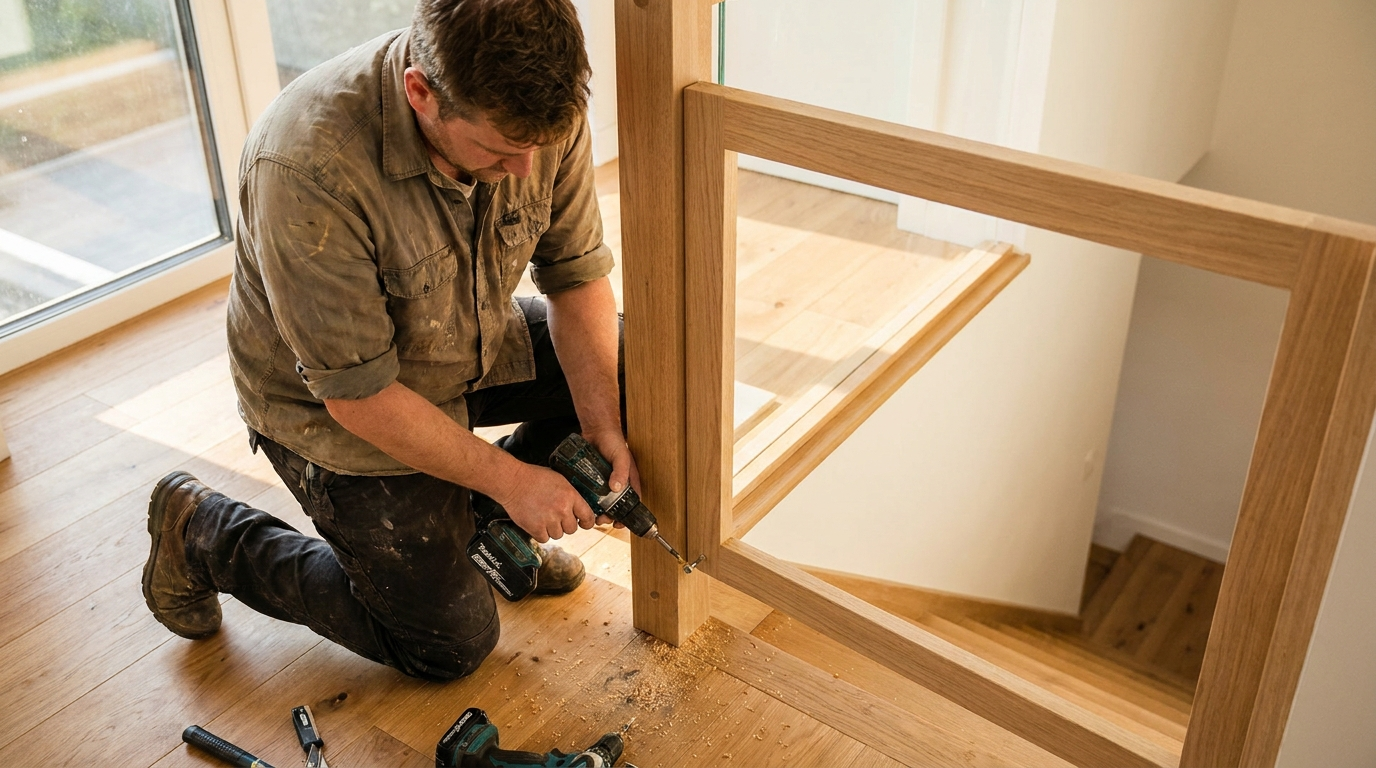
Step 1 — Measure twice. Measure the opening at the top, middle, and bottom. Walls and banisters are rarely perfectly plumb, and a 1-inch variation can push you out of a gate’s range.
Step 2 — Find solid wood. Use a stud finder on the wall side. If the stud is off-center, the Cardinal SS30‘s angle mount or the KidCo Angle Mount Safeway can help you reach it. Avoid relying on drywall anchors alone at the top of stairs.
Step 3 — Prep the banister side. If you won’t drill into the newel post, install the Safety Innovations No Hole Stairway Mounting Kit first, then treat its wood strip as your mounting surface.
Step 4 — Mount the hinge side first. Many owners of the Toddleroo Series 2 recommend installing the hinge side, checking that the gate swings freely, then positioning the latch. Use the included template.
Step 5 — Set the swing direction. At the top of stairs, the gate must never swing out over the steps. Install the stop pin or bracket every time.
Step 6 — Run the “toddler test.” Push and pull hard at the top, middle, and both sides. Nothing should shift.
Common first-30-days mistakes: skipping the stop bracket, leaving the gate unlatched “just for a second,” and forgetting to re-tighten screws after the wood settles. Recheck hardware after the first month, then every few months.
Real-World Scenarios: Matching Your Stairway to the Right Gate
Specs are abstract until you picture your own hallway. Here are three common household profiles and the reasoning behind each match.
Scenario 1: The first-time renters
Jordan and Priya rent a two-story townhouse with a stained oak banister their lease forbids drilling. Their 8-month-old is crawling fast, and their budget is moderate. Best match: the Safety Innovations No Hole Stairway Mounting Kit paired with the KidCo Safeway. The kit protects the banister, the Safeway’s quick-release hardware means a clean removal at move-out, and together they stay well under the cost of a premium gate. Daily use is frequent, so one-handed operation matters.
Scenario 2: The open-concept loft
A family in a newer home has a stair top that opens onto a 50-inch-wide landing with no doorframe. They also have a dog that streaks through gates. Best match: the Retract-A-Gate 52″. Nothing else on this list spans that width while disappearing when guests visit. The higher price is justified because there’s no cheaper safe alternative for this geometry — just make sure both mounting points are solid.
Scenario 3: The grandparents’ house
Grandma watches her grandchild two days a week in an older home with a standard 36-inch stair opening and slightly crooked walls. Best match: the Evenflo Walk-Thru Top of Stairs Gate if walls cooperate, or the Cardinal Gates SS30 Stairway Special if the studs are off-center. Usage is occasional, so budget weighs heavier — but the top of the stairs still demands hardware mounting.
Problem → Solution: Fixing the 5 Most Common Stairway Headaches
Baby-proofing a stairway rarely goes perfectly the first time. Here are the problems parents hit most often and the precise fixes.
Problem 1: “My banister is round and nothing attaches.” Solution: a post-clamp adapter like the Safety Innovations No Hole Stairway Mounting Kit creates a flat wood surface for your hardware gate. Measure the post first.
Problem 2: “The stud is in the wrong spot.” Solution: choose a gate with angled mounting, such as the Cardinal Gates SS30 Stairway Special (up to 30 degrees), or add a wood mounting board anchored across two studs.
Problem 3: “The gate won’t latch every time.” Solution: check that the gate is level — an unlevel gate misaligns the latch. With the Toddleroo Easy Swing & Lock Series 2, reviewers note a firm swing is needed for the latch to engage.
Problem 4: “My toddler climbs the railings next to the gate.” Solution: install a clear barrier such as the KidKusion Banister Guard (15 feet by 33 inches, attached with tie straps) to block horizontal footholds and spindle gaps.
Problem 5: “My opening is too wide for any gate.” Solution: step up to the Toddleroo Series 2 (up to 47.85 inches) or the Retract-A-Gate 52″, rather than stacking extensions that weaken a swing gate.
How to Choose a Baby Gate for Top of Stairs
Choosing a baby gate for top of stairs is less about brand and more about matching the gate to your geometry and habits. Follow these steps in order.
- Confirm hardware mounting. At the top of stairs, choose only screw-in, hardware-mounted gates. Pressure gates rely on friction and can be pushed out by a leaning toddler.
- Verify certification. Look for gates that meet the mandatory federal standard. The CPSC’s gates and enclosures guidance explains that gates must comply with 16 C.F.R. part 1239, which incorporates ASTM F1004; JPMA certification is a helpful extra signal.
- Measure your opening precisely. Measure at several heights and choose a gate whose range comfortably covers your number, not one stretched to its maximum.
- Check the swing control. The gate must not open over the stairs. Stop pins, stop brackets, or adjustable swing direction are essential.
- Look for no threshold. A bottom bar is a trip hazard for adults carrying babies at the top of a staircase.
- Evaluate height and bar spacing. Taller gates (32–36 inches) slow climbers, and narrow vertical bar spacing helps prevent entrapment.
- Plan for your banister. If one side is a post, decide now whether you’ll drill or use an adapter kit.
These criteria explain why every gate in this guide is hardware-mounted — and why the cheapest pressure gate is false economy at the top step.
Hardware-Mounted Baby Gate vs Pressure-Mounted Gate
This is the single most important decision in stairway safety, so it deserves more than a one-liner. A hardware-mounted baby gate screws directly into wall studs, door framing, or a banister adapter. A pressure-mounted gate wedges between two surfaces using tension. The difference shows up most when a child falls into the gate — or when an adult leans on it.
| Feature | Hardware-Mounted Gate | Pressure-Mounted Gate | Best for |
|---|---|---|---|
| Top-of-stairs safety | Recommended | Not recommended | Hardware: stair tops |
| Bottom threshold | Usually none | Usually present | Hardware: carrying a baby |
| Installation | Drilling required | Tool-free | Pressure: doorways |
| Portability | Low (brackets stay) | High | Pressure: travel, room dividing |
| Stability under force | Very high | Moderate, can loosen | Hardware: climbers |
The table makes the trade-off clear: pressure gates win on convenience, but hardware gates win on everything that matters at the top of stairs. That’s why the guidance from Nationwide Children’s Hospital and other pediatric safety groups says to use only wall-mounted gates at the top. A sensible hybrid strategy is a hardware gate like the KidCo Safeway at the top and a pressure gate at the bottom, where a fall involves only a single step.
Banister Baby Gate Setups: Drill, Clamp, or Strap?
A banister baby gate setup is where most parents get stuck, because staircases rarely offer two flat walls. You have three realistic approaches, and each fits a different home.
Option 1: Drill directly into the newel post
This is the strongest attachment and costs nothing extra, but it leaves permanent holes. It suits homeowners with painted or utilitarian banisters who plan to stay put.
Option 2: Clamp with a no-hole adapter kit
The Safety Innovations No Hole Stairway Mounting Kit clamps around posts from 2.75 to 3.625 inches and provides a wood strip to mount into. It preserves finished wood and is the default choice for renters. Cardinal Gates also sells its own banister clamp kit designed to pair with the Cardinal SS30.
Option 3: Strap-on or retractable systems
Some retractable mesh gates advertise no-drill banister straps. Be skeptical at the top of stairs: the safest retractable options, like the Retract-A-Gate 52″, still require solid hardware mounting.
Y-spindles — bottom only
Y-spindle adapters help pressure gates grip round banisters, but they’re designed for pressure installations — fine at the bottom of the stairs, never at the top.
The deciding factor is usually your post’s shape and size. Measure it, then choose the approach that delivers solid hardware mounting without damaging what you can’t replace.
Common Mistakes to Avoid When Childproofing Stairs
Childproofing stairs goes wrong in surprisingly predictable ways. A 2014 Nationwide Children’s Hospital study on baby gate injuries found that gate-related injuries send an average of five children age 7 and younger to US emergency departments each day, and children under 2 were most often hurt falling down stairs after a gate collapsed. Here’s how to avoid becoming a statistic.
Mistake 1: Using a pressure gate at the top. It’s the most common and most dangerous error. A hardware-mounted gate is the fix.
Mistake 2: Ignoring the swing direction. A gate that opens toward the stairs can dump a leaning toddler onto the steps. Always install the stop pin or set swing control.
Mistake 3: Mounting into drywall alone. Hollow anchors can tear out under repeated force. Find a stud or use a mounting board.
Mistake 4: Gating only the top. Kids also climb up and fall back down. Gate the bottom too.
Mistake 5: Keeping the gate too long. The same study recommended gates for homes with children between 6 months and 2 years. Once a child can climb over or open the gate, it can become a launching platform — time to transition to stair-safety teaching.
Mistake 6: Buying old or secondhand gates blindly. Accordion-style gates with wide V-shaped openings are an entrapment hazard. Check for recalls before reusing anything.
Stair Safety for Toddlers Beyond the Gate
A gate is the centerpiece of stair safety for toddlers, but it’s not the whole system. Think of baby-proofing a stairway as layered protection, where each layer covers a gap the others miss.
Block railing gaps and footholds
Balusters spaced widely enough for a small head or body are a hidden hazard, and horizontal railings act like ladders. A clear barrier like the KidKusion Banister Guard — a 15-foot roll, 33 inches tall, attached with included tie straps and usually around $40 — covers spindle gaps and stops toys from being dropped over landings. Reviewers say it’s a two-person job on angled stair rails, so recruit help.
Improve traction and lighting
Bare hardwood steps are slippery for socked feet. Stair runners or non-slip treads, plus bright lighting at the top and bottom, reduce falls for everyone — including sleep-deprived parents.
Keep stairs clear
Laundry baskets and toys on steps are tripping hazards that a gate can’t fix. A “nothing on the stairs” rule is free and effective.
Teach as they grow
Once your child is walking confidently, practice going down backward on hands and knees under supervision. A gate buys time; teaching builds skills.
Never substitute gates for supervision
Pediatric safety experts are consistent on this: gates reduce risk, but they don’t replace watching your child.
Long-Term Cost and Maintenance
Price tags tell only part of the story. When baby-proofing a stairway, the true cost includes installation hardware, accessories, and how long the gate will last — possibly through multiple children.
| Product | Typical Price Range | Likely Extra Costs | Long-Term Value | Best for |
|---|---|---|---|---|
| Evenflo Walk-Thru | ~$45–$60 | Possibly a mounting board | Good for one child | Evenflo Walk-Thru: tight budgets |
| KidCo Safeway | ~$55–$80 | Banister kit if needed | Very good | KidCo Safeway: overall value |
| Toddleroo Series 2 | ~$70–$90 | Banister kit if needed | Good; check hinges | Toddleroo Series 2: wide openings |
| Cardinal SS30 | ~$80–$110 | Banister clamp kit | Excellent, rustproof | Cardinal SS30: multi-child use |
| KidCo Angle Mount Safeway | ~$85–$100 | 10-in extension | Very good | KidCo Angle Mount Safeway: odd angles |
| Retract-A-Gate 52″ | Premium, $100+ | Extra hardware sets | Excellent if layout requires it | Retract-A-Gate 52″: wide landings |
The numbers reveal a useful insight: the cheapest gate isn’t always the cheapest choice. The Cardinal SS30‘s rustproof aluminum and the KidCo Safeway‘s steel construction are built to outlast a single toddler, which spreads the cost across siblings. Wood gates like the Evenflo Walk-Thru can show chew marks sooner, so factor in a shorter lifespan.
Maintenance schedule: tighten screws after the first month, inspect latches and hinges every three months, wipe mesh or bars with mild soap, and check manufacturer sites for recalls once a year.
Safety, Regulations, and Standards
US baby gates aren’t a free-for-all anymore. Under the Consumer Product Safety Improvement Act, the CPSC issued a mandatory safety standard — 16 C.F.R. part 1239 — that incorporates the ASTM F1004 voluntary standard for expansion gates and expandable enclosures. According to the CPSC, gates manufactured after January 21, 2023, must meet ASTM F1004-22.
The 2020 final rule published in the Federal Register adopted a requirement that all gates, including pressure-mounted models, pass a 30-pound push-out force test at five test locations. It also added warning-label requirements for certain pressure-mounted designs, reflecting concern about incorrect installation.
What does this mean for you as a 2027 buyer?
- Buy new from reputable sellers. A current model sold in the US should be tested to the Commission-accepted version of ASTM F1004.
- Treat JPMA certification as a bonus. It indicates independent testing, which several picks here carry.
- Pressure gates passing tests doesn’t make them stair-top safe. The push-out test measures a minimum; real toddlers lean, climb, and rattle repeatedly.
- Check recalls. The CPSC posts recalls on its website.
As of research for this guide, no new gate regulation specifically taking effect in 2027 had been verified. ASTM revises its standards periodically, so check the CPSC’s gates page for the latest mandatory version before you buy.
Features That Actually Matter (and Ones That Don’t)
Marketing copy loves buzzwords. Here’s an honest cut through what genuinely improves stairway safety — and what’s nice but optional.
Features that matter
- Hardware mounting: the foundation of top-of-stairs safety.
- Swing-over-stairs prevention: a stop pin, bracket, or swing control.
- No bottom threshold: eliminates a fall-inducing trip hazard.
- One-handed adult operation: you’ll often be carrying a baby, laundry, or both.
- A fit range that covers your opening comfortably: stretched gates and stacked extensions lose rigidity.
- Angle-mount capability: crucial if studs or posts don’t align.
Features that are nice but secondary
- Finish and color: a matte bronze Toddleroo Series 2 or a wood Evenflo Walk-Thru looks great, but appearance doesn’t improve safety.
- Auto-close: helpful in busy households, but no pick here relies on it, and a manual gate closed every time works just as well.
- Pet-door cutouts: convenient for cats, but they add openings you’ll want to verify are secure.
Features to be cautious about
- “No-drill” claims at the top of stairs: unless a certified hardware-mounted system backs them up, skip them.
- Extra-wide pressure gates: wide spans under tension are precisely the setups most likely to loosen.
Prioritizing the first list delivers nearly all the safety value, regardless of budget.
FAQ
❓ What is the safest baby gate for the top of the stairs?
✅ The safest option is any hardware-mounted gate that screws into studs or a banister adapter and can't swing over the stairs. Models like the Cardinal Gates SS30 Stairway Special and KidCo Safeway are purpose-built for this location…
❓ Can I install a baby gate on a banister without drilling?
✅ Yes. A no-hole adapter like the Safety Innovations No Hole Stairway Mounting Kit clamps around posts from 2.75 to 3.625 inches and gives you a wood strip to mount a hardware gate onto, protecting your finished banister…
❓ At what age should you start baby-proofing a stairway?
✅ Install gates before your baby becomes mobile, typically around 6 months. Researchers at Nationwide Children's Hospital recommend gates in homes with children between 6 months and 2 years, adjusting once your child can climb or open them…
❓ Are retractable baby gates safe for stairs?
✅ Only some. A retractable gate must be hardware-mounted into solid surfaces and certified for stair use. The Retract-A-Gate 52' is widely described as JPMA certified; many cheaper mesh lookalikes aren't designed for stair tops…
❓ How tall should a top-of-stairs baby gate be?
✅ Most quality stair gates stand 29.5 to 32 inches tall. If your toddler is an early climber, consider a taller option, such as the 36-inch Toddleroo Easy Swing & Lock Series 2 variant, and remove nearby footholds…
Conclusion
Baby-proofing a stairway comes down to one principle backed by pediatric researchers and federal standards alike: the top of the stairs demands a hardware-mounted gate that can’t swing over the steps. Everything else — width, finish, price — is about fitting that principle to your home.
If you have a standard opening, the KidCo Safeway offers excellent value and proven mechanics. For awkward stud placement, the Cardinal Gates SS30 Stairway Special and its 30-degree mounting flexibility are hard to beat, while the KidCo Angle Mount Safeway is the specialist for misaligned mounting points. Wider openings point toward the Toddleroo Easy Swing & Lock Series 2, and open-concept landings justify the premium Retract-A-Gate 52″. On a budget, the Evenflo Walk-Thru Top of Stairs Gate covers the essentials. And if a beautiful banister stands in your way, the Safety Innovations No Hole Stairway Mounting Kit turns it into a safe mounting point.
Pair your gate with a bottom-of-stairs barrier, a railing guard like the KidKusion Banister Guard if spindles are wide, and regular hardware checks. Most importantly, remember that a gate buys you time — it doesn’t replace supervision. Do it right once, and you’ll spend the next two years worrying a whole lot less about those stairs.
✨ Don’t miss these top-rated stairway safety picks!
🔍 Take your stair safety to the next level with this carefully curated lineup. Click a highlighted product to check current pricing and availability. These picks will help you create a safer home your whole family can enjoy!
Recommended for You
- indoor playground for kids: 7 Best Picks Compared (2027)
- DIY Babyproofing Tips for Sharp Corners: 7 Best Picks (2026)
- 7 Best Jungle Gyms for Backyards in 2026 (Don’t Overspend)
Disclaimer: This post contains affiliate links. As an Amazon Associate, I earn from qualifying purchases made through these links, at no additional cost to you.
✨ Found this article helpful? Share it with someone who needs it! 💬🤗