Introduction
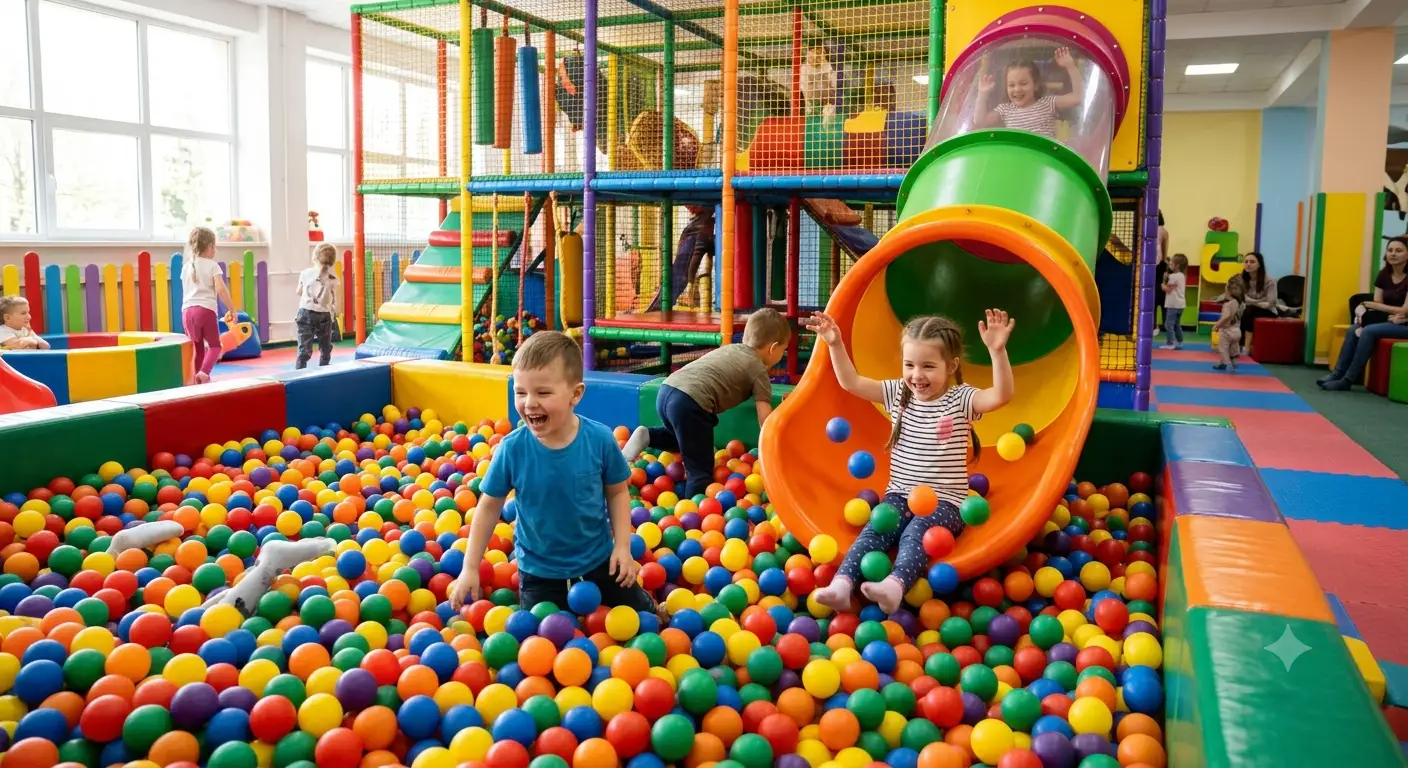
It’s 4:30 p.m., it has rained for three days straight, and your toddler is scaling the back of the couch like it’s a summit attempt. Sound familiar? That restless, climb-everything energy isn’t misbehavior — it’s development asking for an outlet. An indoor playground for kids gives that energy a safe, purpose-built place to go, right inside your living room, basement, or playroom.
The category has exploded. A few years ago, your options were a plastic slide and maybe a ball pit. Heading into 2027, you can choose between Montessori-style wooden climbers, 9-in-1 jungle gyms with monkey bars and rope ladders, foam soft-play sets for crawlers, and even a ride-on roller coaster that fits in a basement. That variety is great — but it also makes it easy to buy the wrong thing for your child’s age, your ceiling height, or your floor space.
This guide cuts through the noise. We compared seven real products sold on amazon.com using their published specs, weight limits, dimensions, and the recurring themes in aggregated customer reviews. You won’t find made-up “we tested it for 90 days” stories here — just honest analysis of what each spec means for your family, who each option actually suits, and where the trade-offs hide.
You’ll also get a quick comparison table, a first-30-days setup guide, real-world buyer scenarios, safety basics drawn from U.S. Consumer Product Safety Commission guidance, and a breakdown of long-term costs. Whether you’re shopping for a one-year-old’s first climber or a sturdy indoor jungle gym for toddlers and preschoolers to share, you’ll know exactly what to look for by the end.
Heads-up: this article contains affiliate links. If you buy through them, we may earn a small commission at no extra cost to you.
What Is an Indoor Playground for Kids?
An indoor playground for kids is a freestanding play structure — wooden, plastic, metal, or foam — designed for safe climbing, sliding, swinging, and crawling inside the home. It scales down the classic backyard jungle gym to fit a playroom, and it is sized for specific age ranges and weight limits.
In practice, home models fall into four broad families:
- 🪵 Wooden multi-station climbers (often marketed as Montessori or Waldorf-style): ladders, rock walls, monkey bars, slides, and swings on one frame. Best for ages 2-6+.
- 🛝 Plastic toddler climbers: low, lightweight, easy to wipe down, typically for ages 1-4.
- 🧸 Foam soft-play sets: modular blocks, wedges, and ramps for crawlers and new walkers.
- 🎢 Ride-on or activity-based sets: think toddler roller coasters or slides that reward repetition and balance.
The right family depends less on what looks impressive in photos and more on three hard numbers: your child’s age, the product’s weight limit, and the footprint you can realistically give up.
Quick Comparison: The 7 Best Picks at a Glance
| Product | Type | Age Range (listed) | Approx. Price Range | Best for |
|---|---|---|---|---|
| Avenlur Magnolia 7-in-1 | Wooden climber | 2-6 yrs | $450-$650 | Avenlur Magnolia 7-in-1: premium, multi-kid families |
| BlueWood 9-in-1 | Wooden climber | 3+ yrs | $250-$320 | BlueWood 9-in-1: most activities per dollar |
| Costzon 8-in-1 | Wooden climber | 3+ yrs | $230-$280 | Costzon 8-in-1: hardwood build at mid-range |
| Step2 Up & Down Roller Coaster | Ride-on | 2-5 yrs | $90-$160 | Step2 Up & Down Roller Coaster: high-energy toddlers |
| Little Tikes Hide & Seek Climber | Plastic climber | 1-4 yrs | $80-$110 | Little Tikes Hide & Seek Climber: first climber on a budget |
| Little Tikes Easy Store Slide & Explore | Plastic climber | 1-3 yrs | $80-$110 | Little Tikes Easy Store Slide & Explore: small apartments |
| ECR4Kids SoftZone Climb and Crawl | Foam set | ~9 mo-3 yrs | $110-$140 | ECR4Kids SoftZone Climb and Crawl: crawlers and new walkers |
Reading the table top to bottom is basically reading a child’s growth curve in reverse. The ECR4Kids SoftZone Climb and Crawl and the two Little Tikes climbers own the under-3 territory, while the three wooden gyms only really start to shine once a child can grip a rung confidently — usually around age 3. If you have kids at both ends of that range, the Avenlur Magnolia 7-in-1 is the only pick here whose listed range starts at age 2, which is why it commands the premium.
💬 One click helps other shoppers make an informed choice too! Tap any highlighted product to check current pricing and availability. 😊
Top 7 Indoor Playground Picks for 2027: Expert Analysis
Prices below are approximate ranges at the time of writing — they move often, so check the current price on the product page.
1. Avenlur Magnolia 7-in-1 Indoor Playground — the premium all-rounder for ages 2-6
The Avenlur Magnolia 7-in-1 is the pick for families who want one structure that grows with a toddler and handles a sibling at the same time.
It combines monkey bars, a mini rock wall, cargo net, wood ladder, rope ladder, Swedish slide, and rope swing in one frame. The manufacturer rates it at up to 110 lb per child and 220 lb total, which in practice means two preschoolers can share it without you hovering over a weight limit. It comes in two sizes: Medium (51.6 x 43 x 47.2 in) and Large (57.3 x 47.9 x 56.2 in) — the Medium suits standard 8-ft ceilings and smaller playrooms, while the Large adds challenge for kids closer to 5 or 6.
Based on the specs, this is the most toddler-friendly of the wooden gyms: the low slide angle and age-2 starting point mean a younger child isn’t just watching an older sibling play. It was also recognized in the 2023 Good Housekeeping Parenting Awards, a useful third-party signal in a category crowded with look-alike brands.
Aggregated reviews consistently praise its sturdiness and design quality; the most common caveat is assembly — several buyers note it takes real time and goes faster with a power drill.
Pros:
- ✅ Starts at age 2, wider than most wooden gyms
- ✅ 220 lb total capacity supports sibling play
- ✅ Two sizes to match ceiling height
Cons:
- ❌ Highest price in this lineup
- ❌ Assembly is lengthy without a drill
💲 Typically $450-$650 depending on size and finish — the price is steep, but the age-2-to-6 runway makes the cost per year of use competitive.
2. BlueWood Upgraded 9-in-1 Indoor Jungle Gym — most activities for the money
The BlueWood 9-in-1 packs the highest station count in this guide into a mid-range price.
You get climbing rocks, a slide, two swing types, a climbing net, an upright ladder, monkey bars, a rope ladder, and a climbing ladder. Several retailer listings rate it at up to 485 lb total, although some listings show lower figures, so confirm the number on the exact listing you buy. Listed dimensions are roughly 59.1 x 38.8 x 46.1 in, so it’s longer than it is deep — handy along a wall. Variety matters more than it sounds: a 4-year-old who masters the ladder in week one still has monkey bars and a rope ladder to work toward, which keeps the gym from becoming furniture.
This is the right call for one very active child or two moderate climbers aged roughly 3-6 who want variety more than a premium finish. It’s less suited to an 18-month-old.
Review sentiment leans strongly positive — buyers frequently mention daily use and kids constantly reconfiguring their routes. The recurring negative is seller support: at least one buyer reported difficulty reaching customer service after a problem.
Pros:
- ✅ Nine activities on a single frame
- ✅ High listed total weight capacity
- ✅ Long, shallow footprint fits along walls
Cons:
- ❌ Not ideal for kids under three
- ❌ Some reports of slow seller support
💲 Usually $250-$320 — the strongest activity-per-dollar value of the wooden options.
3. Costzon 8-in-1 Indoor Jungle Gym — hardwood build at a mid-range price
The Costzon 8-in-1 stands out for its birch and beech wood construction instead of the pine used by most rivals.
The standard version measures about 50 x 46.5 x 54.5 in, weighs roughly 60 lb, and includes a slide, climbing rock or net, and monkey bars. The listing we checked rates it at around 110 lb per activity zone. Why does wood species matter? Beech and birch are denser hardwoods, which generally means rungs resist dents and wear better over years of sneakers and swinging — a real advantage if you plan to pass the gym down to a younger sibling. Costzon also sells a foldable 8-in-1 variant that collapses to about 47 x 11 x 60.5 in for closet storage.
It’s a smart pick for families with kids aged 3-6 who value durability and want a near-square footprint for a corner.
Reviews generally describe it as sturdy and good value, though assembly takes time. One useful pattern from owner feedback: vigorous swinging can loosen hardware, so a monthly bolt check is a sensible habit.
Pros:
- ✅ Dense birch and beech hardwood frame
- ✅ Foldable variant available for storage
- ✅ Compact, corner-friendly square footprint
Cons:
- ❌ Bolts need periodic re-tightening
- ❌ Listed for ages 3+, not toddlers
💲 Generally $230-$280 — solid value for a hardwood frame.
4. Step2 Up & Down Roller Coaster — the energy burner for high-octane toddlers
The Step2 Up & Down Roller Coaster isn’t a climber at all, and that’s exactly its appeal.
An ATV-style car rolls down roughly 9-10 ft of hilly track, with steps at the start. It’s designed for ages 2-5, one rider at a time, with a 50 lb maximum. The track runs about 10 ft long when assembled, so it suits a basement, garage, or long hallway rather than a compact living room. Kids burn energy by climbing the steps, riding down, and pushing the car back up — dozens of times. That repetition builds balance and leg strength while letting a child control the thrill level.
It’s perfect for toddlers who have outgrown simple slides but aren’t ready for monkey bars. Retailer listings show a manufacturer’s limited warranty (three years on the Kohl’s listing), which is reassuring for a ride-on toy.
It carries one of the largest review bases in the category, and the sentiment is overwhelmingly positive about easy assembly and fun. The main complaint involves occasional shipping damage, which buyers report Step2 resolved by sending replacement parts.
Pros:
- ✅ Simple, mostly tool-free assembly
- ✅ Builds balance through repetitive play
- ✅ Works indoors and outdoors
Cons:
- ❌ About 10 ft of floor needed
- ❌ One rider only, 50 lb limit
💲 Typically $90-$160 depending on edition — excellent value for a toy with this much replay.
5. Little Tikes Hide & Seek Climber — the classic first climber
The Little Tikes Hide & Seek Climber is the low-stakes, low-cost way to find out whether your toddler is a climber.
It measures about 40.75 x 15.5 x 25 in, supports up to 60 lb, and targets ages 1-4. You get a beginner rock wall, a short slide, and a crawl-through tunnel underneath. That 25-inch height is the important number: it keeps falls short, and the slim 15.5-inch width lets it tuck against a wall. The tunnel turns it into a hiding spot, which adds imaginative play beyond climbing.
It’s the go-to for a 12- to 24-month-old who is pulling up on everything. Older preschoolers will outgrow it quickly.
Aggregated reviews are largely positive about quick assembly (often around 10 minutes) and toddler appeal. Recurring criticisms: some grandparents feel the slide is steep for the youngest walkers, and a minority of buyers describe it as less stable than expected.
Pros:
- ✅ Low height keeps falls short
- ✅ Fast, simple assembly
- ✅ Tunnel adds hide-and-seek play
Cons:
- ❌ Slide feels steep to some toddlers
- ❌ Outgrown quickly by preschoolers
💲 Usually $80-$110 — an affordable trial run before investing in a bigger gym.
6. Little Tikes Easy Store Slide & Explore — built for small spaces
The Little Tikes Easy Store Slide & Explore solves the biggest apartment problem: where do you put it when playtime ends?
It offers over 4.5 ft of climb, slide, and crawl fun for ages 1-3, with a maximum of two children and up to 60 lb per child. The “Easy Store” design packs down for storage, so the living room can be a living room again after bedtime. A steering-wheel feature adds pretend play, which matters for young toddlers whose attention bounces between movement and imagination.
If you rent, live in a smaller home, or need to clear the floor for guests, this is the most practical plastic option here. It’s also handy at grandparents’ houses.
Review sentiment focuses on space savings: buyers repeatedly say it’s ideal when you’re short on room and quick to pack away. As a newer and smaller-volume product, it has fewer reviews than the Hide & Seek Climber, so long-term durability data is thinner.
Pros:
- ✅ Packs away for compact storage
- ✅ Two-child capacity for playdates
- ✅ Pretend-play steering wheel included
Cons:
- ❌ Narrow 1-3 age window
- ❌ Less long-term review data available
💲 Typically $80-$110 — worth the small premium if storage space is your bottleneck.
7. ECR4Kids SoftZone Climb and Crawl Activity Playset (5-Piece) — the softest start for crawlers
The ECR4Kids SoftZone Climb and Crawl is the safest first step for babies who are crawling, pulling up, or taking first wobbly steps.
The set includes five foam shapes — a platform, wedge, rectangle, cylinder, and half-moon — measuring about 56 x 32 x 16 in when arranged together. It’s made with CertiPUR-US certified foam and lists compliance with California’s TB 117 flammability standard. The 16-inch max height is the key detail: there’s simply nowhere high to fall from. Because the pieces are modular, you can build ramps, bridges, and steps, then rearrange them as skills improve.
It’s ideal for roughly 9 months to 3 years and doubles as soft furniture later. Physical therapists sometimes recommend similar foam climbers for early motor practice.
The review base is smaller than the plastic climbers’, but feedback consistently highlights quality stitching, easy wipe-clean vinyl, and enthusiastic toddlers.
Pros:
- ✅ Lowest fall height in this lineup
- ✅ Certified foam and wipe-clean covers
- ✅ Endlessly reconfigurable pieces
Cons:
- ❌ Little challenge for kids over three
- ❌ Smaller pool of customer reviews
💲 Usually $110-$140 — a sensible investment for the crawl-to-walk stage.
Head-to-Head: Specs, Capacity, and Footprint
| Product | Approx. Footprint | Listed Weight Limit | Key Activities | Best for |
|---|---|---|---|---|
| Avenlur Magnolia 7-in-1 (Medium) | 51.6 x 43 in | 110 lb/child, 220 lb total | Slide, swing, rock wall, monkey bars, nets | Avenlur Magnolia 7-in-1: ages 2-6 sharing |
| BlueWood 9-in-1 | 59.1 x 38.8 in | Up to 485 lb total (varies by listing) | 9 stations incl. two swings | BlueWood 9-in-1: variety seekers |
| Costzon 8-in-1 | 50 x 46.5 in | ~110 lb per zone | Slide, rock/net, monkey bars | Costzon 8-in-1: durability |
| Step2 Up & Down Roller Coaster | ~10 ft long | 50 lb, 1 rider | Ride-on coaster | Step2 Up & Down Roller Coaster: basements |
| Little Tikes Hide & Seek Climber | 40.75 x 15.5 in | 60 lb | Rock wall, slide, tunnel | Little Tikes Hide & Seek Climber: first climbers |
| Little Tikes Easy Store Slide & Explore | Compact, stores away | 60 lb/child, 2 kids | Climb, slide, steering wheel | Little Tikes Easy Store Slide & Explore: apartments |
| ECR4Kids SoftZone Climb and Crawl | 56 x 32 in | N/A (floor-level foam) | 5 foam shapes | ECR4Kids SoftZone Climb and Crawl: crawlers |
The footprint column is where most buying mistakes happen. The Step2 Up & Down Roller Coaster looks compact in photos but needs a 10-foot runway, while the Little Tikes Hide & Seek Climber is the only pick under 16 inches deep. For shared play, notice that the Avenlur Magnolia 7-in-1 publishes both per-child and total limits — more useful than a single big number, because it tells you how weight can be distributed.
Indoor Playground vs. Traditional Alternatives
Is a home setup actually better than a backyard swing set or a membership to a local play center? It depends on what you’re optimizing for.
| Option | Weather-proof | Ongoing Cost | Supervision Ease | Best for |
|---|---|---|---|---|
| Home indoor playset (e.g., BlueWood 9-in-1) | ✅ Yes | One-time purchase | Very easy | Daily, unplanned play |
| Outdoor backyard swing set | ❌ No | One-time + upkeep | Moderate | Older kids, big yards |
| Commercial indoor play center | ✅ Yes | Per-visit fees add up | Crowded | Socializing, big equipment |
| Furniture climbing (no equipment) | ✅ Yes | Free, until something breaks | Hard | Nobody, honestly |
The biggest advantage of a home setup is frequency. A play center is a fun outing, but at typical per-visit fees, a family going weekly through a long winter can spend more than a mid-range climber costs in a single season. A backyard set offers more height and challenge for kids over 6, but it sits unused for months in cold or rainy regions.
That said, a home playset isn’t a replacement for everything. Commercial centers offer social play with other kids and equipment far bigger than any living room allows. The smartest approach for most families: a home set for daily movement, and occasional outings for novelty. And whatever you choose, it beats the couch-climbing alternative — your sofa cushions agree.
How to Choose an Indoor Playground for Kids
Follow these seven steps in order — each one narrows the field.
- Start with your child’s age, not their size. Coordination and grip strength matter more than height. Most wooden multi-station gyms list ages 3+; under-3s generally do better on foam or low plastic climbers.
- Check the weight limit, twice. Confirm both per-child and total capacity if you have siblings. If only one number is listed, assume it applies to the whole structure.
- Measure floor space plus a safety buffer. Add a few feet of clear space around slides and swings for landing and dismount — not just the product’s own footprint.
- Measure ceiling height. A child standing on the top platform needs headroom. Low basement ceilings rule out the tallest gyms.
- Pick materials for your priorities. Hardwood (beech, birch) resists wear; pine is lighter and cheaper; plastic wipes clean; foam minimizes fall risk.
- Think about storage. Renting or tight on space? Foldable or pack-away designs keep the room usable.
- Plan for growth. Buying for a 2-year-old? A gym that stays interesting until age 5 or 6 delivers more value per year.
Why does this matter beyond fun? Federal guidance in the Physical Activity Guidelines for Americans says preschool-aged children should be physically active throughout the day, and it counts climbing among muscle-strengthening activities. An indoor jungle gym for toddlers makes that easy on days when the park isn’t an option.
✨ Don’t miss out on the perfect playroom upgrade!
🔍 Take your child’s indoor play to the next level with this carefully curated lineup. Click a highlighted product to check current pricing and availability — these picks will help you raise a confident, active climber the whole family can cheer on!
Setting Up Your Indoor Playground: A First-30-Days Guide
The box arrives. Now what? Here’s how to set up for success — and avoid the mistakes most families make in the first month.
Day 1: Assembly and placement 🔧
- Assemble with two adults if possible, especially for wooden gyms. Keep the hardware list handy and check off each bolt.
- Place the structure on carpet or, better, on dense foam mats — never directly on hardwood, tile, or concrete.
- Keep it away from windows, radiators, sharp furniture corners, and blind cords.
Week 1: Introduce one activity at a time 🧗
Instead of letting your child attack all nine stations at once, show them one or two features — the ladder and slide, for example. Teach the “feet first down the slide” rule from the start, and demonstrate how to come back down the rock wall, not just go up. Kids who learn descent early fall less.
Weeks 2-3: Build routines ⏰
Tie playground time to natural energy peaks — late afternoon before dinner works for many families. Set simple house rules: one child on the swing at a time, no toys on the climbing surfaces, shoes off (or grippy socks on).
Week 4: The maintenance check 🔍
This is the step almost everyone forgets. After a month of daily use, wooden frames settle and bolts loosen. Go over every joint with the included hex key, check ropes and nets for fraying, and inspect plastic parts for cracks. Then put a recurring monthly reminder on your phone.
One optimization tip: rotate configurations. If your gym allows repositioning the slide or swapping the climbing ramp side, change it every few weeks. Novelty is what keeps a jungle gym from becoming a very expensive coat rack.
Which Indoor Playground Fits Your Family? Real-World Scenarios
Specs are abstract until you map them onto real lives. Here are four common buyer profiles and how the picks line up.
👶 Scenario 1: First-time parents, 10-month-old, two-bedroom apartment. Budget is moderate, space is tight, and the baby is just starting to pull up. The ECR4Kids SoftZone Climb and Crawl is the clear first buy: almost no fall height, wipe-clean covers, and pieces that double as seating later. Around 18 months, adding the Little Tikes Easy Store Slide & Explore gives a first slide that still packs away.
👧👦 Scenario 2: Two kids, ages 2 and 5, finished basement. This family needs one structure both children will actually use. The Avenlur Magnolia 7-in-1 fits best because its listed range starts at 2 and its 220 lb total capacity covers both kids. The 5-year-old gets monkey bars; the 2-year-old gets a gentle slide.
⚡ Scenario 3: One very energetic 3-year-old, mid-range budget, long playroom. Variety is the priority because boredom sets in fast. The BlueWood 9-in-1 delivers the most stations for the money, and its long, shallow shape fits along a wall.
🏠 Scenario 4: Grandparents hosting a 2-year-old on weekends. They want something affordable, quick to set up, and easy to move. The Little Tikes Hide & Seek Climber wins on simplicity, while the Step2 Up & Down Roller Coaster is a great add-on if the garage or basement has a long open stretch.
Notice the pattern: age and space decide the category, and budget only decides between options within it.
Common Problems and Quick Fixes
Even the best indoor playground for kids comes with a learning curve. Here are the issues owners mention most often in reviews, with practical solutions.
Problem 1: The frame wobbles or creaks. 🪛 This usually means hardware has settled. Re-tighten every bolt with the included tool, working evenly around the frame. Owner feedback on the Costzon 8-in-1 specifically mentions monthly re-tightening after heavy swing use — a good habit for any wooden gym.
Problem 2: The slide is too fast or too steep for a young toddler. 🛝 Some buyers of the Little Tikes Hide & Seek Climber report this. Place a thick mat at the exit, sit beside your child for the first few rides, and teach a seated, feet-first position. Most toddlers adjust within a couple of weeks.
Problem 3: The structure slides on hardwood floors. 🧱 Use interlocking foam mats or a rug with a non-slip pad underneath. This adds cushioning and grip at the same time.
Problem 4: Your child lost interest after two weeks. 😴 Rotate configurations, add a stuffed-animal “rescue mission” on the platform, or set up obstacle-course challenges using the ECR4Kids SoftZone Climb and Crawl pieces alongside the gym. Imaginative framing revives interest fast.
Problem 5: Parts arrived damaged. 📦 Photograph everything before assembly and contact the brand directly. Reviews of the Step2 Up & Down Roller Coaster describe the company sending replacement parts after shipping damage — manufacturer support is often faster than a full return.
Safety, Standards, and Fall Height at Home
Safety is where an indoor playground for kids earns or loses its place in your home, so it’s worth understanding the vocabulary.
Fall height is the vertical distance between the highest designated play surface (the top platform or the highest foot rung) and the floor below. The higher it is, the more cushioning you need underneath. The U.S. Consumer Product Safety Commission’s Outdoor Home Playground Safety Handbook covers anchoring, hardware checks, protective surfacing, and supervision — and while it’s written for backyards, most of its principles transfer directly indoors.
Key standards worth recognizing on product listings:
- 🏷️ ASTM F963 — the mandatory U.S. toy safety standard covering hazards like small parts, sharp edges, and certain chemicals.
- 🏷️ CPSIA compliance — limits on lead and phthalates in children’s products.
- 🏷️ ASTM F1148 — the voluntary standard for home playground equipment.
- 🏷️ CertiPUR-US — a certification program for flexible foam, relevant to soft-play sets.
Practical takeaways for your home:
- Never install on a hard floor without padding. Dense foam mats extending beyond the structure are the bare minimum.
- Check for entrapment and strangulation hazards. Avoid clothing with drawstrings during play, and never tie ropes, leashes, or jump ropes to the frame.
- Supervise actively. Every product here assumes adult supervision.
- Respect weight limits. Adults “testing” the slide is a common cause of cracked parts.
As of this writing, we found no new federal rule specific to home indoor climbers taking effect in 2027, so these existing standards remain your best checklist.
Indoor Jungle Gym for Toddlers vs. Preschoolers
A 20-month-old and a 4-year-old might both love to climb, but they need very different equipment.
Toddlers (roughly 12-36 months) are still mastering balance. Their grip strength is limited, they often go up confidently but freeze coming down, and they explore by mouthing and touching everything. For this group, prioritize:
- Low platforms and short slides
- Wide, flat steps instead of thin rungs
- Wipe-clean surfaces
- Foam or plastic over hanging elements like monkey bars
That’s why the ECR4Kids SoftZone Climb and Crawl, Little Tikes Hide & Seek Climber, and Little Tikes Easy Store Slide & Explore sit at the top of the toddler list.
Preschoolers (roughly 3-6 years) crave challenge. They can hang, swing, and plan a climbing route, and a toddler climber bores them within weeks. For this group, look for:
- Monkey bars and rings for upper-body strength
- Rope ladders and nets for coordination
- Multiple routes to the top
- Higher weight capacity for growth spurts
The BlueWood 9-in-1 and Costzon 8-in-1 are built for exactly this stage. And if you’re buying for a 2-year-old but want the gym to last until kindergarten, the Avenlur Magnolia 7-in-1 bridges both groups — the main reason it costs more.
Features That Actually Matter (and Ones That Don’t)
Product listings throw around a lot of buzzwords. Here’s how to separate signal from noise.
✅ Features that genuinely matter:
- Published weight limits (per child and total). This is a safety specification, not marketing. Vague or missing numbers are a red flag.
- Wood species and finish. Hardwoods like beech resist wear; water-based, non-toxic finishes matter because toddlers chew on things.
- Rounded edges and recessed hardware. Exposed bolt ends snag clothing and scrape skin.
- Real dimensions, including height. Photos are staged to look spacious; the spec sheet tells the truth.
- Brand support and parts availability. Wooden gyms sometimes arrive with a missing or damaged piece. A responsive manufacturer turns that into a minor delay instead of a return.
❌ Features that matter less than the marketing suggests:
- “X-in-1” counts. A 9-in-1 isn’t automatically better than a 7-in-1; some “activities” are just the same ladder counted twice.
- “Montessori” or “Waldorf” labels. These describe a design philosophy, not a certification. A well-made Pikler-style climber is great — but the label alone guarantees nothing.
- Rainbow color options. Fun, but irrelevant to safety or durability.
The takeaway: judge any kids indoor gym by its spec sheet and support record, not its headline.
Long-Term Cost and Maintenance
The sticker price is only part of the story. Here’s how the total cost of ownership shapes up across categories.
| Product | Approx. Price Range | Likely Years of Use | Rough Cost per Year | Best for |
|---|---|---|---|---|
| Avenlur Magnolia 7-in-1 | $450-$650 | ~4 (ages 2-6) | ~$115-$165 | Avenlur Magnolia 7-in-1: longest runway |
| BlueWood 9-in-1 | $250-$320 | ~3-4 | ~$65-$105 | BlueWood 9-in-1: value |
| Little Tikes Hide & Seek Climber | $80-$110 | ~2 | ~$40-$55 | Little Tikes Hide & Seek Climber: low commitment |
| ECR4Kids SoftZone Climb and Crawl | $110-$140 | ~2-3 | ~$40-$70 | ECR4Kids SoftZone Climb and Crawl: early years |
The cheapest product per year isn’t always the cheapest overall, because toddler climbers get outgrown and replaced. A family that buys the Little Tikes Hide & Seek Climber at age 1 and then the BlueWood 9-in-1 at age 3 may spend about the same as a family that buys the Avenlur Magnolia 7-in-1 once at age 2 — but gets two age-matched products instead of one compromise.
Budget for these extras too:
- 🧱 Foam floor mats: often $40-$100 for adequate coverage.
- 🔧 Maintenance: a few minutes monthly; replacement ropes or hardware occasionally.
- ♻️ Resale value: well-kept wooden gyms tend to resell more easily than scuffed plastic, recovering part of the cost.
Common Mistakes to Avoid When Buying
Learn from the most frequent regrets in customer reviews.
- Buying for the age they’ll be “someday.” A 9-in-1 gym for a 14-month-old means months of frustration and risky improvising. Buy for today, plan for the next 2-3 years.
- Measuring only the footprint. Forgetting ceiling height and landing space around the slide is the most common sizing error.
- Skipping floor protection. Even a 2-foot fall onto tile hurts. Mats aren’t optional.
- Trusting a single headline weight number. Check whether it’s per child or total, and whether different listings for the same product disagree.
- Ignoring assembly time. Wooden gyms can take a couple of hours. Don’t start at 8 p.m. on a birthday eve.
- Forgetting the youngest sibling. A gym with ropes and gaps sized for a 5-year-old can create entrapment risks for a crawling baby who wanders in. The CPSC’s Public Playground Safety Handbook explains why equipment for children under 2 is designed differently — a useful read before mixing ages.
- Assuming “indoor/outdoor” means weatherproof. Plastic climbers can go outside occasionally; most wooden indoor gyms should stay inside to avoid swelling and splintering.
Avoid these, and almost any pick on this list will serve your family well.
FAQ
❓ Are indoor playgrounds for kids safe for toddlers?
✅ Yes, when you match the product to your child's age and weight. Choose low platforms, place dense foam mats underneath, check bolts monthly, and supervise actively. Under-2s generally do best on foam or low plastic climbers rather than tall wooden gyms…
❓ How much space do I need for an indoor jungle gym?
✅ Most wooden gyms need roughly 4 x 4 feet of floor space, plus a few extra feet of clear landing room around slides and swings. Ride-ons like toddler roller coasters can need about 10 feet in length. Always measure ceiling height too…
❓ What age is best for a wooden indoor playground?
✅ Most multi-station wooden gyms are listed for ages 3 and up, when grip strength and coordination are more developed. A few, like the Avenlur Magnolia 7-in-1, start at age 2. Younger toddlers usually do better with foam or plastic climbers…
❓ Is an indoor playground worth the money compared to play centers?
✅ For families who'd visit a play center often, usually yes. Per-visit fees add up quickly over a long winter, while a home set is a one-time cost used daily. Play centers still offer social play and bigger equipment for occasional outings…
❓ Do I need mats under an indoor playground?
✅ Yes. Even low climbers should sit on dense foam mats or thick carpet, never directly on hardwood, tile, or concrete. Extend padding beyond the structure's edges, especially at slide exits and swing zones, to cushion falls and stop the frame sliding…
Conclusion
Choosing an indoor playground for kids comes down to three numbers and one honest question. The numbers: your child’s age, the product’s weight limit, and the floor space (plus ceiling height) you can give up. The question: do you want something your child will outgrow in a year or two, or a bigger structure that grows with them?
For crawlers and new walkers, the ECR4Kids SoftZone Climb and Crawl is the gentlest, safest start. For budget-conscious first climbers, the Little Tikes Hide & Seek Climber remains a dependable classic, while the Little Tikes Easy Store Slide & Explore is the apartment-friendly choice. High-energy toddlers with a long basement will get endless laps out of the Step2 Up & Down Roller Coaster.
Once your child is around 3, the wooden gyms take over: the BlueWood 9-in-1 for maximum variety per dollar, the Costzon 8-in-1 for a durable hardwood frame, and the Avenlur Magnolia 7-in-1 if you want a single premium structure that spans ages 2 to 6 and handles siblings.
Whichever you pick heading into 2027, the formula for success stays the same: pad the floor, check the bolts, supervise, and rotate the fun. Do that, and rainy days stop being a countdown to bedtime — and start being the best part of your child’s week.
✨ Ready to turn rainy days into play days?
🛒 Click any highlighted product above to check current pricing and availability, and give your little climber a safe place to burn energy all year long!
Recommended for You
- DIY Babyproofing Tips for Sharp Corners: 7 Best Picks (2026)
- 7 Best Wooden Indoor Jungle Gym Options For Ultimate Fun in 2025
- 7 Best Indoor Wooden Playground Options for Ultimate Child Development in 2025
Disclaimer: This post contains affiliate links. As an Amazon Associate, I earn from qualifying purchases made through these links, at no additional cost to you.
✨ Found this article helpful? Share it with someone who needs it! 💬🤗
[wpf_share]