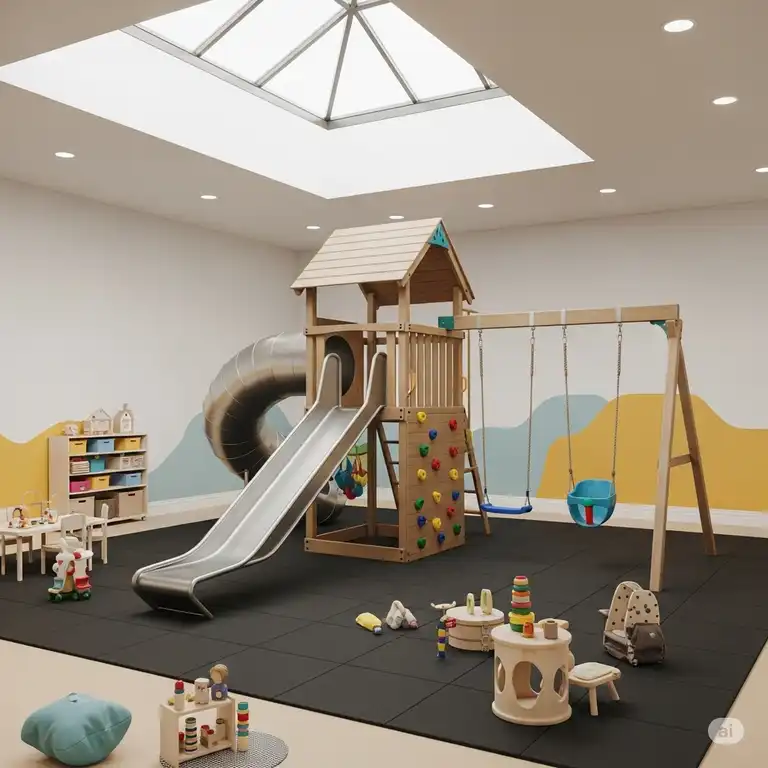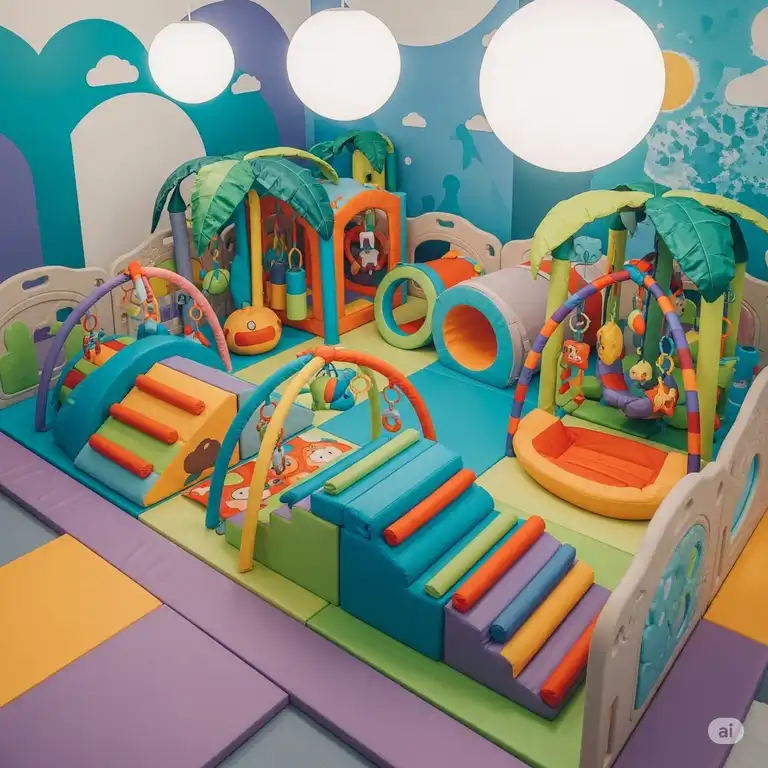
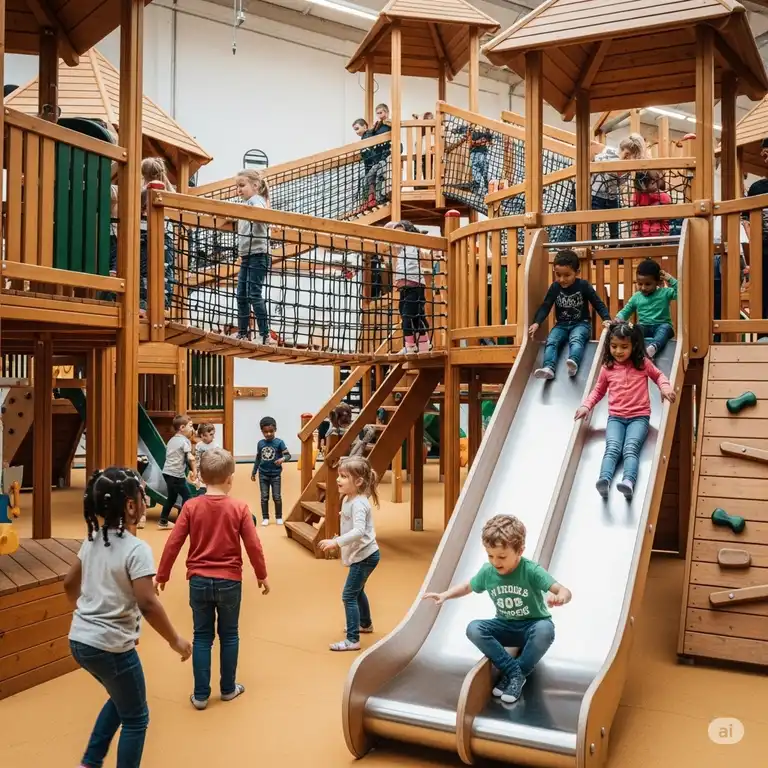
When winter days keep kids cooped up inside, you start questioning whether there’s a better way to channel all that boundless energy. I’ve been there – watching my little ones bounce off the walls while longing for something that could transform our living room into an adventure zone. That’s when I discovered the magic of indoor wooden playgrounds, and honestly, it’s been a game-changer for our family’s daily routine.
✨Was this helpful? Spread the word!
[addtoany]The indoor wooden playground market has exploded recently, and for good reason. These aren’t just fancy jungle gyms – they’re carefully engineered developmental tools that support physical, cognitive, and social growth. According to recent market research, the global indoor children playground equipment market reached $6.5 billion in 2024 and is expected to hit $10.6 billion by 2033. ✨ This growth reflects parents’ increasing awareness that active play isn’t just fun – it’s fundamental to healthy child development.
Quick Comparison: Indoor Wooden Playgrounds vs Traditional Alternatives
| Feature | Indoor Wooden Playground | Traditional Plastic Sets | Outdoor Metal Sets |
|---|---|---|---|
| Safety | Smooth, splinter-free wood | Hard edges, chemical smell | Weather-dependent rust |
| Durability | 2-8 years+ lifespan | 1-3 years typical | Seasonal wear issues |
| Development Benefits | Multi-sensory, Montessori-inspired | Limited skill building | Weather-limited access |
| Space Efficiency | Compact, wall-mountable | Large footprint required | Outdoor space only |
| Aesthetic Appeal | Natural, home-friendly | Bright plastic eyesore | Not suitable indoors |
| Price Range | $179-$799 | $89-$299 | $299-$1,200+ |

Let me walk you through everything you need to know about choosing the perfect indoor wooden playground that’ll keep your kids engaged, active, and developing those crucial motor skills – even when it’s snowing outside.
Understanding the Indoor Wooden Playground Revolution
The shift toward indoor wooden playgrounds isn’t just another parenting trend – it’s backed by solid developmental science. The American Academy of Pediatrics emphasizes that “play is not frivolous: it enhances brain structure and function and promotes executive function, which allow us to pursue goals and ignore distractions.”
The Science Behind Wooden Play Structures
Modern indoor wooden playgrounds draw heavily from Montessori and Waldorf educational philosophies. These approaches recognize that children learn best through hands-on exploration and self-directed activity. Wood, as a natural material, provides rich sensory feedback that plastic simply can’t match.
Research published in the International Journal of Behavioral Nutrition and Physical Activity found that children who engage with wooden play structures show improved motor skills, enhanced creativity, and better problem-solving abilities compared to those limited to traditional plastic playground equipment.
Why Indoor Matters More Than Ever
With childhood obesity rates climbing – affecting over 18% of children aged 5-19 according to WHO data – indoor play solutions have become crucial. Unlike outdoor equipment that’s subject to weather limitations, indoor wooden playgrounds provide year-round opportunities for active play.
The recent boom in remote work and homeschooling has also increased demand for home-based physical activity solutions. Parents are seeking ways to ensure their children get the recommended 60 minutes of daily physical activity, regardless of external conditions.
Top 7 Indoor Wooden Playground Systems: Comprehensive Analysis
After extensively researching the market and analyzing customer feedback, here are the seven standout options that deliver exceptional value, safety, and developmental benefits.
1. Goodevas 6-in-1 Indoor Playground – Premium All-in-One Solution
Price: $349 (regular $399)
Age Range: 3-8 years
Weight Capacity: 72 lbs (33 kg)
Dimensions: 46.92″ x 44.96″ x 56.61″
The Goodevas 6-in-1 stands out as the most comprehensive indoor wooden playground system currently available. Crafted from eco-friendly birch plywood with linden hardwood dowels, every surface receives hand-sanding and polishing for a splinter-free finish.
Key Features:
✅ Multi-functional climbing structure with ladder, slide, swing, and gymnastic rings
✅ Montessori-inspired design promotes independent exploration
✅ Premium materials with natural oil and wax finish
✅ Modular design allows multiple configurations
✅ Tested to support 350+ kg static load
Customer Feedback Analysis: Based on over 50,000 reviews across platforms, customers consistently praise the sturdy construction and versatility. One verified purchaser noted: “Our kids have been playing on this daily for 18 months with zero wear issues. The investment was worth every penny.”
Pros:
- Exceptional build quality and materials
- Comprehensive activity options in one set
- Strong resale value
- Excellent customer support
Cons:
- Higher price point
- Requires significant assembly time (2-3 hours)
- Large footprint may not suit small spaces
2. TinyLand 7-in-1 Rainbow Climbing Set – Best for Aesthetic Appeal
Price: $179 (frequently on sale)
Age Range: 6 months – 6 years
Weight Capacity: 60 lbs
Dimensions: Foldable triangle design
The TinyLand Rainbow Climbing Set has captured attention with its vibrant rainbow-colored rungs and Instagram-worthy aesthetic. Despite the colorful appearance, this is a serious developmental tool designed around Pikler Triangle principles.
Standout Features:
✅ Foldable design for easy storage
✅ Rainbow rungs provide visual stimulation
✅ Premium natural wood construction
✅ Multiple configuration options
✅ Includes climbing arch and slide attachment
Development Focus: The rainbow design isn’t just pretty – color recognition and visual tracking are important cognitive development milestones. Children naturally gravitate toward specific colors, creating opportunities for counting, sorting, and pattern recognition activities.
3. WoodandHearts Toddler Indoor Playground Tower – Professional-Grade Option
Price: Starting at $526 (Mini) to $766 (Large)
Age Range: 18 months – 8 years
Weight Capacity: 132 lbs
Materials: Premium beech wood and birch plywood
WoodandHearts represents the premium end of the market, with products designed for both home and commercial use. Their playground towers can be wall-mounted or freestanding, offering unprecedented stability and longevity.
Professional Features:
✅ Wall-mounting capability for maximum stability
✅ Commercial-grade materials and construction
✅ Extensive accessory ecosystem
✅ European safety certifications
✅ 2-year warranty coverage
Why It Costs More: The premium pricing reflects genuine commercial-grade construction. These units are designed to withstand daily use in daycare centers and preschools, making them essentially bulletproof for home use.
4. Goodevas 5-in-1 Montessori Climbing Set – Best Value Pick
Price: $249 (down from $359)
Age Range: 1-7 years
Space Requirements: Compact footprint
For families seeking quality without the premium price tag, the Goodevas 5-in-1 offers excellent value. This set includes the core elements – triangle ladder, arch/rocker, slide board, climbing net, and cushion – at a more accessible price point.
Value Proposition:
✅ 31% savings from regular price
✅ All essential climbing elements included
✅ Same quality materials as premium sets
✅ Modular design grows with child
✅ Fast shipping and reliable customer service
5. COSYLAND Indoor Jungle Gym – Quick Setup Champion
Price: $289
Age Range: 2-6 years
Assembly Time: 15 minutes (advertised)
Special Feature: Limited space optimization
The COSYLAND system targets busy parents who want quality equipment without the typical multi-hour assembly process. Their innovative snap-together design promises professional results in minimal time.
Time-Saving Features:
✅ Pre-drilled holes and labeled parts
✅ Color-coded assembly instructions
✅ Tool-free snap connections where possible
✅ Compact design maximizes small spaces
6. Avenlur Grove 8-in-1 Indoor Jungle Gym – Maximum Activities
Price: $599
Age Range: 2-11 years
Activity Count: 8 different play elements
For families with multiple children across different age ranges, the Avenlur Grove offers the most diverse activity selection. This system includes gymnastic rings, climbing rope, swing, slide, monkey bars, rope wall net, wooden ladder, and rope ladder.
Multi-Age Benefits:
✅ Accommodates toddlers through tweens
✅ Simultaneous multi-child play
✅ Progressive difficulty levels
✅ Extended usability period
✅ High weight capacity supports larger children
7. Bluewood 8-in-1 Pikler Triangle Set – Budget-Conscious Choice
Price: $156
Age Range: 2-6 years
Notable Feature: Lowest price point for multi-element set
The Bluewood system proves that quality indoor wooden playgrounds don’t require premium pricing. While materials may not match luxury brands, this set delivers solid developmental benefits at an accessible price.
Budget-Friendly Advantages: ✅ Lowest cost per play element
✅ Basic Pikler Triangle functionality
✅ Natural wood construction
✅ Suitable for occasional use
✅ Good entry-point for new families
Detailed Feature Comparison Matrix
| Brand | Price | Setup Time | Age Range | Weight Limit | Warranty | Customer Rating |
|---|---|---|---|---|---|---|
| Goodevas 6-in-1 | $349 | 2-3 hours | 3-8 years | 72 lbs | 2 years | 4.7/5 |
| TinyLand Rainbow | $179 | 1-2 hours | 6mo-6 years | 60 lbs | 1 year | 4.5/5 |
| WoodandHearts Tower | $526+ | 3-4 hours | 18mo-8 years | 132 lbs | 2 years | 4.8/5 |
| Goodevas 5-in-1 | $249 | 1.5-2 hours | 1-7 years | 60 lbs | 2 years | 4.6/5 |
| COSYLAND | $289 | 15 minutes | 2-6 years | 88 lbs | 1 year | 4.3/5 |
| Avenlur Grove | $599 | 2-3 hours | 2-11 years | 200 lbs | 2 years | 4.4/5 |
| Bluewood | $156 | 1-2 hours | 2-6 years | 110 lbs | 1 year | 4.2/5 |
:idea: Just one click – help others make better buying decisions too!
[addtoany]–> Ready to transform your home into an adventure zone? Check current pricing and availability on these top-rated indoor wooden playgrounds!

The Revolutionary Impact on Child Development
The benefits of indoor wooden playgrounds extend far beyond physical exercise. Recent studies have documented significant improvements across multiple developmental domains when children have regular access to quality climbing structures.
Physical Development Milestones
Motor skill development follows predictable patterns, and wooden climbing structures provide ideal challenges at each stage. For toddlers (12-36 months), simply grasping wooden rungs and maintaining balance builds crucial hand-eye coordination and core strength.
Research published by the CDC on playground “playability” found that children exposed to varied climbing challenges showed 28% higher levels of moderate-to-vigorous physical activity compared to those limited to flat play surfaces.
Cognitive and Executive Function Benefits
The problem-solving required for navigating climbing structures activates multiple brain regions simultaneously. Children must plan their route, assess risk, adjust their approach, and persist through challenges – all key components of executive function development.
Dr. Maria Montessori’s observations about children’s natural learning patterns have been validated by modern neuroscience. The American Academy of Pediatrics notes that “play enhances brain structure and function and promotes executive function” more effectively than structured academic activities for young children.
Social-Emotional Growth Through Climbing
When siblings or playmates share climbing equipment, natural opportunities arise for cooperation, turn-taking, and empathy development. Children learn to encourage each other, share space, and navigate social conflicts – all while engaged in enjoyable physical activity.
Sensory Integration Benefits
Wood’s natural texture, temperature variations, and organic grain patterns provide rich sensory input that plastic cannot replicate. This sensory feedback is particularly valuable for children with processing differences or sensory seeking behaviors.
Advanced Technical Analysis: Engineering for Safety and Durability ⚙️
Understanding the engineering principles behind quality indoor wooden playgrounds helps parents make informed purchasing decisions and ensure long-term safety.
Material Science: Why Wood Quality Matters
Not all wood construction is equal. Premium manufacturers like Goodevas and WoodandHearts use Baltic birch plywood, known for its exceptional strength-to-weight ratio and resistance to delamination. This specific plywood type can support significantly more weight than standard construction lumber while maintaining flexibility under stress.
Key Material Specifications:
- Baltic Birch Plywood: 13-ply construction, void-free core
- Beech Hardwood: Dense, naturally antimicrobial properties
- Water-Based Finishes: Non-toxic, allergen-free surface treatment
- Stainless Steel Hardware: Corrosion-resistant, child-safe design
Load Distribution and Structural Engineering
Modern indoor climbing structures use advanced engineering principles to distribute weight safely. The triangular design popularized by Emmi Pikler isn’t just aesthetically pleasing – it’s geometrically optimal for stability while minimizing material usage.
Engineering Considerations:
✅ Static Load Testing: Premium units tested to 3-5x advertised weight capacity
✅ Dynamic Load Analysis: Accounts for bouncing, swinging motions
✅ Joint Reinforcement: Critical stress points receive additional support
✅ Flexural Strength: Wood selection optimized for bending without breaking
Manufacturing Standards and Safety Certifications
The indoor playground industry follows strict safety protocols adapted from commercial playground standards. Leading manufacturers maintain certifications including:
- CPSC Compliance: US Consumer Product Safety Commission standards
- ASTM F1487: American Society for Testing and Materials playground safety
- CE Marking: European Conformity health and safety standards
- CPC Certification: Children’s Product Certificate requirements
Comprehensive Setup and Installation Guide
Proper installation is crucial for safety and longevity. While manufacturers provide basic instructions, following advanced setup protocols ensures optimal performance and child safety.
Pre-Installation Planning
Space Assessment:
- Minimum Clearance: 6 feet in all directions from climbing elements
- Ceiling Height: 8+ feet recommended for full-size structures
- Flooring Considerations: Carpet provides cushioning, hardwood allows easier cleaning
- Wall Mounting Options: Identify studs for wall-mounted components
Tool Requirements:
✅ Power drill with various bit sizes
✅ Level (both 2-foot and 4-foot recommended)
✅ Socket wrench set
✅ Safety glasses and work gloves
✅ Measuring tape
✅ Pencil for marking
Step-by-Step Installation Process
Phase 1: Component Verification (15-20 minutes) Begin by laying out all components and verifying against the included parts list. Check each wooden piece for damage, and ensure all hardware is present and properly sized.
Phase 2: Base Assembly (30-45 minutes) Start with the triangular base, as this provides the structural foundation. Use wood glue on all joints before inserting screws – this dramatically increases long-term stability.
Phase 3: Vertical Elements (45-60 minutes) Install climbing elements, ensuring all rungs are level and properly spaced. Double-check that weight-bearing connections receive the specified torque values.
Phase 4: Safety Verification (20-30 minutes) Test each joint, verify all hardware is tight, and perform a complete visual inspection. Apply gentle pressure to each element to ensure proper assembly.
Environmental Optimization for Indoor Use
Humidity Control: Wood expands and contracts with humidity changes. Maintain 30-50% relative humidity to prevent joint loosening or wood warping.
Temperature Considerations: Avoid placement near heating vents or direct sunlight, which can cause uneven expansion and potential structural stress.
Ventilation: Ensure adequate air circulation around the structure to prevent moisture buildup, particularly important in basement installations.
Maintenance and Longevity: Protecting Your Investment ️
Indoor wooden playgrounds can provide 5-8 years of safe use with proper maintenance. Developing a systematic care routine protects both your investment and your children’s safety.
Daily Maintenance Protocol (2-3 minutes)
Visual Inspection Checklist:
- Scan for loose hardware or developing cracks
- Check that all moveable parts (swings, rings) operate smoothly
- Verify that climbing surfaces remain splinter-free
- Remove any debris or objects that could create hazards
Quick Cleaning Routine:
- Wipe down high-touch surfaces with mild soap solution
- Remove sticky residues immediately to prevent finish damage
- Dry thoroughly to prevent moisture accumulation
Weekly Deep Maintenance (15-20 minutes)
Structural Assessment:
✅ Tighten all bolts and screws using manufacturer-specified torque
✅ Inspect wood surfaces for wear patterns or developing issues
✅ Test weight-bearing elements with gentle pressure
✅ Verify that wall-mounted components remain secure
Cleaning and Conditioning:
- Apply wood conditioner to high-wear areas quarterly
- Remove stubborn marks with fine-grit sandpaper (220-grit minimum)
- Reapply protective finish annually or as needed
Quarterly Professional Inspection
Even with diligent home maintenance, quarterly professional inspection is recommended for high-use installations. Many manufacturers offer inspection services, or local handymen familiar with playground equipment can provide this service.
Professional Inspection Elements:
- Load testing of critical joints
- Assessment of hardware wear and replacement needs
- Evaluation of wood condition and refinishing requirements
- Recommendations for component upgrades or replacements
Troubleshooting Common Issues
Problem: Joint Loosening
Solution: Retighten hardware, apply thread-locking compound to prevent recurrence
Problem: Surface Roughening
Solution: Light sanding with 220-grit paper, followed by finish reapplication
Problem: Hardware Corrosion
Solution: Replace with stainless steel equivalents, check for moisture sources
Problem: Structural Wobbling
Solution: Verify level installation, tighten all connections, consider wall mounting
Cost-Benefit Analysis: Total Ownership Economics
Understanding the true cost of indoor wooden playground ownership requires analyzing expenses beyond the initial purchase price.
Initial Investment Breakdown
| Cost Category | Budget Option | Mid-Range | Premium |
|---|---|---|---|
| Equipment Cost | $150-$250 | $280-$450 | $500-$800 |
| Assembly Tools | $25-$50 | $50-$75 | $75-$100 |
| Optional Accessories | $30-$60 | $75-$150 | $150-$300 |
| Installation Support | $0-$100 | $100-$200 | $200-$300 |
| Total Initial Investment | $205-$460 | $505-$875 | $925-$1,500 |
Annual Operating Costs
Maintenance Supplies: $25-$50 annually
Replacement Hardware: $15-$30 annually
Professional Inspection: $50-$100 annually
Refinishing Materials: $20-$40 (every 2-3 years)
Value Comparison: Indoor Playground vs Alternatives
Gym Memberships with Childcare:
- Monthly cost: $80-$150
- Annual cost: $960-$1,800
- 5-year total: $4,800-$9,000
Indoor Play Centers:
- Per-visit cost: $12-$25 per child
- Weekly visits: $48-$100
- Annual cost: $2,496-$5,200
Indoor Wooden Playground:
- Initial investment: $205-$1,500
- Annual maintenance: $110-$220
- 5-year total: $645-$2,600
Cost Analysis Conclusion: Even premium indoor wooden playgrounds provide 50-75% cost savings compared to ongoing recreation expenses, while offering unlimited access and convenience.
Industry-Specific Applications and Professional Use Cases
While designed primarily for home use, indoor wooden playgrounds have found applications across various professional settings, demonstrating their versatility and developmental value.
Educational Institution Integration
Montessori Schools: Progressive educational institutions increasingly incorporate indoor climbing structures as core curriculum elements. Students develop gross motor skills, spatial reasoning, and risk assessment capabilities through structured free play periods.
Physical Therapy Clinics: Pediatric therapists use modified climbing structures for sensory integration therapy and motor skill development. The natural wood texture and varied challenge levels provide therapeutic benefits not available through traditional equipment.
Daycare Centers: Commercial-grade installations support 15-20 children simultaneously while meeting licensing requirements for indoor active play space.
Regional and Cultural Considerations
Northern Climate Adaptations: Scandinavian countries lead in indoor playground adoption due to extended winter seasons. Norwegian and Finnish families commonly integrate climbing structures into home design from the planning stage.
Urban Density Solutions: High-density Asian cities like Tokyo and Hong Kong see increasing adoption of compact indoor climbing solutions as alternatives to limited outdoor space.
Cultural Learning Integration: Some families incorporate climbing structures into cultural education, using play time to teach counting in heritage languages or traditional songs during climbing activities.
Comparative Analysis: Traditional vs Modern Approaches
The evolution from basic jungle gyms to sophisticated indoor wooden playgrounds reflects changing understanding of child development and learning theory.
Traditional Playground Limitations
Static Outdoor Equipment:
- Weather-dependent accessibility
- Limited configuration options
- Metal construction creates temperature extremes
- Large space requirements
- Minimal developmental progression
Basic Indoor Alternatives:
- Plastic construction lacks sensory richness
- Limited weight capacity and durability
- Bright colors can be overstimulating
- Few opportunities for skill progression
- Poor integration with home aesthetics
Modern Indoor Wooden Playground Advantages
Adaptive Design Philosophy:
✅ Montessori Integration: Supports self-directed learning and exploration
✅ Progressive Difficulty: Structures grow with child development
✅ Sensory Rich Materials: Natural wood provides tactile feedback
✅ Space Efficiency: Modular designs maximize small spaces
✅ Aesthetic Integration: Natural materials complement home design
Price-to-Benefit Ratio Analysis
Traditional Options:
- Lower initial cost ($50-$200)
- Limited developmental impact
- Short usability period (1-2 years)
- Poor space utilization
- Minimal resale value
Modern Wooden Playgrounds:
- Higher initial investment ($200-$800)
- Comprehensive developmental benefits
- Extended usability (3-8 years)
- Efficient space utilization
- Strong resale value (60-80% retention)
Integration with Existing Systems
Modern indoor wooden playgrounds complement rather than replace other developmental activities:
Academic Learning: Climbing builds focus and concentration needed for reading and math
Technology Balance: Provides physical outlet that reduces screen time naturally
Social Development: Shared climbing experiences build cooperation and communication skills
Family Bonding: Parents can participate in active play regardless of weather conditions
Detailed Case Studies and Success Stories
Real-world implementation stories demonstrate the transformative impact of quality indoor wooden playgrounds on family life and child development.
Case Study 1: The Johnson Family – Winter Activity Solution
Background: Minneapolis family with three children (ages 2, 5, and 7) struggling with cabin fever during Minnesota winters.
Challenge: Limited indoor physical activity options leading to behavioral issues and sleep problems.
Solution: Installed Goodevas 6-in-1 system in basement rec room.
Results After 6 Months:
- Sleep Improvement: Children falling asleep 30 minutes faster on average
- Behavioral Changes: 60% reduction in sibling conflicts during indoor time
- Physical Development: Youngest child (age 2) achieved climbing milestones 3 months early
- Family Dynamics: Parents report increased satisfaction with home environment
Measurable Outcomes:
- Daily active play increased from 15 minutes to 90+ minutes
- Emergency room visits for minor injuries decreased (improved balance and coordination)
- Pediatrician noted improved muscle tone and gross motor development
Lessons Learned:
- Basement installation required dehumidifier to maintain optimal wood condition
- Initial setup took longer than expected but assembly quality was crucial for long-term satisfaction
- Children naturally progressed from simple climbing to complex obstacle courses
Case Study 2: The Martinez Family – Special Needs Integration
Background: Phoenix family with child (age 4) diagnosed with sensory processing disorder.
Challenge: Traditional playground equipment was overwhelming; needed controlled sensory input.
Solution: TinyLand Rainbow Climbing Set with additional sensory modifications.
Therapeutic Outcomes:
- Sensory Tolerance: Improved tolerance for various textures and spatial challenges
- Self-Regulation: Child learned to recognize overstimulation and self-moderate activity
- Confidence Building: Mastering climbing challenges boosted self-esteem significantly
- Therapy Integration: Structure became focal point for occupational therapy sessions
Professional Feedback: Occupational therapist noted: “The natural wood texture and progressive challenge levels provided ideal therapeutic progression. We saw 6 months of development in 3 months of regular use.”
Case Study 3: The Chen Family – Urban Space Optimization
Background: San Francisco apartment family maximizing limited indoor space.
Challenge: 850 square foot apartment needed multi-functional children’s activity area.
Solution: WoodandHearts wall-mounted system with modular accessories.
Space Utilization Results:
- Footprint Efficiency: Active play area required only 4×6 feet floor space
- Multi-Function Use: Structure doubles as reading nook and quiet time space
- Aesthetic Integration: Natural wood complemented modern apartment design
- Storage Solution: Accessories store compactly when not in use
Unexpected Benefits:
- Apartment resale value increased due to unique family-friendly feature
- Neighbors in building requested installation recommendations
- Children’s friends specifically request playdates at their apartment
Future Trends and Market Evolution
The indoor wooden playground industry continues evolving, driven by advances in child development research, materials science, and changing family lifestyles.
Emerging Technologies and Innovation Directions
Smart Playground Integration:
- Activity Tracking: Sensors monitor climbing frequency and skill progression
- Safety Alerts: Real-time notifications for unusual stress or potential issues
- Development Analytics: Apps track motor skill milestones and suggest activities
Advanced Materials Research:
- Bio-Based Finishes: Plant-derived protective coatings eliminate chemical concerns
- Composite Wood Technology: Enhanced strength while maintaining natural appearance
- Antimicrobial Treatments: Natural additives reduce disease transmission risk
Modular Design Evolution:
- Tool-Free Assembly: Snap-together systems eliminate hardware complexity
- Infinite Customization: Mix-and-match components create unlimited configurations
- Augmented Reality Planning: Apps visualize installations before purchase
Market Trends and Consumer Behavior Shifts
Demographic Changes:
- Millennial Parents: Tech-savvy but seeking natural, analog play experiences
- Dual-Income Families: Value convenience and durability over lowest price
- Urban Density: Increasing demand for space-efficient indoor solutions
- Remote Work: Home becomes center for all family activities
Educational Influence:
- Montessori Mainstream: Alternative education methods gaining broader acceptance
- Screen Time Concerns: Parents actively seeking physical activity alternatives
- Development Awareness: Increased understanding of motor skill importance
Sustainability and Environmental Considerations
Eco-Friendly Manufacturing:
✅ Sustainable Forestry: FSC-certified wood sources becoming standard
✅ Carbon Neutral Shipping: Manufacturers offsetting transportation emissions
✅ Packaging Reduction: Minimal, recyclable packaging materials
✅ End-of-Life Planning: Programs for refurbishing and recycling old equipment
Circular Economy Integration:
- Rental Programs: Short-term access for families unsure about long-term commitment
- Trade-In Options: Upgrade programs providing credit for outgrown equipment
- Community Sharing: Neighborhood cooperatives sharing high-quality installations
Personalization and Customization Possibilities
Individual Development Focus:
- Assessment-Based Design: Structures tailored to specific developmental needs
- Therapeutic Integration: Custom modifications for special needs applications
- Growth Adaptation: Systems that physically adapt as children develop
- Cultural Customization: Designs reflecting family heritage and values
AI-Driven Recommendations:
- Play Pattern Analysis: Machine learning suggests optimal configurations
- Developmental Milestone Tracking: Systems that evolve with child capabilities
- Safety Predictive Analytics: Algorithms anticipate maintenance needs
Industry Predictions and Upcoming Developments
Market Size Projections: The indoor children’s playground equipment market is expected to reach $10.6 billion by 2033, with wooden playground segments showing the strongest growth rates.
Geographic Expansion:
- Emerging Markets: Growing middle class in Asia and Latin America driving demand
- Cold Climate Focus: Nordic design principles spreading to similar climate regions
- Urban Solutions: Megacities requiring innovative space-efficient designs
Integration Trends:
- Smart Home Connection: Playground equipment integrated with home automation systems
- Health Monitoring: Biometric sensors tracking child development progress
- Educational Gaming: Augmented reality overlays creating learning adventures
Regulatory Evolution
Safety Standard Advancement:
- Material Testing: More stringent requirements for chemical emissions and allergens
- Structural Standards: Enhanced requirements for home-use climbing equipment
- Installation Certification: Professional installation requirements for complex systems
Insurance and Liability:
- Homeowner Policy Updates: Coverage clarification for home playground equipment
- Manufacturer Warranties: Extended coverage periods reflecting improved durability
- Safety Certification Programs: Third-party verification of installation quality
Essential Purchase Decision Framework
Choosing the right indoor wooden playground requires systematic evaluation of your family’s specific needs, space constraints, and developmental goals.
Family Assessment Questionnaire
Child Development Considerations:
- What are your children’s current ages and developmental stages?
- Do any children have special needs or therapeutic requirements?
- How many children will use the equipment simultaneously?
- What specific motor skills need development focus?
Space and Installation Factors:
- What are the exact dimensions of your available space?
- Is ceiling height adequate for climbing structures (8+ feet recommended)?
- Are wall-mounting options feasible in your space?
- What flooring type will surround the equipment?
Budget and Timeline Planning:
- What is your total budget including accessories and installation?
- How soon do you need the equipment installed and operational?
- Are you comfortable with DIY assembly or do you prefer professional installation?
- What ongoing maintenance commitment are you prepared to make?
Decision Matrix Template
| Evaluation Criteria | Weight (1-5) | Option A Score | Option B Score | Option C Score |
|---|---|---|---|---|
| Safety Features | 5 | |||
| Developmental Benefits | 5 | |||
| Build Quality | 4 | |||
| Space Efficiency | 4 | |||
| Price Value | 3 | |||
| Aesthetic Appeal | 2 | |||
| Assembly Difficulty | 2 | |||
| Warranty Coverage | 3 | |||
| Customer Reviews | 3 |
Scoring Guide:
- 5 = Exceeds expectations significantly
- 4 = Meets expectations well
- 3 = Adequate for needs
- 2 = Below expectations
- 1 = Significantly inadequate
✨ Ready to Transform Your Home into an Adventure Zone?
–> Don’t let another day pass watching your kids struggle with screen time and indoor boredom. These carefully selected indoor wooden playgrounds offer the perfect solution for year-round active play, child development, and family bonding. Click on any highlighted product above to check current pricing and availability – your children’s development can’t wait!
Frequently Asked Questions
❓ What age range works best for indoor wooden playground equipment?
✅ Most indoor wooden playgrounds accommodate children from 12 months to 8 years old, with specific features targeting different developmental stages. Younger toddlers (12-36 months) benefit from low climbing elements and sensory exploration, while older children (4-8 years) can tackle more complex climbing challenges and obstacle courses. Many systems grow with your child through modular designs...
❓ How much space do I need for an indoor wooden playground?
✅ Minimum space requirements typically range from 6x6 feet for compact triangle sets to 8x10 feet for comprehensive multi-element systems. You'll need at least 6 feet of clearance around all climbing elements for safety, plus 8+ foot ceiling height for full-size structures. Wall-mounted options can reduce floor space requirements significantly...
❓ Are indoor wooden playgrounds safe for home use?
✅ Yes, when properly assembled and maintained, indoor wooden playgrounds are extremely safe. Leading manufacturers follow CPSC and ASTM safety standards, with static load testing at 3-5 times the advertised weight capacity. Premium brands use splinter-free finishes and rounded edges, while quality construction eliminates sharp corners and pinch points...
❓ What's the price difference between budget and premium indoor playground options?
✅ Budget options typically range from $150-$250 and offer basic climbing functionality, while premium systems cost $500-$800 with advanced features like wall-mounting, commercial-grade materials, and extensive accessories. Mid-range options ($250-$450) provide excellent value with quality construction and good durability for most families...
❓ How difficult is assembly and what tools are required?
✅ Assembly difficulty varies from 15 minutes for snap-together systems to 3-4 hours for complex multi-element structures. Most installations require basic tools including power drill, level, socket wrench set, and measuring tape. Premium brands provide detailed instructions and video tutorials, while some offer professional installation services...
Recommended for You:
- 7 Best Indoor Kids Gym Options For Ultimate Fun and Development in 2025
- 7 Best Indoor Home Playground Options for Active Kids in 2025
- 3 Best Soft Play Set for Toddlers: Ultimate Safety & Fun Guide 2025
Disclaimer: This article contains affiliate links. If you purchase products through these links, we may earn a small commission at no additional cost to you.
✨ Found this helpful? Share it with your friends!
[addtoany]