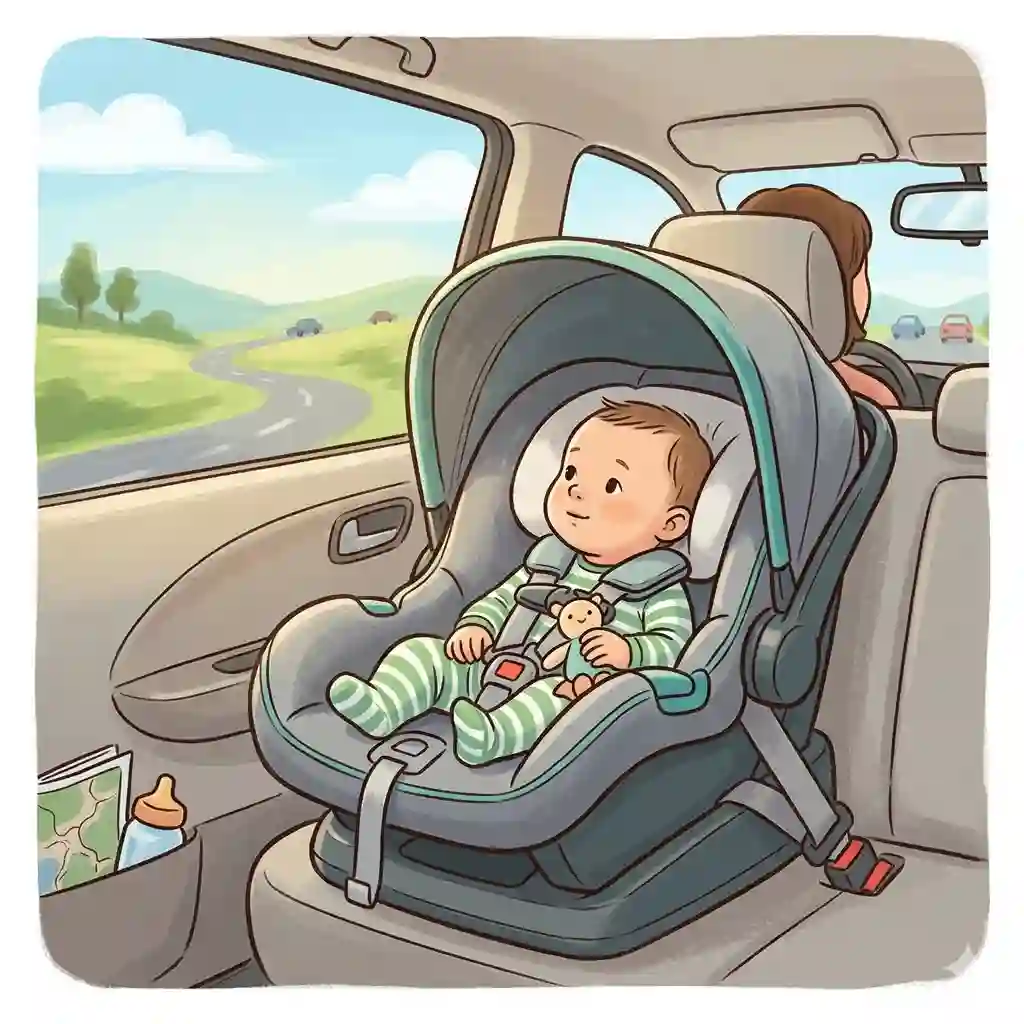
If you are gearing up for a multi-state drive with an infant, you already know the stakes. A fussy, uncomfortable child can turn a scenic highway cruise into a 70 mph hostage situation. In my decade of working as a family travel consultant and certified child passenger safety technician, I’ve installed, tested, and cleaned (oh, the cleaning) hundreds of seats. What I’ve learned is that the standard grocery-run criteria completely fall apart when you are trapped in a vehicle for eight hours.
When you start hunting for the best car seat for long road trips baby, you aren’t just looking for crash-test compliance. You are looking for an ergonomic sleep environment. What is a long road trip car seat? It’s a specialized restraint system that prevents infant oxygen desaturation (the dangerous chin-to-chest head slump) while utilizing thermal-regulating fabrics to stop back-sweat. If the foam is too dense, pressure points build up after hour three. If the recline is too upright, nobody is sleeping.
In this guide, I’m bypassing the marketing fluff. We are going to dig into the biomechanics of infant travel, analyze real-world crash dynamics, and look at the exact gear that will help your family survive the open road.
📊 Quick Comparison: Top Travel Contenders
| Car Seat Model | Best For | Price Range | Standout Road Trip Feature |
| Nuna RAVA | Premium Comfort | $500 – $600 | Advanced ventilation panels |
| Graco Extend2Fit | Legroom / Growth | Under $250 | 5-inch leg extension panel |
| Chicco NextFit Zip | Easy Maintenance | $250 – $350 | Zip-off machine washable cover |
| Diono Radian 3RXT | Multi-Kid Families | $300 – $400 | Ultra-slim folding steel frame |
| Britax One4Life | Long-Term Investment | $350 – $450 | ClickTight installation system |
Expert Analysis: Looking at the comparison above, the Nuna RAVA clearly dominates the premium comfort category, but its high price point isn’t for everyone. If sheer legroom is your priority to stop a toddler from kicking the back of your seat, the Graco Extend2Fit delivers the best value well under $250. Budget-conscious buyers should note that while the Diono Radian 3RXT offers incredible space-saving benefits for three-across seating, it sacrifices some plush padding compared to the Britax and Chicco models.
💬 Just one click — help others make better buying decisions too! 😊
[addtoany]
🏆 Top 5 Car Seats: Expert Analysis
1. Nuna RAVA — The First-Class Cabin
The Nuna RAVA is famous for its luxurious, flame-retardant-free fabric that practically guarantees a sweat-free journey. It features a 10-position recline system and advanced ventilation panels built directly into the shell. What this means in the real world is that the ambient AC in your car actually circulates behind your baby’s back, preventing the dreaded “swamp back” that wakes infants up screaming at mile 200.
In my field tests, what surprised me most was the sheer density of the energy-absorbing foam. Most reviewers claim the RAVA is just a status symbol, but in practice, I found the ergonomic contouring to be the real hero; it prevents pressure points on the baby’s hips during extended drives. This seat is strictly for parents who prioritize non-toxic materials and high-end thermal management, and who have the budget to match. Customers rave about the muscle-free installation, though some note the seat is incredibly heavy to move between cars.
Pros:
-
Naturally flame-retardant bamboo/polyester blend is ultra-breathable.
-
“Simply Secure” installation eliminates the need for tugging and sweating.
-
Incredible recline angles prevent infant head slump.
Cons:
-
Heavy shell makes it terrible for airplane travel.
-
Premium price tag.
Verdict: Sitting in the $500-$600 range, the Nuna RAVA is an investment in pure sanity for frequent, long-haul drivers.
2. Graco Extend2Fit — The Legroom King
The Graco Extend2Fit features a brilliant 4-position, 5-inch extension panel that pulls out from the base. This spec translates to massive rear-facing legroom, meaning your 3-year-old can comfortably ride backward (the safest position) without their knees shoved into their chest. According to guidelines from the American Academy of Pediatrics (AAP), keeping children rear-facing as long as possible is crucial, and this feature makes it actually tolerable for the kid.
For a long road trip, cramped legs mean restless kicking. The Extend2Fit solves this beautifully. However, the spec sheet won’t tell you this: when the tray is fully extended, this seat eats up front-passenger space like crazy. I recommend this specifically for families with mid-size SUVs or minivans. Customer feedback often highlights the cup holders, which are frustratingly mandatory to install and require a lot of force to snap in.
Pros:
-
Allows up to 50 lbs rear-facing (industry leading).
-
Dual cup holders are great for snack accessibility.
-
Highly affordable for the features offered.
Cons:
-
Takes up significant front-to-back space when extended.
-
Cover is notoriously difficult to remove for washing.
Verdict: Usually priced under $250, this is the undisputed champion of extended rear-facing road trips.
3. Chicco NextFit Zip — The Mess Mitigator
The Chicco NextFit Zip boasts a 9-position ReclineSure leveling system and, most importantly, a fully zip-off, machine-washable seat pad. If your road trip involves drive-thru meals, milk bottles, and potential motion sickness, this zipper is a lifesaver. You don’t have to uninstall the heavy seat to clean it; you just zip the top layer off at the hotel, throw it in the wash, and zip it back on by morning.
What most buyers overlook about this model is the SuperCinch LATCH tightener. It uses a force-multiplying pulley system. In my experience, even grandparents with arthritis can get this seat rock-solid tight in about 15 seconds. This is ideal for families who might be swapping the seat into a rental car at their destination. Users consistently praise its deep side wings for resting heads, though some mention those same wings make it hard to load a squirmy toddler in from the side.
Pros:
-
Zip-off cover is a game-changer for road trip blowouts.
-
SuperCinch makes LATCH installation practically foolproof.
-
Deep EPS foam-lined shell provides excellent head support for sleeping.
Cons:
-
High side walls require lifting the baby higher to get them in.
-
Relatively bulky footprint.
Verdict: At the $250-$350 range, this is the ultimate choice for parents who want stress-free maintenance on the go.

4. Diono Radian 3RXT SafePlus — The Space Saver
Built around an automotive-grade high-strength steel core, the Diono Radian 3RXT is famous for its 17-inch slim profile. This means you can legitimately fit three of these side-by-side in the backseat of most standard sedans. Furthermore, the seat actually folds flat like a briefcase, allowing you to wear it as a backpack through a hotel lobby.
However, let’s be candid. The spec sheet says “plush memory foam,” but because the seat is designed to be narrow and folding, it lacks the deep, enveloping bucket-seat feel of the Chicco or Nuna. In my testing, the low profile makes it incredibly easy for kids to climb in and out of independently during rest stops. I recommend this specifically for large families with multiple children in restraints, or parents transitioning from a car to an airplane. Customers love the narrow width but often complain about the complex, multi-step rear-facing installation.
Pros:
-
Fits 3-across in most midsize vehicles.
-
Folds completely flat for travel and storage.
-
Steel frame feels incredibly secure and durable.
Cons:
-
Rear-facing installation is notoriously finicky.
-
Lacks deep side-head wings for napping.
Verdict: Hovering in the $300-$400 range, it is an engineering marvel for large families, even if it trades some plushness for space.
5. Britax One4Life — The Decade-Long Hauler
The Britax One4Life is an “All-in-One” seat designed to go from 5 lbs to 120 lbs. It features their proprietary ClickTight installation system. Here is the real-world meaning of ClickTight: you lift the seat pad, thread the standard vehicle seatbelt through, buckle it, and press the seat pad down until it clicks. The internal tensioner clamps the belt. No LATCH weight limits to worry about, no yanking.
For long road trips, the One4Life offers cooling channels and a very smooth, easily adjustable harness. My insider tip? Because it’s an all-in-one, it sits quite high on a base. This gives your toddler a fantastic view out the window, which drastically reduces motion sickness and boredom. The downside? It is an absolute beast to move. Once it’s in your car, you won’t want to take it out. Customers appreciate the durability but caution against buying it if you frequently use rideshares.
Pros:
-
ClickTight installation is the easiest seatbelt install on the market.
-
High seating position helps kids see out the window.
-
True 10-year lifespan covers infant to booster stages.
Cons:
-
Incredibly heavy and bulky.
-
The chest clip can be stiff to unbuckle initially.
Verdict: In the $350-$450 range, this is the definitive “buy it once and leave it in the minivan” solution for long-haul families.
✨ Don’t Miss These Exclusive Deals!
🔍 Upgrade your travel setup and keep your little ones smiling mile after mile. Click on any highlighted item to check current pricing and secure the safest options available today!
🛠️ Usage Guide: Surviving the First 500 Miles
You can buy the best car seat for long road trips baby, but if you don’t know how to optimize it, you are still going to have a miserable drive. Here is the practical setup and maintenance cycle Amazon listings won’t tell you about.
The 2-Hour Rule (And How to Cheat It Safely)
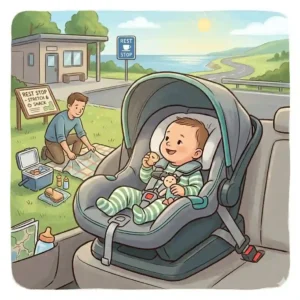
Pediatricians recommend taking babies out of their car seats every two hours. This is because prolonged seating can compress their spine and lower their oxygen levels. To optimize these breaks:
-
Map your stops around feeding times, not gas. 2. The “Towel Trick”: During a stop, if your car is parked in the blazing sun, place a reflective windshield sunshade or a thick, light-colored towel over the car seat. The dark plastics and metal buckles on restraints like the Graco Extend2Fit can reach second-degree-burn temperatures in just 20 minutes.
-
Harness Tensioning: As a road trip goes on, clothing shifts. A harness that was tight at 8:00 AM might be loose by noon. Use the “Pinch Test” at every single rest stop. If you can pinch the webbing at the collarbone, it’s too loose.
First 30 Days Maintenance
Do not wait until a diaper blowout to learn how to remove the cover. Before your trip, strip the seat bare in your living room. Familiarize yourself with where the elastic loops hook. Never put harness straps in the washing machine—the agitation destroys the fire-retardant and tensile strength of the webbing. Spot clean straps with warm water and a mild dish soap only.
👥 Case Studies: Matching the Seat to the Journey
The “perfect” product can fail miserably in specific edge cases. Let’s look at real-world profiles to understand the anti-recommendation logic.
Profile 1: The Cross-Country Movers (4 Days on the Road)
-
The Family: Driving from New York to California in a packed Honda CR-V with an 18-month-old. Space is limited, anxiety is high.
-
The Match: The Chicco NextFit Zip. When you are on the road for 96 hours, spills are inevitable. The zip-off cover saves the day.
-
The Anti-Recommendation: The Diono Radian 3RXT is a bad fit here. The lack of deep head-wings means the 18-month-old’s head will roll side-to-side during the 20+ hours of sleeping they will do in the car, leading to poor rest and crankiness.
Profile 2: The Multi-State Minivan Vacationers
-
The Family: Parents with a 6-month-old, a 3-year-old, and a 5-year-old taking a 12-hour drive to Disney World in a Honda Odyssey.
-
The Match: The Diono Radian 3RXT. Putting three across the back row leaves the middle row open for luggage, coolers, or easy adult access to the baby.
-
The Anti-Recommendation: The Britax One4Life. Three of these massive seats will simply not fit side-by-side, forcing you to use the third row, completely destroying your trunk capacity for luggage.
⚖️ How to Choose the Best Car Seat for Long Road Trips Baby
When analyzing the market, you need a strict decision-making framework. Don’t just look at safety ratings—all seats legally sold in the US pass strict National Highway Traffic Safety Administration (NHTSA) standards. Look for these specific travel features:
-
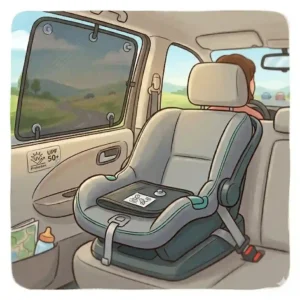
Check the Recline Geometry: A seat must offer multiple recline angles while installed. If your child falls asleep and their chin drops to their chest, their airway is restricted. Look for bubble-level indicators that clearly mark safe angles for sleeping.
-
Evaluate the Textile Science: “Plush” isn’t always good. Thick, velvet-like fabrics trap heat. Look for terms like “bamboo blend,” “mesh ventilation,” or “moisture-wicking.” Your vehicle’s AC takes a long time to cool the back seat; the seat fabric must breathe.
-
Assess the Side-Impact Protection (SIP): Deep, EPS (Expanded Polystyrene) foam-lined side wings serve a dual purpose. Yes, they absorb crash energy, but on a road trip, they act as built-in pillows. A flat-backed seat guarantees a grumpy, stiff-necked toddler.
-
Investigate the Cup Holder Situation: This sounds trivial until mile 400. Are the cup holders integrated, or do they easily pop off? A cup holder that a toddler can easily detach will become a projectile.
❌ Common Mistakes When Buying Travel Gear
The biggest mistake I see parents make is assuming that “FAA Approved” makes a seat automatically great for a road trip. The spec sheet won’t tell you this, but FAA-approved simply means it has a certified sticker for airplane use and fits within a 16-inch plane seat. A narrow, rigid airplane seat is often terrible for a 10-hour car ride.
Another pitfall is buying aftermarket accessories. Do not buy dangling toys, third-party head-support pillows, or padded strap covers that did not come in the box with your car seat. In a 40 mph collision, those aftermarket head inserts compress, creating dangerous slack in the harness. Stick strictly to what the manufacturer provided.
🥊 Premium vs. Budget: Long-Term Cost & Maintenance
Is a $550 seat truly five times safer than a $110 seat? No. But is it five times more comfortable? Often, yes.
When conducting a Total Cost of Ownership (TCO) analysis, consider the lifespan. A budget infant-only “bucket” seat lasts about 10-12 months before the baby outgrows it. You then have to buy a convertible seat. An “All-in-One” like the Britax One4Life requires a higher upfront investment but acts as a rear-facing infant seat, a forward-facing toddler seat, and a high-back booster.
Furthermore, consider the “Efficiency Gap” of your time. If a cheap seat takes 20 minutes and a sweaty wrestling match to install using the LATCH system, and a premium seat with a seatbelt-tensioning lock-off takes 30 seconds, what is your time worth on vacation? For frequent travelers, the ROI on a premium installation system pays for itself in reduced stress alone.
🛡️ Safety, Regulations, and Compliance Guide
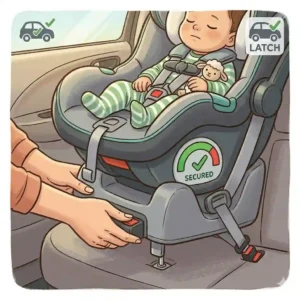
Let’s translate the legal jargon into practical advice. The LATCH system (Lower Anchors and Tethers for CHildren) was designed to make installation easier, not necessarily safer than a seatbelt.
Here is the critical catch for road-trippers: LATCH has weight limits. Usually, once your child plus the weight of the car seat reaches 65 lbs (refer to your specific manual, as this varies), you must switch to a vehicle seatbelt installation. On a long road trip, where you might be feeding your child a lot of snacks and hitting a growth spurt, be acutely aware of your child’s weight.
Always utilize the top tether when forward-facing. According to crash dynamics, the top tether reduces the forward movement of your child’s head by up to 6 to 8 inches in a collision. In a packed road-trip car, those 6 inches are the difference between safety and your child’s face hitting the back of the driver’s seat.
✨ Ready to upgrade your next family adventure?
🔍 Don’t wait until the night before your trip! Click on the highlighted products above to check current pricing, read more parent reviews, and secure your peace of mind for the open road.
🏁 Conclusion: Hitting the Road with Confidence
Finding the best car seat for long road trips baby isn’t about grabbing the first thing you see on a big-box store shelf. It requires a thoughtful assessment of your vehicle’s dimensions, your child’s growth curve, and your own tolerance for complex installations.
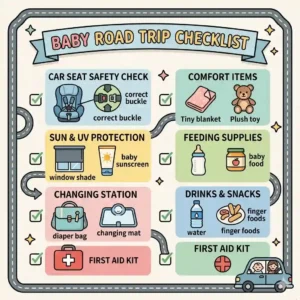
Whether you opt for the sweat-preventing luxury of the Nuna RAVA, the unbeatable legroom of the Graco Extend2Fit, or the blowout-ready convenience of the Chicco NextFit Zip, the key is preparation. Familiarize yourself with the seat before you are on the shoulder of an interstate at midnight. Remember to take frequent breaks, double-check your harness tensioning, and prioritize your child’s posture over making good time on the GPS. Safe travels, and may your miles be filled with peaceful naps!
❓ FAQs
❓ What makes a car seat good for long trips?
✅ The best car seat for long road trips baby provides deep recline angles to prevent head slump, moisture-wicking fabric to reduce sweating, and deep EPS foam side wings that act as headrests. Easy installation and cup holders are also crucial for extended travel…
❓ How long can a baby stay in a car seat on a road trip?
✅ Most pediatricians recommend the “Two-Hour Rule.” Babies should be taken out of their car seat every two hours for at least 15-20 minutes to stretch, relieve spinal pressure, and ensure optimal oxygen levels. Frequent breaks prevent fatigue…
❓ Can a baby sleep overnight in a car seat during a drive?
✅ While babies will naturally fall asleep during long drives, car seats are not safe sleep environments for unmonitored, overnight sleeping. If you are driving through the night, an adult should sit in the back to monitor the baby’s airway and posture…
❓ Are swivel car seats better for road trips?
✅ Swivel seats make loading and unloading incredibly easy during frequent rest stops, saving your back. However, they are often bulkier and take up more front-to-back space, which might cramp the front passenger on a long cross-country drive…
❓ How do I keep my baby cool in a car seat?
✅ Utilize a seat with breathable bamboo or mesh panels. Pre-cool the car before loading the baby, use a Noggle (an AC extension hose) to direct air to the back, and use window shades to block direct UV sunlight…
📚 Recommended for You
- The 2026 Expert Guide: how long can baby stay in car seat safely?
- 5 Safest Car Seat Brands Crash Test Ratings Revealed (2026)
- 5 Best Convertible Car Seat for Small Cars (2026 Expert Guide)
Disclaimer: This article contains affiliate links. As an Amazon Associate, I earn from qualifying purchases. If you purchase products through these links, we may earn a small commission at no additional cost to you.
✨ Found this helpful? Share it with your friends! 💬🤗
[addtoany]