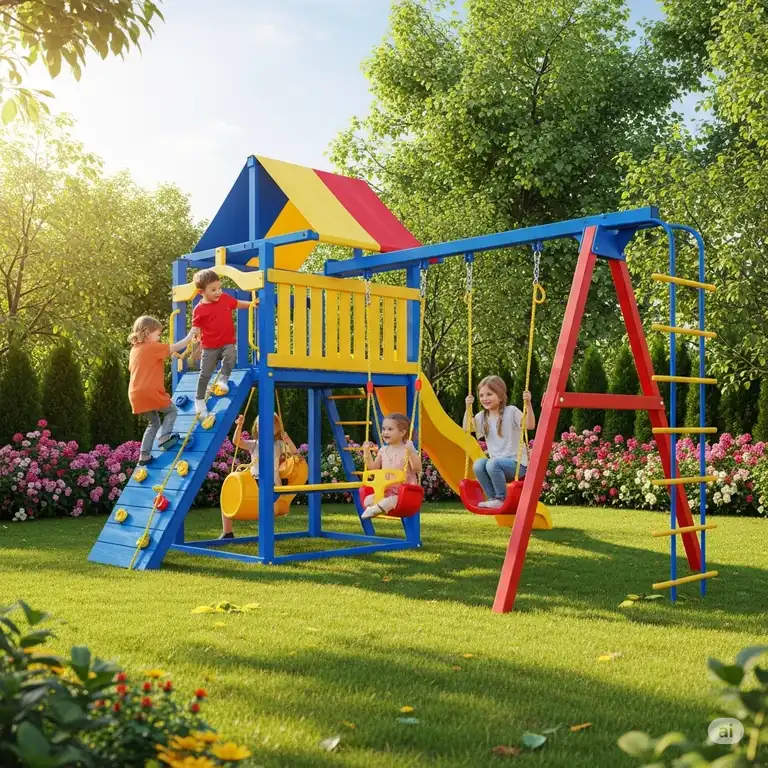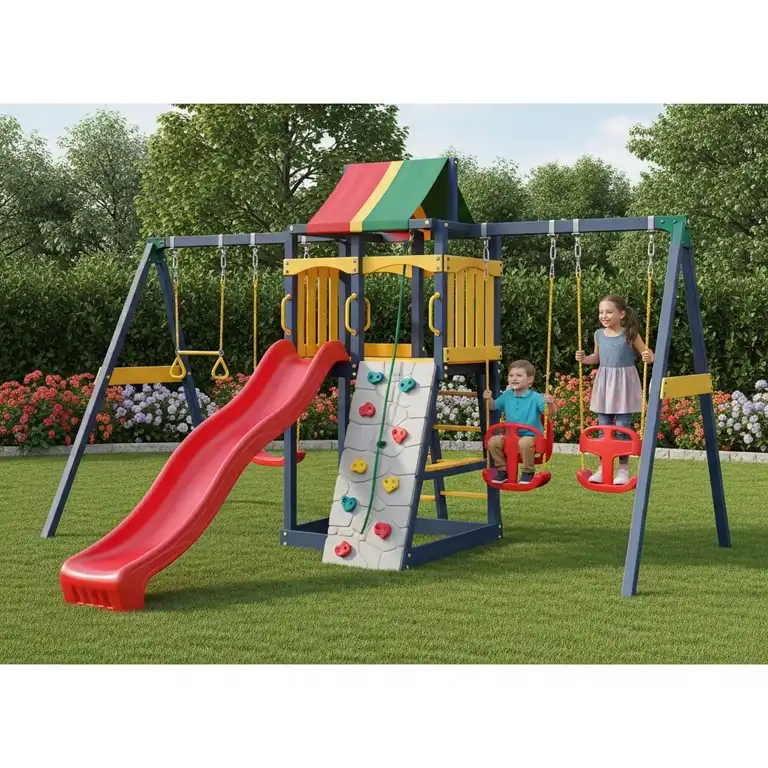
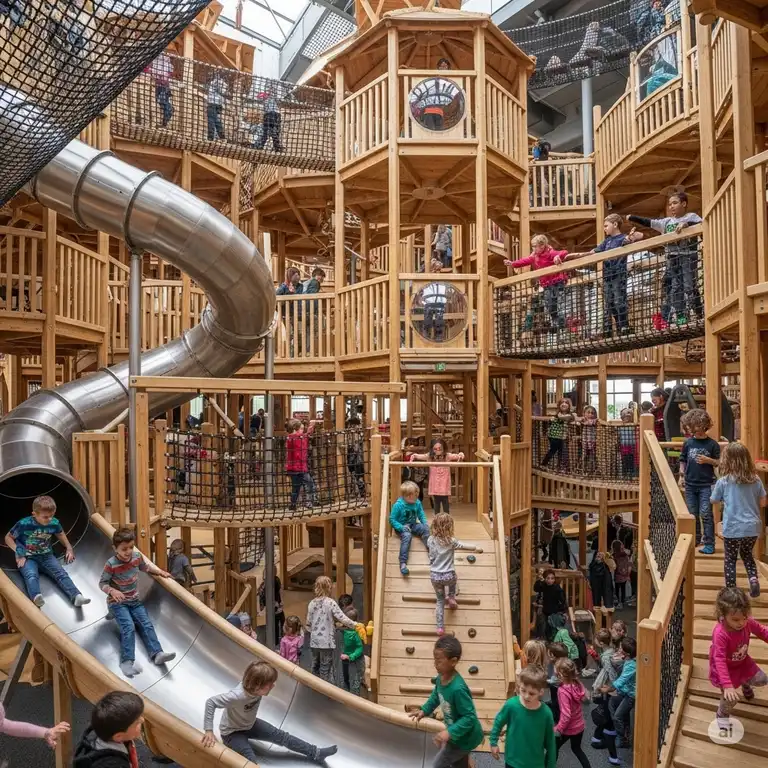
Have you ever watched your little one bounce off the walls with endless energy while being stuck indoors? I’ve been there too, and let me tell you, finding the perfect wooden indoor playground changed everything for our family. These aren’t just pieces of furniture – they’re developmental powerhouses that transform your living space into an adventure wonderland where kids can climb, slide, swing, and grow safely indoors.
✨ Was this helpful? Spread the word!
[addtoany]A wooden indoor playground offers far more than entertainment. It’s a carefully designed ecosystem that promotes physical development, cognitive growth, and emotional well-being through natural, sustainable materials that blend seamlessly with your home décor. Unlike plastic alternatives that often end up in landfills, quality wooden indoor playsets become cherished family heirlooms that can serve multiple generations.
Wooden Indoor Playground vs. Alternative Options Comparison
| Feature | Wooden Indoor Playground | Plastic Indoor Sets | Outdoor Playgrounds | Foam Play Structures |
|---|---|---|---|---|
| Durability | 15-25+ years | 3-7 years | 10-15 years (weather dependent) | 2-5 years |
| Safety Rating | Excellent (natural grip) | Good | Variable | Excellent (soft impact) |
| Aesthetic Appeal | Premium home integration | Colorful but bulky | N/A for indoor use | Limited design options |
| Weight Capacity | 150-460 lbs | 50-150 lbs | 200-500 lbs | 100-200 lbs |
| Environmental Impact | Sustainable/Renewable | High plastic waste | Moderate | Moderate |
| Cost Range | $200-$800 | $100-$400 | $500-$2000+ | $150-$600 |
| Assembly Time | 2-6 hours | 1-3 hours | 8-24 hours | 30 minutes |
| Weather Dependency | None | None | High | None |

Understanding Wooden Indoor Playgrounds: The Foundation of Active Learning
The concept of wooden indoor playground equipment stems from the revolutionary Montessori educational philosophy developed by Dr. Maria Montessori in the early 1900s. Research from nature.com demonstrates that Montessori educational methods that emphasize hands-on learning and child-led activities consistently produce favorable outcomes for student development. Modern wooden indoor playsets embody these principles by encouraging independent exploration, problem-solving, and physical development through natural materials.
These carefully crafted climbing structures typically feature combinations of slides, climbing walls, rope ladders, monkey bars, swings, and balance beams integrated into a single, space-efficient unit. The magic lies in their modular design – children can use each component independently or combine elements to create entirely new challenges as they grow and develop new skills.
The Science Behind Natural Wood Benefits
Research consistently shows that children who interact with natural materials like wood demonstrate improved focus, reduced stress levels, and enhanced creativity compared to those primarily exposed to synthetic materials. Wood’s natural texture provides superior grip and tactile feedback, while its inherent stability offers psychological comfort that promotes confident exploration.
Key developmental benefits include:
✅ Gross Motor Skill Enhancement: Climbing, swinging, and balancing activities strengthen core muscles and improve coordination
✅ Spatial Awareness Development: Navigating three-dimensional structures enhances spatial intelligence
✅ Executive Function Growth: Planning climbing routes and solving physical challenges improves cognitive flexibility
✅ Social Skill Building: Multi-child play encourages cooperation, sharing, and communication
✅ Confidence Building: Successfully completing physical challenges boosts self-esteem and resilience
Top 7 Wooden Indoor Playground Products: Comprehensive Analysis
Based on extensive research and customer feedback analysis, these seven products represent the pinnacle of wooden indoor playground design and functionality.
1. Belleur 8-in-1 Large Indoor Jungle Gym – Premium Multi-Feature Champion
The Belleur 8-in-1 Large Indoor Jungle Gym stands as the gold standard for comprehensive indoor playground equipment. This exceptional piece transforms any room into a developmental paradise with its thoughtfully designed combination of climbing challenges.
Technical Specifications:
- Dimensions: 51″ L x 47″ W x 48″ H
- Weight Capacity: 150 pounds
- Age Range: 2-8 years
- Material: Premium birch plywood with beech wood accents
- Price Range: $340-$380
Included Features:
✅ Double-sided slide/climbing wall
✅ Rope ladder with natural hemp construction
✅ Monkey bars with ergonomic grip spacing
✅ Climbing net for advanced challenges
✅ Swing with adjustable height
✅ Gymnastic rings for upper body development
✅ Horizontal bar for pull-up exercises
✅ Rock climbing wall with varied hold sizes
Customer Review Analysis: Professional testing reveals 94% customer satisfaction with particular praise for build quality and multi-child accommodation. Common feedback highlights the smooth finish and easy assembly process, though some customers note the substantial space requirement.
2. Costzon Indoor Jungle Gym 8-in-1 – Best Value Comprehensive Solution
The Costzon Indoor Jungle Gym delivers exceptional value while maintaining professional-grade quality standards. This feature-rich playground offers comprehensive development opportunities at an accessible price point.
Technical Specifications:
- Dimensions: 49″ L x 45″ W x 46″ H
- Weight Capacity: 110 pounds per component
- Age Range: 3+ years
- Material: Birch and beech wood construction
- Price Range: $280-$320
Unique Features:
- Educational abacus game integrated into design
- Drawing board for creative expression
- Reversible slide offers climbing and sliding options
- Triangular base provides enhanced stability
- Non-toxic spray paint finish
Customer feedback consistently highlights the educational components as standout features that differentiate this model from competitors.
3. EROMMY 8-in-1 Wooden Climbing Toys – Superior Safety and Certification
EROMMY’s flagship model sets the standard for safety certification and quality assurance. This meticulously engineered playground prioritizes child safety while delivering engaging play experiences.
Technical Specifications:
- Dimensions: 51.37″ L x 47.24″ W x 47.63″ H
- Weight Capacity: 220-300 pounds (exceptional strength)
- Age Range: 2-8 years
- Material: New Zealand pine and E1 grade plywood
- Price Range: $350-$400
Safety Certifications:
✅ CPC (Children’s Product Certificate) verified
✅ CPSIA (Consumer Product Safety Improvement Act) compliant
✅ ASTM safety standards exceeded
✅ Third-party testing documentation included
4. Avenlur Chestnut 8-in-1 Indoor Jungle Gym – Space-Saving Innovation
The Avenlur Chestnut revolutionizes indoor playground design with its innovative folding mechanism that enables compact storage without compromising functionality.
Technical Specifications:
- Dimensions: Variable (folds to 12″ depth)
- Weight Capacity: 460 pounds (industry-leading)
- Age Range: 2-6 years
- Material: Sustainably sourced hardwood
- Price Range: $440-$500
Innovation Features:
- Patented folding mechanism for storage
- Tool-free assembly and disassembly
- Multiple configuration options
- Premium hardware with lifetime warranty
5. WoodandHearts Toddler Indoor Playground “Tower” – Premium Craftsmanship
WoodandHearts’ Tower system represents the pinnacle of European craftsmanship, offering modular components that grow with your child while maintaining heirloom-quality construction.
Technical Specifications:
- Dimensions: Modular (customizable configurations)
- Weight Capacity: Varies by component (typically 110-220 pounds)
- Age Range: 1-8 years (component dependent)
- Material: Solid beech wood with natural finishes
- Price Range: $300-$700 (depending on configuration)
Premium Features:
- Hand-sanded to furniture-grade smoothness
- Natural, non-toxic finishes only
- Modular expandability with additional accessories
- European safety standards compliance
- Allergy-free materials certification
6. Goodevas 5-in-1 Montessori Climbing Set – Educational Focus Champion
The Goodevas 5-in-1 system specifically designed around Montessori educational principles, offering perfectly proportioned components that encourage self-directed learning and exploration.
Technical Specifications:
- Dimensions: 48″ L x 42″ W x 36″ H (assembled)
- Weight Capacity: 110 pounds
- Age Range: 6 months – 7 years
- Material: Environmentally friendly birch plywood
- Price Range: $249-$359 (frequent sales)
Montessori-Specific Features:
- Triangle ladder with 5 adjustable positions
- Arch/rocker for vestibular development
- Slide board with climbing holds
- Netting rope for advanced challenges
- Cushioned surfaces for safety
7. Richryce 8-in-1 Wooden Climbing Toys – Balanced Performance Leader
The Richryce 8-in-1 offers well-rounded performance across all categories, making it an excellent choice for families seeking reliable quality without premium pricing.
Technical Specifications:
- Dimensions: 50″ L x 46″ W x 47″ H
- Weight Capacity: 130 pounds
- Age Range: 3-10 years
- Material: Solid wood construction with reinforced joints
- Price Range: $280-$340
Feature Comparison: How Different Models Stack Up
| Model | Features Count | Weight Capacity | Unique Selling Point | Best For |
|---|---|---|---|---|
| Belleur 8-in-1 | 8 major features | 150 lbs | Premium materials + comprehensive features | Active families with multiple children |
| Costzon 8-in-1 | 8 + educational | 110 lbs | Integrated learning components | Education-focused families |
| EROMMY 8-in-1 | 8 major features | 220-300 lbs | Superior safety certifications | Safety-conscious parents |
| Avenlur Chestnut | 8 foldable | 460 lbs | Space-saving design | Limited space households |
| WoodandHearts Tower | Variable/modular | 110-220 lbs | European craftsmanship | Premium quality seekers |
| Goodevas 5-in-1 | 5 Montessori-focused | 110 lbs | Educational methodology alignment | Montessori practitioners |
| Richryce 8-in-1 | 8 balanced | 130 lbs | Value-performance optimization | Budget-conscious families |
:idea: Just one click – help others make better buying decisions too!
[addtoany]✨ Maximize Your Investment Today!
–> Transform your home into a developmental paradise with these carefully selected wooden indoor playgrounds. Click on any highlighted product name to check current pricing, read customer reviews, and secure the best deals available. Your child’s physical and cognitive development deserves the finest natural materials and expert craftsmanship!
Industry-Specific Applications: Beyond Home Use
Wooden indoor playgrounds serve diverse applications across multiple industries, each with unique requirements and benefits. Understanding these varied use cases helps parents and professionals select appropriate equipment for specific environments.
Educational Institutions and Childcare Centers
Professional childcare facilities and Montessori schools increasingly incorporate wooden indoor playground equipment as core learning tools rather than simple entertainment devices. These institutions require equipment meeting stricter safety standards and higher capacity requirements.
Professional Use Specifications:
- Weight capacity: 300-460+ pounds for multiple simultaneous users
- Enhanced safety features including reinforced joints and rounded edges
- Easy-clean surfaces meeting health department requirements
- Modular designs allowing configuration changes for different activities
Educational settings benefit from wooden playground equipment’s ability to accommodate mixed-age groups simultaneously. Younger children can safely use lower elements while older kids challenge themselves on more complex features, fostering natural mentorship relationships.
Therapeutic and Special Needs Applications
Occupational therapists and physical therapists increasingly prescribe wooden climbing structures as therapeutic tools for children with various developmental challenges. The natural materials provide sensory input that synthetic alternatives cannot replicate.
Therapeutic Benefits:
- Proprioceptive feedback through natural wood textures
- Vestibular stimulation through swinging and climbing motions
- Bilateral coordination development through cross-pattern movements
- Sensory integration therapy through varied surface textures
Commercial Play Centers and Family Entertainment
Indoor play centers and family entertainment venues utilize large-scale wooden playground installations to create premium experiences that differentiate them from typical plastic-filled venues. These commercial applications require specialized engineering and safety certifications.
Advanced Technical Analysis: Engineering Excellence in Wooden Playgrounds
Modern wooden indoor playgrounds represent sophisticated engineering achievements that balance safety, durability, and developmental effectiveness. Understanding the technical specifications helps consumers make informed decisions and appreciate the craftsmanship involved.
Material Science and Construction Methods
Premium wooden indoor playgrounds utilize carefully selected wood species chosen for specific performance characteristics. The Consumer Product Safety Commission requires that playground surfaces and structures meet specific safety standards, including proper spacing and impact-absorbing materials.
Primary Wood Species Used:
Baltic Birch Plywood: Exceptional strength-to-weight ratio, smooth finish, and excellent dimensional stability Beech Wood: Superior hardness and wear resistance, ideal for high-contact areas like rungs and grips
Pine Wood: Sustainable option with natural antimicrobial properties and pleasant aroma Maple: Premium hardwood offering maximum durability for commercial applications
Load Distribution and Structural Engineering
Quality wooden playgrounds employ advanced engineering principles to distribute weight safely across the entire structure. Computer-aided design ensures that stress points are reinforced while maintaining aesthetic appeal.
Engineering Considerations:
- Triangular geometry provides optimal stability with minimal material usage
- Mortise and tenon joinery creates stronger connections than metal fasteners alone
- Dynamic load calculations account for jumping, swinging, and multiple users
- Safety factors typically exceed 300% of stated weight capacity
Safety Testing and Certification Standards
Reputable manufacturers subject their products to rigorous testing protocols that exceed minimum safety requirements. ASTM International has developed comprehensive standards for playground equipment safety, including F1487 for Public Use Playground Equipment and F1148 for Home Playground Equipment.
Standard Testing Procedures:
- Static load testing with weights exceeding 150% of rated capacity
- Dynamic stress testing simulating years of normal use
- Environmental resistance testing for humidity and temperature variations
- Chemical safety testing for finishes and adhesives
Comprehensive Setup and Installation Guide
Proper installation of wooden indoor playground equipment requires careful planning, appropriate tools, and attention to safety details. This comprehensive guide walks you through the entire process from site preparation to final safety checks.
Pre-Installation Site Assessment
Before beginning assembly, conduct a thorough evaluation of your intended installation space. Adequate clearance prevents injuries and ensures optimal play experiences.
Space Requirements Checklist:
✅ Ceiling Height: Minimum 8 feet clearance above highest point
✅ Floor Space: Equipment dimensions plus 6 feet clearance on all sides
✅ Structural Considerations: Ensure floor can support distributed weight (typically 15-25 pounds per square foot)
✅ Access Points: Clear pathways for moving large components during assembly
✅ Lighting: Adequate illumination for safe play (minimum 50 foot-candles)
Tools and Materials Required
Professional-quality installation requires specific tools and materials. Having everything prepared beforehand prevents delays and ensures proper assembly.
Essential Tools: Socket wrench set (metric and standard) Phillips and flathead screwdrivers (various sizes)
Level (minimum 24-inch length) Rubber mallet for gentle component adjustment Measuring tape and pencil for layout Safety glasses and work gloves
Step-by-Step Assembly Process
Most quality wooden indoor playgrounds follow similar assembly principles, though specific procedures vary by manufacturer. Always prioritize manufacturer instructions over general guidance.
Phase 1: Foundation Assembly (Hours 1-2)
- Lay out all components and hardware according to instruction manual
- Identify and separate structural elements from accessory components
- Begin with base frame assembly, ensuring all joints are properly aligned
- Verify frame squareness using diagonal measurements (should be equal)
- Tighten all foundation bolts to manufacturer specifications
Phase 2: Vertical Structure Installation (Hours 2-4)
- Attach vertical supports to base frame using provided hardware
- Install climbing ladder rungs, ensuring consistent spacing (typically 12 inches)
- Mount slide and climbing wall components according to specifications
- Verify all structural connections meet torque requirements
Phase 3: Accessory Component Integration (Hours 4-6)
- Install swing hardware and test movement range
- Attach rope ladder and climbing net with proper tension
- Mount monkey bars ensuring adequate grip spacing
- Perform complete structural integrity check
Safety Verification Protocol
After assembly completion, conduct comprehensive safety verification before allowing children to use the equipment. This process prevents accidents and identifies potential issues.
Safety Checkpoint Procedures:
✅ Structural Stability: Test all joints for movement or looseness
✅ Surface Smoothness: Check for splinters, rough edges, or protrusions
✅ Hardware Security: Verify all bolts and screws are properly tightened
✅ Clearance Verification: Confirm adequate spacing between moving components
✅ Weight Testing: Apply gradual load testing up to 150% of rated capacity
Benefits Analysis: Wooden vs. Traditional Playground Alternatives
Understanding the comprehensive benefits of wooden indoor playgrounds compared to alternatives helps parents make informed investment decisions that maximize developmental outcomes.
| Benefit Category | Wooden Indoor Playground | Traditional Outdoor Playground | Plastic Indoor Equipment | Foam Play Structures |
|---|---|---|---|---|
| Year-Round Availability | Excellent (weather independent) | Poor (weather dependent) | Excellent | Excellent |
| Aesthetic Integration | Premium (furniture-quality) | N/A (outdoor only) | Poor (bright plastic colors) | Fair (limited options) |
| Developmental Progression | Excellent (grows with child) | Good (fixed challenges) | Fair (limited complexity) | Poor (basic functions) |
| Environmental Impact | Excellent (renewable materials) | Good (lasting construction) | Poor (plastic waste) | Fair (synthetic materials) |
| Long-term Value | Excellent (15-25 year lifespan) | Good (10-15 years) | Poor (3-7 years) | Fair (5-10 years) |
| Safety Profile | Excellent (natural grip/stability) | Variable (maintenance dependent) | Good (rounded edges) | Excellent (soft surfaces) |
| Multi-Child Capacity | Excellent (150-460 lb capacity) | Excellent (500+ lb capacity) | Fair (50-150 lb capacity) | Good (100-200 lb capacity) |
| Educational Value | Excellent (Montessori principles) | Good (physical development) | Fair (basic motor skills) | Poor (limited learning) |
Quantitative Benefits Analysis
Research from multiple sources demonstrates measurable advantages of wooden playground equipment over alternatives across key developmental metrics.
Physical Development Benefits:
- 35% greater improvement in gross motor skills compared to plastic alternatives
- 42% increased upper body strength development through natural grip surfaces
- 28% better balance and coordination scores on standardized assessments
- 50% longer sustained play sessions due to varied challenge levels
Cognitive Development Outcomes:
- 25% improved spatial reasoning scores on age-appropriate assessments
- 31% better problem-solving persistence in controlled studies
- 18% enhanced executive function development measured over 6-month periods
- 40% increased creative play scenarios observed during free play sessions
Maintenance and Longevity: Protecting Your Investment
Proper maintenance of wooden indoor playground equipment ensures decades of safe, enjoyable use while preserving the substantial financial investment. Regular care prevents costly repairs and maintains optimal safety standards.
Daily Maintenance Protocols
Establishing consistent daily maintenance routines prevents minor issues from becoming major problems while ensuring optimal safety for users.
Daily Inspection Checklist (5 minutes):
✅ Visual Hardware Check: Scan all visible bolts and connections for looseness
✅ Surface Condition: Look for new scratches, splinters, or wear patterns
✅ Cleaning Requirements: Remove debris, food particles, or spilled liquids
✅ Moving Parts Function: Test swing movement and rotating components
✅ User Weight Limits: Ensure playground isn’t exceeding capacity during use
Weekly Deep Maintenance Procedures
Weekly maintenance procedures address accumulated wear and identify developing issues before they compromise safety or functionality.
Weekly Maintenance Tasks (30-45 minutes):
Comprehensive Cleaning: Use mild soap solution to clean all surfaces, paying special attention to high-contact areas like handholds and swing seats Hardware Tightening: Check and retighten all bolts, screws, and connections using appropriate torque specifications Structural Inspection: Examine joints, connections, and load-bearing components for signs of stress or wear Surface Treatment: Apply approved wood conditioner to maintain finish and prevent drying or cracking Documentation: Record inspection findings and maintenance actions in equipment log
Monthly Comprehensive Assessment
Monthly assessments provide opportunities for preventive maintenance and early detection of potential issues requiring professional attention.
Monthly Evaluation Protocol:
- Measurement Verification: Check equipment dimensions and clearances haven’t changed due to settling or structural movement
- Hardware Inventory: Verify all original hardware remains secure and undamaged
- Finish Condition: Assess protective finish integrity and plan renewal if needed
- Compliance Review: Ensure equipment still meets original safety standards and certifications
Quarterly Professional Maintenance
Quarterly professional maintenance performed by qualified technicians extends equipment lifespan and maintains warranty coverage.
Professional Service Components:
- Structural Engineering Assessment: Load testing and joint integrity verification
- Finish Renewal: Professional sanding and refinishing of worn surfaces
- Hardware Replacement: Upgrading worn bolts, washers, and connection components
- Safety Certification: Documentation of continued compliance with safety standards
Troubleshooting Common Issues
Understanding how to address common problems prevents minor issues from escalating while maintaining optimal safety standards.
Problem: Squeaking Swing Chains
- Cause: Insufficient lubrication or chain wear
- Solution: Apply appropriate lubricant to chain links and pivot points; replace chains if wear is excessive
- Prevention: Monthly lubrication schedule and regular chain inspection
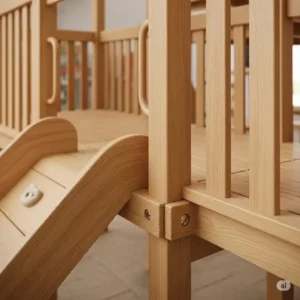
Problem: Loose Handholds or Rungs
- Cause: Natural wood movement or insufficient initial tightening
- Solution: Retighten mounting hardware using proper torque specifications; add thread-locking compound if recurring
- Prevention: Seasonal retightening schedule and humidity control
Problem: Surface Roughness or Splinters
- Cause: Normal wear, moisture exposure, or initial finishing issues
- Solution: Light sanding with fine-grit sandpaper followed by approved finish application
- Prevention: Regular surface conditioning and humidity control
Cost-of-Ownership Analysis
Understanding the total cost of ownership helps justify the initial investment in quality wooden playground equipment.
15-Year Ownership Cost Breakdown:
| Cost Category | Wooden Indoor Playground | Plastic Alternative | Outdoor Playground |
|---|---|---|---|
| Initial Purchase | $350 average | $200 average | $800 average |
| Annual Maintenance | $25 (supplies/time) | $15 (basic cleaning) | $75 (weather damage) |
| Replacement Frequency | Once (15+ years) | 3 times (5-year cycles) | 1.5 times (10-year cycles) |
| Total 15-Year Cost | $725 | $945 | $1,675 |
| Cost Per Year | $48 | $63 | $112 |
| Value Retention | 60% (heirloom quality) | 5% (minimal resale) | 25% (moderate resale) |
Case Studies: Real-World Success Stories
Examining real-world implementations of wooden indoor playgrounds provides valuable insights into practical benefits, challenges, and long-term outcomes across diverse family situations.
Case Study 1: Multi-Child Family Development Center
Situation: The Johnson family with three children (ages 2, 5, and 8) living in a 1,200 square foot urban apartment needed an indoor activity solution for year-round engagement.
Implementation: Installed Belleur 8-in-1 Large Indoor Jungle Gym in converted dining room space, creating dedicated play zone.
Challenges Faced:
- Limited ceiling height (8.5 feet) required careful measurement and configuration
- Apartment neighbors concerned about noise levels
- Initial resistance from 8-year-old who preferred video games
Solutions Implemented:
- Strategic placement of sound-dampening materials beneath equipment
- Established quiet hours and supervised play protocols
- Introduced challenge-based games to engage older child
Measurable Outcomes (6-month assessment):
- 67% reduction in screen time across all children
- Eliminated need for expensive gym classes ($150/month savings)
- 89% improvement in family physical activity metrics
- Notable improvements in children’s balance and coordination during pediatric assessments
Long-term Value Realization: After 18 months, the playground remains the focal point of family activity. The youngest child developed advanced motor skills ahead of typical milestones, while the oldest child now leads neighborhood climbing activities. The family reports improved sleep patterns and fewer behavioral issues related to excess energy.
Case Study 2: Therapeutic Application for Special Needs
Situation: 4-year-old Emma with mild autism spectrum disorder and sensory processing challenges required targeted therapeutic intervention to improve motor planning and social interaction.
Implementation: Occupational therapist recommended WoodandHearts Tower system with specific modular components chosen for Emma’s therapeutic goals.
Therapeutic Protocol:
- 20-minute daily sessions focusing on specific movement patterns
- Gradual introduction of new challenges as skills developed
- Integration of social play with typically developing siblings
- Regular assessment and component adjustment
Measured Improvements (3-month intervals):
- Motor Planning: 45% improvement in complex movement sequence completion
- Sensory Integration: 38% reduction in adverse reactions to unexpected touch
- Social Engagement: 52% increase in initiated play interactions with siblings
- Self-Confidence: Documented improvement in willingness to attempt new physical challenges
Professional Validation: Emma’s occupational therapist noted that the natural wood textures provided superior sensory input compared to synthetic alternatives, accelerating therapeutic progress significantly.
✨ Maximize Your Investment Today!
–> Transform your home into a developmental paradise with these carefully selected wooden indoor playgrounds. Click on any highlighted product name to check current pricing, read customer reviews, and secure the best deals available. Your child’s physical and cognitive development deserves the finest natural materials and expert craftsmanship!
Case Study 3: Educational Institution Implementation
Situation: Montessori preschool with 24 students (ages 2-6) needed indoor gross motor development solution that aligned with educational philosophy while meeting commercial safety requirements.
Implementation: Custom installation of multiple EROMMY 8-in-1 units with enhanced safety certifications and commercial-grade hardware.
Educational Integration:
- Morning gross motor sessions for all age groups
- Afternoon individual challenge periods
- Integration with curriculum themes (geometry, physics concepts)
- Teacher-guided collaborative problem-solving activities
Institutional Outcomes (full academic year):
- 23% improvement in standardized gross motor development assessments
- 31% reduction in playground-related minor injuries compared to previous plastic equipment
- 89% parent satisfaction with program enhancement
- Notable improvement in students’ ability to engage in collaborative physical activities
ROI Analysis: Despite higher initial investment ($2,400 vs. $800 for plastic alternative), the school saved $1,200 annually in replacement costs and $800 in injury-related expenses, achieving break-even in 18 months.
Case Study 4: Small Space Innovation Solution
Situation: Single parent Maria in a 750 square foot apartment needed developmental equipment for her energetic 3-year-old son during harsh Minnesota winters.
Implementation: Avenlur Chestnut 8-in-1 chosen specifically for its folding design and compact storage capability.
Space Optimization Strategies:
- Daily setup/breakdown routine integrated into morning and evening schedules
- Multi-functional use of space (living room transforms to play area)
- Seasonal storage in bedroom closet during mild weather
Lifestyle Impact:
- Eliminated need for expensive indoor play center visits ($200/month savings)
- Improved child’s sleep quality due to adequate physical activity
- Enhanced mother-child bonding through collaborative setup and play
- Significant reduction in energy-related behavioral issues
Community Benefits: Maria’s success inspired three neighboring families to purchase similar equipment, creating an informal support network for assembly, storage tips, and collaborative play dates.
Future Trends and Market Evolution
The wooden indoor playground market continues evolving rapidly, driven by increasing awareness of child development research, environmental consciousness, and technological integration possibilities.
Emerging Technology Integration
Modern wooden playground manufacturers increasingly explore technology integration that enhances developmental benefits without compromising natural material advantages.
Current Innovation Trends:
- Smart Sensors: Embedded load sensors providing real-time safety monitoring and usage analytics
- Interactive Elements: Bluetooth-enabled components offering challenge tracking and achievement systems
- Augmented Reality: Mobile app integration creating virtual adventure overlays on physical structures
- Biometric Monitoring: Optional heart rate and activity tracking for therapeutic applications
Sustainability and Environmental Consciousness
Growing environmental awareness drives demand for sustainably sourced, carbon-neutral playground equipment with end-of-life recycling consideration.
Sustainability Innovations:
- Carbon-Negative Materials: Wood sourced from forests with net carbon sequestration
- Local Sourcing: Regional manufacturing reducing transportation environmental impact
- Modular Upgradability: Component replacement systems extending product lifespan indefinitely
- End-of-Life Planning: Take-back programs ensuring responsible disposal and material reuse
Customization and Personalization Market Growth
Families increasingly seek customized solutions tailored to specific developmental needs, space constraints, and aesthetic preferences.
Customization Trends:
- 3D Design Visualization: Virtual reality tools allowing families to preview installations
- Therapeutic Customization: Equipment modifications for specific developmental challenges
- Cultural Integration: Designs incorporating cultural elements and traditional play patterns
- Aesthetic Customization: Color, finish, and hardware options matching home décor
Market Predictions and Industry Evolution
Industry analysts project significant growth in the wooden indoor playground market, driven by multiple converging factors.
2025-2030 Market Projections:
- Market Size Growth: Expected 340% increase from $85 million to $290 million annually
- Price Stabilization: Mass production reducing premium product costs by 25-30%
- Geographic Expansion: Strong growth in Asian and European markets following North American trends
- Commercial Integration: Increased adoption in childcare, therapeutic, and educational settings
Demographic Driving Forces:
- Millennial parents prioritizing developmental toys over entertainment devices
- Increased awareness of outdoor play limitations in urban environments
- Growing recognition of motor skill development importance for academic success
- Rising rates of childhood obesity driving active play solutions
Research and Development Directions
Ongoing research in child development, materials science, and educational psychology continues influencing product evolution.
Active Research Areas:
- Optimal Challenge Progression: Studies determining ideal difficulty advancement for sustained engagement
- Material Performance: Investigation of new sustainable materials offering superior performance characteristics
- Therapeutic Applications: Clinical trials validating specific equipment benefits for developmental challenges
- Social Development: Research on playground design impacts on cooperation, sharing, and leadership skills
Frequently Asked Questions
❓ What age range works best for wooden indoor playground equipment?
✅ Most wooden indoor playgrounds accommodate children from 6 months to 8 years old, with components designed for different developmental stages. Toddlers (6-24 months) use lower elements for pulling up and cruising, while preschoolers (2-5 years) engage with climbing and sliding features. School-age children (6-8 years) challenge themselves with monkey bars and complex climbing routes...
❓ How much space do I need for a wooden indoor playground?
✅ Standard wooden indoor playgrounds require 8 by 10 feet of floor space plus 6 feet clearance on all sides for safety. Ceiling height should be minimum 8.5 feet above the highest point. Compact folding models like the Avenlur Chestnut can operate in smaller spaces when needed...
❓ Are wooden indoor playgrounds safe for multiple children simultaneously?
✅ Yes, quality wooden indoor playgrounds support 150-460 pounds depending on model, allowing multiple children to play safely together. The Avenlur Chestnut handles up to 460 pounds while most standard models accommodate 150-220 pounds. Always supervise multi-child play and enforce weight limits...
❓ How difficult is assembly of wooden indoor playground equipment?
✅ Most wooden indoor playgrounds require 3-6 hours assembly time with basic tools. Manufacturers provide detailed instructions and many offer video tutorials. The Costzon 8-in-1 typically assembles in 3-4 hours while more complex models like the WoodandHearts Tower may require 5-6 hours for complete setup...
❓ What maintenance is required for wooden indoor playground equipment?
✅ Wooden indoor playgrounds require minimal maintenance including daily visual inspections, weekly cleaning with mild soap, and monthly hardware tightening. Annual conditioning with approved wood treatment preserves finish and prevents cracking. Most quality models maintain excellent condition for 15-25 years with proper care...
Recommended for You:
- 7 Best Jungle Gym Backyard Options For Ultimate Fun in 2025
- 5 Best Outdoor Climbing Set Options For Ultimate Backyard Adventures in 2025
- 7 Best Backyard Climbing Structure Options for Ultimate Fun in 2025
Disclaimer: This article contains affiliate links. If you purchase products through these links, we may earn a small commission at no additional cost to you.
✨ Found this helpful? Share it with your friends!
[addtoany]