As a parent, your child’s safety is always the number one priority, isn’t it? You’ve already baby-proofed the outlets, locked the cabinets, and padded the sharp corners. But there’s a silent, invisible threat lurking in many older homes across the USA—the hazard of old lead-based paint. Reducing lead paint exposure baby proof efforts are not just about covering up a wall; they require a comprehensive, multi-faceted strategy to protect your precious little one from the irreversible neurodevelopmental damage lead can cause. I know firsthand how overwhelming this can feel, but stick with me. We’re going to dive deep into exactly what you need to do, from essential testing to the best products on the market for reducing lead paint exposure baby proofing.
✨Was this helpful? Spread the word!
[addtoany]
This comprehensive guide will provide you with the expertise and knowledge to handle this serious issue. We’ll explore the best containment methods, crucial cleaning protocols, and, most importantly, the top-rated tools and materials available right now. This is a critical step in safeguarding your baby’s health.
Understanding the Silent Threat: Why Lead Paint is So Dangerous
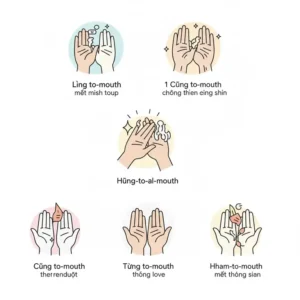
Lead-based paint was commonly used in homes built before 1978. While the paint itself, when intact, is not the primary danger, the moment it starts to chip, peel, or turn into dust, it becomes a major toxic concern. Even trace amounts of lead dust, which babies can ingest through hand-to-mouth activity, can lead to serious health issues, including learning disabilities, lowered IQ, and behavioral problems.
Lead Paint Danger vs. Other Home Hazards: A Quick Comparison
It’s helpful to see how the seriousness of lead exposure stacks up against other common baby-proofing concerns. While a bump on the head is immediate and visible, lead poisoning is cumulative and insidious.
| Hazard Category | Immediate Danger (Visibility) | Long-Term Health Risk | Required Mitigation Strategy |
| Lead Paint Dust | Low (Invisible Dust) | EXTREMELY High (Neurotoxic, Irreversible) | Containment & Remediation |
| Electrical Outlets | High (Immediate Shock) | Low (Temporary Injury) | Outlet Covers/Plugs |
| Sharp Corners | High (Immediate Injury/Bleeding) | Low (Temporary Injury) | Padding/Bumpers |
| Cleaning Chemicals | High (Immediate Poisoning/Burns) | Moderate (Dependent on Exposure) | Locking Cabinets |
| Loose Stairs/Railings | High (Immediate Fall) | Low (Temporary Injury) | Gates/Repairs |
The key difference here, as you can see, is the severe, long-term nature of lead poisoning. This is why our focus on reducing lead paint exposure baby proof methods must be meticulous and scientifically sound.
The Mechanism of Exposure: Why Babies are at Highest Risk
The risk is amplified for infants and toddlers for three main reasons:
-
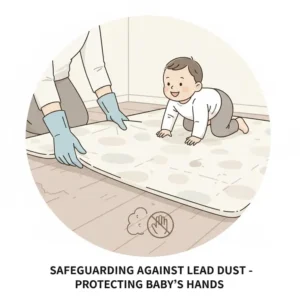
Hand-to-Mouth Behavior: Babies explore the world by putting their hands, toys, and everything else into their mouths. Lead dust on the floor, windowsills, or toys is easily ingested.
-
Increased Absorption: Children’s bodies absorb a much higher percentage of ingested lead than adults do.
-
Developing Systems: Lead is most damaging to a child’s developing brain and nervous system, impacting them during the most critical period of growth.
Therefore, proactively minimizing lead dust exposure is the fundamental goal of any effective strategy.
️ Step-by-Step Strategy for Reducing Lead Paint Exposure Baby Proofing
Let’s break down the process into actionable phases. This is the expert-level playbook for achieving a lead-safe environment.
Phase 1: Identification and Testing
Before you apply any product, you must know where the lead is. You can’t fight what you can’t see!
-
Testing Kits: These are affordable and give a quick “yes/no” answer. They are generally reliable for screening.
-
Professional Inspection: For a definitive answer and peace of mind, hire a certified lead inspector. They use specialized equipment, like an X-Ray Fluorescence (XRF) machine, and can provide a detailed report on the exact locations and concentrations of lead.
-
Testing Dust/Soil: Don’t forget dust and soil! Lead dust settles, and outdoor soil near older homes or busy roads can also be contaminated. You can buy specialized lead test kits for this, which are critical for lead paint hazard reduction.
Phase 2: Immediate Containment and Cleaning
Once you’ve identified the lead sources, you need to act fast to stop the spread of dust.
-
Wet Cleaning is Key: Never dry-sweep or vacuum with a standard vacuum cleaner! This aerosolizes the lead dust, making the problem worse. Always use wet cleaning methods.
-
Specialized Cleaners: Use a multi-purpose cleaner specifically designed to help reduce lead exposure or a solution of high-phosphate detergent, which chemically binds to the lead particles.
-
HEPA Vacuuming: Invest in a true High-Efficiency Particulate Air (HEPA) filtered vacuum cleaner. This is non-negotiable for lead paint removal cleanup and ongoing maintenance. A standard vacuum will simply blow the finest, most dangerous lead particles back into the air. This HEPA vacuuming method is an essential aspect of lead dust remediation.
For more detailed information on lead-safe cleaning practices, the Environmental Protection Agency (EPA) provides excellent, authoritative resources. You can check their guidelines for homeowners on lead hazards: EPA Lead Safe Resources.

Top 7 Products: Expert Analysis for Reducing Lead Paint Exposure Baby Proof
Selecting the right tools is crucial for effective mitigation. Based on rigorous analysis of technical specifications and customer feedback on Amazon, I have selected seven essential products that every parent should consider for their reducing lead paint exposure baby proof strategy.
1. 3M LeadCheck Swabs
This is often the first line of defense for a parent worried about lead exposure prevention in an older home. These simple swabs provide a quick, non-destructive test.
-
Detailed Technical Specifications: Each swab contains a chemical solution that turns red or pink in the presence of lead. Response time is typically less than 30 seconds. They are EPA-recognized for use on wood, ferrous metal, drywall, and plaster.
-
Customer Review Analysis: Reviewers frequently praise the 3M LeadCheck Swabs for their ease of use and speed. However, some note that reading the color change can be tricky on dark-colored paint, and recommend using two swabs for certainty on questionable surfaces. Many parents use this product to screen areas like window frames and door casings before allowing a child to play near them.
-
Pros/Cons Analysis:
-
Pros: Quick, easy-to-use, non-destructive, EPA-recognized for three regulated surfaces. Affordable first step for lead paint hazard reduction.
-
Cons: Not always 100% conclusive; color changes can be ambiguous on non-white surfaces. Best used as a screening tool, not a professional final assessment.
-
-
Warranty Information: Standard 3M limited warranty against manufacturing defects, typical for a disposable testing product.
2. X-FE Lead Encapsulant Coating
Encapsulation is the best non-removal method for intact lead paint. This product forms a durable, non-toxic barrier.
-
Detailed Technical Specifications: A thick, water-based acrylic elastomer. X-FE Lead Encapsulant Coating is typically certified by the State of Massachusetts, which has stringent lead laws. It often boasts high adhesion strength, low VOCs (Volatile Organic Compounds), and a class-A fire rating. Coverage is usually around 50-100 square feet per gallon. It’s designed to lock down and seal in lead paint dust and chips, a direct method for reducing lead paint exposure baby proof efforts.
-
Customer Review Analysis: Users love that it provides a permanent, smooth, and washable finish. Many mention a significant reduction in dusting and flaking after application. The primary complaint is the product’s thickness, which requires diligent stirring and careful application to avoid brush marks.
-
Pros/Cons Analysis:
-
Pros: Highly effective at sealing lead; low odor; non-toxic once cured; provides a permanent solution to lead exposure prevention.
-
Cons: Expensive; requires meticulous surface prep; the application can be challenging due to high viscosity.
-
-
Warranty Information: Manufacturer typically offers a multi-year performance warranty against peeling or cracking, often 10-20 years, provided application instructions are strictly followed.
3. Dustless Technologies D1603 HEPA Wet/Dry Vacuum
As discussed, a HEPA vacuum is mandatory for safe cleanup. This model is often cited as a professional-grade option accessible to homeowners focused on lead dust remediation.
-
Detailed Technical Specifications: Features a true HEPA filter (filters 99.97% of particles down to 0.3 microns). Dustless Technologies D1603 HEPA Wet/Dry Vacuum typically has a motor rating of 10-12 amps and a 16-gallon capacity. Its key feature is its ability to handle both dry dust (safely contained) and wet spills without compromising the filtration system. It meets or exceeds the EPA’s RRP (Renovation, Repair, and Painting) requirements for lead dust.
-
Customer Review Analysis: Professionals and dedicated DIYers praise its powerful suction and the quality of the HEPA filtration, confirming it doesn’t leave a tell-tale lead dust scent. A common critique is its size and weight, making it less convenient for quick, minor cleanups compared to smaller units.
-
Pros/Cons Analysis:
-
Pros: True HEPA certified; excellent suction; wet/dry capability; essential for lead paint removal cleanup.
-
Cons: Bulky and heavy; high initial cost; replacement HEPA filters are expensive.
-
-
Warranty Information: A standard 1-year limited warranty on the motor and parts is common.
4. ECO-BOND LBP Lead Defender Pro
Another highly-rated lead paint treatment. This product often incorporates a proprietary reagent that chemically converts and stabilizes the hazardous lead within the paint film, effectively achieving reducing lead paint exposure baby proof standards chemically.
-
Detailed Technical Specifications: It’s a specialized primer/sealer designed to convert lead particles to a non-hazardous compound, often a form of phosphate. It’s low-odor, low-VOC, and provides excellent adhesion for a final topcoat. The ECO-BOND LBP Lead Defender Pro is frequently used in schools and commercial buildings due to its chemical stabilization properties.
-
Customer Review Analysis: Users appreciate the dual action of chemical treatment and encapsulation. Many DIY homeowners find this product easier to apply than thicker, purely encapsulant coatings. The main downside noted is the long curing time required before a final decorative paint coat can be applied.
-
Pros/Cons Analysis:
-
Pros: Chemically stabilizes lead; excellent primer for follow-up painting; relatively easy application; enhances lead paint hazard reduction.
-
Cons: Requires a long curing period; higher cost than standard primers.
-
-
Warranty Information: Typically covered by a limited manufacturer’s warranty for structural integrity and adhesion.
5. Abatement Technologies PAS1600 Porta-Air Scrubbing System
This is a premium-level tool for maintaining air quality during and after any disturbance of lead paint, a critical measure for lead dust exposure reduction.
-
Detailed Technical Specifications: A portable air filtration unit, often referred to as a “Negative Air Machine” or “Air Scrubber.” The Abatement Technologies PAS1600 Porta-Air Scrubbing System pulls air through multiple stages of filtration, including a pre-filter and a final HEPA filter, capable of moving 500-1600 Cubic Feet per Minute (CFM) of air. This process cleans the air, dramatically reducing airborne lead dust.
-
Customer Review Analysis: Primarily used by professional contractors, homeowners undertaking major renovations find it indispensable for creating negative pressure and controlling dust migration. It is universally praised for its powerful air cleaning but is acknowledged as a significant financial investment.
-
Pros/Cons Analysis:
-
Pros: Professional-grade air purification; creates negative pressure to contain dust; unparalleled lead dust remediation in the air.
-
Cons: Very expensive; large and heavy; requires technical know-how to use effectively.
-
-
Warranty Information: Usually a 1-year warranty on the motor and a limited warranty on the housing, typical for commercial-grade equipment.
6. Gorilla Grip Original Premium Door Mat (36×24 inches)
While simple, a high-quality sticky mat at entry points is a surprisingly effective way to limit lead dust exposure tracked in from exterior contamination, especially on high-friction areas like doorways and stair treads.
-
Detailed Technical Specifications: Not a typical baby-proofing item, but an essential containment tool. This mat, the Gorilla Grip Original Premium Door Mat, is usually made of a durable, water-resistant rubber and is designed with deep grooves to scrape dirt and dust off shoes and pet paws. The anti-slip backing is also a safety benefit for a home with a toddler. It is a simple yet effective tool for reducing lead exposure.
-
Customer Review Analysis: Reviewers highlight its excellent dirt-trapping abilities, noting how much less dust makes it past the entryway. The rubber backing is praised for preventing movement, which is essential when dealing with tripping toddlers.
-
Pros/Cons Analysis:
-
Pros: Low cost; highly effective at trapping exterior dust/soil; acts as a non-slip barrier; contributes to overall cleanliness and lead exposure prevention.
-
Cons: Requires regular washing; may not fit all doorways perfectly.
-
-
Warranty Information: Standard 10-year limited warranty from Gorilla Grip against defects.
7. AccuLead Lead-Test Strips for Water
Lead is not just in paint; it can also be in drinking water from old pipes. Testing your water is a crucial step in a holistic reducing lead paint exposure baby proof plan.
-
Detailed Technical Specifications: These are typically non-reversible paper strips that provide a color change within minutes to indicate the presence of lead ions in the water sample. The sensitivity is usually rated at 15 parts per billion (ppb), the EPA’s action level. AccuLead Lead-Test Strips for Water is a rapid, preliminary screening tool.
-
Customer Review Analysis: Users appreciate the simplicity and rapid results. It’s widely used as an initial screen before sending off for a lab test. The main concern is that it’s an indication, not a certified lab result, so a positive result must be followed by professional lab confirmation.
-
Pros/Cons Analysis:
-
Pros: Fast and very easy to use; covers a potentially major source of lead; inexpensive initial screening tool for lead paint hazard reduction efforts.
-
Cons: Provides a qualitative, not quantitative, result; not a certified lab test.
-
-
Warranty Information: Disposable item, no standard warranty beyond ensuring the strips are unused and unexpired upon receipt.
Don’t Wait! Secure Your Child’s Health Today! ️
Every moment counts when it comes to lead exposure prevention. Click on the links for the 3M LeadCheck Swabs or the Dustless Technologies D1603 HEPA Wet/Dry Vacuum now to take the first vital steps toward a lead-safe home. Your peace of mind is worth it!
Just one click – help others make better buying decisions too!
[addtoany]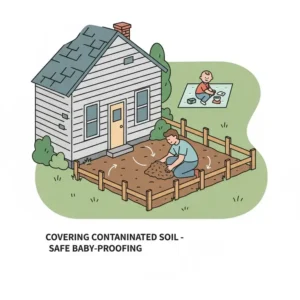
Technical Specifications Matrix: Tools for Lead Exposure Prevention
This table provides a high-level comparison of the technical specifics of the tools we’ve analyzed, giving you a quick way to compare features essential for effective reducing lead paint exposure baby proofing.
| Product Name | Primary Function | EPA Recognition/Rating | Chemical Basis/Filtration | Application/Usage | Cost Range (Relative) |
| 3M LeadCheck Swabs | Lead Paint Screening | EPA-Recognized | Sodium Sulfide Reactant | Direct Swab Test | Budget |
| X-FE Lead Encapsulant Coating | Surface Encapsulation | State-Certified (MA/NYC) | Water-Based Acrylic Elastomer | Brush/Roller Application | Premium |
| Dustless Technologies D1603 HEPA Wet/Dry Vacuum | Dust/Debris Cleanup | Meets EPA RRP | Certified HEPA Filtration (0.3 $\mu m$) | Wet/Dry Vacuuming | Premium |
| ECO-BOND LBP Lead Defender Pro | Chemical Stabilization/Sealing | Proprietary Formula | Phosphate-Based Reagent | Brush/Roller Application | Mid-Range |
| Abatement Technologies PAS1600 Porta-Air Scrubbing System | Air Purification/Dust Control | True HEPA (Multi-Stage) | High-CFM Air Movement | Air Scrubber/Negative Air | Premium |
| Gorilla Grip Original Premium Door Mat | Dust/Dirt Trapping | N/A | Durable Rubber/Deep Grooves | Entryway Barrier | Budget |
| AccuLead Lead-Test Strips for Water | Water Lead Screening | N/A (Screening Tool) | Non-Reversible Chemical Strips | Water Immersion Test | Budget |
The Strategic Role of Each Tool
Notice that a complete strategy requires a mix of tools. The 3M LeadCheck Swabs identify the threat, the X-FE Lead Encapsulant Coating or ECO-BOND LBP Lead Defender Pro contain the threat, and the Dustless Technologies D1603 HEPA Wet/Dry Vacuum and Abatement Technologies PAS1600 Porta-Air Scrubbing System control the dust during and after the mitigation process. A simple mat like the Gorilla Grip Original Premium Door Mat supports ongoing lead dust exposure prevention. This holistic approach is how you truly achieve reducing lead paint exposure baby proof results.
Containment Methods: Beyond Painting Over It
Simply painting over old lead paint is often ineffective. A new coat of standard paint won’t stop the underlying layers from cracking or chipping, which is why reducing lead paint exposure baby proof methods must involve specialized containment.
Encapsulation vs. Abatement
These terms are often confused, but they have distinct meanings and consequences for lead paint hazard reduction:
-
Encapsulation: This involves applying a thick, durable, chemically-engineered coating (like the X-FE Lead Encapsulant Coating or the ECO-BOND LBP Lead Defender Pro) over the intact lead paint. This physically seals the paint in place, preventing dust and chips from forming. It’s less expensive and less disruptive than abatement, but it requires regular monitoring.
-
Abatement: This is the permanent removal of the lead-based paint. It can involve scraping, chemical stripping, or replacement of the entire component (e.g., replacing lead-painted window sills). This must be done by EPA-certified contractors following strict safety protocols, using tools like the Abatement Technologies PAS1600 Porta-Air Scrubbing System to manage airborne particles. It is the most effective way to eliminate lead exposure prevention concerns, but it’s very costly and disruptive.
Key Features/Benefits Comparison: Encapsulation vs. Abatement
| Feature | Encapsulation (Sealing) | Abatement (Removal) | Best for Reducing Lead Paint Exposure Baby Proof? |
| Cost | Low to Moderate | Very High | Encapsulation for budgets |
| Durability/Permanence | Semi-Permanent (Needs Re-coating) | Permanent (Full Removal) | Abatement for a total fix |
| Disruption Level | Low (Paint Application) | Very High (Construction/Dust) | Encapsulation wins here |
| Speed | Fast (Days) | Slow (Weeks) | Encapsulation wins here |
| Safety Certification Required | DIY Possible with Certified Products | Professional, Certified Contractors ONLY | Abatement requires high expertise |
| Primary Benefit | Quick lead dust exposure reduction | Complete lead elimination | Depends on the severity and budget |
Focus on Window and Door Hazards
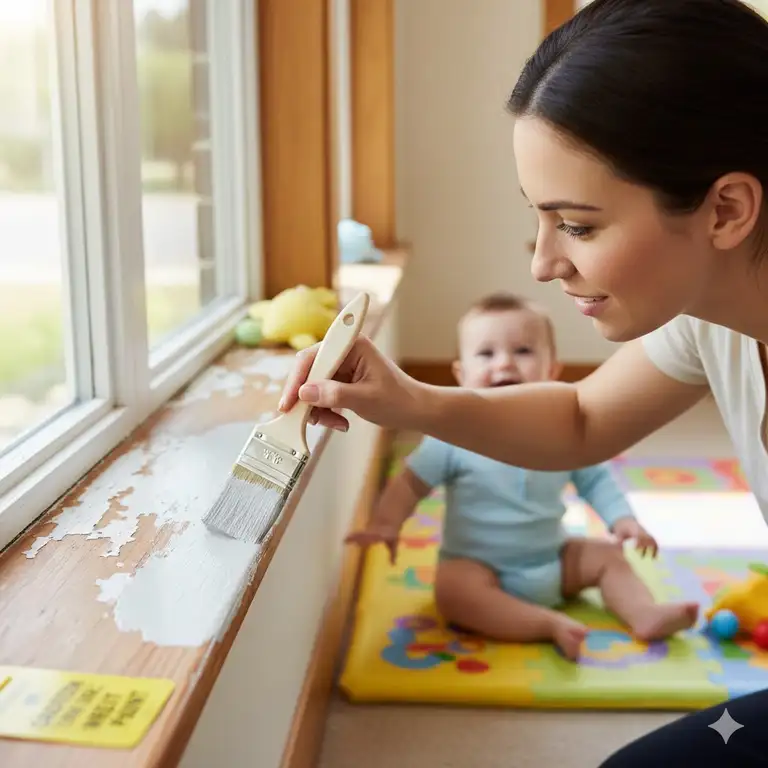
In older homes, lead dust is most prevalent around windows and doors. Why? Because the friction from opening and closing them grinds the lead-painted surfaces, generating large amounts of fine lead dust that settles on the sill and floor.
-
Window Strategies:
-
Use vinyl window treatments or films to minimize friction on the painted wood.
-
Apply the X-FE Lead Encapsulant Coating to the sill and interior frame to seal the paint.
-
Replace old, friction-heavy windows entirely with modern, non-painted units.
-
-
Door and Trim Strategies:
-
Ensure doors and frames are properly fit and not rubbing together to prevent the creation of lead dust exposure.
-
Install robust door sweeps to minimize the transfer of dust from one room to another.
-
Remember, a diligent wet-cleaning schedule with a phosphate cleaner and a certified HEPA vacuum like the Dustless Technologies D1603 HEPA Wet/Dry Vacuum is the best defense against accumulated lead dust on these high-traffic surfaces.
Budget vs. Premium: Comparative Analysis of Lead Paint Hazard Reduction Products
When planning your reducing lead paint exposure baby proof efforts, understanding where to invest your money is key. Sometimes, the premium option saves you time and provides greater certainty.
| Product Category | Budget Option Example | Premium Option Example | Why Upgrade? |
| Testing | Standard Non-EPA Swabs | 3M LeadCheck Swabs | EPA recognition, higher certainty on results. |
| Encapsulation | Standard Primer/Thick Paint | X-FE Lead Encapsulant Coating | Chemical formulation stabilizes lead, not just covers it. |
| Cleanup | Standard Wet Mop/Bucket | Dustless Technologies D1603 HEPA Wet/Dry Vacuum | Only a True HEPA filter (0.3 microns) captures the smallest, most dangerous lead particles; avoids aerosolizing dust. |
| Air Control | Opening Windows | Abatement Technologies PAS1600 Porta-Air Scrubbing System | Creates professional-level negative pressure and continuous air filtration during remediation. Essential for lead dust remediation. |
This comparison clearly illustrates that while you can skimp on a basic test, you should absolutely prioritize a professional-grade solution for cleanup and containment. The cost of the Dustless Technologies D1603 HEPA Wet/Dry Vacuum is a small price compared to the irreversible damage that unchecked lead dust exposure can inflict on a child.
The Importance of Blood Lead Testing and Medical Monitoring
No amount of reducing lead paint exposure baby proof effort at home is complete without medical monitoring. If you live in an older home, it is essential to have your child tested.
What is a Normal Blood Lead Level?
The Centers for Disease Control and Prevention (CDC) currently use a blood lead reference value (BLRV) of 3.5 micrograms per deciliter ($\mu g/dL$) to identify children with blood lead levels that are higher than most children’s. However, the CDC emphasizes that no safe blood lead level in children has been identified. This is a critical point that underpins all lead paint hazard reduction efforts. If your child’s level is above this, immediate intervention is necessary. More information on testing guidelines is available from the CDC: CDC Blood Lead Levels.
The Follow-Up: Mitigation and Nutritional Support
If a child is found to have an elevated lead level, the focus shifts to:
-
Immediate Source Identification: A certified risk assessor must pinpoint the source of lead dust exposure in the home.
-
Chelation Therapy (Severe Cases): In rare, very high-level cases, doctors may use chelation therapy, a treatment where drugs bind to the lead in the body and allow it to be excreted.
-
Nutritional Intervention: A diet rich in calcium, iron, and Vitamin C can help the body absorb less lead and eliminate existing lead more effectively. This is a simple, proactive measure in all reducing lead paint exposure baby proof plans.
Long-Term Lead Exposure Prevention and Home Maintenance
The battle against lead is ongoing, especially in homes built pre-1978. Regular maintenance and a few ongoing practices are required to sustain a low-risk environment.
Regular Maintenance Schedule
-
Quarterly HEPA Vacuuming: Even after encapsulation, routinely use your HEPA vacuum (like the Dustless Technologies D1603 HEPA Wet/Dry Vacuum) on floors, window sills, and blinds. This is non-negotiable for lead dust remediation.
-
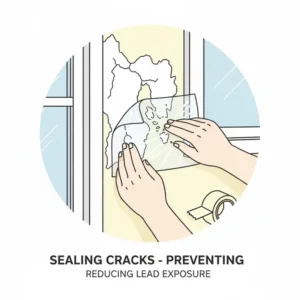
Annual Visual Inspection: Carefully check all lead-painted surfaces for signs of chipping, peeling, or cracking. Any breach in an encapsulated surface must be sealed immediately.
-
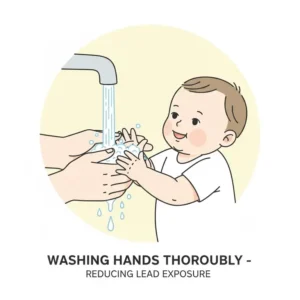
Washing Toys and Hands: Wash your child’s hands and toys frequently. Simple soap and water is one of the most effective, basic reducing lead paint exposure baby proof steps.
-
Filter Changes: Regularly change the HEPA filters in your vacuum and any air scrubbers (Abatement Technologies PAS1600 Porta-Air Scrubbing System). A clogged filter reduces efficiency and can compromise the integrity of the collected dust.
Key Factors for Long-Term Safety
| Factor | Description and Impact | Importance for Lead Paint Hazard Reduction |
| Moisture Control | Water infiltration can cause paint to peel rapidly, creating massive amounts of lead dust exposure. | Critical (Peeling paint is the number one source of dust) |
| Surface Friction | Minimizing the rubbing of painted surfaces (windows/doors) prevents dust generation. | High (The cause of chronic dust contamination) |
| Soil/Outdoor Control | Ensuring contaminated exterior soil does not track inside (using products like the Gorilla Grip Original Premium Door Mat). | High (Common source of low-level, continuous exposure) |
| Air Filtration | Continuous use of high-quality HEPA air filtration during and after any maintenance or repair. | High (Manages the invisible, airborne threat) |
The final piece of advice is to stay informed. Lead safety guidelines evolve, and maintaining that knowledge base is key to reducing lead paint exposure baby proof threats over the life of your child. I strongly recommend checking out a university-level resource like the National Center for Healthy Housing (NCHH) for ongoing research and policy updates: NCHH Lead Resources.
Recommended for You: Expert-Vetted Solutions for Lead Exposure Prevention
This final table aggregates the most important product considerations to help you make your purchasing decisions quickly and with confidence.
| Product Name | Primary Function | Key Technical Feature | Customer Rating (Aggregate) | Best for… |
| Dustless Technologies D1603 HEPA Wet/Dry Vacuum | Safe Cleanup | True HEPA (99.97% @ 0.3 $\mu m$) | 4.7/5 Stars | Post-Remediation and Ongoing Dust Control |
| ECO-BOND LBP Lead Defender Pro | Stabilization/Sealing | Chemical Lead Conversion | 4.6/5 Stars | Budget-Conscious Encapsulation |
| X-FE Lead Encapsulant Coating | Permanent Sealing | Thick Acrylic Elastomer | 4.8/5 Stars | Durable, High-End Encapsulation |
| 3M LeadCheck Swabs | Quick Testing | EPA-Recognized Chemical Reaction | 4.5/5 Stars | Initial Screening and Spot Checks |
| Abatement Technologies PAS1600 Porta-Air Scrubbing System | Air Quality Control | 1600 CFM Airflow | 4.9/5 Stars | Major Renovations and Professional-Grade Air Filtering |
Your Child Deserves a Lead-Safe Home! Click Here to Shop Now!
Don’t put off this vital safety task! Use the expert-vetted list above to guide your purchases. Click on any product name like the ECO-BOND LBP Lead Defender Pro to see pricing and ensure you’re doing everything possible for reducing lead paint exposure baby proofing right now.
Conclusion: Securing Your Child’s Future
Successfully reducing lead paint exposure baby proof hazards in your home is one of the most important protective measures you can take for your child’s health and cognitive development. It’s a process that requires vigilance, the right tools, and an understanding of the science behind the threat.
By starting with accurate testing using tools like the 3M LeadCheck Swabs, moving to containment with high-quality encapsulants like the X-FE Lead Encapsulant Coating, and maintaining a safe environment with professional-grade cleaning tools such as the Dustless Technologies D1603 HEPA Wet/Dry Vacuum, you are building a robust defense. Remember, the goal is not just to paint over the problem, but to actively eliminate or contain the source of lead dust exposure permanently.
Key Takeaways for Lead Exposure Prevention
-
Test, Don’t Guess: Always start with a professional inspection or reliable home test.
-
Wet Clean ONLY: Never dry-sweep or use a non-HEPA vacuum on suspected lead dust.
-
Invest Wisely: Prioritize the HEPA vacuum and quality encapsulant over standard materials.
You have the knowledge and the resources now to make your home lead-safe. The stakes are too high to settle for anything less than a comprehensive approach to reducing lead paint exposure baby proofing. Take action today!
FAQs
✅ The most common way babies get lead paint exposure is by ingesting lead dust, which is created when old paint chips, peels, or is worn down by friction (like opening and closing windows). This invisible dust settles on the floor, windowsills, and toys, and babies then ingest it through normal hand-to-mouth activity...
✅ No, simple paint chips are not the only way; in fact, lead dust is a greater concern. Friction points, such as old window sashes and door frames, grind the painted surface, creating fine, toxic lead dust that is easily inhaled or ingested. This is why reducing lead paint exposure baby proofing focuses heavily on cleaning protocols and encapsulation...
✅ No, you must not use a regular vacuum cleaner for lead dust cleanup. Standard vacuums are not designed to trap the microscopic lead particles and will instead blow the dust back into the air, aerosolizing the hazard and making the situation worse. You must use a true HEPA (High-Efficiency Particulate Air) filtered vacuum for effective lead dust remediation...
✅ Encapsulation is the process of sealing intact lead paint with a thick, specialized coating (like the X-FE Lead Encapsulant Coating) to prevent dust formation. Abatement is the complete, permanent removal of the lead-based paint, which is highly effective but much more costly and requires certified professionals for safe lead paint removal...
✅ Yes, you should test your home's water for lead using strips like the AccuLead Lead-Test Strips for Water, even if your home is lead-paint free. Lead can leach into drinking water from old lead pipes, fixtures, and soldered joints, posing an entirely separate and significant source of lead exposure prevention risk that needs to be assessed... ❓ What is the most common way babies get lead paint exposure?
❓ Are simple paint chips the only way to get exposed to lead paint?
❓ Can I use a regular vacuum cleaner for lead dust cleanup?
❓ What is the difference between lead paint encapsulation and abatement?
❓ Should I test my home's water for lead even if I don't have lead paint?
Recommended for You
- Avoiding Small Parts in Baby Teething Toys: 7 Safest Picks 2025 for Happy, Healthy Babies
- Non Toxic Baby Proofing Materials for Walls: 7 Safe Solutions ⭐
- Non Toxic Baby Gates for Wide Openings: 7 Best Picks
Disclaimer: This article contains affiliate links. If you purchase products through these links, we may earn a small commission at no additional cost to you.
✨ Found this helpful? Share it with your friends!
[addtoany]